
Photo: Hartmann Linge / Wikimedia Commons (CC BY-SA 4.0) · ตัดภาพบางส่วนโดยมรดกล้านนา
Find Your Lanna Birth Day Name: Wan Tai and Wan Meng
Your Lanna birth day name is the name of the day you were born in the old Lanna way of counting. Lanna people can name the same day in two ways. The first is the wan meng (วันฯเมังฯ, Kham Mueang reading wan meng), the day of the week. The second is the wan tai (วันฯไท, Kham Mueang reading wan tai), a name from a cycle of 60 days, such as kap jai, dap pao or ruai yi.
This lesson shows you how to find the wan tai and wan meng of your birthday, step by step, with the converter of the Moradok Lanna calendar, real examples and a way to count it yourself by hand.
Try your own date of birth in the tool below.
Wan meng and wan tai: what is the difference?
The dictionary explains the wan meng as "counting days the Mon way, like the Thai way of counting days", from Sunday to Saturday, and adds that "some use numbers instead: 1 2 3 4 5 6 7". So the wan meng comes round every 7 days.
The wan tai comes from the hon tai count (ห฿นฯไท, Kham Mueang reading hon tai), which the dictionary explains as "a way of counting time or eras in which the mae mue and the luk mue are related". So the wan tai comes round every 60 days.
| Wan meng | Wan tai | |
|---|---|---|
| What it is | the day of the week | a day name in a 60-day cycle |
| Repeats every | 7 days | 60 days |
| Example | Wednesday, or "day 4" | dap mao |
Step 1: open the date converter
- Open the date converter of the Lanna calendar (in Thai).
- Enter your date of birth in the box "เลือกวันที่ (สากล)" (choose a date, international calendar) and press แปลงวันที่ (convert).
- Scroll down to the ปฏิทินล้านนา (Lanna calendar) box. The row "วัน" (day) gives two things side by side: the Kham Mueang name of the weekday, then "วันไท" and the wan tai name of that day.
- The first line of the same box gives the waxing or waning day in the northern months, such as "แรม ๙ ค่ำ เดือนสาม", the 9th waning day of the 3rd northern month.
To see every other value for your birthday, open that day's page in the calendar, for example the Lanna calendar page for 1 January 2000 (in Thai).
Step 2: read the wan meng in Kham Mueang
The days of the week in Kham Mueang differ a little from central Thai. The dictionary records them like this:
| Wan meng | Lanna script | Kham Mueang | English |
|---|---|---|---|
| 1 | วันฯอาทิต์ยฯ | wan tit | Sunday |
| 2 | วันฯจัระฯน์ทฯ | wan jan | Monday |
| 3 | วันฯคาฯรฯ | wan kan | Tuesday |
| 4 | วันฯพุธ | wan put | Wednesday |
| 5 | วันฯผัสฯฯ | wan phat | Thursday |
| 6 | วันฯสุระฯก์ | wan suk | Friday |
| 7 | วันฯเสัาร์ | wan sao | Saturday |
Step 3: split the wan tai into mae mue and luk mue
Every wan tai name has two parts. The first part is the mae mue (แม่มื้, Kham Mueang reading mae mue, "mother day"), also called the mae wan (แม่วันฯ, mae wan). The second part is the luk mue (ลูกมื้, luk mue, "child day").
| No. | Mae mue (10 names) | No. | Luk mue (12 names) |
|---|---|---|---|
| 1 | kap | 1 | jai |
| 2 | dap | 2 | pao |
| 3 | ruai | 3 | yi |
| 4 | mueang | 4 | mao |
| 5 | poek | 5 | si |
| 6 | kat | 6 | sai |
| 7 | kot | 7 | sanga |
| 8 | ruang | 8 | met |
| 9 | tao | 9 | san |
| 10 | ka | 10 | rao |
| 11 | set | ||
| 12 | khai |
The dictionary explains the pairing under the word wan tai: the mae mue and the luk mue are paired in order, giving kap jai, dap pao, ruai yi and so on up to ka rao. When the mae mue run out at ka, they start again at kap, but the luk mue carry on, giving kap set, dap khai. This goes on "until 5 rounds are complete, at the 10th with the 12th, ka khai": 60 names in all.
All 60 wan tai names (read down each column)
| No. | Name | No. | Name | No. | Name | No. | Name | No. | Name | No. | Name |
|---|---|---|---|---|---|---|---|---|---|---|---|
| 1 | kap jai | 11 | kap set | 21 | kap san | 31 | kap sanga | 41 | kap si | 51 | kap yi |
| 2 | dap pao | 12 | dap khai | 22 | dap rao | 32 | dap met | 42 | dap sai | 52 | dap mao |
| 3 | ruai yi | 13 | ruai jai | 23 | ruai set | 33 | ruai san | 43 | ruai sanga | 53 | ruai si |
| 4 | mueang mao | 14 | mueang pao | 24 | mueang khai | 34 | mueang rao | 44 | mueang met | 54 | mueang sai |
| 5 | poek si | 15 | poek yi | 25 | poek jai | 35 | poek set | 45 | poek san | 55 | poek sanga |
| 6 | kat sai | 16 | kat mao | 26 | kat pao | 36 | kat khai | 46 | kat rao | 56 | kat met |
| 7 | kot sanga | 17 | kot si | 27 | kot yi | 37 | kot jai | 47 | kot set | 57 | kot san |
| 8 | ruang met | 18 | ruang sai | 28 | ruang mao | 38 | ruang pao | 48 | ruang khai | 58 | ruang rao |
| 9 | tao san | 19 | tao sanga | 29 | tao si | 39 | tao yi | 49 | tao jai | 59 | tao set |
| 10 | ka rao | 20 | ka met | 30 | ka sai | 40 | ka mao | 50 | ka pao | 60 | ka khai |
Real examples: four birthdays
Every value in this table was calculated with the Moradok Lanna calendar. The first row is the example the dictionary itself gives under the word mae pi (แม่ปี, Kham Mueang reading mae pi), and our calendar gives exactly the same values.
| Birthday | Wan meng | Wan tai (mae mue + luk mue) | Northern month |
|---|---|---|---|
| Wednesday 22 November 2006 | 4, wan put | dap mao (dap 2 + mao 4), no. 52 | 2nd waxing day of month 3 |
| Saturday 1 January 2000 | 7, wan sao | poek sanga (poek 5 + sanga 7), no. 55 | 9th waning day of month 3 |
| Wednesday 14 February 1990 | 4, wan put | kot set (kot 7 + set 11), no. 47 | 4th waning day of month 5 |
| Sunday 29 February 2004 | 1, wan tit | poek yi (poek 5 + yi 3), no. 15 | 10th waxing day of month 6 |
Look at the first and third rows: both are Wednesdays but have different wan tai names, because the two cycles have different lengths. And for people born on 29 February: the date comes only every 4 years, but the wan tai never skips a day.
Step 4: count your wan tai by hand
The wan tai runs on every day without a gap, so you can find it by counting days from a date whose name you already know. Use the dictionary's example as the starting point: Wednesday 22 November 2006 is dap mao, no. 52.
- Count the days from the starting date to the date you want (a date calculator on your phone will do).
- Divide by 60 and keep only the remainder.
- Count forward that many places from no. 52. If you pass 60, subtract 60.
Example: Friday 1 July 2016
- From Wednesday 22 November 2006 to Friday 1 July 2016 there are 3,509 days.
- 3,509 divided by 60 is 58, remainder 29.
- 52 + 29 = 81, which is more than 60, so subtract 60: no. 21, kap san.
- The Moradok Lanna calendar gives kap san for that day too.
If your date is before the starting date, count the days backwards, take the remainder in the same way, and count back from no. 52 instead (if you go below 1, add 60).
Your birthday in the northern months
The same box in the converter also gives your birthday as a waxing or waning day of a month, in the pak lem count that most Lanna people use, which runs two months ahead of central Thailand. For example, the 9th waning day of the 3rd northern month is the 9th waning day of the 1st month (เดือนอ้าย) in central Thailand.
Areas with Tai Lue and Tai Khün culture use the hora count, which is one month behind the pak lem count, so the tool above also shows the month number in the hora count. Read where the two counts come from in Duean Nuea.
The wan tai in inscriptions and manuscripts
Giving a date with both the wan meng and the wan tai is not just a calendar habit. Kannika Wimonkasem (กรรณิการ์ วิมลเกษม, 2002) explains that Lanna inscriptions usually begin with the era year, the year name, the month, the wan meng and the wan tai, which lets scholars match the dates in inscriptions with today's calendar. A line-by-line reading of an inscription date is in Duean Nuea.
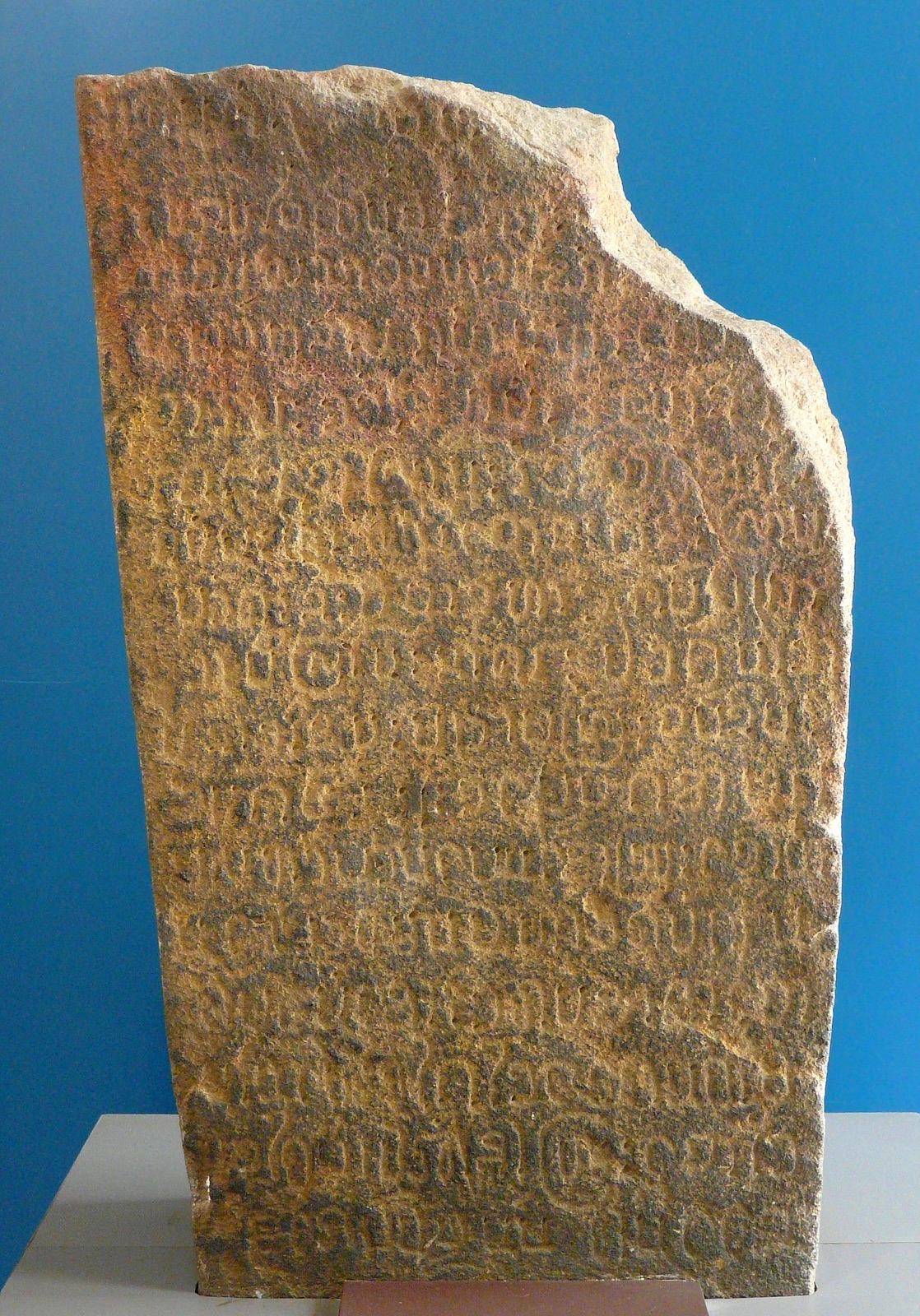
Years are named with the hon tai count too, called pi hon tai (ปีห฿นฯไท, Kham Mueang reading pi hon tai), which uses the same "mother" names as the mae mue. For birth years and their animals, read Lanna Birth-Year Relics.
Summary
- One birthday has two Lanna names: the wan meng (the day of the week, every 7 days) and the wan tai (a name in a 60-day cycle).
- You can find them at once in the date converter of the Lanna calendar, in the "วัน" row of the Lanna calendar box, or with the tool in this lesson.
- A wan tai splits into a mae mue (10 names) and a luk mue (12 names), paired until all 60 are used.
- You can count it yourself from the dictionary's starting point: Wednesday 22 November 2006 = dap mao, no. 52.
Look up more words about days, months and years in the Moradok Lanna dictionary (in Thai), and read the rest of the series in The Lanna Calendar: Complete Guide.
Sources
- Moradok Lanna dictionary: วันไท · วันเม็ง · แม่มื้อ · ลูกมื้อ · แม่ปี
- Moradok Lanna calendar: date converter (wan meng, wan tai and northern-month date of every example)
- กรรณิการ์ วิมลเกษม [Kannika Wimonkasem]. (2002). ศักราช ศก ปี วัน เดือน ฤกษ์ และยามในจารึกล้านนา [Eras, era names, years, days, months, auspicious moments and watches in Lanna inscriptions]. Damrong Wichakan 1(1). Faculty of Archaeology, Silpakorn University. In Thai.
- Wikimedia Commons file description of the Wat Lam Chang inscription photo (Hariphunchai National Museum, Lamphun)
Practise the words from this article
Flip through 17 flashcards of the Lanna words used in this article.


