
Photo: Supanut Arunoprayote / Wikimedia Commons (CC BY 4.0)
Lanna Birth-Year Relics: 12 Zodiac Years and Chedis
The birth-year relic, or that pi koet (ธาฯตฯปีเกิดฯ, that pi koet), is the relic chedi that belongs to each year of the twelve-year zodiac. People in Lanna, Northern Thailand, have long believed that everyone is bound to one relic chedi from before they are born, and that visiting it at least once brings blessings to your life. This guide gives the twelve Kham Mueang (Northern Thai) year names, the animal of each year, and the twelve relic chedis as the Moradok Lanna dictionary lists them, plus a quick way to find your own Lanna year.
Pi tua poeng: the zodiac years in Kham Mueang
The zodiac year is called pi tua poeng (ปีต฿วฯเพิ่งฯ, pi tua poeng) in Kham Mueang, and the animal of a person's birth year is their tua poeng (ต฿วฯเพิ่งฯ, tua poeng). The dictionary explains: "whoever is born in a year takes that year's animal as their tua poeng."
The twelve Lanna year names are not the central Thai ones. The rat year (Chuat in central Thai) is pi jai, the rabbit year is pi mao, and the pig year is pi kai.
| Kham Mueang year | Lanna script | Central Thai year | Tua poeng (year animal) |
|---|---|---|---|
| pi jai | ไจ้ | Chuat (rat) | rat (nu, หู) |
| pi pao | เปั้า | Chalu (ox) | ox (ngua, ง฿วฯ) |
| pi yi | ยี | Khan (tiger) | tiger (suea, เสิอฯอ) |
| pi mao | เหั้มฯา | Thao (rabbit) | rabbit (ka-tai, ระฯกต่ายฯ) |
| pi si | สี | Marong (dragon) | naga, the great serpent (nak, นาฯคฯ) |
| pi sai | ไส้ | Maseng (snake) | snake (ngu, งู) |
| pi sa-nga | สง้า | Mamia (horse) | horse (ma, ม้า) |
| pi met | เมัดฯ | Mamae (goat) | goat (pae, แพะ) |
| pi san | สันฯ | Wok (monkey) | monkey (ling, ลิงฯ) |
| pi lao | เรั้า | Raka (rooster) | rooster (kai, ไก่) |
| pi set | เสัดฯ | Cho (dog) | dog (ma, หมฯา) |
| pi kai | ไค้ | Kun (pig) | elephant (pig in central Thai) (jang, ช้างฯ) |
The twelve year names are also paired with ten other names to make the Lanna sixty-year cycle, such as kap jai and dap pao. Read more about it in Lanna northern months.
Which year were you born in?
The Lanna zodiac year does not change on 1 January. It changes at the Lanna New Year, on Phaya Wan (พญาวันฯ, pha-ya wan), around 15 or 16 April. The dictionary's example: in 2022 the year turned from the ox to the tiger on Phaya Wan, Saturday 16 April, so anyone born after that moment takes the tiger as their tua poeng.
0 = jai · 1 = pao · 2 = yi · 3 = mao · 4 = si · 5 = sai · 6 = sa-nga · 7 = met · 8 = san · 9 = lao · 10 = set · 11 = kai
Example: born 1987 → BE 2530 + 5 = 2535; 2535 ÷ 12 leaves 3 = pi mao (rabbit).
If you were born between 1 January and Phaya Wan in April, use the year before.
For reference, 2026 (from Phaya Wan) is pi sa-nga, the horse year, and 2027 is pi met, the goat year. Read more about the Lanna New Year day in Wan Phaya Wan.
Try it yourself with the tool below: enter your birth year and see your Kham Mueang year name, your tua poeng and your birth-year relic at once.
The twelve birth-year relics
In Kham Mueang, that (ธาฯตฯ, that) is a chedi that holds relics. The dictionary says plainly: "the people of Lanna call a chedi that." These are the twelve birth-year relics as the dictionary lists them:
| Birth year | Relic chedi | Where |
|---|---|---|
| pi jai (rat) | Phra That Si Chom Thong | Wat Phra That Si Chom Thong, Chom Thong, Chiang Mai |
| pi pao (ox) | Phra That Lampang Luang | Wat Phra That Lampang Luang, Ko Kha, Lampang |
| pi yi (tiger) | Phra That Cho Hae | Wat Phra That Cho Hae, Mueang, Phrae |
| pi mao (rabbit) | Phra That Chae Haeng | Wat Phra That Chae Haeng, Phu Phiang, Nan |
| pi si (dragon) | Phra That Luang, Wat Phra Singh | Wat Phra Singh, Mueang, Chiang Mai |
| pi sai (snake) | the Mahabodhi chedi | Bodh Gaya, Bihar, India · substitute: Wat Chet Yot, Chiang Mai |
| pi sa-nga (horse) | the Shwedagon Pagoda | Yangon, Myanmar · substitute: Wat Phra Borommathat, Tak |
| pi met (goat) | Phra That Doi Suthep | Wat Phra That Doi Suthep, Mueang, Chiang Mai |
| pi san (monkey) | Phra That Phanom | Wat Phra That Phanom, That Phanom, Nakhon Phanom |
| pi lao (rooster) | Phra That Hariphunchai | Wat Phra That Hariphunchai, Mueang, Lamphun |
| pi set (dog) | Phra That Ket Kaeo Chulamani | in the Tavatimsa heaven · substitute: Wat Ket Karam, Chiang Mai |
| pi kai (pig) | Phra That Doi Tung | Wat Phra That Doi Tung, Mae Fa Luang, Chiang Rai |
At Wat Phra Singh in Chiang Mai, twelve gilded models of the relic chedis stand in a row, so people can pay respect to their own birth-year relic in one place.
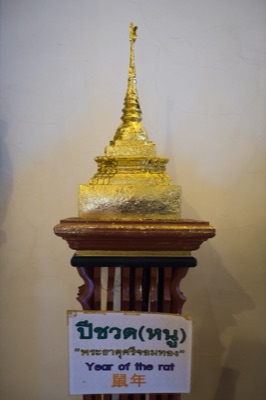
Photo: Takeaway / Wikimedia Commons (CC BY-SA 4.0)
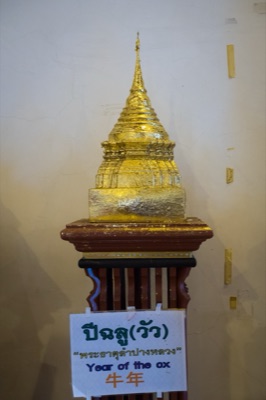
Photo: Takeaway / Wikimedia Commons (CC BY-SA 4.0)
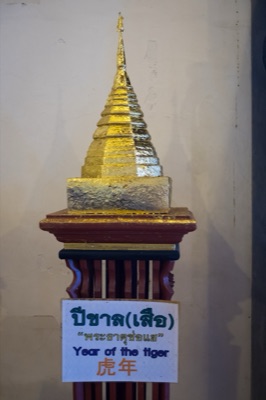
Photo: Takeaway / Wikimedia Commons (CC BY-SA 4.0)
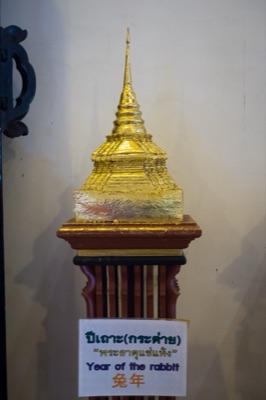
Photo: Takeaway / Wikimedia Commons (CC BY-SA 4.0)
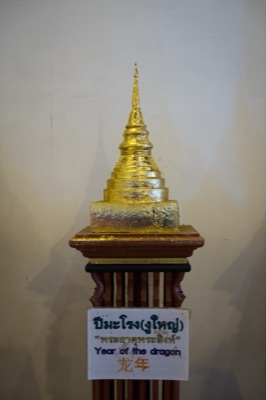
Photo: Takeaway / Wikimedia Commons (CC BY-SA 4.0)
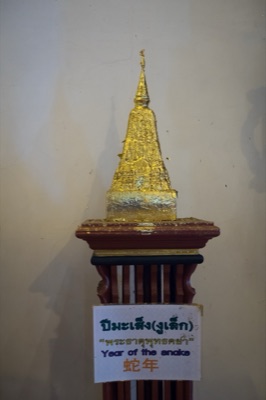
Photo: Takeaway / Wikimedia Commons (CC BY-SA 4.0)
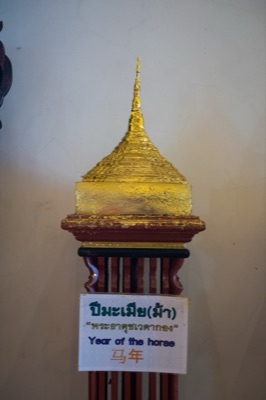
Photo: Takeaway / Wikimedia Commons (CC BY-SA 4.0)
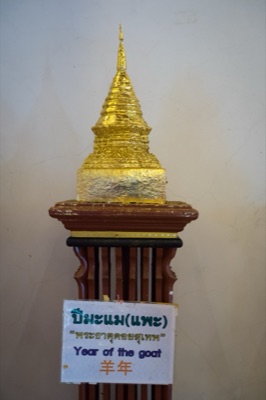
Photo: Takeaway / Wikimedia Commons (CC BY-SA 4.0)
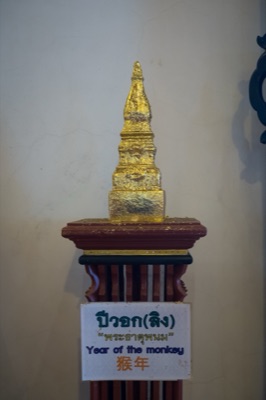
Photo: Takeaway / Wikimedia Commons (CC BY-SA 4.0)
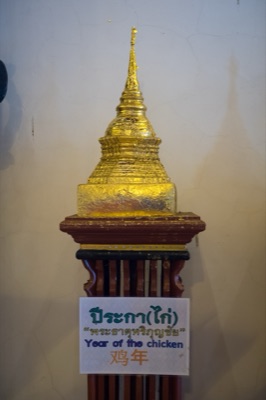
Photo: Takeaway / Wikimedia Commons (CC BY-SA 4.0)
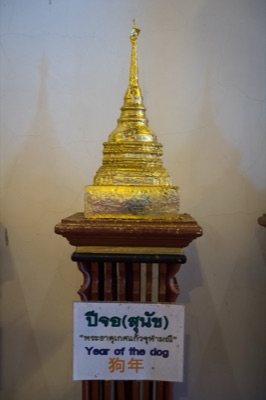
Photo: Takeaway / Wikimedia Commons (CC BY-SA 4.0)
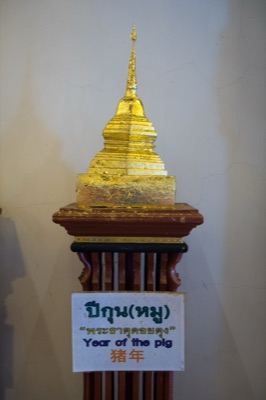
Photo: Takeaway / Wikimedia Commons (CC BY-SA 4.0)
Most of the real chedis are in the old Lanna lands; a few are in Isan or abroad.
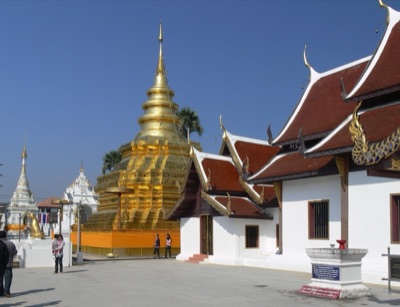
Photo: FredTC / Wikimedia Commons (CC BY-SA 3.0)
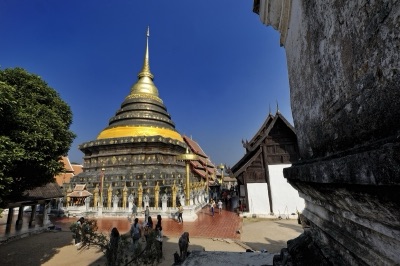
Photo: Mr.Peerapong Prasutr / Wikimedia Commons (CC BY-SA 4.0)
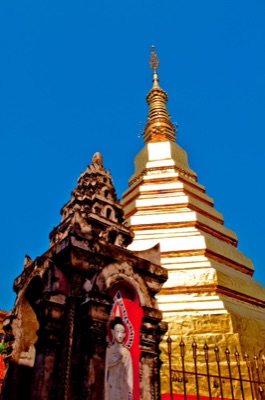
Photo: Arts of Chet / Wikimedia Commons (CC BY-SA 4.0)

Photo: K.Phothiwijit / Wikimedia Commons (CC BY-SA 3.0)
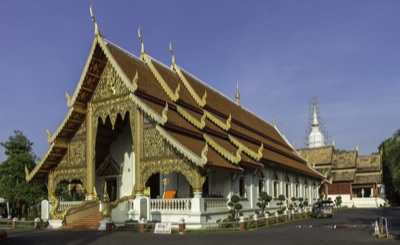
Photo: Stefan Fussan / Wikimedia Commons (CC BY-SA 3.0)
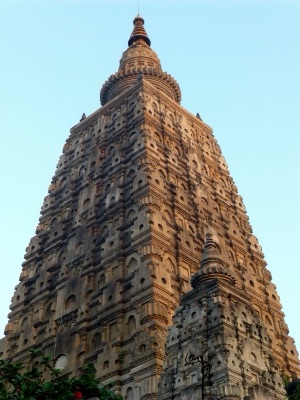
Photo: Photo Dharma / Wikimedia Commons (CC BY 2.0)
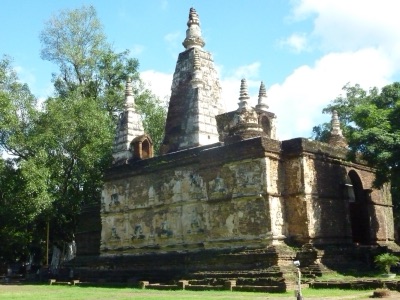
Photo: Photo Dharma / Wikimedia Commons (CC BY 2.0)
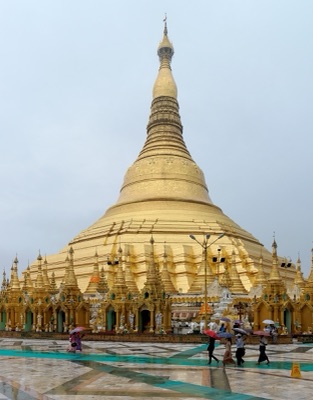
Photo: Jakub Hałun / Wikimedia Commons (CC BY-SA 4.0)
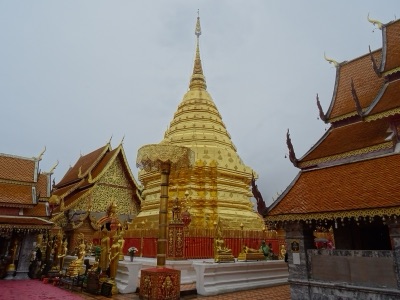
Photo: Christophe95 / Wikimedia Commons (CC BY-SA 4.0)
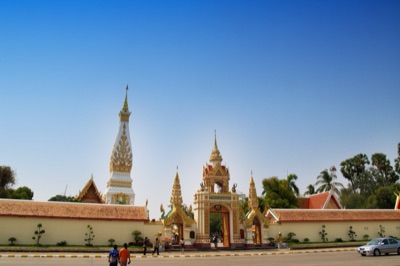
Photo: Kittipong khunnen / Wikimedia Commons (CC BY-SA 3.0)

Photo: Supanut Arunoprayote / Wikimedia Commons (CC BY 4.0)
Faraway relics and substitutes
Three of the birth-year relics are outside Thailand, or somewhere no living person can go, so the dictionary also gives a chedi to visit instead:
- Pi sai (snake): the Mahabodhi chedi at Bodh Gaya, India. Visit the seven-spired chedi of Wat Chet Yot in Chiang Mai instead, built in the reign of King Tilokkarat.
- Pi sa-nga (horse): the Shwedagon Pagoda in Myanmar. Visit Wat Phra Borommathat in Tak instead, which copies the Shwedagon.
- Pi set (dog): Phra That Ket Kaeo Chulamani in the Tavatimsa heaven. Visit the chedi of Wat Ket Karam in Chiang Mai instead.
What other lists say
The substitutes can differ from one source to another. A study by Manawat Promrat (2014) gives a list in which people born in the snake year pay respect to a throne holding a Buddha image in place of Bodh Gaya, and people born in the dog year visit the Kyaiktiyo (Golden Rock) pagoda in Mon State, Myanmar, in place of Ket Kaeo Chulamani. The other nine relics match the dictionary.
Phra That Phanom, the relic for the monkey year (pi san), is in Nakhon Phanom on the Mekong. It is far from Chiang Mai, but it is a real chedi you can visit.
The chu that belief
The birth-year relic belief is also called chu that (pronounced ju that). The dictionary explains it under jedi pi koet (เจดียฯ์ปีเกิดฯ, jedi pi koet): people in Lanna believe that before a soul is born, the person's tua poeng leads it to rest at a relic chedi. When the time comes, the soul moves to the crown of the father's head for seven days, and then into the mother's womb. When the person dies, the soul returns to the same chedi. Visiting your birth-year relic is therefore a blessing.
The dictionary also notes that the birth-year relics are spread across Lanna, Lan Xang and Burma because these lands shared a close culture, so the custom was "a skilful way of keeping people travelling and in touch."
- the oldest evidence is an inscription on a metal leaf dated BE 2432 (1889), though the author thinks it may have been written later, so the belief is probably no older than the 19th century;
- it was probably influenced by the Siamese interest in zodiac years in the early Rattanakosin period;
- long pilgrimages to distant relics travelled with trading caravans, both Lanna ox-caravan traders and Tai Yai (Shan) merchants;
- later, people painted a picture of their own relic chedi to worship at home instead of travelling.
How to honour your birth-year relic
In the Lanna calendar of twelve monthly customs, the eighth northern month is the time when people go up to pay respect at the great relic chedis (Manee Payomyong, cited in Manawat Promrat, 2014). Today people visit their birth-year relic all year round, and some set out to visit all twelve.
Northern Thai ways of making merit for your birth year include:
- offering a tung sip-song rasi (ทุง 12 ราศี, tung sip-song rasi) or tung tua poeng (ทุงต฿วฯเพิ่งฯ, tung tua poeng), a long banner with the zodiac animals. The dictionary says it is hung in the vihara on your birthday, or planted on a sand chedi at the Lanna New Year. Read more in Tung, Lanna banners;
- tan tung (ทาฯนฯทุง, tan tung), offering a banner as a gift to the temple;
- making, or sharing in making, a tham ja-ta pi koet (ธัม์มฯชตาปีเกิดฯ, tham ja-ta pi koet), a palm-leaf scripture for your birth year, which the dictionary says brings great merit;
- when the monk finishes his blessing, answering sa-tu (สาทุ, sa-tu).
If you were born in the rabbit year, read about the rabbit and Phra That Chae Haeng in the rabbit in Kham Mueang. For the story of Phra That Doi Suthep, see King Kue Na.
Test yourself (answers after each question)
- What do Northern Thai people call the rat year? — pi jai
- Which animal does Lanna use for the pig year? — the elephant (jang)
- What is a tua poeng? — the animal of a person's birth year
- Which relic belongs to people born in the goat year? — Phra That Doi Suthep
- When does the Lanna zodiac year change? — on Phaya Wan, around 15–16 April
Summary
- That pi koet are the twelve birth-year relic chedis, from Phra That Si Chom Thong (pi jai) to Phra That Doi Tung (pi kai).
- The twelve Kham Mueang year names are jai, pao, yi, mao, si, sai, sa-nga, met, san, lao, set and kai, and a person's year animal is their tua poeng.
- Lanna uses the elephant for the pig year, and the zodiac year changes on Phaya Wan, not on 1 January.
- Faraway relics have substitutes, such as Wat Chet Yot, Wat Phra Borommathat in Tak and Wat Ket Karam.
- In the chu that belief the soul rests at the relic before birth and returns after death; scholars date the belief to around the 19th century.
Look up the year names and relic words in the ธาตุปีเกิด (in Thai), and read about the banners used for birth-year merit in Tung, Lanna banners.
Sources
- The Moradok Lanna dictionary (in Thai): ธาตุปีเกิด · เจดีย์ปีเกิด · ตั๋วเปิ้ง · ไก๊ · ตุง ๑๒ ราศี
- มนวัธน์ พรหมรัตน์ [Manawat Promrat]. (2014). ชุธาตุ: เศรษฐกิจ การเมือง และศาสนาในสังคมล้านนายุคเปลี่ยนผ่าน [Chu That: Economy, Politics and Religion of Lanna Society in Transition]. Humanities and Social Sciences Review 2(2), 16–42
Look up "ธาตุปีเกิด" in the Moradok Lanna dictionary (in Thai)


