

Photo: Takeaway / Wikimedia Commons (CC BY-SA 3.0)
The Noi Chaiya Song: Kham Mueang, Rhyme and So Melody
The song Noi Chaiya is the courtship exchange between the young man Noi Chaiya (น้อฯยฯไชยา, Kham Mueang reading noi chai-ya) and the young woman Waen Kaeo, when the two meet at Huai Kaeo at the foot of Doi Suthep. It is a Kham Mueang (Northern Thai) song that people all over Lanna can sing along to, yet many of its words are old words that younger people no longer know. So this lesson reads the first two verses of the song slowly, looking at the music, the rhyme and the Kham Mueang words one by one.
Where does the song come from?
The song Noi Chaiya is one part of the song-drama Noi Chaiya, which Thao Sunthon Photchanakit wrote for Princess Dara Rasmi (read the plot and the history of the drama in Noi Chaiya). The Thai Cultural Encyclopedia records that his original name was Bunma Sukhanthakun (1863–1937), while the Moradok Lanna dictionary calls him "Mai Bunma".
The sources differ slightly on who wrote this courtship passage. The Office of Arts and Culture of Chulalongkorn University says that the princess "composed additional courtship verses between Noi Chaiya and Waen Kaeo in the local language", while music research describes the song as the work of Thao Sunthon Photchanakit. What is certain is that the passage was born in the princess's residence about a hundred years ago, and later generations know it through the voices of Jaran Manopetch and Soontaree Vechanont on the album Folk Song Kham Mueang Amata (1977).
The music: from so melody to Kham Mueang folk song
The Lanna so (ซํอฯ, read so) is not an instrument but singing in which singers answer each other. Chutiphong Khongsanthia (2013) explains that the male and female so singers who answer each other are called "khu thong" (sparring partners), accompanied by instruments such as the pi chum (ปี่ชุม, read pi chum, Lanna reed pipes), the salo and the sueng. So falls into two main types: so pi, or Chiang Mai so, which uses a pi chum ensemble, and so long nan, from Nan and Phrae, which uses the salo and the sueng (which the people of Nan call pin).
The song-drama Noi Chaiya uses so melodies. Chutiphong's work (citing Chiang Mai University, 2010) states that Thao Sunthon Photchanakit composed the drama to the "Phra Lo" or "Phra Lo Long Nan" melody, the same Phra Lo melody that so long nan ensembles still play today. Chulalongkorn University also gives the melody of this set of courtship verses as "the Long Nan melody". The dictionary explains long nan (ล่อฯงนาฯ, read long nan) as "the name of a so-singing melody, popular in Nan Province".
When Jaran Manopetch recorded the song anew, Krit Buranavitayawut (2018) found that it kept the form of a man and a woman singing in answer to each other, and that the verses do not use a fixed melody, the same note for note, but vary the melody to follow the words of the drama. This is a feature of so singing, in which the singer bends the melody to fit the words. The song moves at a slow pace. Later, Withep Kanthima played it as a pi chum solo, and Krit himself arranged it as jazz.

The best-known version: the song Noi Chaiya, sung by Jaran Manopetch and Soontaree Vechanont, from the Nititad AOA Official channel on YouTube. Listen and notice how the man's voice and the woman's voice take turns, one verse each.
The verse form: rhymes linked like a chain
This set of courtship verses has 6 verses, with the man and the woman each singing 3 in turn. Every verse ends with the particle "noe" (spelled เนอ, or เหนอ or เน้อ in some versions), like a signal handing over to the other singer. Look at the first verse, sung by Noi Chaiya, divided into a first half and a second half of each line. The rhyming words are in bold.
| Line | First half | Second half |
|---|---|---|
| 1 | ปวงดอกไม้เบ่งบานสลอน | ฝูงภมรภู่เผิ้งสอดไซ้ |
| 2 | ดอกพิกุลของเปิ้นต้นใต้ | ลมปั๊ดไม้มาสู่บ้านตู๋ |
| 3 | ฮู้แน่ซัดเข้าสอดสองหู | ว่าสีจมปูถูกป้ำเก๊าเนิ้ง |
| 4 | เก๊ามันต๋ายป๋ายมันเซิ่ง | ลำกิ่งเนิ้งต๋ายโก้นตวยแนว |
| 5 | ดอกพิกุลก่คือดอกแก้ว | ไปเป๋นหองเปิ้นแล้ว เนอ |
If you follow the bold words, you can see that the rhyme runs like a chain through every line: the last word of a line rhymes with the last word of the first half of the next line, and then the same sound "looks back" again at one of the first words of the second half. For example sai → tai → mai, then tu → hu → pu, then noeng → soeng → noeng, and naeo → kaeo → laeo.
If you count the syllables, most half-lines have 7 syllables, such as dok-phi-kun-khong-poen-ton-tai and lom-pat-mai-ma-su-ban-tu. This recalls the rule of khao (ระฯค่าฯวฯ, read khao), which older poets remembered as "sam tua liao, chet tua thiao" (the third word looks back, seven words make a run): each unit has about 7 words, with a rhyme that echoes back at the third word (read more in Khao). Chutiphong (2013) also explains that khao and choi (ช้อฯยฯ, read choi) are composed in the same way; the difference is that khao is read aloud while choi is chanted to a melody. So the song Noi Chaiya is Lanna verse sung to a so melody.
Kham Mueang words in the first two verses
In the first verse Noi Chaiya reproaches Waen Kaeo: he has heard a rumour that she is going to belong to someone else. In the second verse Waen Kaeo answers that her heart is still steadfast. Below are the Kham Mueang words worth knowing; all the meanings come from the Moradok Lanna dictionary.
| Kham Mueang | Lanna script | Meaning |
|---|---|---|
| kao | เคั้าฯ | base, as in the base of a tree; also a head, a chairman |
| noeng | เนิ้งฯ | to lean, to tilt |
| pat | พัดฯ | to blow, to flap |
| tu | ตู | we, I (a pronoun for the speaker) |
| poen | เพิ่นฯ | he, she, they (respectful); khong poen = his, hers |
| hong | หอฯง | of, belonging to |
| tai | ตายฯ | to die |
| tuai | ทวฯยฯ | to follow, to go along with |
| kon | โค่฿นฯ | to fell, to topple |
| chom-pu | ช฿มู | rose apple; "si chom-pu" is pink |
| pam | พํา | hunched, squat |
| fuean | เฟิอฯร | to shake, to tremble, to stir |
| tiang | ท่ยฯง | straight, certain |
| sa-luean | เสิๆลฯอฯร | to swerve, to lean away (written เสลือน in the song) |
| choei | เชิยฯ | lom choei is a gentle, wafting breeze |
| nim | หินฯม | still, calm and composed |
| ngiang | ห่งฯยฯง | slanting, not straight, leaning to one side |
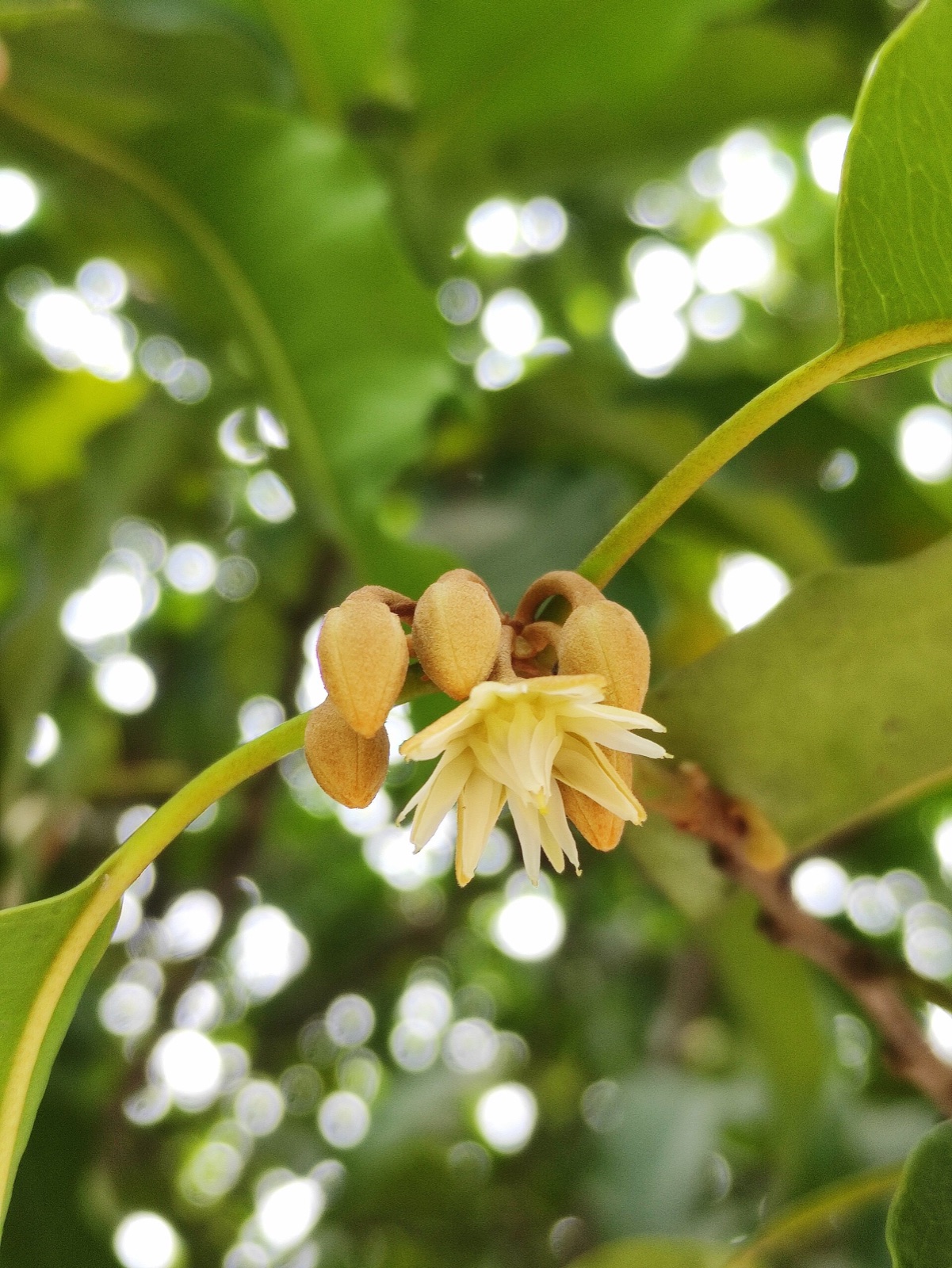
The key word of the first verse is dok kaeo (ดอฯกแก้วฯ, read dok kaeo). The dictionary says that Khon Mueang (Northern Thai people) call the phikun flower (bullet wood) dok kaeo. So the line "dok phikun ko khue dok kaeo" literally means "the phikun flower is the kaeo flower", but listeners will hear the name Waen Kaeo hidden in the word. In her answer, Waen Kaeo calls herself "a clear, bright mirror, waen kaeo", that leans to no side.
Another word worth knowing is kam lom (คำฯล฿มฯ, read kam lom), in Waen Kaeo's line "tam kam lom poen pat ok khao" (as the empty talk blows in and out). The dictionary defines it as "idle, empty words that cannot be trusted; untrue words". So Waen Kaeo plays on the "wind" (lom) that Noi Chaiya spoke of in the first verse: the wind that blew in was only a rumour.
The meaning of kao is also worth noticing, because the dictionary gives both "the base of a tree" and "a head, a chairman". When the song speaks of the kao that leans while the branches are not uprooted, it can be read as saying that the elders may sway towards the suitor who has come to ask for her hand, but she herself remains steadfast.
Kham Mueang sounds you can hear in the song
When you compare the words in the song with the Thai forms the dictionary gives, you see sound changes that happen again and again, which make it easier to guess other Kham Mueang words.
| Thai sound | Kham Mueang sound | Examples in the song |
|---|---|---|
| ช (ch) | จ (ch, like "j") | chu (lover) → chu (ชู้), chomphu → chom-pu, choei → choei |
| พ (ph) | ป (p) | phat → pat (to blow), phoen → poen, phi noi → pi noi (พี่น้อฯยฯ) |
| ท (th) | ต (t) | thiang → tiang (straight), thuai → tuai (to follow), thang → tang (way) |
| ร (r) | ฮ (h) | ru → hu (to know), rak → hak (to love) |
| ค (kh) | ก (k) | kham lom → kam lom, khon → kon (to fell) |
The later verses also have words about status and asking for a bride's hand, such as som poeng (ส฿มฯเพิงฯ, read som poeng), meaning suitable, well matched, in the line "suan chai-ya bo som poeng chao" (but Chaiya is no match for you), and khiam (ขยฯม, read khiam), meaning scarce, in the line "phro khiam khao khong ngoen thong" (because I am short of goods and money): Noi Chaiya feels hurt that he does not have enough wealth to be worthy of her.
The first two verses in plain words
All the flowers are in full bloom, and swarms of bees and beetles fly in to nuzzle them. The phikun tree on their side, to the south: the wind blew its branches over to our house. I have heard it clearly, right in my ears, that the rose-apple tree (or "the pink one") has leaned and stooped at its base. When the base dies, the top leans too, and the branches lean and fall along with it. The phikun flower is the kaeo flower, and it has gone to be someone else's now.
Though the base of the tree may lean, the branches are not uprooted; they do not shake or tremble, but stay truly firm. The wind of rumour they blow in and out only makes the base sway and shake, but the branches do not swerve or lean away. Not like the gentle breeze that drifts this way and that: my heart is still and steadfast, and belongs to no one else. I am still a clear, bright mirror, waen kaeo, that leans to no side at all.
This paraphrase is by Moradok Lanna, based on the meanings in the dictionary. Some words can still be read in more than one way: "si chom-pu" may mean the rose-apple tree or the colour pink, and "pam" is written "pom" in some versions, which the dictionary defines as shorter than usual. Both words point the same way: the tree is bending low.
How the different versions of the lyrics differ
The lyrics of this courtship passage are found in different sources, and the spelling does not match word for word. This article follows the version published by the Office of Arts and Culture of Chulalongkorn University, which matches the version on a listener's blog (bloggang, 2010).
| Word in this article | Another version | Source |
|---|---|---|
| ป้ำ | ป้อม | Pantip forum thread (2006) |
| คอนเฟือน | คลอนเฟือน | Pantip forum thread (2006) |
| แต๊ | แต้ | Pantip forum thread (2006) |
| เนอ | เหนอ, เน้อ | Pantip forum thread (2006), Chulalongkorn University (some verses) |
| ตางปู๊น / ผะจ๋ำ | ตังปู๊น / ประจ๋ำ | Moradok Lanna dictionary (entry for poen) |
Differences in spelling like these are normal for songs handed down by listening and singing along: people in each area wrote down the sounds they heard.
Summary
- The song Noi Chaiya is the courtship exchange between Noi Chaiya and Waen Kaeo from the song-drama Noi Chaiya: 6 verses, with the man and the woman singing 3 each in turn, every verse ending in "noe".
- The song-drama uses the Phra Lo so melody, or Phra Lo Long Nan, and the version by Jaran Manopetch and Soontaree Vechanont varies the melody to follow the words, as in so singing.
- The rhymes are linked like a chain: the last word of a line passes to the last word of the first half of the next line, and then looks back again in the second half. Most half-lines have 7 syllables, close to the rule of khao.
- dok kaeo is the phikun flower in Kham Mueang, and in the song it also calls to mind the name Waen Kaeo; kam lom is empty talk, a rumour.
- The Kham Mueang sounds in the song change from Thai in regular ways: ch → j, ph → p, th → t, r → h, kh → k.
Look up more words from the song in the Moradok Lanna dictionary (in Thai), read the plot of the drama in Noi Chaiya, and read more about so singing in Khap So.
More in the same series: So songs · Kham U Bao U Sao · Reading the Hong Hin khao · Sao Motorcycle · Sao Chiang Mai, or see the whole series at Kham Mueang through songs and literature (in Thai).
Sources
- Moradok Lanna dictionary (in Thai): น้อยไจยา · ดอกแก้ว · กำลม · เปิ้น · ล่องน่าน
- สำนักบริหารศิลปวัฒนธรรม จุฬาลงกรณ์มหาวิทยาลัย [Office of Arts and Culture, Chulalongkorn University]. (2022). พระนิพนธ์ในพระราชชายาเจ้าดารารัศมี : น้อยไจยา [The works of Princess Dara Rasmi: Noi Chaiya]. In Thai.
- ภาวิณี เครือยา [Phawini Khrueaya]. สุนทรพจนกิจ, ท้าว (พ.ศ. ๒๔๐๖–๒๔๘๐) [Sunthon Photchanakit, Thao (1863–1937)]. Thai Cultural Encyclopedia database, Princess Maha Chakri Sirindhorn Anthropology Centre (citing Manee Payomyong, 1970). In Thai.
- ชุติพงศ์ คงสันเทียะ [Chutiphong Khongsanthia]. (2013). ซอล่องน่าน: พลวัตการผลิตซ้ำทางวัฒนธรรมของเพลงพื้นบ้านไทยภาคเหนือ บทที่ ๒ [So Long Nan: the dynamics of cultural reproduction of a Northern Thai folk song, chapter 2]. MA thesis, Chiang Mai University. In Thai.
- กฤษติ์ บูรณวิทยวุฒิ [Krit Buranavitayawut]. (2018). น้อยใจยา/เสเลเมา: การตีความการผสมผสานวัฒนธรรมดนตรีตะวันออกและตะวันตกในบรรยากาศของแจ๊ส [Noi Chaiya/Se Le Mao: interpreting the blend of Eastern and Western musical cultures in a jazz setting]. Veridian E-Journal, Silpakorn University 11(3). In Thai.
- Lyrics used for comparison (as leads only): บล็อก "น้อยใจยา" [blog post "Noi Chaiya"] (bloggang, 2010) · กระทู้ "เพลงน้อยใจยา ภาษาล้านนาแท้ๆ" [forum thread "The song Noi Chaiya, in true Lanna language"] (Pantip, 2006). In Thai.
Look up "น้อยไจยา" in the Moradok Lanna dictionary (in Thai)


