

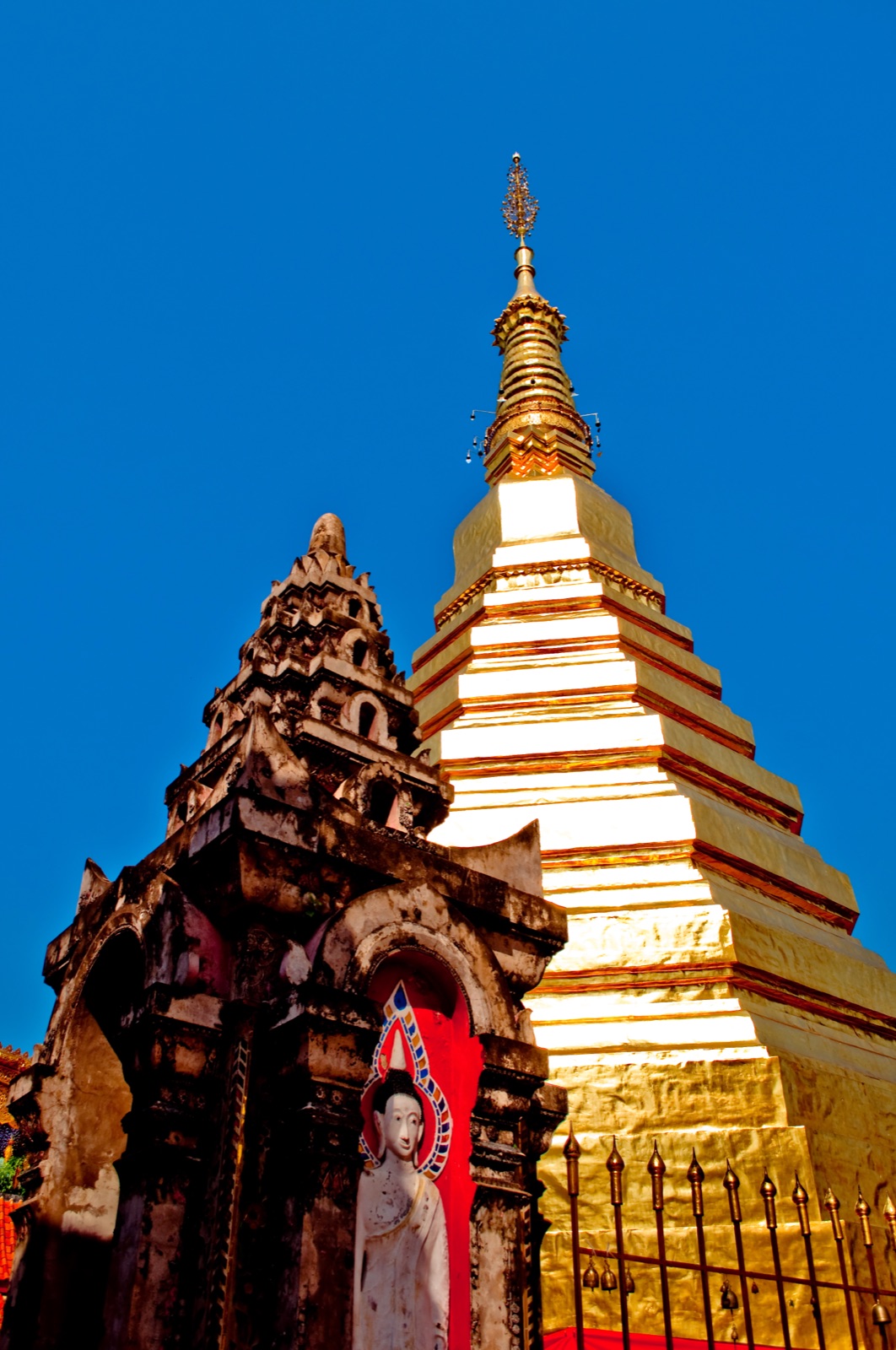
Photo: Stefan Fussan / Wikimedia Commons (CC BY-SA 3.0)
Phra Ubali Khunupamachan: Scholar Monk of Wat Phra Singh
Phra Ubali Khunupamachan (พระอุบาลีคุณูปมาจารย์), whose monastic name was Fu Attasivo (ฟู อตฺตสิโว), was a senior monk from Phrae who served as abbot of Wat Phra Singh Woramahawihan in Chiang Mai for more than 20 years. He laid the foundations of monastic education in Northern Thailand, edited the Soi Sangkon version of the Vessantara Jataka that Lanna preachers still use today, and compiled Lak Phasa Thai Phayap (หลักภาษาไทยพายัพ), a textbook that includes both a dictionary and lessons in the Lanna language. This article tells his story from sources that can be checked, together with The Light of Lanna (แสงประทีปแห่งล้านนา), a song written in his memory.
Origins: a son of Phrae
His birth name was Fu Banleng (ฟู บรรเลง). He was born on 11 April 1901 in Nai Mueang subdistrict, Mueang Phrae district, the son of Nan Saen and Mae Chao Fong Banleng, a descendant of Phraya Phimphisan Racha, a ruler of Phrae (Directory of Sangha Administrators; Wikipedia).
In the Lanna language, Phrae is Mueang Pae (เมิอฯงแระฯพ่, Kham Mueang reading mueang pae). The Moradok Lanna dictionary explains that Kham Mueang (Northern Thai) speakers pronounce the name of the province "Pae" or "Mueang Pae". Before ordination he finished the second year of secondary school and passed the elementary teacher's certificate, the groundwork for a lifetime of work in education.
Novice, monk and student
He was ordained as a novice on 22 July 1918 at Wat Mahathat Yuwaratrangsarit in Bangkok. His preceptor was Somdet Phra Wanarat (Heng Khemachari), then holding the title Phra Thammatrailokachan.
He was later ordained as a monk, a tu chao (ทุเจั้า, tu chao), as Lanna people call a monk, on 23 June 1921 at Wat Benchamabophit Dusitwanaram, with Somdet Phra Wanarat (Chai Punnathatto) as preceptor, and received the monastic name Attasivo. He went on to pass the intermediate Nak Tham exams and the sixth grade of Pali studies (Parian Tham 6).
Leading the Sangha of the North
He came to work in the North before he was 30 and oversaw the Sangha in several provinces for more than 30 years. The Directory of Sangha Administrators records his posts as follows.
| Years (CE) | Post |
|---|---|
| 1927–1930 | Assistant ecclesiastical head of Chiang Mai Province |
| 1930–1933 | Assistant and acting ecclesiastical head of Phrae Province |
| 1933–1961 | Ecclesiastical head of Phrae Province |
| 1946–1951 | Assistant regional inspector, then regional inspector, Region 4 |
| 1950–1951 | Abbot of Wat Phra That Cho Hae, Phrae |
| 1950–1973 | Abbot of Wat Phra Singh Woramahawihan, Chiang Mai |
| 1951–1961 | Regional inspector, Region 5 |
| 1955–1963 | Member of the Sangha Assembly |
| 1969 | Abbot of Wat Phra Bat Ming Mueang Worawihan, Phrae |
In the Lanna language an abbot is a tu chao hua wat (ทุเจั้าห฿วฯวัดฯ, tu chao hua wat), which the dictionary explains as "the head of a monastery, the abbot".
Founder of monastic education in the North
He is remembered above all for education. He founded Pariyatti Dhamma schools (schools of Buddhist scriptural study) at Wat Phra Bat Ming Mueang in Phrae and at Wat Phra Singh in Chiang Mai, and also founded the Thammarat Suksa School (Directory of Sangha Administrators). Thai Wikipedia adds that he went to Chiang Mai to organise scriptural studies in 1928–1929, then extended them to Phrae, Chiang Rai and Lampang, and ran a general-education school for monks (Pariyatti Saman) in Phrae between 1930 and 1951.
He was also preceptor to many Lanna monks of the next generation. One example is Phra Maha Phothiwongsachan (Suchi Katasaro), ordained at Wat Kanchanaram, Mueang Phrae district, in 1938 with him as preceptor, at a time when he held the title Phra Pariyattiwongsachan (Directory of Sangha Administrators).
The Soi Sangkon Vessantara and Lak Phasa Thai Phayap
He cared deeply about Lanna literature. One of his major works was an edition of the Tham Maha Chat (ธัม์มฯมหาชาติ, Kham Mueang reading tham ma-ha chat), the Lanna version of the Vessantara Jataka, which is preached at the Pawani Tang Tham Luang (ปาเวณีตั้งฯธัม์มฯหลฯวฯง, pa-we-ni tang tham luang), the great sermon festival. He collected several versions, edited them and printed the result in Thai script in 1955, when he held the title Phra Thammarachanuwat, through the S. Thammaphakdi press, under the name "Tham Maha Chat Phak Phayap Chabap Soi Sangkon" (the Northern Vessantara, Soi Sangkon edition).
In the preface he explained the name himself, as quoted by Wathit Thammachuea (วาทิต ธรรมเชื้อ, 2013) in the Silpakorn University Journal:
I have tried to arrange the Lanna Tham Maha Chat so that the words rhyme as much as possible, which Lanna people call "soi", and so I named it "Tham Maha Chat Phak Phayap Chabap Soi Sangkon". In truth this is not a sermon I composed myself; I copied several versions of the Tham Maha Chat and corrected, improved and extended them to suit … while trying to preserve the old Lanna language and keep modern language out of it. — Phra Thammarachanuwat (1955), quoted in Wathit Thammachuea (2013); our translation
Wathit explains that printing it in Thai script meant that monks who could not read tua mueang (ต฿วฯเมิอฯง, tua mueang), the Lanna (Tai Tham) script, could still read it and preach from it easily. The version is written in long flowing verse that suits preaching, which made it especially popular with preachers. Nathakon Patiphanmethi (ณฐกร ปฏิภาณเมธี) and colleagues (2023) conclude that he improved the original in three ways, in the sound of the words (especially the rhymes), the vocabulary and the meaning, and that this edition is still popular today. Read more about the Vessantara sermon in the article Tang Tham Luang (in Thai).
His other major work was the textbook Lak Phasa Thai Phayap, which contains both a Central Thai–Northern Thai dictionary and lessons in the Lanna language (Directory of Sangha Administrators). It preserved kam mueang (คำฯเมิอฯง, kam mueang), the spoken Northern Thai language, in a form later generations could learn from: the same kind of work the Moradok Lanna dictionary does today.
Ecclesiastical ranks
The royal titles he received, in order, as recorded by the Directory of Sangha Administrators and by Wikipedia (which cites the Royal Gazette):
| Date | Rank and title |
|---|---|
| 8 November 1932 | Ordinary-grade royal chapter monk, as Phra Pariyattiwongsachan |
| 5 December 1946 | Raj-grade royal chapter monk, under the same title |
| 4 December 1949 | Thep-grade royal chapter monk, as Phra Thepmuni |
| 5 December 1952 | Tham-grade royal chapter monk, as Phra Thammarachanuwat |
| 5 December 1971 | Royal chapter monk ranked equal to a deputy Somdet, as Phra Maha Phothiwongsachan |
| 5 December 1972 | Deputy Somdet (Rong Somdet Phra Racha Khana), as Phra Ubali Khunupamachan |
Nineteen years without promotion
The table shows that between 1952 and 1971 he received no promotion at all. Thai Wikipedia says that during that time he "faced politics within the Sangha and was brought before an ecclesiastical case (athikon)", without giving details. None of the sources used for this article contains a primary document explaining what happened, so it is recorded here only as far as that. He was promoted again on 5 December 1971, and became Phra Ubali Khunupamachan about three months before his death.
A contemporary of Khruba Siwichai
He worked in the North at the same time as Khruba Siwichai (ระฯคูบาฯระฯสีวิไชยฯ, Kham Mueang reading khru-ba si-wi-chai), the monk whom Lanna people revere as a ton bun (man of merit). The dictionary explains khruba (ระฯคูบาฯ, khru-ba) as a social title for monks used only in Lanna culture, honouring senior monks who are strict in the monastic discipline.
The two followed different paths. Khruba Siwichai grew up in the old Lanna monastic tradition, while Phra Ubali Khunupamachan was ordained and studied in Bangkok, then came north to work within the administration and education system of the central Sangha. Yet the important temples in their care overlap. Research by Kritsana Hong-uthen (กฤษณา หงษ์อุเทน, 2021) records that Khruba Siwichai restored Phra That Cho Hae in 1923 and Wat Phra Singh in 1924; some 26–27 years later, Phra Ubali Khunupamachan became abbot of both temples.
When Khruba Siwichai was investigated in 1935–1936, Phra Ubali Khunupamachan was already ecclesiastical head of Phrae Province. The sources cited in this article do not record any direct role for him in that affair. Read the story of Khruba Siwichai in the article Khruba Siwichai.
Death
Phra Ubali Khunupamachan died of an acute heart attack on 5 March 1973 at 5.10 pm at Ramathibodi Hospital, aged 71, in his 52nd rains retreat as a monk. His body lay in state at Wat Phra Singh and received royal bathing water, a funeral urn and the regalia of his rank. On 15 January 1974 King Bhumibol Adulyadej the Great and Queen Sirikit, now the Queen Mother, came to preside over his royal cremation at Wat Phra Singh Woramahawihan (Directory of Sangha Administrators; Wikipedia).
Born: 11 April 1901, Phrae · Died: 5 March 1973
Key temples: Wat Phra Singh Woramahawihan, Chiang Mai · Wat Phra Bat Ming Mueang Worawihan and Wat Phra That Cho Hae, Phrae
Main works: Pariyatti Dhamma schools · Thammarat Suksa School · the Soi Sangkon Vessantara (1955) · Lak Phasa Thai Phayap
The song "The Light of Lanna"
The Light of Lanna (แสงประทีปแห่งล้านนา) is a song in tribute to Phra Ubali Khunupamachan (Fu Attasivo), with lyrics and melody by Ajarn Jaree Soontornsing, founder of Moradok Lanna. It was released on OverNormal Play on 1 October 2026. The lyrics tell of his Phrae ancestry, the Thammarat school, Wat Phra Singh, Lak Phasa Thai Phayap and the Soi Sangkon Vessantara.

พระอุบาลีคุณูปมาจารย์… ร่มโพธิ์ไทรคุ้มกัน
มอบวิชาความรู้… ให้ศิษย์ใช้ฝ่าฟัน
เป็นพระคุณยิ่งใหญ่… ร้อยศรัทธาผูกพัน
ชื่อ ฟู อตฺตสิโว… สถิตอยู่นิรันดร์
— The Light of Lanna, lyrics by Ajarn Jaree Soontornsing (OverNormal)
In English, the chorus says roughly: Phra Ubali Khunupamachan, a sheltering bodhi and banyan tree, gave his pupils the knowledge to make their way; his great kindness binds their faith together, and the name Fu Attasivo lives on for ever.
Listen to the full song, read all the lyrics and hear the instrumental version at OverNormal Play: The Light of Lanna.
Summary
- Phra Ubali Khunupamachan (Fu Attasivo) was born in Phrae in 1901, ordained and educated in Bangkok, and reached the sixth grade of Pali studies.
- He led the Sangha of the North for more than 30 years, as ecclesiastical head of Phrae and as abbot of Wat Phra Singh, Chiang Mai, from 1950 until his death.
- He founded Pariyatti Dhamma schools and the Thammarat Suksa School, open to monks, novices and children.
- He edited the Soi Sangkon Vessantara (1955), still popular with preachers, and compiled Lak Phasa Thai Phayap.
- He died on 5 March 1973; the song The Light of Lanna was written in his memory.
Look up more Lanna words about temples and monks in the Moradok Lanna dictionary (in Thai), and read about another Lanna monk in the article Khruba Siwichai.
Sources
- The Moradok Lanna dictionary (in Thai): พระสิงห์ · เมืองแป้ · ตุ๊เจ้าหัววัด · ครูบา
- ทำเนียบพระสังฆาธิการ [Directory of Sangha Administrators]. พระอุบาลีคุณูปมาจารย์ (ฟู อตฺตสิโว ป.ธ.๖) [Phra Ubali Khunupamachan (Fu Attasivo, Pali 6)]. Biography, posts, ranks and death. In Thai.
- ทำเนียบพระสังฆาธิการ [Directory of Sangha Administrators]. พระมหาโพธิวงศาจารย์ (สุจี กตสาโร ป.ธ.๓) [Phra Maha Phothiwongsachan (Suchi Katasaro, Pali 3)]. His ordination in 1938. In Thai.
- Wathit Thammachuea (วาทิต ธรรมเชื้อ). (2013). วรรณศิลป์ล้านนาจากมหาชาติภาคพายัพ สำนวนสร้อยสังกร [Lanna literary art in the Northern Vessantara, Soi Sangkon version]. Silpakorn University Journal (Thai edition) 33(1). In Thai.
- Nathakon Patiphanmethi (Chaiyabut) (ณฐกร ปฏิภาณเมธี (ไชยบุตร)) et al. (2023). การวิเคราะห์หลักธรรมที่ปรากฏในมหาชาติเวสสันดรชาดก ฉบับสร้อยสังกร ตามกรอบแนวคิดธรรมนูญชีวิตของสมเด็จพระพุทธโฆษาจารย์ (ป.อ. ปยุตฺโต) [An analysis of the Dhamma in the Soi Sangkon Vessantara Jataka through Somdet Phra Buddhaghosacariya's (P. A. Payutto) "Constitution for Living"]. 6(3). In Thai.
- Kritsana Hong-uthen (กฤษณา หงษ์อุเทน). (2021). อนุสาวรีย์ครูบาศรีวิชัย ณ เชิงดอยสุเทพ จังหวัดเชียงใหม่: ปิดตำนานปาฏิหาริย์แห่งอมตะวาจาครูบาศรีวิชัย [The Khruba Siwichai monument at the foot of Doi Suthep, Chiang Mai]. Journal of Fine Arts, Chiang Mai University 12(2). In Thai.
- Bowie, K. A. (2023). Dating the First Arrest of Khruba Srivichai, the Saint of Northern Thailand. Journal of the Siam Society 111(1)
- พระอุบาลีคุณูปมาจารย์ (ฟู อตฺตสิโว) [Phra Ubali Khunupamachan (Fu Attasivo)]. Thai Wikipedia (used as a lead; cites the Royal Gazette and the book Wat Phra Singh Woramahawihan, Chao Phu Khrong Nakhon Chiang Mai). In Thai.
- OverNormal Play. (2026). แสงประทีปแห่งล้านนา [The Light of Lanna]. Lyrics and melody by Ajarn Jaree Soontornsing.
Look up "พระสิงห์" in the Moradok Lanna dictionary (in Thai)


