

Photo: Takeaway / Wikimedia Commons (CC BY-SA 3.0)
Tang Tham Luang: Lanna's Great Vessantara Sermon
Every year at Yi Peng (ยี่เพงฯ, Kham Mueang reading yi peng), Lanna temples have more than clay lamps and lanterns. There is also a great merit-making festival the villagers look forward to: the Tang Tham Luang tradition (ปาเวณีตั้งฯธัม์มฯหลฯวฯง, read pa-we-ni tang tham luang). The Moradok Lanna dictionary explains it briefly as "the tradition of preaching the Maha Chat (the Great Vessantara Jataka)".
The villagers dress the temple up as a forest and listen to monks preach the story of Prince Vessantara in all 13 chapters, in melodies unique to Lanna. It is believed that those who hear the whole story will be reborn in the time of the future Buddha, Ariya Metteyya. This article introduces the festival through the Kham Mueang words used at it.
What is Tang Tham Luang?
The word tham luang means a great or important teaching, and tang means to begin. Research by Phra Maha Charin Arinchayo and colleagues (พระมหาจรินทร์ อริญฺชโย และคณะ, 2025) explains that "tang tham luang" may also mean hearing a sermon from a newly inscribed manuscript for the first time, and that the festival corresponds to the Maha Chat sermon of central Thailand.
The text preached is usually the Tham Maha Chat (ธัม์มฯมหาชาติ, read tham ma-ha chat), which the dictionary defines as "the Maha Vessantara Jataka". The same study notes that a temple and its faithful may choose another long text, such as a story from the Ten Great Births or the Fifty Jatakas (Paññāsa Jātaka), but the Maha Chat is by far the most popular. Because it takes at least two days to preach, Lanna people call it the "great" (luang) sermon.
Prince Vessantara and the thousand verses in 13 chapters
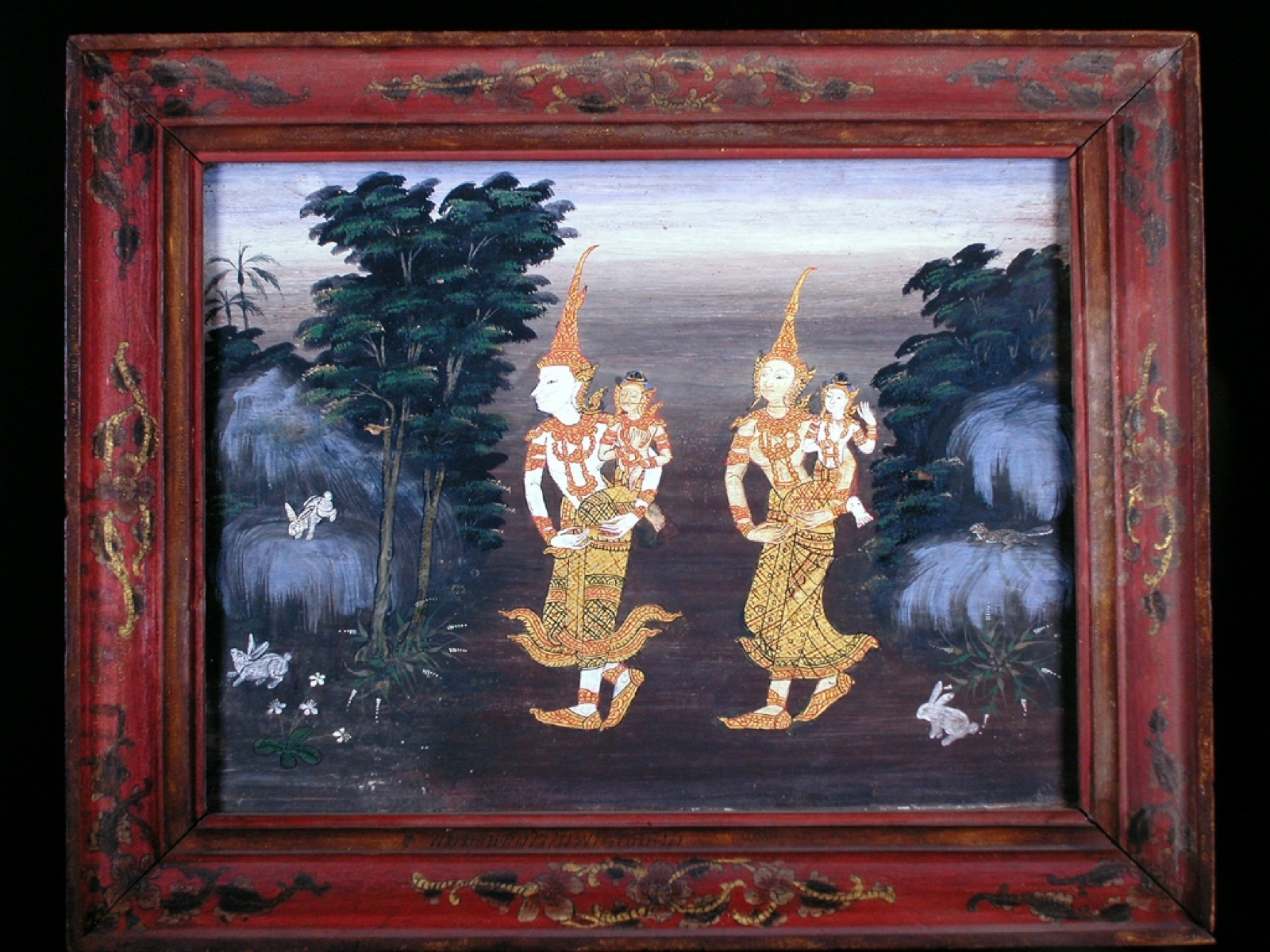
Prince Vessantara (ระฯพเวสสฯันดฯอฯร, read phra wet-san-don) is the Bodhisatta's tenth and last life in the Ten Great Births. The dictionary describes it as "the final life before attaining enlightenment as the Fully Enlightened Buddha". It is the story of the perfection of giving, and in everyday speech his name is also used for a generous person who gives things away without limit.
The Pali original of the story is called the kha-tha pan (คาฯถาพันฯ, read kha-tha pan), "the thousand verses", because it has exactly one thousand verses, divided into 13 chapters as the dictionary records:
| Chapter | Name | Verses |
|---|---|---|
| 1 | Thotsaphon (the Ten Boons) | 19 |
| 2 | Himaphan (the Himalaya) | 134 |
| 3 | Thanakan (the Gifts) | 209 |
| 4 | Wanaprawet (Entering the Forest) | 57 |
| 5 | Chuchok (the Brahmin Jujaka) | 79 |
| 6 | Chunlaphon (the Little Forest) | 35 |
| 7 | Mahaphon (the Great Forest) | 80 |
| 8 | Kuman (the Children) | 101 |
| 9 | Matsi (Queen Maddi) | 90 |
| 10 | Sakkaban (Indra) | 43 |
| 11 | Maharat (the Great King) | 69 |
| 12 | Chakasat (the Six Royals) | 36 |
| 13 | Nakhon (the City) | 48 |
| Total | 1,000 |
Phra Maha Charin and colleagues (2025) explain that the all-Pali version is called the kha-tha pan, while versions that translate it are called chariya. In the North each chapter is called a phuk (ผูก, read phuk), which the dictionary describes as "a set of many palm leaves, or a single section, strung together with a cord".
Why hear all 13 chapters?
The key belief behind the festival comes from the Malai Sutta (the legend of Phra Malai). It tells how the monk Phra Malai went up to the Tavatimsa heaven to pay homage at the Chulamani relic shrine and met the future Buddha, Ariya Metteyya, who sent a message to the people of the world: hear the Maha Chat through all 13 chapters within one day and one night, and you will be reborn in his time (as retold by Phra Maha Charin and colleagues, 2025).
Udom Rungruangsri (อุดม รุ่งเรืองศรี, 2003), in his book Lanna Literature (วรรณกรรมล้านนา), records the same belief: those who hear the Maha Chat sermon in all 13 chapters will be reborn in the age of the future Buddha Ariya Metteyya.
The merit of honouring the Maha Chat, in Lanna texts
Phra Maha Charin and colleagues (2025) quote the work of Mani Phayomyong (มณี พะยอมยงค์, 2003), which describes the merit of honouring the Maha Vessantara Jataka in Lanna sermon language. In short: whoever honours the Maha Vessantara Jataka will become great among people, with many followers, elephants and horses, silver and gold, clothes, and paddy and rice as they wish.
When the future Buddha Ariya Metteyya attains enlightenment, they will surely meet him face to face, and in the end will "reach the jewelled city, the summit of great Nirvana", that is, Nibbana.
When is Tang Tham Luang held?
Most temples hold it in the month of Yi Peng (เดิอฯรยี่เพงฯ, read duean yi peng), the full moon of the second northern month. The dictionary explains that this is the 15th waxing day of the 12th month in central Thailand, because the Lanna calendar runs two months ahead of the central one. The festival therefore falls together with Loy Krathong.
Not only at Yi Peng: Phra Maha Charin and colleagues (2025) note that the abbot meets the villagers to set the date. It is mostly held in the month of Yi, but some places hold it in the 3rd or 4th month.
The order of the sermons differs from place to place, and the sources record different timings:
Phra Maha Charin and colleagues (2025) recount that for the Maha Chat the sermons might run on for 7 days. The first day was given to the tham wat (general sermons), the second to the kha-tha pan, then other stories, and the last day to Malai Ton, Malai Plai and the Merit of the Maha Chat. Before dawn the next day the Thotsaphon chapter began, and the 13 chapters followed one after another, usually ending soon after 7 p.m.
At the Tang Tham Luang of Wat Si Khom Kham, Phayao, in 2011 (MGR Online), the first day was given to the tham wat, general sermons. On the second day, the Yi Peng full moon, the Thotsaphon chapter began and the chapters followed in order up to Nakhon, ending at about 1 to 2 a.m.
Phra Maha Charin and colleagues (2025) state that today it is common to finish within one day. Each chapter's sponsor invites a monk skilled in that chapter to preach it, called "tet kin kan" (preaching one's own chapter).
Turning the temple into the Himaphan forest
Before the festival the villagers work together to turn the temple into the Himaphan forest where Prince Vessantara, Queen Maddi and the two children practised their perfections. Phra Maha Charin and colleagues (2025) describe how it begins with an arch at the temple gate called the forest gate (ปตูป่า, read pa-tu pa), standing for the entrance to the Himaphan forest.
From the gate a ratchawat fence is built. The mock forest is decorated with banana trees and sugarcane, with flower spikes, tung banners and parasols. Paper and bamboo lanterns hang over the temple yard, and inside the vihara hang strings of flags and the offerings for the Maha Chat. The study also sees in the mock forest a lesson about caring for nature, forests, hills and trees.
On Yi Peng night people also light clay lamps (ผังฯผทีปฯ, read phang pha-tip), lamps in a flat, plate-like clay dish with a cotton wick. The dictionary notes that they are lit as an offering to the Buddha at festivals such as the Yi Peng festival.
Lanna preaching: wa tham in local melodies
Lanna has several words for giving a sermon. The general word is preach (เทส์นฯ, read tet), but the one that best fits Tang Tham Luang is wa tham (ว่าฯธัม์มฯ, read wa tham), which the dictionary explains as "to give a Dhamma sermon by reading from a palm-leaf manuscript".
The dictionary also distinguishes tet tham mueang (เทส์นฯธัม์มฯเมิอฯง, read tet tham mueang): Lanna-style preaching read from palm-leaf scriptures (ธัม์มฯไบลานฯ, read tham bai lan) inscribed in the Lanna script. Today the texts are also printed on paper in Thai script, called "imitation palm leaves in place of real ones".
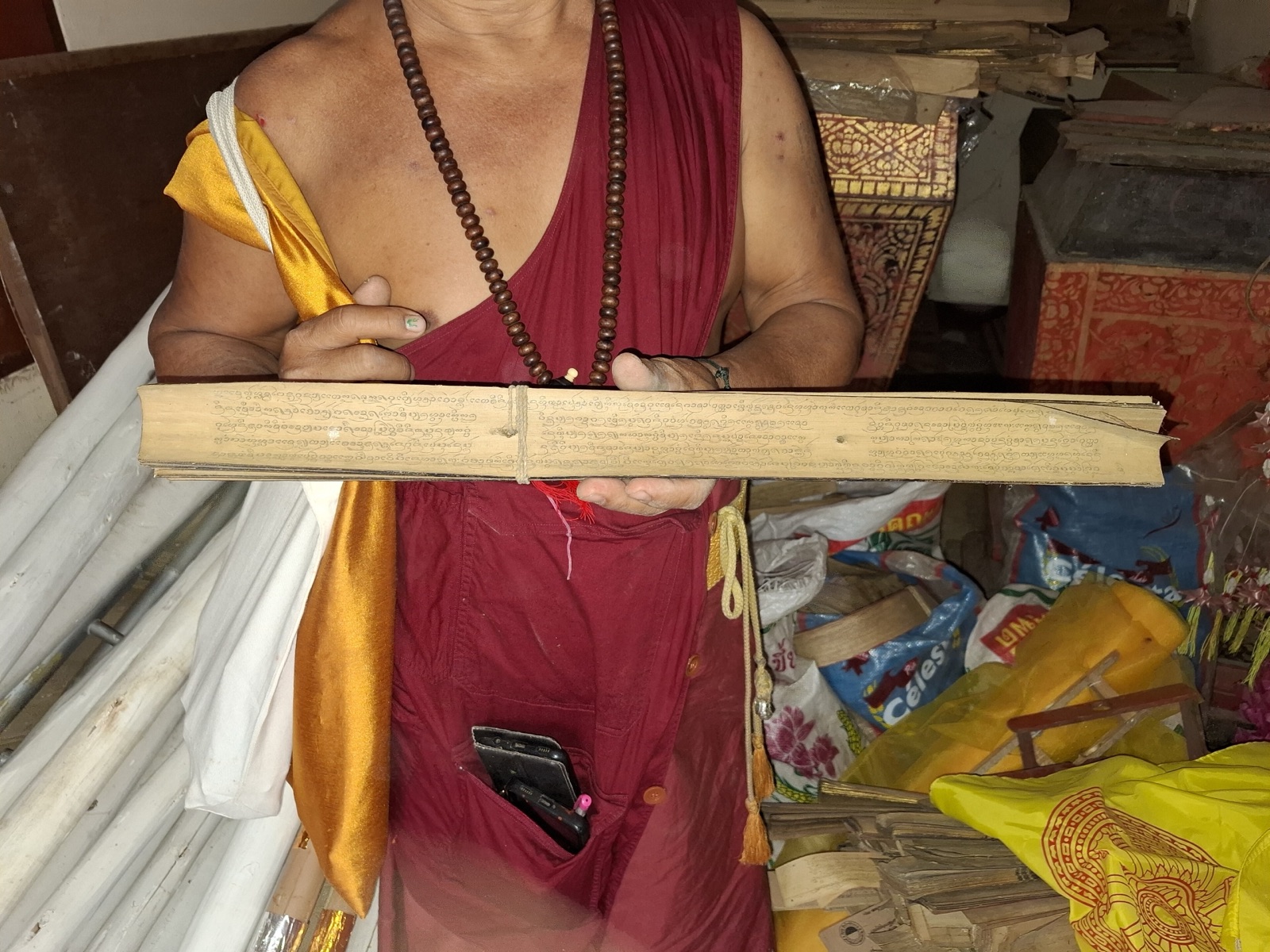
There are special words for sponsoring, too. Kan tham (กณฑฯธมมฯ, read kan tham) are the gifts offered to the monk who preaches, and offering palm-leaf scriptures to a temple is called tan tham (ทาฯนฯธัม์มฯ, read tan tham).
Monks who specialise in a chapter
Some chapters need a specially skilled preacher. Chuchok (ทุจ฿กฯ, read tu-chok) is the old Brahmin Jujaka of the Maha Chat. Preaching his chapter is called tet tu-chok (เทส์นฯทุจ฿กฯ, read tet tu-chok), and a monk expert in the Chuchok chapter is called a kin tu-chok (กินฯทุจ฿กฯ, read kin tu-chok). The dictionary records that in Nan Province people say "ti nang", as in ti nang ma-thi, ti nang tu-chok.
Another chapter people wait for is Queen Maddi's, and preaching it is called tet ma-thi (เทส์นฯมัระฯที, read tet ma-thi).
Melodies and versions
Phra Maha Charin and colleagues (2025) state that the local Lanna sermon melodies are called rabam, and that Lanna scholars composed some 150 versions of the Maha Chat, such as Wingwon Luang, Hing Kaeo, Phai Chae Riao Daeng and Phrao Kwai Bai. The most popular today is the Soi Sangkon version by Phra Ubali Khunupamachan (Fu Attasivo), which brings together the best chapters of several versions. The same study cites a survey by Singkha Wannasai (สิงฆะ วรรณสัย, 1980) that found 130 versions, and one by Sommai Premchit (สมหมาย เปรมจิตต์, 2001) that found 70 more, 200 versions in all, so the figure depends on the survey.
Thitiphon Kantiwong (ธิติพล กันตีวงศ์) studied the melody of the Matsi chapter at Chiang Mai's Tang Tham Luang and found that it uses the Phai Chae Riao Daeng version with the Phrao Kwai Bai melody. Lanna preaching is divided into the tham wat style and the Maha Chat style, and the texts carry marks such as "rise high", "rise low", "la-mai" and "drop the voice" to guide pitch and rhythm.
The five voice registers of preachers
Phra Maha Charin and colleagues (2025) cite Phra Khru Adun Sinlakit, who compares the use of the voice in preaching to singing, and divides the voices of Chiang Mai preachers into five registers:
- Siang nio: a high, sharp voice
- Siang noi: a naturally small voice
- Siang khueang: a breaking voice
- Siang ham: a medium voice, neither big nor small
- Siang luang: a big voice
Tang Tham Luang in the life-extension style
The Lanna Maha Chat has a form unlike those of central and northeastern Thailand: it can be held in the life-extension (suep chata) style, matching each chapter to the birth year of the sponsor of that chapter, according to the belief in each chapter's merit.
Professor Emeritus Mani Phayomyong (2010) recounts that Phra Khru Sophalakkhana of Wat Muen San, Chiang Mai, saw that people were losing interest in Tang Tham Luang and began holding it in the life-extension style in 1959, with people born in each year sponsoring a chapter. More people came to listen. Later the Sahatham Club took it to Wat Suan Dok, and the style spread from there (cited in Phra Maha Charin and colleagues, 2025). Many ritual objects are therefore the same as in the life-extension rite, such as prop sticks, tung kha-khing banners, tian kha-khing candles, and lamps matching one's age or 108 lamps.
Summary
- Tang Tham Luang (in Kham Mueang, pa-we-ni tang tham luang) is the Lanna tradition of the Maha Chat sermon, matching the Maha Chat sermon of central Thailand.
- It is usually held at Yi Peng (the full moon of the 2nd northern month); in 2026 that is 24 November.
- Monks preach the story of Prince Vessantara in 13 chapters and 1,000 verses (the kha-tha pan); those who hear it all are believed to be reborn in the time of Ariya Metteyya.
- The temple is turned into the Himaphan forest, with a pa-tu pa forest gate, banana trees, sugarcane, tung and clay lamps.
- Monks preach in melodies unique to Lanna, and some specialise in one chapter, such as the kin tu-chok.
Look up more Lanna words for merit-making in the Moradok Lanna dictionary (in Thai), and read about Lanna words of the Yi Peng festival in the article Yi Peng, Pi Mai and Tung (in Thai).
Sources
- Moradok Lanna dictionary (in Thai): ป๋าเวณีตั้งธรรมหลวง · คาถาปัน · ปะตู๋ป่า · ว่าธรรม · กิ๋นตุ๊จ๋ก
- พระมหาจรินทร์ อริญฺชโย (กันทอง), พระครูกิตติพัฒนานุยุต, เทพประวิณ จันทร์แรง, วิโรจน์ วิชัย และปรุตม์ บุญศรีตัน [Phra Maha Charin Arinchayo (Kanthong) and colleagues]. (2025). การสร้างอัตลักษณ์ทางวัฒนธรรมของประเพณีการตั้งธรรมหลวงในล้านนา [Building the cultural identity of the Tang Tham Luang tradition in Lanna]. Journal of Buddhist Studies 16(2), 44–57 (citing Mani Phayomyong 2003 and 2010, Udom Rungruangsri 2003). In Thai.
- ธิติพล กันตีวงศ์ [Thitiphon Kantiwong]. (2008). เรื่อง ทำนองเทศน์มหาชาติ กัณฑ์มัทที ในประเพณีตั้งธัมม์หลวง [The sermon melody of the Matsi chapter in the Tang Tham Luang tradition]. Journal of Fine Arts, Chiang Mai University 1(1). In Thai.
- MGR Online. (2011, 10 November). เมืองกว๊านฯ ตั้งธรรมหลวง-เทศมหาชาติ ในงานลอยกระทง [Phayao holds Tang Tham Luang and the Maha Chat sermon at Loy Krathong]. In Thai.
- Moradok Lanna Lanna calendar: 24 November 2026 (in Thai).
Look up "ป๋าเวณีตั้งธรรมหลวง" in the Moradok Lanna dictionary (in Thai)


