
Photo: Nathan Dumlao / Unsplash
La-on: Kham Mueang Words for Babies and Children
La-on (ลอ่อฯร, Kham Mueang reading la-on) is the word Khon Mueang use for a child. The dictionary explains that it is a shift from "luk on", and it has a second written form, la-on (หละอ่อน). The word opens the door to a large group of Kham Mueang words for looking after small children: nursing, feeding rice, sleeping in the cradle, affectionate names, and teaching a baby to talk. This article gathers them from the Moradok Lanna dictionary.
La-on and other words for a child
The dictionary keeps several words for a child. Some tell the age and some mean children as a group.
| Kham Mueang | Lanna script | Dictionary meaning |
|---|---|---|
| la-on | ลอ่อฯร | child (a shift from luk on) |
| la-on (หละอ่อน) | หลฯะอ่อฯร | small child, youngster |
| luk on | ลูกอ่อฯร | child, baby (today la-on is used) |
| la-on noi (หละอ่อนหน้อย) | หลฯะอ่อฯรห้นฯอฯย | small child, baby |
| la-on ton taen (หละอ่อนต่อนแต่น) | หลฯะอ่อฯรต่อฯรแต่นฯ | the children, all the kids (also la-on la-aen) |
The word noi (ห้นฯอฯย, Kham Mueang reading noi) means small or not much, so it sits inside several names for small children, such as ai noi (ไอ่ห้นฯอฯย์), which the dictionary says adults use for a little boy with affection, like "ai nu", and i noi (อี่ห้นฯอฯย), used for a little girl, like "i nu".
Ui, khao pon, khao mam: words for a baby's food
A Khon Mueang baby starts with ui (อุ, Kham Mueang reading ui), which the dictionary defines as a woman's milk, used in kin ui (กินฯอุ, Kham Mueang reading kin ui): a baby drinking its mother's milk. When a baby fusses to be fed, the dictionary uses hop kin nom (ร฿ปฯกิน฿มฯ, Kham Mueang reading hop kin nom), with "on kin nom" as an alternative.
When the child is old enough for rice, the dictionary separates two words. Khao pon (เขั้าป้อฯร, Kham Mueang reading khao pon) is finely mashed rice a mother feeds a baby. If the mother chews the rice fine first it is called khao mam (เขั้ามา, Kham Mueang reading khao mam), and the verb for chewing rice to feed a child is mam (ม่ำ, มา).
At the entry for khao mam the dictionary says that people in the past raised children by chewing rice fine to feed small babies, and did not use small mortars to grind rice with ripe bananas as people do now. It also names a snack often fed to small babies, khao nom kuea (เขั้าห฿นฯมเกิลฯอฯอ, Kham Mueang reading khao nom kuea): a salty sticky-rice-flour sweet wrapped in banana leaf and steamed. The simple word used with babies for eating is mam (หม่ำ, หํมฯา).
U, mo aeng, pha om: things for small children
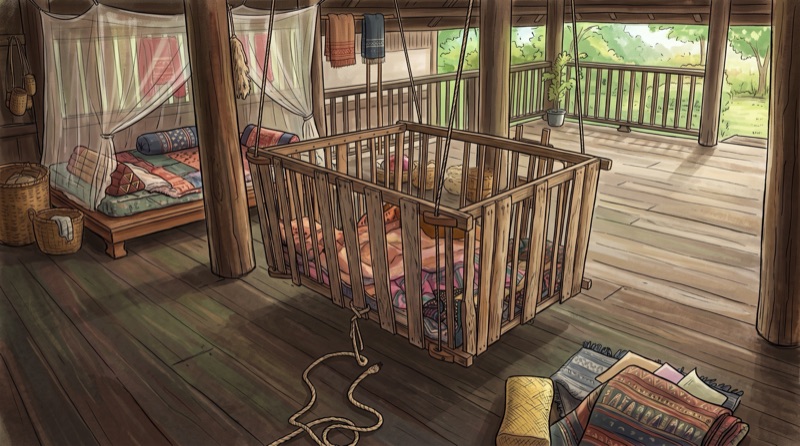
A Khon Mueang baby sleeps in the u (อู่, Kham Mueang reading u), which the dictionary gives first as a cradle for a baby or small child.
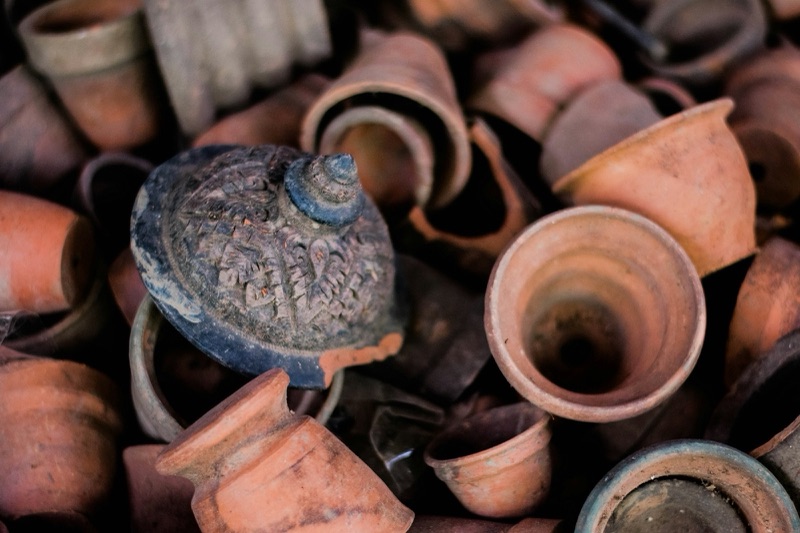
For bathing a baby there is a vessel called mo aeng (หํมฯอฯมฯอฯแอ่งฯ, Kham Mueang reading mo aeng). The dictionary describes it as a small earthenware pot with a low base and a flared mouth, often used for bathing babies.
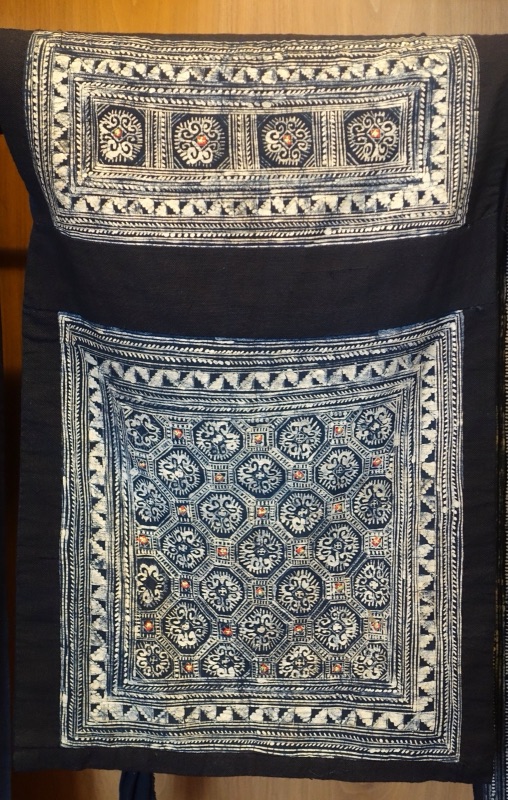
Other things for small children in the dictionary are the pha om (ผ้าอ้อฯม), a small cloth used for babies, and the wom (ว่อฯม, Kham Mueang reading wom), a cloth or woollen cap without a brim used for small babies or monks.
Carrying, crying, crawling: caring words
The dictionary records two words for carrying. Um (อุ้ม) is to lift and hold against the body, as in carrying a child, and um kip (อุ้มคีปฯ, Kham Mueang reading um kip) is to carry a child with both legs clasped around your waist. When a baby nestles against its mother's chest the word is sun ok (สุ่รอ฿กฯ, Kham Mueang reading sun ok).
Babies' crying has its own words. Hai on (ไห้อ้อฯร, Kham Mueang reading hai on) is crying so that someone will comfort you, like a baby fussing for its mother, and hai ha (ไห้หา, Kham Mueang reading hai ha) is crying out for someone, such as a baby crying for its mother.
For stages of growth Kham Mueang has these words: mong kong (ม่อฯงค่อฯง, Kham Mueang reading mong kong), which in one sense the dictionary gives as a baby crawling; top pop (ท฿ปฯพ฿ปฯ, Kham Mueang reading top pop), lying face down, as a baby sleeping on its tummy; and aewa (แอวฯะฯ, Kham Mueang reading aewa), a baby bringing food back up.
I ma chae, ai ma noi: affectionate names
Northern adults have names for babies that may sound odd to people from other regions. The dictionary records that adults call a lovable baby or small girl i ma chae (อี่แจะ, Kham Mueang reading i ma chae) and a small boy ai ma noi (ไอ่หมฯาห้นฯอฯย์, Kham Mueang reading ai ma noi). The two go as a pair and are used in an affectionate, teasing way.
When a baby looks adorable, a Khon Mueang might say na chang (ห้นฯาชังฯ, Kham Mueang reading na chang), which the dictionary gives first as "lovable", used about a baby with affection.
Teaching a baby to talk, and the u lullaby
When a baby starts to make sounds, adults begin to son pak (สอฯรปากฯ, Kham Mueang reading son pak), which the dictionary translates as teaching to speak, practising speech, as with a baby.
And before bed there is the lullaby called ue (อื่, Kham Mueang reading ue). The dictionary explains it as the name of a tune for singing or so to soothe, rock or sing a baby to sleep, and it usually begins with ue cha cha (อื่ชาชา). The dictionary's example is "ue cha cha, lap lom song ta, pho mae pik ma, koi tuen", which it glosses as: sleeping soundly with both eyes closed, until mum and dad come back and then wake. See more about the so singing tradition in Khap So and Choi.
Summary
- La-on (also written หละอ่อน, and luk on) is a child in Kham Mueang, and noi means small, as in ai noi and i noi.
- Babies take ui (milk), and rice comes as khao pon and khao mam, chewed by the mother.
- Things for small children include the u (cradle), mo aeng (bathing pot), pha om (nappy cloth) and wom (cap).
- The affectionate names are i ma chae (girl) and ai ma noi (boy), and teaching a baby to talk is son pak.
- Lullabies are called ue and begin "ue cha cha".
Look up more words about children in the Moradok Lanna dictionary, and read on about words for relatives in Kham Mueang family words.
📚 Whole series: see every stage of life on one map at Lanna Life Cycle: Customs from Birth to Death
Sources
Practise the words from this article
Flip through 35 flashcards of the Lanna words used in this article.


