
Photo: Pailoolom / Wikimedia Commons (CC BY-SA 4.0)
Animal Names in Kham Mueang: Farm, Wild and the Zodiac
Many animal names in Kham Mueang sound close to Central Thai, such as ma (dog), maeo (cat) and mu (pig). Many others are completely different: a cow is ngua, a goat is pae, a squirrel is hok, a barking deer is fan, a monitor lizard is laen, a house gecko is chak kim, and an elephant is chang (ช้างฯ, Kham Mueang reading chang), the animal Lanna uses for the Year of the Pig in the twelve-year zodiac.
This article gathers animal names from the Moradok Lanna dictionary: farm and household animals, words for male, female and young animals, elephants, large wild animals, small wild animals, reptiles and amphibians, the counting word for animals, and the Kham Mueang names of the zodiac years. Birds, fish and insects already have their own articles.
Farm and household animals
The animals closest to Lanna people are the ones kept at home and used for work in the rice fields. Most names are close to Central Thai, but with Lanna tones and spellings of their own.
| Kham Mueang | Lanna script | Meaning (from the dictionary) |
|---|---|---|
| ma | หมฯา | dog; there are both wild and domestic kinds |
| maeo | แมวฯ | cat (the same word also means a coconut grater and the cover of a coffin) |
| ngua | ง฿วฯ | cow; a cud-chewing, cloven-hoofed animal with short horns curving up |
| khwai | ฅวฯายฯ | water buffalo; a large cud-chewing, hoofed animal with long curved horns |
| mu | หู | pig; cloven-hoofed, long snout, fat body; both farm pigs and wild boar |
| kai | ไก่ | chicken, a bird-like fowl; in the forest it is called kai pa (junglefowl) |
| pet | เปัดฯ | duck; a bird with a wide flat bill and webbed feet for swimming |
| han | ห่านฯ | goose; a duck-like bird with a longer neck than a duck but shorter than a swan |
| ma | ม้า | horse; single-hoofed, used for riding and pulling carts (a bench is also called ma) |
| pae | แพะ | goat; cloven-hoofed, the male has a beard under its chin |
| la | ลา | donkey; like a horse but smaller, with long ears and a tufted tail |
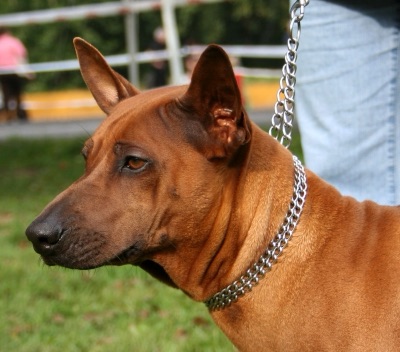
Photo: Pleple2000 / Wikimedia Commons (CC BY-SA 3.0)
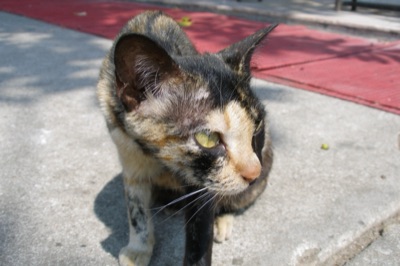
Photo: Vyacheslav Argenberg / Wikimedia Commons (CC BY 4.0)
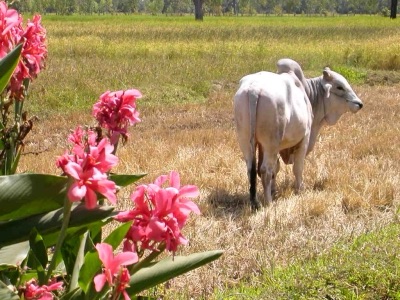
Photo: Love Krittaya / Wikimedia Commons (Public domain)
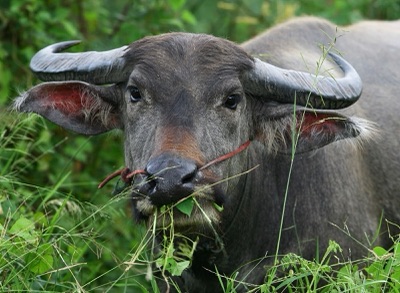
Photo: Heiko S / Wikimedia Commons (CC BY 2.0)
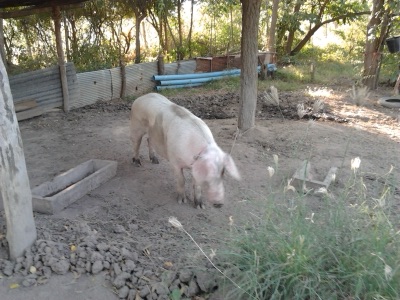
Photo: kittionguess / Wikimedia Commons (CC BY-SA 3.0)
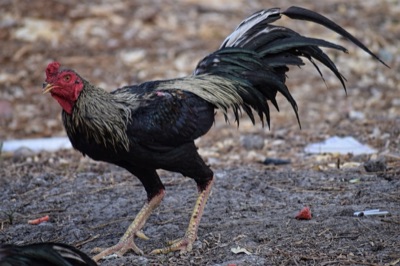
Photo: PumpkinSky / Wikimedia Commons (CC BY-SA 4.0)
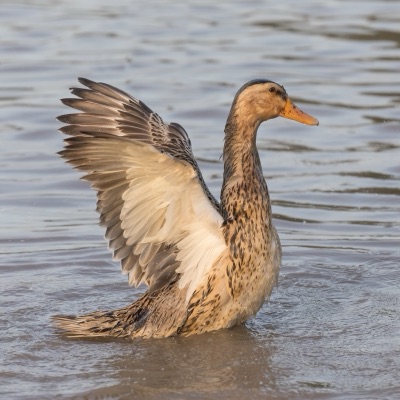
Photo: Basile Morin / Wikimedia Commons (CC BY-SA 4.0)
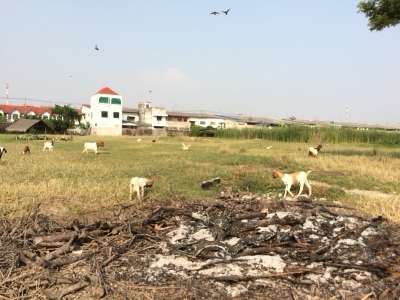
Photo: Joe628 / Wikimedia Commons (CC BY 4.0)
Don't mix up pae and phae. In Kham Mueang, phae (แระฯพะ) means scrubby open forest, as in pa phae, not the animal. For the rabbit (Kham Mueang ka-tai), see The Rabbit in Kham Mueang.
Male, female and young animals
Lanna people have very precise words for animals by sex and age, especially for the cows, buffaloes and pigs that every household kept. The words to remember are pu (male), mae (female), thao (young adult) and ngan (in its prime).
Sex and age
| Kham Mueang | Lanna script | Meaning (from the dictionary) |
|---|---|---|
| tua pu | ต฿วฯพู้ | male |
| tua mae | ต฿วฯแม่ | a female animal (also a man's sweetheart) |
| ngua pu | ง฿วฯพู้ | bull |
| ngua mae | ง฿วฯแม่ | cow (female) |
| ngua thao | ง฿วฯถ่าวฯ | young bull or heifer |
| ngua ngan | ง฿วฯหงฯานฯ | a bull in its prime, with the hump on its neck that grows as it matures |
| khwai laeo | ฅวฯายฯแลวฯ | young buffalo |
| khwai ngan | ฅวฯายฯหงฯานฯ | a buffalo in its prime; often also means a young man |
| mu thao | หูถ่าวฯ | young boar, grown but not yet bred |
| mu dong | หูด้อฯง | a thin pig, usually a sow nursing her piglets |
| kai chuea | ไก่เชิ้อฯอ | breeding rooster |
Working animals
| Kham Mueang | Lanna script | Meaning (from the dictionary) |
|---|---|---|
| ngua lo | ง฿วฯแม่ลํอฯ | an ox that pulls a cart |
| ngua tang | ง฿วฯต่างฯ | a pack ox that carries goods |
| kai chon | ไก่ช฿นฯ | a fighting cock |
| kai chong | ไก่ช฿งฯ | a large breed of chicken, bigger than a bantam, with a small comb |
Coat colours and patterns
| Kham Mueang | Lanna script | Meaning (from the dictionary) |
|---|---|---|
| khwai pon | – | albino (pink) buffalo |
| ma kong | หมฯาโก้฿งฯ | a dog with big patches |
| ma yui | หมฯายุ | a long-haired fluffy dog, like those hill peoples keep in the cold mountains |
| maeo kong | แมวฯโก้฿งฯ | a cat with patches |
| maeo phoi | แมวฯระฯพ้อฯยฯ | a cat with spots of many colours |
| maeo phoeng | แมวฯเผิ้งฯ | an all-yellow (ginger) cat |
Chang: the elephant in Kham Mueang
Elephants have been bound up with Lanna for centuries, in forestry work, in travel and in belief, so the dictionary has many words for elephants by sex, tusks and habits.
| Kham Mueang | Lanna script | Meaning (from the dictionary) |
|---|---|---|
| chang | ช้างฯ | elephant, the largest land animal, with a long nose called a trunk |
| chang pu | ช้างฯพู้ | a tusker, a male elephant with long tusks |
| chang mae | ช้างฯแม่ | a female elephant, usually without tusks |
| chang sado | ช้างฯสดํอฯ | a male or young elephant whose tusks are still short |
| chang ton | ช้างฯโท฿นฯ | a lone elephant that feeds by itself away from the herd |
| chang nam | ช้างฯนาฯ | a creature of legend shaped like an elephant, with trunk and tusks but a fish's tail |
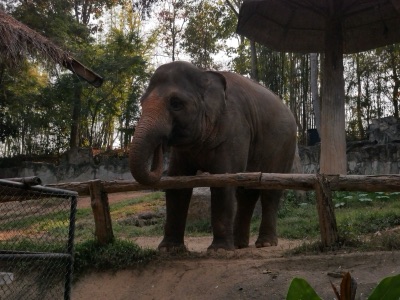
Photo: กสิณธร ราชโอรส / Wikimedia Commons (CC BY-SA 4.0)
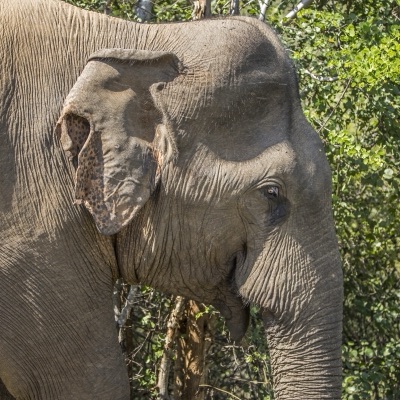
Photo: Charles J. Sharp / Wikimedia Commons (CC BY-SA 4.0)
Large wild animals
The forests and mountains of Lanna were once home to tigers, bears, deer and barking deer. Many of their names differ from Central Thai: the barking deer is fan, the mouse-deer is kai, and the serow is kwang yueang.
| Kham Mueang | Lanna script | Meaning (from the dictionary) |
|---|---|---|
| suea | เสิอฯอ | tiger or big cat; a meat-eater like a cat but larger, hunting at night |
| suea khong | เสิอฯอโระฯค่฿งฯ | the striped tiger, the largest cat in Thailand |
| suea fai | เสิอฯอไฟ | a small wild cat with reddish-brown fur all over |
| mi | หีมฯ | bear; it can stand and walk on its hind legs and eats plants and animals |
| mi khwai | หีมฯฅวฯายฯ | a big bear with long coarse black fur and a white V on its chest (Asian black bear) |
| mi khon | หีมฯฅึนฯ | a bear smaller than mi khwai, with short fur and a white U on its chest (sun bear) |
| ling | ลิงฯ | monkey, with or without a tail (also i wok, อี่วอฯก) |
| ling lom | ลิงฯล฿มฯ | slow loris; plump, round head, big round eyes ringed with dark fur |
| kwang | กวฯางฯ | deer; the male has branched antlers, shed once a year |
| fan | ฟานฯ | barking deer (muntjac); brown, the male has antlers and tusks |
| kai | ไก้ | mouse-deer; like a tiny deer without antlers |
| kwang yueang | กวฯางฯเ£อฯง | serow; goat-like, black fur (also yueang) |
| ma nai | หมฯาไน | dhole, a reddish wild dog with a bushy tail that lives in packs |
| ma chok wo | หมฯาจัอฯกวํอฯ | jackal or fox (also ma phi) |
| haet | แรดฯ | rhinoceros, with one or two horns (the giant gourami fish is also haet) |
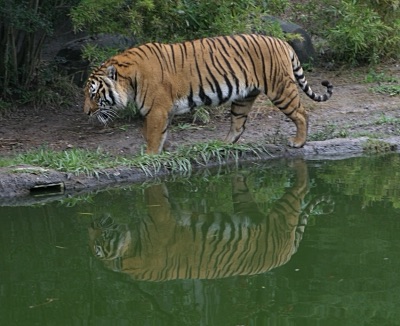
Photo: Cburnett / Wikimedia Commons (CC BY-SA 3.0)
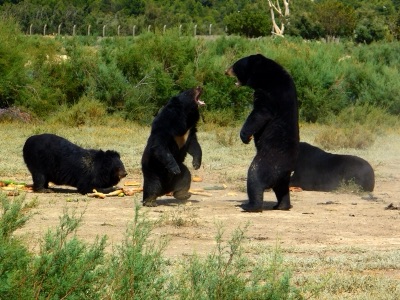
Photo: H. Zell / Wikimedia Commons (CC BY-SA 3.0)
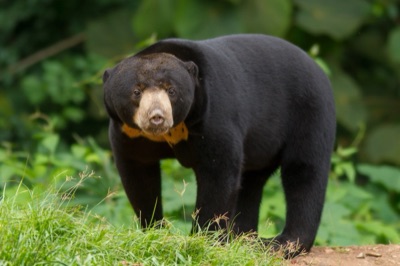
Photo: Wich'yanan L / Wikimedia Commons (CC BY 4.0)
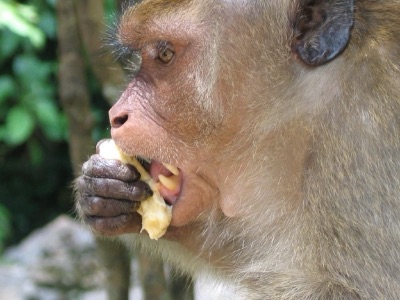
Photo: 13bobby / Wikimedia Commons (CC BY 2.0)
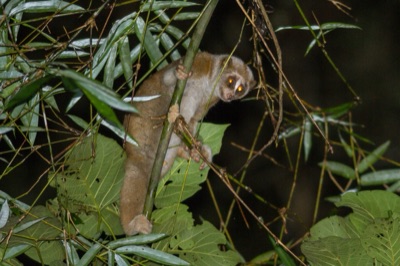
Photo: Wich’yanan L / Wikimedia Commons (CC BY 4.0)
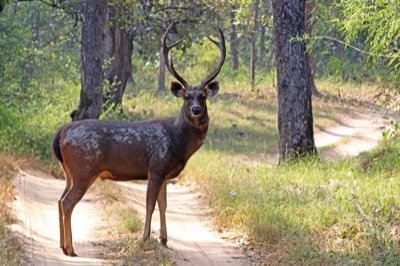
Photo: Charles J. Sharp / Wikimedia Commons (CC BY-SA 4.0)
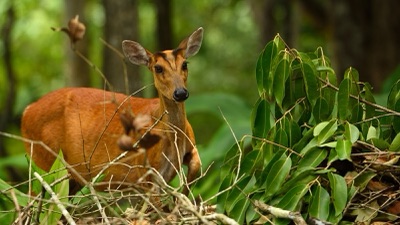
Photo: tontantravel / Wikimedia Commons (CC BY-SA 2.0)
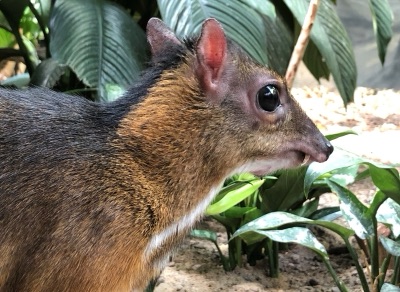
Photo: Udo Schröter / Wikimedia Commons (CC BY-SA 4.0)
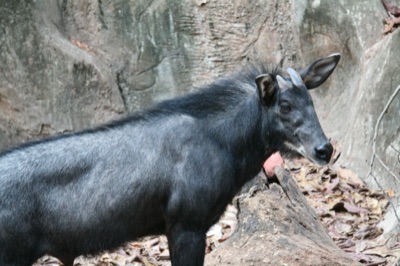
Photo: Melanochromis / Wikimedia Commons (Public domain)
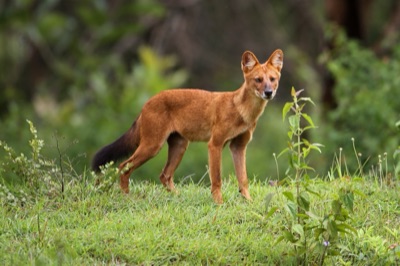
Photo: Davidvraju / Wikimedia Commons (CC BY-SA 4.0)
The dictionary even has a word for the call of the barking deer: fan khok (ฟานฯโข฿กฯ), "the barking deer barks".
Small wild animals: forest, garden and underground
Many small animals live close to villages, in gardens, bamboo groves and burrows. Their Kham Mueang names are often nothing like Central Thai.
| Kham Mueang | Lanna script | Meaning (from the dictionary) |
|---|---|---|
| men | เห้มฯร | porcupine, covered in sharp stiff quills for defence |
| hok | ฮอฯก | squirrel, a small fluffy rodent |
| hen | เหันฯ | palm civet; long body, pointed face, long tail, scent glands at the base of the tail |
| hen om | เหนฯอ้฿มฯ | small civet, the civet with a sweet scent |
| chon khui | จ่อฯรขุ่ | mongoose, reddish-brown or grey, with a long narrow face |
| buan | บ้วฯร | otter, broad head, flat tail, a strong swimmer |
| lin | ลิ่นฯ | pangolin, covered in hard scales, rolls into a ball (also nim) |
| mu ling | หูหำระฯหิ่งฯ | hog badger; pig-like face, a white stripe from the nose, long claws for digging |
| nu | หู | rat or mouse, a rodent of many kinds |
| nu puk | หูพุก | bandicoot rat of the rice fields, popular as food |
| nu phi | หูผี | shrew; like a tiny mouse with a long nose, digging for insects |
| tun | ตุ่ร | bamboo rat, a rat-like animal that lives underground |
| hung khao | รุ้งฅาวฯ | bat (i bueng, อี่บึ่งฯ, is the flying fox, the largest bat) |
| ka-tai | ระฯกต่ายฯ | rabbit, fluffy with long ears (read more in The Rabbit in Kham Mueang) |
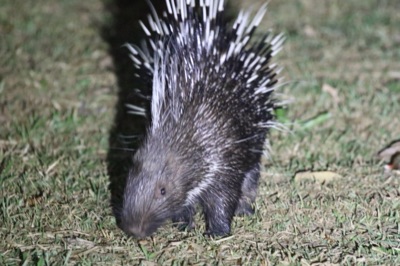
Photo: Blair Dudeck / Wikimedia Commons (CC BY 4.0)
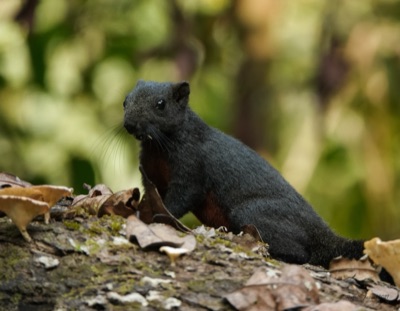
Photo: Rejoice Gassah / Wikimedia Commons (CC BY 4.0)
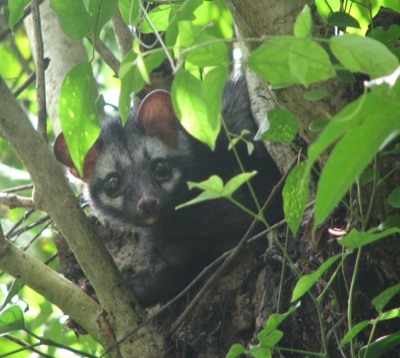
Photo: Praveenp / Wikimedia Commons (CC BY-SA 3.0)
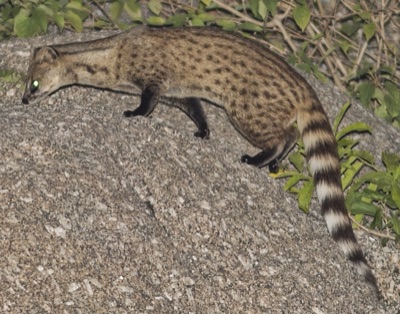
Photo: Vickey Chauhan / Wikimedia Commons (CC BY-SA 4.0)
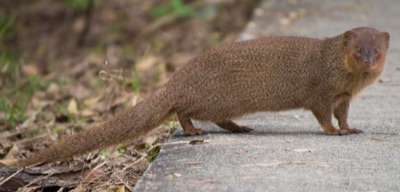
Photo: Chung Bill Bill / Wikimedia Commons (CC BY 2.0)
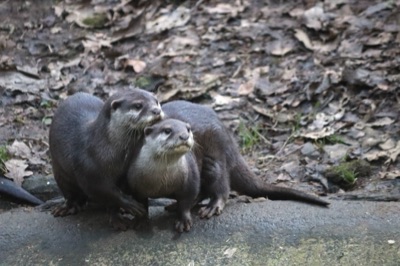
Photo: Animalculum / Wikimedia Commons (CC BY 4.0)
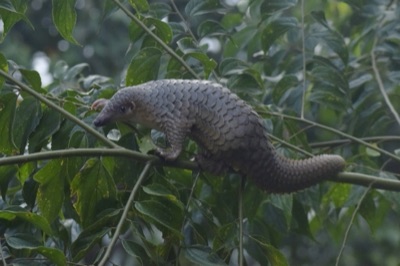
Photo: Frendi Apen Irawan / Wikimedia Commons (CC BY-SA 4.0)
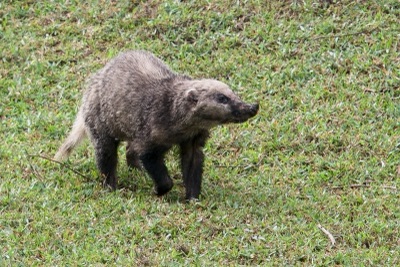
Photo: Rushenb / Wikimedia Commons (CC BY-SA 4.0)
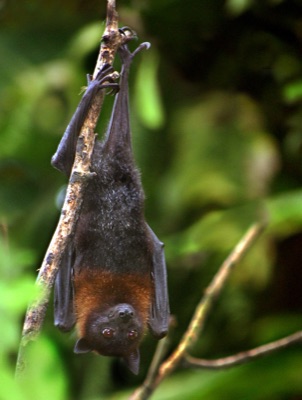
Photo: Malene Thyssen / Wikimedia Commons (CC BY-SA 3.0)
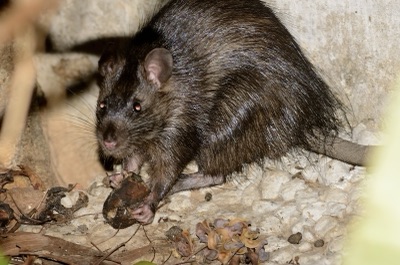
Photo: sunnyjosef / Wikimedia Commons (CC BY 4.0)
Even porcupine quills have their own name, lem men (เหลฯมเห้มฯร). The dictionary says they were used to shred bamboo shoots into strips for cooking, or to decorate a hair bun.
Reptiles and amphibians
Snakes, geckos, lizards, frogs and toads are everyday sights in Lanna homes and rice fields. The names are easy to remember once you know the openings: chak in chak kim (house gecko), and chak with a rising tone in chak ka (garden lizard) and chak khe (crocodile).
| Kham Mueang | Lanna script | Meaning (from the dictionary) |
|---|---|---|
| ngu | งู | snake; a long round reptile with no legs, covered in scales |
| ngu chong la-ang | งูจอฯงลอางฯ | king cobra, the largest venomous snake in the world |
| ngu hao | งูเหั่า | cobra, a medium-sized land snake with deadly venom |
| ngu loem | งูเหิลฯม | reticulated python, up to 9 metres long |
| ngu lam | งูหลฯา | a big python like the reticulated, but stouter with a short tail |
| ngu pao | งูเพัา | Malayan pit viper, with a triangular head |
| ngu chuen | งูชืนฯ | sunbeam snake, harmless |
| tok to | ท฿กฯโท | tokay gecko; big head, grey spotted body, loud call, active at night |
| chak kim | ชักฯกิ้มฯ | house gecko, a small lizard of the same family as the tokay |
| chak ka | จักฯก่า | garden lizard |
| chak ka bin | จักฯก่าบินฯ | flying lizard, small, with a tail longer than its body |
| laen | แลนฯ | Bengal monitor; a good climber that likes to bask on branches |
| tao | เตั่า | turtle or tortoise, with a hard shell |
| chak khe | จักฯเข้ | crocodile, living in swamps, ponds and rivers |
| kop | ก฿ปฯ | frog, an amphibian that lays its eggs in water |
| kop tu | ก฿ปฯตู่ | toad |
| khiat | ขยฯด | a small frog, common in rice fields |
| khiat ching | ขยฯดจิงฯ | rice-field frog, the most common and most eaten |
| khiat laeo | ขยฯดแลวฯ | a big mountain frog, up to a foot long with legs stretched |
| ueng | อึ่งฯ | narrow-mouthed frog; stout, small head, short legs, often puffs itself up |
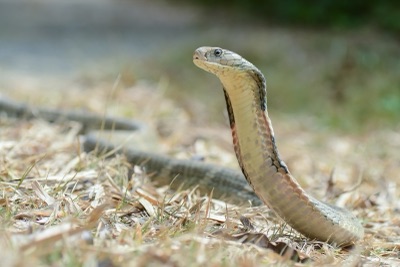
Photo: Rushenb / Wikimedia Commons (CC BY-SA 4.0)
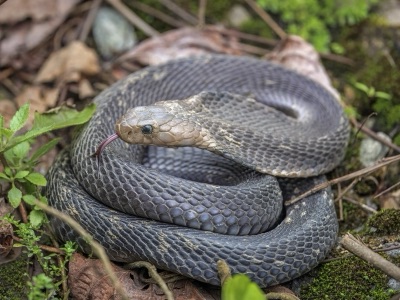
Photo: Charles J. Sharp / Wikimedia Commons (CC BY-SA 4.0)
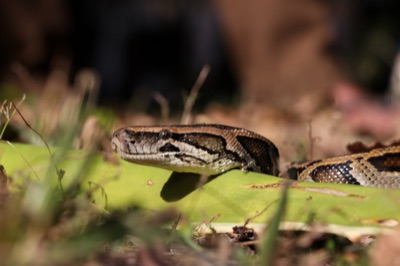
Photo: Shadow Ayush / Wikimedia Commons (CC BY-SA 4.0)
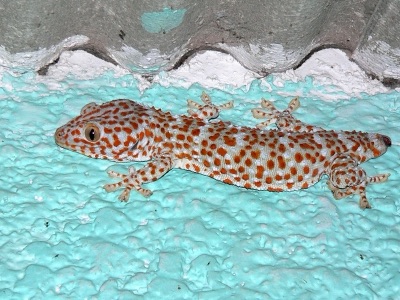
Photo: Bernard DUPONT from FRANCE / Wikimedia Commons (CC BY-SA 2.0)
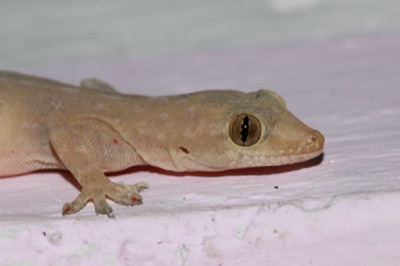
Photo: Firos AK / Wikimedia Commons (CC BY-SA 4.0)
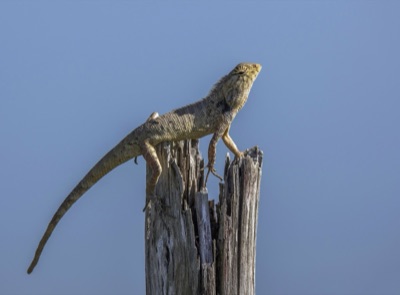
Photo: Charles J. Sharp / Wikimedia Commons (CC BY-SA 4.0)
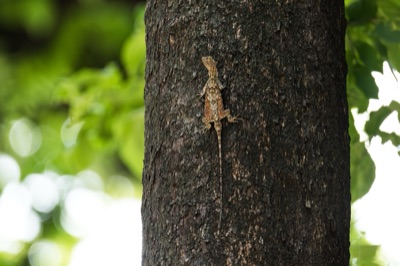
Photo: Wich'yanan L / Wikimedia Commons (CC BY 4.0)
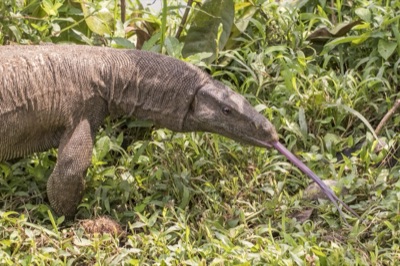
Photo: Charles J. Sharp / Wikimedia Commons (CC BY-SA 4.0)
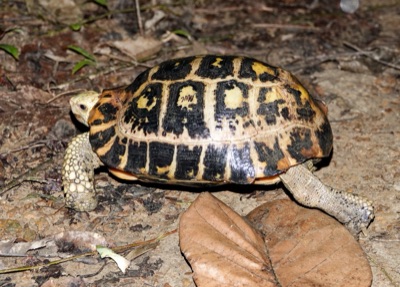
Photo: Rejoice Gassah / Wikimedia Commons (CC BY 4.0)
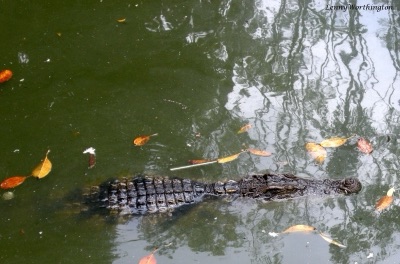
Photo: Len Worthington / Wikimedia Commons (CC BY-SA 2.0)
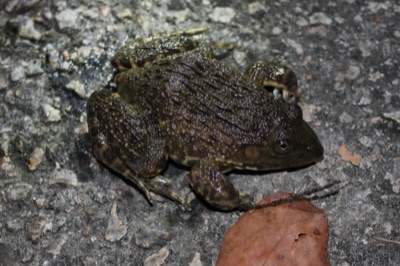
Photo: Thomas Brown / Wikimedia Commons (CC BY 2.0)
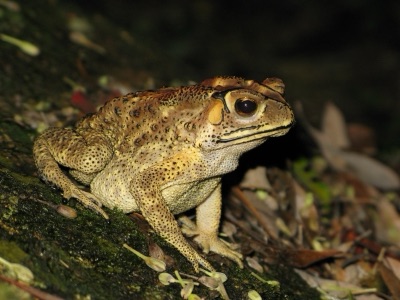
Photo: Lokionly / Wikimedia Commons (CC BY-SA 3.0)
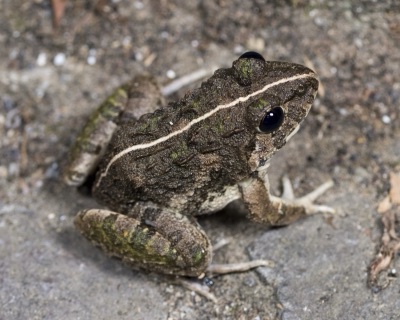
Photo: LiCheng Shih / Wikimedia Commons (CC BY 2.0)
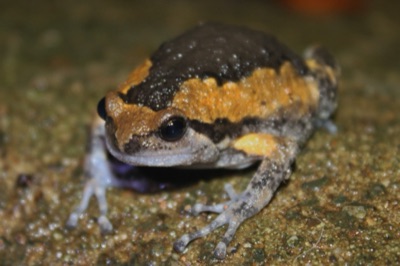
Photo: Thomas Brown / Wikimedia Commons (CC BY 2.0)
Counting animals with tua
When counting animals, Kham Mueang uses the classifier tua (ต฿วฯ, Kham Mueang reading tua), just like tua in Central Thai. The dictionary gives the example "ten ants" (mot sip tua), and it is used for some objects too, such as five tables or two pairs of trousers. So "two buffaloes" is khwai song tua.
Pack animals also have a group name, tang (ต่างฯ), as in ma tang (pack horse) and ngua tang (pack ox).
The twelve zodiac years in Kham Mueang
Lanna people call their birth-year animal pi tua poeng (ปีต฿วฯเพิ่งฯ). The dictionary explains that people used to remember their birth year by its zodiac animal, and that a new zodiac year starts at the New Year, on Wan Phaya Wan. The twelve Lanna year names (the pi hon thai system) are all different from the Central Thai names.
| No. | Kham Mueang year | Lanna script | Central Thai | Animal |
|---|---|---|---|---|
| 1 | chai | ไจ้ | Chuat | rat |
| 2 | pao | เปั้า | Chalu | ox (ngua) |
| 3 | yi | ยี | Khan | tiger |
| 4 | mao | เหั้มฯา | Tho | rabbit (ka-tai) |
| 5 | si | สี | Marong | great serpent (naga) |
| 6 | sai | ไส้ | Maseng | snake |
| 7 | sa-nga | สง้า | Mamia | horse |
| 8 | met | เมัดฯ | Mamae | goat (pae) |
| 9 | san | สันฯ | Wok | monkey |
| 10 | lao | เรั้า | Raka | rooster |
| 11 | set | เสัดฯ | Cho | dog |
| 12 | kai | ไค้ | Kun | pig, but Lanna prefers the elephant (chang) |
Sayings and beliefs from animal names
Animal names in Kham Mueang are not only for animals. Many have become sayings, spoonerisms or beliefs.
- Khwai ngan (ฅวฯายฯหงฯานฯ) is a buffalo in its prime, but it also means a young man.
- Maeo li (แมวฯลี้) is a spoonerism of mi laeo, "already has one", meaning someone already has a sweetheart.
- Maeo phong (แมวฯโพ฿งฯ) is a big, fierce old tomcat; adults used it to scare children into behaving: "stop crying or the maeo phong will come and eat your liver".
- Dao mu kong (หูคอฯง) is the Kham Mueang name for the morning star.
- Suea yen (เสิอฯอเยันฯ) is a were-tiger, a tiger said to have been a person with strong magic who could turn into a tiger.
- Ma khi (ม้าขี่), "ridden horse", is a spirit medium, a person whom a spirit possesses.
- Ma wo (หมฯาวอฯ) is a mad dog, a dog with rabies.
Summary
- Farm animals in Kham Mueang include ngua (cow), khwai (buffalo), ma (dog), maeo (cat), mu (pig), pet (duck) and pae (goat); phae means scrubby forest.
- Sex and age are marked with pu (male), mae (female), thao (young) and ngan (in its prime): ngua pu, ngua thao, khwai ngan.
- The elephant is chang, a tusker is chang pu, a female is chang mae.
- Many wild animals have names unlike Central Thai: fan (barking deer), kai (mouse-deer), hok (squirrel), buan (otter), laen (monitor lizard), chak kim (house gecko), tok to (tokay).
- Animals are counted with tua, and the zodiac birth year is pi tua poeng, from chai, pao, yi, mao to kai, which Lanna marks with the elephant.
Look up more animal names in the Moradok Lanna dictionary (in Thai), read more animal vocabulary in Bird Names in Kham Mueang, Fish Names in Kham Mueang and Maeng in Kham Mueang, or read about the rabbit in The Rabbit in Kham Mueang.
Sources
- Moradok Lanna dictionary (in Thai): chang · ngua · fan · laen · pi tua poeng
- All photos are from Wikimedia Commons as credited under each picture; they illustrate the words and are not species identifications.


