
Photo: User:Mattes / Wikimedia Commons (CC BY-SA 4.0)
A Lanna Wedding: Kin Dong and How It Changed
A Lanna wedding is what the people of northern Thailand call kin dong (กินฯดอฯง, Kham Mueang reading kin dong). The dictionary explains it briefly as "to marry", and gives kin kiao kin dong (กินฯก่ยฯวกินฯดอฯง) as another way to say it. Behind that short word lie rites that tell a lot about Lanna life: respect for ancestral spirits, belief in the khwan (spirit essence), and the custom of the groom moving to the bride's family home. This article goes through the steps one by one with words from the dictionary, then looks at how the customs changed over time.
The order of rites and their meanings here follow the study by Pattakan Chantana (พัฒน์กานต์ จันทนา) on the Lanna wedding, and the word meanings come from the Moradok Lanna dictionary.
Words for "getting married" in Kham Mueang
The dictionary keeps several words for marrying, some formal and some everyday.
| Kham Mueang | Lanna script | Dictionary meaning |
|---|---|---|
| kin dong | กินฯดอฯง | to marry |
| ao mia | ´าเมยฯ | to marry (said of a man) |
| ao phua | ´าผ฿วฯ | to marry (said of a woman) |
| chot mia | จ฿ดฯเมยฯ | to take a wife, to marry |
| ku bao sao | คู่บ่าฯวฯสาวฯ | a married couple |
The dictionary notes that the word taeng ngan for marrying was formerly "ao phua ao mia". Bao (บ่าฯวฯ) means an unmarried young man, and a man who marries is called "chao bao" (the groom).
Before the wedding: aeo sao and ja sao
In the past Lanna people chose partners through the custom of aeo sao (แอ่วฯสาวฯ, Kham Mueang reading aeo sao). The dictionary explains that after the evening meal the young women would "stay outside", that is sit on the toen (the open hall), light an oil lamp or candle and do small jobs such as sewing or spinning thread, waiting for a young man or sweetheart from the same or another village to visit and talk. It counts this as one of the ways old Lanna people found a partner.
Pattakan's study (2018) explains that aeo sao let young people choose partners freely, using time off from farming to meet, talk and judge each other through work from farming life, such as pounding rice and weaving. To read the playful speech young people used with each other, see Kam u bao u sao.
Once they agree, the next step is asking for her hand, ja sao (จาสาวฯ, Kham Mueang reading ja sao): talks to ask for the young woman. There is also pai toeng (ไพเทิงฯ), which the dictionary says means going to sound out the other side about marriage. During the talks some money may be given to the bride's side as sai khan ja (ไส่ขันฯจา), which the dictionary describes as a goodwill gift, not the betrothal gift.
Choosing the day: hua riang mon
A wedding needs an auspicious day. The study records that Lanna people set the date so that it would not fall in the farming season, because work in the fields was the family's main source of food.
The dictionary explains that hua riang mon (ห฿วฯรยฯงหมฯอฯร, Kham Mueang reading hua riang mon) is the day suited to a wedding, and says that even if everything else is auspicious, a wedding should not be held until it is a hua riang mon day. The name comes from sleeping positions: heads touching, or one head by the other's feet, are not auspicious, but "hua riang mon" means lying close together, heads the same way on pillows in one line.
In the same entry the dictionary adds that Lanna people do not usually marry in the middle of the Buddhist Lent, in odd-numbered months (the northern months 3, 5, 7, 9 and 11), on the great precept day, on a "muai bao sao" day, or on a bad day of the month. The method of choosing the day is detailed enough for an article of its own.
Paeng phi: telling the ancestral spirits
The step the study treats as the heart of the ceremony is the offering to the ancestral spirits. The dictionary calls it paeng phi (แปลฯงผี, Kham Mueang reading paeng phi) and describes it as an offering made when someone in the family or clan marries.
Pattakan (citing Renu Atthamet, 1985) explains that the offering to the ancestral spirits, called phi pu ya (ผีปู่ย่า, Kham Mueang reading phi pu ya), vouches for the marriage and shows that the two sides are now related. The dictionary explains that the phi pu ya are clan spirits that bind relatives together and are passed down through the women's side. More on them in Liang phi pu ya.
A related path is sai phi (ไส่ผี, Kham Mueang reading sai phi), which the dictionary explains as paying money for the offering to the woman's spirits when the man has broken custom. A study by Phiphatphong Masiri and Phongwikran Mahitthiphong (2025) analysed the courting so songs on "sai phi" from Chiang Rai, Chiang Mai and Nan. It found that the songs tell the story from courting to agreeing to marry, and that by custom the man must perform sai phi for the woman first, with the amount of money differing between areas.
Mat mue: calling the khwan and tying the wrists
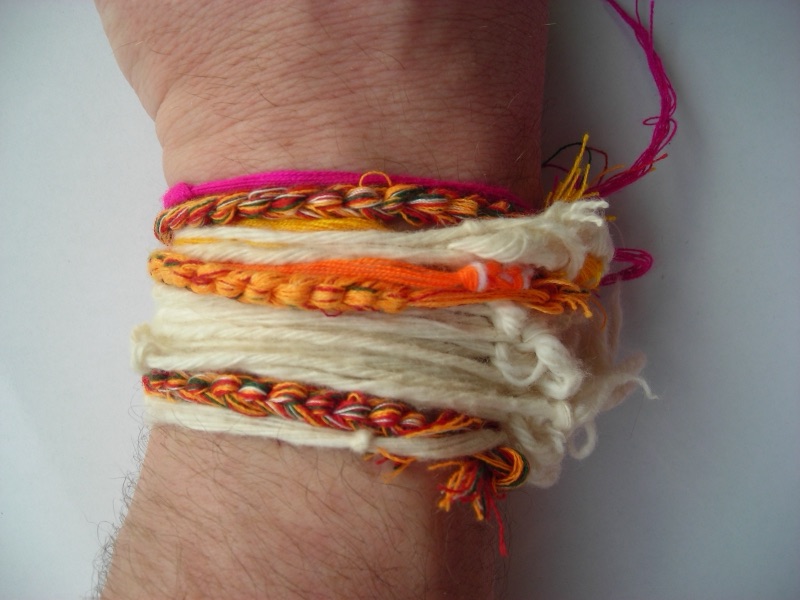
The rite that is easiest to picture is wrist-tying. The study records that weddings include calling the khwan and tying wrists, following the belief in the khwan. Kham Mueang calls it mat mue (มัดฯมื, Kham Mueang reading mat mue). The dictionary explains it as a rite that invites the khwan into a person, and it is also used to "show acceptance", for example tying a young man's wrists to show that he is accepted as a son-in-law.
The thread used is called fai mai mue (ฝ้ายฯไหมฯมื, Kham Mueang reading fai mai mue). The dictionary defines it as thread for tying wrists, such as that used to tie a married couple's wrists or to call the khwan. The calling of the khwan itself is hong khwan (ร้อฯงขัวฯร). For more on the 32 khwan and the calling verses, see Hong Khwan.
The new chest, the sword and chuea sa-li
The study records the meaningful objects of the older wedding: the new chest of cloth and the new kitchen set and the sword (dap, ดาปฯ, Kham Mueang reading dap) that the groom keeps at his side. It explains them as symbols of starting a new family and of security. The dictionary gives the sword only a plain meaning, a long pointed knife, and the phrase for the new chest and kitchen is not in the dictionary, so it is given in Thai only.
One more step the dictionary records is chuea sa-li (เจิอฯอสลี, Kham Mueang reading chuea sa-li): the elders prepare and lay out the couple's bed on the wedding day. It is also called pu sa-li, and the dictionary gives a line from the song "Sao Chiang Mai" as an example: "the elders lay out the bedding, the fine young man has vanished without a trace".
The son-in-law moves to the bride's home
One of the biggest differences from weddings today: the study records that the groom had to move in with the bride's family and work in the fields. The dictionary calls a son-in-law luk chai (ลูกชายฯ, Kham Mueang reading luk chai), and a spouse calls the other's mother mae thao (แม่เถั้า, Kham Mueang reading mae thao).
Being married with a household of one's own is pen ho pen rueang (เปนฯหํอฯเปนฯเริอฯร, Kham Mueang reading pen ho pen rueang). A married man is called pho rueang (พํอฯเริอฯร) and a married woman mae rueang (แม่เริอฯร). The study also records that Lanna people used to marry young and have many children, to widen the family network and to have hands for farm work.
From a household rite to a changing custom
Pattakan's study describes how the Lanna wedding began to change under outside influence in three main periods, a picture the researcher draws from documents and interviews.
- Siam's vassal era (1774–1899): Change happened among the elite, who were in contact with the Siamese court. They mixed the baisi offering, wearing the chong kraben, Western goods and royal regalia into the local rites, and the Siamese customs of betrothal and the water-pouring blessing began to spread.
- The administrative reform era (1899–1933): Elite weddings became less grand, and some people began to hold Siamese-style ceremonies. Interview information says the offering to ancestral spirits became something done quietly, because it was seen as backward. The sword and the new chest and kitchen were given less weight.
- Field Marshal Phibun's government (1938–1944): A campaign promoted the central Thai wedding form, with Buddhist rites and Western wedding dress, backed by local agencies in Lanna, starting with mass weddings.
Then from about the 1990s the Lanna wedding was revived. The study gives examples: the first Lanna wedding festival in 1998 with support from the Tourism Authority of Thailand, and in 2003 the Lanna wedding was added to Chiang Mai's tourism calendar. After that many providers made it into a wedding package.
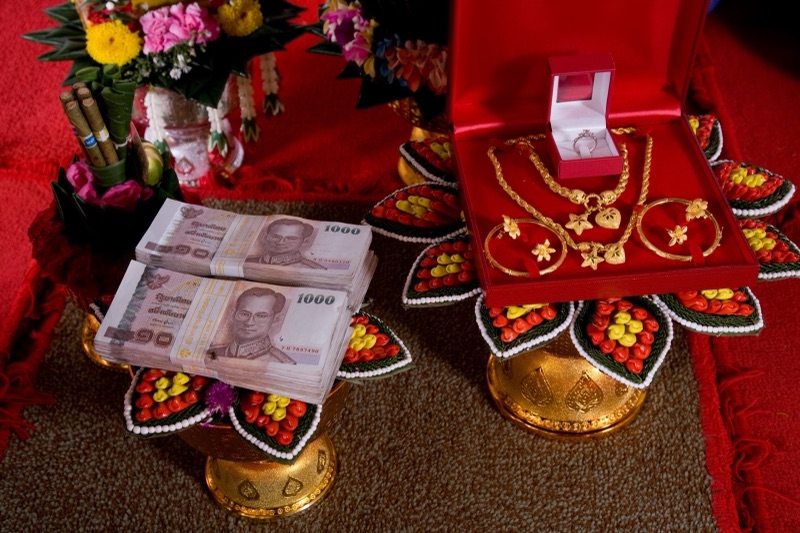
Besides reviving the baisi calling of the khwan, wrist-tying, and the chest and sword, these packages add other cultures: eating at a khantoke, a re-created kat mua market, and performances. They also include Buddhist rites, auspicious central Thai sweets, vintage cars and elephant rides. Pattakan concludes that providers try to build "staged authenticity" into the product, and that the Lanna wedding has become a cultural product that some people choose because they want to build a Lanna identity for themselves.
If you want to know how your own family or village does it, the elders at home are the best source, because the study itself accepts that details differ from area to area in Lanna.
Summary
- Kin dong is "to marry" in Kham Mueang, with other words such as ao mia, ao phua, chot mia and ku bao sao. The word "kin khaek" is not in the dictionary.
- Before the wedding come aeo sao, then asking for her hand (ja sao) and choosing a suitable day such as a hua riang mon day, outside the farming season.
- The study treats the heart of the ceremony as the offering to the ancestral spirits (paeng phi), which vouches for the marriage and shows kinship, followed by calling the khwan and mat mue.
- Ceremony items like the new chest and kitchen and the sword stand for a new family. The elders lay out the bed (chuea sa-li), and the groom moves to the bride's home.
- The customs changed with Siamese influence and state policy, then were revived as ceremonies and packages in the tourism era.
Look up more wedding words in the Moradok Lanna dictionary, and read on about the khwan-calling rite used at weddings in Hong Khwan.
📚 Whole series: see every stage of life on one map at Lanna Life Cycle: Customs from Birth to Death
Sources
- Moradok Lanna dictionary (in Thai): กิ๋นดอง · แป๋งผี · มัดมือ · เจี๋อสะลี · หัวเรียงหมอน · ผีปู่ย่า
- พัฒน์กานต์ จันทนา [Pattakan Chantana]. (2018). พิธีแต่งงานล้านนา: ภาพสะท้อนความเปลี่ยนแปลงของอัตลักษณ์ทางวัฒนธรรม [Lanna wedding ceremony: a reflection of changes in cultural identity]. In Thai. Kasalongkham Research Journal 6(2), 135–145 (Note: the online article page gives 2018, while the issue label says Jul–Dec 2012; we follow the online page.)
- พิพัฒน์พงศ์ มาศิริ และพงษ์วิกรานต์ มหิทธิพงศ์ [Phiphatphong Masiri and Phongwikran Mahitthiphong]. (2025). การถ่ายทอดเพศวิถีในสังคมจารีตล้านนาผ่านการขับซอเกี้ยวสาวเรื่อง "ใส่ผี" [The transmission of sexuality in traditional Lanna society through the courting so song "Sai Phi"]. In Thai. Journal of the Institute of Culture and Arts, Srinakharinwirot University 27(1), 40–53
Practise the words from this article
Flip through 30 flashcards of the Lanna words used in this article.


