
Photo: CEphoto, Uwe Aranas / Wikimedia Commons (CC BY-SA 4.0)
Ja Pai Means "Don't": How to Forbid in Kham Mueang
If you hear someone in Chiang Mai say ja pai (จะไพ, Kham Mueang reading ja pai) and think they are about to leave, you may have it badly wrong. In Kham Mueang, ja pai placed before a verb means "don't": ja pai kin is "don't eat", and ja pai pai is "don't go".
This lesson gathers every entry that begins with ja pai in the Moradok Lanna dictionary, 21 in all, and sorts them into easy groups: everyday warnings at home, lessons about character, and the strongest warning of all, ja pai pai pai pai. It ends with a short dialogue and a quiz.
The central Thai trap: ja pai does not mean "will go"
In central Thai, ja pai means "going to go". In Kham Mueang, when ja pai stands in front of another verb, it turns into a prohibition. The dictionary says ja pai is "placed before a verb to mean don't, not allowed to…", with these examples:
- ja pai pho = don't look
- ja pai wok = don't lie (wok, วอฯก, as a verb means to lie, to twist the truth)
- ja pai u nak = don't talk so much (nak, นักฯ, means much, very)
As for ya (อยฯา), the central Thai word for "don't", the dictionary marks it as a loanword and says plainly that "Lanna uses ja pai": ja pai pai (don't go), ja pai yia (don't do it), ja pai lon (don't run).
Ja comes from chak
The dictionary explains that ja (จะ) developed from chak (จักฯ), a helper word for the future, as in chak nang (will sit) and chak kin (will eat). It adds: "used with pai as ja pai, it means don't, telling someone not to do something or refusing to let them."
The dictionary has two headwords spelled ja pai (refs 2739 and 16888). The second only says "see ja", so they count as one word.
A simple formula: ja pai + verb
One formula covers almost any warning.
| Formula | Example | Meaning |
|---|---|---|
| ja pai + verb | ja pai kin · ja pai lon · ja pai yia | don't eat · don't run · don't do it |
| ja pai + verb + nak | ja pai u nak · ja pai kuet nak | don't talk so much · don't overthink |
| ja pai + verb + with… | ja pai cha kap man | don't negotiate with him, i.e. don't go pleading |
| ja pai + verb + tae noe | ja pai pai tae noe | don't go, I really mean it |
| ja pai + verb + thaem sam po song | ja pai yia thaem sam po song | never do it again |
All of these come from the dictionary: cha (to talk) in ja pai cha kap man, and thaem sam po song (แถมฯซาพํอฯสอฯง), "a second time; absolutely; ever again", as in ja pai ma thaem sam po song, "don't you ever show your face here again".
Ja pai at home: warnings heard every day
These are the phrases parents and grandparents say to children most often.
| Kham Mueang | Lanna script | Meaning (from the dictionary) |
|---|---|---|
| ja pai kin | จะไพกินฯ | don't eat |
| ja pai pai | จะไพไพ | don't go; an order not to go |
| ja pai fang | จะไพฟั่งฯ | don't rush, don't be hasty (ja pai + fang, to hurry) |
| ja pai u dang | จะไพอู้ดังฯ | don't talk loudly |
| ja pai dueat | จะไพเดิอฯด | don't make a noise, don't make a fuss |
| ja pai pak | จะไพปากฯ | don't speak, keep quiet, don't butt in |
| ja pai yia cha an | จะไพเยยฯะชะอั้นฯ | don't do that, don't do it that way |
| ja pai la pai khwang | จะไพละไพข้วฯางฯ | don't throw things away carelessly |
Ja pai la pai khwang can be shortened to pai la pai khwang (ไพลไพข้วฯางฯ). The dictionary's example is "pai la pai khwang noe", "don't go throwing things away, okay?"
More ja pai examples hide inside other entries: ja pai kham ma (don't be cruel to the dog) under kham (ฅํา), and ma suak ja pai chop man (the dog is fierce, don't tease it) under chop (จอฯบ).
Ja pai for character: don't lie, don't be stingy, don't show off
This group holds the elders' teachings. It shows how much Northern Thai culture values modesty, honesty and generosity.
| Kham Mueang | Lanna script | Meaning (from the dictionary) |
|---|---|---|
| ja pai khi chu | จะไพขี้จุ | don't lie |
| ja pai khi chi | จไพขี้ชิ | don't be stingy |
| ja pai uat mi | จไพอวฯดมี | don't show off your wealth |
| ja pai uat luak | จะไพอวฯดหัลฯวฯก | don't show off how clever you are |
| ja pai han kae tua | จไพหันฯแก่ต฿วฯ | don't be selfish |
| ja pai yoi pai yam | จะไพย่อฯยฯไพยำ | don't nitpick or nag (also pai yoi pai yam) |
| ja pai kuet nak | จะไพคึดฯนักฯ | don't overthink |
From mild to strong: ja pai pai → ja pai pai tae noe → ja pai pai pai pai
The same warning can be said at several strengths. The more words you add, the firmer it gets.
| Level | Kham Mueang | Lanna script | Meaning (from the dictionary) |
|---|---|---|---|
| 1 plain | ja pai pai | จะไพไพ | don't go |
| 2 out of worry | ja pai pai tae noe | จไพไพแท้เนิ้อฯ | don't go, I really mean it; forbidding out of care, because going may be dangerous |
| 3 repeated, serious | ja pai pai pai pai | จไพไพ ไพไพ | don't go, don't go (ja followed by pai four times) |
Level 2 adds tae (แท้), "true, real", and the softening ending noe. For level 3 the dictionary gives a lovely note: it is used "while the situation is happening, with a stern, serious face", because the adult has already warned out of worry, ja pai pai tae noe, but the child still looks as if they won't listen, so the warning is repeated more firmly.
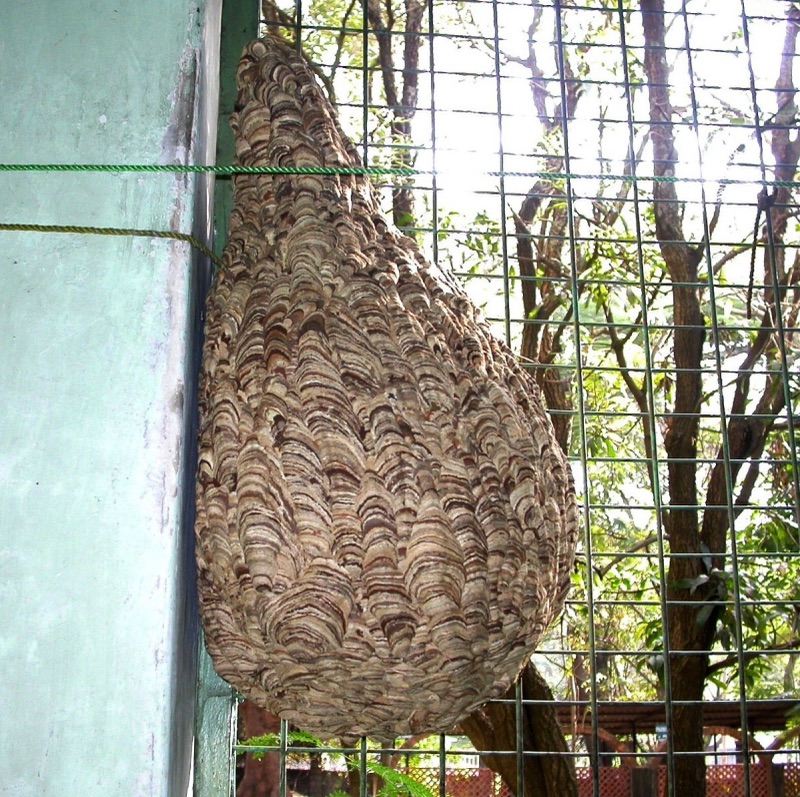
A saying: ja pai chi hang to lo hang taen
Literally "don't poke the hornets' nest, don't tease the wasps' nest", it means don't provoke someone, don't make them angry. Word by word:
- chi (จิ): to poke, prod, egg on
- hang (รังฯ): nest
- to (ตํอฯ): hornet, a venomous insect that swarms and stings when disturbed
- lo (ลํอฯ): to lure, tease
- taen (แตนฯ): wasp, a smaller relative of the hornet
Northern Thai people know how much it hurts when a hornet pi (ปี้), stings, so the saying warns you to keep away from someone who is angry, or from trouble you know will spread.
Other ways to say no: bo tong, bo di, ya, ham
Besides ja pai, Kham Mueang has gentler ways to say "you shouldn't".
| Kham Mueang | Lanna script | Meaning (from the dictionary) |
|---|---|---|
| bo tong | บต้อฯง | there's no need to…, it isn't right to… |
| bo di | บดี | before a verb: shouldn't, had better not, e.g. bo di pai (you shouldn't go) |
| bo lang di… | บห้ลฯางฯดี... | shouldn't, had better not, e.g. bo lang di pai (you'd better not go) |
| ya | อยฯา | don't (a loanword; Lanna uses ja pai) |
| ham | ห้ามฯ | to forbid, to tell someone to stop, as in "no entry", "no parking" |
Bo (บ) is a negative, not a prohibition: bo pai means "not going", but ja pai pai means "don't go". For more on bo, ko and ka, see Everyday Kham Mueang Verbs.
Try it: playing in the water at Pi Mai
This short dialogue is our own example for learners. It uses dictionary words such as kha chao (ข้าเจั้า, "I", polite, for women), len nam (เห้ลฯรนาฯ, to play in the water, to swim), nam mae (นาฯแม่, river), kua (ก฿ลฯวฯ, afraid) and lon (ล่฿นฯ, to run).
Child: Mae, kha chao pai len nam pi mai noe. (Mum, I'm going to play in the water for Songkran, okay?)
Mother: Pai dai, tae ja pai lon noe. (You can go, but don't run, okay?)
Child: Laeo pai len nam thi nam mae Ping dai ko chao? (And can I go swimming in the Ping River?)
Mother: Ja pai pai tae noe, mae kua. (Don't you dare go, I'm scared for you.)
(The child starts walking towards the river.)
Mother: Ja pai pai, pai pai! (Don't go, don't go!)
Child: Bo pai laeo chao. (I won't go.)
Mother: Di laeo. Koi koi pai, ja pai fang noe. (Good. Take it slowly, don't rush, okay?)
Quiz: what does ja pai mean?
Translate each phrase into English, then open the answers.
-
- ja pai kin
-
- ja pai khi chu
-
- How are ja pai fang and kha chai pho different?
-
- ja pai han kae tua
-
- Which is strongest: ja pai pai · ja pai pai tae noe · ja pai pai pai pai
-
- ja pai chi hang to lo hang taen
Answers
-
- Don't eat.
-
- Don't lie.
-
- Ja pai fang = don't rush; kha chai pho = quick, look (an order to hurry).
-
- Don't be selfish.
-
- Ja pai pai pai pai, said when repeating a warning with a serious face.
-
- Don't poke the hornets' nest, i.e. don't provoke someone.
Summary
- Ja pai + verb in Kham Mueang means don't: ja pai kin (don't eat), ja pai pai (don't go). Ya is a loanword.
- The Moradok Lanna dictionary has 21 entries beginning with ja pai, from home warnings like ja pai fang and ja pai u dang to lessons in character like ja pai khi chu and ja pai uat mi.
- The more you add, the stronger it gets: ja pai pai → ja pai pai tae noe → ja pai pai pai pai.
- The saying ja pai chi hang to lo hang taen means "don't provoke anyone".
- Always listen to context: ja pai as "will go" exists too, as in thaem kam ja pai non (in a moment I'll go to bed).
Look up more warnings in the Moradok Lanna dictionary, and learn the verbs that go with ja pai in Everyday Kham Mueang Verbs.
Sources
- Moradok Lanna dictionary (พจนานุกรมมรดกล้านนา): จะไป · จะ · อย่า · จะไปไปไปไป · จะไปจิ๋ฮังต่อล่อฮังแต๋น


