

Photo: Vyacheslav Argenberg / Wikimedia Commons (CC BY 4.0)
The Song Lanna, Lanna: Learn Kham Mueang from Our Song
Lanna, Lanna is a song by Moradok Lanna that tells the story of Lanna (ล้านฯนาฯ, Kham Mueang reading lan-na), from King Mangrai founding his city to the present day, when Lanna still lives on in the speech of the Khon Mueang (Northern Thai people). The lyrics alternate between spoken passages in Kham Mueang (Northern Thai) and sung verses, which makes the song ideal for practising reading and listening to Kham Mueang line by line.
This lesson is part of the series Kham Mueang through songs and literature. We will read the key passages of the song, break down the words, look up their meanings in the dictionary, notice the sounds that change from central Thai, and see how the song weaves its rhymes.
About the song Lanna, Lanna
Words and music: Ajarn Jaree Soontornsing
Artist: Moradoklanna · length 4:30
Released: on OverNormal on 3 October 2026. Listen to the full song and read the lyrics at overnormal.com/play/lanna-lanna-cinematic
The song has two clearly separate voices. The parts in quotation marks are spoken passages, telling the story almost entirely in Kham Mueang. The sung verses are mainly in central Thai, with Kham Mueang words placed at key points, such as hao (we), hit hoi (customs) and ai nong (brothers and sisters). So listeners across the country can follow the story, and learners hear real Kham Mueang at the same time.
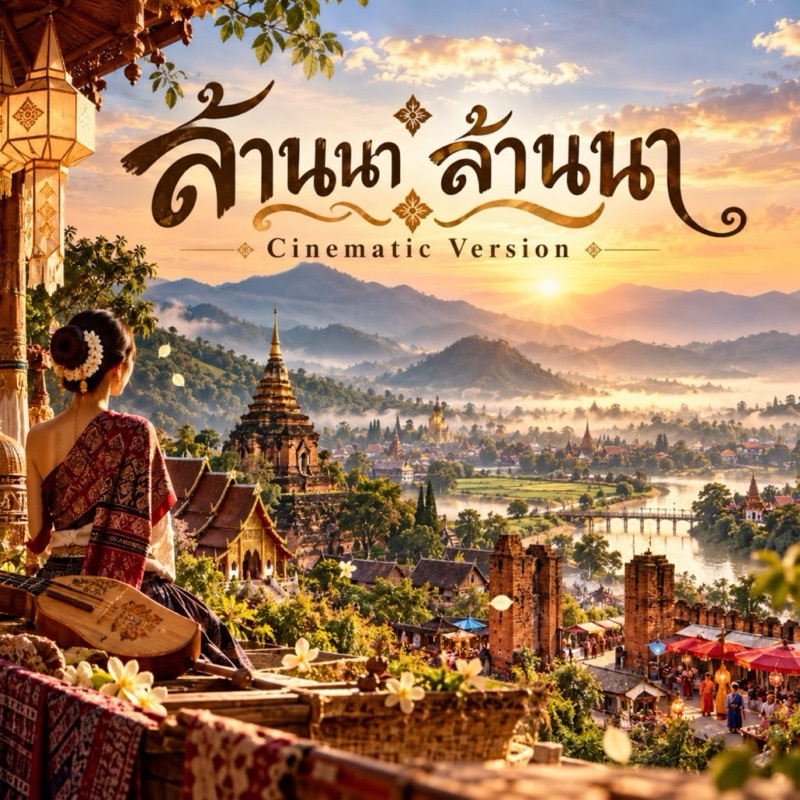
The opening speech: reading Kham Mueang phrase by phrase
The song opens with a spoken passage telling how this land came to be Lanna.
"ก่อนตี้จะมีกำฮ้องขาน... แผ่นดินนี้มีก้าขุนเขาและสายน้ำ... ตราบจนพญามังรายเจ้า รวบรวมเวียงวังจากหริภุญชัยสู่เวียงกุมกาม... แป๋งเจียงใหม่ขึ้นริมปิง... หลอมรวมหมู่เฮาเป็นหนึ่งเดียว... ฮ้องขานนามว่า... ล้านนา..." — opening speech of Lanna, Lanna (lyrics: Ajarn Jaree Soontornsing)
In English: "Before there was a name to call it by... this land had only mountains and rivers... until Lord Mangrai gathered the cities and palaces, from Hariphunchai to Wiang Kum Kam... built Chiang Mai beside the Ping... and melded our people into one... and called it by the name... Lanna..."
| Kham Mueang | Lanna script | Thai word | Meaning (from the dictionary) |
|---|---|---|---|
| ti | ที่ | (ที่) | a place, a locality; in the song, kon ti cha mi… means "before there was…" |
| kam | คําฯ | (คำ) | a word, words |
| hong | ร้อฯง | (ร้อง) | to cry out, to make a sound, and to call, as in mae hong luk, a mother calls her child |
| khan | ขานฯ | (ขาน) | to speak, to say, to utter, to call |
| mang-rai | มังฯรายฯ | (มังราย) | the name of King Mangrai; the dictionary gives the reading as mang-lai |
| wiang | วยฯง | (เวียง) | a town, a small city; it also means a wall or fortification |
| paeng | แปลฯง | (แปลง) | to make, to build, to create |
| chiang mai | ชยฯงไห่มฯ | (เชียงใหม่) | the city of Chiang Mai, Chiang Mai Province |
| mu hao | หู่เรัา | (หมู่เรา) | our own people, said in a familiar way |
Kam hong khan combines three words: kam (word), hong (to call) and khan (to call, to say), giving the sense of the name by which something is called. The passage says that before there was a name, this land had only mountains and rivers, until King Mangrai brought the cities together, paeng (built) Chiang Mai beside the Ping River, and united its people into one, and then "hong khan", called it by the name Lanna.
Hit hoi, pha-nya and kam u: words that say who we are
The middle of the song tells how the land changed over time, as powers from elsewhere came and drew new borders, but what never disappeared was faith, custom and language.
"…ศรัทธาแป๋งวัดแป๋งวา ฮีตฮอยงามสลอน... กี่ปีกี่ชาติตี้พ้นผ่าน ภัยพาลและอำนาจเปิ้นเข้ามา... แต่ผญาและวิญญาณของหมู่เฮา... บ่เคยสูญหายไปจากหัวใจ..."
In English: "…faith built temples and monasteries, fine customs stood out everywhere... through all the years and lifetimes that passed, the dangers and the power of others that came in... yet the wisdom and the spirit of our people... never vanished from our hearts..."
| Kham Mueang | Lanna script | Meaning (from the dictionary) |
|---|---|---|
| sattha (faith) | ระฯศัทธฯาฯ | belief, devotion, confidence in what is good; in the song, sattha paeng wat paeng wa means people's faith built the temples and monasteries |
| hit hoi | รีตฯรอฯยฯ | customs and traditions, the ways a group of people has handed down for a long time |
| sa-lon | สๆลฯอฯร | standing out in great numbers; hit hoi ngam salon means fine customs stand out everywhere |
| poen | เพิ่นฯ | a second-person pronoun for someone at a distance: he, she, they; amnat poen means the power of others |
Hit hoi comes from hit (custom; central Thai charit) and hoi (trace, footprint). Khon Mueang often say the two together, and there is an opposite expression, nok hit nok hoi, meaning not following custom and tradition.
The word pha-nya (ผญา) in the song means wisdom, knowledge built up over time. The Moradok Lanna dictionary notes under the word panya (wisdom) that "Lanna uses pha-nya", but it does not yet have an entry of its own, so it is written in Thai script for now.
The closing speech: hao, oen and ku khon
Before the last sung verse, the spoken passage turns to address the listener directly.
"ถึงแม้ขอบเขตจะเปลี่ยนไป... บ่มีแล้วคำว่าอาณาจักร... แต่สูเขาจงผ่อกอยเต๊อะ... ล้านนายังคงมีชีวิต... อยู่ในสายเลือด อยู่ในกำอู้ตี้เฮาเอิ้นหากัน!"
In English: "Even though the borders have changed... and the word 'kingdom' is no more... you should all look and see... Lanna is still alive... in our blood, in the words we call out to each other!"
| Kham Mueang | Lanna script | Meaning (from the dictionary) |
|---|---|---|
| su khao | สูเขัา | you all; a second-person plural pronoun |
| koi pho toe | คอฯยฯผํอฯเทิอฯะ | keep watching, please consider it (in the song the order is pho koi toe) |
| kam u | คำฯอู้ | speech, spoken words |
| hao | เรัา | we; a first-person plural pronoun |
| oen | เอิ้นฯ | to shout, to call out, to shout out a message |
The sentence "yu nai kam u ti hao oen ha kan" means "in the words we use to call out to each other". This is the heart of the song: Lanna is not only on a map or in history, but lives in the language that Khon Mueang still speak every day.
The song ends with the spoken line "lan-na... bo chai ka a-dit... tae man khue lom hai chai... khong hao ku khon..." ("Lanna... is not just the past... it is the breath... of every one of us..."). The word chai (ไช่) means yes, to be so (bo chai means "is not"), and ku khon (คู่ฅ฿นฯ) means everyone.
Kham Mueang sounds that differ from central Thai
Many Kham Mueang words in this song look like central Thai words, but their consonant sounds change in a regular way. The dictionary gives the Thai form of each word, so they are easy to compare.
| Central Thai sound → Kham Mueang | Examples from the song |
|---|---|
| ch (ช) → ch (จ) | chiang mai → chiang mai (เชียงใหม่ → เจียงใหม่) · chai → chai (ใช่ → ใจ้) |
| r → h | rong → hong · rit roi → hit hoi · rao → hao |
| kh (ค) → k | kham → kam · khu khon → ku khon |
| th → t | thi → ti |
| ph → p | phoen → poen |
| the consonant cluster disappears | plaeng → paeng |
Rhyme in the sung verses: four lines, one sound
Each sung verse has four lines, and the last words of all four lines rhyme on the same vowel. Look at the first verses and the refrain (the rhyming words are in bold).
- พญามังรายรวบรวมแว่นแคว้นให้ยิ่งใหญ่
- สถาปนาเชียงใหม่ริมปิงให้แสนกว้างไกล
- หลอมรวมผู้คนต่างเผ่าพันธุ์ด้วยหัวใจ
- ก่อเกิดเป็นอาณาจักรล้านนาอันเกรียงไกร
In English: King Mangrai united the lands into something great, founded Chiang Mai on the Ping to reach far and wide, melded peoples of many origins with heart, and so arose the mighty kingdom of Lanna. Rhyme: the -ai sound (yai, klai, chai, krai).
- ศรัทธาสร้างวัดวาอารามเชื่อมใจผู้คน
- สืบทอดภาษาคำเมืองผ่านทุกแห่งหน
- ผ้าทอผืนงามถักทอจากทุกชุมชน
- ฮีตฮอยล้านนาคงอยู่รอดพ้นความมืดมน
In English: Faith built temples that join people's hearts, Kham Mueang was handed down in every place, fine woven cloth came from every community, and Lanna's customs survived the darkness. Rhyme: the -on sound (khon, hon, chumchon, mon).
- ล้านนา ล้านนา... งดงามและแสนเพริศเพรา!
- เรื่องราววันวานคอยช่วยสั่งสอนและขัดเกลา!
- รอยยิ้มอ้ายน้องอบอุ่นเสมอเปรียบดั่งเงา!
- ล้านนา ล้านนา... ยังมีชีวิตในตัวเฮา!
In English: Lanna, Lanna... so beautiful and graceful! The stories of yesterday teach us and refine us! The smiles of our brothers and sisters are always warm, like a shadow! Lanna, Lanna... still alive in us! Rhyme: the -ao sound (phrao, klao, ngao, hao).
Notice the refrain: its last word is hao, a Kham Mueang word, yet it rhymes neatly with central Thai words such as phrao, klao and ngao. This single Kham Mueang word closes the refrain every time, so listeners sing along "yang mi chiwit nai tua hao" ("still alive in us") in the voice of the Khon Mueang themselves.
The refrain also has the word ai nong, which combines ai (อ้ายฯ, elder brother, or a term for a man older than oneself) and nong (น้อฯง, younger sibling), meaning all the brothers and sisters of Lanna.
The meaning of the song as a whole
Lanna, Lanna tells its story in three parts. First, a land of only mountains and rivers becomes a kingdom when King Mangrai unites the cities and builds Chiang Mai. Second, although time and outside powers change the borders, faith, hit hoi, woven cloth and the Kham Mueang language are still handed down. Finally, Lanna may no longer be called a kingdom, but it still lives in the blood and in the kam u (speech) of every Khon Mueang.
Summary
- Lanna, Lanna by Ajarn Jaree Soontornsing alternates spoken passages in Kham Mueang with sung verses in central Thai sprinkled with Kham Mueang.
- Its key words are kam hong khan (the name something is called by), paeng (to build), mu hao (our people), hit hoi (customs and traditions) and kam u (speech).
- Many central Thai sounds change into Kham Mueang in a regular way, such as r → h and ช, kh, th, ph → จ, k, t, p.
- Each sung verse uses one rhyming vowel across four lines, and the refrain closes with the Kham Mueang word hao.
- The message of the song is that Lanna still lives in the language the Khon Mueang speak.
Listen to the full song on OverNormal, look up more words from the song in the Moradok Lanna dictionary (in Thai), and read about the founder of Chiang Mai in the article King Mangrai.
More in this series: Saeng Prathip haeng Lanna · Kiang Kaeo, or see the whole series at Kham Mueang through songs and literature (in Thai).
Sources
- Moradok Lanna dictionary (in Thai): ล้านนา · ฮีตฮอย · กำอู้ · แป๋ง · หมู่เฮา · เอิ้น
- จรีย์ สุนทรสิงห์ [Jaree Soontornsing] (words and music). (2026). ล้านนา ล้านนา (Cinematic Version) [Lanna, Lanna (Cinematic Version)]. OverNormal (published lyrics). In Thai.
- Moradok Lanna. King Mangrai: founder of Chiang Mai, from Ngoen Yang to Wiang Kum Kam (Thai original: พญามังราย). Moradok Lanna blog.


