

Photo: Photo Dharma from Sadao, Thailand / Wikimedia Commons (CC BY 2.0)
Lanna's Revered Monks: The Khruba and Elders of the North
Lanna's revered monks (keji Lanna) are the monks whom people in Northern Thailand know and honour. But Lanna people themselves rarely call them keji; they use their own word, khruba (ระฯคูบาฯ, Kham Mueang reading khru-ba). This title does not come from any official rank. It comes from the faith of villagers who saw the monk's conduct and his works with their own eyes.
This article gathers short lives of ten monks Lanna people honour, from the elders who laid the foundations of Buddhism more than 600 years ago to the khruba and forest monks of recent times. All of them have passed away, and every story cites its sources at the end of the article.
Keji, khruba, ton bun: different words for monks
The word keji achan in the dictionary of the Royal Society of Thailand literally means, from its Pali roots, "certain teachers", and its meaning in use today is "a teacher believed to have knowledge and power in magic spells and in consecrating amulets". The word therefore points mainly to magical power.
The word khruba, on the other hand, is explained in the Moradok Lanna dictionary as "a social position of the Sangha, used only in Lanna culture". It honours a monk senior in rains retreats, strict in the discipline, a spiritual leader who "has visibly done good works for Buddhism". A khruba held in especially high esteem is honoured by villagers as a ton bun (ต฿นฯบุญ, Kham Mueang reading ton bun), "a saint, a person of merit".
Research by Pisith Nasee (2018) draws the same distinction. A khruba of the ton bun kind is honoured for his meditation practice and for leading the faith (sattha, ระฯศัทธฯาฯ, Kham Mueang reading sattha) of villagers to build and restore temples, while the keji achan, in the sense of a monk with magical power, belongs to another group tied to beliefs about luck and fortune. The researcher also concludes that in Thailand "khruba" is not an official ecclesiastical title but an honour the people give, because they feel the monk deserves it.
Ten revered Lanna monks at a glance
| Monk | Temple | Province | Life (CE) |
|---|---|---|---|
| Phra Sumana Thera | Wat Suan Dok | Chiang Mai | came to Chiang Mai in 1369 |
| Phra Ratanapanya Thera | Wat Pa Daeng | Chiang Mai | about 1473 – after 1535 |
| Khruba Siwichai | Wat Ban Pang | Lamphun | 1878–1939 |
| Khruba Aphichai Khao Pi | Wat Phra Phutthabat Pha Nam | Lamphun | 1889–1977 |
| Khruba Chaiyawongsa Phatthana (Khruba Wong) | Wat Phra Phutthabat Huai Tom | Lamphun | 1913–2000 |
| Khruba Phromma Phrommachakko | Wat Phra Phutthabat Tak Pha | Lamphun | 1898–1984 |
| Luang Pho Kasem Khemako | Susan Trailak | Lampang | 1912–1996 |
| Phra Ubali Khunupamachan (Fu Attasivo) | Wat Phra Singh | Chiang Mai / Phrae | 1901–1973 |
| Luang Pu Waen Suchinno | Wat Doi Mae Pang | Chiang Mai | 1888–1985 |
| Luang Pu Sim Phutthacharo | Wat Tham Pha Plong | Chiang Mai | 1909–1992 |
Roots: the elders who laid the foundations of Buddhism in Lanna
Phra Sumana Thera (Wat Suan Dok, Chiang Mai)
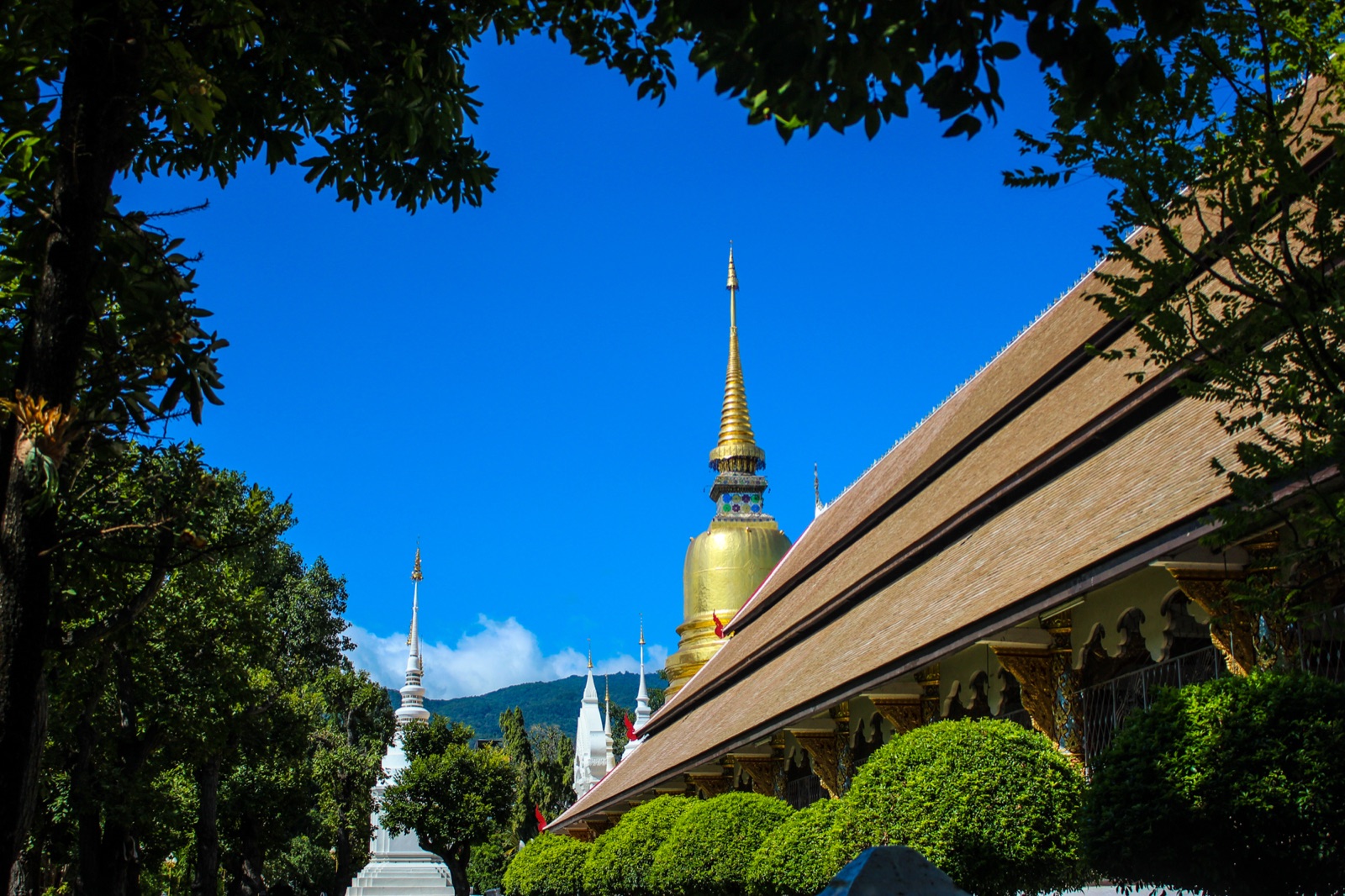
Phra Sumana Thera travelled from Sukhothai to Chiang Mai in 1369 at the invitation of King Kue Na (Phaya Kue Na), to spread Sri Lankan-lineage Buddhism. King Kue Na built Wat Suan Dok for him to reside in, and according to legend the relic of the Buddha he brought was enshrined on Doi Suthep. Read more in King Kue Na.
Phra Ratanapanya Thera (Wat Pa Daeng, Chiang Mai)
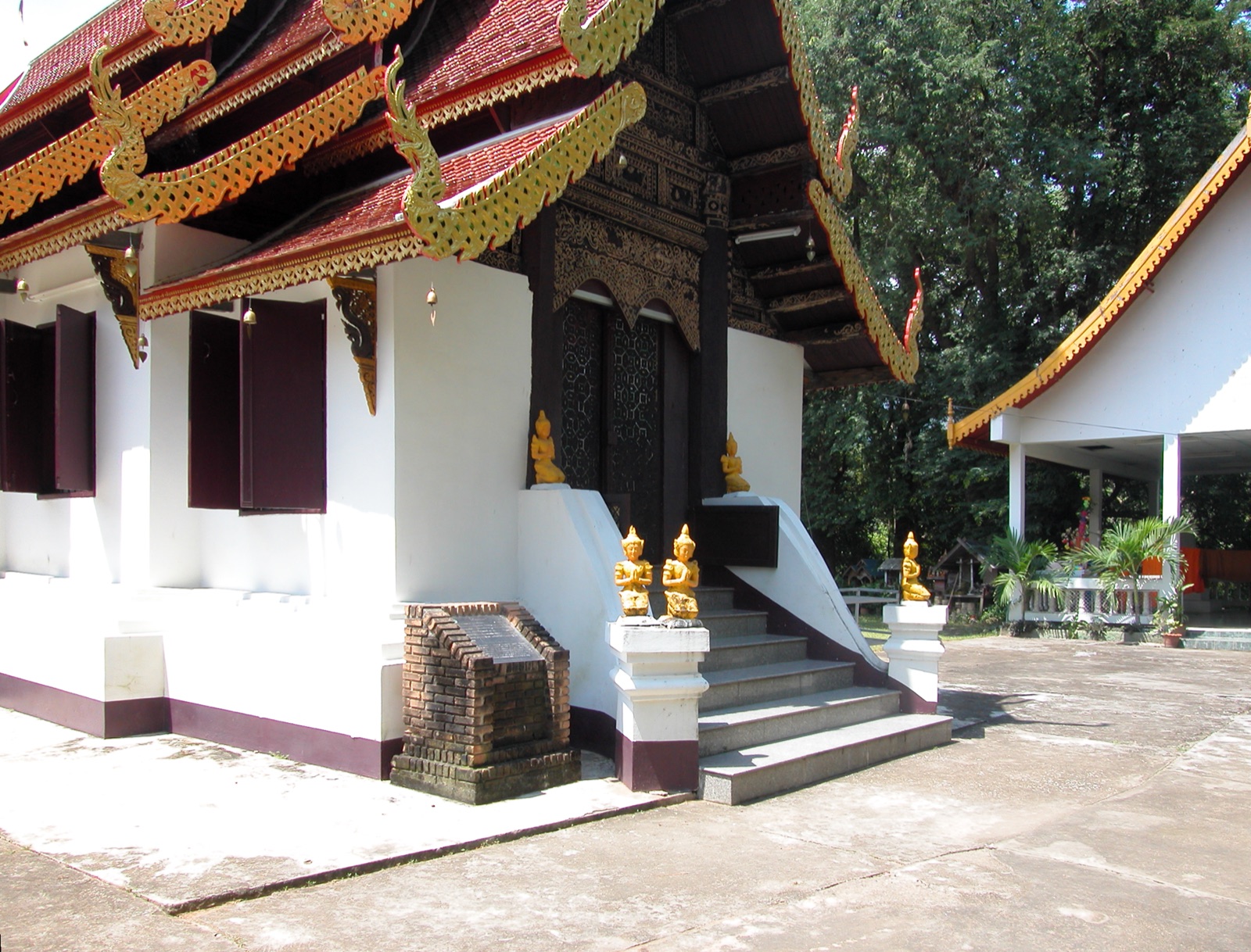
The scholar monk who composed the Jinakalamali, one of the most important Pali chronicles of Buddhism in Lanna. Its colophon says it was finished at Wat Pa Daeng in 1517. Scholars calculate that he was born around 1473–1474, in the reign of King Tilokarat. Read more in Phra Ratanapanya Thera.
Khruba Siwichai's line: the ton bun who built temples
Pisith Nasee (2018) writes that Khruba Siwichai's way is believed to have been carried on by his disciples Khruba Khao Pi and Khruba Wong. The three are often spoken of together as "the three great khruba of Lanna", and every younger khruba the researcher studied still claimed to follow Khruba Siwichai's way.
Khruba Siwichai (Wat Ban Pang, Lamphun)
Khruba Siwichai (ระฯคูบาฯระฯสีวิไชยฯ, Kham Mueang reading khru-ba si-wi-chai) was born at Ban Pang, Li District, Lamphun, in 1878. The dictionary records that he is known as the "ton bun", the saint, of Lanna. He led the faithful in restoring more than a hundred temples, and built the road up Doi Suthep, finished in 1935 entirely through villagers' labour.
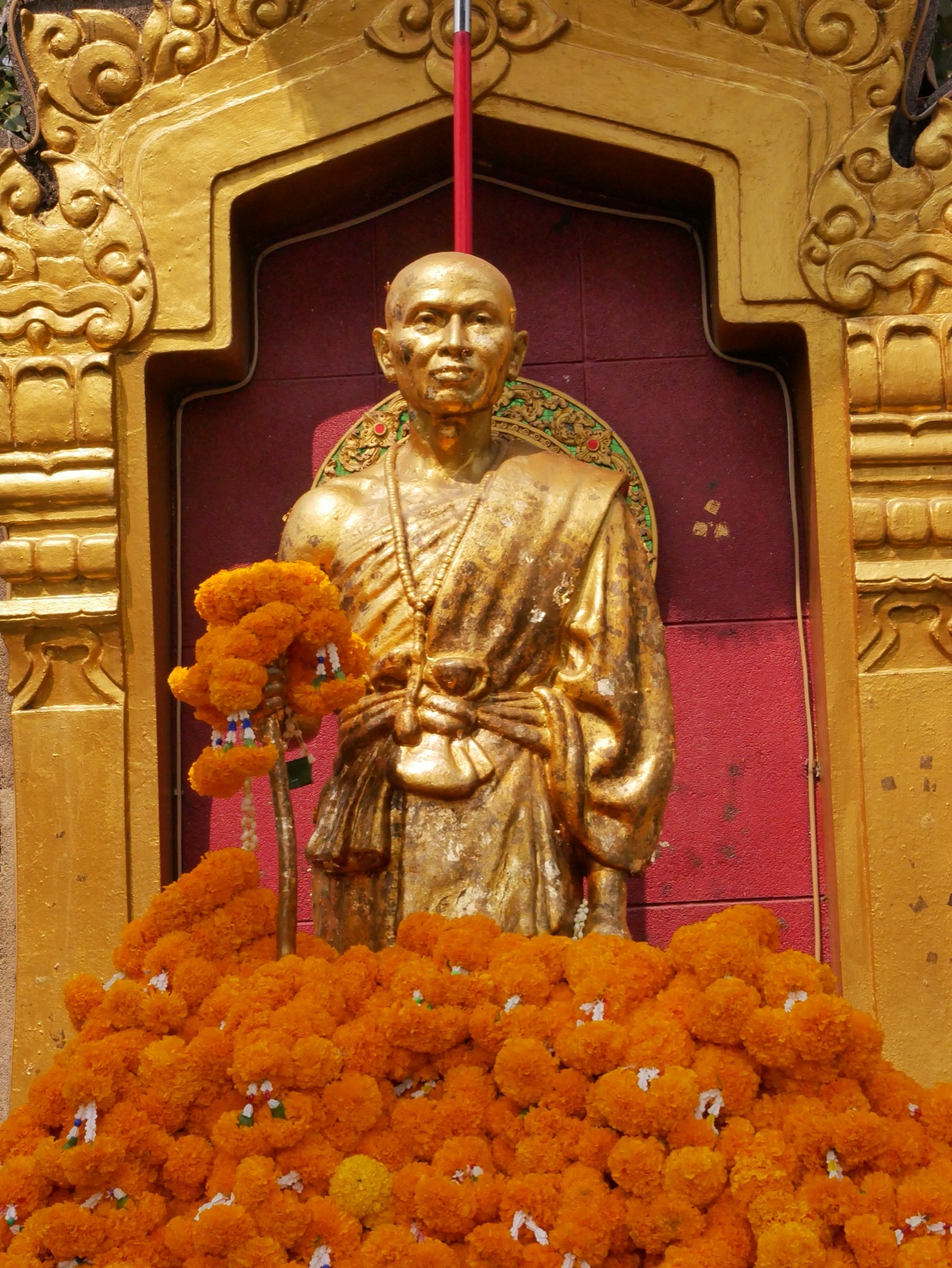
He also faced ecclesiastical charges several times, for ordaining monks and novices according to Lanna Sangha custom at a time when the centre was taking control of the Sangha's administration. He died at Wat Ban Pang in 1939. Read the full story in Khruba Siwichai.
Khruba Aphichai Khao Pi (Wat Phra Phutthabat Pha Nam, Lamphun)
Khruba Aphichai (1889–1977) was the closest disciple of Khruba Siwichai, as Pisith Nasee (2018) states, citing Khwanchiwan Buadaeng. Thai Wikipedia says his birth name was "Champi", that he was born in Li District, and that his mother entrusted him to Khruba Siwichai at Wat Ban Pang as a pupil when he was 16.
Later he was forced to leave the monkhood, so he wore white but kept the practice of a monk, and villagers called him "Khruba Khao Pi" (khao means white). His devoted Karen followers called him "the lord who wears white", paired with Khruba Siwichai, "the lord who wears yellow" (Pisith Nasee, 2018). He restored many temples and in his last years lived at Wat Phra Phutthabat Pha Nam, Li District.
Khruba Chaiyawongsa Phatthana, or Khruba Wong (Wat Phra Phutthabat Huai Tom, Lamphun)
Khruba Wong (1913–2000) became a novice at 13 and was ordained a monk at 20, with Khruba Phrommachak as his preceptor. He later came to reside at Wat Phra Phutthabat Huai Tom, Li District, and spent 34 years building the vihara over the Buddha's footprint (Payap University Library, citing Chiang Mai News, 2001).
His most notable work is the Huai Tom community. Pisith Nasee (2018) records ten villages that Khruba Wong founded around the temple, most of them Karen people who moved to live near him. Following the rules Khruba Wong laid down, the villagers strictly keep the Five Precepts, and do not raise animals or eat meat in the community. In 2015 the community received a government award as the first community in the country where every villager keeps the Five Precepts.
He died on 17 May 2000, which fell on Visakha Bucha. Every year on this day the temple holds a ceremony to change the robes on his body (Krungthep Turakij).
Khruba of Lamphun and Lampang
Khruba Phromma Phrommachakko (Wat Phra Phutthabat Tak Pha, Lamphun)
Khruba Phromma, or Phra Suphromyanathera, was born on 30 August 1898 at Ban Pa Phaeng, Pa Sang District, Lamphun. The Directory of Sangha Administrators records that he spent 20 rains retreats on thudong (ascetic wandering) across the North and in Burma, strictly keeping the ascetic practices, eating one meal a day and wearing robes made of discarded cloth.
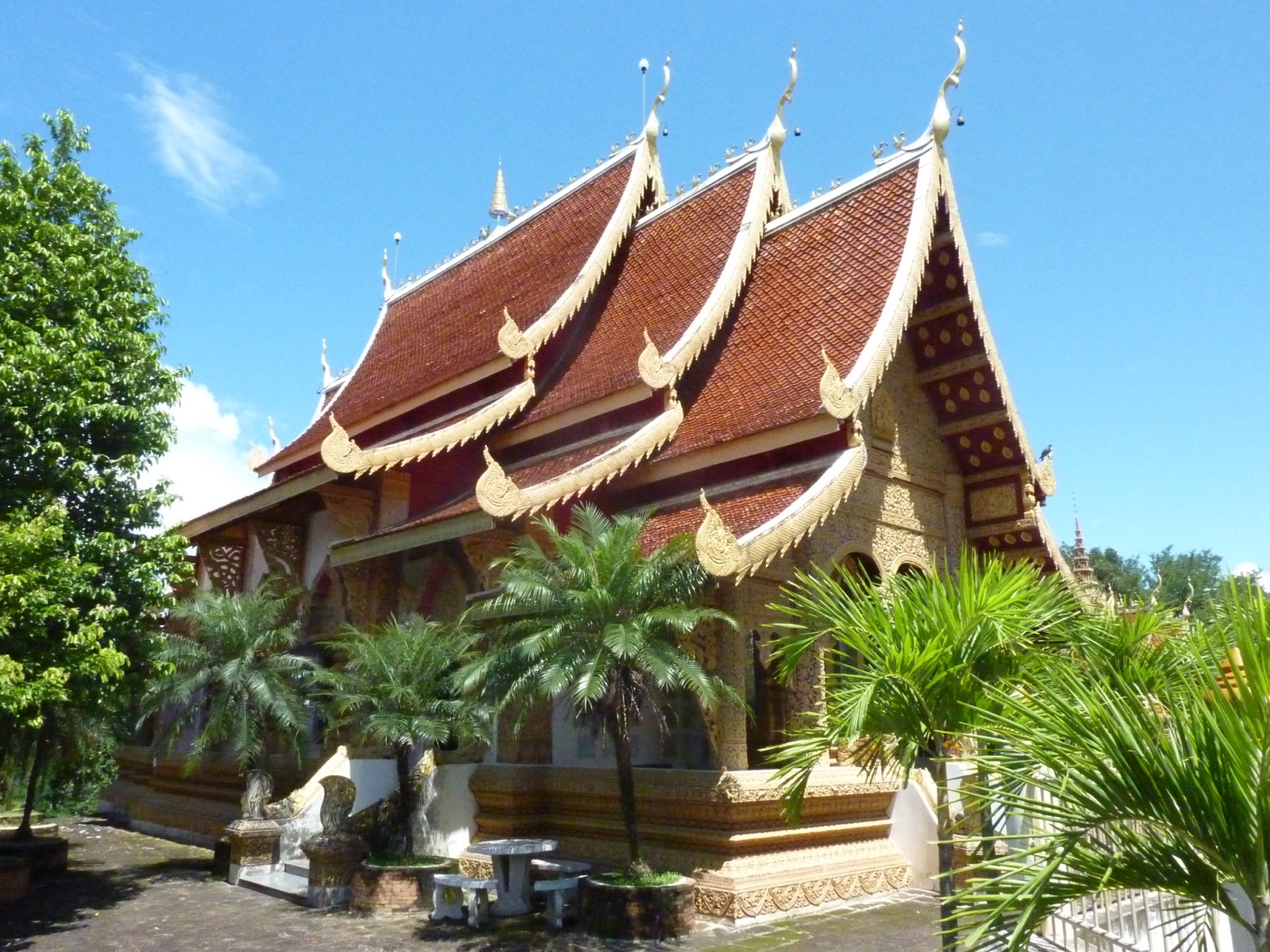
In 1948 he returned to reside at Wat Phra Phutthabat Tak Pha (the temple in this article's cover photo) and stayed there until his death. He extended the mandapa over the Buddha's footprint that Khruba Siwichai had once restored, built a school for monastic studies, and wrote several Dhamma books, such as questions and answers on morality, concentration and wisdom, to teach villagers to pha-wa-na (ภาวนาฯ, Kham Mueang reading pha-wa-na), that is, to train the mind according to Buddhist principles.
He died on 17 August 1984 while seated in meditation. His disciples kept his body for three years, and he received a royally sponsored cremation on 30 January 1988 (Directory of Sangha Administrators; his cremation memorial book).
Luang Pho Kasem Khemako (Susan Trailak, Lampang)
He is the example the Moradok Lanna dictionary gives under khruba chao for the kind "of northern princely descent". His birth name was Chao Kasem na Lampang, son of Chao Noi Nu and Chao Mae Bua Chon na Lampang, and grandson of Chao Luang Bunwatwongmanit, the last ruler of Lampang. Thai Wikipedia gives his date of birth as 28 November 1912.
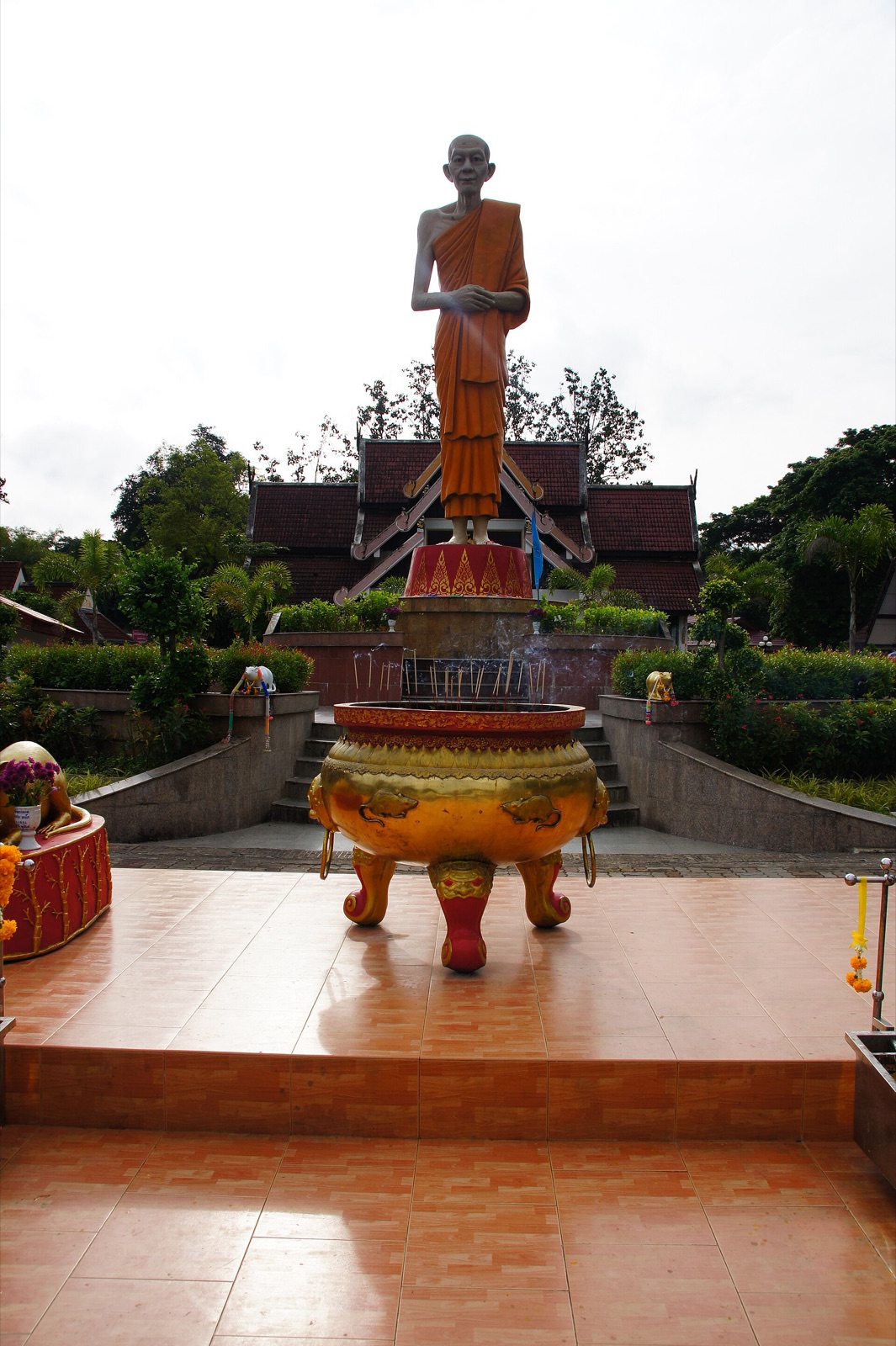
Although born into a princely family, he chose a solitary life and practised meditation at Susan Trailak, a cremation ground (Thairath). He died on 15 January 1996, aged 83, after 63 rains retreats. His body is still kept in a glass coffin at the Susan Trailak meditation centre, where people come to pay respects (Thai Post, 2022).
Scholar monks who laid the foundations of learning
Phra Ubali Khunupamachan (Fu Attasivo) (Wat Phra Singh, Chiang Mai)
Not every revered monk is famous for thudong or building. Phra Ubali Khunupamachan (1901–1973), a native of Phrae, was abbot of Wat Phra Singh and laid the foundations of monastic education in the North. He also edited the Soi Sangkon Vessantara, a version of the Tham Maha Chat preached at the Tang Tham Luang festival, and compiled Lak Phasa Thai Phayap, a grammar of Northern Thai. Read the full story in Phra Ubali Khunupamachan.
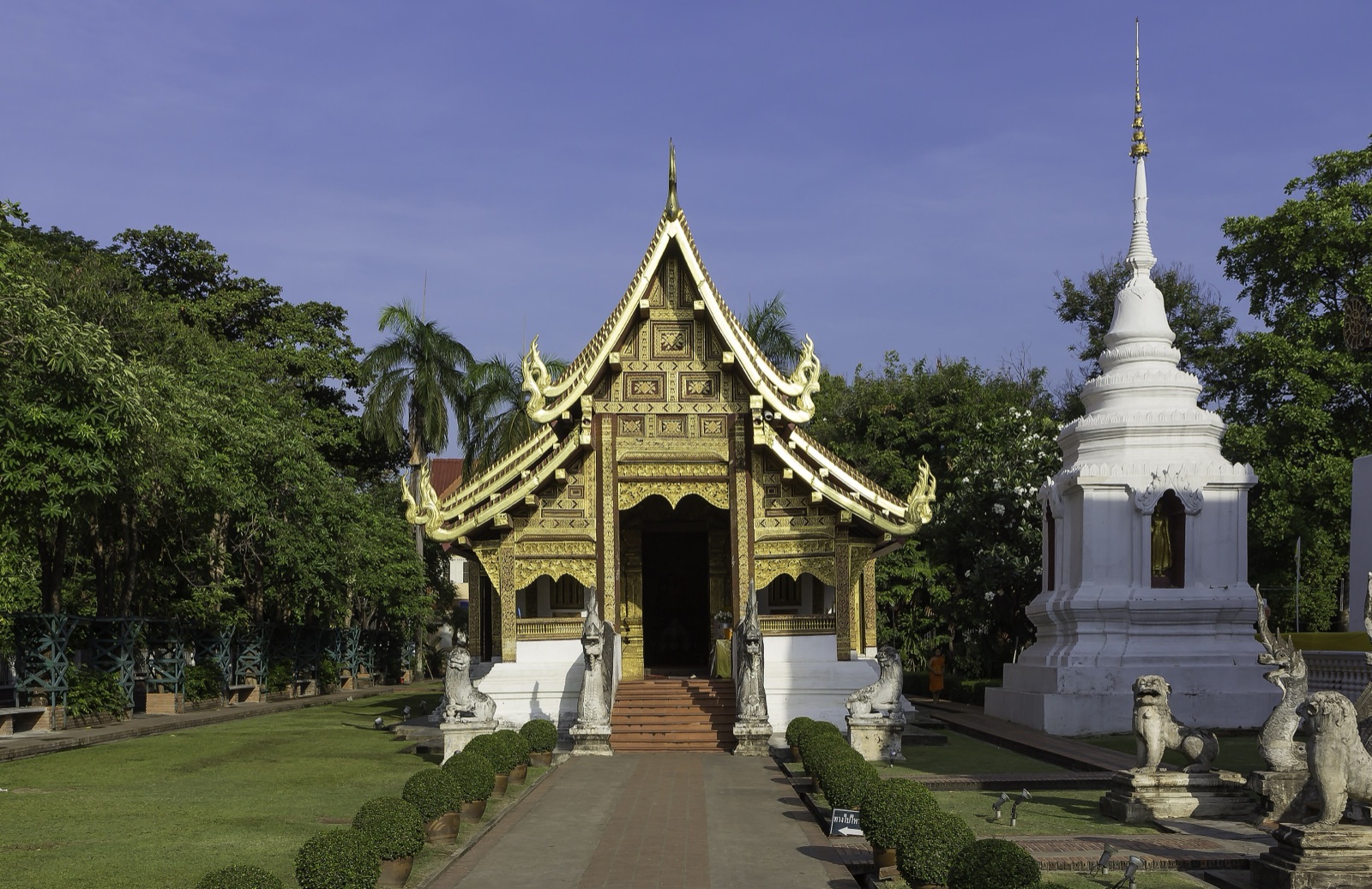
The song The Light of Lanna (แสงประทีปแห่งล้านนา) was written in his memory, with lyrics and melody by Ajarn Jaree Soontornsing, released by OverNormal.

Forest monks who settled in Lanna
The North is also where many forest monks of the line of Phra Ajarn Mun Bhuridatto practised. Born in the Northeast (Isan), they came to spend the rest of their lives in the forests and mountains of Chiang Mai, and Lanna people honour them no less than their local khruba.
Luang Pu Waen Suchinno (Wat Doi Mae Pang, Chiang Mai)
Luang Pu Waen was born in Loei Province in 1888 (some sources give 1887, by the old reckoning in which the new year began in April). He wandered on thudong and practised meditation for decades before settling at Wat Doi Mae Pang, Phrao District, where he died in 1985 (Thai Wikipedia; PostToday, 2017).
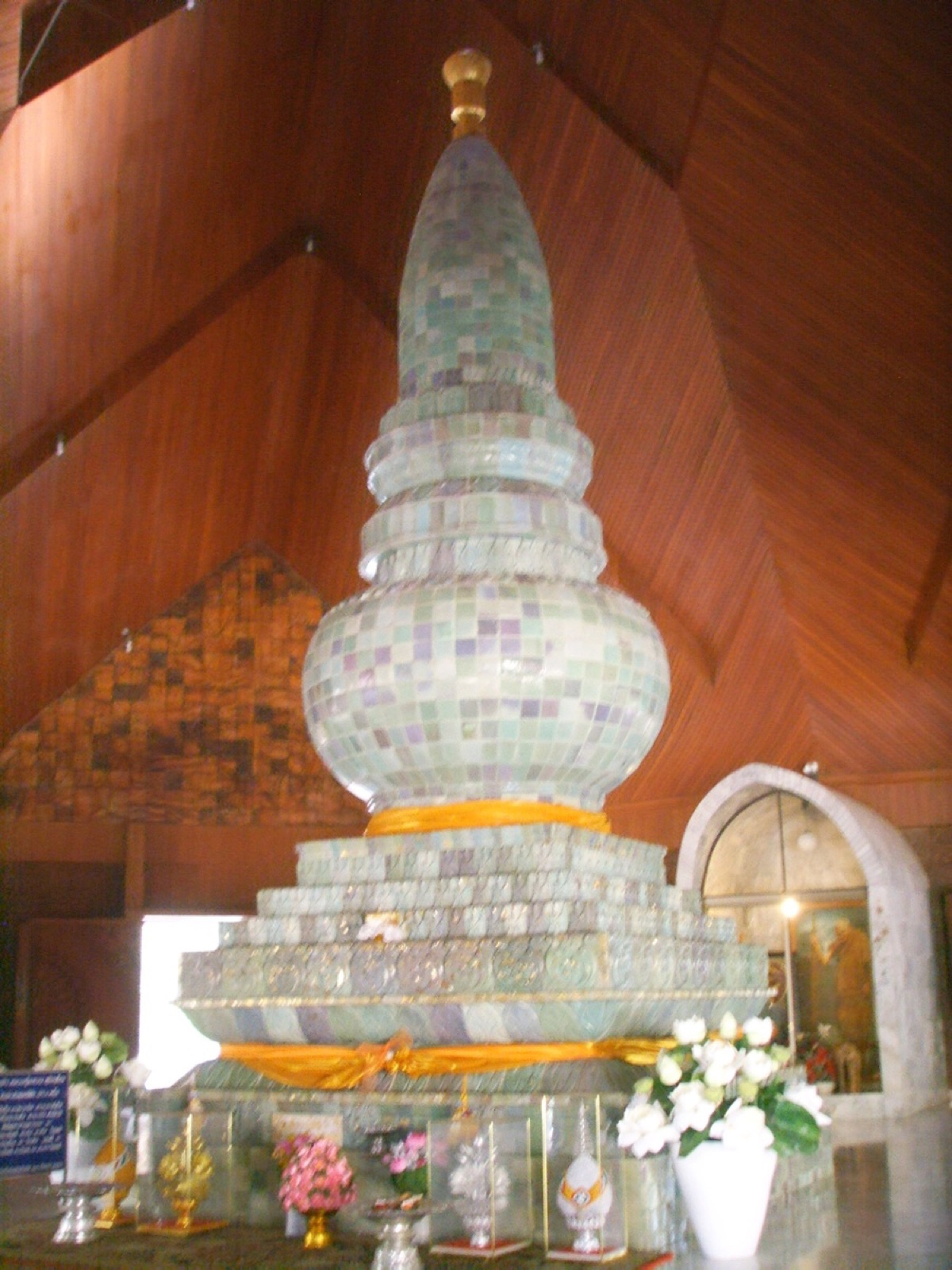
Faith in him still benefits the sick today. When he turned 90 in 1978, his disciples and the public donated to build the 15-storey Luang Pu Waen patient building at Maharaj Nakorn Chiang Mai Hospital, which has been receiving patients for more than 40 years (Daily News, 2022).
Luang Pu Sim Phutthacharo (Wat Tham Pha Plong, Chiang Mai)
Luang Pu Sim was born on 26 November 1909 in Phanna Nikhom District, Sakon Nakhon, and was a disciple of Phra Ajarn Mun. He was once abbot of Wat Santitham in Chiang Mai, then in 1967 went to found Tham Pha Plong in Chiang Dao District as a place of practice, and stayed there until his death on 14 August 1992 (Directory of Sangha Administrators; Dhammathai).
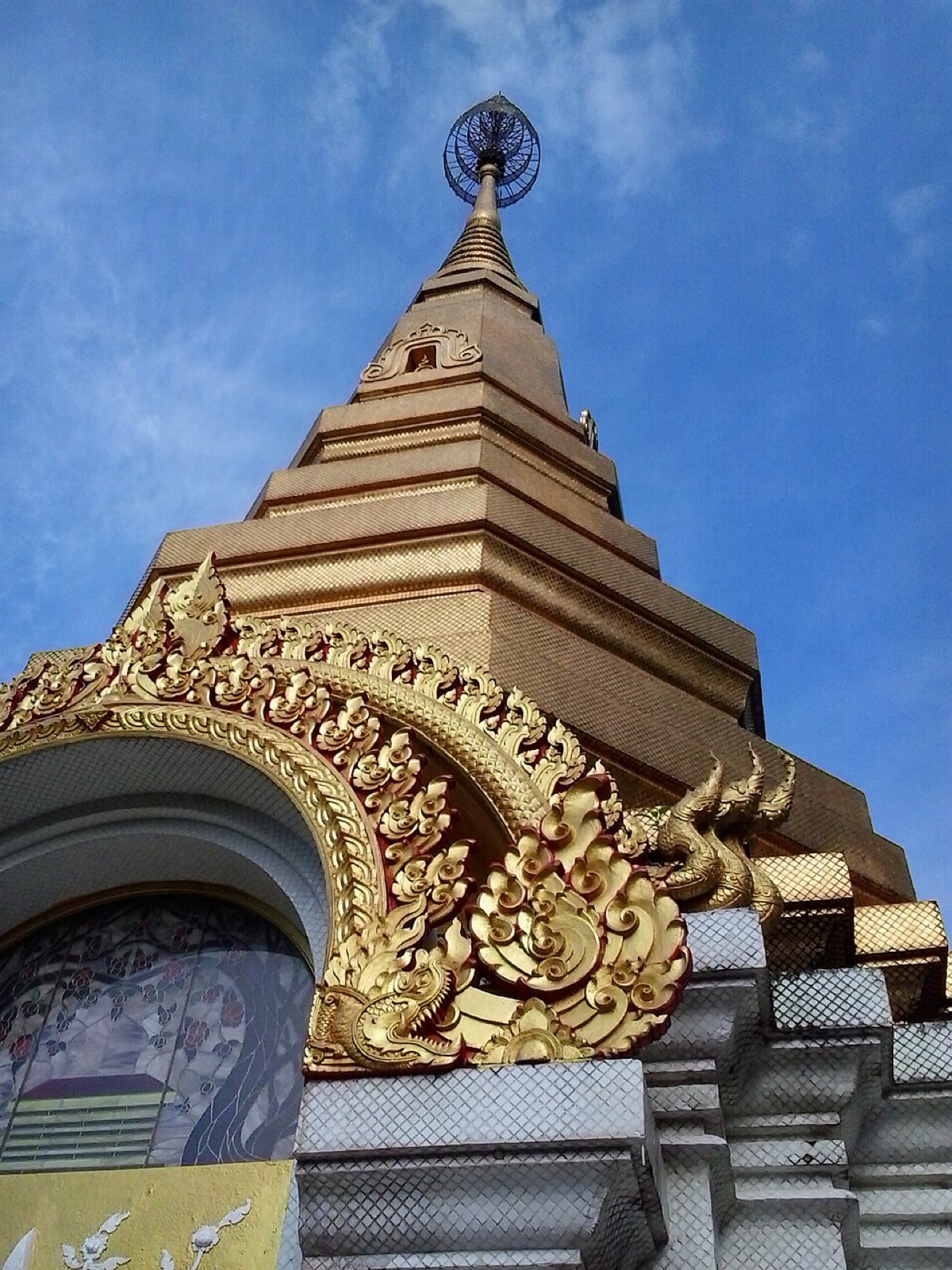
One of his teachings, quoted on the Dhammathai website, is to remember "we must die" with every breath in and out.
Summary
- Lanna people call the monks the faithful honour khruba, an honour given by the people, not an official ecclesiastical rank, while keji achan stresses belief in magical power.
- The most revered khruba are honoured as ton bun, saints, for their conduct and for leading villagers' faith to build temples and public works.
- Khruba Siwichai, Khruba Khao Pi and Khruba Wong are together called the three great khruba of Lanna, and all three had many Karen followers.
- Lanna also honours monks who came by other paths: a khruba chao of princely descent (Luang Pho Kasem), a scholar of monastic education (Phra Ubali Khunupamachan), and forest monks from Isan (Luang Pu Waen, Luang Pu Sim).
Look up ครูบา ต๋นบุญ ครูบาเจ้า and more Lanna words for monks in the Moradok Lanna dictionary (in Thai), and read about the temple celebrations that khruba and chao sattha (เจั้าสัทธฯาฯ, Kham Mueang reading chao sattha), the lay patrons, build together in the article Poy Luang.
Sources
- Moradok Lanna dictionary (in Thai): ครูบา · ครูบาเจ้า · ครูบาอุ๊กแก๊ส · ต๋นบุญ · ตุ๊เจ้า
- ราชบัณฑิตยสภา [Royal Society of Thailand]. พจนานุกรม ฉบับราชบัณฑิตยสถาน: เกจิอาจารย์ [Royal Institute Dictionary: keji achan]. (Accessed 12 October 2026.) In Thai.
- Pisith Nasee. (2018). Constructing the Charisma of Khruba (Venerable Monks) in Contemporary Thai Society. Southeast Asian Studies 7(2), 199–236.
- หอสมุดมหาวิทยาลัยพายัพ [Payap University Library]. ครูบาชัยวงศาพัฒนา (ครูบาวงศ์) [Khruba Chaiyawongsa Phatthana (Khruba Wong)]. (Citing Chiang Mai News, December 2001.) In Thai.
- กรุงเทพธุรกิจ [Krungthep Turakij]. ชุมชนปกาเกอะญอ วัดพระพุทธบาทห้วยต้ม [The Pgaz K'Nyau (Karen) community of Wat Phra Phutthabat Huai Tom]. In Thai.
- ทำเนียบพระสังฆาธิการ [Directory of Sangha Administrators]. พระสุพรหมยานเถร (พรหมา พฺรหฺมจกฺโก) [Phra Suphromyanathera (Phromma Phrommachakko)] · พระญาณสิทธาจารย์ (สิม พุทฺธาจาโร) [Phra Yanasitthachan (Sim Phutthacharo)]. In Thai.
- หอสมุดมหาวิทยาลัยธรรมศาสตร์ [Thammasat University Library]. หนังสืออนุสรณ์ในงานพระราชทานเพลิงศพ พระสุพรหมยานเถร (ครูบาพรหมา พฺรหฺมจกฺโก) ๓๐ มกราคม ๒๕๓๑ [Memorial book for the royally sponsored cremation of Phra Suphromyanathera (Khruba Phromma Phrommachakko), 30 January 1988]. In Thai.
- ไทยโพสต์ [Thai Post]. (2022). แห่ไหว้สังขาร 'หลวงพ่อเกษม' อดีตเกจิดังเมืองลำปาง [Crowds pay respects to the body of Luang Pho Kasem, the famous late monk of Lampang]. In Thai.
- ไทยรัฐออนไลน์ [Thairath Online]. (2020). "ปอ ประตูน้ำ" มุ่งทางธรรม ร่วมแจกทาน งานรำลึก ๒๔ ปี หลวงพ่อเกษม เขมโก ["Po Pratunam" turns to the Dhamma, joins in giving alms at the 24th memorial of Luang Pho Kasem Khemako]. In Thai.
- วิกิพีเดียภาษาไทย [Thai Wikipedia] (used as a lead): หลวงพ่อเกษม เขมโก [Luang Pho Kasem Khemako] · ครูบาอภิชัยขาวปี [Khruba Aphichai Khao Pi] · หลวงปู่แหวน สุจิณฺโณ [Luang Pu Waen Suchinno]. In Thai.
- สมาน สุดโต [Saman Sudto]. (2017). วันมรณภาพ หลวงปู่แหวนปีที่ ๓๒ [The 32nd anniversary of Luang Pu Waen's death]. PostToday. In Thai.
- เดลินิวส์ [Daily News]. (2022). ส่งต่อ 'สะพานบุญ' สมทบทุนปรับปรุงอาคารผู้ป่วย [Passing on a "bridge of merit": donations to renovate the patient building]. In Thai.
- ธรรมะไทย [Dhammathai]. หลวงปู่สิม พุทธาจาโร สำนักสงฆ์ถ้ำผาปล่อง [Luang Pu Sim Phutthacharo, Tham Pha Plong monastery]. In Thai.
- Articles on Moradok Lanna: King Kue Na · Phra Ratanapanya Thera · Khruba Siwichai · Phra Ubali Khunupamachan


