

Photo: Chainwit. / Wikimedia Commons (CC BY-SA 4.0)
Phra Ratanapanya Thera: Author of the Jinakalamali
Phra Ratanapanya Thera was the Lanna scholar monk who composed the Jinakalamali (Chinakalamali Pakon), a Pali text that is among those historians use most to study Lanna. He lived in the 21st century of the Buddhist Era (the late 15th and early 16th centuries CE), a period scholars call the golden age of Buddhism in Lanna, and resided at Wat Pa Daeng in Chiang Mai.
Lanna people call a learned person a chao pha-ya (เจั้าระฯบยฯา, Kham Mueang reading chao pha-ya), and the name "Ratanapanya" itself can be translated as one whose wisdom is like a gem. But, interestingly, this may not have been his original name, and scholars still debate who he really was.
Who was Phra Ratanapanya Thera?
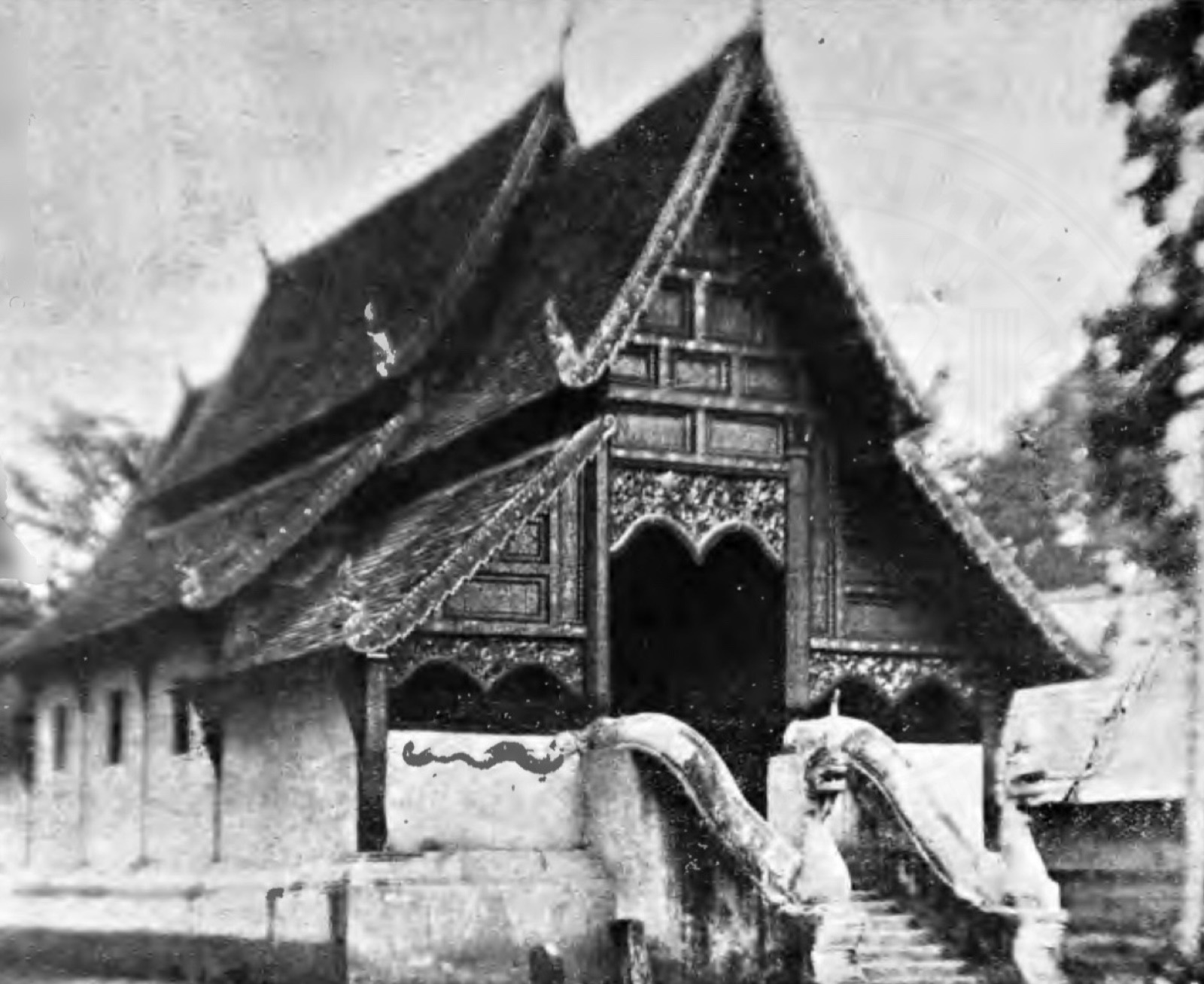
What we know about him comes mainly from the colophon of the Jinakalamali. It says that Phra Ratanapanya had been a monk for 23 rains retreats and lived in the Ratana Mahavihara built for him by a king who was the grandson of King Tilokarat. That king was King Mueang Kaeo, and the vihara is Wat Pa Daeng in Chiang Mai (Phra Phiyaphop Thanphanali and Sirisak Aphisakmontri, 2020).
A thera (เถรฯ, read then or the-ra) is a senior monk who has been ordained for a long time, while Lanna people call any monk a tu chao (ทุเจั้า, read tu chao), however many rains retreats he has spent.
- Born around 1473–1474, in the reign of King Tilokarat
- Ordained as a monk around 1493
- Composed the Jinakalamali at Wat Pa Daeng; the colophon says it was finished in 1517, when he was about 43
- The text itself continues the story up to 1527, in the reign of King Mueang Ket Klao
- Composed the Vajirasaratthasangaha in 1535, aged about 61, so he probably died after that year
Hans Penth (1995) calculates his birth as around 1473 CE, while Phra Phiyaphop and Sirisak (2020) give 1474.
A man of Chiang Rai ordained at Wat Phra Kaeo
Saeng Manavidura, who translated the Jinakalamali into Thai (1958), looked further into his life through the stories Lanna people tell, and recorded that "some affirm that he was a native of Chiang Rai, of the royal lineage of King Mangrai, ordained at Wat Phra Kaeo in Chiang Rai" (cited in Phra Phiyaphop and Sirisak, 2020).
Chiang Rai (ชยฯงรายฯ, Kham Mueang reading chiang hai) may therefore have been his birthplace. He later moved to reside in Chiang Mai (ชยฯงไห่มฯ, read chiang mai) in the reign of King Mueang Kaeo.
What does the name "Ratanapanya" mean?
The name comes from two Pali words: ratana (gem) and panya (ปั¡า, read pan-ya, wisdom). The Moradok Lanna dictionary records that panya is a loanword; Lanna people originally used pha-ya, as in chao pha-ya.
As for kaeo (แก้วฯ, read kaeo), one of its meanings in the dictionary is "a hard, clear stone, namely gems of various kinds". Lanna people also call the Buddha, the Dhamma and the Sangha kaeo tang sam (แก้วฯทังฯสามฯ, read kaeo tang sam), "the Three Gems", so kaeo is a word for honouring precious things.
The colophon contains a Pali verse explaining the origin of his name. Hans Penth (1995) compares the translations of this verse by three scholars: George Cœdès, N. A. Jayawickrama and Saeng Manavidura. All of them translate it the same way: the monk who lived in that vihara under the king's patronage was called "Ratanapanya" because his wisdom was like a gem.
Which Ratanapanya was he?
What has kept scholars debating for more than a hundred years is that the Jinakalamali itself mentions two other monks named Ratanapanya. At the consecration of the boundary markers (sima) at Wat Chet Yot (Maha Photharam) in 1511, more than 20 senior monks are listed, among them one Ratanapanya from Phayao (พะเยัา, read pha-yao) and another from Lampang (ลำพางฯ, read lam-pang), but no Ratanapanya from Chiang Mai (Penth, 1995).
Prince Damrong Rajanubhab wrote in the preface to the first printed edition (1908) that the author was probably one of these two monks named Ratanapanya, not a monk living in Chiang Mai.
George Cœdès argued in 1915 that the colophon clearly says the author lived at Wat Pa Daeng, Chiang Mai, and that he might have been the monk from Phayao or Lampang who moved to Wat Pa Daeng between 1511 and 1516.
Hans Penth (1995) suggests that "Ratanapanya" may be an honorific for a learned monk, which could be given to more than one monk. The author's real name might then appear in the list of monks at Wat Chet Yot under another name.
Evidence from a Phayao inscription
Hans Penth brings in the inscription of Wat Wisutharam near Phayao, dated 1506 CE. It says that the abbot of Wat Pa Daeng Luang in Phayao sent a senior monk named "Chayaphon Ratanapanya" to ask the king of Chiang Mai for permission to set up the inscription.
Penth observes that this looks like two names together: "Chayaphon", probably his real name, and "Ratanapanya", an honorific. He guesses that this monk may have caught the attention of the king and the abbot of Wat Pa Daeng in Chiang Mai, and later moved there. But Penth himself stresses that this is still only a guess.
The hon pa daeng monks of the Sri Lankan lineage
Wat Pa Daeng was the centre of the hon pa daeng monks (ห฿นฯป่าแดงฯ, Kham Mueang reading hon pa daeng), whom the dictionary describes as "monks of the school, or those who follow the teaching, of Wat Pa Daeng ... which is of the Lankawong lineage". The Jinakalamali calls this group the Sihala bhikkhu (Sinhalese monks). Penth (1995) explains that they were a reformist order of forest monks, the first group of whom went to Sri Lanka to be re-ordained in 1424 CE.
Before that, Lanna had the hon suan dok monks (ห฿นฯสวฯรดอฯก, read hon suan dok), whom the dictionary describes as the Lankawong "old sect". Both orders were Theravada Buddhism (เถรวาฯทฯ, read thera-wat), but descended from Sri Lanka in different periods.
The golden age of Lanna Pali literature
Scholars call the period from the reign of King Tilokarat (1441–1487) to that of King Mueang Kaeo (1495–1525) "the golden age of Buddhism in Lanna" (Sommai Premchit and colleagues, 2003, cited in Chumphon Suyata, 2024). A key starting point was the council to revise the Tipitaka at Wat Maha Photharam (Wat Chet Yot) in 1477, after which Pali texts were composed widely.
Many Lanna monks of this era were scholars (ผาช์ญฯ, Kham Mueang reading phat) of Pali. Chumphon Suyata (2024) gives examples of their works:
| Author | Main works | Year |
|---|---|---|
| Phra Nyanakitti Thera | the Atthayojana, commentaries on the Vinaya and Abhidhamma texts, 12 works in all | 1485–1500 |
| Phra Bodhiramsi | the Camadevivamsa and the Sihinganidana | not known for certain |
| Phra Nyanavilasa Thera | the Sankhyapakasaka, on counting, weights and measures | 1515 |
| Phra Sirimangalacariya | the Vessantaradipani, Cakkavaladipani and Mangalatthadipani | 1517–1524 |
| Phra Ratanapanya Thera | the Jinakalamali and two other works | 1517–1535 |
In 1517 two important Lanna Pali texts were completed: the Jinakalamali of Phra Ratanapanya Thera and the Vessantaradipani of Phra Sirimangalacariya. Phra Sirimangalacariya's Mangalatthadipani (1524) is still part of the Pali curriculum of the Thai Sangha today (Chumphon Suyata, 2024).
The works of Phra Ratanapanya Thera
The work of Chumphon Suyata (2024) and of Phra Phiyaphop and Sirisak (2020) lists three works by him:
- The Jinakalamali: a text that traces the story of the Buddhas in order of time, followed by the history of Buddhism in Sri Lanka, Hariphunchai and Lanna; finished in 1517.
- The Matikatthasarupa Dhammasangani: a short explanation of the Abhidhamma, composed around 1517–1522 (some sources call it the Matikatthasarupa Abhidhammasangani).
- The Vajirasaratthasangaha: a text that gathers the sources of key teachings from various verses, composed in 1535.
Phra Phiyaphop and Sirisak (2020) note that in the Jinakalamali he cites many Pali texts and Sri Lankan chronicles, such as the Dipavamsa, the Mahavamsa and the Milindapanha, which "shows very well the scholarship of Phra Ratanapanyanyana" (this study uses the name found in the opening salutation of the text, Phra Ratanapanyanyana).
The texts of Lanna monks at that time were inscribed (chan, จารฯ, read chan) on palm leaves (bai lan, ไบลานฯ, read bai lan) and kept in the temple's scripture library (ho tham, หํอฯธัม์มฯ, read ho tham). Moradok Lanna tells the story of the Jinakalamali itself, its content, manuscripts and translations, in the article Jinakalamali.
The legacy he left
The Jinakalamali was written in the late Mangrai dynasty, so historians use it as key evidence for dating Lanna eras and events, such as the council at Wat Chet Yot and the stories of important Buddha images. It is also one of the Pali works of Lanna monks that travelled as far as Ayutthaya and Bangkok, and has been translated into Thai, French, Sinhala and English.
So a Lanna bhikkhu (ภิกขฯ, read phik-khu), a monk who lived in the vihara (วิหารฯ, read wi-han) of Wat Pa Daeng 500 years ago, left writings that later generations still read and debate today, even down to his real name.
ชื่อและตัวตนของผู้แต่งชินกาลมาลีปกรณ์ยังคงไม่แน่ชัด — Hans Penth (Journal of the Siam Society, 1995)
(In English: "The name and identity of the author of the Jinakalamali remain uncertain.")
Summary
- Phra Ratanapanya Thera was the monk of Wat Pa Daeng, Chiang Mai, who composed the Jinakalamali, finished in 1517 when he had been a monk for 23 rains retreats.
- Scholars calculate that he was born around 1473–1474. The account recorded by Saeng Manavidura says he was from Chiang Rai and was ordained at Wat Phra Kaeo, Chiang Rai.
- The name "Ratanapanya" means one whose wisdom is like a gem. Hans Penth suggests it may be a sobriquet, so his true identity is still debated.
- He was a monk of the hon pa daeng order of the Sri Lankan lineage, and one of the scholars of the golden age of Lanna Pali literature, alongside Phra Nyanakitti Thera and Phra Sirimangalacariya.
- He wrote three works: the Jinakalamali, the Matikatthasarupa Dhammasangani and the Vajirasaratthasangaha (1535).
Look up more Lanna words about monks and learned people in the Moradok Lanna dictionary (in Thai), and read about palm-leaf texts and Lanna's sermon festival in the article Tang Tham Luang.
Read next: Lanna's revered monks, short lives of ten elders and khruba Lanna people honour, from the hon pa daeng scholars to the khruba of recent times.
Sources
- Moradok Lanna dictionary (in Thai): เจ้าผะหญา · หนป่าแดง · หนสวนดอก · แก้ว · บวช
- พระพีร์ญาภพพ์ ธารพนาลี และศิริศักดิ์ อภิศักดิ์มนตรี [Phra Phiyaphop Thanphanali and Sirisak Aphisakmontri]. (2020). วงศ์พระพุทธเจ้าในชินกาลมาลีปกรณ์ [The lineage of the Buddhas in the Jinakalamali]. Journal of Fine Arts, Chiang Mai University 11(1). In Thai.
- Penth, H. (1995). Which Ratanapañña Composed the Jinakalamali?. Journal of the Siam Society 83.
- จุมพล สุยะต๊ะ [Chumphon Suyata]. (2024). คุณค่าของคัมภีร์มังคลัตถทีปนีในฐานะวรรณกรรมต้นแบบของบาลีในประเทศไทย [The value of the Mangalatthadipani as a model work of Pali literature in Thailand]. Journal of Humanities, Mahamakut Buddhist University 16(1). In Thai.
Look up "เจ้าผะหญา" in the Moradok Lanna dictionary (in Thai)


