
Photo: Michael Garlick / Wikimedia Commons (CC BY-SA 2.0)
Amazing Grace in Kham Mueang: Every Verse Retold
Amazing Grace is an English hymn known all over the world: in churches, at memorials and in the sound of the bagpipes. It was written by John Newton, a former sailor who later became a Church of England clergyman. This article retells the six original verses in Kham Mueang (Northern Thai), using only words found in the dictionary, to see which words a Northerner could use to say the same things.
The first word of the hymn, "amazing", has an exact match in Kham Mueang: pun ngueat ปุรงืดฯ, which the dictionary explains as wondrous, astonishing. "Grace" has no single Kham Mueang equivalent. The closest dictionary word is phai phot ผายฯโผ฿ดฯ, meaning to be kind, to pity, to show tender care.
The words of the hymn were first printed in 1779 (B.E. 2322), and the author died more than two hundred years ago, so they are in the public domain. Unlike a song still under copyright, such as My Way, we can retell every verse and print the original beside it. We use the first printing in Olney Hymns, not the wording of any modern arrangement.
Where Amazing Grace comes from
The author. John Newton was born in 1725 and died in 1807, according to the Cowper & Newton Museum in Olney. He went to sea as a young man and worked on slave ships crossing the Atlantic, rising to ship's captain. On the night of 21 March 1748 his ship was caught in a violent storm. The museum records that this was the turning point that brought him back to faith, and that he marked the day every year afterwards.
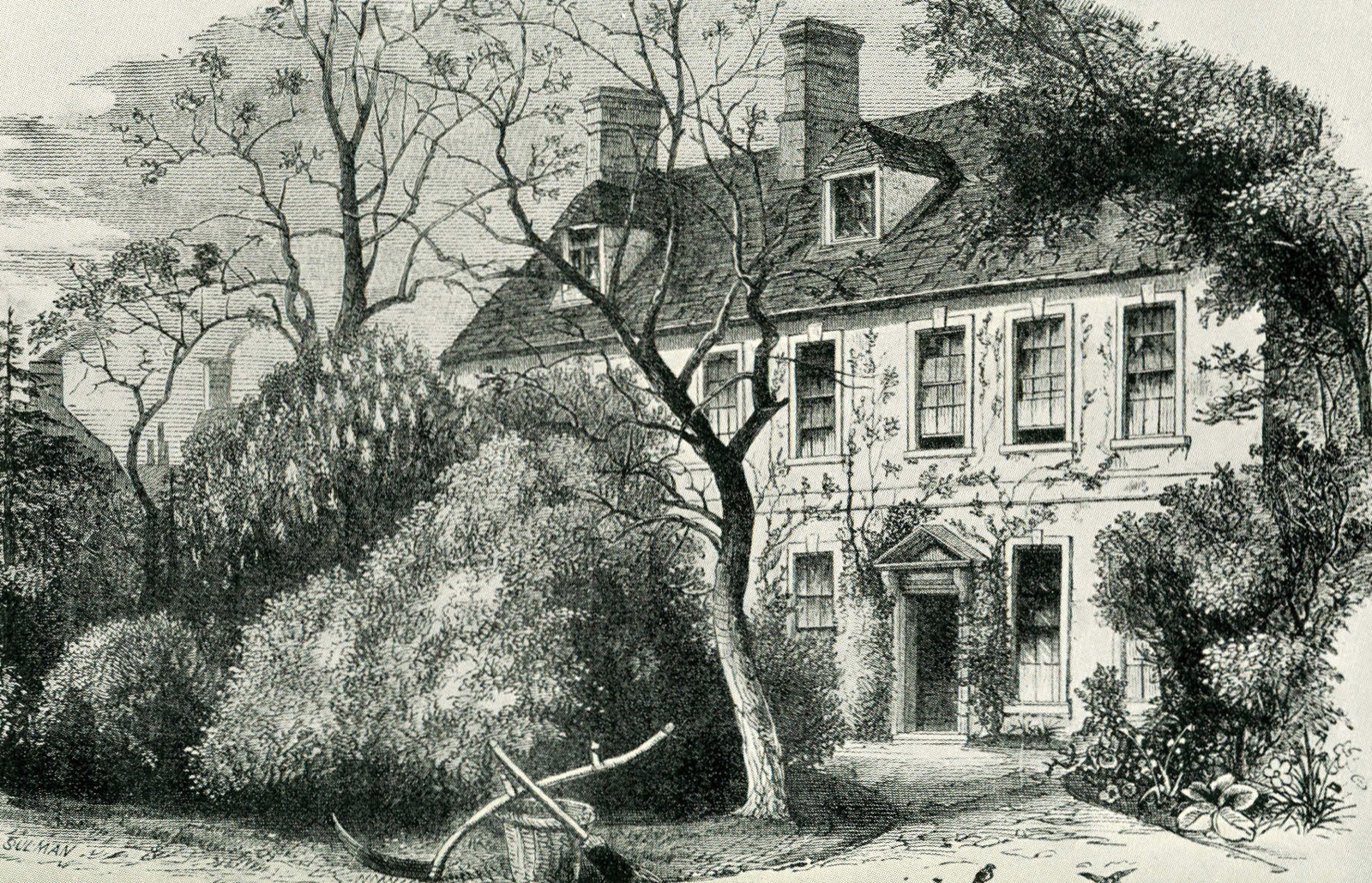
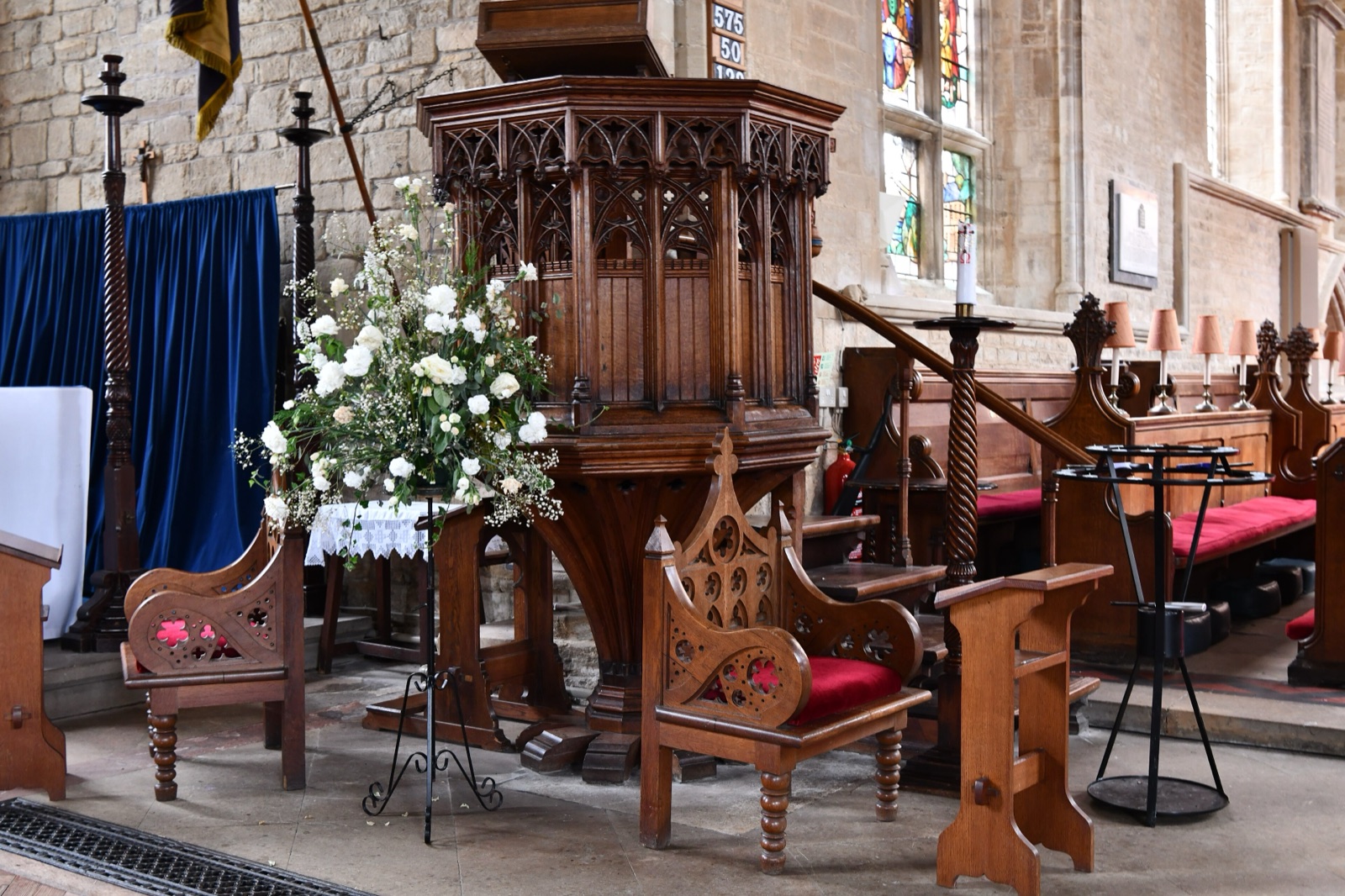
At Olney. Newton later served as the clergyman in charge of St Peter and St Paul's Church in Olney, a small town in the middle of England, from 1764 to 1779. The hymn was probably written in late December 1772 for the New Year's Day service of 1 January 1773, when Newton preached on 1 Chronicles 17:16–17. The museum quotes his diary for 22 December 1772, which says he was "composing hymns".
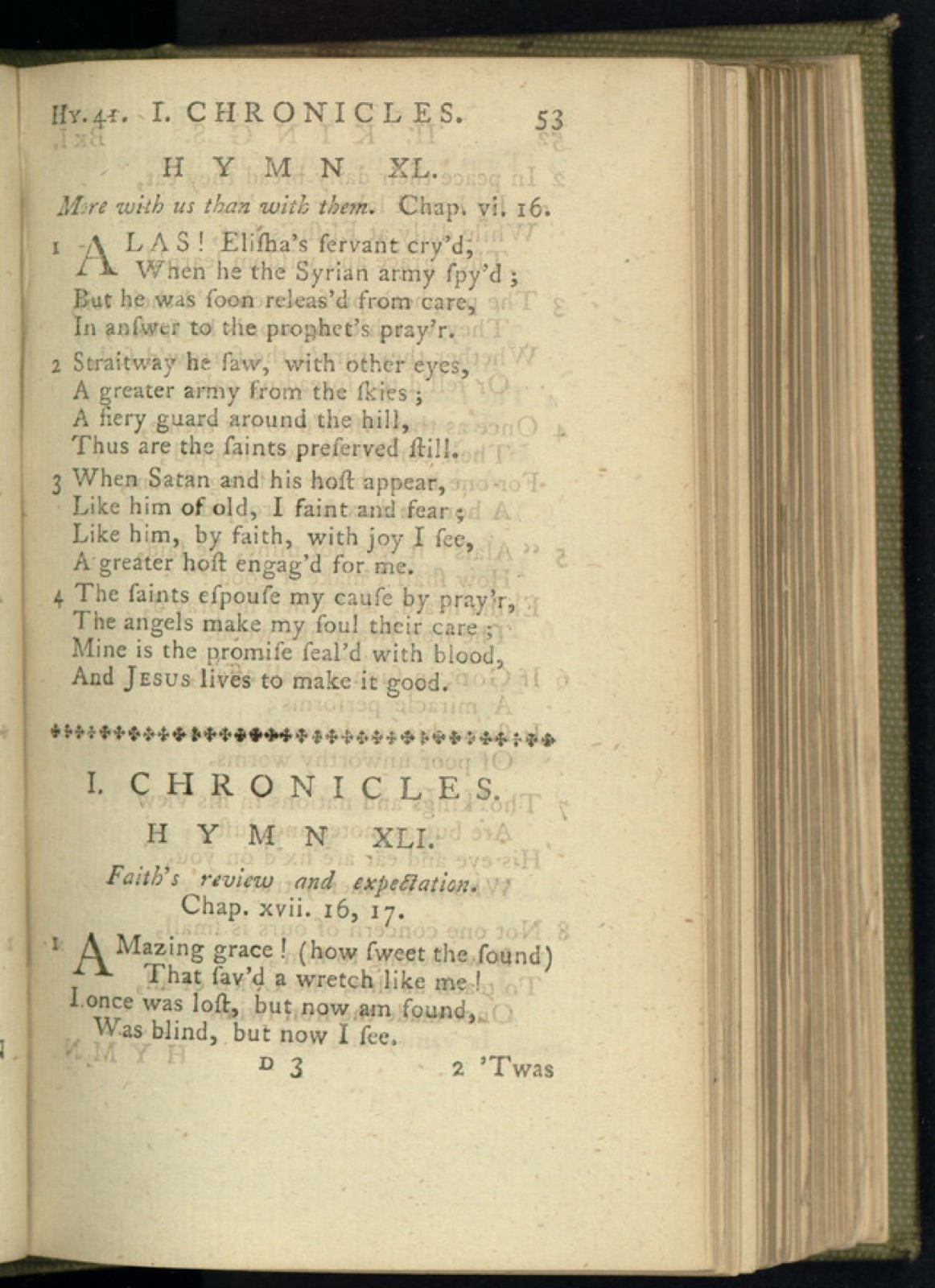
The first printing. The hymn was printed in Olney Hymns (1779), the hymn book Newton made with the poet William Cowper. According to a Library of Congress blog post, it did not yet have the title Amazing Grace: it was simply "Hymn XLI", headed "Faith's review and expectation", starting at the bottom of page 53. The sources count the book's hymns slightly differently: the Library of Congress gives 280 by Newton and 68 by Cowper, the museum 281 and 67.
The tune. In 1779 hymn books printed only the words, with no music. The museum says nobody knows for certain which tune was first used. The tune the whole world sings today is "New Britain", an American folk tune. Hymnary.org and Wikipedia agree that it was first joined to these words in William Walker's The Southern Harmony (1835 according to Wikipedia), and that Edwin Othello Excell made this version the standard in American churches between 1900 and 1910.
The "ten thousand years" verse. Many people know the verse that begins "When we've been there ten thousand years" (muen หื่มฯร pi ปี in Kham Mueang). But this verse is not by Newton and is not in the 1779 text. The sources disagree about where it came from: Hymnary.org traces it to a hymn by Elhanan Winchester (1784); Wikipedia to the song "Jerusalem, My Happy Home", quoted by Harriet Beecher Stowe in Uncle Tom's Cabin (1852). Both agree that Excell attached it to the end of the hymn in 1910. This article therefore retells only Newton's six verses.
Listen to the bagpipe version the world knows
There are thousands of recordings of this hymn. One of the best known is the bagpipe version by the military band of the Royal Scots Dragoon Guards, from the album Amazing Grace: Farewell to the Greys (℗ 1971), which Wikipedia records as reaching number 1 in the UK singles chart in 1972. It is instrumental, with no words: listen and try to follow each Kham Mueang verse in your head. The clip comes from the Royal Scots Dragoon Guards - Topic channel, uploaded to YouTube by the record label.

Verse 1: pun ngueat, once lost, now found
The first verse is the one everyone remembers. The singer says the grace he received is wondrous: it saved a sinner like him. He compares his life before and after: once lost but found, once blind but now able to see.
Original (Olney Hymns, 1779):
Amazing grace! (how sweet the sound)
That sav'd a wretch like me!
I once was lost, but now am found,
Was blind, but now I see.Kham Mueang rendering by MoradokLanna:
พระคุณนี้ปุ๋นงืดแต๊ (เสียงม่วนแต๊หนอ)
ตี้จ้วยคนบาปอย่างข้าไว้
ตะก่อนข้าหายไป ป่านอี้มีผู้มาป๋ะ
ตะก่อนต๋าบอด ป่านอี้ข้าหันแล้ว
("This grace is truly wondrous (how truly sweet the sound) / that saved a sinner like me. / Once I was lost; now someone has found me. / Once my eyes were blind; now I see.")
Tae แท้ means true, real, used for emphasis ("truly"). Siang สยฯง muan ม่วฯร is a sweet sound: the dictionary gives muan as pleasing, enjoyable, melodious, fun. Chuai ช่วฯย is to help or save, and bap บาฯปฯ is sin, wrongdoing. The dictionary also has thai bap ไถ่บาฯปฯ, "to help someone be free of sin", which is very close to the idea of this verse.
Ta kon ตก่อฯร means formerly, in the past. Kha ข้า is "I". Hai หายฯ means lost, not to be found, and pa ปะ means to meet, to find. Pan i ป่านฯอี้ means now, at this time: the exact opposite of ta kon. Bot บอฯด means unable to see, and han หันฯ in Kham Mueang means to see, not to turn. The dictionary's example is "koei han ko?", "have you ever seen it?"
Verse 2: afraid, then free of fear
The second verse says grace did two things: it taught the heart to fear, and then it took the fear away. And at the very hour the singer first believed, that grace seemed most precious.
Original:
'Twas grace that taught my heart to fear,
And grace my fears reliev'd;
How precious did that grace appear,
The hour I first believ'd!Kham Mueang rendering by MoradokLanna:
พระคุณนี้แหละตี้สอนหัวใจ๋ข้าหื้อฮู้จักกั๋ว
และพระคุณนี้แหละตี้เยียะหื้อความกั๋วหายไป
พระคุณนั้นมีก้าแต๊ ๆ
ในยามตี้ข้าวางเนื้อเจื้อใจ๋เตื้อแรก
("It was this grace that taught my heart to know fear, / and this grace that made the fear go away. / How truly precious that grace was / at the moment I first laid my trust in it.")
Hua chai ห฿วฯไจ is the heart. Kua ก฿ลฯวฯ is to fear; the dictionary's example is "kua tuk", to fear hardship. Ka ค่าฯ means value, worth. The most interesting word in this verse is wang nuea chuea chai วาฯงฯเนิ้อฯอเชิ่อฯอไจ, "to trust, to rely on": a vivid phrase, literally "to lay down body and heart" with what you believe in. Tuea เทิ่อฯอ means a time, an occasion, so "tuea raek" is the first time.
Verse 3: through many things, and then going home
The third verse looks back. The singer has come through many dangers, toils and snares, has arrived safely so far, and trusts that the same grace will lead him home. For Newton, who nearly lost his life at sea, these lines carry special weight.
Original:
Thro' many dangers, toils, and snares,
I have already come;
'Tis grace has brought me safe thus far,
And grace will lead me home.Kham Mueang rendering by MoradokLanna:
ผ่านอันตรายหลายอย่าง ผ่านความยาก ผ่านกับดัก
ข้ามาเถิงตี้นี้แล้ว
พระคุณปาข้ามาฮอดป่านอี้อย่างปลอดภัย
และพระคุณจะปาข้าเมือบ้าน
("Through many dangers, through hardship, through traps, / I have come as far as here. / Grace has led me safely all the way to now, / and grace will lead me home.")
Lai หลฯายฯ means many, much. Yak ยากฯ can be a noun in the dictionary: trouble, hardship, toil, which matches "toils". Ma thoeng มาเถิงฯ is to arrive, pa พา is to take, to lead, and hot รอฯด means to reach one's destination. The dictionary gives the saying "pai hot pai thoeng nip-pan", to reach all the way to Nirvana.
The last word of the verse is "home", and Kham Mueang has a warm word for it: muea ban เมิอฯอบ้าฯนฯ, "to go home" (Kham Mueang uses muea for to go, to return). The words for "snare" and "safe" are not in the dictionary as Kham Mueang words, so we keep the Thai.
Verse 4: a word given and a hope made firm
The fourth verse speaks of God in Christian belief: He has promised good, His word makes hope secure, and He will be both shield and portion for as long as life lasts.
Original:
The LORD has promis'd good to me,
His word my hope secures;
He will my shield and portion be,
As long as life endures.Kham Mueang rendering by MoradokLanna:
พระผู้เป็นเจ้าสัญญาสิ่งดีไว้หื้อข้า
กำของพระองค์เยียะหื้อความหวังของข้าหมั้นกุง
พระองค์จะเป๋นโล่ป้องข้า และเป๋นส่วนของข้า
ตราบเท่าตี้ข้ายังเป๋นอยู่
("The Lord has promised good things to me; / His word makes my hope firm. / He will be a shield to screen me, and my portion, / for as long as I am still alive.")
Di ดี in the dictionary is both a noun (the gall bladder) and an adjective meaning pleasing, as one wishes. Kam คําฯ is a word, speech. Wang หัวฯง is to hope, to expect, and man kung หั้มฯรคุง means firm, certain and lasting.
Pong ป้อฯง is to screen, to shield something off, the closest word for "shield" (there is no dictionary word for the shield itself). Suan ส่วฯร is a part, a share. The best word for the last line is pen เปนฯ: besides "to be", it also means still alive; the dictionary's example is "kai pen", a chicken that is still alive. So "as long as I am still pen" fits "as long as life endures".
Verse 5: joy and hom yen
The fifth verse speaks of the day when body and heart fail and earthly life ends. In Christian belief the singer will then have a new life "within the veil", a picture from the Bible meaning a life of joy and peace after death.
Original:
Yes, when this flesh and heart shall fail,
And mortal life shall cease;
I shall possess, within the vail,
A life of joy and peace.Kham Mueang rendering by MoradokLanna:
แม่นแล้ว เมื่อตั๋วกับหัวใจ๋นี้หมดแรง
และชีวิตบนโลกนี้สิ้นสุดลง
ข้าจะได้ชีวิตภายในม่านหั้น
ชีวิตตี้ม่วนใจ๋และฮ่มเย็น
("Yes, when this body and heart lose their strength / and life on this earth comes to an end, / I shall have a life within that veil, / a life of joy and peace.")
Maen แม่นฯ means true, right, correct, used for the affirming "Yes". Tua ต฿วฯ is the body. The word that fits "peace" best is hom yen ร่฿มฯเอยฯันฯ, which the dictionary explains as shady and cool, happy, untroubled, at ease. For "joy" we use muan chai, from muan (pleasing, enjoyable), already met in verse 1.
For a Northern word for the world above, the dictionary has chan fa ชั้นฯฟ้า (the "tiers of the sky"): the sky city, the home of the devas, heaven. But this word comes from a Buddhist and Thai picture of the world, which does not match Christian belief, so we do not use it in the rendering and keep "within the veil" as in the original (the words for veil and life are not in the dictionary as Kham Mueang words).
Verse 6: the land melts, the sun stops shining
Newton's last verse uses the biggest pictures of all: the earth will melt away like snow and the sun will stop shining, but the God who called the singer into the world below will be his for ever.
Original:
The earth shall soon dissolve like snow,
The sun forbear to shine;
But GOD, who call'd me here below,
Will be for ever mine.Kham Mueang rendering by MoradokLanna:
ผืนแผ่นดินจะละลายหายไปเหมือนน้ำแข็งไน่
ต๋าวันจะบ่ส่องแสง
แต่พระผู้เป็นเจ้า ผู้ฮ้องเฮียกข้ามาอยู่ตางลุ่มนี้
จะอยู่กับข้าไปตลอด
("The land will melt away like melting ice; / the sun will not shine its light. / But the Lord, who called me to live here below, / will stay with me always.")
Phuen phaen din ผืนฯแผ่นฯดิ is the land, the earth. Snow is not in the dictionary, since it does not snow in northern Thailand; the nearest word is nam khaeng nai น้ำฯแขังฯไน่, ice melting. Ta wan ตาวันฯ is the sun, song ส่อฯง is to shine, and saeng แสงฯ is light, what lets the eyes see.
"Here below" matches the Kham Mueang tang lum ทาฯงฯลุ่ม exactly: the dictionary says the lower side, below. Hong ร้อฯง is to cry out, to call, which serves for "call'd". We kept the last line simple, because "for ever" has no Kham Mueang dictionary word.
The words at a glance
| Idea in the hymn | Kham Mueang words | Dictionary meaning |
|---|---|---|
| amazing grace | pun ngueat ปุรงืดฯ · phai phot ผายฯโผ฿ดฯ · phot pha ni โผ฿ดฯผานี | wondrous · kind, tender · to show mercy |
| sweet sound, saving a sinner | muan ม่วฯร · chuai ช่วฯย · thai bap ไถ่บาฯปฯ | melodious · to help · to free from sin |
| lost and found, blind and seeing | hai หายฯ · pa ปะ · bot บอฯด · han หันฯ | lost · to meet, find · unable to see · to see |
| then and now | ta kon ตก่อฯร · pan i ป่านฯอี้ | formerly · now |
| fear and trust | kua ก฿ลฯวฯ · wang nuea chuea chai วาฯงฯเนิ้อฯอเชิ่อฯอไจ | to fear · to trust, rely on |
| arriving and going home | ma thoeng มาเถิงฯ · pa พา · muea ban เมิอฯอบ้าฯนฯ | to arrive · to lead · to go home |
| a firm hope | wang หัวฯง · man kung หั้มฯรคุง · pong ป้อฯง | to hope · firm, lasting · to shield |
| still alive, at peace | pen เปนฯ · hom yen ร่฿มฯเอยฯันฯ | still alive · peaceful, happy |
| earth, sun, below | phuen phaen din ผืนฯแผ่นฯดิ · ta wan ตาวันฯ · tang lum ทาฯงฯลุ่ม | the land · the sun · below |
All these Kham Mueang lines are MoradokLanna's own wording, mixing dictionary words with everyday Thai. They are not a single standard version and not a version sung in church. People from different places might say the same thing with other words, and we would welcome a native speaker's check.
Compared with a Lanna song: The Light of Lanna
Amazing Grace is a song of Christian faith. The Light of Lanna, by OverNormal, is a song honouring the Buddhist monk Phra Ubali Khunupamachan. Different religions, languages and times, yet they share something: both are sung with reverence, and both put light at their heart. One sings of someone who "was blind, but now I see"; the other of a lamp that lights the way for later generations.
A Kham Mueang word that fits both songs is sattha ระฯศัทธฯาฯ, which the dictionary defines as faith, devotion, confidence in what is good. Another is hu kun รู้คุณ, gratitude, remembering the good others have done for you, which is also the feeling of the hymn's first verse. And yo kun ยํอฯคุณ means to praise, to extol: the work of both a hymn and a song of homage.
We set the two songs side by side to learn language, not to compare the teachings of any religion. Every reader has their own beliefs, and we respect them all.
Summary
- Amazing Grace was written by John Newton, probably for New Year's Day 1773, and first printed in Olney Hymns (1779). It is in the public domain.
- The "ten thousand years" verse is not Newton's; it was added later. This article retells only the six original verses.
- Pun ngueat means wondrous, han means to see, pa means to find, and muea ban means to go home (while muea ban kao means to die).
- Phra chao in Kham Mueang mainly means the Buddha or a Buddha image, so take care when speaking of God in another religion.
- The Kham Mueang lines are MoradokLanna's own wording and still need a native speaker's check.
Look up the words of this article in the MoradokLanna dictionary. More in the same series: My Way · The Light of Lanna, or see the whole series at Kham Mueang through songs and literature (in Thai).
Copyright and courtesy
| Item | Details |
|---|---|
| Song | Amazing Grace (originally Hymn XLI "Faith's review and expectation" in Olney Hymns) |
| Words | John Newton (English; written about 1772–1773, printed 1779) |
| Music | "New Britain", an American folk tune, joined to these words in William Walker's The Southern Harmony (1835) |
| Best-known recording | Mahalia Jackson (1947) · Judy Collins (1970) · the Royal Scots Dragoon Guards bagpipe version (1972) |
| Status | Public domain: printed in 1779, and the author died in 1807 |
This article was made by Moradok Lanna, a non-profit website, for learning the Lanna language and culture. The original words are in the public domain, so we render every verse in Kham Mueang. Modern arrangements and recordings (e.g. Judy Collins and the Royal Scots Dragoon Guards) remain under copyright; we do not use their particular wording. Embedded videos come from the rights holders' official channels and remain their property.
With thanks and respect to the songwriters, performers and rights holders. If a rights holder would like anything changed or removed, please write to moradoklanna@gmail.com and we will act promptly.
References
- MoradokLanna Dictionary (dict2): phai phot, phot pha ni, pun ngueat, tae, siang, muan, chuai, bap, thai bap, ta kon, kha, hai, pa, pan i, bot, han, long tang, hua chai, kua, chuea, ka, wang nuea chuea chai, tuea, lai, yak, ma thoeng, pa, hot, muea ban, muea ban kao, phra chao, di, kam, wang, man kung, pong, suan, pen, maen, tua, hom yen, chan fa, phuen phaen din, nam khaeng nai, ta wan, song, saeng, tang lum, hong, muen, pi, lom luang, huea, sattha, hu kun, yo kun.
- Newton, J. and Cowper, W. (1779). Olney Hymns, in three books. London. Book I, Hymn 41, pages 53–54. Copy at the Internet Archive
- Cowper & Newton Museum. Amazing Grace
- Kazmi, S. (2025). "Amazing Grace" Didn't Stand out as "Amazing" When First Published. Library of Congress Blog
- Hymnary.org. Amazing grace! (how sweet the sound)
- Wikipedia. Amazing Grace (used as a lead and checked against other sources).
- Royal Scots Dragoon Guards - Topic. Amazing Grace. YouTube
- Moradok Lanna articles My Way and The Light of Lanna.
Practise the words from this article
Flip through 40 flashcards of the Lanna words used in this article.


