

Photo: Paktaotik123456 / Wikimedia Commons (CC BY-SA 4.0)
Ban Bon Doi: Kham Mueang from a Jaran Manopetch Song
Ban Bon Doi ("My Home on the Mountain") is a Kham Mueang (Northern Thai) folk song by Jaran Manopetch. It opens with a picture of the doi (ดอฯย, Kham Mueang reading doi, mountain), with mist and clouds filling the sky, and then leads the listener to compare life on the mountain with life in the city, in simple, funny words that are full of Kham Mueang worth learning.
This article is part of the series Kham Mueang through songs and literature. We do not print the whole song; we pick out only the lines and words worth knowing and explain their meaning, sound and rhymes. You can listen to the full song in the official video below.
The song Ban Bon Doi
This song opens the album Jaran kap Candle: Ban Bon Doi (Jaran and Candle: Ban Bon Doi). The sources give slightly different years: 1983 (Wikipedia) and 1984 (Sunthon Khamyot, 2016). The song was later included on several Kham Mueang folk-song compilations. Read more about Jaran and his duets at the song Noi Chaiya.
The study by Ueamporn Thipdet and Siriwan Nanthachanthun (2023) uses Ban Bon Doi as an example of "the representation of Khon Mueang who love and take pride in their homeland" and of "friendly Khon Mueang". They show that the song builds this picture through definitions and through negative words, which we will see clearly in the "bo mi…" part below.
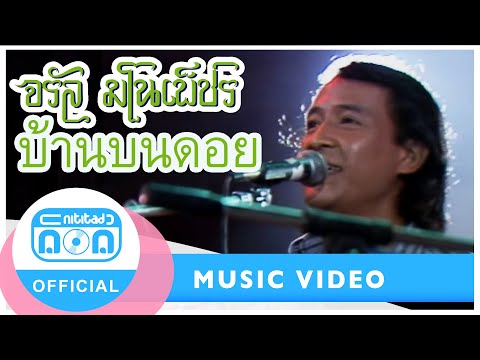
Video from the official channel of the Nititad AOA Official label. Words and music by Jaran Manopetch.
Kha and su: the two sides of the song
The song opens with "kha", the mountain dweller, introducing himself:
บ้านข้าอยู่บนดอย เมฆหมอกลอยเต็มฟ้า … เกิดเป็นคนบนดอย บ่ต้องคอยง้อใคร — Ban Bon Doi, words: Jaran Manopetch
("My home is on the mountain, mist and clouds fill the sky … born a mountain man, I don't have to beg anyone's favour.")
The whole song is told through two pronouns, kha (I) and su (you), comparing the two sides one thing at a time, for example "ban su yu nai mueang, mung krabueang si sai" (your house is in the town, roofed with bright tiles) and "ban kha yu klang phrai, mung duai bai tong tueng" (my house is in the forest, roofed with tong tueng leaves).
| Word | Reading | Meaning |
|---|---|---|
| kha ข้า | kha | first-person pronoun, I |
| su สู | su | you (respectful), you all |
| hao เรัา | hao | we |
| mu hao หู่เรัา | mu hao | we all, our group, our own people |
The dictionary explains that kha can be used by both women and men, but "is normally used with men of about the same age, or close friends", while women usually say kha chao. So the song sounds familiar and friendly, like friends talking. su in the song means "you all", the city people "kha" is talking to. In the last part of the song, "kha" changes to mu hao, speaking for the whole community.
Tong tueng and the sound of the sueng: two kinds of "tueng"
The roof of the mountain home in the song is thatched with "bai tong tueng". In the dictionary this word is tong tueng (ตอฯงทึงฯ, read tong tueng), the leaf of the phluang tree: large, tough and hard to tear. The young leaves are used to wrap things, while the old leaves that fall from the tree are gathered by villagers, who "weave them into panels to thatch roofs, like cogon grass, and they last for several years".
tueng (ทึงฯ) itself is the name of the phluang tree, and it is also a much-used word with another meaning: every (pai tueng wan = to go every day) and both … and … (tueng wan tueng khuen = all day and all night).
In the next line "kha" says he loves to hear the sueng (ซึงฯ, read sueng), a plucked folk instrument like a guitar with two pairs of strings, and then the song imitates the sound of the sueng: "tueng tueng ta tit tueng". This imitated sound happens to echo the "tueng" of the tong tueng leaves in the line before, so the two lines are linked by a single sound.
Bo mi… bo mi…: the easiest part to remember
The chorus lists, one by one, the things the mountain home does not have, using bo (บ, read bo), the negative, like "not", and bo mi (บมี), meaning "there is no", "not have".
| Phrase in the song | Meaning | Note |
|---|---|---|
| bo mi saeng si | no bright lights like in the city | |
| bo mi thiwi | no television | |
| bo mi hong nang | no cinema | hong โร฿งฯ = hall, building; nang หันฯง = film |
| sop kin khao chi | (we) like eating khao chi | khao chi เขั้าจี่ = sticky-rice balls grilled over a fire |
| mi nam chai | (we) have nam chai | nam chai นาฯไจ = sincerity, generosity |
This part ends with the line "tae mu hao mi, hueng, mi nam chai" (but we have, mm, we have nam chai). After a long list of "bo mi", the song turns around with the single word mi (have), so that nam chai stands out as the thing the mountain people are proud of. This matches the study's point that the song uses negative words to say who its people are.
"If you…": Thai and Kham Mueang words in one song
The second part uses the form "tha su…" ("if you…") to teach with a joke: if you want to eat rice, you have to go and plough the field; if you want to eat fish, you have to look for it in the huai (ห้วฯยฯ, a stream); plant fai (ฝ้ายฯ, cotton) and you will have a nice shirt to wear; but if you want to win the huai (หวฯยฯ, the lottery), then "sorry about that".
This song mixes central Thai and Kham Mueang words to fit the rhythm of the singing, so many words in the song are spelled differently from the dictionary.
| Written in the song | Written in the dictionary | Meaning |
|---|---|---|
| กิน (kin) | kin กินฯ (with a rising tone) | to eat |
| ข้าวจี่ (khao chi) | เข้าจี่ (khao chi) | sticky-rice balls grilled over a fire |
| ปลา (pla) | pa ปลฯา | fish |
| ซอบ (sop, for ชอบ) | mak มักฯ | to like very much, to be pleased with |
| คอย (khoi, in the line "bo tong khoi ngo khrai") | tha ถ้า | to wait |
The word "sop" in the song is "chop" (to like), with ช (ch) sung as ซ (s). In the dictionary sop appears only in the compound su sop (willing, glad to), while the everyday Kham Mueang word for "to like very much" is mak.
The rhymes of the song
Ban Bon Doi is not written in the verse form of khao; it uses vowel rhymes at the ends of lines, like a modern song. We can see them in the last words of the lines:
| Part | Rhyming words | Sound |
|---|---|---|
| opening | doi · doi · sam-oi · doi (and khoi inside a line) | -oi |
| kha and su | si sai · klang phrai | -ai |
| kha and su | tong tueng · siang sueng · tit tueng | -ueng |
| chorus | saeng si · Pepsi · khao chi · yang di (and thiwi inside a line) | -i |
| "tha su" part | nai huai · suea suai · thuk huai | -uai |
The chorus uses loanwords that end neatly on the -i sound, thiwi (TV) and Pepsi, to rhyme with mountain words like khao chi. So the fun of the song comes from the sound of its rhymes, not only from its meaning. This table is Moradok Lanna's own reading, not taken from the sources.
The lyrics differ slightly between sources
The lyrics in the description of the Nititad AOA Official video and those quoted in Ueamporn and Siriwan's study (2023, p. 176) differ in a few words: "yu klang phana" and "yu klang phong phana" (in the middle of the forest) · "sop" and "chop" (to like) · and the sueng sound "tueng tueng ta tit tueng" and "tueng, tueng, ta, tuet, tueng". This article follows the label's video description.
The meaning as a whole
"Kha" is a mountain man living in the middle of the forest, neither rich nor poor, and he does not have to beg anyone's favour. Your house in the city is roofed with tiles; mine is thatched with phluang leaves. You like Western songs; I like the sound of the sueng. On the mountain there are no bright lights, no TV, no tap water, no cinema and no famous-brand drinks. Mountain people eat khao chi, but what we have is nam chai, kindness. The second part warns, with a joke, that if you want something you have to work for it yourself, except the lottery, where nobody can help you.
Summary
- doi is a high mountain; a low one is called mon.
- kha is the speaker, I; su is you, you all; and mu hao is we all.
- tong tueng is the phluang leaf used for thatching roofs, and tueng also means every, or both … and ….
- bo mi means "there is no"; the chorus lists "bo mi" and ends with nam chai.
- In Kham Mueang tha means to wait, but the song uses it in the central Thai sense of "if".
Look up more words from the song in the Moradok Lanna dictionary (in Thai), and read about the instruments "kha" loves to hear in the article Salo So Sueng.
More in the same series: Long Mae Ping · Phak Kat Cho, or see the whole series at Kham Mueang through songs and literature (in Thai).
Sources
- Moradok Lanna dictionary (dict2), entries ดอย, ข้า, สู, ต๋องตึง, ตึง, ซึง, บ่มี, โฮง, เข้าจี่, น้ำใจ๋, ถ้า, มัก, คนเมือง and the other words named in this article. In Thai.
- Nititad AOA Official. (2016). บ้านบนดอย - จรัล มโนเพ็ชร (ภาพคอนเสิร์ต) [Ban Bon Doi – Jaran Manopetch (concert footage)]. YouTube (lyrics in the video description).
- เอื้อมพร ทิพย์เดช และสิริวรรณ นันทจันทูล [Ueamporn Thipdet and Siriwan Nanthachanthun]. (2023). ภาพแทนคนเมืองในบทเพลงของจรัล มโนเพ็ชร [Representations of Khon Mueang in the songs of Jaran Manopetch]. Journal of Humanities and Social Sciences 10(1), 167–184. In Thai.
- สุนทร คำยอด [Sunthon Khamyot]. (2016). "อุดมการณ์ล้านนานิยม" ในบทเพลงของ จรัล มโนเพ็ชร ["Lanna-ist ideology" in the songs of Jaran Manopetch]. Khuang Phaya Journal, Chiang Mai Rajabhat University 11. In Thai.
- วิกิพีเดีย [Wikipedia]. จรัล มโนเพ็ชร [Jaran Manopetch] (discography), used as background on the album. In Thai.


