
Photo: Thomas Schoch – www.retas.de / Wikimedia Commons (CC BY-SA 3.0)
Dak Sai: Kham Mueang from a Jaran Manopetch Song
Dak Sai ("Setting a Fish Trap") is a Kham Mueang (Northern Thai) folk song by Jaran Manopetch about going out to set a sai (ไซ, Kham Mueang reading sai, a bamboo fish trap) and coming back with several fish. It is a song full of fish names, repeated sung sounds and the feel of life by the water. This article uses the song as a door into the Kham Mueang words for fishing tools that the dictionary records as a set.
This article is part of the series Kham Mueang through songs and literature. We do not print the whole song, and from this one we quote only a single line, because it is hard to find the wording confirmed in several independent sources (explained in the sources section). You can listen to the full song in the video below.
The song Dak Sai
Wikipedia lists this song on the album Folk Song Kham Mueang, Volume 2, released by Tha Phae Bannakhan in 1976 and described as Jaran's first, unofficial release; Dak Sai is track 7. We found this album and year in one source only, so we say plainly that it comes from Wikipedia. The words and music are by Jaran, according to the information the rights holder (RMS Publishing) supplied to YouTube.

The audio comes from the "จรัล มโนเพ็ชร - Topic" channel, which YouTube generates from the files the rights holder (RMS) delivers. Words and music by Jaran Manopetch.
Ta khuen: telling time with "ta-"
The song opens with the time:
เมื่อตะคืนนี้เฮาไปดักไซ — Dak Sai, words: Jaran Manopetch
("Last night I went to set the trap.")
The word to stop at is ta khuen (ตฅืนฯนี้). The dictionary gives "last night, the night just past". Hao (เรัา) is "we, I" (see more at the song Liang Khwai), and pai (ไพ) is "to move away from a place", as in central Thai.
Ta- is a prefix for time that has passed, and there are several such words in the dictionary:
| Kham Mueang | Reading | Meaning in the dictionary |
|---|---|---|
| ta khuen ตฅืนฯนี้ | ta khuen | last night, the night just past |
| ta wa ตวาฯ | ta wa | yesterday (also ta wan wa, wan wa) |
| ta kon ตก่อฯร | ta kon | before, the previous time, in the past (also ต๋าก่อน) |
| ta ki ตกี้ | ta ki | a moment ago (also ต่ากี้, ต๋ากี้) |
So "muea ta khuen ni" in the song is a doubled way of speaking: the central Thai "muea" (when) placed in front of ta khuen, which already means "the night that has passed" (this is an observation by Moradok Lanna). The dictionary also has muea khuen and muea khuen ni as separate words.
Dak and dak: two words that are not the same
Sai, tum, lan and khong: the fishing tools
The dictionary explains sai as "a lop, a fish-catching device made of woven bamboo, cylindrical, with a closing funnel". The word nga (งา) in this sense is "the closing cover of an animal trap such as a lop or a sai", the part that lets fish in but makes it hard for them to get out.
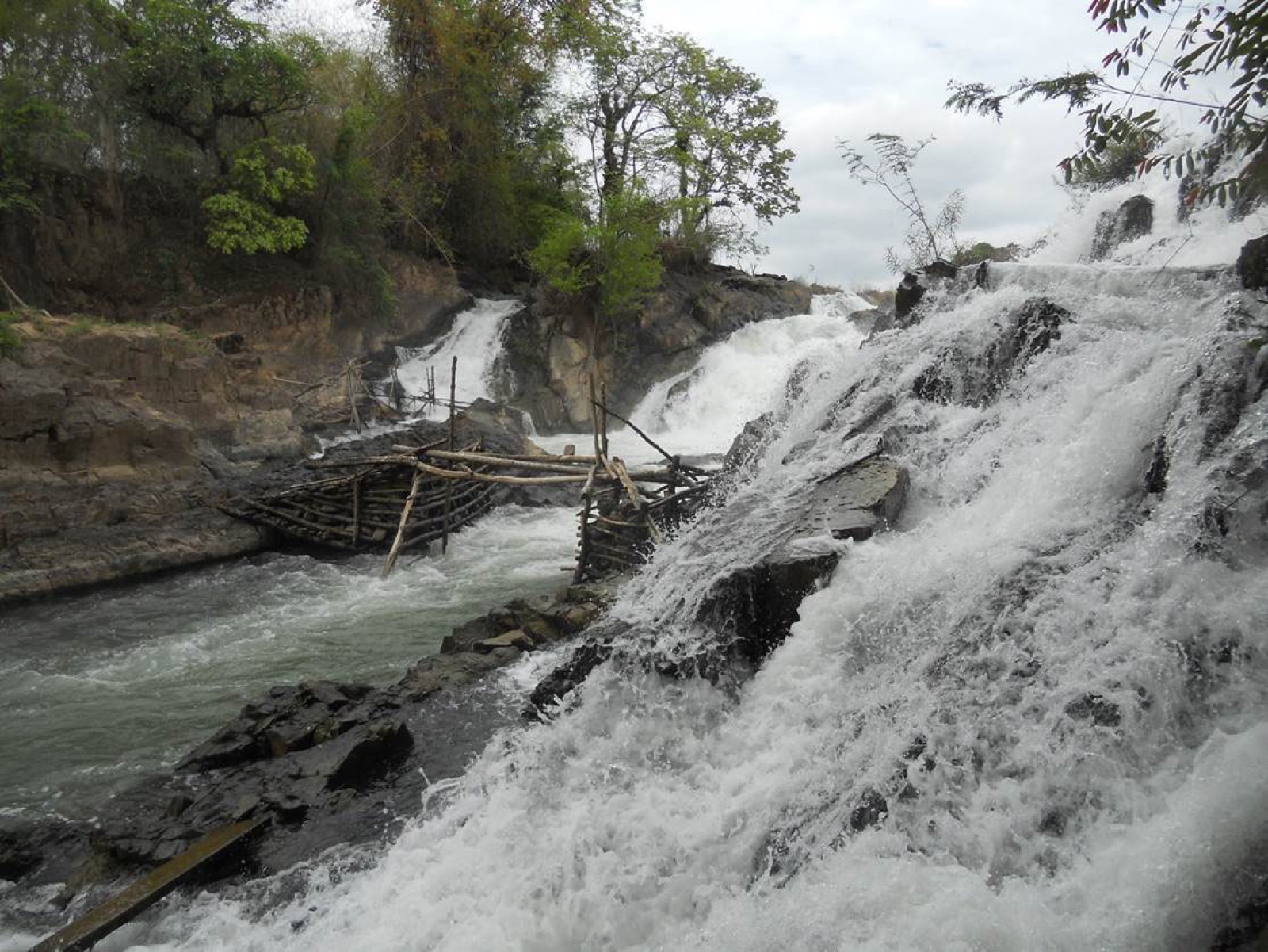
Photo: Oregon State University / Wikimedia Commons (CC BY-SA 2.0)
Khon Mueang have more names for fishing tools than the song mentions. This table collects the words the dictionary records (the grouping is ours).
Traps set for the fish to enter by themselves
| Kham Mueang | Reading | Meaning in the dictionary |
|---|---|---|
| sai ไซ | sai | a lop: a fish trap of woven bamboo, cylindrical, with a closing funnel |
| tum ตุ้ม | tum | i-chu, a kind of fish trap made of woven bamboo |
| tum pa yian ตุ้มปลฯาอยฯยฯร | tum pa yian | an eel trap made of woven bamboo or bamboo tubes, with a funnel (also called lan) |
| lan ลันฯ | lan | the name of an eel trap |
| ka tam กะทํ้าฯ | ka tam | an animal trap in which a weight falls on the animal; a fish trap of the "chan" type |
| pum peng ปุมเป้งฯ | pum peng | a woven bamboo trap tied in front of a spillway to catch fish jumping against the current |
| fueak เฝิอฯก | fueak | a fence of slats joined into a sheet, used to dam the water so as to trap fish |
Tools that a person carries to catch fish
| Kham Mueang | Reading | Meaning in the dictionary |
|---|---|---|
| sum pa สุ่มปลฯา | sum pa | a fish-catching tool woven from split bamboo rods, cylindrical, narrowing at the top, with an opening for a hand to reach in and take the fish |
| hae แห | hae | a net thrown to spread over the water to catch fish |
| tot hae ทอฯดแห | tot hae | to throw a cast net so that it spreads over the water to catch fish |
| cham จำ | cham | a lift net: a fish-catching tool made as a net frame with a lifting pole |
| sae แซะ | sae | a scoop: a woven bamboo fish-catching tool with a handle, used to scoop up fish or small water animals |
| hing หิงฯ | hing | a dip net: a fish-catching tool of fine netting fixed to a bamboo frame |
| ha buak หะบวฯก | ha buak | to bail the water out of a pool in order to catch fish (also ha pa) |
Hooks and containers for fish
| Kham Mueang | Reading | Meaning in the dictionary |
|---|---|---|
| boet khuit เบัดฯฅิวฯด | boet khuit | a fish-catching tool with a hook tied to a line and a rod about 2–3 metres long, with a float that shows when a fish takes the bait |
| boet kong เบัดฯก่อฯง | boet kong | a hook on a rod about 0.6 metres long, with a line shorter than the rod; baited and stuck in the ground at the water's edge |
| fom ฟ่อฯม | fom | a float: something buoyant that floats on water to hold other things up |
| khong ข้อฯง | khong | a bamboo basket with a narrow neck and a lid that can be opened; for fish, crabs, shrimps, shellfish, frogs |
| khong yuen ข้อฯงอยฯนฯ | khong yuen | a cylindrical khong like a water jar, with a flared mouth like a trumpet, carried on a strap or tied at the waist when looking for water animals |
| khong pet ข้อฯงเปัดฯ | khong pet | a khong shaped like a duck, with a flared mouth turned upwards, often kept in a boat or on the bank (also khong non) |
| khong loi ข้อฯงลอฯยฯ | khong loi | a khong that floats on the water while fishing, tied to a float made of two bamboo tubes |
Lan (ลันฯ) in the table is the name of an eel trap according to the dictionary, while the song's repeated sung line includes "ลัน ลัน ลั้น ล้า". Listeners may not be able to help smiling, but that is pure singing and does not say the song is talking about a lan (an observation by Moradok Lanna).
Pa lim, pa khao, sio: the fish in the trap
After saying he went to set the trap, the song lists the fish that came in, singing them with their Kham Mueang names, using pa in place of pla.
| Kham Mueang | Reading | Meaning in the dictionary |
|---|---|---|
| pa ปลฯา | pa | fish: a cold-blooded, backboned water animal |
| pa lim ปลฯาหิลฯม | pa lim | snakehead fish: a freshwater fish with a long slender cylindrical body, often made into salted fish |
| pa khao ปลฯาขาวฯ | pa khao | white sroi, a small freshwater fish of the carp family with a silvery-grey body, living in groups |
| sio ซิวฯ | sio | a freshwater fish of many kinds, mostly small, with big eyes and large scales |
| pa chom ปลฯาจ่อฯม | pa chom | small fish such as sio, fermented in salt |
| tua ต฿วฯ | tua | a classifier for animals and some things |
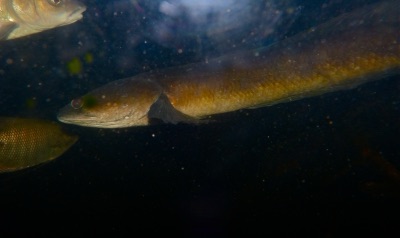
Photo: Bernard DUPONT from FRANCE / Wikimedia Commons (CC BY-SA 2.0)
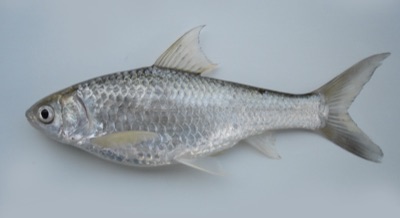
Photo: BigYoi / Wikimedia Commons (CC BY-SA 4.0)
In the song the fish that come in include the snakehead and the white sroi, and the rest are small sio. The singer also plays with the shape of each fish's head using imitative words that the dictionary does not record as single words, so we do not translate them. The word for counting fish, "tua" in central Thai, is tua (ตั๋ว) in Kham Mueang; the dictionary says it is used for animals, for example 10 ants, so counting fish probably uses the same word (an observation by Moradok Lanna). Pa chom, small sio fermented in salt, is a fish of the Northern kitchen that you can read more about in Fish names in Kham Mueang.
The meaning as a whole
The singer tells how last night he went to set his trap and caught snakehead, white sroi and some small sio, and sings repeated sounds between the parts. The song is a simple, cheerful picture of life by the water. (This reading is by Moradok Lanna, from the quoted line and the fish names; for the full lyrics see the rights holder.)
Summary
- sai is a lop, a woven bamboo fish trap, cylindrical, with a funnel (nga) that closes it.
- ta khuen is "last night", and the prefix ta- also appears in ta wa, ta kon and ta ki.
- ดั๋ก (dak, rising tone) in the dictionary means quiet, not "to set a trap".
- Kham Mueang has many fishing tools, such as tum, lan, ka tam, hae, hing, sae, cham, sum pa, and the container for fish is the khong.
- pa is fish, pa lim is snakehead and pa khao is white sroi.
Look up more words in the Moradok Lanna dictionary (in Thai), and read about related water creatures in Fish names in Kham Mueang · Insects in Kham Mueang.
More in the same series: Phak Kat Cho · Khong Kin Khon Mueang, or see the whole series at Kham Mueang through songs and literature (in Thai).
Sources
- Moradok Lanna dictionary (dict2), entries ไซ, งา, ข้อง, ตุ้ม, ลัน, กะต๊ำ, ปุ๋มเป้ง, เฝือก, แห, จ๋ำ, แซะ, หิง, เบ็๋ดควิด, ป๋า, ป๋าหลิม, ป๋าขาว, ซิว, ตะคืน and the other words named in this article. In Thai.
- RMS Karaoke. ดักไซ - จรัล มโนเพ็ชร [Dak Sai – Jaran Manopetch]. YouTube (RMS karaoke video showing the words; used to check the quoted line; the only source for the wording that we found).
- จรัล มโนเพ็ชร - Topic. ดักไซ [Dak Sai]. YouTube (℗ RMS, delivered by AnyMind Music), and the authorship data from the upload delivered by RMS Publishing.
- วิกิพีเดีย [Wikipedia]. จรัล มโนเพ็ชร [Jaran Manopetch] (discography), album Folk Song Kham Mueang Vol. 2 (Tha Phae Bannakhan, 1976), track 7; the only source found. In Thai.
Practise the words from this article
Flip through 35 flashcards of the Lanna words used in this article.


