
Photo: Danjuma Anthony / Wikimedia Commons (CC0)
Maeng in Kham Mueang: Insect Names and Edible Insects
In Kham Mueang, maeng (แมงฯ, Kham Mueang reading maeng) covers almost every small animal without a backbone. The dictionary explains that Lanna people call both the eight-legged "maeng" (spiders, scorpions) and the six-legged "insects" (flies, bees, wasps) by the same word, maeng. The word is also used for fruit that insects have bored into: ba muang pen maeng is a mango with a grub inside.
This article gathers Kham Mueang names for maeng from the Moradok Lanna dictionary: insects people eat, insects of the house and the fields, insects whose names do not start with maeng, and insects that, people believe, announce the seasons.
Insects people eat
Lanna people have eaten insects for a very long time. Many have their own season and their own way of being gathered and cooked. The dictionary records the names of the insects, their eggs and the dishes made from them. This table only includes words the dictionary marks as edible.
| Kham Mueang | Lanna script | Meaning (from the dictionary) |
|---|---|---|
| maeng man | แมงฯมันฯ | an ant-like insect that nests in tunnels underground and comes out around May, when rain wets the soil |
| maeng man kam | แมงฯมันฯกํา | the female maeng man: dark red, winged, large, rich and tasty |
| maeng man kha | แมงฯมันฯฅา | the male maeng man: yellow; not usually eaten because it tastes bitter |
| maeng man chom | แมงฯมันฯจ่อฯม | maeng man eggs dug from the nest, soured overnight with rice-soaking water, then seasoned with toasted dried chilli |
| mot som | ม฿ดฯส้฿มฯ | the red weaver ant, which builds leaf nests in big trees such as mango and longan |
| teng mot som | เต้งฯม฿ดฯส้฿มฯ | the large eggs and larvae of the weaver ant, which grow into queens |
| yaep mot som | แยัปฯม฿ดฯส้฿มฯ | the small eggs and larvae of the weaver ant, which grow into workers |
| maeng da | แมงฯดา | the giant water bug: front legs for catching prey, flat paddle-like back legs for swimming |
| maeng nun | แมงฯนูร | a brown chafer beetle that eats young leaves; many kinds, edible (the bigger one is maeng nun chang, แมงฯนูรช้างฯ) |
| maeng ba khi bao | แมงฯบ่าฯขี้เบั้าฯ | a dung beetle whose grub lives in a ball of elephant or buffalo dung; edible |
| maeng chon | แมงฯชอฯร | the mole cricket, with rake-like front legs for digging; eaten like crickets and grasshoppers |
| khi kung | ขี้กุ่ง | the giant cricket, the biggest cricket, popular as food |
| maeng niang | แมงฯห่นฯยฯง | a black, flat, egg-shaped water beetle; edible |
| maeng niao | แมงฯห้นฯยฯว | the water-dwelling nymph of the dragonfly; edible (also neo, เห้นฯวฯฯ) |
| maeng hua ngok | แมงฯห฿วฯหงฯอฯก | planthopper nymphs covered in white threads; washed and dry-roasted to eat (also maeng khao tok, แมงฯเขั้าตอฯก) |
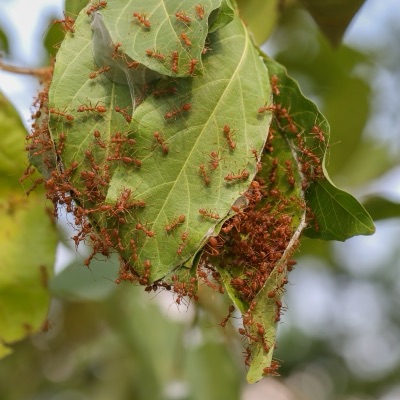
Photo: Basile Morin / Wikimedia Commons (CC BY-SA 4.0)
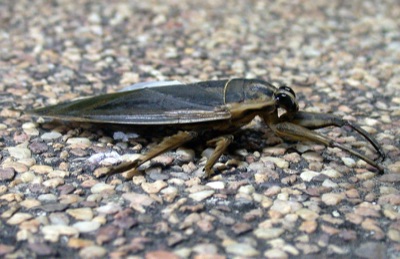
Photo: Len Worthington / Wikimedia Commons (CC BY-SA 2.0)
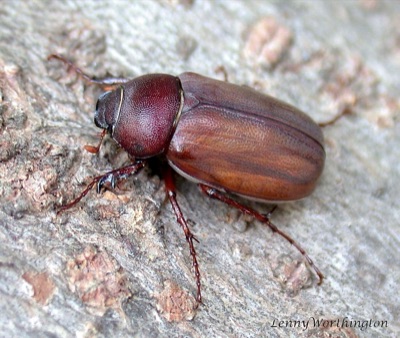
Photo: Len Worthington / Wikimedia Commons (CC BY-SA 2.0)
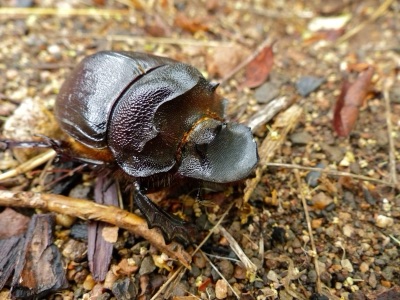
Photo: Bernard DUPONT from FRANCE / Wikimedia Commons (CC BY-SA 2.0)
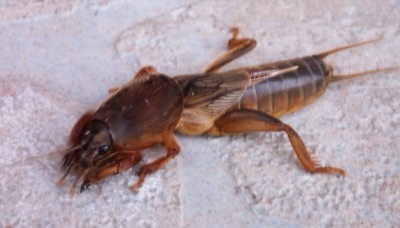
Photo: Eszter Kovács / Wikimedia Commons (CC BY-SA 2.0 de)
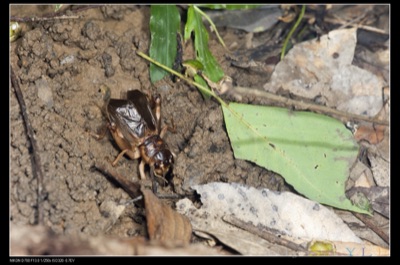
Photo: LiCheng Shih / Wikimedia Commons (CC BY 2.0)
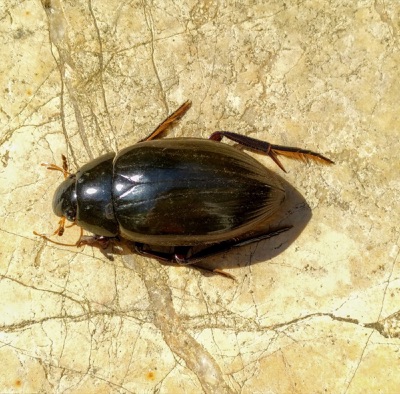
Photo: Rudolphous / Wikimedia Commons (CC BY-SA 4.0)
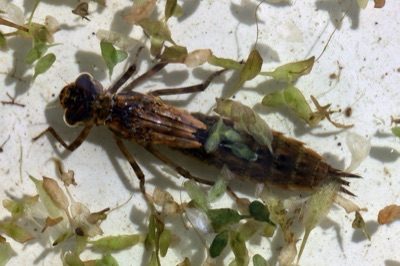
Photo: Charles J. Sharp / Wikimedia Commons (CC BY-SA 4.0)
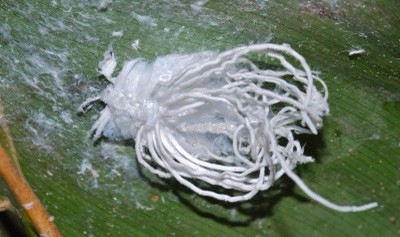
Photo: Bernard DUPONT from FRANCE / Wikimedia Commons (CC BY-SA 2.0)
The dictionary also has words for gathering insects. Si mot som (สิม฿ดฯส้฿มฯ) is knocking down weaver-ant eggs: a basket tied to the end of a long pole is used to jab the nest so the eggs fall in. The nest itself is hang mot som (รังฯม฿ดฯส้฿มฯ). Dishes made from these insects turn up in songs too, such as giant-water-bug chilli dip and red-ant-egg salad in Kin Lam Kin Lam.
Insects of the house and the fields
The insects we meet every day in the house, the garden and the rice fields have their own Kham Mueang names, many of them nothing like central Thai.
| Kham Mueang | Lanna script | Meaning (from the dictionary) |
|---|---|---|
| maeng ngon | แมงฯง฿นฯ | the housefly (the blowfly is maeng ngon hua khiao, แมงฯง฿นฯห฿วฯขยฯว) |
| maeng sap | แมงฯสาปฯ | the cockroach; the kind that can fly is maeng saep (แมงฯแสัปฯ) |
| maeng phing | แมงฯระฯพิ้งฯ | the gnat (also maeng mi, แมงฯหี่มฯ) |
| maeng khun | แมงฯขุ้ร | a biting midge, bigger than a gnat, found in cool damp places such as high hills; its bite stings and itches |
| maeng but | แมงฯบูด | small insects that swarm around rotting food |
| maeng ngong ngaeng | แมงฯง้อฯงแง้งฯ | mosquito larvae |
| maeng kom | แมงฯคอฯม | a tiny black beetle the size of a match head that bores into fruit such as mango |
| maeng kaeng | แมงฯแคงฯ | a stink bug that damages crops, with a needle-like mouth and a bad smell |
| maeng bong | แมงฯบ้฿งฯ | hairy caterpillars; many kinds of moth and butterfly larvae |
| maeng kon ngaem | แมงฯก้฿นฯแง่มฯ | the earwig, which grips prey with its pincer tail and helps control crop pests |
| maeng kai kum | แมงฯไก่กุ้ม | the antlion, buried at the bottom of a funnel-shaped pit in sand; ants that fall in are caught and eaten (also maeng chang or maeng i mong) |
| maeng bai | แมงฯไบ้ | the potter wasp, a relative of bees and hornets that builds clay nests on beams, ceilings and house posts |
| maeng khom kham | แมงฯฅ่อฯมฅำ | the jewel beetle, a beetle of many colours, mostly shiny green |
| maeng kho lan | แมงฯฅํอฯลั่นฯ | the click beetle, which arches its neck to flip itself into the air |
| maeng pu | แมงฯภู่ | the carpenter bee |
| maeng po | แมงฯปํอฯ | an insect with orange-red wings and two dark eye-like spots, living on jute plants |
| maeng daeng | แมงฯแดงฯ | a tiny pink insect that tends to bite around the navel |
| maeng ma nam | แมงฯหมฯา¢ | the water strider, whose long legs spread its weight so it can stand on water |
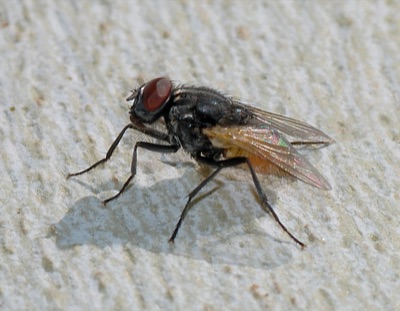
Photo: Alvesgaspar / Wikimedia Commons (CC BY-SA 3.0)
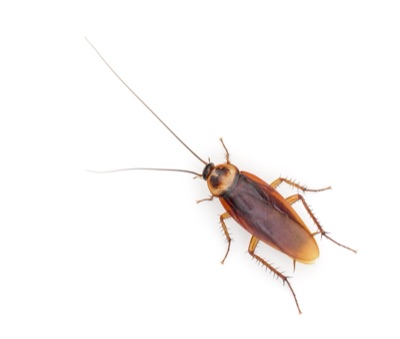
Photo: Insects Unlocked / Wikimedia Commons (CC0)
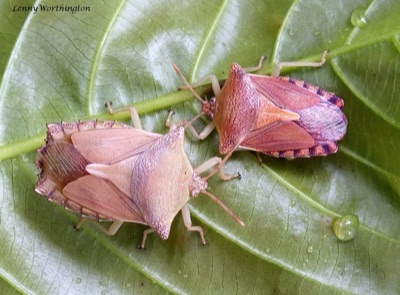
Photo: Len Worthington / Wikimedia Commons (CC BY-SA 2.0)
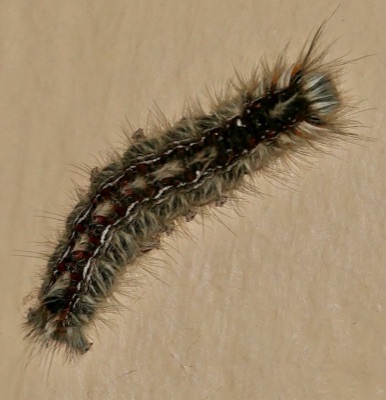
Photo: Bernard DUPONT / Wikimedia Commons (CC BY-SA 2.0)
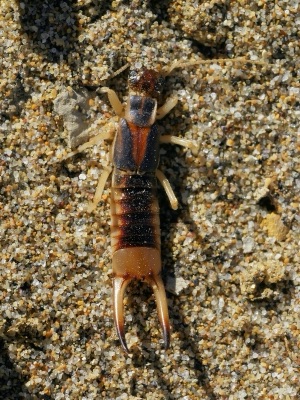
Photo: Hans Hillewaert / Wikimedia Commons (CC BY-SA 4.0)
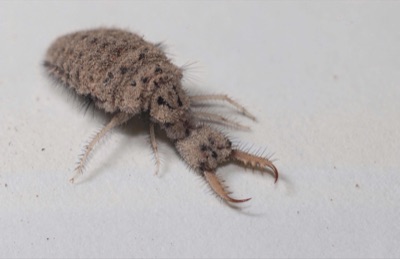
Photo: Joseph Berger / Wikimedia Commons (CC BY 3.0 us)
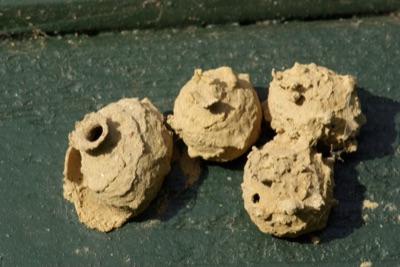
Photo: Hamon jp / Wikimedia Commons (CC BY-SA 3.0)
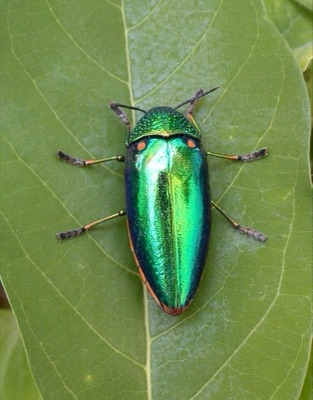
Photo: Len Worthington / Wikimedia Commons (CC BY-SA 2.0)
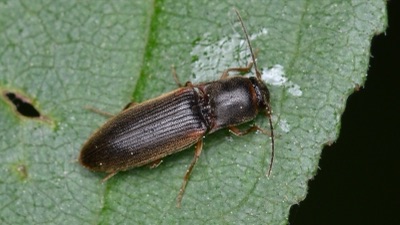
Photo: Ryan Hodnett / Wikimedia Commons (CC BY-SA 4.0)
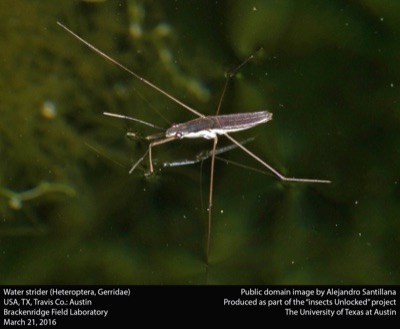
Photo: Insects Unlocked / Wikimedia Commons (CC0)
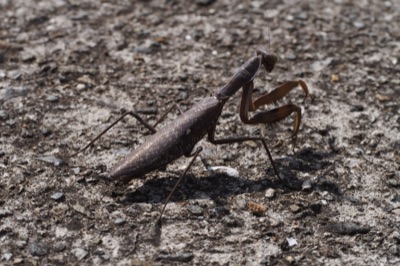
Photo: harum.koh from Kobe city, Japan / Wikimedia Commons (CC BY-SA 2.0)
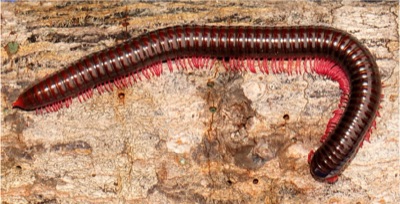
Photo: Piyatida Pimvichai, Henrik Enghoff, Somsak Panha, & Thierry Backeljau / Wikimedia Commons (CC BY 3.0)
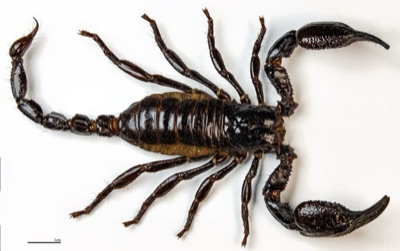
Photo: Didier Descouens / Wikimedia Commons (CC BY-SA 4.0)
Some insects are named for their shape. Maeng ma (แมงฯม้า), literally "horse insect", is the praying mantis: the dictionary explains that when it catches prey it lifts its front legs like a stalking horse lifting its forelegs. Maeng saen tin (แมงฯแสนฯตีนฯ), "hundred-thousand-feet insect", is the millipede, an animal with very many legs (also tuek tao, ตืกฯตาวฯ). Maeng tang mo (แมงฯต่างฯหํมฯอฯ) is an orange-red millipede that curls into a ring like a tang mo, a pot stand.
Insects whose names don't start with maeng
Many familiar insects have Kham Mueang names without maeng in front at all. Some begin with kam, others with chak.
| Kham Mueang | Lanna script | Meaning (from the dictionary) |
|---|---|---|
| kam bi | กําบี้ | the dragonfly (also kam bi, kabi, i bi in different places) |
| kam boe | กําเบิ้อฯ | the butterfly |
| kam pung | กําพุ้ง | the spider |
| chak taen | จักฯแตนฯ | the grasshopper |
| chak chan | จักฯจั่นฯ | the cicada (also cha, จ้า) |
| chi hit | จิหีดฯ | the cricket |
| ma ni | หมฯานี | a long-horned grasshopper with a sweet, high song that likes lamplight |
| maeng yai | แมงฯไย | a giant cicada that sings only at dawn and dusk |
| phoeng | เผิ้งฯ | the bee (the biggest kind is phoeng luang, เผิ้งฯหลฯวฯง, the giant honeybee) |
| taen | แตนฯ | a wasp like a hornet but smaller, nesting in colonies |
| mao | เมั่า | flying termites, the winged stage that flies out to mate |
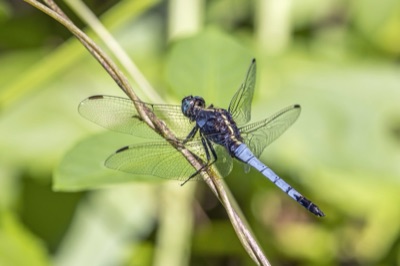
Photo: Charles J. Sharp / Wikimedia Commons (CC BY-SA 4.0)
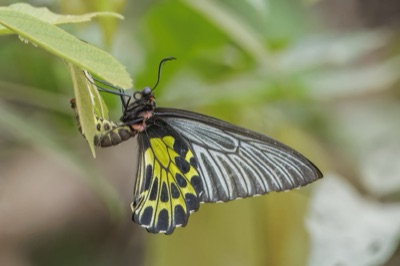
Photo: Charles J. Sharp / Wikimedia Commons (CC BY-SA 4.0)
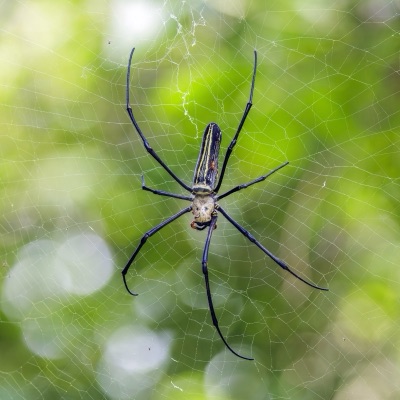
Photo: Charles J. Sharp / Wikimedia Commons (CC BY-SA 4.0)
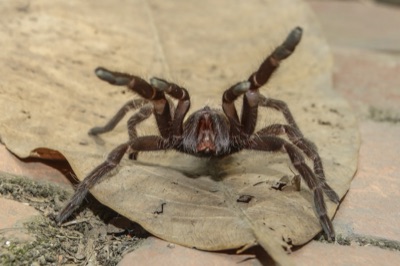
Photo: Apu Jaman / Wikimedia Commons (CC BY-SA 4.0)
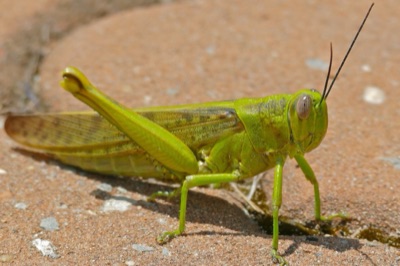
Photo: Bernard DUPONT from FRANCE / Wikimedia Commons (CC BY-SA 2.0)
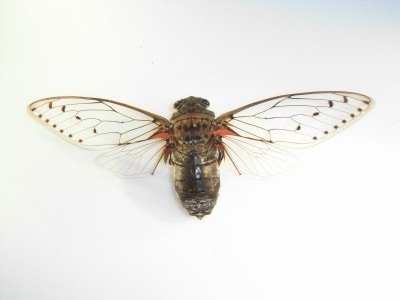
Photo: Notafly / Wikimedia Commons (CC BY-SA 3.0)
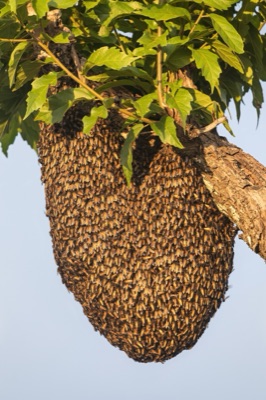
Photo: Basile Morin / Wikimedia Commons (CC BY-SA 4.0)
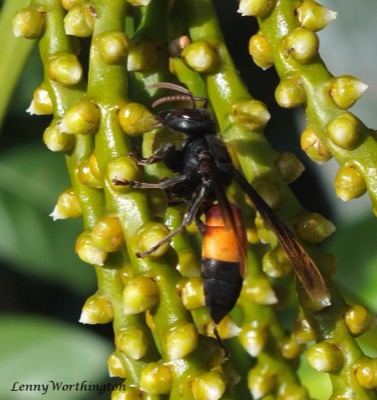
Photo: Len Worthington / Wikimedia Commons (CC BY-SA 2.0)
Insects that announce the seasons
The dictionary records Khon Mueang beliefs that some insects can tell the weather. Mae daet (แม่แดดฯ), "mother sunshine", is a beetle believed to appear when the hot sunny weather begins. Mae fon (แม่ฝ฿นฯ), "mother rain", is a long-horned brown beetle believed to bring rain soon after it flies in or calls (also lam fon). And maeng man come out of their nests when the rain falls around May.
Summary
- Maeng in Kham Mueang covers both arachnids and insects, and also the mark of a creature boring into fruit, as in ba muang pen maeng.
- Insects the dictionary says are edible include maeng man, mot som (teng and yaep), maeng da, maeng nun, maeng chon, khi kung and maeng niao.
- Household insects include maeng ngon (fly), maeng sap (cockroach), maeng phing (gnat), and maeng ma, the praying mantis.
- Some names don't begin with maeng: kam bi (dragonfly), kam boe (butterfly), kam pung (spider), chak taen (grasshopper), phoeng (bee).
- Mae daet and mae fon are insects the Khon Mueang believe announce the seasons.
Look up more insect names in the Moradok Lanna dictionary (in Thai), read more animal vocabulary in Fish Names in Kham Mueang and Bird Names in Kham Mueang, or learn the dishes made with insects in Kin Lam Kin Lam.


