
Photo: Kittitep Khotchalee / Unsplash
Khao Soi Gai Recipe: Northern Thai Curry Noodles
Khao soi is egg noodles in a rich, spicy coconut curry, topped with crispy fried noodles and eaten with pickled mustard greens, shallots and lime. In Kham Mueang (Northern Thai) it is khao soi (เขั้าซอฯยฯ, read khao soi). It is the noodle dish people think of first when they think of Chiang Mai, and it is easier to make at home than you might expect.
This is the second post in our Lanna Kitchen series, after nam phrik ong. It teaches khao soi gai (chicken khao soi) from pounding the paste to filling the bowl. Quantities are given as ranges so you can adjust them, and every step comes with the Kham Mueang word cooks really use.
What khao soi is, according to the Kham Mueang dictionary
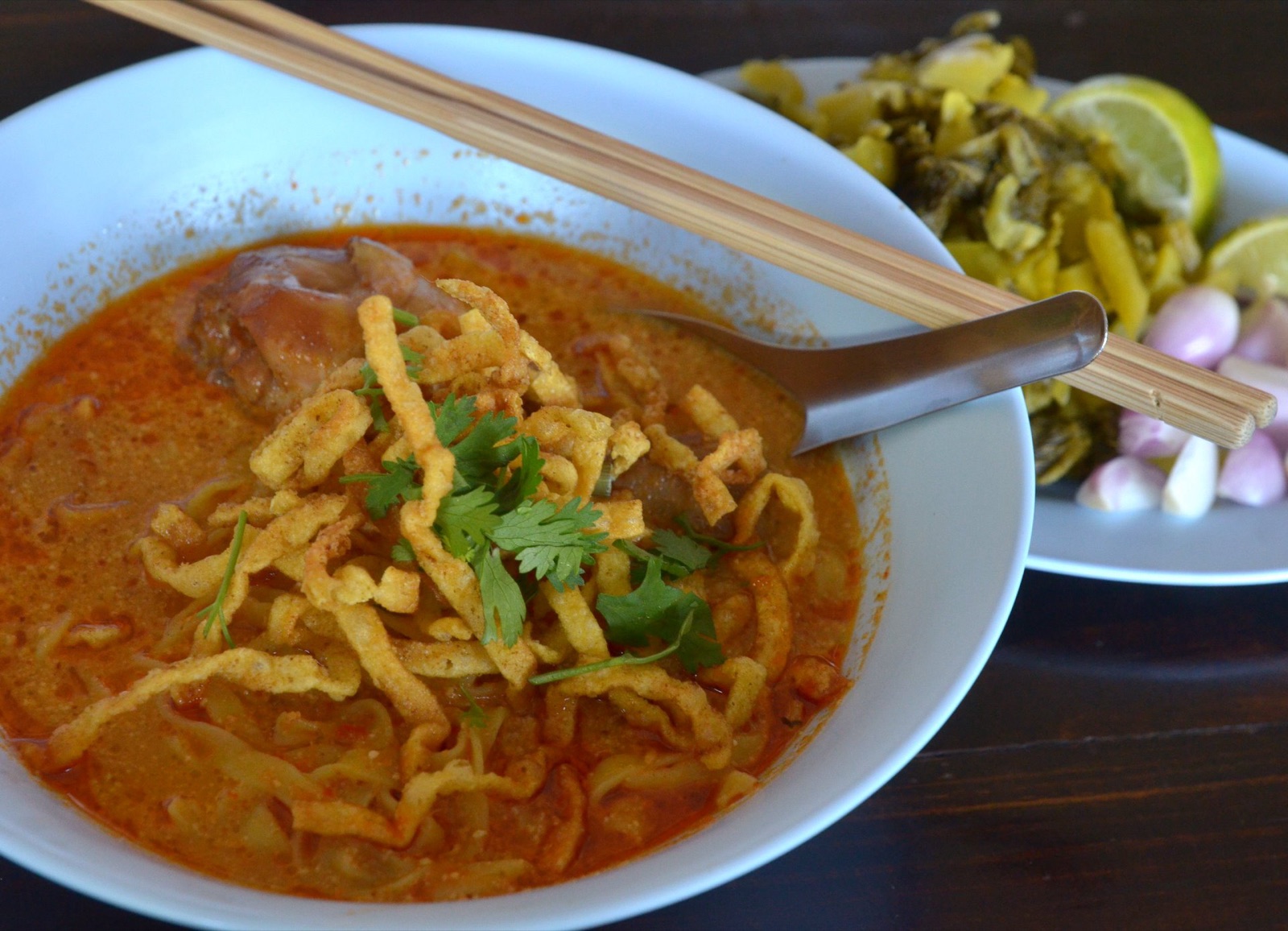
The Moradok Lanna dictionary describes khao soi as "a noodle dish with noodles like bami, in a strongly flavoured curry made with coconut milk", served with pickled mustard greens, shallots and lime, and named after the meat in it: chicken khao soi, beef khao soi, duck khao soi.
The word soi (ซอฯยฯ, read soi) has two meanings in the dictionary. The first is a lane or small street. The second is a verb: to cut with a small knife. And khao soi itself has a second, funny meaning: "to go into a lane". The sentence tells you whether someone means lunch or a turn into an alley.
Where khao soi comes from: the Haw traders' road
No academic study we found settles the history of khao soi, but published sources point the same way:
- The "อิ่ม_โอชาฯ" column in Thansettakij (October 2026) links khao soi to Chinese Muslims from Yunnan, whom Northern Thais call Haw (ฮ่อ), traders who travelled and settled across Northern Thailand, Burma and nearby lands. It says the traditional Muslim khao soi curry does not need coconut milk; the creamy Chiang Mai coconut version came later.
- Chef Phol Tantasathien of PholFoodMafia gives khao soi another name, kuay tiao Haw (Haw noodles), and says it originated with Chinese Muslims.
As for the name, the Thansettakij column explains that the dough used to be rolled into a sheet and cut into strands with a knife, hence "khao soi". That fits the dictionary's "to cut with a small knife" sense of soi, but it remains a story passed down, not proven fact.
Ingredients and their Kham Mueang names
This recipe serves 4. Quantities are ranges because dried chillies vary in heat and coconut milk varies in thickness. Start with the lower amount, then taste and adjust.
Khao soi curry paste (pounded)
| Ingredient | Kham Mueang | Lanna script | Amount (4 people) |
|---|---|---|---|
| large dried chillies (seeded) | phik | ฯระฯพิกฯ | 3–5 |
| shallots | hom bua | หอฯมบ่฿วฯ | 4–6 |
| ginger (sliced) | khing | ขิงฯ | 1–2 tbsp |
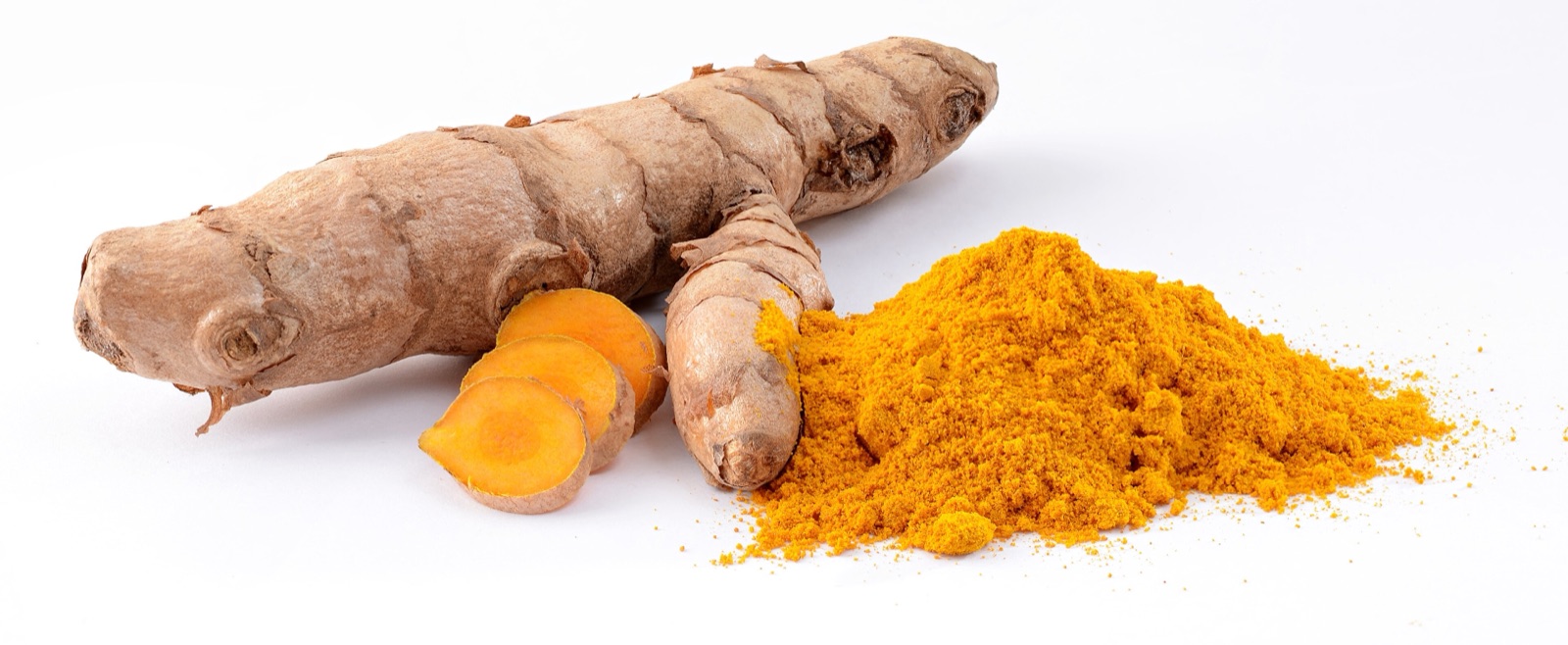
| turmeric (sliced) | khao min | เขั้าหิ้มฯร | 1–2 tbsp |
| coriander seeds | seeds of phak pom | ผักฯป้อฯม | ½–1 tsp |
| black cardamom | — | — | ½–1 tsp |
| salt | kuea | เกิลฯอฯอ | 1–1½ tsp |
Curry and noodles
| Ingredient | Kham Mueang | Lanna script | Amount (4 people) |
|---|---|---|---|
| chicken thighs with drumsticks | kai | ไก่ | 4 pieces (about 600–800 g) |
| coconut milk | kathi | กะทิ | 3–4 cups |
| water | nam | นาฯ | 1–1½ cups |
| light soy sauce | — | — | 1–2 tbsp |
| dark soy sauce | — | — | ½–1 tbsp |
| fresh egg noodles (to boil) | — | — | 4 nests |
| fresh egg noodles (to fry crisp) | — | — | ½–1 nest |
| oil for frying the noodles | nam man | นาฯมันฯ | 1–2 cups |
Side dishes
| Ingredient | Kham Mueang | Lanna script | Amount (4 people) |
|---|---|---|---|
| pickled mustard greens | phak kat + dong | ผักฯกาดฯ ดอฯง | ½–1 cup |
| shallots (halved) | hom bua | หอฯมบ่฿วฯ | 4–6 |
| limes (wedges) | ba nao | บ่าฯนาฯวฯ | 2–3 |
| chilli fried in oil | phik | ฯระฯพิกฯ | 2–3 tbsp |
| coriander, spring onion | phak pom | ผักฯป้อฯม | 2–3 stems each |
In Kham Mueang turmeric is khao min (เขั้าหิ้มฯร, read khao min), and it is turmeric that turns khao soi curry yellow-orange. Coconut milk comes from ba pao (บ่าฯพ้ลฯาวฯ, read ba pao), the coconut, and for squeezing coconut milk Northern cooks use the word kan (คั้นฯ, read kan): the dictionary's example is kan kathi, to squeeze coconut milk.
Choose how many people you are cooking for below; the amounts adjust for you, and you can tick off ingredients as you prepare them.
Step by step, with Kham Mueang kitchen verbs
Allow about 60–80 minutes in total, most of it simmering the chicken until tender.
1. Khua the paste ingredients. Heat a dry pan over medium heat with no oil. Roast the dried chillies, shallots, ginger and turmeric until fragrant and lightly charred, then set aside and roast the coriander seeds and cardamom briefly. This dry-roasting is khua (ขั้฿วฯ, read khua): the dictionary explains it as putting food in a pan over the fire without water or oil and turning it until done, e.g. khua khao, roasting rice.
2. Tam until smooth. Put the coriander seeds, cardamom and salt in the mortar first and tam (ตำ, read tam), pound, to a powder. Then add the chillies, shallots, ginger and turmeric and pound to a smooth paste. If you use a blender, a splash of coconut milk helps it turn.
3. Fry the paste in coconut cream. Put about 1 cup of the thick coconut cream in a pot over medium heat and simmer until the oil starts to separate. Add the paste and fry for 3–5 minutes until the kitchen smells wonderful.
4. Add the chicken and kon. Add the chicken and kon (ค฿นฯ, read kon), stir, until every piece is coated and the outside is cooked. Then add the rest of the coconut milk and the water.
5. Tom, then simmer. Tom (ต้฿มฯ, read tom), bring to the boil, and season with light soy sauce, dark soy sauce and salt. Lower the heat and simmer for about 30–45 minutes, until the chicken is tender and comes off the bone easily.
6. Fry the crispy noodles. Meanwhile heat the oil. Loosen the reserved noodles and fry a little at a time until golden and crisp. Drain on paper towels, and take care with spitting hot oil.
7. Luak the noodles. Luak (ลวฯก, read luak), blanch, the remaining noodles in boiling water for 1–2 minutes, then drain.
8. Fill the bowls, then jim. Put the noodles in bowls; Northern Thais call a bowl thuai (ถ้วฯยฯ, read thuai). Ladle over the chicken and curry, top with crispy noodles, coriander and spring onion, then jim (ชิมฯ, read jim), taste, and adjust before serving.
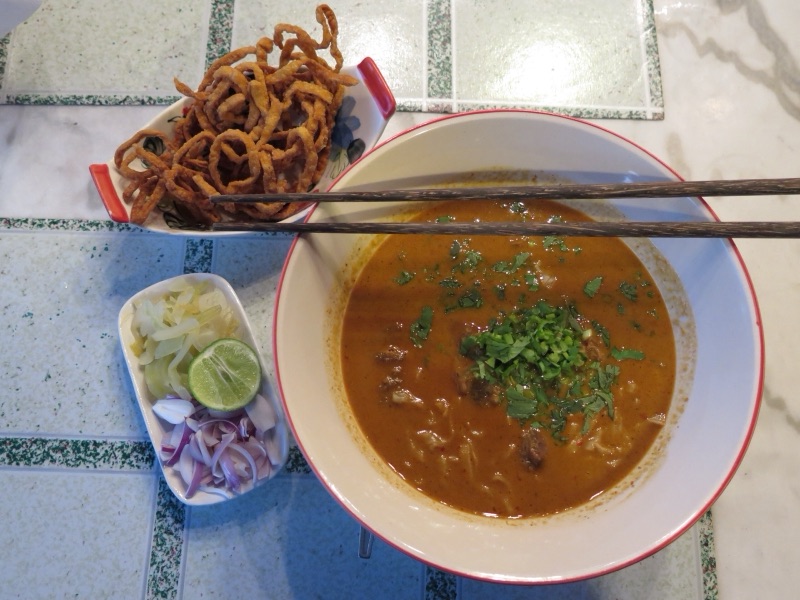
Side dishes: season it yourself at the table
Khao soi is not finished in the pot; each diner seasons their own bowl. The dictionary names three side dishes: pickled mustard greens, shallots and lime.
- Pickled mustard greens are phak kat (ผักฯกาดฯ, read phak kat), mustard greens, that have been dong (ดอฯง, read dong), pickled. Their sour-salty bite cuts the richness of the coconut.
- Shallots, hom bua (หอฯมบ่฿วฯ, read hom bua), are eaten in halves on the side for a sharp crunch.
- Lime, ba nao (บ่าฯนาฯวฯ, read ba nao), is squeezed in for extra sourness.
- Chilli fried in oil is for those who like it hot; add a little at a time.
For Northern table manners and how locals season their food, read Eat Like a Local in Chiang Mai.
Every home, a different taste
- The meat. The dictionary says khao soi is named after its meat. Besides chicken there is beef khao soi, made with jin ngua (ชิ้นฯง฿วฯ, read jin ngua), beef, and duck khao soi. Beef needs much longer simmering than chicken.
- Coconut or not. Some Muslim khao soi shops make a lighter, clearer curry that puts the spices first, as Thansettakij describes.
- Spices. Some recipes add other spices to the paste, such as cumin or cinnamon; add a little and taste.
- Toppings. The dictionary word mi (หี่มฯ, read mi) is not only a noodle dish: it also means fried shallots or garlic used as a topping. Some homes scatter fried shallots on top for extra aroma.
Where this recipe comes from
The Moradok Lanna kitchen does not yet have a house recipe tested at every step. This recipe is rewritten in our own words from the Moradok Lanna dictionary's description and cross-checked with the published chicken khao soi recipe by PholFoodMafia. All quantities are ranges: taste and adjust as you like.
Summary
- Khao soi is egg noodles in a rich, spicy coconut curry, named after the meat in it.
- The paste is dried chillies, shallots, ginger and khao min (turmeric), dry-roasted and pounded with coriander seeds and cardamom.
- Today's kitchen verbs: khua (dry-roast), tam (pound), kon (stir), tom (boil), luak (blanch) and jim (taste).
- The side dishes are pickled mustard greens, shallots and lime, so each diner seasons their own bowl.
- Published sources link khao soi to Chinese Muslim (Haw) traders from Yunnan; the origin of the name is still a story passed down.
When you finish, praise the cook with lam tae (ลำแท้, read lam tae), "really delicious". Look up more Kham Mueang kitchen words in the Moradok Lanna dictionary, and try nam phrik ong, the first post in the Lanna Kitchen series.
Sources
- Moradok Lanna dictionary (moradoklanna.com/dict): khao soi, soi, kathi, khao min, khua, mi and every word in this post, checked 18 October 2026.
- Joie de La Cuisine. (2026). ข้าวซอยอิสลาม เชียงใหม่ 2 ร้าน [Khao soi Islam: two shops in Chiang Mai]. Thansettakij, อิ่ม_โอชาฯ column.
- Phol Tantasathien. ข้าวซอยไก่ (Chicken Khao Soi). PholFoodMafia. (used to cross-check ingredients and steps)
Practise the words from this article
Flip through 27 flashcards of the Lanna words used in this article.


