
Photo: Takeaway / Wikimedia Commons (CC BY-SA 3.0)
Nam Phrik Ong Recipe: Northern Thai Pork & Tomato Dip
Nam phrik ong is an orange chilli dip of tomatoes and dried chillies, simmered with minced pork until thick. In Kham Mueang (Northern Thai) it is nam phik ong (นาฯระฯพิกฯอ่อฯง, read nam phik ong). It is only mildly hot, so it makes a good first dish for anyone new to Northern food, and it is a regular on the khantoke tray.
This is the first post in our Lanna Kitchen series. It teaches you to make nam phrik ong at home step by step. Quantities are given as ranges so you can adjust them, and every step comes with the Kham Mueang word cooks really use, so you learn vocabulary while you cook.
What is nam phik ong, and why "ong"?
Nam phik (นาฯระฯพิกฯ, read nam phik) means chilli dip. The word ong (อ่อฯง, read ong) is defined in the dictionary only as "the name of a chilli dip", with a pointer to nam phik ong, so we have found no explanation of where the name comes from that we can verify.
The Moradok Lanna dictionary describes nam phik ong clearly:
- it is orange from tomatoes and dried chillies;
- it is simmered until thick, with a little oil floating on top;
- it has three tastes, sour, salty and slightly hot, followed by a sweet note;
- there are many recipes, and some homes add thua nao khaep for extra flavour.
To meet other Northern dishes before you cook, read What to Eat in Chiang Mai: 20 Northern Thai Dishes. Nam phrik ong also appears on the khantoke, the Northern tray meal for guests.
Ingredients and their Kham Mueang names
This recipe serves 4. Quantities are ranges because dried chillies differ in heat and tomatoes differ in sourness and sweetness. Start at the low end, then taste and adjust.
For the chilli paste (pounded)
| Ingredient | Kham Mueang | Lanna script | Amount (4 people) |
|---|---|---|---|
| dried chillies | phik (chilli) | ฯระฯพิกฯ | 8–12 |
| shallots | hom bua | หอฯมบ่฿วฯ | 4–6 bulbs |
| garlic | hom khao or hom tiam | หอฯมขาวฯ | 6–10 cloves |
| salt | kuea | เกิลฯอฯอ | ½–1 tsp |
| shrimp paste | — | — | 1–2 tsp |
| thua nao khaep (optional) | thua nao khaep | ถ฿วฯเนาฯแขัปฯ | 1–2 discs |
For the dip
| Ingredient | Kham Mueang | Lanna script | Amount (4 people) |
|---|---|---|---|
| minced pork | mu (pork; to mince = fak) | หู | 300–400 g |
| small tomatoes | ba khuea som | บ่าฯเขิอฯอส้฿มฯ | 300–400 g |
| cooking oil | nam man | นาฯมันฯ | 2–3 tbsp |
| water | nam | นาฯ | ¼–½ cup |
| fish sauce | nam pa | นาฯปลฯา | ½–1 tbsp |
| sugar (optional) | nam tan | นาฯตาลฯฯ | ½–1 tsp |
| spring onions and coriander | spring onion · phak pom | ผักฯป้อฯม | 2–3 stalks each |
Northerners call the tomato ba khuea som (บ่าฯเขิอฯอส้฿มฯ, read ba khuea som), literally "sour eggplant". Coriander is phak pom (ผักฯป้อฯม, read phak pom), also hom pom. And fak (ฟักฯ, read fak) is not only the name of a gourd: as a verb it means "to mince", so minced pork is pork that has been fak-ed.
Pick the number of people below and the amounts adjust themselves; you can also tick off each ingredient as you get it ready.
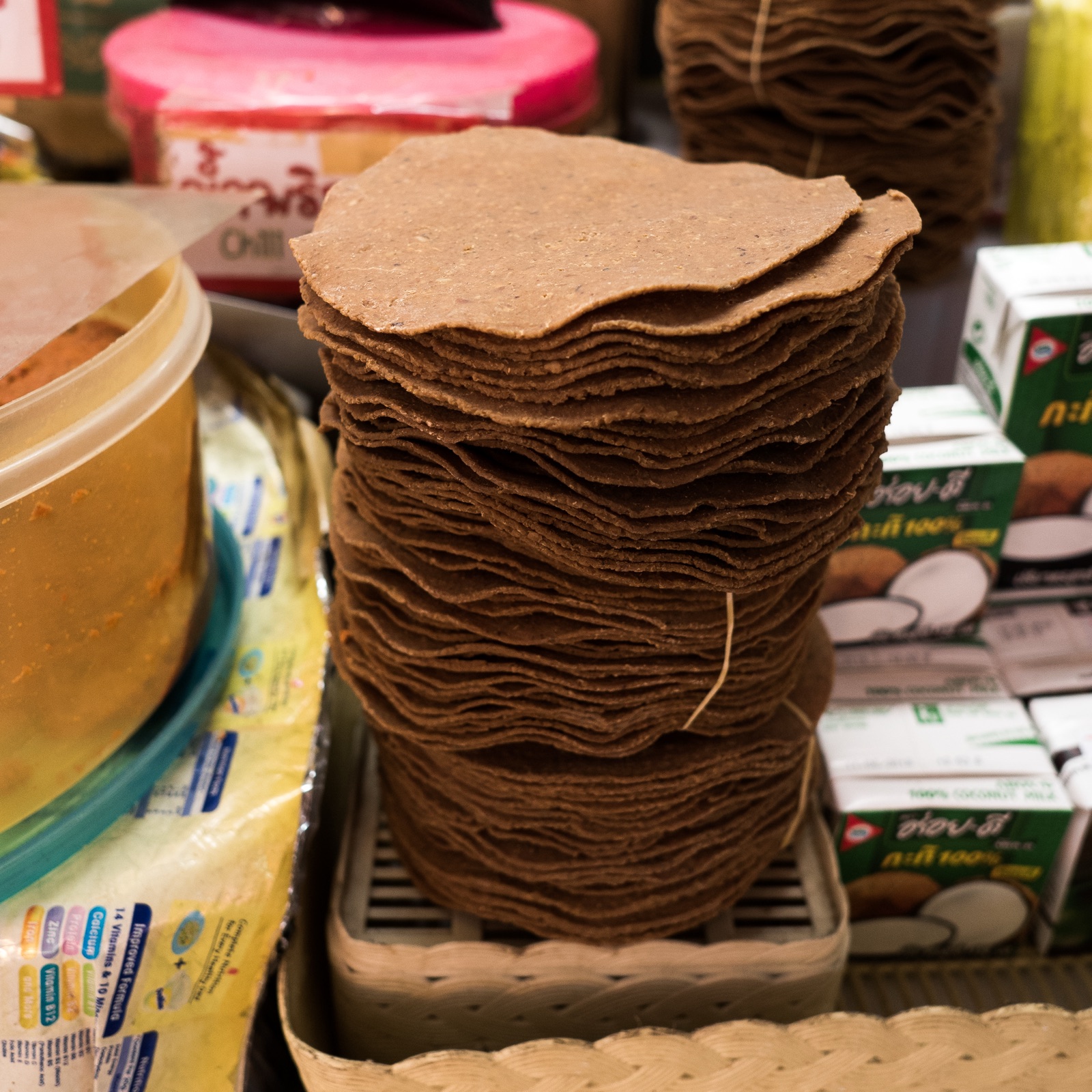
Thua nao khaep (ถ฿วฯเนาฯแขัปฯ, read thua nao khaep) is described in the dictionary as soybeans boiled soft, fermented, pounded fine, then shaped into thin round discs about 3 inches across and sun-dried. It is one form of thua nao (ถ฿วฯเนาฯ, read thua nao), which the dictionary says is used to season many dishes. Cooks usually toast the disc over a flame before using it.
Tools: kok and kaen kok
Every chilli dip starts in a mortar. In Kham Mueang a mortar is a kok (ระฯค฿กฯ, read kok); the one kept for chilli dips is a kok phik (ระฯค฿กฯระฯพิกฯ, read kok phik), and its pestle is a kaen kok (แกนฯระฯค฿กฯ, read kaen kok), also kaen tam.
No mortar? Use a blender, but pulse it so the paste stays a little coarse. For more kitchen words, see Lanna Kitchenware Words.
Step by step, with Kham Mueang kitchen verbs
Total time is about 30–40 minutes, plus soaking the chillies.
1. Suai the vegetables, soak the chillies. Wash the vegetables you will serve. Washing in Kham Mueang is suai (ซ่วฯยฯ, read suai), as in suai phak, "wash vegetables". Cut the dried chillies into pieces (shake out some seeds for less heat), soak them in hot water for 10–20 minutes until soft, then squeeze them dry.
2. Toast the thua nao. If you use thua nao khaep, ping (ปิ้งฯ, read ping, "to grill or toast") it over a low flame or in a dry pan until fragrant and crisp. Don't let it burn; it turns bitter.
3. Tam the paste. Tam (ตำ, read tam) means "to pound"; the dictionary's own example is tam nam phik, "to pound a chilli dip". Pound the chillies with the salt first (the salt helps break them down), then add the shallots, garlic, shrimp paste and thua nao, and pound until well mixed. A slightly coarse paste is fine.
4. Fry the paste. Heat the oil in a pan over medium heat and fry the paste for 2–3 minutes until fragrant.
5. Add the pork and kon. Add the minced pork and stir to break it up so it doesn't clump. To stir is kon (ค฿นฯ, read kon), as in kon kaeng, "stir the curry". Cook until all the pork has changed colour, about 5 minutes.
6. Add the tomatoes and simmer with little water. Add the halved or roughly chopped tomatoes and a little water at a time, lower the heat and simmer for 10–15 minutes, until the tomatoes collapse and the dip is thick, with orange oil on top.
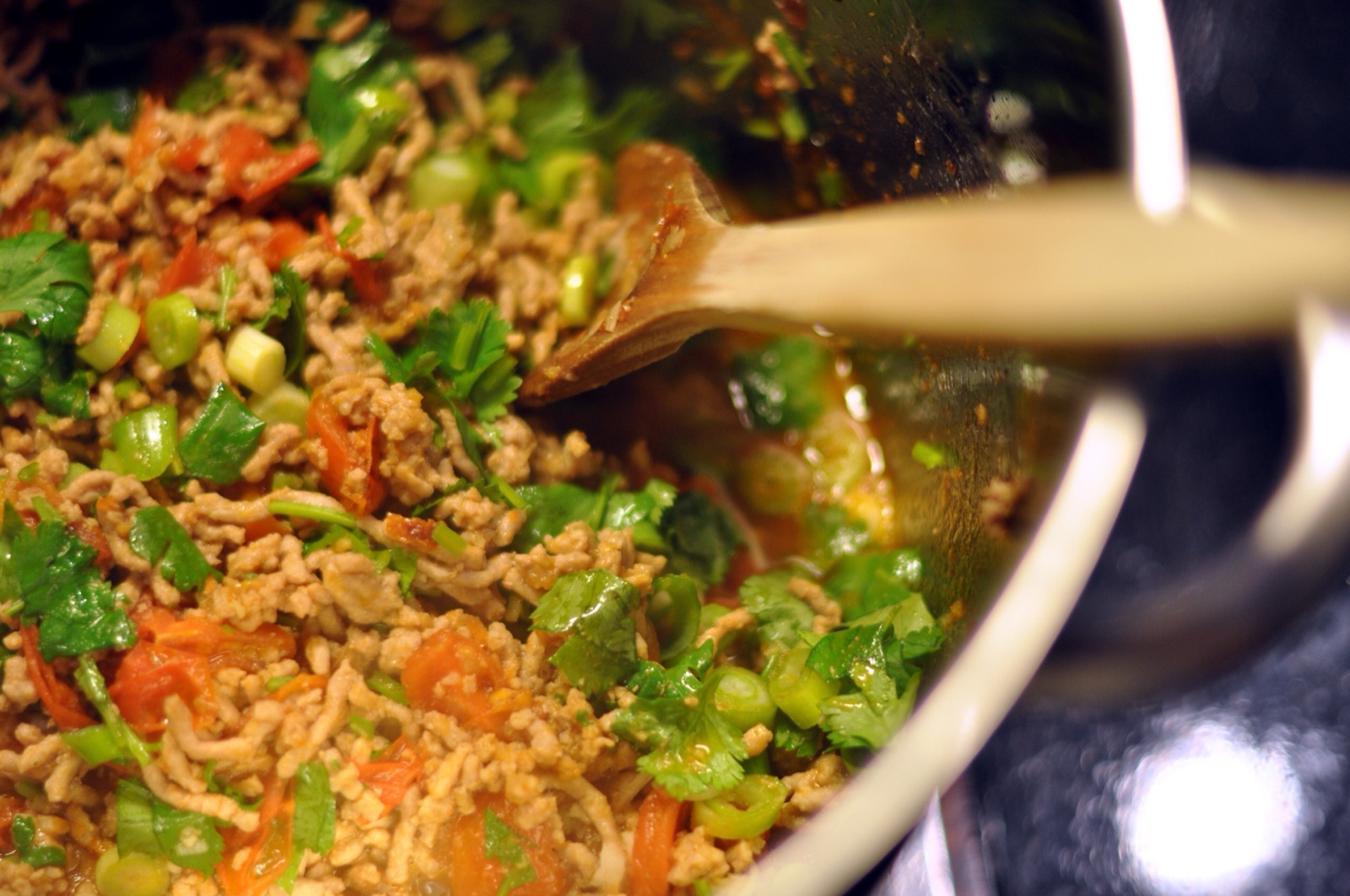
Cooking with a little water and a pounded paste like this is close to the Kham Mueang verb jiao (จยฯว, read jiao).
The dictionary goes on: when chilli paste is added, the dish is called ok, and when there is a lot of water and a sour taste, it is jo. So the three words form one family of Northern ways to simmer.
7. Jim, then season. To taste is jim (ชิมฯ, read jim). Taste for the balance the dictionary describes: som (ส฿มฯ, sour), kem (เคัมฯ, salty) and a little phet (เผัดฯ, hot). If it is bland add fish sauce; if it is too sour add a pinch of sugar.
8. Add the herbs and serve. Turn off the heat, stir in sliced spring onions and coriander, and spoon into a bowl.
What to eat it with: phak kap nam phik
The vegetables eaten with a chilli dip are called phak kap nam phik (ผักฯกัปฯนาฯระฯพิกฯ, read phak kap nam phik). The dictionary says nam phik ong goes with fresh, boiled or steamed vegetables, and gives one classic pairing: nam phrik ong with blanched young cassia (khi lek) shoots.
| Vegetable | Kham Mueang | Lanna script | How |
|---|---|---|---|
| cucumber | ba taeng sang | บ่าฯแตงฯซั้งฯ | fresh |
| yardlong beans | ba thua sang | บ่าฯถ฿วฯซั้งฯ | fresh or blanched |
| Chinese cabbage, cabbage | phak kat | ผักฯกาดฯ | fresh or steamed |
| eggplant | ba khuea | บ่าฯเขิอฯอ | fresh or steamed |
| cassia (khi lek) shoots | — | — | blanched |
Vegetables that need cooking are either luak (ลวฯก, read luak), blanched in boiling water, or nueng (หึ้นฯง, read nueng), steamed.
Add khaep mu (แฅปฯหู, read khaep mu), pork cracklings, and khao nueng (เขั้าหึ้นฯง, read khao nueng), steamed sticky rice. The Northern way to eat is to roll a little sticky rice, or pick up a vegetable, and dip it in the chilli dip; Kham Mueang has a word for exactly that: jam nam phik (จํานาฯระฯพิกฯ, read jam nam phik). For more table manners, see Eat Like a Local in Chiang Mai.
Every home has its own version
As the dictionary says, there are many recipes. The most common differences:
- Order of cooking. The dictionary says the pork is usually cooked first, then the paste and tomatoes go in. This recipe fries the paste first for aroma. Both give you nam phrik ong.
- Thua nao or shrimp paste. Some homes add thua nao khaep, others use only shrimp paste (Bangkokbiznews, in Thai, uses both).
- Lemongrass. Some recipes pound jak khai (จักฯไฯระฯค, read jak khai), lemongrass, into the paste.
- No pork. Bangkokbiznews suggests soft tofu or chicken egg in place of the minced pork.
Where this recipe comes from
The Moradok Lanna kitchen does not yet have a house recipe tested at every step. This recipe is written in our own words from the Moradok Lanna dictionary's description, checked against the two published recipes listed under Sources. Every quantity is a range: taste and adjust.
Summary
- Nam phik ong is an orange dip of tomatoes, dried chillies and minced pork, simmered until thick: sour, salty and slightly hot.
- The paste is dried chillies, shallots, garlic, salt and shrimp paste; some homes add thua nao khaep.
- Today's kitchen verbs: suai (wash), ping (toast), tam (pound), kon (stir), jiao (simmer with a little water) and jim (taste).
- Eat it with phak kap nam phik, fresh, blanched or steamed, plus pork cracklings and sticky rice.
- When it's done, praise the cook with lam tae (ลำแท้, read lam tae): "really delicious!"
Look up more Kham Mueang kitchen words in the Moradok Lanna dictionary. Nam phrik ong is also one of the dishes in the song Kin Lam Kin Lam.
Sources
- Moradok Lanna dictionary (moradoklanna.com/dict): entries for nam phik ong, jiao, phak kap nam phik, thua nao khaep and every word in this article, checked 17 October 2026.
- กรุงเทพธุรกิจ (Bangkokbiznews). (2021). Cooking at Home 'น้ำพริกอ่อง' แสนง่ายใครทำก็อร่อย [Cooking at Home: nam phrik ong, easy and tasty for anyone].
- Kanlaya Supachana. Nam Prik Ong. The Local Palate. (Used to cross-check ingredients and timing.)
Practise the words from this article
Flip through 40 flashcards of the Lanna words used in this article.
Look up "น้ำพิกอ่อง" in the Moradok Lanna dictionary (in Thai)


