
Food False Friends: Som Is Sour, Tuai Is a Bowl
Ordered food in Chiang Mai and got something you didn't expect? You may not have misheard: you may have met a Kham Mueang food false friend. These Northern Thai words look exactly like central Thai words, letter for letter, but mean something else up north. Take som (ส฿มฯ): it does not mean an orange, it means sour.
This lesson collects the kitchen and table words that central Thai speakers (and learners of standard Thai) most often get wrong. Every word comes from the Moradok Lanna dictionary. Many of them can still carry the central Thai meaning too, so the central sense isn't "wrong" in the north; you just need to know what a Northern speaker means.
Som: sour, not an orange
The dictionary defines som as "sour, tasting like lime or ma-dan". It is also the first part of the names of sour plants such as pomelo (som o) and som poi. When a Northerner says a curry is som, it is simply sour. You can still see this old meaning in the name of the central Thai dish kaeng som, "sour curry".
- som pak (ส฿มฯปากฯ): literally "sour mouth", a craving for something you are used to eating
- ba khuea som (บ่าฯเขิอฯอส้฿มฯ): the tomato, literally "sour eggplant"
- jin som (ชิ้นฯส้฿มฯ): fermented pork sausage (central Thai naem), literally "sour meat"
Khaep: crispy fried things, not "narrow"
Khaep (แฅปฯ) does not mean narrow, as it does in central Thai. The dictionary defines it as "animal fat with the oil rendered out", so the word turns up in the names of many crunchy snacks.
| Kham Mueang | Lanna script | Meaning (from the dictionary) |
|---|---|---|
| khaep mu | แฅปฯหู | pork skin fried until crisp (pork crackling) |
| khao khaep | เขั้าแฅปฯ | Lanna-style rice cracker |
| phak khaep | ผักฯแฅปฯ | ivy gourd leaves (tamlueng) |
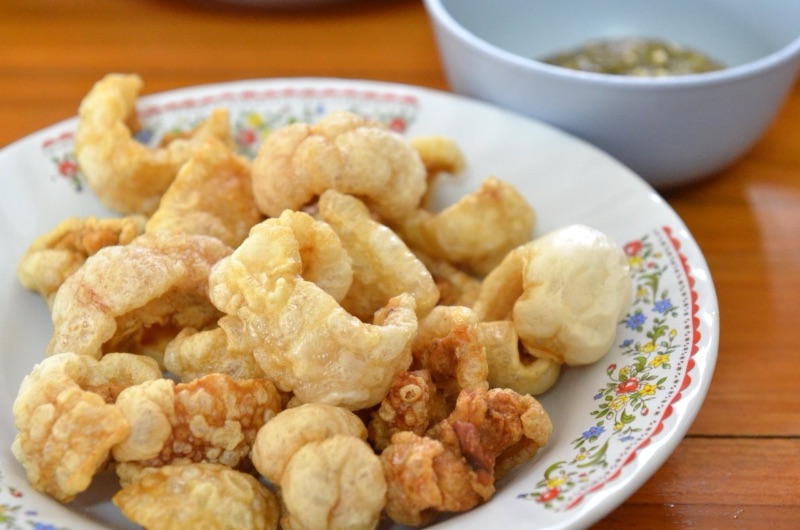
If a vendor says she has phak khaep, she means ivy gourd, a leafy green that goes into soups, not vegetables fried in batter.
Jo: a vegetable soup, not a TV screen
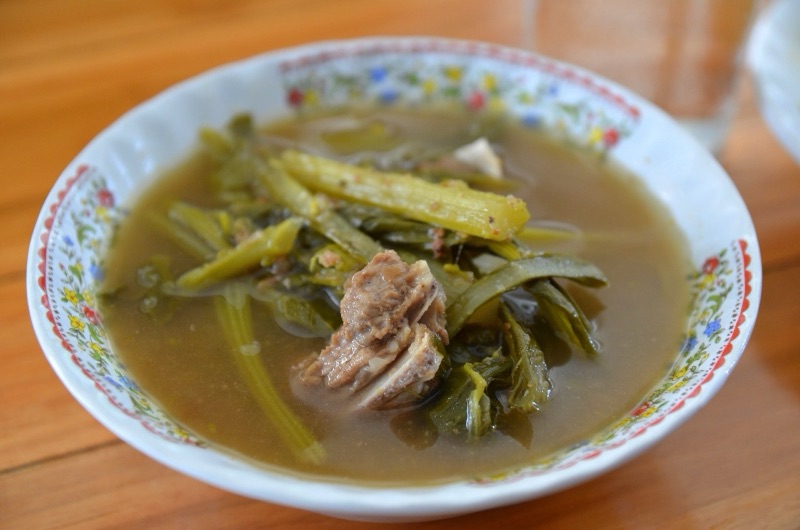
Jo (ชํอฯ) has several meanings in the dictionary, including a screen, as in central Thai. In the kitchen, though, jo is a way of cooking greens: boil water with shrimp paste, salt and fermented fish, add the vegetables once it boils, sour it with tamarind, and name the dish after the vegetable, as in phak kat jo (ผักฯกาดฯชํอฯ), mustard-green soup.
Naem, nuea and jin: ordering meat right
These three words cause more ordering mix-ups than any others.
- Naem (แหนฯม) in the dictionary is not a food at all. It means probably, should, might. The sour pork sausage that central Thai calls naem is jin som in Kham Mueang.
- Nuea (เนิ้อฯอ), "meat" or "beef" in central Thai, has as its first dictionary meaning "wild animal, deer-type animal".
- Meat as food is jin (ชิ้นฯ), and beef is jin ngua (ชิ้นฯง฿วฯ).
Say just "naem" and a Northerner may hear "probably". Ask for jin som instead, and for beef say jin ngua. For dishes worth trying, see What to Eat in Chiang Mai.
Khao and khao: one is rice, one is a wall slat
Northerners pronounce the word for rice as khao (เขั้า), spelled like central Thai khao "to enter". The dictionary notes that it has a special in-between tone (tri phian, half falling, half high) that central Thai doesn't have, as in kin khao (to eat) and khao nueng (เขั้าหึ้นฯง), steamed sticky rice.
The word spelled like central Thai khao "rice" (ข้าวฯ) is not food at all in the dictionary: it is "a wooden lath, the slat fitted to the posts of a woven bamboo wall", or a bamboo fence rail.
Nueng and nueng: "one" and "steamed"
These two have swapped places. Nueng (นึ่งฯ), spelled like central Thai "to steam", means one in Kham Mueang, as in an nueng (อันฯนึ่งฯ), "one thing". Steaming food is nueng spelled with a leading ห (หึ้นฯง), like central Thai "one".
So the banana-leaf parcel that central Thai calls ho nueng is ho nueng written with the "steam" spelling (หํอฯหึ้นฯง), as in ho nueng jin kai (steamed chicken parcel).
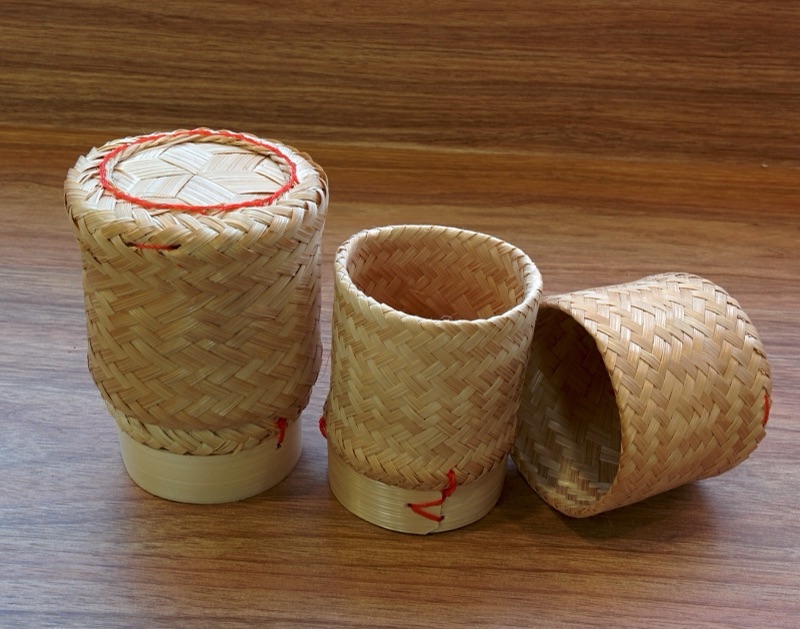
A vendor saying "ho nueng" may mean one parcel. The steamed banana-leaf parcel is spelled the steaming way, and sticky rice steamed in a basket is khao nueng.
Tuai, jok and jan: dishes with swapped names
Even the tableware can confuse you.
- Tuai (ถ้วฯยฯ), a cup in central Thai, is a bowl in Kham Mueang: a deep dish for food.
- A small, tall vessel for drinking water is a jok (จอฯก).
- Jan (ชานฯ), a plate in central Thai, is not tableware in the dictionary: it is the open deck of a house outside the eaves.
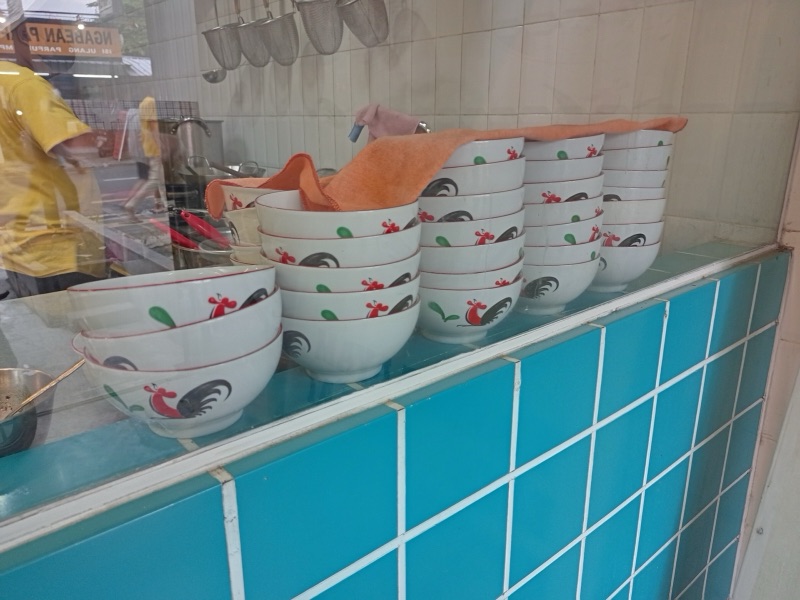
More Lanna kitchen words: Lanna kitchenware.
Tam, tam and khua: kitchen verbs that trip you up
- Tam (ทำฯ), "to pound" in central Thai, means to put down, to place in the dictionary, as in tam wai han (put it over there).
- Pounding with a pestle is tam with a rising tone (ตำ), as in tam nam phik (pound a chilli dip).
- Khua (ขั้฿วฯ), "a pole" or "a stem" in central Thai, means to dry-roast (central khua), as in khua khao (roast rice). It is also the name of a thick, almost dry curry such as khua khae, so lap khua is minced meat salad roasted until cooked.

Photo: Takeaway / Wikimedia Commons (CC BY-SA 3.0)
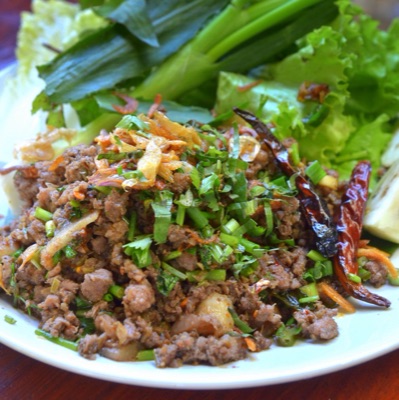
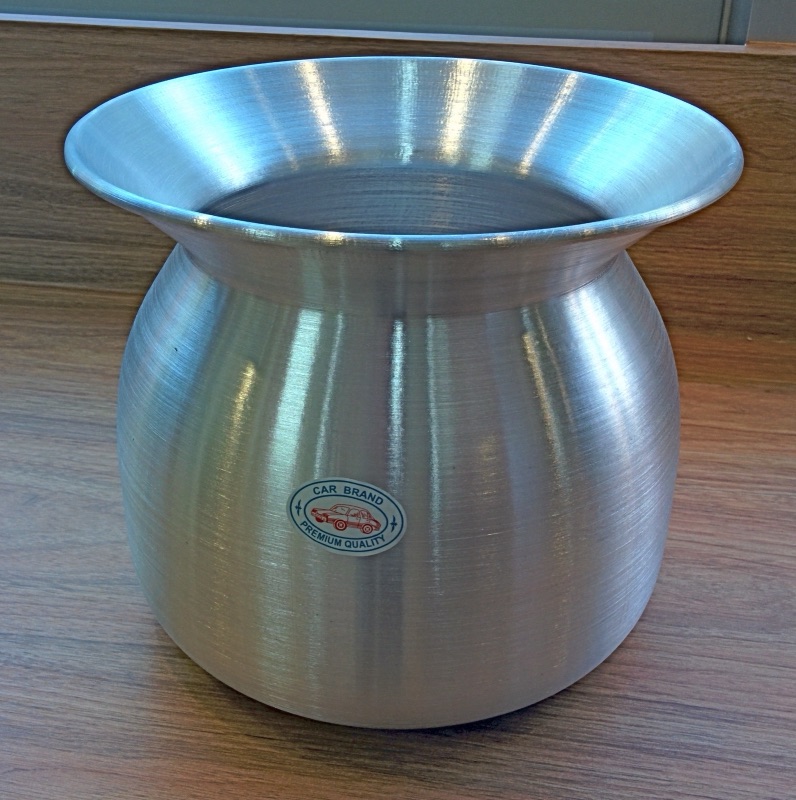
Photo: Takeaway / Wikimedia Commons (CC BY-SA 3.0)
Tao and tao: algae and the stove
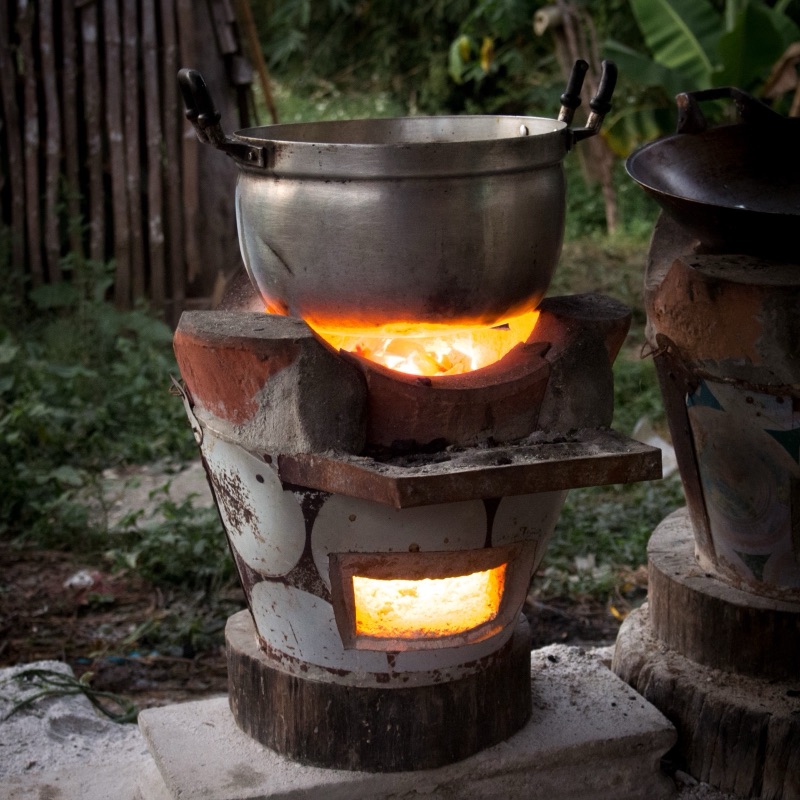
Tao (เทัาฯ) in the dictionary is "a green freshwater alga in fine threads; some kinds are edible". A cooking stove is tao with a rising tone (เตัา), as in tao hang lo, the small clay charcoal stove.
Pu and pu: betel and crab
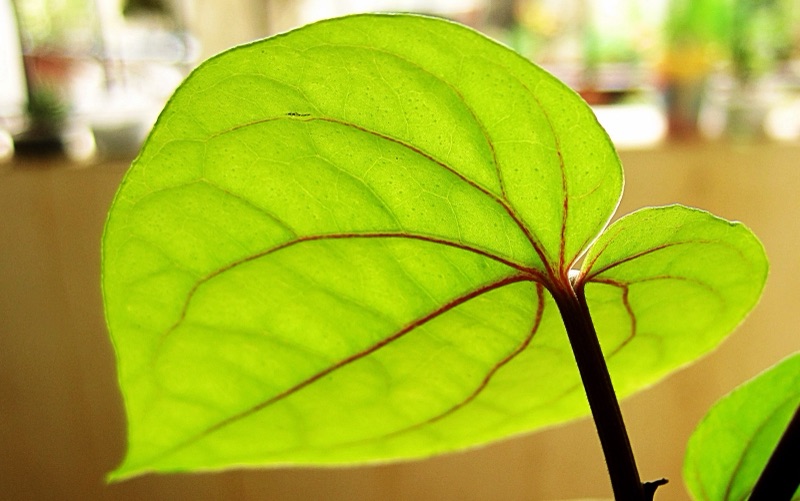
Pu (พลฯ), a crab in central Thai, is the betel leaf in Kham Mueang, the peppery leaf chewed with areca nut. The crab is pu with a rising tone (ปู), and the black paste boiled down from rice-field crab juice is nam pu (นาฯปู).
Lam, yak, khai and po: words at the table
- Lam (ลำ): central Thai uses it for long things such as a stalk of bamboo, and so does Kham Mueang, but at the table lam means delicious. Very delicious is lam kha-nat (ลำขๆนฯาดฯ).
- Yak (อยฯากฯ), "to want" in central Thai, means hungry, thirsty when used about food: yak khao (อยฯากฯเขั้า) is hungry and yak nam (อยฯากฯนาฯ) is thirsty. (It can still mean "to want", too.)
- Khai (ไฅ่) means to want or wish. It sounds like the central Thai word for egg, so central Thai speakers sometimes think you are talking about eggs.
- Po (พํอฯ) means enough, not the jute plant of central Thai.
For the full set of food compliments, see Kham Mueang words locals love, and for table manners see Eat like a local in Chiang Mai.
Vegetables with misleading names
Some vegetable names don't sound like vegetables at all.
| Kham Mueang | Lanna script | Central Thai / English |
|---|---|---|
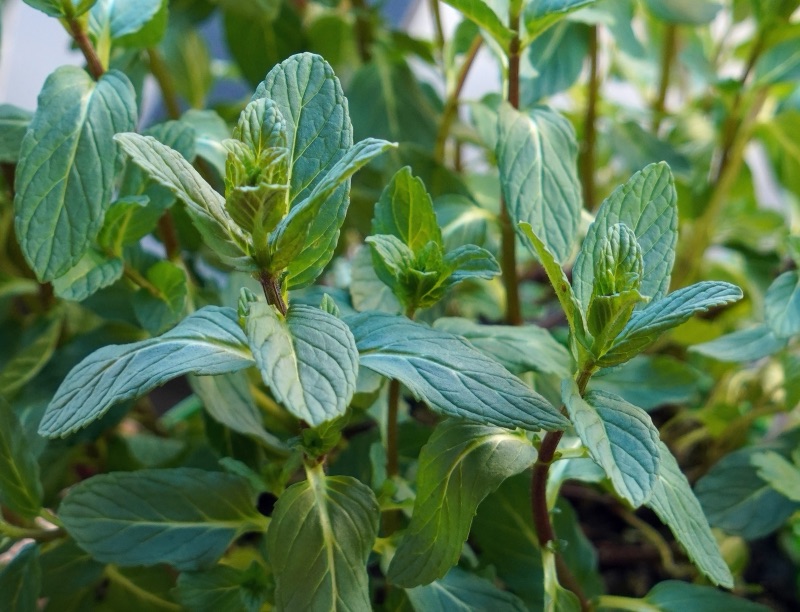
| phak duan | ผักฯด่วฯร | sa-ra-nae, mint (duan means "urgent" in central Thai) |
| phak pom | ผักฯป้อฯม | phak chi, coriander (pom means "fort") |
| phak khaep | (see above) | tamlueng, ivy gourd |
| ba khuea som | (see above) | ma khuea thet, tomato |
Cheat sheet: you think… a Northerner means…
| Word | Central Thai speakers think | Kham Mueang meaning |
|---|---|---|
| som | an orange | sour |
| khaep | narrow | crispy fried, pork crackling |
| jo | a screen | vegetable soup cooked the jo way (screen too) |
| naem | sour pork sausage | probably, might |
| nuea | beef, meat | wild game, deer (meat = jin) |
| khao (rice spelling) | rice | wall slat (rice = the other khao) |
| nueng (steam spelling) | to steam | one (to steam = nueng with ห) |
| tuai | a cup | a bowl |
| jan | a plate | the open deck of a house |
| tam | to pound | to put down (to pound = rising-tone tam) |
| tao | a stove | freshwater algae (stove = rising-tone tao) |
| pu | a crab | betel leaf (crab = rising-tone pu) |
| yak | to want | hungry, thirsty (and to want) |
| po | jute | enough |
Listen in: chaos at the curry stall
This dialogue is our own example for learning, built from dictionary words.
Customer from Bangkok: Naem, please, and some stir-fried nuea.
Vendor: Jin som ka? Jin ngua ka? (The sour sausage, right? Beef, right?)
Customer: Yes. And two servings of khao nueng, please.
Vendor: Khao nueng song kong. Phak kat jo ao tuai nueng ko? (Two baskets of sticky rice. Do you want one bowl of mustard-green soup?)
Customer: (confused) One… cup?
Vendor: Tuai nueng is one bowl, jao. Som noi, lam kha-nat. (One bowl. A little sour, really delicious.)
Practice
Try answering first, then open the answers.
- A Northerner says "this curry is som". What do they mean?
- You want the sour pork sausage. What do you ask for?
- What does tuai nueng mean?
- Someone says "tam it on the table". What should you do?
- What does yak khao laeo mean?
Answers
- The curry is sour.
- Jin som.
- One bowl (nueng = one, tuai = bowl).
- Put it down on the table.
- I'm hungry now.
Summary
- Som = sour · khaep = crispy fried · jo = vegetable soup cooked the jo way
- Naem = probably; the edible naem is jin som, and meat is jin, not nuea
- Rice is the khao spelled like "enter"; the other khao is a wall slat · nueng = one; steaming is the nueng spelled with ห
- Tuai = bowl, jok = cup, jan = house deck · tam = put down; pounding is the rising-tone tam
- Many of these words keep their central Thai meaning too: listen to the context and you will get it
Look up more kitchen words in the Moradok Lanna dictionary. For a song that raps through Northern dishes, read Kin Lam Kin Lam.


