
Photo: Takeaway / Wikimedia Commons (CC BY-SA 3.0)
What to Eat in Chiang Mai: 20 Northern Thai Dishes
You have come to Chiang Mai, or anywhere in Lanna, and one thing is on every list: Northern Thai food. Locals call food khong kin (ขอฯงกินฯ, Kham Mueang reading khong kin), and anything delicious is lam (ลำ, read lam).
This guide picks 20 Northern Thai dishes to try in Chiang Mai, each with its Kham Mueang (Northern Thai) name, the Lanna (Tai Tham) script and a description from the Moradok Lanna dictionary. You will also find a spice rating, what to know before you order, and a few words to use at the table.
Rice is khao, curry is kaeng: dish names the local way
Most menus spell dishes the central Thai way, but Northerners say them a little differently. The word for rice is khao (เขั้า, read khao), said with a tone the dictionary describes as "half falling, half high, a tone central Thai does not have".
So khao soi stays khao soi with the Northern tone, sticky rice is khao nueng, curry is kaeng (แกงฯ, read kaeng, with a rising tone) and chilli dip is nam phik (นาฯระฯพิกฯ, read nam phik, not nam phrik). Try the Northern names when you order.
Noodles: khao soi and nam ngiao
1. Khao soi 🌶️🌶️
Khao soi (เขั้าซอฯยฯ, read khao soi) is, in the dictionary's words, "a noodle dish like egg noodles in a rich, strong curry made with coconut milk". It comes with pickled mustard greens, shallots and lime on the side, and is named after the meat: chicken khao soi, beef khao soi and so on.
It is the dish most people think of first when they think of Chiang Mai. A study by Songsuk Bunthawong and colleagues (2022) quotes the old travel slogan "Visit Kamphaeng Din, eat khao soi, go up Doi Suthep" (Anu Noenhat, 2000), and cites a 2018 survey by the Tourism Council of Thailand in which foreign visitors singled out khao soi, a Chiang Mai recipe, as a favourite.
2. Khanom chin nam ngiao 🌶️
Rice noodles (central Thai khanom chin) are khao nom sen (เขั้าห฿นฯมเส้นฯ, read khao nom sen) in Kham Mueang. The Northern favourite pours nam ngiao (นาฯง้ยฯว, read nam ngiao) over them: a broth that the dictionary says is made with minced pork, pork bones, cubes of pork or chicken blood, tomatoes and dried kapok flowers.
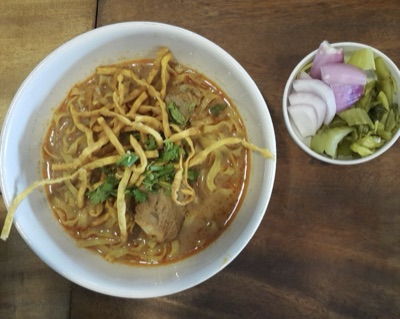
Photo: Chainwit. / Wikimedia Commons (CC BY-SA 4.0)
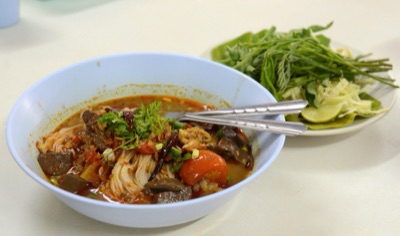
Photo: Takeaway / Wikimedia Commons (CC BY-SA 3.0)
Chilli dips and pork cracklings: a perfect pair
3. Nam phik num 🌶️🌶️🌶️
Nam phik num (นาฯระฯพิกฯหุ่ม, read nam phik num) is made from roasted phrik num (long green chillies) with the charred skins peeled off, pounded with roasted shallots, garlic, shrimp paste and salt. The dictionary says it is eaten with pork cracklings, fresh and steamed vegetables, and sticky rice.
4. Nam phik ong 🌶️
Nam phik ong (นาฯระฯพิกฯอ่อฯง, read nam phik ong) is orange from tomatoes and dried chillies, simmered with minced pork into a thick sauce. The dictionary describes its taste as "sour, salty and slightly spicy", so it is a good first chilli dip for anyone new to Thai heat.
5. Khaep mu ○
Khaep mu (แฅปฯหู, read khaep mu) is "pork skin fried until crisp". Songsuk and colleagues (2022) note that a Northern meal set tends to pair something spicy, such as a chilli dip, with something not spicy, such as pork cracklings, because the flavours suit each other.
The same study cites a record that Princess Dara Rasmi once sent fried pork cracklings, packed in oil in sealed jars, as a gift to royalty in Bangkok (Nueang Ninlarat, 1996). Pork cracklings and nam phik num are still favourite souvenirs to take home from Chiang Mai.
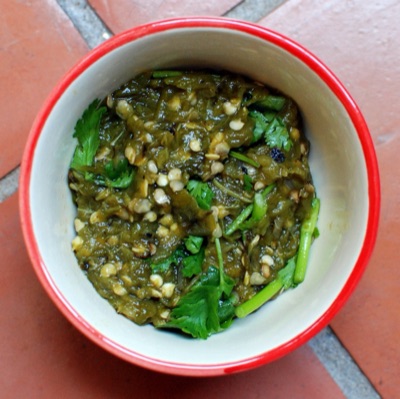
Photo: Takeaway / Wikimedia Commons (CC BY-SA 3.0)
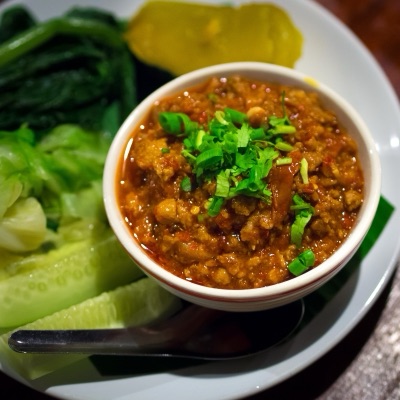
Photo: Takeaway / Wikimedia Commons (CC BY-SA 3.0)
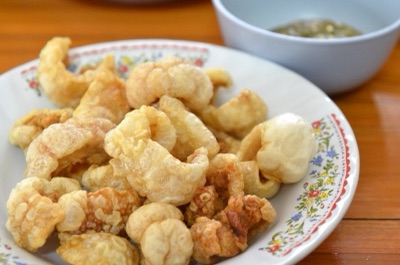
Photo: Takeaway / Wikimedia Commons (CC BY-SA 3.0)
Grilled and wrapped: sai ua, jin som, khai pam
6. Sai ua 🌶️🌶️
Sai ua (ไส้อ่฿วฯ, read sai ua) is minced pork mixed with a herb and chilli paste, stuffed into pork casing, then fried or grilled. The word ua (อ่฿วฯ, read ua) means "to stuff, to put something in the middle", so you will find other ua dishes too, such as stuffed chillies (phrik ua) and stuffed bamboo shoots (no ua).
7. Naem, or jin som 🌶️
Thai fermented pork, known elsewhere as naem, is jin som (ชิ้นฯส้฿มฯ, read jin som) in Kham Mueang: pork fermented with garlic, cooked rice and salt until sour. Wrapped in banana leaf and buried in embers or grilled until cooked, it becomes jin som mok (ชิ้นฯส้฿มฯห฿มฯก, read jin som mok).
8. Khai pam ○
Khai pam (ไข่ป่ามฯ, read khai pam) is egg beaten until fluffy, seasoned with fish sauce, spring onion and coriander, then poured into a banana-leaf cup and grilled over the fire. Some cooks add red-ant eggs. It is a dish with no chilli at all.
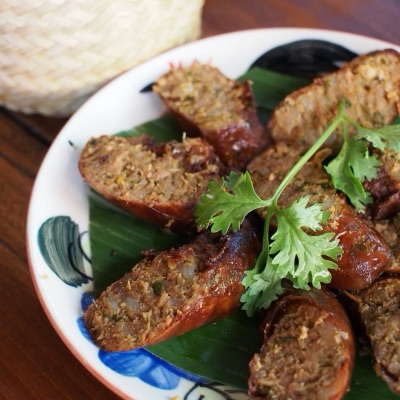
Photo: Takeaway / Wikimedia Commons (CC BY-SA 3.0)
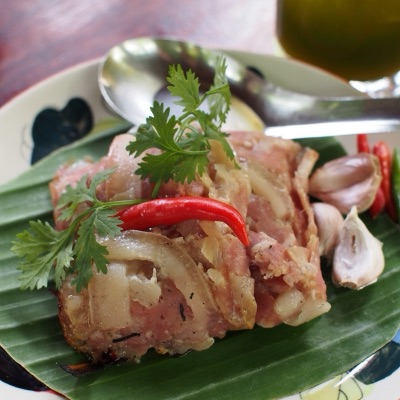
Photo: Takeaway / Wikimedia Commons (CC BY-SA 3.0)
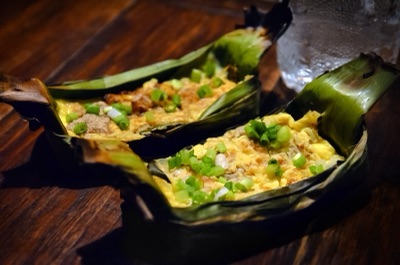
Photo: Takeaway / Wikimedia Commons (CC BY-SA 3.0)
Northern curries: hang le, ho, khae, om
9. Kaeng hang le 🌶️
Kaeng hang le (แกงฯฮังฯเล, read kaeng hang le) uses pork belly with some lean pork, cut into big pieces and simmered until the sauce is thick. The dictionary explains hang le (ฮังฯเล) as a curry paste with curry powder, giving a thick, rich sauce.
10. Kaeng ho 🌶️
Kaeng ho (แกงฯโร฿ะ, read kaeng ho) is a "mixed curry": hang le curry stir-fried with glass noodles, pickled bamboo shoots, lemongrass, kaffir lime leaves and local greens. The dictionary says it was often made from curries left over after a merit-making ceremony, combined and simmered until fragrant, a piece of Lanna kitchen wisdom.
11. Kaeng khae 🌶️🌶️
Kaeng khae (แกงฯแฅ, read kaeng khae) is "a curry made with many kinds of vegetables together", with whatever meat the cook chooses. The most common is kaeng khae kai (แกงฯแฅไก่, read kaeng khae kai), with chicken. Meet the vegetables in Kham Mueang Garden Greens.
12. Kaeng om 🌶️🌶️
Kaeng om (แกงฯอ่อฯม, read kaeng om) is made with a special om curry paste and meat simmered until tender, and is named after the meat used: chicken, beef and so on.
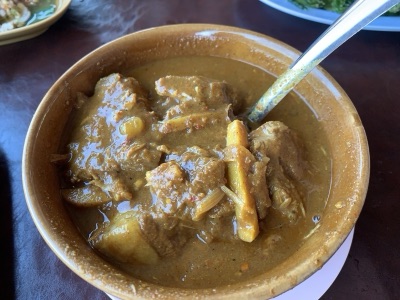
Photo: Chainwit. / Wikimedia Commons (CC BY-SA 4.0)
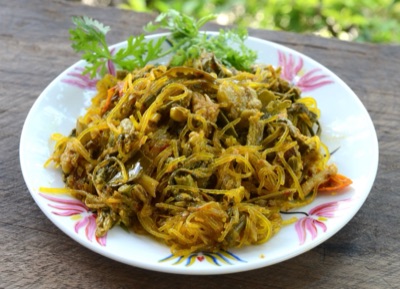
Photo: Takeaway / Wikimedia Commons (CC BY-SA 3.0)
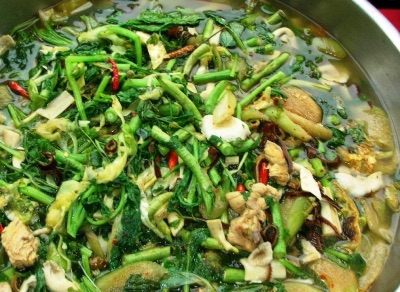
Photo: Xufanc / Wikimedia Commons (CC BY-SA 3.0)
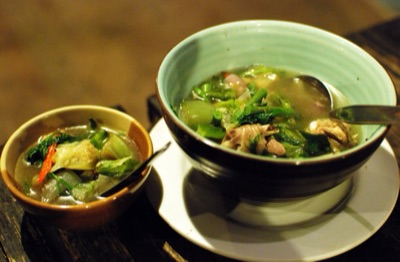
Photo: Takeaway / Wikimedia Commons (CC BY-SA 3.0)
13. Northern lap: ask for it cooked 🌶️🌶️
Lap (ลาปฯ, read lap) is finely chopped meat mixed with a lap chilli paste full of spices such as galangal, lemongrass, chilli, garlic and long pepper. The dictionary says each community keeps its own secret paste recipe, which is why Northern lap is so fragrant with spices.
It is eaten with phak kap lap (ผักฯกัปฯลาปฯ, read phak kap lap), a plate of fresh and blanched herbs and greens that lift the flavour.
The dictionary is clear about how cooked your lap is: lap dip (ลาปฯดิปฯ, read lap dip) is lap that has not been cooked, while lap khua (ลาปฯข้฿วฯ, read lap khua) has been stir-fried until cooked, also called lap suk (ลาปฯสุก).
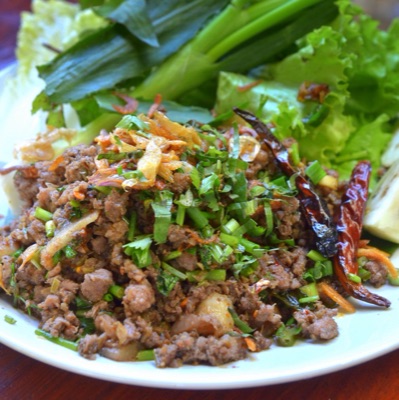
Photo: Takeaway / Wikimedia Commons (CC BY-SA 3.0)
With sticky rice: khao kan jin, tam ba nun, jo phak kat
14. Sticky rice (khao nueng) ○
Steamed sticky rice is khao nueng (เขั้าหึ้นฯง, read khao nueng), the everyday rice of the North. It usually arrives in a kong khao (ก่อฯงเขั้า, read kong khao), a box woven from bamboo or rattan. Read more about kitchen things in Lanna Kitchenware Words and about the shared Northern meal in Khantoke.
15. Khao kan jin 🌶️
Khao kan jin (เขั้าคั้นฯชิ้นฯ, read khao kan jin) is, the dictionary says, "a Tai Yai (Shan) dish": rice mixed with meat and blood, wrapped in banana leaf and steamed until cooked, then eaten with fried garlic, shallots and fried dried chillies. It is also called khao ngiao.
16. Tam ba nun (young jackfruit salad) 🌶️🌶️
This is young jackfruit pounded with chilli paste. Jackfruit is ba nun (บ่าฯหนฯร, read ba nun) and "to pound" is tam (ตำ, read tam, with a rising tone), so locals call the dish tam ba nun, though the name is not yet a headword in the dictionary. Small young jackfruits have their own name, sa ba nun (ส่าบ่าฯหุร), which the dictionary says are "eaten with kaeng ho or dipped in chilli dip".
17. Jo phak kat 🌶️
Jo phak kat (ชํอฯผักฯกาดฯ, read jo phak kat) uses mustard greens just coming into yellow flower, cooked the jo (ชํอฯ) way: water boiled with shrimp paste, salt and fermented fish, then the greens, seasoned with tamarind and cane sugar. The result is a soup that is sour from the tamarind. The dish has its own song story in Phak Kat Cho.
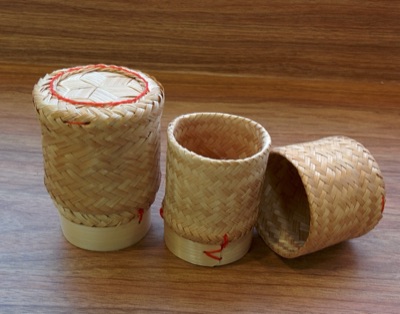
Photo: Susan Slater / Wikimedia Commons (CC BY-SA 4.0)
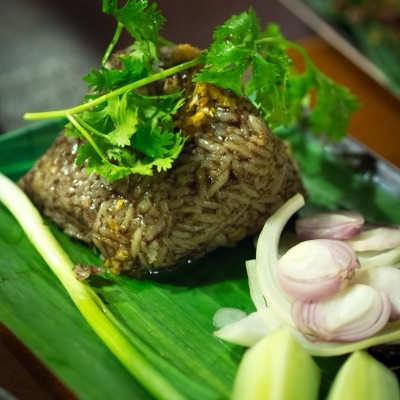
Photo: Takeaway / Wikimedia Commons (CC BY-SA 3.0)
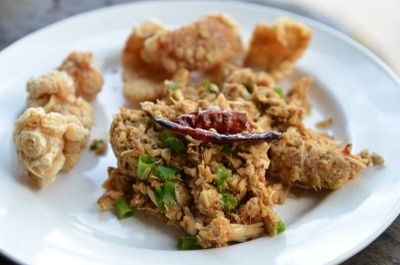
Photo: Takeaway / Wikimedia Commons (CC BY-SA 3.0)
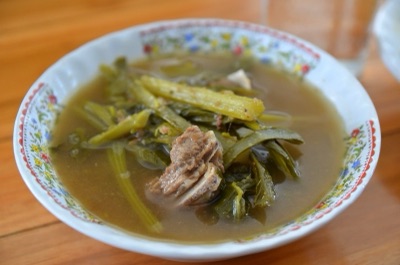
Photo: Takeaway / Wikimedia Commons (CC BY-SA 3.0)
Sweets and the end of the meal
18. Khao nom jok ○
The sweet called khanom thian in central Thai is khao nom jok (เขั้าห฿นฯมจัอฯก, read khao nom jok): glutinous-rice dough around a sweet coconut filling or a salty mung-bean filling, wrapped in a banana-leaf pyramid and steamed.
19. Khao taen ○
Khao taen (เขั้าแตนฯ, read khao taen) is steamed sticky rice mixed with boiled-down cane sugar, pressed into thin rounds, dried and fried until it puffs up, sometimes with more cane syrup drizzled on top. It packs well as a souvenir.
20. Miang ○
Miang (ห้มฯยฯง, read miang) is the young leaves of the miang plant, a kind of tea, steamed and fermented, then rolled around a little salt and kept in the mouth after a meal. The dictionary adds that it is offered to welcome guests on visits and at ceremonies.
Kham Mueang words for the table
| Kham Mueang | Lanna script | Meaning |
|---|---|---|
| lam kha-nat | ลำขๆนฯาดฯ | very delicious, really tasty |
| lam tae | ลำแท้ | really delicious |
| jat lam | ชาดฯลำ | very delicious, just to my taste |
| phet | เผัดฯ | spicy, hot like chilli |
| bo | บ | not (before a verb) |
| ao | ´า | to want, to take |
| im | อิ่มฯ | full, no longer hungry |
| yak khao | อยฯากฯเขั้า | hungry |
Put them together: bo ao phet ("not spicy, please"), and when you love the food, tell the cook lam kha-nat! ("so delicious!"). We built these two sentences ourselves from dictionary words.
Vegetarians, allergies and what to know before ordering
Many Northern dishes use pork: sai ua, pork cracklings, nam phik ong and hang le curry. Some contain blood, such as nam ngiao and khao kan jin. If you do not eat meat, combine sai (ไส่, "to put in") and jin (ชิ้นฯ, "meat") and tell the cook bo sai jin ("no meat, please").
Seasonings to know: nam pa (นาฯปลฯา, fish sauce), ha (ร้า, fermented fish), shrimp paste, which the dictionary lists in nam phik num and in jo soups, and nam pu (นาฯปู), a paste boiled down from paddy crabs. If you are allergic to seafood or shellfish, always ask first.
One more signature seasoning is thua nao (ถ฿วฯเนาฯ, read thua nao): soybeans boiled soft and fermented with salt, used to season many dishes. The dictionary also has a word for a curry with no meat: kaeng luang (แกงฯห้ลฯวฯง, read kaeng luang).
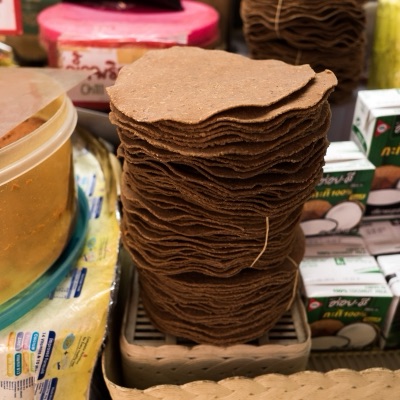
Photo: Takeaway / Wikimedia Commons (CC BY-SA 4.0)
Summary
- Northerners call food khong kin, delicious lam, and say rice as khao with a tone of its own.
- Easy, non-spicy starters: pork cracklings, khai pam, sticky rice, and the only slightly spicy nam phik ong. Nam phik num is the hottest dish on this list.
- In Kham Mueang, naem means "probably"; for the sour pork, ask for jin som.
- Order lap as lap khua or lap suk: Thailand's Department of Disease Control warns that raw pork can cause Streptococcus suis infection.
- Three phrases to use today: bo ao phet, bo sai jin and lam kha-nat.
Look up more dish names in the Moradok Lanna dictionary (in Thai), read about the shared Northern meal in Khantoke, or test yourself on 99 Northern dishes in Kin Lam Kin Lam.
Sources
- Moradok Lanna dictionary (in Thai): เข้าซอย · ของกิ๋น · ลาบ · น้ำพิกหนุ่ม · จิ๊นส้ม
- ทรงสุข บุญทาวงค์ และคณะ [Songsuk Bunthawong et al.]. (2022). อาหารพื้นเมืองเชียงใหม่ในมิติประวัติศาสตร์และการท่องเที่ยว [Chiang Mai local food in its historical and tourism dimensions]. Academic and Research Journal of Northeastern University 12(4). In Thai (citing Anu Noenhat 2000, Nueang Ninlarat 1996 and the Tourism Council of Thailand 2018).
- สำนักงานป้องกันควบคุมโรคที่ ๑ เชียงใหม่ กรมควบคุมโรค [Office of Disease Prevention and Control 1, Chiang Mai, Department of Disease Control]. (2025). สคร. ๑ เชียงใหม่ เตือน อย่ากินหมูดิบ อาจเสียชีวิตจากไข้หมูดิบ [ODPC 1 Chiang Mai warns: do not eat raw pork, it can kill]. In Thai.


