
Photo: Kittitep Khotchalee / Unsplash
Eat Like a Local in Chiang Mai: Sticky Rice & Manners
Eating like a local in Northern Thailand is easier than it looks once you know how people up here share a meal. Kin khao (กินฯเขั้า), Kham Mueang (Northern Thai) for "to eat a meal", centres on sticky rice rolled by hand, dishes set in the middle for everyone to share, and a few short words of praise that make the cook smile.
This guide is written for travellers and visitors, Thai or foreign. It covers how to eat sticky rice, how to use a spoon and fork the Thai way, how to sit at a khantoke, and the Kham Mueang words you'll need at the table. Every word is checked against the Moradok Lanna dictionary, shown in the Lanna (Tai Tham) script.
How to eat sticky rice: dip in, roll, dip
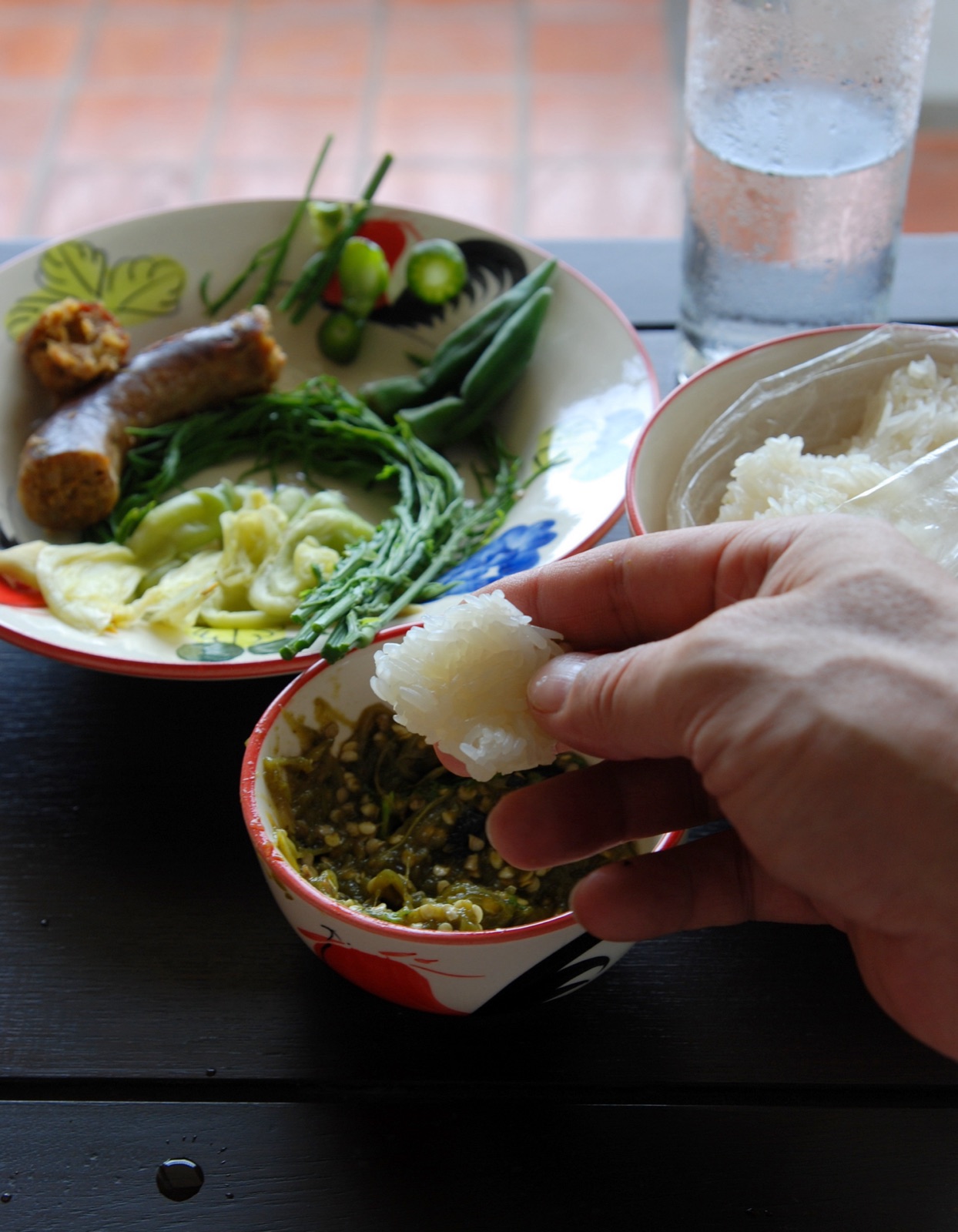
Steamed sticky rice, which Northerners call khao nueng (เขั้าหึ้นฯง), usually arrives in a kong khao (ก่อฯงเขั้า), a lidded box woven from bamboo or rattan (central Thais call it a kratip). Kham Mueang has a word for every step of eating it:
- Jok kong khao (จ฿กฯก่ลฯอฯงเขั้า): reach into the rice box with your hand and take some sticky rice. Take a modest amount, not a big lump.
- Pan khao (ปั้นฯเขั้า): roll the rice in your fingers into a small, bite-sized ball. Say it pun kao.
- Jam nam phik (จํานาฯระฯพิกฯ): use the rice (or a vegetable) in your hand to dip into the chilli dip, then eat.
The dictionary describes pan khao as rolling sticky rice "into a ball to hold before breaking off pieces to dip into the food". The rice is both your starch and your spoon. Writing for the MICHELIN Guide (2020), Chawadee Nualkhair calls sticky rice "a handy, edible utensil", rolled into a ball to pick up larb or chilli dip, and notes that Northern dishes such as larb, sai ua sausage and nam phik with vegetables are made to be eaten with it.
Spoon, fork or chopsticks?
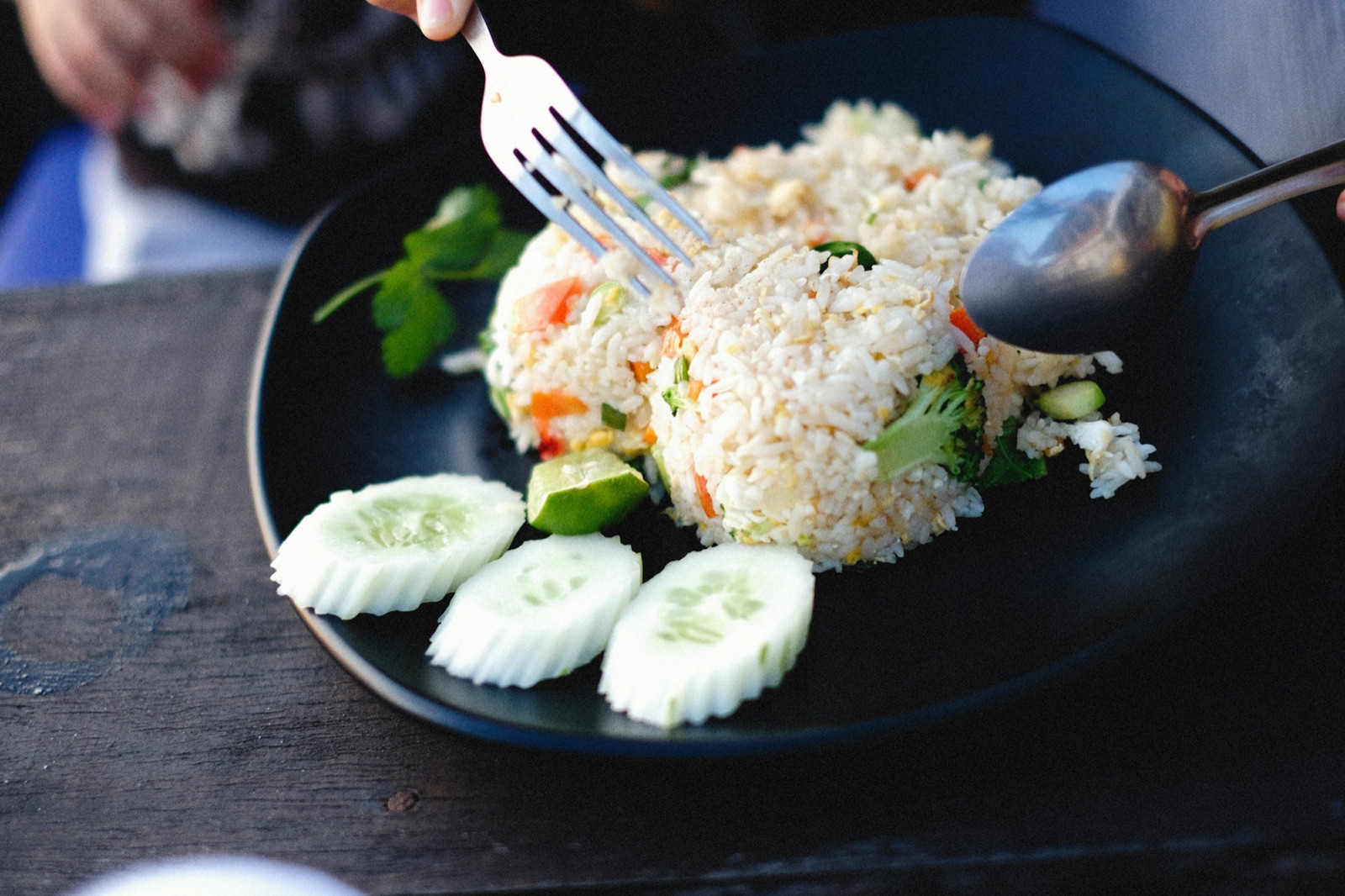
When the meal is ordinary steamed rice, Northerners use a spoon and fork like everyone else in Thailand. In Kham Mueang a spoon is jon (ช้อฯร), a fork is som (ส้อฯม), the same as in central Thai, and chopsticks are mai kip (ไม้คีปฯ, also mai thu).
Chef Pailin Chongchitnant of Hot Thai Kitchen (2023) explains how Thais use them:
- Spoon in your dominant hand, fork in the other. The fork pushes food onto the spoon, and the spoon goes into your mouth.
- Every shared dish has its own serving spoon. Use it to take food from the middle onto your own plate of rice.
- Noodle soups are eaten with chopsticks and a spoon. Ordinary rice meals are not eaten with chopsticks.
- Thai food comes cut into bite-sized pieces, so you won't need a knife.
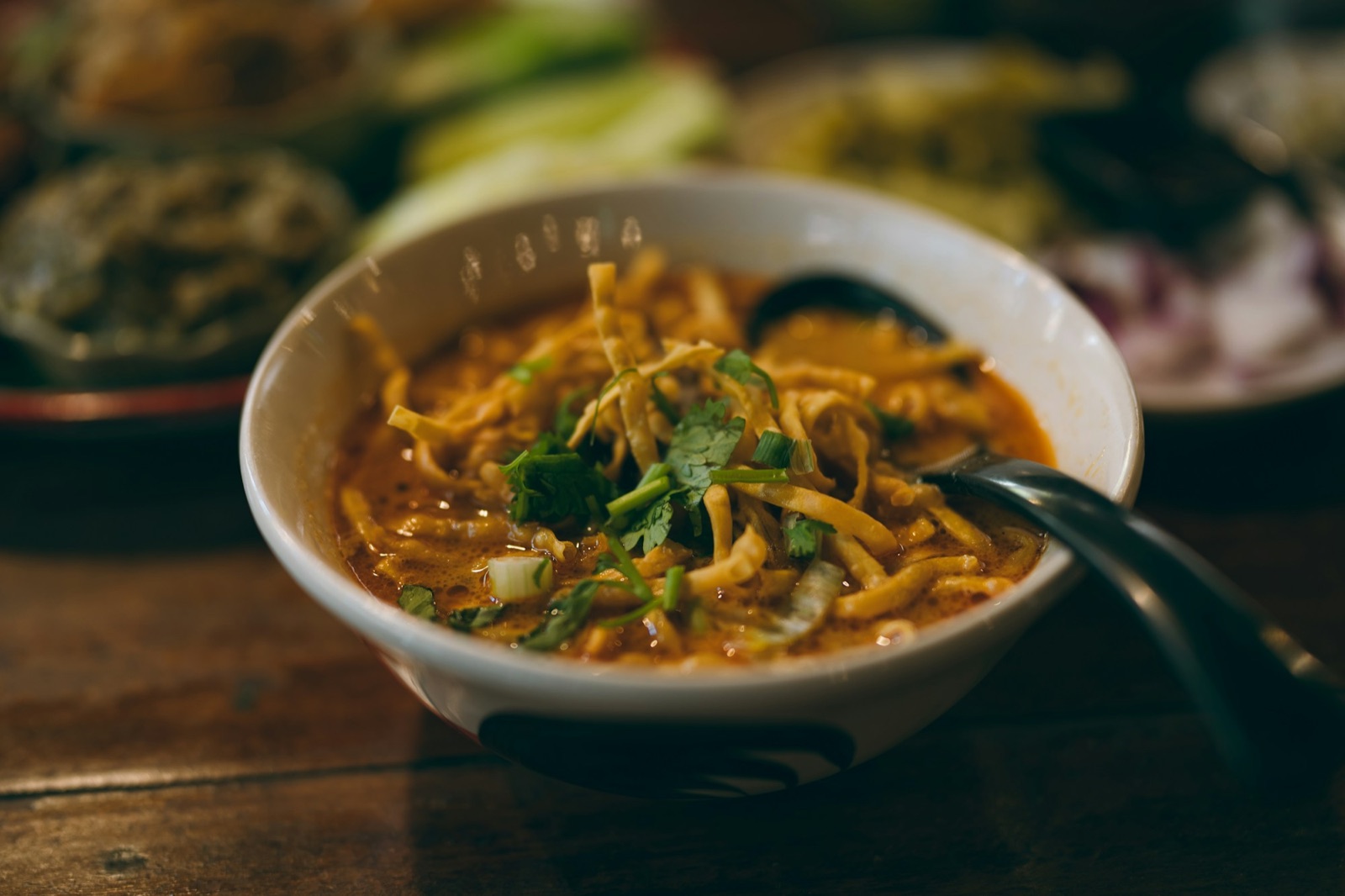
Khao soi, the curry-noodle dish every visitor should try, is eaten with a spoon and chopsticks: pick up the noodles with the chopsticks, rest them on the spoon, and sip the curry broth along with them.
Sitting around the khantoke politely
The traditional Northern meal is eaten sitting on the floor around a khan tok (ขันฯโต฿กฯ), a footed tray that serves as the table. Everyone does kin tuai (กินฯทวฯยฯ), "eating together, at the same time". For the history of the tray and the khantoke dinner, read Khantoke.
Kham Mueang has words for the polite ways to sit on the floor:
| Kham Mueang | Lanna script | Meaning | When |
|---|---|---|---|
| nang po la mae | นั่งฯปํอฯหลฯะแห้มฯ | to sit with legs folded to one side | the most polite posture: legs tucked to the side, feet pointing behind you |
| nang khot tha wai | นั่งฯข฿ดฯถๆวฯายฯ | to sit cross-legged | comfortable for men and guests on the floor |
| nang yiat kha | นั่งฯอยฯยฯดขา | to sit with legs stretched out in front | avoid at a meal: your feet would point at the food and at people |
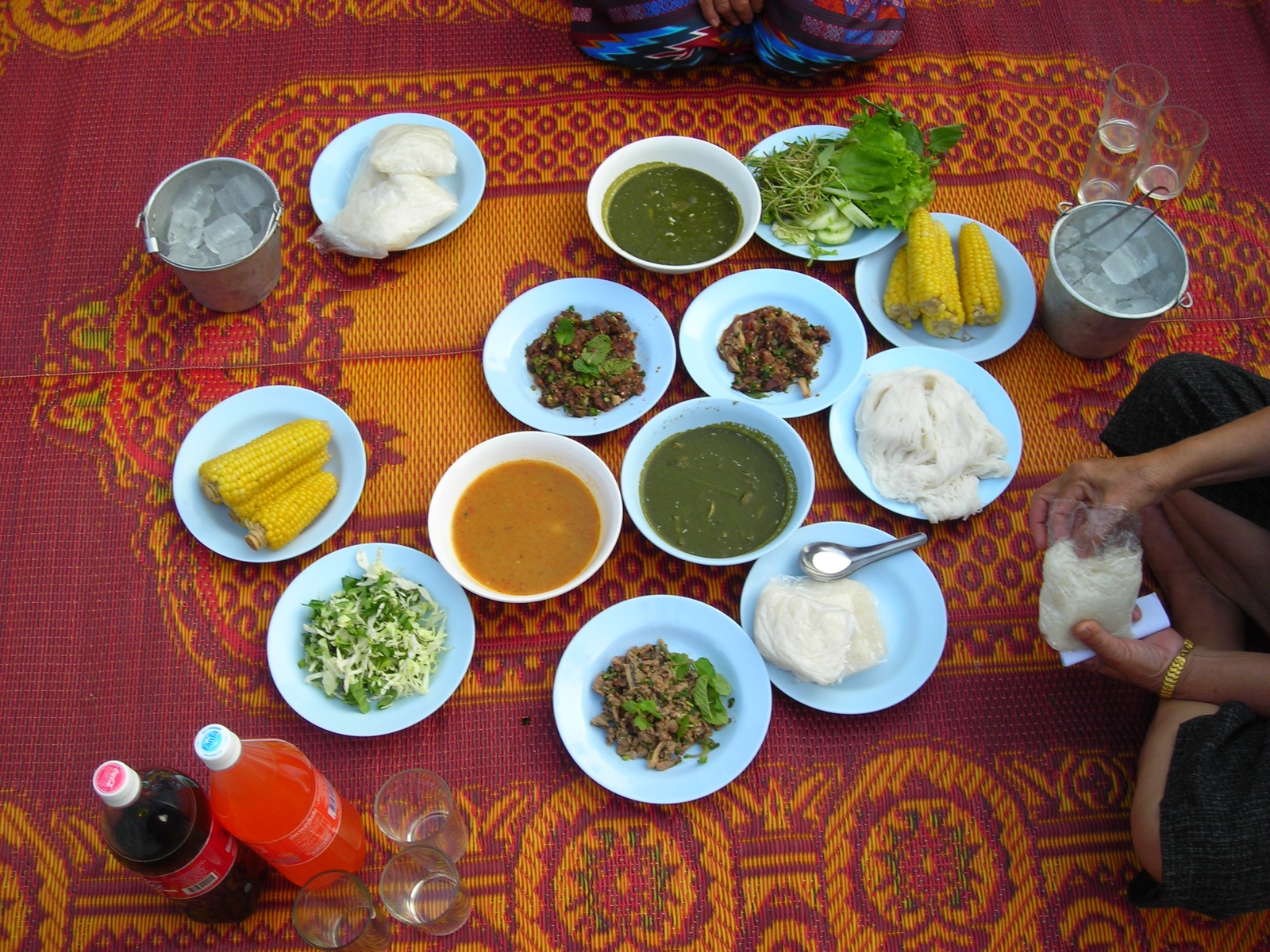
Thais regard the feet as the lowest part of the body, so don't point your feet at the food or at other people, and don't step over the food tray: walk around it. If folding your legs to the side gets tiring, switch to sitting cross-legged. Northerners understand that visitors aren't used to sitting on the floor.
Elders first: wait to be invited
At a meal, a khaek (แขกฯ), a guest, usually waits for the host or the eldest at the table to invite everyone before starting. The Kham Mueang word for "to invite" is joen (เชินฯ), and the host will often say kin toe (กินฯเทิอฯะ), "go ahead and eat". When you hear it, start.
If you'd rather wait, you can say you'll kin lun (กินฯลูร), "eat later".
khao ngai เขั้างายฯ breakfast
khao ton เขั้าทอฯร lunch
khao laeng เขั้าแลงฯ dinner
If you're hungry, say yak khao อยฯากฯเขั้า
Say it's delicious: Kham Mueang at the table
Praise for the food is one of the things Northerners most love to hear. Lam (ลำ, say lahm) means delicious. To praise more strongly, choose from this table:
| Kham Mueang | Lanna script | Meaning |
|---|---|---|
| lam kha-nat | ลำขๆนฯาดฯ | very delicious, really tasty |
| lam tae | ลำแท้ | really delicious (also lam tae tae, lam tae lam wa) |
| jat lam | ชาดฯลำ | very delicious, just to my taste |
| lam ko | ลำกํ่อฯ | is it tasty? |
The dictionary says lam kha-nat (say lahm kha-NAHT) is used for food and drink that "truly tastes good". Say it once and your host will remember it all meal. The question lam ko uses the ending ko, which turns a sentence into a question; see more in Asking Questions in Kham Mueang.
Other phrases you'll use at the table and in restaurants:
| You want to say | Say it in Kham Mueang | Dictionary word |
|---|---|---|
| I'm full | im laeo | im อิ่มฯ no longer hungry, full, that's enough |
| That's enough | po laeo | po พํอฯ enough, sufficient |
| Not spicy, please | bo ao phet | phet เผัดฯ hot, tasting of chilli · bo บ not |
| Just a little spicy | phet noi diao | noi diao ห้นฯอฯยดยฯว just a little, not much |
| I'll have this one | ao an ni | ao ´า to want, to take |
| More, please / More to eat? | ao mae / kin mae ko | mae แหมฯ more, again (after a verb) |
| Thank you | yin di / yin di jat nak | yin di ยินฯดี thank you · yin di jat nak ยินฯดีชาดฯนักฯ thank you very much |
A sample conversation
Written by the Moradok Lanna team for learning, from dictionary words.
Host: Joen jao, kin toe, kin tuai kan noe. (Please, go ahead, let's eat together.)
Guest: Yin di jao. (rolls sticky rice, dips it in chilli dip) Lam kha-nat jao! (Thank you. It's delicious!)
Host: Phet ko? (Is it spicy?)
Guest: Phet noi diao jao, lam tae tae. (Just a little spicy. Really tasty.)
Host: Kin mae, ao mae ko? (Have some more. Want more?)
Guest: Im laeo jao, po laeo. Yin di jat nak jao. (I'm full, that's enough. Thank you so much.)
Do's and don'ts at the table
These are manners shared by Thais in general, Northerners included. Taking a little at a time and using the serving spoon match Chef Pailin's advice; the rest is common courtesy.
| Do ✅ | Don't ❌ |
|---|---|
| Roll bite-sized balls of sticky rice with your right hand and dip them | Put rolled or bitten rice back in the rice box |
| Take a little food at a time with the serving spoon, then go back for more | Pile your plate high at the start |
| Wait for the host or an elder to invite you before you start | Start eating before the host says joen |
| Sit with legs folded to the side or cross-legged, feet behind or to the side | Stretch your legs or point your feet at food or people |
| Ask the person next to you to pass a far-away dish | Reach across people or step over the food tray |
| Say "lam kha-nat" and thank your host with "yin di jao" | Sang khi muk (สั่งฯขี้มูก), blow your nose at the table: step away first |
| Close the rice box after every helping | Leave the box open until the rice goes hard |
Quiz: test yourself (answers inside)
1. What is pan khao? Answer: rolling sticky rice into a bite-sized ball to dip into the food.
2. Your host says "kin toe". What should you do? Answer: start eating; it means "go ahead and eat".
3. How do you say "very delicious" in Kham Mueang? Answer: lam kha-nat (or lam tae, jat lam).
4. What is a thuai in Kham Mueang? Answer: a bowl.
5. Which way of sitting should you avoid at a meal? Answer: nang yiat kha, legs stretched out, because your feet point at the food and at people.
Summary
- Northerners jok kong khao, pan khao, then jam nam phik: sticky rice is both the rice and the spoon.
- With steamed rice, the fork pushes and the spoon lifts; noodle soups and khao soi take a spoon and chopsticks; and a thuai is a bowl.
- Sit around the tray with legs folded to the side (nang po la mae) or cross-legged (nang khot tha wai), never with your feet towards the food.
- Wait for the host to joen you or say kin toe before you start.
- Say lam kha-nat and yin di jat nak: those two phrases alone will make a Northerner smile.
Look up more food words in the Moradok Lanna dictionary (in Thai). Next, find out what to order in What to Eat in Chiang Mai, learn to greet people in How to Greet in Chiang Mai, and if you plan to visit temples, read Lanna Temple Etiquette before you go.
Sources
- Moradok Lanna dictionary (in Thai): เข้าหนึ้ง · ปั้นเข้า · ลำขนาด · ส้อมเจ้าตี้
- Chawadee Nualkhair. (2020). Why Sticky Rice Reigns in the North of Thailand. MICHELIN Guide Thailand
- Pailin Chongchitnant. (2023). How to Eat Thai Food CORRECTLY (Thai Dining Etiquette). Hot Thai Kitchen
Look up "เข้าหนึ้ง" in the Moradok Lanna dictionary (in Thai)


