
Photo: Paffka / Wikimedia Commons (CC BY-SA 3.0)
Lanna Mushrooms: Het Thop, Het Lom and Kham Mueang Names
Het (เหัดฯ, Kham Mueang reading het) means mushroom. The dictionary describes it as a large fungus whose threads gather into a fruiting body, and says that some kinds are edible while others are poisonous, and some can kill. The rainy season is mushroom season for the people of Lanna, and the Moradok Lanna dictionary records more than twenty Kham Mueang names for Lanna mushrooms.
This article continues the series on Kham Mueang names for fruit and vegetables. It gathers every mushroom name in the dictionary, sorts them into groups with their Lanna script and real photos, and ends with the names the Khon Mueang gave to poisonous mushrooms so that no one would forget them.
Het thop: the mushroom of the first rains
The mushroom the Khon Mueang wait for most is het thop (เหัดฯถอฯบ, Kham Mueang reading het thop), called het phao in central Thai. The dictionary describes a flattened round ball 1–3 cm across, with no stem and no roots, that likes open woodland with loose soil that has been burnt, and that comes up at the start of the rainy season, in May and June.
When young it is soft and white inside; when old the skin turns dark brown, the inside black, and it splits open into a star. The Khon Mueang boil, stir-fry, curry or dry-fry young het thop, or eat it raw dipped in chilli paste.
Edible wild mushrooms of the rainy season
The dictionary says the mushrooms in this table are edible. Most grow in the forest in the rainy season.
| Kham Mueang | Lanna script | Meaning (from the dictionary) |
|---|---|---|
| het lom | เหัดฯห่฿ลฯม | grows in open woodland in the rainy season; creamy white when young, the opened cap green or blue-green near the rim; fragrant |
| het khon | เหัดฯฅ฿นฯ | termite mushroom: a large wild mushroom with a thick base, usually growing on termite mounds, so also called the termite mushroom |
| het daeng | เหัดฯอดงฯ | grows in the forest in the rainy season; creamy white stem and gills, cap red, pinkish red, or purple mixed with brown |
| het na so | เหัดฯห้นฯาสอฯ | like het daeng but smaller, with a pale pink cap |
| het na moi | เหัดฯห้นฯาม่อฯยฯ | cap 4–8 cm across, the top many colours mixed on a white ground |
| het khai nok | เหัดฯไข่น฿กฯ | comes up in the forest after rain; at first round and creamy white like a bird's egg, then splits open as the stem and cap rise (also called het tamong kong, เหัดฯตโม่฿งฯโค฿งฯ) |
| het khai han | เหัดฯดฯไข่ห่านฯ | comes up in the forest in the rainy season and grows like het khai nok, but the cap is yellow and smaller |
| het kham khuen | เหัดฯฅาฅืนฯ | appears and grows very fast in the evening near dusk, in large groups; the gills turn from white to black and it breaks down quickly (also called het hing hoi, เหัดฯหิ่งฯห้อฯยฯ, or ink cap) |
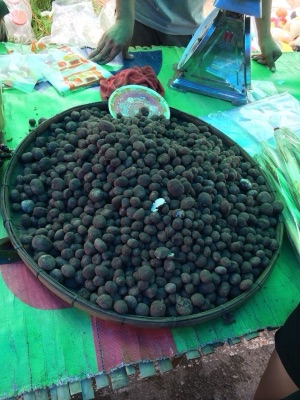
Photo: Renaudsechet / Wikimedia Commons (CC BY-SA 4.0)
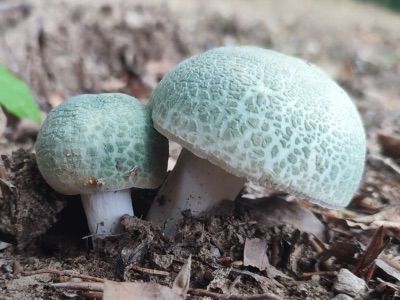
Photo: xulescu_g / Wikimedia Commons (CC BY-SA 4.0)
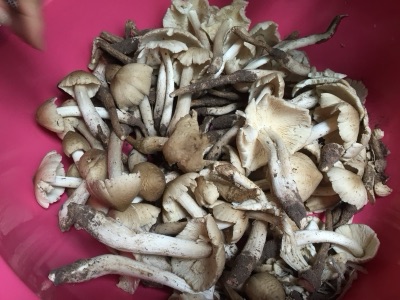
Photo: Thanhnyx / Wikimedia Commons (CC BY-SA 4.0)
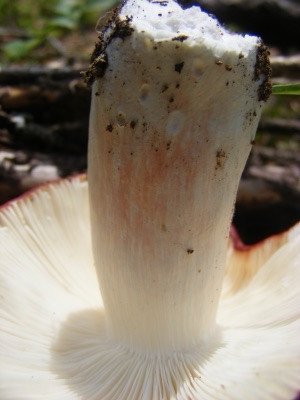
Photo: Szabi237 / Wikimedia Commons (CC BY-SA 3.0)
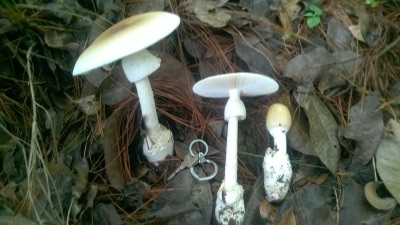
Photo: This image was created by user Vihane (wihane) at Mushroom Observer, a source fo / Wikimedia Commons (CC BY-SA 3.0)
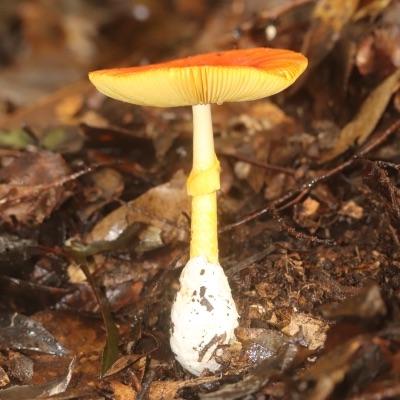
Photo: Alpsdake / Wikimedia Commons (CC BY-SA 4.0)
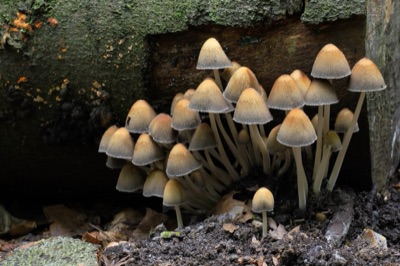
Photo: Stu's Images / Wikimedia Commons (CC BY-SA 4.0)
Mushrooms that grow on wood, on the ground, and cultivated ones
Another group grows at the foot of trees, on damp ground, on heaps of bean waste, or can be cultivated. The dictionary says every mushroom in this table is edible.
| Kham Mueang | Lanna script | Meaning (from the dictionary) |
|---|---|---|
| het chan | เหัดฯจั่นฯ | white tap tao mushroom, growing in groups, stems 10–20 cm tall (also called het hua khao, เหัดฯห฿วฯเขั่า) |
| khai | ไระฯค้ | the lemongrass plant, and also the tap tao mushroom (a large bolete) |
| het ha | เหัดฯห้า | grows at the foot of the ha (Java plum) tree (ba ha, บ่าฯห้า); dark brown mixed with black, like the tap tao mushroom |
| het khao tok | เหัดฯเขั้าตอฯก | "popped-rice mushroom": small and creamy white, coming up together in large groups |
| het khao min | เหัดฯเขั้าหิ้มฯร | "turmeric mushroom": small and yellow like turmeric, growing in groups on damp ground |
| het hom | เหัดฯหอฯม | (1) a small creamy-white mushroom with pale pink gills, growing on lawns or rice-field banks in the cool season, fragrant; (2) the brown-capped shiitake, now cultivated, which keeps a long time when dried |
| het hu lua | เหัดฯหูลวฯะ | wood ear: a cup-shaped jelly mushroom like a mouse's ear, crunchy and tasty |
| het fueang | เหัดฯเฟิอฯง | straw mushroom, cap white-grey to dark grey |
| het ba thua nao | เหัดฯบ่าฯถ่฿วฯเนาฯ | a mushroom that grows on heaps of soybean vines or soybean waste |
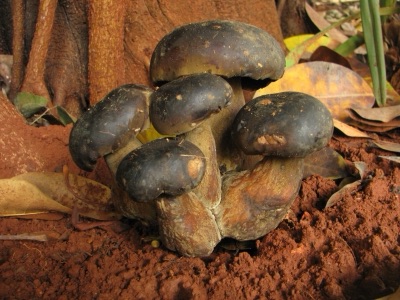
Photo: Ryane Snow (snowman) / Wikimedia Commons (CC BY-SA 3.0)
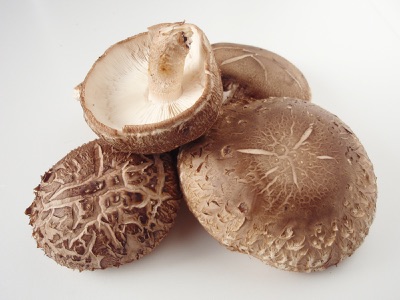
Photo: Batholith (talk) / Wikimedia Commons (Public domain)
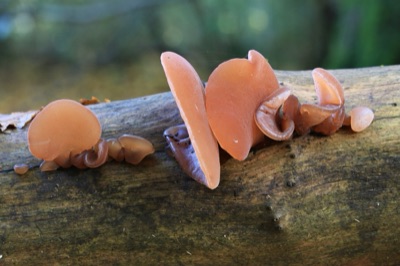
Photo: Stu's Images / Wikimedia Commons (CC BY-SA 4.0)
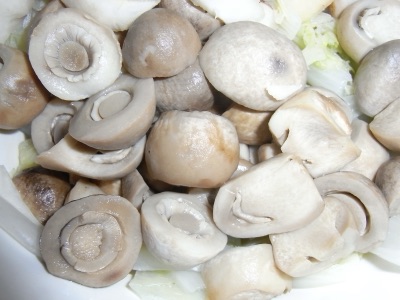
Photo: Cathiniamoa / Wikimedia Commons (CC BY-SA 3.0)
Poisonous mushrooms: names meant as warnings
Kham Mueang has a general name for poisonous mushrooms, het buea (เหัดฯเบิอฯอ, Kham Mueang reading het buea). The dictionary describes them as poisonous, some deadly to eat; most have a white net-like veil, and some are brightly and beautifully coloured.
The most memorable name is het pi nong lai (เหัดฯพี่น้อฯงหลฯายฯ, Kham Mueang reading het pi nong lai), literally "many-relatives mushroom". The dictionary explains that it covers several poisonous mushrooms; whoever eats them may die, which brings crowds of relatives to visit, or to the funeral. The name is a dark joke and a warning in one word.
Besides poisonous mushrooms there are mushrooms that simply cannot be eaten, such as het kadang (เหัดฯระฯกด้างฯ, Kham Mueang reading het kadang): a hard, brown, fan-shaped bracket growing on rotten stumps, which the dictionary says is not edible.
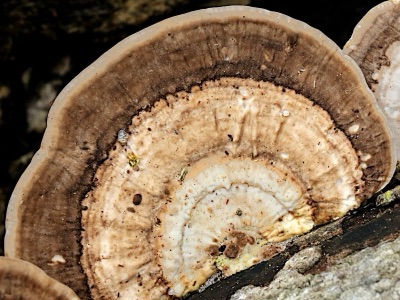
Photo: peterwchen / Wikimedia Commons (CC BY 4.0)
Mushrooms on the Lanna table
Rainy-season mushrooms end up in many dishes. The song Kin Lam Kin Lam names kaeng het phao, nam phrik het lom and khua het lom in its rap verses, and Jaran Manopetch's Khong Kin Khon Mueang has kaeng het in its list of food too.
Summary
- Het means mushroom; some are edible and some poisonous.
- Het thop is the earthstar puffball (het phao), which comes up at the start of the rains in May–June; beware het hak, which looks the same but has roots.
- Edible wild mushrooms include het lom, het khon (termite mushroom), het daeng, het khai nok and het khai han.
- Many names describe shape or home, such as het khao tok, het khao min and het ha.
- Het buea are poisonous mushrooms, and het pi nong lai is the name that warns your relatives will come to your funeral.
Look up more mushroom names in the Moradok Lanna dictionary (in Thai). More in the same series: Garden and market greens · Lanna wild greens · Kham Mueang fruit names · Kham Mueang vegetable names · Lanna wild fruits, or see the whole series at Kham Mueang fruit and vegetable names (in Thai).
Sources
- Moradok Lanna dictionary (in Thai): เห็๋ด · เห็๋ดถอบ · เห็๋ดหล่ม · เห็๋ดเบือ · เห็๋ดปี้น้องหลาย


