
Photo: Vengolis / Wikimedia Commons (CC BY-SA 4.0)
Lanna Wild Greens: Forest and Waterside Vegetables
Wild greens in Lanna are vegetables that are not grown in a garden but gathered from the forest, the hills, the streamsides and the rice fields. The word phak (ผักฯ, Kham Mueang reading phak) is defined in the dictionary as "a plant that can be used as food", and it comes in front of the names of plants eaten as vegetables. This article collects the Kham Mueang names of wild and waterside greens, with their Lanna script and a photo of each.
Many of the names sound nothing like central Thai: phak nok is Asiatic pennywort (bua bok), and phak la is cha-om (cha om). Ask for greens by their Kham Mueang names at a Chiang Mai market and the vendor will smile straight away.
Shoots from the forest: greens picked from big trees
Many wild greens are not small plants at all but the young leaves of trees, which flush with new growth in their season. Lanna people pick these shoots for curries, salads, or to dip in chilli paste.
| Kham Mueang | Lanna script | Central Thai | Meaning (from the dictionary) |
|---|---|---|---|
| phak wan | ผักฯหวฯานฯ | wild phak wan (Melientha suavis) | a small to medium tree of mixed deciduous forest that flushes in the dry season; the young leaves go into clear soups, kaeng liang and other curries |
| phak hueat | ผักฯเฮิอฯด | young leaves of the liap fig | the liap tree is like a banyan; its young leaves are reddish-brown and green, used in salads and coconut soups |
| phak hi | ผักฯฮี้ | phak hi | like phak hueat but with bigger, paler leaves, sour and slightly astringent; cooked with pork bones and tomatoes as kaeng phak hi |
| phak saliam | ผักฯสลยฯม | neem (sadao) | reddish-brown young shoots and creamy-white flowers, bitter; both food and medicine |
| phak saliam wan | ผักฯสลยฯมหวฯานฯ | sweet neem | neem with green shoots that is less bitter |
| phak tio | ผักฯติ้วฯ | tio (Cratoxylum) | a wild local green; the young shoots and flower buds go into bamboo-shoot curry, fish tom yam, salads, or are eaten with chilli paste |
| phak siao | ผักฯส้ยฯว | shoots of the white orchid tree | the young shoots of the white chongkho (Bauhinia) tree |
| phak la | ผักฯหลฯะ | cha-om (Acacia pennata) | a thorny shrub with feathery leaves and a strong smell; the shoots and young leaves are eaten |
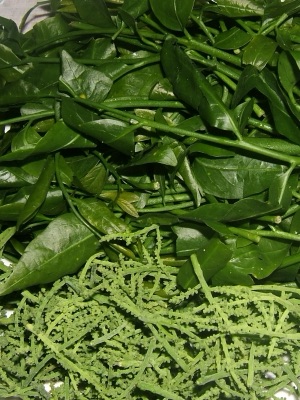
Photo: Viethavvh / Wikimedia Commons (CC BY-SA 3.0)
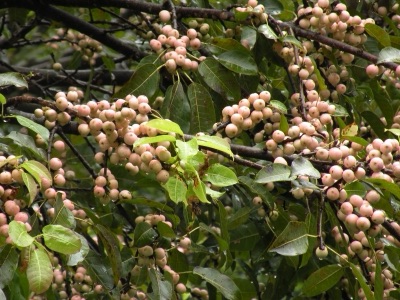
Photo: Ajtjohnsingh / Wikimedia Commons (CC BY-SA 4.0)
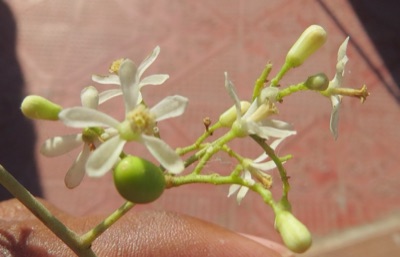
Photo: Vinayaraj / Wikimedia Commons (CC BY-SA 4.0)
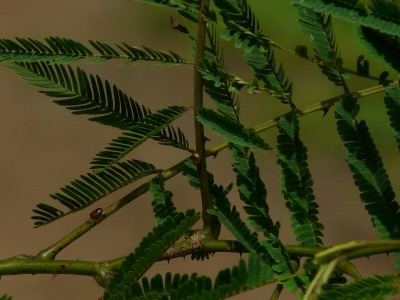
Photo: Dinesh Valke from Thane, India / Wikimedia Commons (CC BY-SA 2.0)
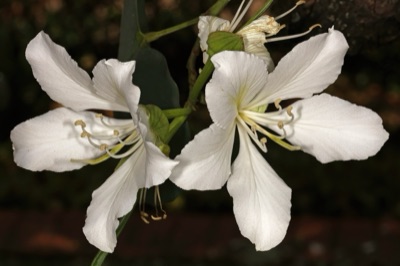
Photo: SAplants / Wikimedia Commons (CC BY-SA 4.0)
Climbing greens: one plant, many names
These greens are vines that climb over other trees. Some have several names in Kham Mueang, and the dictionary records them all.
| Kham Mueang | Lanna script | Central Thai | Meaning (from the dictionary) |
|---|---|---|---|
| phak siang da | ผักฯซยฯงดา | gymnema (phak chiang da) | a climbing medicinal vine with white sap, usually curried; also called phak seng, phak muan kai or phak wan |
| phak choi nang | ผักฯช้อฯยฯนาฯงฯ | ya nang (Tiliacora triandra) | a twining vine with slimy sap; the young leaves are eaten with lap or chilli paste and round out the taste of many dishes |
| phak pu ya | ผักฯปู่ย่า | cha lueat (Caesalpinia mimosoides) | a woody vine with hooked thorns and leaves like small tamarind leaves; the pungent shoots are eaten raw, in salads or with lap |
| phak huan mu | ผักฯฮ้วฯรหู | krathung ma ba (Dregea volubilis) | a large woody vine; young shoots, leaves and flowers are dipped in chilli paste or curried Lanna-style; also called phak huan or phak nguan mu |
| phak pu ling | ผักฯพลฯลิงฯ | cha phlu (wild betel) | a vine with glossy leaves like betel leaves, fragrant and a little hot |
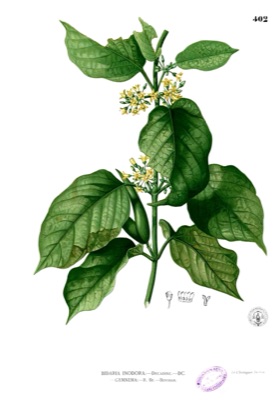
Photo: Francisco Manuel Blanco (O.S.A.) / Wikimedia Commons (Public domain)
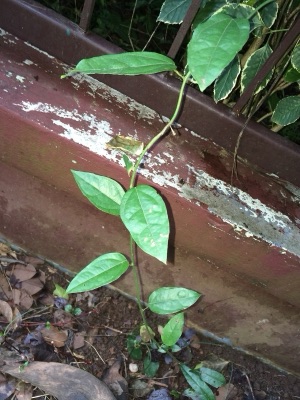
Photo: Renaudsechet / Wikimedia Commons (CC BY-SA 4.0)
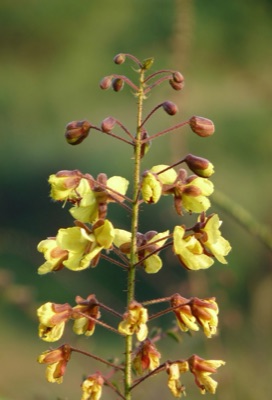
Photo: Jeevan Jose, Kerala, India / Wikimedia Commons (CC BY-SA 4.0)
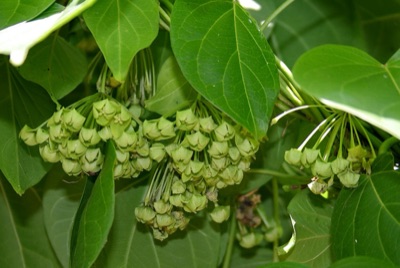
Photo: J.M.Garg / Wikimedia Commons (CC BY 3.0)
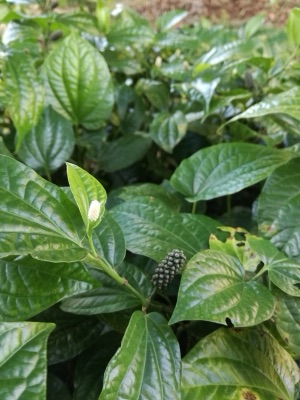
Photo: Wee Hong / Wikimedia Commons (CC BY-SA 4.0)
Greens of the streams, waterside and rice fields
The biggest group grows in wet places, along a huai (ห้วฯยฯ, Kham Mueang reading huai, a stream), by ponds and in the rice fields. Several are ferns or water plants.
| Kham Mueang | Lanna script | Central Thai | Meaning (from the dictionary) |
|---|---|---|---|
| phak kut | ผักฯกูด | vegetable fern | a fern whose frond tips curl over; the young shoots are cooked or blanched and dipped in chilli paste |
| phak nam | ผักฯหนฯามฯ | phak nam (Lasia spinosa) | grows along streams and in wet places; the young stems and leaves are steamed for chilli dips or put in sour curry |
| phak nok | ผักฯหนฯอฯก | Asiatic pennywort (bua bok) | creeps over damp low ground, with round leaves; eaten raw, made into pennywort juice, and used as medicine |
| phak nok chang | ผักฯหนฯอฯกช้างฯ | water dropwort (phak chi lom) | grows in water and wet places, pungent and hot; the young shoots are eaten with chilli paste, papaya salad, salads and lap |
| phak pot nam | ผักฯปอฯดนาฯ | water primrose (phaeng phuai) | creeps over ground and water, floating on white spongy pads; the young leaves are blanched for chilli dips, salads or sour curry |
| phak pot | ผักฯปอฯด | land phak pot | the phak pot that grows on land; also called phak pot din |
| phak waen | ผักฯแว่นฯ | water clover | a fern with four leaflets, growing in garden ditches and rice fields; eaten raw with lap or papaya salad, or in clear soup |
| phak nong | ผักฯหนฯอฯง | water mimosa (phak krachet) | a water plant floated by white spongy pads, whose leaves fold at night, hence "the vegetable that knows how to sleep"; also called phak la nong |
| phak khi khuang | ผักฯขี้ขวฯง | sadao din (Glinus) | a rice-field herb with small purple flowers; the young shoots are bitter; also called phak khuang |
| phak top | ผักฯต฿ปฯ | Thai water hyacinth (Monochoria) | a paddy water plant with blue flowers; the young shoots and flowers are eaten |
| phak bia | ผักฯเบ้ยฯ | purslane | a succulent herb that creeps over the ground, with small glossy leaves; edible |
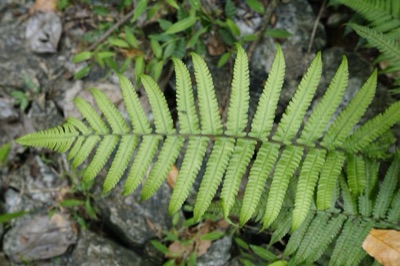
Photo: Vengolis / Wikimedia Commons (CC BY-SA 4.0)
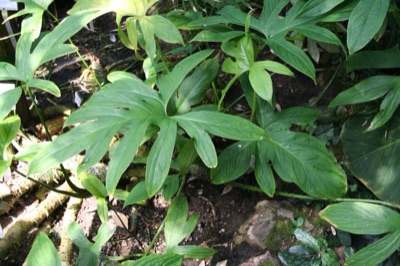
Photo: Michael Wolf (Webseite) / Wikimedia Commons (CC BY-SA 3.0)
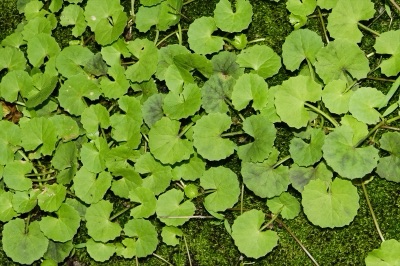
Photo: Vengolis / Wikimedia Commons (CC BY-SA 4.0)
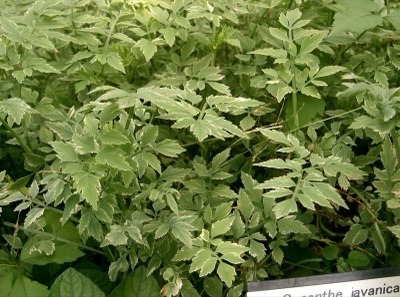
Photo: KENPEI / Wikimedia Commons (CC BY-SA 3.0)
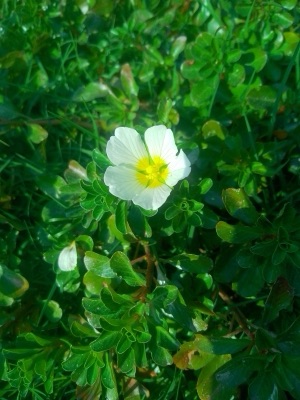
Photo: Yahya / Wikimedia Commons (CC BY-SA 4.0)
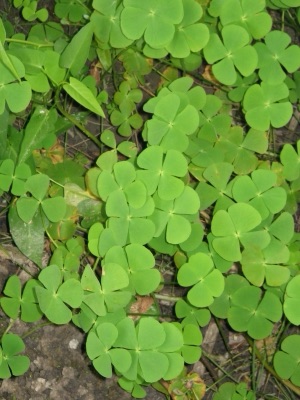
Photo: Meneerke bloem / Wikimedia Commons (CC BY-SA 3.0)
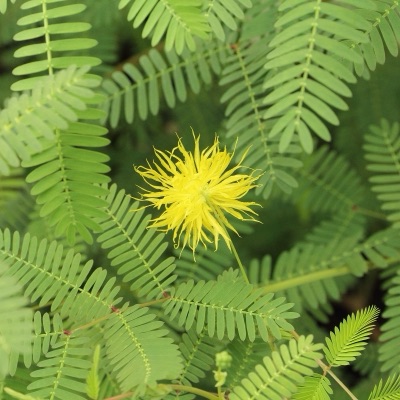
Photo: C T Johansson / Wikimedia Commons (CC BY-SA 3.0)
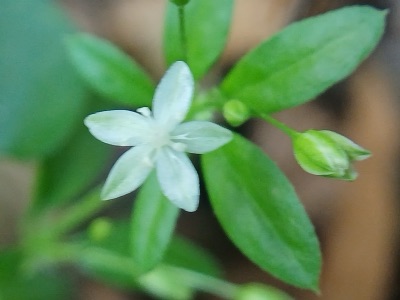
Photo: Nativeplants garden / Wikimedia Commons (CC BY-SA 4.0)
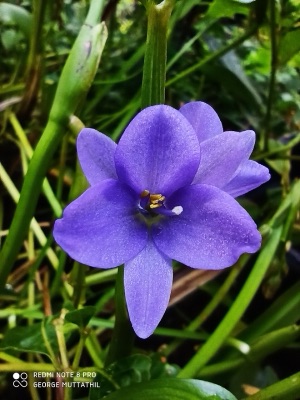
Photo: George Muttathil Pulikurumba / Wikimedia Commons (CC BY-SA 4.0)
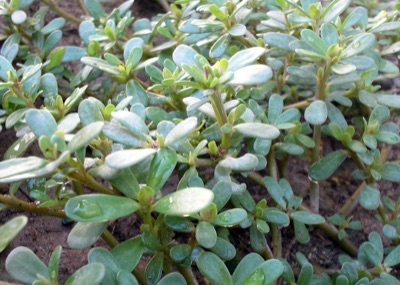
Photo: ZooFari / Wikimedia Commons (CC BY-SA 3.0)
Strong-smelling greens: the friends of lap
Lanna lap has to be eaten with side greens of strong smell and taste. The dictionary clearly records several greens eaten "with lap".
| Kham Mueang | Lanna script | Central Thai | Meaning (from the dictionary) |
|---|---|---|---|
| phak khao tong | ผักฯฅาวฯทอฯง | fish mint (phlu khao) | the whole plant smells fishy and tastes pungent; leaves and shoots are eaten raw with fresh or raw lap; also called ผั๋กเข้าตอง |
| phak phai | ผักฯไผ่ | Vietnamese coriander (phak phaeo) | strongly fragrant and a little hot; eaten raw, with lap, or cooked into lap and spicy soups |
| phak duan | ผักฯด่วฯร | mint (saranae) | a fragrant creeping herb; leaves and shoots are dipped in chilli paste or eaten with lap; also called hom duan |
| phak paem | ผัดฯแพมฯ | — | a shrub with lobed leaves, very bitter, eaten with lap or boiled with grilled fish; also called phak maem ma |
| phak khi khwai | ผักฯขี้ฅวฯายฯ | crown daisy (tang o) | fragrant; used to scent food, stir-fried, or in clear soup |
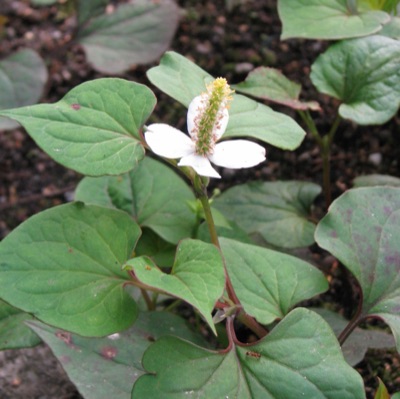
Photo: Agnieszka Kwiecień, Nova / Wikimedia Commons (CC BY-SA 4.0)
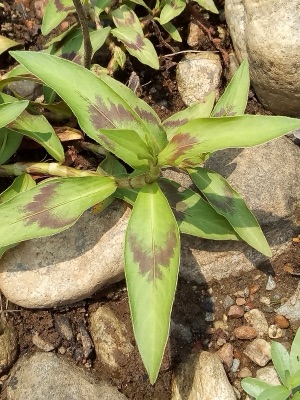
Photo: Vinayaraj / Wikimedia Commons (CC BY 3.0)
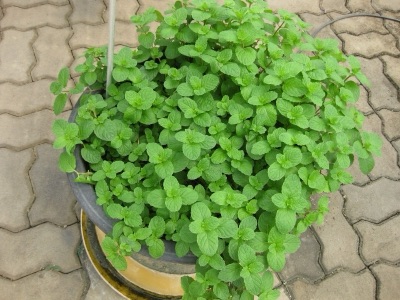
Photo: Raffi Kojian / Wikimedia Commons (CC BY-SA 3.0)
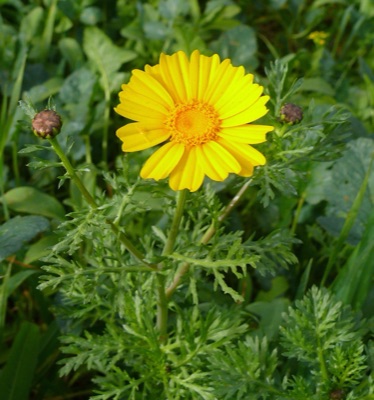
Photo: MathKnight and Zachi Evenor / Wikimedia Commons (CC BY-SA 4.0)
Odd names with stories
Some wild-green names make you wonder where they came from, and the dictionary keeps the story of some of them.
- Phak po ka ti mia (ผักฯพํอฯค้าฯตีเมยฯ, Kham Mueang reading phak po ka ti mia) means "the merchant-beats-his-wife vegetable". The dictionary says po ka ti mia (พํอฯค้าฯตีเมยฯ) is a small herb with a stem as thin as a coconut-leaf rib. The story goes that a merchant took his wife on a trading trip and they stayed the night at the forest edge. The wife curried this plant for him, but however long it cooked it stayed hard and crunchy as if raw, so the merchant was furious and accused her of serving it uncooked. The name is easy to remember and describes the plant at the same time.
- Phak maem ma (ผัดฯแม้มฯหมฯา) is another name for phak paem, the very bitter green.
- Phak muan kai is another name for phak siang da.
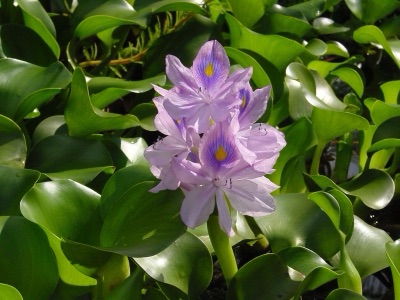
Photo: Wouter Hagens / Wikimedia Commons (Public domain)
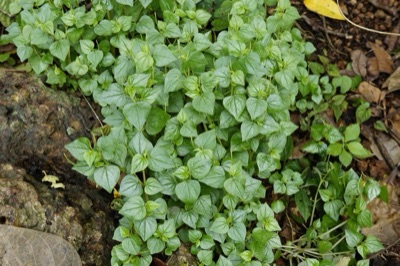
Photo: Vengolis / Wikimedia Commons (CC BY-SA 4.0)
Summary
- Phak means a plant that can be used as food, and it comes before almost every vegetable name in Kham Mueang.
- Lanna wild greens include forest shoots (phak wan, phak hueat, phak tio), climbing greens (phak siang da, phak choi nang) and waterside greens (phak kut, phak nok, phak waen).
- Many have several names, e.g. phak siang da, phak seng, phak muan kai, phak wan.
- Strong greens like phak khao tong and phak phai are lap's partners.
- All greens together are called phak mai sai khuea: vegetables of every kind.
Look up more vegetable names in the Moradok Lanna dictionary (in Thai), read about garden and market greens in Kham Mueang Garden Greens, rainy-season mushrooms in Lanna Mushrooms, and wild fruit in Lanna Wild Fruits. For kaeng phak hueat in a Jaran Manopetch song, see Khong Kin Khon Mueang.
More in the same series: Kham Mueang Fruit Names · Kham Mueang Vegetable Names, or see the whole series at Kham Mueang fruit and vegetable names (in Thai).
Sources
- Moradok Lanna dictionary (in Thai): ผั๋ก · ผั๋กหวาน · ผั๋กหนอก · ผั๋กเซียงดา · ป้อก๊าตี๋เมีย · ผั๋กไม้ไซ้เคือ
- Photos: Wikimedia Commons (photographer and licence credited under each photo).


