
Photo: LonNyoe / Wikimedia Commons (CC BY-SA 4.0)
Wild Lanna Fruits: Ba Kiang, Ba Tao, Ba Muen and More
Wild Lanna fruits are fruits that grow by themselves in the forest, or native trees whose fruit the Khon Mueang have always gathered. Many are rarely seen at the market any more, but their Kham Mueang names are all recorded in the Moradok Lanna dictionary. Like market fruit, their names begin with ba where central Thai has ma, for example ba kiang (บ่าฯกยฯง, Kham Mueang reading ba kiang), a tree native to the North.
This is part three of the series on Kham Mueang fruit and vegetable names, after Kham Mueang fruit names and Kham Mueang vegetable names. It sorts wild fruits by how they are eaten and used; every name, every Lanna spelling and every meaning comes from the dictionary.
Wild fruits eaten fresh
These fruits can be eaten as soon as they are ripe; they range from sweet to sour and astringent.
| Kham Mueang | Lanna script | Central Thai | From the dictionary |
|---|---|---|---|
| ba kiang | บ่าฯกยฯง | มะเกี๋ยง | native to the North; fruit like the Java plum but bigger, purple-red or blackish red when ripe, sourer than the Java plum; made into pickles, wine and juice |
| ba ha | บ่าฯห้า | ลูกหว้า (Java plum) | dark purple to black when ripe, like grapes; sweet and slightly astringent; made into juice, jelly and jam |
| ba mao | บ่าฯเหั้มฯา | หมากเม่า | round fruits in bunches, sour when young, purple-black and sweet-sour when fully ripe, used for drinks; the young shoots add sourness to puffball-mushroom curry |
| ba kap tong | บ่าฯกัปฯทอฯง | มะพลับ | egg-shaped to oval, with the sepals still on the stalk end; astringent-sweet and edible when ripe |
| ba ta kop | บ่าฯตาก฿ปฯ | ตะขบไทย | pinkish red when ripe, sweet and fragrant |
| ba kwaen pa | บ่าฯเกวฯรป่า | ตะขบป่า | soft and dark red when ripe, edible (also ba kwaen or ba ta kop pa) |
| ba kwaen khwai | บ่าฯเกวฯรฅวฯายฯ | ตะขบควาย | red-black and sweet when ripe |
| ba tan kho | บ่าฯทันฯขํอฯ | เล็บเหยี่ยว | of the same family as the jujube; small round fruit, red-black and sweet-sour when ripe |
| ba lot | บ่าฯหลฯอฯด | — | a vine with fruit like the ivy gourd, orange-yellow or red when ripe; some kinds sweet, some sour and astringent |
| ba chok | บ่าฯโช฿กฯ | สะคร้อ | egg-shaped fruit with a single seed, sweet-sour when ripe |
| ba kwit | บ่าฯกิวฯด | มะขวิด (wood apple) | hard shell; the ripe flesh is the colour of tamarind paste, with many seeds, edible |
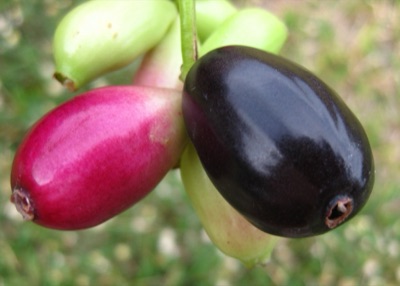
Photo: Ton Rulkens / Wikimedia Commons (CC BY-SA 2.0)
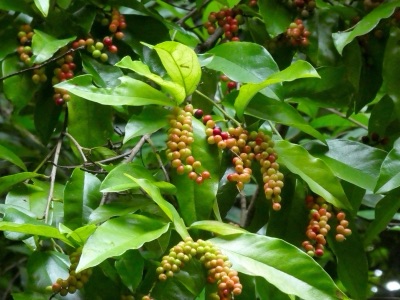
Photo: Steve Fitzgerald / Wikimedia Commons (CC BY-SA 4.0)
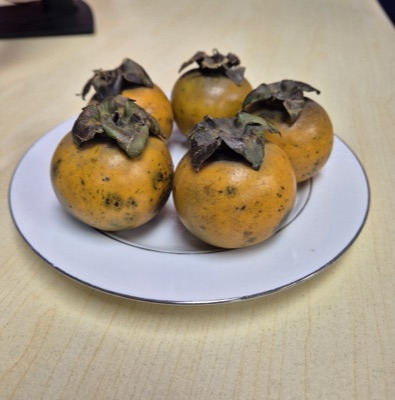
Photo: Delwar Hossain / Wikimedia Commons (CC BY-SA 4.0)
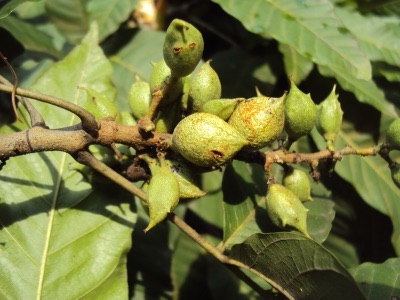
Photo: Vinayaraj / Wikimedia Commons (CC BY-SA 4.0)
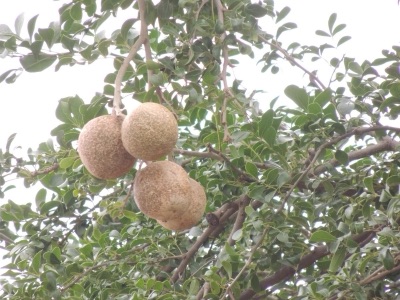
Photo: Vijay Barve / Wikimedia Commons (CC BY 4.0)
Sour, astringent fruits for cooking
Many wild fruits are not eaten as fruit but used for sourness in the kitchen, for pickling, or leaves and fruit together.
| Kham Mueang | Lanna script | Central Thai | From the dictionary |
|---|---|---|---|
| ba kok | บ่าฯกอฯก | มะกอก (hog plum) | the young leaves are sour and often eaten with lap; the ripe fruit is sour and slightly astringent, used in cooking |
| ba kok nam | บ่าฯกอฯกนาฯ | มะกอกน้ำ | grows by the water; small oval fruit, astringent-sour, pickled as a snack |
| ba yom | บ่าฯย฿มฯ | มะยม (star gooseberry) | flattened round fruit in lobes, pale yellow when ripe, sour |
| ba faen | บ่าฯแฟนฯ | มะแฟน, มะแพน | roundish fruit the size of a finger, dark brown when ripe, sour |
| ba kho laen | บ่าฯฅํอฯแลนฯ | คอแลน | a wild fruit like the salak, but sour |
| ba ta suea | บ่าฯตาเสิอฯอ | ลูกยอ (noni) | the ripe fruit can be eaten as it is; the unripe fruit is made into salad or pounded like papaya salad; the young leaves line the bottom of steamed curry parcels |
| ba tan | บ่าฯทันฯ | พุทรา (jujube) | a thorny tree with round or oval fruit |
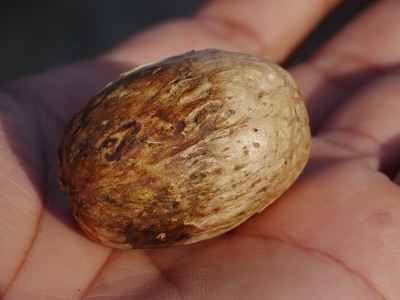
Photo: Rohit Naniwadekar / Wikimedia Commons (CC BY-SA 4.0)
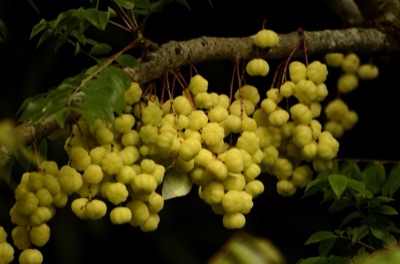
Photo: PJeganathan / Wikimedia Commons (CC BY-SA 4.0)
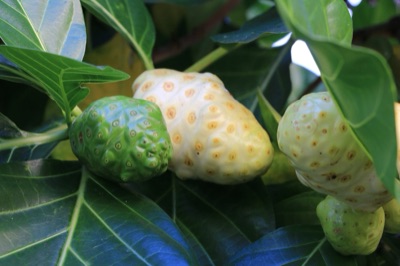
Photo: ImagePerson / Wikimedia Commons (CC BY-SA 4.0)
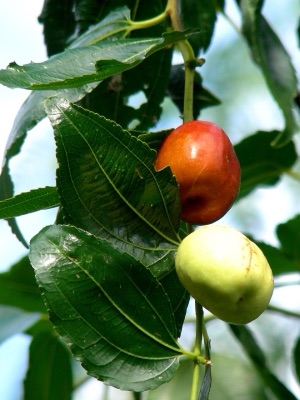
Photo: Fpalli / Wikimedia Commons (CC BY-SA 3.0)
Native citrus
Lanna has several native citrus fruits whose names are nothing like the oranges at the market.
| Kham Mueang | Lanna script | Central Thai | From the dictionary |
|---|---|---|---|
| ba kiang (citrus) | บ่าฯก้ลฯยฯง | ส้มเกลี้ยง | round to flattened fruit with tiny oil glands on the skin, yellow-green to bright orange when ripe, fragrant; eaten fresh or juiced |
| ba ngae | บ่าฯแง | ส้มแก้ว | tree and fruit like som kliang, but smaller and sour |
| ba chuk | บ่าฯจุก | — | like a tangerine, but with a small raised knob on top (also ba bang, บ่าฯบาฯงฯ) |
| ba khun | บ่าฯขุร | — | round, like a som sa citron, with thick peel; sour and bitter |
Fruits of the sugar palm, palmyra and fan palm
Palms in the forest bear their fruit in bunches, and each is eaten in its own way.
| Kham Mueang | Lanna script | Central Thai | From the dictionary |
|---|---|---|---|
| ba tao | บ่าฯตาวฯ | ลูกตาว, ลูกชิด | huge bunches of fruit; each fruit holds 2–3 seeds set close together (chit), hence the name luk chit; eaten fresh, boiled or candied as a sweet |
| ba tan (palm) | บ่าฯตาลฯฯ | ลูกตาล | the young palmyra fruit is edible; juice from the ripe fruit is used to make khao nom tan (palm cake) |
| ba ko | บ่าฯคํอฯ | ลูกค้อ | a palm like the palmyra; fruit a little smaller than a ping-pong ball with a bluish skin, steamed and tossed with salt as a snack |
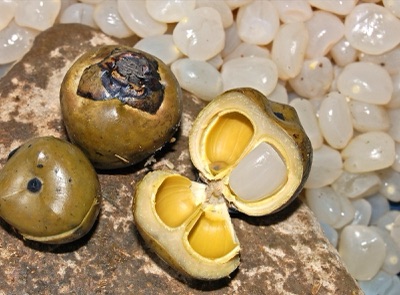
Photo: W.A. Djatmiko (Wie146) / Wikimedia Commons (CC BY-SA 3.0)
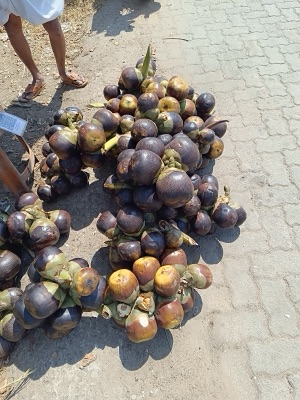
Photo: Harshanh / Wikimedia Commons (CC BY-SA 4.0)
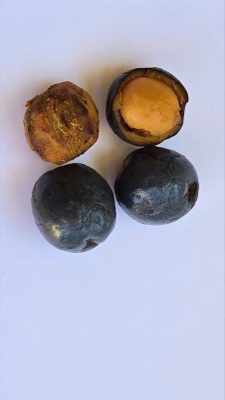
Photo: Saosukham / Wikimedia Commons (CC0)
Hard-shelled fruits, roasted for a nutty taste
With some wild fruits it is the kernel that is eaten. It must be roasted first, and then it tastes rich and nutty (man).
| Kham Mueang | Lanna script | Central Thai | From the dictionary |
|---|---|---|---|
| ba ko (chestnut) | บ่าฯกํอฯ | มะก่อ | the fruit of the forest ko tree, of two kinds; roasted, edible and nutty |
| ba ko duea | บ่าฯกํอฯเดิอฯยฯ | ก่อเดือย | small, like Job's-tears seeds, with a hard shell and creamy-white kernel |
| ba ko paen | บ่าฯกํอฯแป้นฯ | ก่อแป้น | like a chestnut but smaller (also ba ko hin) |
| ba muen | บ่าฯมื่นฯ | เม็ดกระบก | dry the fruit, crack off the outer husk, break the hard shell, then roast over a low fire until the kernel turns golden; eaten as a rich, nutty snack |
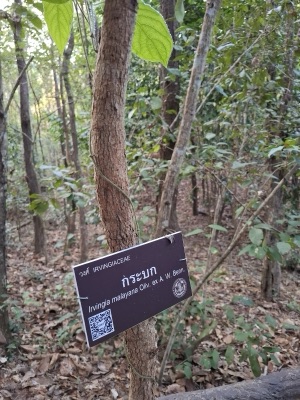
Photo: Lannafolium / Wikimedia Commons (CC0)
Fruits used as medicine and around the house
The dictionary records this last group as used for medicine, for dyeing, or even for washing clothes. This article only repeats what the dictionary records; it is not medical advice.
| Kham Mueang | Lanna script | Central Thai | From the dictionary |
|---|---|---|---|
| ba pin | บ่าฯพินฯ | มะตูม (bael) | hard shell; ripe fruit yellow with pale yellow, sticky, sweet and fragrant flesh; made into candied bael, dried bael and bael drink |
| ba kham pom | บ่าฯขามฯป้อฯม | มะขามป้อม (emblic) | small round fruit, astringent-sour, bitter-sweet; used for medicine |
| ba na | บ่าฯนะ | สมอ (chebulic myrobalan) | sour, astringent fruit with one seed; flowers, fruit and bark are all used for medicine |
| ba nae | บ่าฯแหนฯ | สมอพิเภก (belleric myrobalan) | hard round or oval fruit with 5 ridges, sour when young, sour-astringent when old; used for medicine |
| ba hok fa | บ่าฯร฿กฯฟ้า | รกฟ้า | oval fruit with 5 wings; the bark gives a red astringent liquid used for dyeing and medicine |
| ba chi | บ่าฯชี่ | ผลคนทา | flattened round fruit about the size of a thumb, bitter; used for medicine |
| ba sak | บ่าฯซักฯ | ประคำดีควาย (soapnut) | old fruits are crushed and soaked, then beaten into a lather to wash silk and clean gold jewellery |
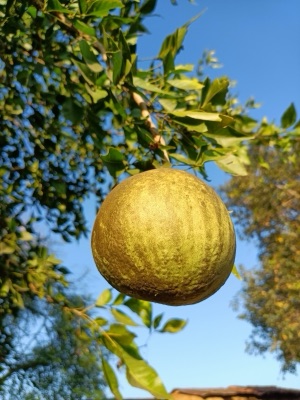
Photo: SUDHANSHU YADAV / Wikimedia Commons (CC BY-SA 4.0)
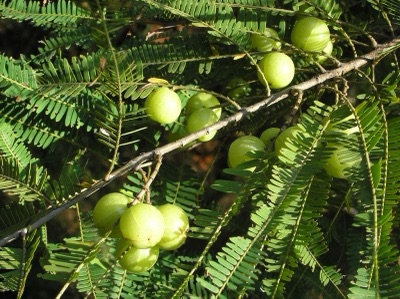
Photo: Lalithamba from India / Wikimedia Commons (CC BY 2.0)
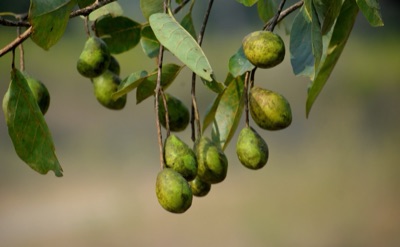
Photo: Sipuwildlife / Wikimedia Commons (CC BY-SA 4.0)
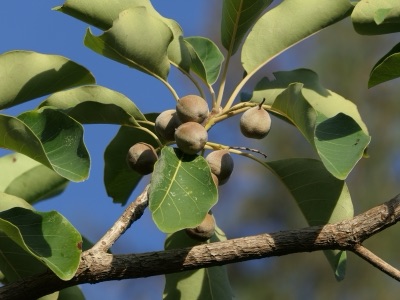
Photo: Dinesh Valke from Thane, India / Wikimedia Commons (CC BY-SA 2.0)
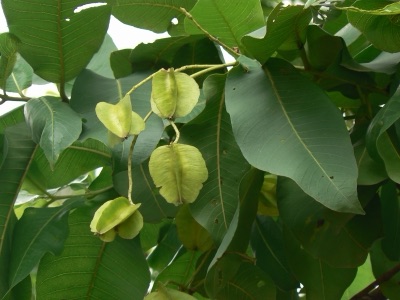
Photo: Dinesh Valke from Thane, India / Wikimedia Commons (CC BY-SA 2.0)
Summary
- Wild Lanna fruit names begin with ba, just like market fruit: ba kiang, ba ha, ba mao.
- Wild fruits eaten fresh include ba kiang, ba ha (Java plum), ba kap tong and ba chok.
- Sour fruits for cooking include ba kok, ba yom and ba ta suea (noni), and native citrus such as ba ngae and ba chuk.
- Ba tao is the sugar-palm seed luk chit, and ba muen is the krabok kernel, roasted for a nutty snack.
- Some are used as medicine or around the house, such as ba pin (bael), ba na (chebulic myrobalan) and ba sak (for washing), and some are poisonous, such as ba khang and ba hung.
Look up other fruit names in the Moradok Lanna dictionary (in Thai), read the rest of the series at Kham Mueang fruit names and Kham Mueang vegetable names, learn the words for shopping at Going to the Kat Like a Khon Mueang, or all 99 Northern Thai dishes in Kin Lam Kin Lam.
Sources
Look up "บ่าเกี๋ยง" in the Moradok Lanna dictionary (in Thai)


