
Photo: Iudexvivorum / Wikimedia Commons (CC0)
Singhanavati and the Naga-Built City of Yonok
Singhanavati (สิงหนวัติกุมาร) is the prince of a Lanna legend who led a hundred thousand people in search of land for a new city, close to the Mekong. There a naga (nak, นาฯคฯ), a serpent king named Phanthu, dug out a city for him in a single night. So the city was called Nak Phanthu Singhanavati Nakhon, and the legend says it later became Yonok Nakhon (yonok nakon, โยน฿กฯนคอฯร), the land of the Tai Yuan on the plain of the Kok River.
This legend is the beginning of the story of Yonok. Its ending, when the city sinks into a swamp, is told in Wiang Nong Lom. This article retells the legend from the version the Fine Arts Department translated, compares the names and tellings that differ, and collects the Kham Mueang (Northern Thai) words hidden in the city's name.
Who was Singhanavati? A prince with the strength of a lion
The legend says Singhanavati was the second son of King Thewakan of Nakhon Thai Thet, a city the chronicle identifies with Rajagriha. The king had thirty sons and thirty daughters. The eldest son stayed to rule the old city, while the others received a share of the treasury and went off in every direction to found towns of their own.
The legend itself explains the prince's name: he was called Singhanavati "because he had the build and strength of a lion". The Kham Mueang word ratchasi (ratchasi, ราชสีห์) the dictionary explains as the lion king, a creature of the legendary Himaphan forest, majestic, very strong and lord over all animals. That is why temples in the North so often have lions sitting at their gates.
- The version translated and printed by the Fine Arts Department in 1936 spells him สิงหนวติกุมาร (Singhanawati Kumara), but in places the same text also writes สิงหนติ (Singhanati).
- The department's 1939 introduction to the Suwanna Khom Kham chronicle writes สิงหนวัติ (Singhanavati), the most widespread form today, so this article uses it.
- The name is not in the Moradok Lanna dictionary, so we write it in Thai script only.
Khai tam-nong: the naga who dug a city in one night
A Lanna tale often opens with khai tam-nong (khai tam-nong, ไขทำนอฯง), "to begin recounting the story". What follows is retold in our own words from the outline of the Singhanavati Kumara chronicle, which the Fine Arts Department translated from a Northern Thai manuscript and printed in Prachum Phongsawadan part 61.
Having received his share, Singhanavati took leave of his father and mother and set out from Rajagriha with elephants, horses, cattle and buffalo, soldiers and about a hundred thousand households. He crossed a great river and travelled through forests, hills, gullies and rivers large and small. After four months he hot (hot, รอฯด), reached his goal: a flat and lovely land with plenty of water, good for fields and paddies, not far from the river Khoranathi, which the translator explains is the Mekong. There the prince had his people paeng (paeng, แปลฯง), build, a pang (pang, ปางฯ), a temporary forest camp, and they stayed.
The legend says this land had once been the realm of Suwanna Khom Kham, long ago. By now only forest people, whom the chronicle calls milakkhu, lived in the gullies and at the foot of the doi (doi, ดอฯย), the mountains. The translator's footnote says this means the Lawa, the people Kham Mueang calls Lua (lua, ลวฯะ). One chief ruled over them all, living on a mountain to the west.
One day a naga king named Phanthu Nakharat took the form of a Brahmin and came to the prince. He asked who he was, where he came from, and why. The prince answered that he was the son of King Thewakan, looking for a place to found a city. The Brahmin said: good, build your city here. It will prosper, and enemies from the great cities will find it hard to attack. Only be kind to people and to all living things. The prince asked his name. The Brahmin said he was Phanthu, guardian of this land since his ancestors' time, and invited the prince to send men to follow him home. The prince sent seven. When they had followed him about a thousand wa, the Brahmin simply vanished. When his men han (han, หันฯ), saw this, they went back and told the prince.
That night the Brahmin turned back into a naga and bun (bun, บุ่ร), broke open the ground, marking out the bounds of a wiang (wiang, วยฯง), a walled town, 3,000 wa (wa, วาฯ) on every side. Then he went home. At jaeng (jaeng, แจ้งฯ), first light, the prince saw the city's outline and was overjoyed. He asked his court Brahmin whether the visitor had been a god, or even Indra. The court Brahmin replied: "It must truly have been a naga king." So the people built a royal hall and houses and made it a great city. They joined the naga's name, Phanthu, with the prince's, and named it Nak Phanthu Singhanavati Nakhon. This part of the legend closes with bo ya ja lae (bo ya ja lae, บ£าช¦): "and so it was".
Nak, khue mueang and wiang: Kham Mueang words in a founding legend
In Kham Mueang, nak has several meanings. The dictionary's first is "a great serpent", and it also means a noble one, and a man about to be ordained. The word for a ruler or chief is pha-ya (pha-ya, พญา), and the dictionary's own example is "phaya nak", the naga king.
The translated chronicle says the naga bun the ground. The translator's footnote explains it as "to scrape, to scoop, to bore through", and the dictionary defines bun as "to part, to push a way through", like a bamboo shoot breaking up through the soil. To say plainly "to dig", Kham Mueang uses khut (khut, ขุด). A ditch dug around a town is a khue mueang (khue mueang, ฅืเมิอฯง). Phudet Saensa (2018) quotes the Chiang Mai chronicle: when King Saen Phu built the historical Chiang Saen, he had a khue wiang, a moat, dug on three sides, with the Mekong serving as the moat on the east.
On its own, khue (khue, ฅื) the dictionary defines as "a ditch dug as an obstacle or a defence against enemies". Read that way, the Brahmin's promise that "enemies will find it hard to attack" fits a city ringed by water.
As for the speed of the work, the legend only says the naga finished it in one night: by morning the city was there. Kham Mueang has an expression for all night until it is light: khuen hung tao jaeng (khuen hung tao jaeng, ฅืนฯรุ่งเทั้าฯแจ้งฯ), "all through the night until dawn".
| Kham Mueang | Lanna script | Meaning (from the dictionary) |
|---|---|---|
| wiang | (see above) | a town, a small city; also a wall, a fort |
| jiang | ชยฯง | a city, as in Jiang Mai (Chiang Mai), Jiang Hai (Chiang Rai) |
| kam | ก้ฯลฯา | side, direction, as in kam nuea, the north side |
| wa | (see above) | a unit of length: 1 wa = 4 sok (cubits), or 2 metres |
If one wa is 2 metres, as the dictionary says, a city 3,000 wa on each side would be about 6 kilometres long on every side, far bigger than anything people could build in one night. The number is part of the wonder of the legend. The original says rot su kam, "on every side".
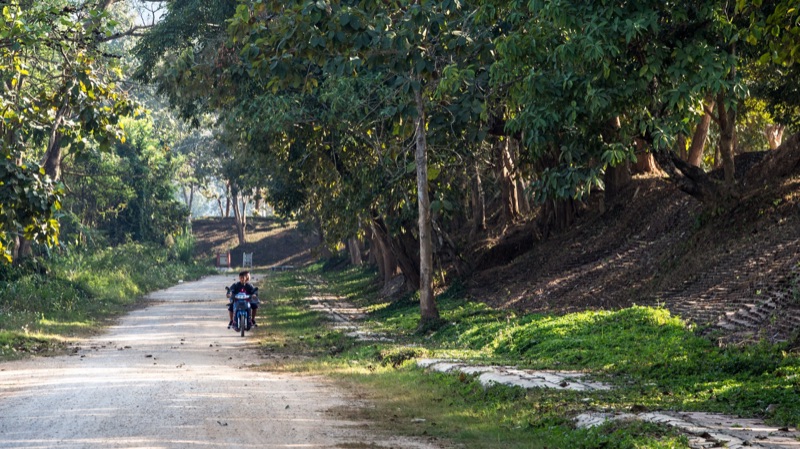
From Nak Phanthu to Yonok Nakhon
The legend goes on: once he ruled the city, Singhanavati sent for the chiefs of the forest peoples to come under his rule. Three years later, there was a city to the south-west, near the head of the Kok River, called Umongkha Sela Nakhon. It was a city of the Khom (khom, ขอฯม), whom the dictionary explains as the ancient Khmer. The Khom ruler would not submit, so the prince marched out to soek (soek, เสิกฯ), war, and won. His ministers then crowned him as a great king, King Singhanavati.
The legend also records that after the city was founded, the earth wai (wai, ไหวฯ), shook, and there were great rolls of fa hong (fa hong, ฟ้าร้อฯง), thunder, several times. A reader today may think of how the city ends: the same chronicle tells that many generations later it sank into a swamp in a single night. Read it in Wiang Nong Lom.
The city's name changed over time too. The chronicle later calls it Yonok Nakhon Chaiyaburi Si Chang Saen, and the Fine Arts Department's introduction calls it Nak Phanthu Singhanavati Nakhon, or Yonok Nakhon Ratchathani. The Moradok Lanna dictionary explains yonok (yonok, โยน฿กฯ) as the Tai Yuan people, the largest group in the Lanna kingdom, who usually call themselves "Khon Mueang".
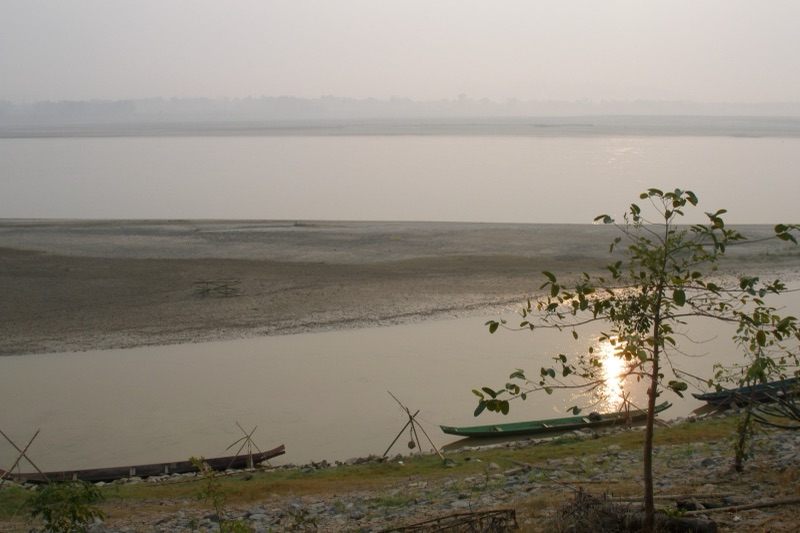
Other tellings: how many versions of the Yonok legend are there?
- The Suwanna Khom Kham chronicle. In its 1939 introduction, the Fine Arts Department says this legend is older than the Singhanavati legend, because the Singhanavati legend mentions Suwanna Khom Kham as a city already in ruins. It sets the old stories in this order: Suwanna Khom Kham, then Singhanavati, then the Ngoen Yang Chiang Saen chronicle.
- The forest chief. At this point the 1936 translation calls the chief "Chao Lao Kayu". The Fine Arts Department's introduction in the same volume, however, says the Singhanavati legend speaks of Pu Chao Lao Chok, chief of the Lawa, and that the Yonok Chronicle by Phraya Prachakitkorachak (Chaem Bunnag) explains the name: he was a chief who owned more than 500 chok, digging hoes. The Moradok Lanna dictionary itself gives lao (lao, ลาวฯ) as a title marking the chief of a people in the era before King Mangrai, as in Lao Chok.
- The Ngoen Yang Chiang Saen chronicle starts with Lao Chok as a heavenly being who came down to rule, not with Singhanavati. The Fine Arts Department printed the two side by side so readers could compare them.
Phudet Saensa, writing in Khuang Phaya journal (2018), concludes that the Chiang Saen chronicles push the age of Yonok very far back, but no archaeological evidence has yet been found to support that antiquity. The Chiang Saen that clearly appears in history was built by King Saen Phu on an older town site in 1328. The Fine Arts Department wrote as early as 1939 that this group of legends had no archaeological confirmation.
Kham Mueang words from the legend
Read the legend above once more with this table.
| Kham Mueang | Lanna script | Reading | Meaning (from the dictionary) |
|---|---|---|---|
| tam nan | ตํานาฯ | tam nan | chronicle, legend: a story handed down for a long time |
| nak | (see above) | nak | a great serpent, a noble one, one about to be ordained |
| pha-ya | (see above) | pha-ya | a ruler, chief, as in phaya nak, the naga king |
| hot | (see above) | hot | to reach one's goal |
| paeng | (see above) | paeng | to make, to build |
| pang | (see above) | pang | a forest camp, a temporary shelter |
| han | (see above) | han | to see, to meet |
| bun | (see above) | bun | to part, to push a way through |
| jaeng | (see above) | jaeng | light, bright (hung jaeng = dawn) |
| khue mueang | (see above) | khue mueang | city moat |
| soek | (see above) | soek | war, battle |
| wai | (see above) | wai | to stir, to shake, to tremble |
| Jiang Hai | ชยฯงรายฯ | Jiang Hai | Chiang Rai, Thailand's northernmost province |
What does the legend teach?
The legend does not spell out a moral, so listeners can read it in several ways.
- A good city starts with a good site: in this legend the naga is the land's guardian from of old, and it is the naga who chooses the place and opens up the ground for the city, on a plain the legend says had plenty of water for fields. Listeners might take it that a city can only prosper on fertile land.
- Power comes with kindness: the only thing the Brahmin asked of the prince was to be kind to people and to all living things.
- A city's name is its memory: Nak Phanthu Singhanavati Nakhon keeps both the naga's name and the prince's, as if to say the city was built by the two together.
Now that you have read the legend, see how much of it you remember.
Summary
- Singhanavati is the prince of a legend who led his people to found a city near the Mekong, according to the Singhanavati Kumara chronicle translated and printed by the Fine Arts Department in 1936.
- The naga king Phanthu came disguised as a Brahmin to point out the site, then broke open the ground into a city 3,000 wa on each side in a single night. So the city was named Nak Phanthu Singhanavati Nakhon, later Yonok Nakhon.
- Kham Mueang words in the story: nak is a great serpent, pha-ya a ruler, khue mueang a city moat, and wiang a town or city wall.
- The prince's name is spelled several ways, and there are several versions of the Yonok legend. The Chiang Saen clearly attested in history was built by King Saen Phu in 1328.
Look up more of the legend's words in the Moradok Lanna dictionary (in Thai), read how the city ends in Wiang Nong Lom, and meet the naga, giants and other Himaphan creatures in Who's Who in Lanna Tales.
📚 The whole series: see every tale and legend on one map at Lanna Folk Tales and Legends: A Story Map
Sources
- The Moradok Lanna dictionary (in Thai): นาค · พะญา · คือเมือง · คือ · โยนกหนะกอน · โยนก · ราชสีห์ · บุ่น · ลาว
- กรมศิลปากร [Fine Arts Department]. (1936). "ตำนานสิงหนวติกุมาร" [The Singhanavati Kumara chronicle] and introduction. In ประชุมพงศาวดาร ภาคที่ ๖๑ [Collected Chronicles, part 61] (Wikisource, in Thai). The outline this article retells in its own words
- กรมศิลปากร [Fine Arts Department]. (1939). Introduction to "ตำนานเมืองสุวรรณโคมคำ" [The Suwanna Khom Kham chronicle]. In ประชุมพงศาวดาร ภาคที่ ๗๒ [Collected Chronicles, part 72] (Wikisource, in Thai)
- ภูเดช แสนสา [Phudet Saensa]. (2018). ชาวเชียงแสนย้ายแผ่นดิน [The people of Chiang Saen move their land]. Khuang Phaya Journal, Chiang Mai Rajabhat University, 13, 8–67 (in Thai)
- Further reading (in Thai): ศิลปวัฒนธรรม [Silpa Watthanatham]. ตำนานนิทานเรื่อง นาคสร้างเมืองเชียงแสน [The legend of the naga who built Chiang Saen] and สำรวจความเชื่อ "นาคสร้างเมืองมนุษย์" ที่ภายหลังคือเมือง "เชียงแสน" [The belief in a naga building a human city, later Chiang Saen]
Practise the words from this article
Flip through 30 flashcards of the Lanna words used in this article.


