
Photo: hyolee2 / Wikimedia Commons (CC BY-SA 4.0)
Arirang in Kham Mueang: Over the Mountain Pass
Arirang is the folk song every Korean can sing, in South Korea, in North Korea and wherever Koreans live around the world. Its refrain, "Arirang, arirang, arariyo", is followed by a picture of someone crossing a mountain pass and going away. This article retells the song in Kham Mueang (Northern Thai), using only words found in the dictionary, and the first word to learn is kio doi กิ่วฯดอฯยฯ. The dictionary defines it as a footpath over a mountain where two mountains meet, a near-perfect match for the Korean word gogae (고개) in the song.
Arirang has no single author. UNESCO calls it a song that ordinary Koreans created together over many generations. Unlike a song still under copyright, such as My Way, the folk words of Arirang are in the public domain, so we can print the Korean original beside the Kham Mueang for every verse of the version we chose.
Where Arirang comes from
One song, thousands of versions. UNESCO inscribed South Korea's Arirang on the Representative List of the Intangible Cultural Heritage of Humanity in 2012. Its listing explains that the song is made of the refrain "Arirang, arirang, arariyo" and two simple lines that differ from region to region; experts count about 3,600 variations in some 60 versions. In 2014 UNESCO also inscribed the Arirang of North Korea as a separate element.
Three main traditions. The Encyclopedia of Korean Culture of the Academy of Korean Studies names the Arirang of Jeongseon (정선) in Gangwon Province, Jindo (진도) in the south and Miryang (밀양) in the south-east as the "three great" traditional Arirangs, and sees Jeongseon Arirang as the one that best keeps the folk character of its mountain region. People in Jeongseon believe their song goes back to the end of the Goryeo dynasty. The same encyclopedia notes that the Maecheon Yarok (매천야록), a record by the scholar Hwang Hyeon, says King Gojong enjoyed Arirang at court, so the song had already reached Seoul by then.
What the word "arirang" means is not settled. The Academy of Korean Studies and the Sejong Cultural Society agree that it is a refrain word with no fixed meaning, there for rhythm and feeling. Other proposals, such as the Chinese characters 我離郎 ("I leave my love") or the name of a legendary figure, remain guesses.
The most famous version. The Arirang the world knows is the standard Arirang, called Bonjo Arirang (본조아리랑) or Gyeonggi Arirang (경기아리랑) in Korea. It spread across the country through the silent film Arirang by Na Woon-gyu (나운규, 1902–1937), which opened at the Dansungsa cinema in Seoul on 1 October 1926, according to Wikipedia. The film itself is now lost. The Academy of Korean Studies classes this song as a "new folk-song Arirang" shaped by later arrangers, with musical roots mostly in Jeongseon Arirang.
The oldest known recording of Arirang, according to Wikipedia and The Korea Herald, is a wax cylinder made in 1896 by the American ethnologist Alice C. Fletcher, of three Korean students singing in Washington, D.C.
The version we used
This article uses the standard Arirang. The refrain and the first verse are the same in three sources: the Academy of Korean Studies encyclopedia, the Sejong Cultural Society and Wikipedia. The second verse differs slightly between sources, and the third verse appears only on Wikipedia; we note the differences at each verse. The English and Thai glosses under the originals are Moradok Lanna's own literal renderings, not copied from anyone else's translation.
Listen to Arirang from UNESCO
This video comes from UNESCO's official channel. It is the short film for South Korea's Arirang nomination, telling the story of Arirang in several regions with the voices of villagers and folk singers. The video page on UNESCO's website credits the copyright to the Cultural Heritage Administration of Korea, 2012.

The refrain: over the kio doi of Arirang
Original (standard Arirang):
아리랑 아리랑 아라리요
아리랑 고개로 넘어간다
(Arirang arirang arariyo / Arirang gogaero neomeoganda)Literal gloss: Arirang, arirang, arariyo / going over the Arirang pass
Kham Mueang rendering by MoradokLanna:
อารีรัง อารีรัง อาราริโย
ข้ามกิ่วดอยอารีรังไป
(Arirang, arirang, arariyo / crossing the Arirang pass and away)
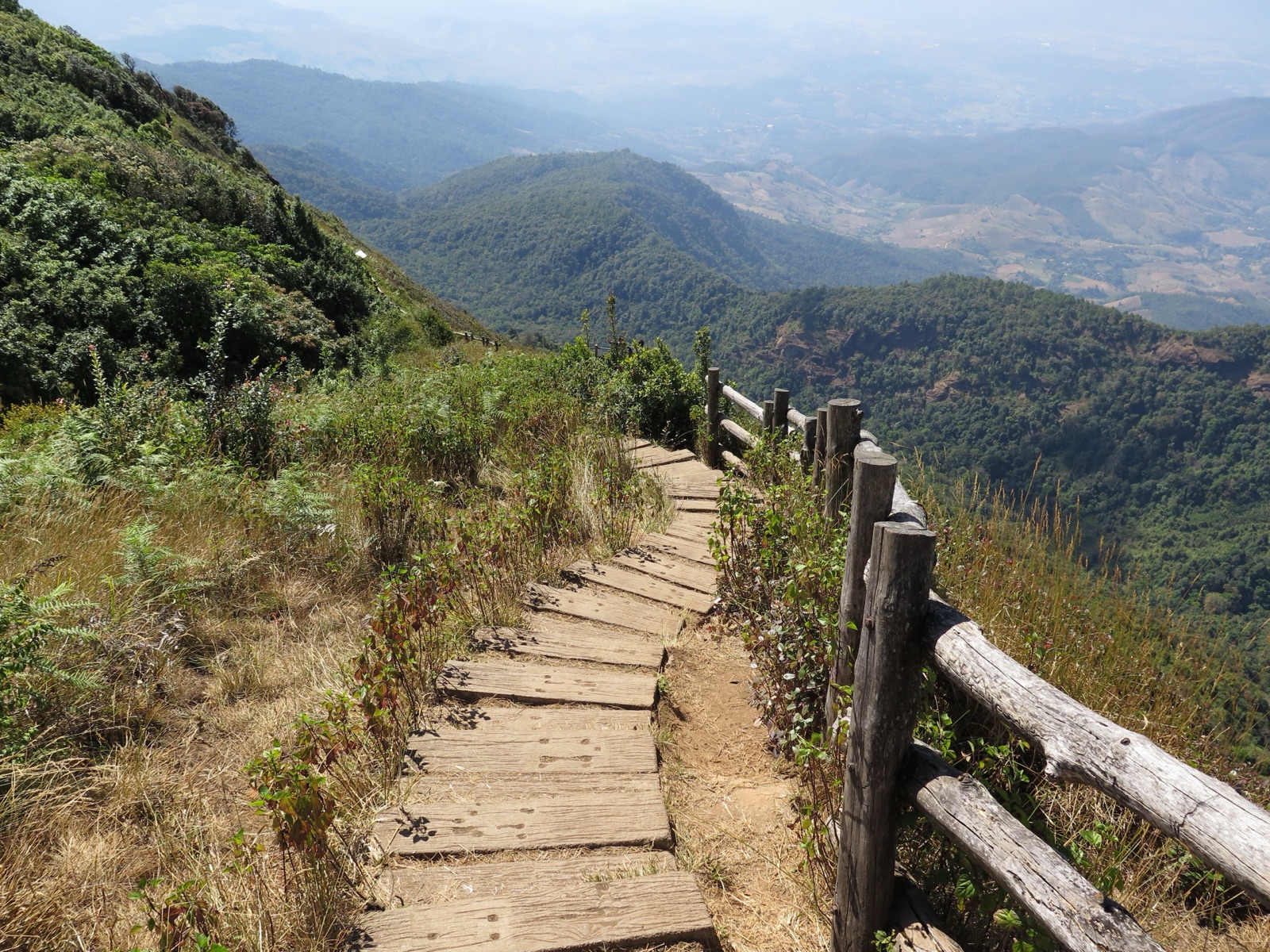
The Korean word gogae (고개) means a way over a mountain, or a slope up and down a hill. Kham Mueang has an almost exact match, kio doi, which splits into two words. Kio กิ่วฯ has several meanings; one of them in the dictionary is "the lowest point between mountain peaks", the dip between two summits where it is easiest to walk across. Doi ดอฯย is a high mountain.
The photo at the top of this article shows the second gate (Jogokgwan) on the old footpath over the Mungyeong Saejae (문경새재) pass in North Gyeongsang Province. The word jae (재) in that name also means a mountain pass.
The verb in the second line is kham ข้ามฯ, which the dictionary defines as to pass from one side to the other, and pai ไพ is to move away from a place. The Korean "neomeoganda" holds both "to cross over" and "to go" in one word, so Kham Mueang uses the two words together.
Verse 1: the one who left me
Original:
나를 버리고 가시는 님은
십리도 못 가서 발병 난다
(Nareul beorigo gasineun nimeun / Simnido mot gaseo balbyeong nanda)Literal gloss: My love, who leaves me behind and goes, / will not get ten ri before the feet start to hurt
Kham Mueang rendering by MoradokLanna:
เปิ้นตี้ละข้าไป
ไปบ่ฮอดสิบลี้ ตี๋นก็จะปวด
(The one who leaves me and goes / will not reach ten ri before the feet ache)
This is the line people remember most. The one left behind does not curse the one leaving; the words are hurt and worried at once: whoever goes will not get far.
"To leave behind" in Kham Mueang is la ละ, which the dictionary glosses as to abandon, to let go. "Me" is kha ข้า, a first-person pronoun used by both women and men. For the one who goes away we use poen เพิ่นฯ: the dictionary says it can mean "he, she" or "that person", as in "poen pai laeo", they have gone.
Hot รอฯด means to reach one's destination; with bo บ in front it becomes "bo hot", not reaching. "Foot" in Kham Mueang is tin ตีนฯ, and an ache that goes on is puat ปวฯด (the Korean "balbyeong" literally means a sickness of the feet).
Verse 2: a clear sky, many stars
Original (as given by the Sejong Cultural Society):
청청하늘엔 별도 많고
우리네 가슴엔 꿈도 많다
(Cheongcheong haneuren byeoldo manko / Urine gaseumen kkumdo manta)Literal gloss: In the clear blue sky there are many stars / in the hearts of us folk there are many dreams
Kham Mueang rendering by MoradokLanna:
ฟ้าใส ดาวก็หลาย
ใจ๋หมู่เฮา ฝันก็หลาย
(Clear sky, and many stars / in our hearts, and many dreams)
The sources write this verse slightly differently. The Sejong Cultural Society gives "별도 많고 … 꿈도 많다" (many stars … many dreams), while Wikipedia gives "잔별도 많고 … 희망도 많다" (many little stars … many hopes). We follow the Sejong Cultural Society, which says its words are the most commonly sung.
Fa ฟ้า is the sky, "the part above that covers the land", and sai ไส in the dictionary means bright, clear, not cloudy, not misty. Dao ดาวฯ is a star shining in the dark sky, and lai หลฯายฯ means many, a lot, the word Northerners use for "very" and "many" every day.
For "in our hearts" we use chai ไจ, which the dictionary gives both as the heart and as "that which knows, feels, thinks", together with mu hao หู่เรัา, meaning our own group, among ourselves, which matches the Korean "urine", a homely "us folk". Fan ฝันฯ has two senses in the dictionary: to dream in sleep, and "to picture, to wish to be, to wish to have". The second sense covers both the "dreams" and the "hopes" of the two versions.
Verse 3: Mount Baekdu and flowers in winter
Original (as given by Wikipedia):
저기 저 산이 백두산이라지
동지 섣달에도 꽃만 핀다
(Jeogi jeo sani Baekdusaniraji / Dongji seotdaredo kkonman pinda)Literal gloss: That mountain over there, they say, is Mount Baekdu / even in the coldest months of the year, flowers bloom
Kham Mueang rendering by MoradokLanna:
ดอยลูกหั้น ว่าเป๋นดอยแบ็กดู
ยามหนาวสุดของปี๋ ดอกก็ยังบาน
(That mountain over there, they say, is Mount Baekdu / in the coldest time of the year, the flowers still bloom)
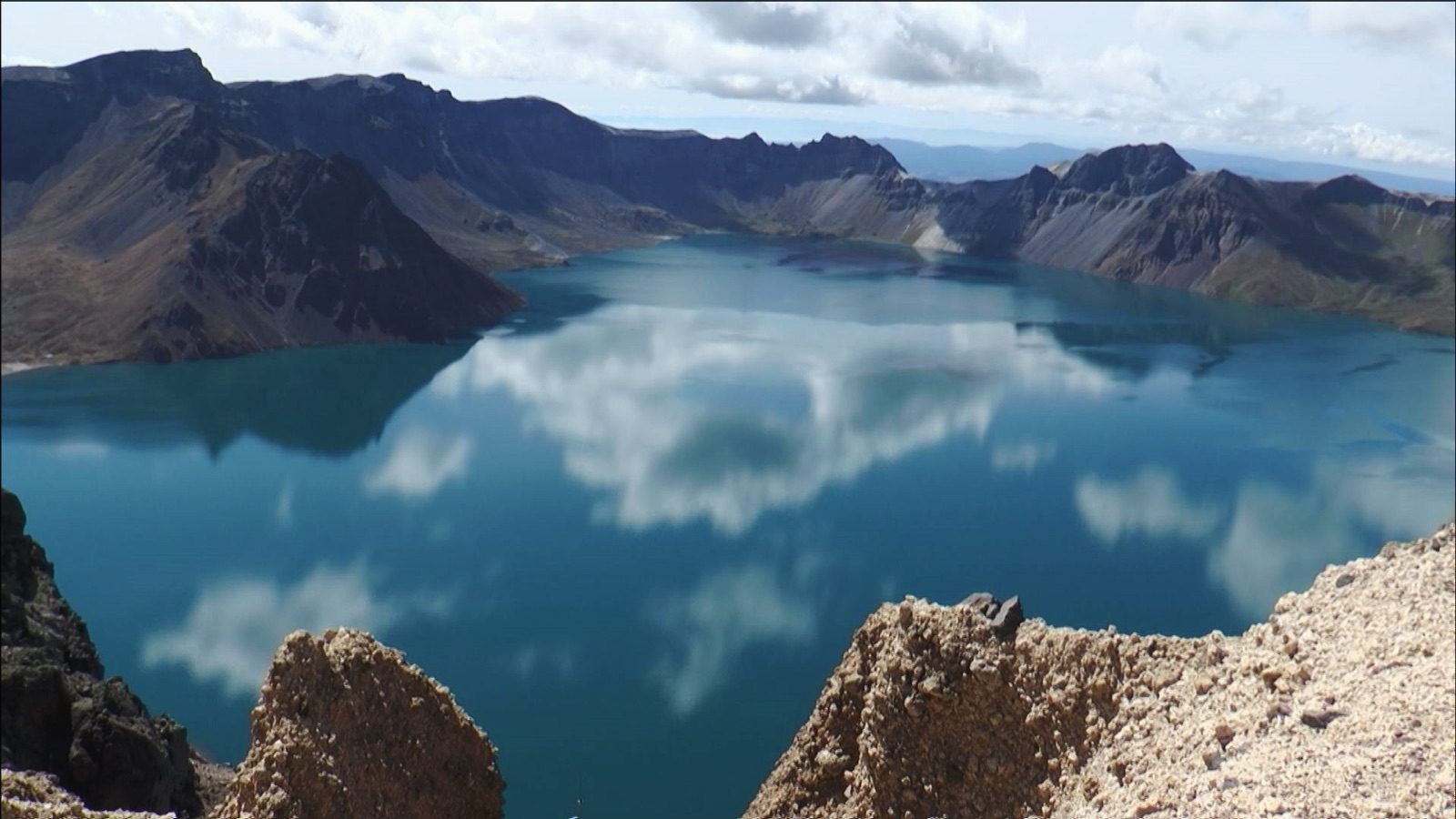
Mount Baekdu (백두산, also written Paektu) is a 2,744-metre volcano on the border between North Korea and China, with a crater lake at its summit. Wikipedia notes that Korean and Manchu people give the mountain and its lake a mythical quality and regard it as their ancestral homeland. "Dongji seotdal" (동지 섣달) means the eleventh and twelfth months of the Korean lunar calendar, the coldest part of the year, so the verse is a picture of hope still blooming in hard times.
Dok ดอฯก is a flower, and ban บาฯนฯ is to open out, to unfold; the dictionary's own example is "dok ban", the flowers bloom. Yang ยังฯ means to still be there, to remain, and han หั้นฯ is "that, over there". The word "cold" (หนาว) is not in the dictionary as a Kham Mueang word (there is only yen, cool), so we keep the Thai word.
Kham Mueang words for parting and missing
Arirang is a song of farewell. Wikipedia, drawing on UNESCO's listing and scholarly work, sums up that although the words change from version to version, most speak of sorrow, separation, meeting again and love. Kham Mueang has several words for these feelings.
| Feeling | Kham Mueang | Meaning in the dictionary |
|---|---|---|
| Parting | phak chak ฯระฯพากฯจากฯ · chak จากฯ | to be torn apart, to separate · to go away from a place |
| Missing someone | kuet hot คึดฯรอฯด | to miss, to think of |
| Coming back | pik พิกฯ · muea เมิอฯอ | to return, to come back · to go, to go back |
| The home left behind | ban บ้าฯนฯ | a house, a home |
To speak to a sweetheart directly, Kham Mueang has a charming pair of pronouns: poen and tua ต฿วฯ. The dictionary explains that tua is a second-person pronoun used between close friends or lovers, "paired with poen", the first-person pronoun for the speaker. "Poen kuet hot tua" means "I miss you". The pair also appears in the song Noi Chaiya. Notice that in our verse 1, poen has its other meaning, "that person", the one who leaves.
Summary of Kham Mueang words from the song
| Idea in the song | Kham Mueang used | Meaning in the dictionary |
|---|---|---|
| The pass to cross | kio doi กิ่วฯดอฯยฯ · kio กิ่วฯ · doi ดอฯย | a footpath between two mountains · the low point between peaks · a high mountain |
| Crossing and leaving | kham ข้ามฯ · pai ไพ · la ละ | to cross to the other side · to move away · to abandon, let go |
| The people in the song | kha ข้า · poen เพิ่นฯ · mu hao หู่เรัา | I · that person (or "I" between close people) · us, our own group |
| Not getting far, sore feet | bo บ · hot รอฯด · tin ตีนฯ · puat ปวฯด | not · to reach · foot · to ache |
| Sky and stars | fa ฟ้า · sai ไส · dao ดาวฯ · lai หลฯายฯ | sky · clear, not cloudy · star · many |
| Heart and dreams | chai ไจ · fan ฝันฯ | heart, the mind that feels · to dream, to wish |
| Flowers in winter | dok ดอฯก · ban บาฯนฯ · yang ยังฯ | flower · to unfold · to still be there |
All the Kham Mueang lines here are Moradok Lanna's own wording, mixing dictionary words with everyday Thai. Northerners from different areas may say the same thing with other words, and we still want a native speaker to check them.
Compared with the song Ban Bon Doi
Both Arirang and Ban Bon Doi by Jaran Manopetch put a mountain at the centre of the song, but they see it from opposite sides. In Arirang, the mountain is what the loved one has to cross, so the kio doi is the line between the one who goes and the one left behind. In Ban Bon Doi, the mountain is home, the place where "kha" lives proudly without needing to cross anywhere, and what the mountain people share is kindness.
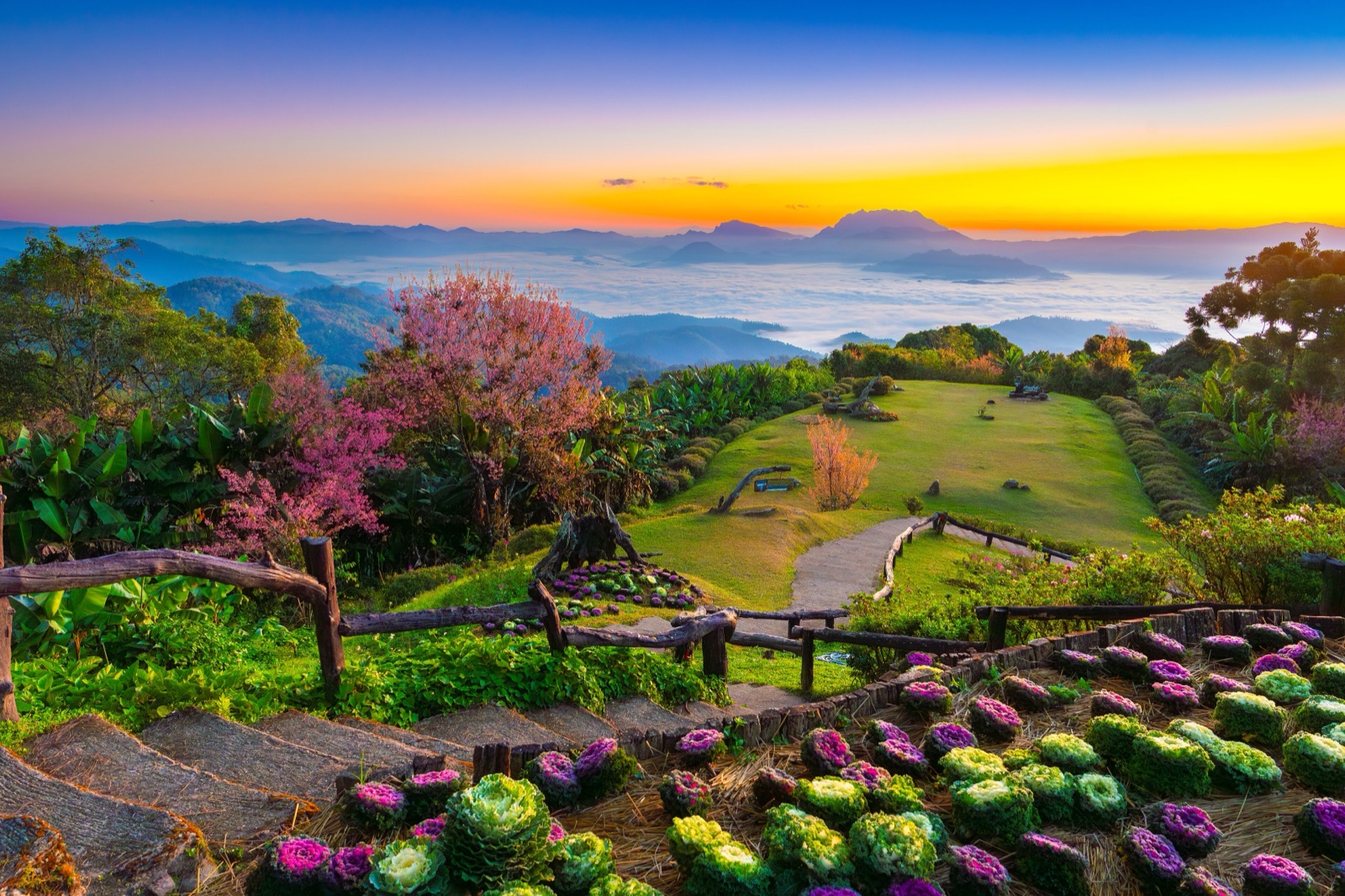
The two songs share one more thing: they sing for a whole group. Arirang says "urine" (us folk) in verse 2, and Ban Bon Doi turns from "kha" to mu hao in its last part. Both are songs of a community, not of one person. For Northerners who have left a mountain home to work far away, Arirang may sound more familiar than they expect.
Summary
- Arirang is a Korean folk song with thousands of versions, all sharing the refrain "Arirang, arirang, arariyo". UNESCO inscribed South Korea's Arirang in 2012 and North Korea's in 2014.
- We used the standard Arirang (Bonjo Arirang) made famous by Na Woon-gyu's 1926 film; the refrain and verse 1 were checked in three sources.
- The pass in the song, gogae, is kio doi in Kham Mueang; "to abandon" is la, and "foot" is tin.
- Li in Kham Mueang means to hide, not the unit of distance in the Korean song.
- "Cold" and the unit ri are not in the dictionary as Kham Mueang words, so we used Thai.
- The Kham Mueang lines are Moradok Lanna's wording and still need a native speaker's check.
Look up the words in the Moradok Lanna dictionary (in Thai). Read on in the same series: My Way · Ban Bon Doi or see the whole set at Kham Mueang through songs and literature (in Thai).
Copyright and courtesy
| Item | Details |
|---|---|
| Song | Arirang (아리랑), the standard version, also called Bonjo Arirang / Gyeonggi Arirang |
| Words | Korean folk song, author unknown (Korean); this version spread through Na Woon-gyu's film Arirang (1926) |
| Music | Korean folk tune, with musical roots in Jeongseon Arirang according to the Encyclopedia of Korean Culture |
| Best-known recording | Sung everywhere by ordinary people; inscribed by UNESCO as intangible cultural heritage (2012 and 2014) |
| Status | Public domain: a traditional folk song, and Na Woon-gyu, who made this version famous, died in 1937 |
This article was made by Moradok Lanna, a non-profit website, for learning the Lanna language and culture. The original words are in the public domain, so we render every verse in Kham Mueang. Modern arrangements and recordings (e.g. the Cultural Heritage Administration of Korea video published by UNESCO) remain under copyright; we do not use their particular wording. The English and Thai glosses are Moradok Lanna's own. Embedded videos come from the rights holders' official channels and remain their property.
With thanks and respect to the songwriters, performers and rights holders. If a rights holder would like anything changed or removed, please write to moradoklanna@gmail.com and we will act promptly.
References
- Moradok Lanna dictionary (dict2): kio doi, kio, doi, kham, pai, la, kha, poen, tua, hot, bo, tin, puat, li, fa, sai, dao, lai, chai, mu hao, fan, dok, ban, yang, han, phak chak, chak, kuet hot, pik, muea, ban (house).
- UNESCO Intangible Cultural Heritage. Arirang, lyrical folk song in the Republic of Korea (inscribed 2012, decision 7.COM 11.27) and Arirang folk song in the Democratic People's Republic of Korea (2014)
- Kim Yeol-gyu (김열규). "아리랑" [Arirang]. Encyclopedia of Korean Culture (한국민족문화대백과사전), Academy of Korean Studies, 1995. encykorea.aks.ac.kr
- Sejong Cultural Society. Arirang (아리랑)
- Wikipedia. Arirang and Mount Paektu (used as a lead and checked against other sources).
- Yoon Min-sik. Oldest recorded Arirang to be on display in Seoul. The Korea Herald, 27 September 2017
- ppss.kr. 1926년 10월 1일 - 나운규의 영화 〈아리랑〉 개봉 [1 October 1926: Na Woon-gyu's film Arirang opens]
- UNESCO (official channel). Arirang, lyrical folk song in the Republic of Korea. YouTube
- Moradok Lanna articles My Way, Ban Bon Doi and Noi Chaiya.
Practise the words from this article
Flip through 31 flashcards of the Lanna words used in this article.


