
Photo: Piith.hant / Wikimedia Commons (CC BY-SA 4.0)
Fly Me to the Moon in Kham Mueang: Moon, Stars and Love
Fly Me to the Moon is a worldwide favourite, best known in the voice of Frank Sinatra. It is about someone who wants to go and play among the stars, and who ends by saying that all of it is another way of saying "I love you". In this article we ask: how would a Northerner (khon mueang) talk about the moon, the stars, the sky and the word love? You pick up Kham Mueang words that work in real life.
The word at the heart of the song is duean เดิอฯร (Kham Mueang reading duean), which the dictionary defines as the moon, and which can also mean a month of the year.
This article is part of the set World songs in Kham Mueang, within Kham Mueang through songs and literature. The song is still under copyright, so we do not translate it line by line, and we quote only short phrases. What we take from it is its ideas, and then we try saying those ideas in Kham Mueang.
Where Fly Me to the Moon comes from
Bart Howard, an American songwriter, wrote the song in 1954, music and words, under the title "In Other Words", as the Songwriters Hall of Fame, Wikipedia and American Songwriter all agree. The first commercial recording was by Kaye Ballard, released on Decca in April 1954 as the B-side of "Lazy Afternoon".
Peggy Lee later sang it in 1960 and performed it on The Ed Sullivan Show. Listeners had begun to call it "Fly Me to the Moon" after its opening line, so she asked the writer about making the title official (American Songwriter). Wikipedia says that in 1963 she persuaded Howard to change the name officially, so the sources tell the timing slightly differently.
The version the world remembers best is Frank Sinatra's on the album It Might as Well Be Swing (1964), played by the Count Basie orchestra in an arrangement by Quincy Jones, who changed the beat from three to four in a bar (according to Wikipedia and American Songwriter). The Songwriters Hall of Fame inducted the song in 1999 in the "Towering Song" category.
You can hear Sinatra with the Count Basie orchestra from Frank Sinatra's official channel.

Loi khuen fa, pai ha duean: floating up to the moon
The first idea of the song is the dream of going to the moon. The line everyone remembers is the title phrase, "Fly me to the moon" (Bart Howard, "Fly Me to the Moon", 1954). The Lanna dictionary has no word for "to fly", so we use loi ลอฯยฯ, which means to hover in the air, not to sink.
Kham Mueang has several words for the night sky. Fa ฟ้า is the visible expanse above that covers the land. Dao ดาวฯ is a bright point of light in the sky when it is dark, and duean เดิอฯร is the moon. The moon has several forms. The full-moon day, the fifteenth day of the waxing moon, is duean peng เดิอฯรเพงฯ; a full round moon is duean mon เดิอฯรม฿นฯ; and the moon just coming up over the horizon or out of the clouds is duean maen เดิอฯรแมนฯ.
Kham Mueang rendering by MoradokLanna: ลอยขึ้นฟ้า ไปหาเดือน ("float up into the sky, go to the moon")
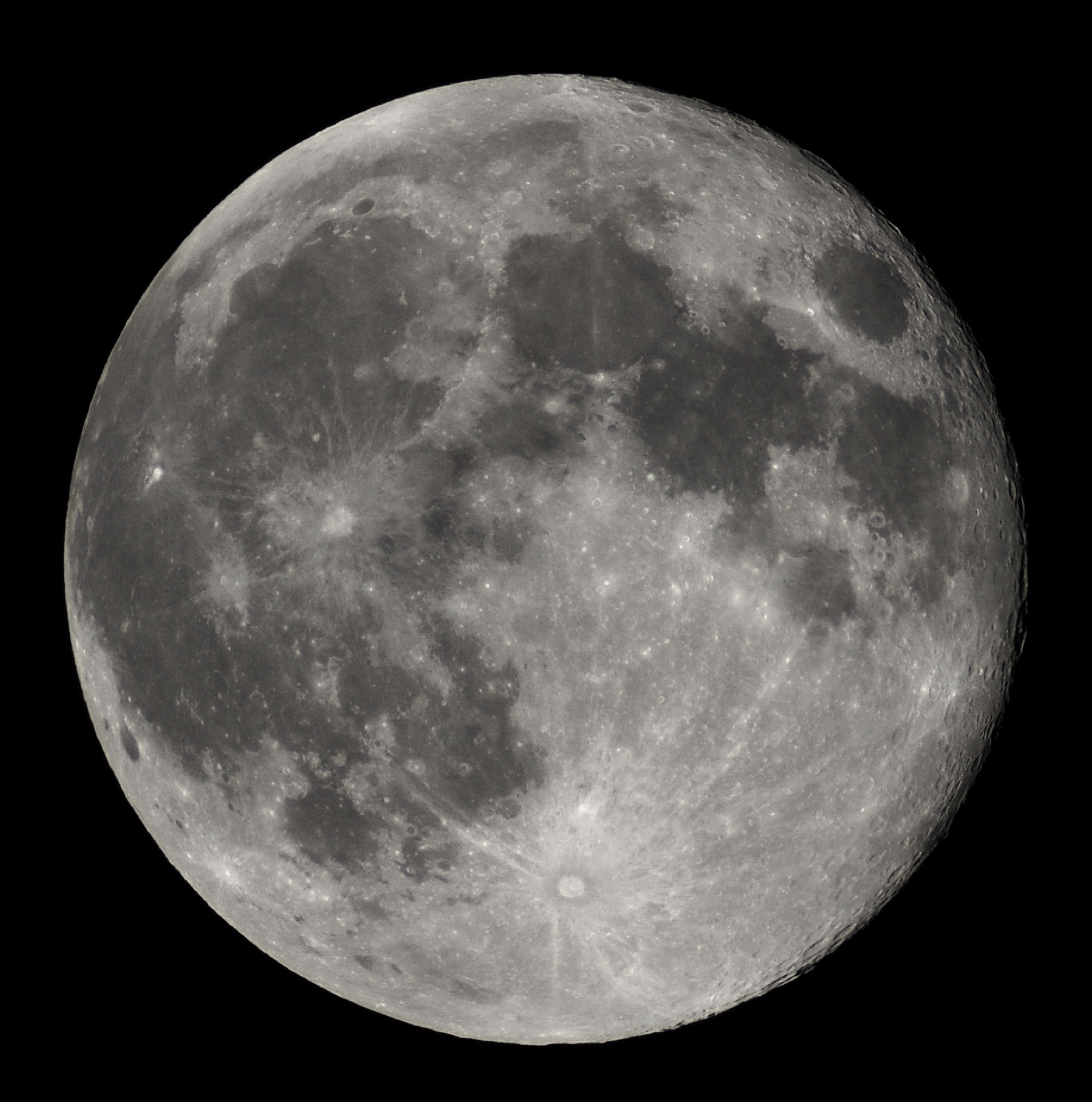
The dictionary also notes about duean that the Lanna people count the months two months ahead of central Thailand. For example, Songkran, in month 5 in the central region, falls in month 7 for the Lanna people. So duean is both the moon and the name of a month in the year.
Yak len tuai dao: wanting to play with the stars
The second idea is curiosity. The singer wants to go and play among the stars and find out what other worlds are like. Kham Mueang uses yak อยฯากฯ (to wish, to want), len เห้ลฯร (to play, to do something for fun or relaxation), tuai ทวฯยฯ (to follow, together with) and pho ผํอฯ (to look, to watch, to look after).
Kham Mueang rendering by MoradokLanna: อยากเหล้นตวยดาว อยากไปผ่อ ("I want to play with the stars, I want to go and look")
The meaning is wanting to play with the stars and go and see them. It is a general thought, not a translation of any line of the song.
Bo u, hue mue, chai hu: saying it another way
The third idea is the heart of the song's original title, "In Other Words". The singer does not say "I love you" outright. Instead the singer asks the other person for a held hand and for closeness, and only then sums it up with "In other words, I love you" (Bart Howard, "Fly Me to the Moon", 1954). It speaks around the thing first, then says it plainly at the end.
Kham Mueang has u อู้, meaning to speak, to talk. To say "not speaking", put bo บ (not) in front. Hue หื้ means to give, to hand over. Mue มื is the part of the body at the end of the arm, and hu รู้ means to understand, to know. The dictionary has no verb "to hold" in the sense of holding hands, so we use "hue mue" (give a hand) in our own phrasing. And chai ไจ is the heart, the part that feels and thinks.
Kham Mueang rendering by MoradokLanna: บ่ต้องอู้ หื้อมือ ใจ๋ก็ฮู้ ("no need to speak; give a hand, the heart knows")
Kha hak tua: the word for love in Kham Mueang
The fourth idea is the last line of the song: saying "I love you" plainly in Kham Mueang. Hak รักฯ is a verb meaning to care for and feel bound to, to be fond of with affection, to cherish (the dictionary uses the same word for the lacquer tree and a kind of beetle). True love is hak tae รักฯแท้; deep, close love is hak phaeng รักฯแพงฯ. A loved one is ti hak ที่รักฯ or ti phaeng ที่แพงฯ, which matches "darling" in the song.
For pronouns with a loved one, the dictionary says tua ต฿วฯ is used for "you" between close friends or sweethearts. The speaker says kha ข้า for "I" (normally between men of similar age or close friends) or kha chao ข้าเจั้า (the polite form women use). The dictionary also has a real example sentence, "hak nong tae i" (found under tae i แท้อี้), meaning "do you really love her, then?"
Kham Mueang rendering by MoradokLanna: ข้าฮักตั๋ว (a man speaking to a loved one) · ข้าเจ้าฮักตั๋ว (a woman speaking to a loved one)
These sentences are our own assembly from dictionary words, not the one standard way to say it. In real speech Northerners from different places may say it differently and add polite endings.
Chai hong phleng, sue tae: a heart that sings
The last idea is a wish for a heart full of song, and for the other person to be sincere. Kham Mueang has hong phleng ร้อฯงเพลฯฯง (to sing) and muan ok muan chai ม่วฯรอ฿กฯม่วฯรไจ (touched, at ease in the heart). For sincerity there is sue ซื่, meaning straight, not crooked, honest, and tae แท้, meaning genuine, true, pure, with nothing mixed in.
Kham Mueang rendering by MoradokLanna: ใจ๋ฮ้องเพลง ซื่อแต๊ ฮักแต๊ ("a singing heart, honest and true, true love")
The words at a glance
| Idea | Kham Mueang words | Dictionary meaning |
|---|---|---|
| Floating up to the moon | fa ฟ้า · dao ดาวฯ · duean เดิอฯร · loi ลอฯยฯ · duean mon เดิอฯรม฿นฯ | the sky above · a star · the moon · to hover in the air · the full moon |
| Wanting to play with the stars | yak อยฯากฯ · len เห้ลฯร · tuai ทวฯยฯ · pho ผํอฯ | to want · to play · together with · to look |
| Saying it another way | u อู้ · hue หื้ · mue มื · hu รู้ | to speak · to give · the hand · to understand |
| Saying "I love you" | hak รักฯ · hak tae รักฯแท้ · ti hak ที่รักฯ · tua ต฿วฯ · kha ข้า | to love · true love · a loved one · you (to a sweetheart) · I |
| A singing heart, sincere | chai ไจ · hong phleng ร้อฯงเพลฯฯง · sue ซื่ · tae แท้ | heart · to sing · straight, honest · genuine, true |
All of these renderings are phrasings we put together from dictionary words. They are not the one standard way to say it, and Northerners from different places may say the same idea with other words. We would like native Kham Mueang speakers to check our phrasing before it is used for real.
Compared with Yi Peng and Lanna courtship
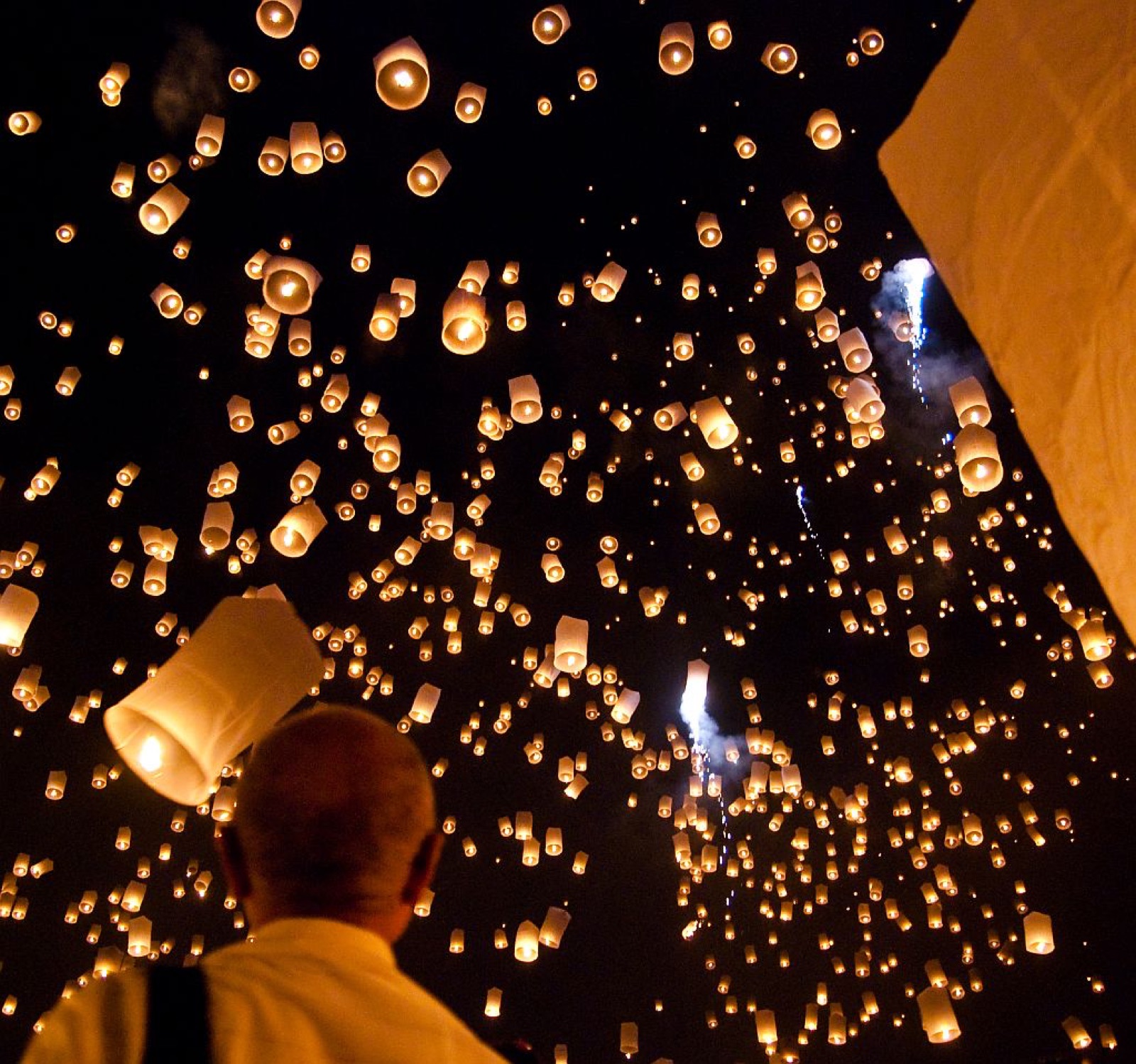
The song makes us look up at the sky, as the Lanna people do on the night of Yi Peng ยี่เพงฯ, which the dictionary explains as the full moon of the northern month 2, matching the full moon of the central month 12. On that night there is the custom of releasing a kom loi โค฿มฯลอฯยฯ, which the dictionary describes as a toy made of kite paper that floats up into the sky. One song asks for someone to carry us floating up to the moon, while the custom sends a lantern up toward the moon itself. Read more about Yi Peng and its words in the article Yi Peng, Pi Mai and Tung.
Another thing to compare is "saying love indirectly", the heart of the original title In Other Words. Lanna has a similar tradition. The dictionary explains aeo sao แอ่วฯสาวฯ as follows: after the evening meal, young women sit doing small tasks in the toen (the open area outside the bedroom), waiting for young men to visit and talk. It counts as one of the ways ancient Lanna people found a partner. Related words are tho sao โทอฯะสาวฯ (to court a young woman, also called u sao) and pheng so เพลฯงซํอฯ, which the dictionary says includes courting verses between men and women. Courting through song is one way Northerners "say it another way".
As for the colour of the night sky, Kham Mueang calls dark blue lae แห้ลฯ (the dictionary says in some places it also means light blue or green). Read about other colours in the article Kham Mueang colour words, and for love in Jaran's Kham Mueang songs, continue with Sao Chiang Mai.
Summary
- Duean is the moon, duean peng the full-moon day and duean mon the full round moon, while dao and fa talk about the night sky.
- The dictionary has no word for "to fly", so we use loi instead.
- Hak is to love, hak tae is true love, ti hak is a loved one, and tua is "you" between sweethearts.
- Sue is honest and tae is genuine, true.
- The "Kham Mueang rendering by MoradokLanna" lines in this article retell ideas; they do not translate the song's lyrics.
Look up more of the words in the MoradokLanna dictionary (in Thai). Keep reading in the same series: My Way · Yesterday Once More or see the whole set at Kham Mueang through songs and literature (in Thai).
Copyright and courtesy
| Item | Details |
|---|---|
| Song | Fly Me to the Moon (original title In Other Words) |
| Words | Bart Howard (English, 1954) |
| Music | Bart Howard |
| Best-known recording | Frank Sinatra with Count Basie and His Orchestra (1964) |
| Status | Under copyright; all rights belong to the authors, publishers and record labels |
This article was made by Moradok Lanna, a non-profit website, for learning the Lanna language and culture. It is not an adaptation, translation or new version of the song. We quote only a few short lines, with credit, for study, criticism and review, as fair use allows (Thai Copyright Act B.E. 2537, section 32). The Kham Mueang lines are our own wording of the song's ideas, not a translation of its lyrics. Embedded videos come from the rights holders' official channels and remain their property.
With thanks and respect to the songwriters, performers and rights holders. If a rights holder would like anything changed or removed, please write to moradoklanna@gmail.com and we will act promptly.
Sources
- Moradok Lanna dictionary (dict2), words duean, duean peng, duean mon, duean maen, dao, fa, loi, dao ngon thai, dao mu kong, yak, len, tuai, pho, u, bo, hue, mue, hu, chai, hak, hak tae, hak phaeng, ti hak, ti phaeng, tua, kha, kha chao, tae i, hong phleng, muan ok muan chai, sue, tae, yi peng, kom loi, aeo sao, tho sao, pheng so, lae (in Thai)
- Songwriters Hall of Fame. Fly Me To The Moon (Towering Song, 1999)
- American Songwriter. The out-of-this-world story behind "Fly Me to the Moon" by Frank Sinatra
- Wikipedia. Fly Me to the Moon (used as a lead and cross-checked)
- Frank Sinatra (official channel, FrankSinatraVEVO). Fly Me To The Moon (Audio) ft. Count Basie And His Orchestra. YouTube
- Moradok Lanna articles Yi Peng, Pi Mai and Tung and Kham Mueang colour words
Practise the words from this article
Flip through 38 flashcards of the Lanna words used in this article.


