
Photo: Harrison Weir / Wikimedia Commons (Public domain)
The Tortoise and the Hare in Kham Mueang
The Tortoise and the Hare is one of Aesop's fables, and Thai children grow up with it. In Kham Mueang (Northern Thai) the hare is ka tai ระฯกต่ายฯ, and the tortoise is tao เตั่า, the same word as in central Thai. This article retells the whole fable in Kham Mueang, using only words found in the dictionary, to show which words a Northerner could use to tell the same story.
The fable is not a song, but it belongs to the series World songs in Kham Mueang for the same reason as the songs: people everywhere know it. And unlike a song still under copyright, such as My Way, an old English translation of it is in the public domain. So we can print the whole original and render every sentence in Kham Mueang. We use the translation of George Fyler Townsend, not a modern retelling.
Where the fable comes from
Aesop is the name tied to the animal fables of ancient Greece. The oldest evidence about him is in the history of Herodotus, a Greek writer of the 5th century BCE, who says that "Esop the maker of fables" had been a slave of a man of Samos named Iadmon. Wikipedia sums up that Aesop probably lived in the 6th century BCE, but the sources give different dates, and many scholars doubt that he was more than a legendary name rather than the real author of every fable. The fables that carry his name were told, retold and collected in many layers over the centuries.
This fable is number 226 in the numbering scholars use for Aesop's fables (the Perry Index), as Wikipedia records. Many versions make a fox the one who sets the course or judges at the finish. Printed editions in Europe from the 16th century onward read its lesson in different ways, and in 1935 Disney made it into a short cartoon.
The edition we use is Three Hundred Aesop's Fables, Literally Translated from the Greek by George Fyler Townsend (1814–1900), published by George Routledge and Sons in London. It is usually dated 1867, but the catalogue of Creighton University notes that Routledge first printed Townsend's 300 fables in 1865 and expanded the book in 1867 with more of Harrison Weir's illustrations, so the date of the first printing is not settled. The cover picture of this article is Harrison Weir's illustration from that book.
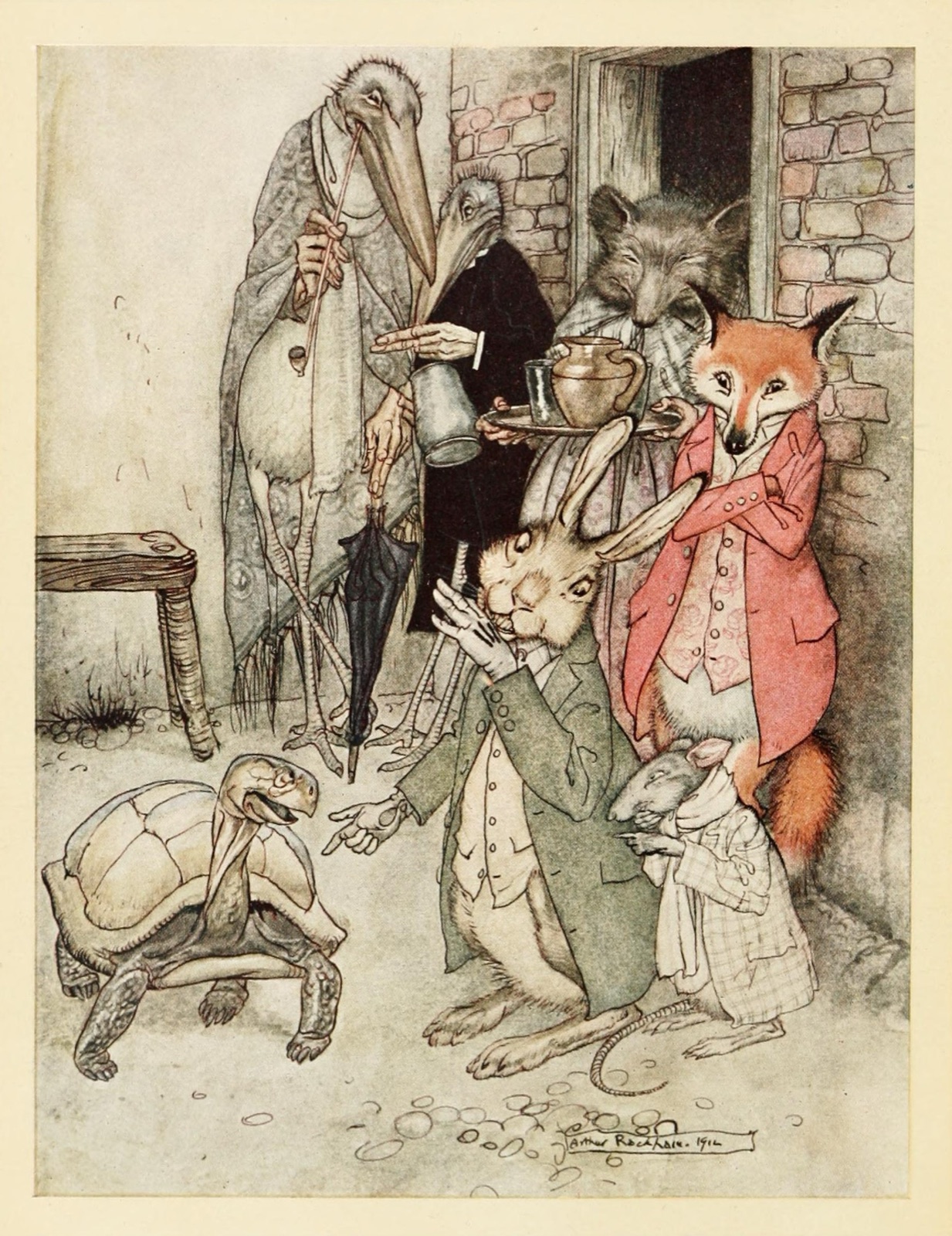
Part 1: the hare mocks the tortoise
The fable opens with the hare laughing at the tortoise for her short feet and slow pace. The tortoise does not get angry. She laughs back and challenges him to a race.
Original (Townsend):
A Hare one day ridiculed the short feet and slow pace of the Tortoise, who replied, laughing: "Though you be swift as the wind, I will beat you in a race."Kham Mueang rendering by MoradokLanna:
วันนึ่ง กะต่ายตือเต่าว่า ตี๋นก็ก้อม เตียวก็จ๊า เต่าไค่หัวแล้วว่า "ถึงตั๋วจะล่นเวยเหมือนลม ข้าก็จะเอี่ยงต๊าตั๋ว แล้วข้าจะแป๊"
(One day the hare mocked the tortoise: her feet are short and her walk is slow. The tortoise laughed and said, "Even if you run as fast as the wind, I challenge you, and I will win.")
The first word to know is tue ทื, which the dictionary glosses as "to look down on, to belittle, to scorn", just like "ridiculed" in the original. The tortoise's short feet are tin ตีนฯ (feet) and kom ก้อฯม (short), the same kom as in jia kom, the short Lanna tale. Walking slowly is cha ช้า, and the dictionary's own example fits perfectly: tiao cha, "to walk slowly".
The tortoise khai hua ไฅ่ห฿วฯ, laughs, and answers that even if the hare can lon ล่฿นฯ (run) woei เวิยฯ (fast) like the lom ล฿มฯ (wind), she will iang ta อ่งท้าฯ, "challenge him to a contest". The pronouns are kha ข้า for the speaker and tua ต฿วฯ for a close listener. The word for "leg" is not in the dictionary as a Kham Mueang word, so we use tin, as the original says "feet".
Part 2: the challenge, with the fox to set the course
Original:
The Hare, believing her assertion to be simply impossible, assented to the proposal; and they agreed that the Fox should choose the course and fix the goal.Kham Mueang rendering by MoradokLanna:
กะต่ายกึ๊ดว่า เรื่องนี้บ่มีตางเป๋นไปได้ ก็รับคำเอี่ยงต๊า แล้วทั้งสองตกลงกันหื้อหมาจ็๋อกวอเป็นผู้เลือกตาง และกำหนดที่ฮอด
(The hare thought there was no way this could happen, so he took up the challenge, and the two agreed to let the fox choose the course and fix the finish.)
Kuet คึดฯ means "to think, to consider". The fox in Kham Mueang is ma chok wo หมฯาจัอฯกวํอฯ, and the dictionary adds that it can also be called ma phi. Tang ทาฯงฯ is "way, line, opening, chance", so it serves both as "the racecourse" and as "a way it could happen" in the first line. Wa ว่าฯ links clauses as in central Thai, but in Kham Mueang it also means "to say, to tell", and hue หื้ is "to give, to let".
Townsend calls the tortoise "her" and the hare "he". Kham Mueang does not need to mark an animal's sex in the sentence, so we simply say ka tai and tao.
Part 3: the tortoise never stops, the hare sleeps by the wayside
This is the heart of the story. The tortoise walks slowly but never stops; the hare is so sure of himself that he falls asleep beside the course.
Original:
On the day appointed for the race the two started together. The Tortoise never for a moment stopped, but went on with a slow but steady pace straight to the end of the course. The Hare, lying down by the wayside, fell fast asleep.Kham Mueang rendering by MoradokLanna:
ฮอดวันเอี่ยงต๊า ทั้งสองออกตางพร้อมกัน เต่าเตียวบ่ยั้งบ่เซา จ๊าก็จ๊า แต่บ่ยั้งสักเตื้อ ตรงไปจนเถิงปลายตาง ส่วนกะต่ายนอนลงป้างตาง แล้วก็หลั๋บไป
(On the day of the race the two set off together. The tortoise walked without stopping or resting: slow, yes, but never stopping once, straight on to the end of the course. The hare lay down by the wayside and fell asleep.)
Tiao ทยฯว means "to walk", and the phrase bo yang bo sao บยั้งฯบเซัา, which the dictionary glosses as "without stopping or resting, without letting up", matches "never for a moment stopped" exactly. Thoeng เถิงฯ is "to reach, to arrive at a goal". The hare lies down at the pang tang พ่างฯทาฯงฯ, literally "the side of the way", then he non นอฯร (lies down) and lap หัลฯบ (sleeps).
Bo yang in the sentence comes from yang ยั้งฯ, "to stop, to rest, to pause for a while", and tuea เทิ่อฯอ means "a time, an occasion", so bo yang sak tuea is "not stopping even once". The words for "finishing line" and "end of the road" are not in the dictionary as Kham Mueang words, so we write plai tang, joining the dictionary word tang to the Thai word plai (end).
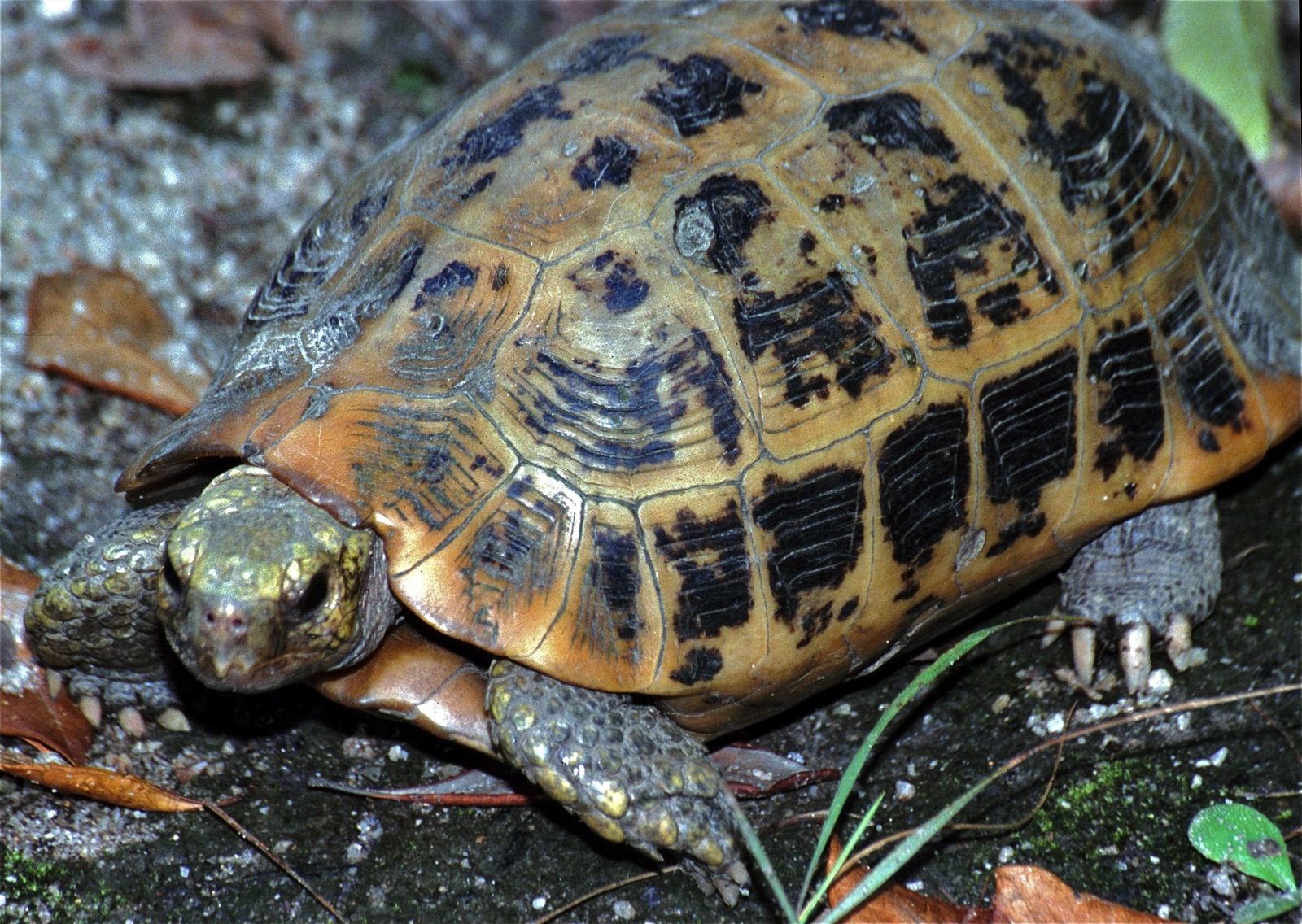
Part 4: the hare wakes, but the tortoise is already there
Original:
At last waking up, and moving as fast as he could, he saw the Tortoise had reached the goal, and was comfortably dozing after her fatigue.Kham Mueang rendering by MoradokLanna:
ในที่สุดกะต่ายก็หลั๋บลุก ล่นจี้บไปเต็มแรง แต่ก็หันว่าเต่าฮอดก่อนแล้ว และกำลังนอนพักหายอิ๋ดอยู่สบาย ๆ
(At last the hare woke up and ran flat out all the way, but he saw that the tortoise had already arrived and was resting comfortably after her tiring walk.)
Lap luk หัลฯบลุก means "to wake up from sleep". Chip ชีปฯ means "quickly", and at the end of a sentence it means "all the way from start to finish"; the dictionary's example is lon thoeng ban chip, "to run all the way home without stopping". Hot รอฯด is "to reach the destination, to get through, to succeed", and it อิดฯ is "tired, worn out, weary". Han หันฯ in the sentence means "to see, to find", and laeo แลฯวฯ means "done, already past".
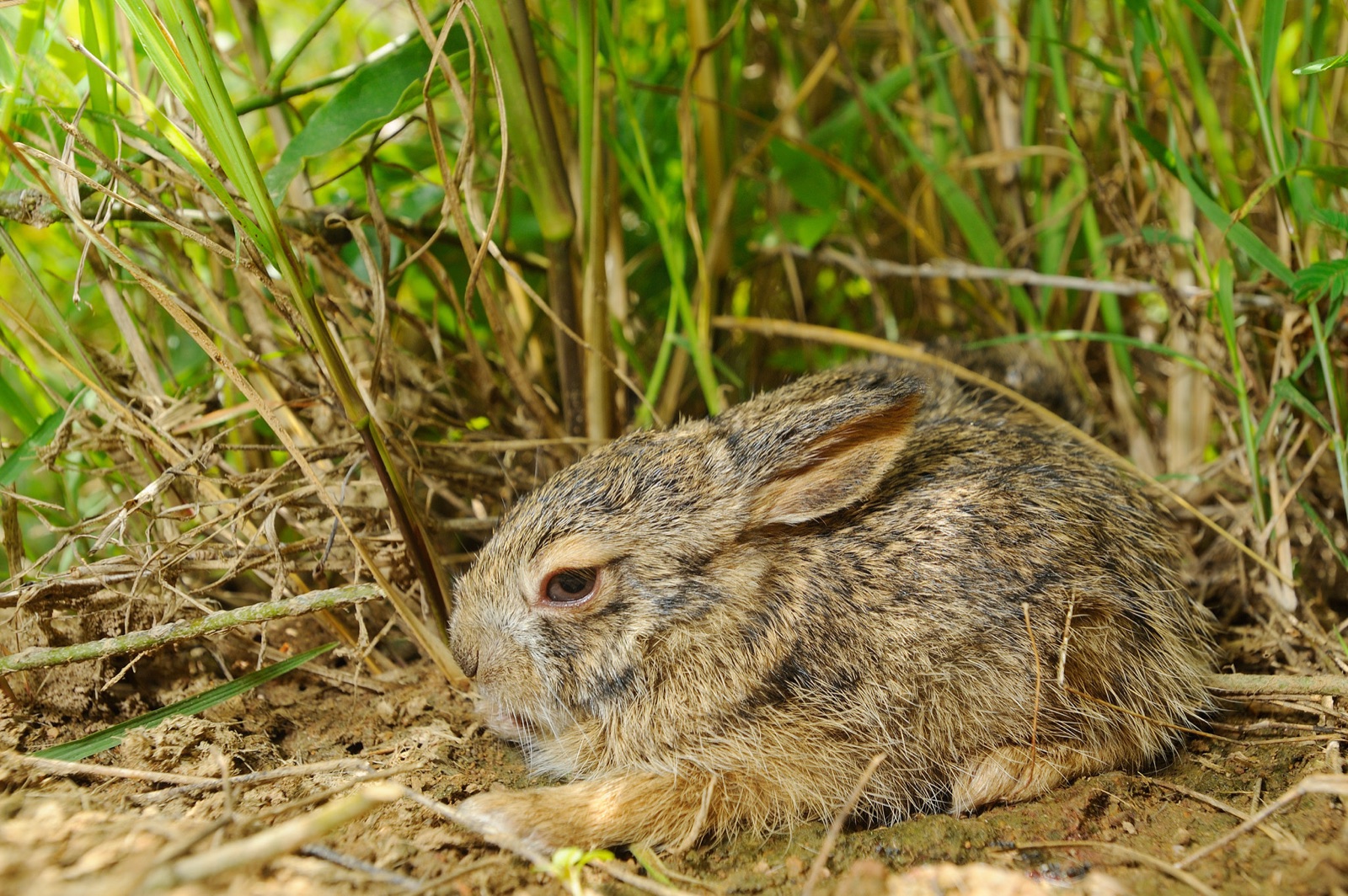
The moral: slow, but never stopping, you can win
Original:
Slow but steady wins the race.Kham Mueang rendering by MoradokLanna:
จ๊าแต่บ่ยั้ง ก็แป๊ได้
(Slow, but never stopping, you can win.)
Townsend's moral is very short, so our Kham Mueang is short too. The key word is pae แพ้, which means to win. The losing side in Kham Mueang is kan ค้าฯนฯ, which the dictionary glosses as "to lose, to be defeated, to be no match, not to win". In this fable the tortoise pae and the hare kan.
Why the hare lost: Kham Mueang words for carelessness and effort
The fable does not say speed is bad. The hare lost because he was too sure of himself to keep going. Kham Mueang has several words for carelessness. Luen ลื่นฯ means "careless, complacent, presuming, looking down on others, heedless, not taking care", so a single word covers both the hare's scorn and his overconfidence. Pha mat ผา(ระฯบาฯ)หมฯาทฯ is the Thai word pramat (heedless) in its Kham Mueang sound. Someone who rests more than they work is khi khan ขี้ระฯค้าฯนฯ, lazy.
The tortoise has words of praise too. Chai yao ไจยาวฯ, literally "a long heart", means "patient, not giving up", just like the tortoise who knows she is slow but does not quit. Man หั่มฯร means "diligent, never idle, persevering".
Central Thai has the saying "slowly, slowly, you get a fine knife" (ช้า ๆ ได้พร้าเล่มงาม), often paired with this fable. The MoradokLanna Dictionary has two Kham Mueang expressions that come close.
| Kham Mueang | Meaning in the dictionary | Where it fits the fable |
|---|---|---|
| nam chuem sai นาฯชึมฯซายฯ | water seeping out of a sand well; as an expression, "little by little", like saving a bit at a time | the tortoise, step by step until she arrives |
| phuea hu po wai เผิ่อฯอรู้พํอฯวาฯยฯ | "by the time you realise, it is too late"; an old saying (kam ba kao) that warns against carelessness, laziness and delay | the hare, who woke up after the tortoise had arrived |
The words at a glance
| Idea in the fable | Kham Mueang words | Meaning in the dictionary |
|---|---|---|
| The characters | ka tai · tao · ma chok wo | hare · tortoise · fox |
| Mocking and challenging | tue · khai hua · iang ta | to belittle · to laugh · to challenge to a contest |
| Slow and fast | cha · woei · lon · tiao · chip | not fast · fast, quick · to run · to walk · quickly, all the way |
| The way and arriving | tang · pang tang · thoeng · hot | way · wayside · to reach · to reach the goal |
| Stopping and sleeping | yang · bo yang bo sao · non · lap · lap luk · it | to stop, rest · without stopping or resting · to lie down · to sleep · to wake up · tired |
| Winning and losing | pae · kan | to win · to lose |
| Carelessness and effort | luen · pha mat · khi khan · chai yao · man | complacent · heedless · lazy · patient · diligent |
All the Kham Mueang lines above are MoradokLanna's own wording, mixing dictionary words with everyday Thai words that the dictionary does not list. Northerners from different places might tell the same story with other words, and we would still like a native speaker to check our lines.
Compared with jia kom: tales that teach and tales that tease
Lanna has short tales of its own called jia kom เจ้ยฯก้อฯม, from jia เจ้ยฯ (a tale, a story) and kom (short). The article Jia Kom collects five of them. Placed beside Aesop, both kinds are short, with characters and dialogue, but they aim at different things.
| Aesop's fable (Tortoise and Hare) | Jia kom | Kham ba kao | |
|---|---|---|---|
| Form | a short story with animal characters | a short story with human characters and dialogue | a single line, often rhyming |
| Purpose | to teach, with a moral at the end | to make people laugh, sometimes with satire | to teach and to warn |
| What matters | what the characters do (rest or keep going) | the punchline, which plays with words | the comparison |
| Example in this article | the tortoise who walks bo yang bo sao | the pregnant buffalo, or fermented-fish chilli dip | phuea hu po wai · nam chuem sai |
So Aesop's fable sits between the two Lanna forms: it is told like a jia kom, but it ends with a lesson like Kham Ba Kao. If you tell the Tortoise and the Hare to a Northern child, you could close it with the old saying phuea hu po wai instead of the English moral.
Summary
- The Tortoise and the Hare is one of Aesop's fables (Perry 226). We used George Fyler Townsend's translation, published by Routledge (usually dated 1867), which is in the public domain.
- Northerners call the hare ka tai and the fox ma chok wo; slow is cha and to run is lon.
- Pae in Kham Mueang means to win, and kan means to lose: beware of the central Thai phae.
- Bo yang bo sao (without stopping or resting) is the tortoise's secret, while luen and pha mat (carelessness) are why the hare lost.
- The old saying phuea hu po wai and the expression nam chuem sai teach the same lesson; our Kham Mueang lines still need a native speaker's check.
Look up the words in this article in the MoradokLanna Dictionary (in Thai). Read on: Jia Kom · Kham Ba Kao · My Way, or see the whole series under Kham Mueang through songs and literature (in Thai).
Copyright and courtesy
| Item | Details |
|---|---|
| Fable | The Hare and the Tortoise, Aesop's fables, Perry Index 226 |
| Author | an ancient Greek fable under the name of Aesop; the true author is unknown |
| Translation used | George Fyler Townsend, Three Hundred Aesop's Fables (English, London: George Routledge and Sons, 1867; some sources give a first printing in 1865) |
| Illustrations | Harrison Weir (Townsend's edition) and Arthur Rackham (1912) |
| Status | Public domain: the fable is an ancient tale, and the translator, George Fyler Townsend, died in 1900 |
This article was made by Moradok Lanna, a non-profit website, for learning the Lanna language and culture. The original fable and the translation we used are in the public domain, so we render the whole story in Kham Mueang. Modern retellings, Thai translations and adaptations (e.g. Disney's 1935 cartoon) remain under copyright; we do not use their particular wording.
With thanks and respect to the storytellers, translators, illustrators and rights holders. If a rights holder would like anything changed or removed, please write to moradoklanna@gmail.com and we will act promptly.
References
- MoradokLanna Dictionary (dict2): ka tai, tao, cha, lon, pae, kan, tue, tin, kom, khai hua, lom, woei, iang ta, kuet, ma chok wo, tang, tiao, bo yang bo sao, thoeng, pang tang, non, lap, lap luk, hot, it, yang, chip, luen, pha mat, khi khan, chai yao, man, nam chuem sai, phuea hu po wai, jia, jia kom, kha, tua, wa, hue, laeo, nueng, han, tuea.
- Townsend, G. F. (tr.) (1867). Three Hundred Aesop's Fables, Literally Translated from the Greek. London: George Routledge and Sons. "The Hare and the Tortoise". Project Gutenberg edition · Copy at the Internet Archive
- Creighton University Digital Repository. Three Hundred Aesop's Fables (note on the 1865 and 1867 printings)
- Herodotus. The History of Herodotus, Book 2, chapter 134 (tr. G. C. Macaulay). Project Gutenberg edition
- Wikipedia. Aesop · The Tortoise and the Hare · George Fyler Townsend (used as a lead and checked against other sources).
- Moradok Lanna articles Jia Kom, Kham Ba Kao and My Way.
Practise the words from this article
Flip through 40 flashcards of the Lanna words used in this article.


