
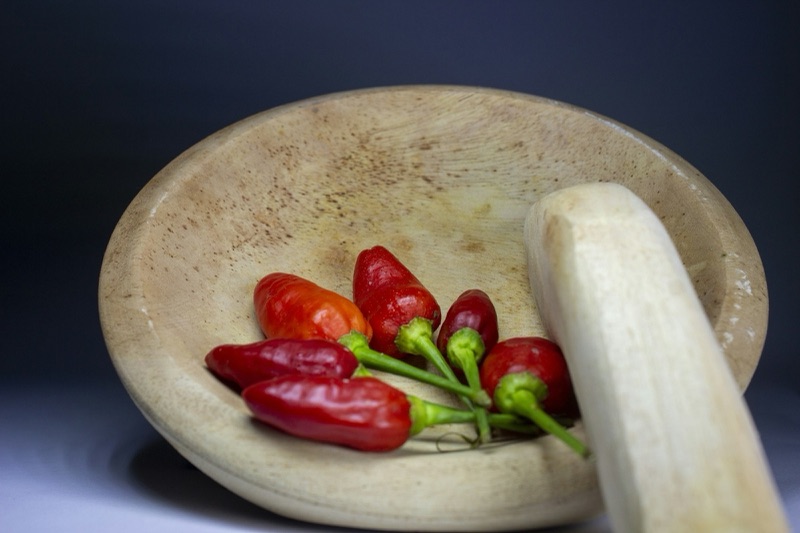
Photo: Farida Tania / Unsplash
False Friends: Movement Verbs (Han, Yang, Luk, Tha)
The Kham Mueang false friends that confuse newcomers most are the short verbs you hear every day. The first is han (หันฯ). A Central Thai speaker hears "to turn", but the Moradok Lanna dictionary defines it as "to see, to meet, to come across". When a northerner asks koei han ko, they mean "have you ever seen it?"
This lesson collects about 15 movement verbs in Kham Mueang: walking, waiting, taking someone along, pushing, putting down, tucking and arriving. Every one comes from the Moradok Lanna dictionary, with what a Central Thai speaker expects and what a northerner means.
Some words in this lesson also keep their Central Thai meaning: luk still means "to get up", and sai can still mean "clear". This lesson does not say the Central Thai sense is wrong. It shows the other meaning northerners use. Some senses were recorded from the speech of older generations, so we write "the dictionary defines it as…".
Han means "see", not "turn"
| Word | Lanna script | A Central Thai speaker expects | The dictionary says | Dictionary example |
|---|---|---|---|---|
| han | หันฯ | to turn your head or body | to see, to meet, to come across | koei han ko (have you ever seen it?) · han na han ta (to see each other's faces) |
So when a northerner says han laeo, they mean "I've seen it", not "I've turned round". For "to look", northerners usually say pho. More verbs for looking and listening: Everyday Kham Mueang Verbs
To a Central Thai ear this sounds like "turn your face this way", but it means to see each other's faces, to meet. People say it when they are happy to see relatives or friends after a long time.
Yang, tiao, kai: walking, not grilling
| Word | Lanna script | A Central Thai speaker expects | The dictionary says |
|---|---|---|---|
| yang | ย่างฯ | to grill | to walk, to step forward |
| tiao | ทยฯว | (no such word) | to walk, to travel (also tiao jon, yang, yok yang) |
| kai | ระฯกายฯ | kai, the body | to pass by, to brush past, e.g. tiao kai (to walk past close by) |
Yang (ย่างฯ) and tiao (ทยฯว) both mean "to walk". A northerner who says yang pai kat is walking to the market, not planning to grill anything.
Kai (ระฯกายฯ) sounds like the word for "body", and the dictionary does have that word too: kai (กายฯ), the body. But in a phrase like tiao kai, it means "to pass close by", like Central Thai krai.
Luk and tha: waking up, succeeding and waiting
| Word | Lanna script | A Central Thai speaker expects | The dictionary says | Dictionary example |
|---|---|---|---|---|
| luk | ลุก | to stand up | to rise from sitting or lying, to wake up, and also to succeed | yia bo luk (it didn't work out) |
| tha | ถ้า | if, as in "if it rains" | to wait | tha yu ni (wait right here) |
Luk (ลุก) keeps its Central Thai meaning, but the dictionary adds two more: to wake up, and to succeed. So yia bo luk does not mean "did it and couldn't get up"; it means "it didn't work out".
Tha (ถ้า) is a verb meaning "to wait". If a market seller says tha yu ni, she means "wait right here", not the start of an "if…" sentence.
A Central Thai speaker who hears tha yu ni may wait for the rest: "if (you) stay here, then…". For a northerner the sentence is complete. It is a request to wait.
Pa, sai, son: taking along and pushing, not throwing
| Word | Lanna script | A Central Thai speaker expects | The dictionary says |
|---|---|---|---|
| pa | พา | to throw | to take someone along, to lead |
| sai | ไส | clear, as in clear water | to push along, to shove (and also clear, bright) |
| son | ซ฿นฯ | naughty | to push, to shove (also called yu) |
| yu | ยู้ | (no such word) | to push, to shove |
Pa (พา) is the northern form of pha, "to take along". A northerner who will pa the children to school is taking them there; nobody is throwing anyone. Why ph becomes p: Kham Mueang Sound Shifts
Son (ซ฿นฯ) means "to push". The dictionary's example comes from the kitchen: son luea nueng khao, push the firewood into the stove for steaming rice. Sai (ไส) also means "to push along", like Central Thai sai.
If you hear son in the kitchen or by the fire, don't assume someone is being naughty. It may mean "push it in", as in feeding firewood into the stove. Another word northerners often use for "push" is yu.
Tam, tai, jom: put down, tuck and sniff-kiss
These three are the trickiest in the lesson, because Kham Mueang has two words that sound almost the same. One matches the Central Thai meaning, the other does not. Listen to the tone. (Here the near-twins are written tǎm, tǎi and jǒm to show their different tone; standard romanization does not mark tones.)
| Kham Mueang | Lanna script | Meaning | Near-twin | Meaning |
|---|---|---|---|---|
| tam | ทำฯ | to set, to put down, e.g. tam wai han (put it over there) | tǎm ตำ | to pound, e.g. tǎm nam phik (pound chilli paste); also to crash into |
| tai | ทาฯยฯ | to tuck, as when tucking a flower behind the ear | tǎi ตายฯ | to die; also to break down, e.g. rot tǎi (the car died) |
| jom | ช฿ | to sniff-kiss, to breathe in someone's scent with love; to gaze at with pleasure | jǒm จ฿มฯ | to sink, e.g. jǒm nam (to sink in water) |
Look at the Lanna script: tam "to put down" is written with the letter ท (th), while tǎm "to pound" is written with ต (t). In the same way, tai "to tuck a flower" is written with ท, and jom "to sniff-kiss" with ช (ch), following the rule that ท is read t and ช is read j.
Tai (ทาฯยฯ) sounds the most alarming, but its meaning is lovely: to tuck a flower behind the ear. If you hear tai dok mai, nobody has died.

Jom (ช฿) is a loving sniff-kiss with the nose, the way grown-ups kiss a child's cheek. It has nothing to do with sinking.
Yang and uap: drying clothes and lying face down
| Word | Lanna script | A Central Thai speaker expects | The dictionary says | Dictionary example |
|---|---|---|---|---|
| yang | อยฯงฯ | still, not yet | to dry in the shade | yang pha (hang the clothes to dry in the shade) |
| uap | อวฯบ | plump | to lie face down; also plump, bigger than usual | non uap (to sleep on your front) |
Kham Mueang has two words yang. One is yang (ยังฯ), "still, remaining", just like Central Thai. The other is yang (อยฯงฯ), "to dry in the shade". They are spelled differently in Lanna script: the "dry" word has the letter อ in front.
Uap (อวฯบ) has as its first dictionary meaning "face down, astride, on top", so non uap means "to sleep on your front". The meaning "plump" is in the same entry too.
Hot: arrived, not survived
Hot (รอฯด) is matched by the dictionary to the Central Thai word rot (to survive, to get through), but its meaning is to reach a destination, to accomplish, to succeed. The dictionary's example is pai hot pai thoeng nip pan, to go all the way to nirvana.
It is also a place name: Hot (ฮอฯด), Hot District in Chiang Mai, which the dictionary notes was formerly called Mueang Hot.
Guess the dictionary sentences
These are real examples from the dictionary. Read them the Central Thai way first, then guess what a northerner means.
Answers: 8 sentences
- koei han ko: have you ever seen it? not "have you ever turned?"
- tha yu ni: wait right here (the sentence is complete)
- tam wai han: put it over there (no pounding involved)
- tiao kai: to walk past close by
- yia bo luk: it didn't work out
- yang pha: to hang the clothes to dry in the shade
- non uap: to sleep face down
- son luea nueng khao: push the firewood into the rice-steaming stove
Play: guess the Kham Mueang verb
Pick the answer you think is the northern meaning, then see the dictionary definition straight away.
Summary
- Han means to see; yang and tiao mean to walk; kai means to pass close by
- Luk can also mean to wake up and to succeed; tha means to wait
- Pa means to take along; sai, son and yu mean to push
- Tam (put down), tai (tuck a flower) and jom (sniff-kiss) differ from tǎm, tǎi and jǒm, which match the Central Thai meanings: listen to the tone
- Yang means to dry in the shade, uap means to lie face down, and hot means to arrive
Look up more words in the Moradok Lanna dictionary, see every false-friend group in Kham Mueang False Friends: The Complete Guide, and learn the everyday verbs in Everyday Kham Mueang Verbs.
Sources
Practise the words from this article
Flip through 22 flashcards of the Lanna words used in this article.


