
Kin: More Than "Eat" in Kham Mueang
Kin (กินฯ) is the Kham Mueang word for "to eat". But when it joins other words, its meaning travels far beyond eating. Kin dong means to get married, kin mueang means to rule a city-state, and kin salak is one of the great merit-making festivals of Lanna.
This lesson picks about 60 words and sayings that begin with kin, out of 103 in the Moradok Lanna dictionary. We start with the three meals, then how to invite someone to eat and how people eat, move on to the kin phrases that involve no eating at all, and finish with northern sayings about food.
In Central Thai, kin sounds casual; to be polite you say rap prathan. The dictionary records that in the northern language kin is a polite word, fine with people of any status or age. So northerners can politely ask an elder kin khao laeo ka? (have you eaten yet?), and the dictionary even compares kin with the royal and monastic words for eating.
Kin khao ngai, kin khao ton, kin laeng: the three meals
Northerners call rice khao (written เข้า) and name each meal after a time of day: ngai (ง่ายฯ, morning), ton (ทอฯร, midday) and laeng (แลงฯ, evening).
| Phrase | Lanna script | Dictionary meaning |
|---|---|---|
| kin khao | กินฯเขั้า | to eat rice, to have a meal |
| kin khao ngai | กินฯเขั้างายฯ | to eat breakfast (also kin ngai); for monks, the morning meal |
| kin khao ton | กินฯเขั้าทอฯร | to eat lunch; for monks, the late-morning meal |
| kin ton | กินฯทอฯร | to eat lunch (short for kin khao ton) |
| kin khao laeng | กินฯเขั้าแลงฯ | to eat dinner |
| kin laeng | กินฯแลงฯ | to eat the evening meal |
| kin khao kap yang | กินฯเขั้ากัปฯหัยฯง | what are you eating with your rice? |
Kin laeng (กินฯแลงฯ) is dinner. Kin ton (กินฯทอฯร) does not mean "to eat bit by bit"; it means to have lunch.
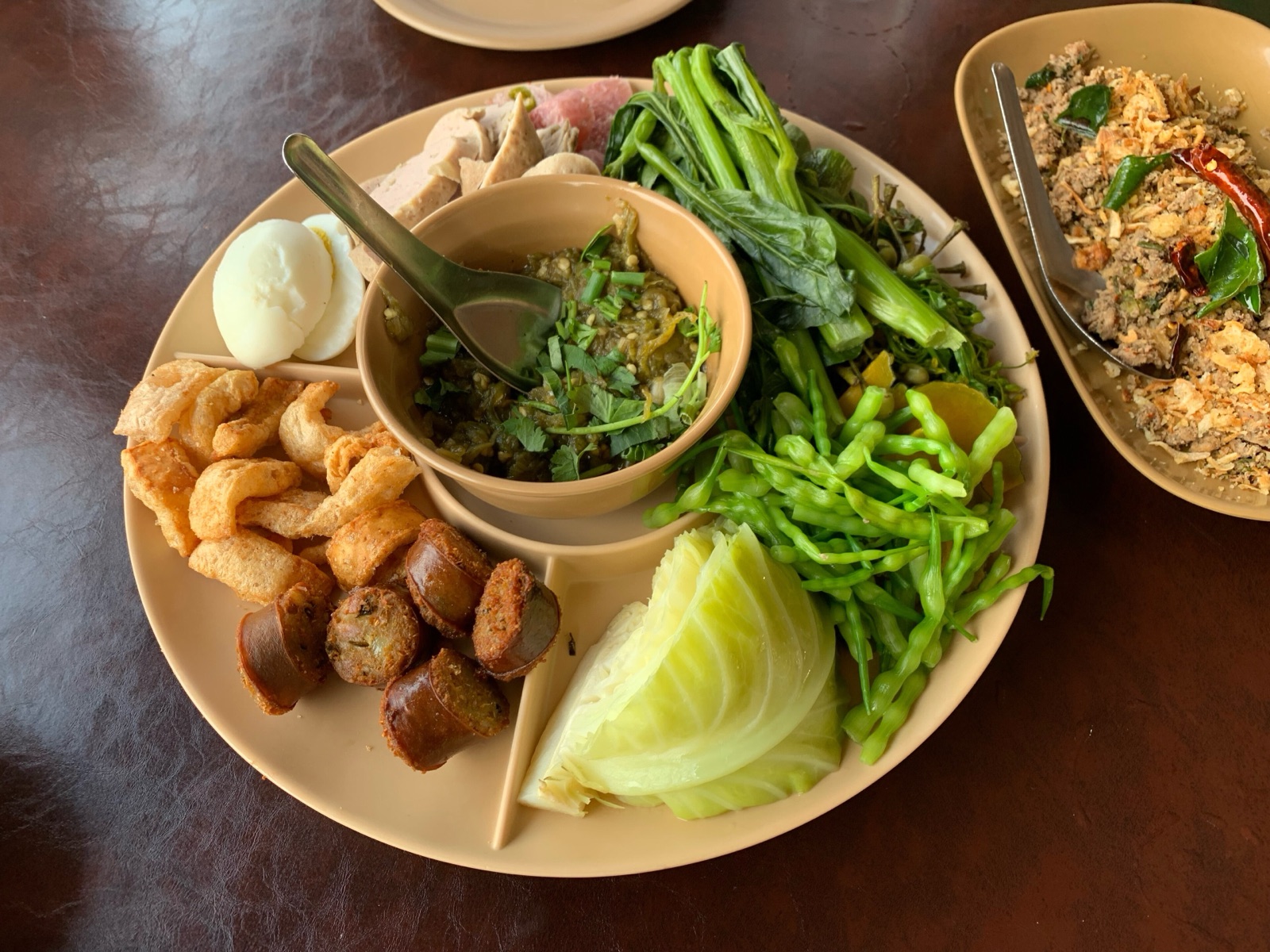
The most common northern greeting comes from this word too: kin khao laeo ka? (have you eaten yet?). How to greet and how to answer: How to Greet in Chiang Mai
The dictionary's examples show that northerners use kin for almost anything that goes into the mouth: kin nam is to drink water, kin mak is to chew betel, and kin ya is to take medicine. There is hardly any need for a separate word for "drink".
Kin ko, kin toe, kin hia: inviting someone to eat
| Phrase | Lanna script | Dictionary meaning |
|---|---|---|
| kin ko | กินฯกํอฯ | will you eat? do you want some? |
| kin toe | กินฯเทิอฯะ | go on, eat |
| kin hia | กินฯเหยฯ | eat! (telling someone to eat) |
| kin tuai | กินฯทวฯยฯ | to eat together (also kin tuai kan) |
| kin lun | กินฯลูร | to eat later, after the others |
Under kin ko (กินฯกํอฯ) the dictionary explains that ko after a verb turns it into a question, so kin ko means "will you eat?". To say "don't eat", northerners say ja pai kin: Ja Pai Means "Don't"
Kin jip kin jop, kin mom mom: how people eat
| Phrase | Lanna script | Dictionary meaning |
|---|---|---|
| kin jip kin jop | กินฯจิปฯกินฯจัอฯบฯฯ | to eat a little but often |
| kin tik tik | กินฯติๆกฯ | to keep on eating |
| kin mom mom | กินฯหมฯอฯมๆ | to eat often, to keep eating, never stop nibbling |
| kin siang | กินฯส้ยฯง | to eat everything up |
| kin di kin lam | กินฯดีกินฯลำ | to enjoy the food (it suits your taste, or you are very hungry) |
| kin khao lam | กินฯเขั้าลำ | to have a delicious meal |
| kin dai | กินฯได้ | to eat a lot, to be a big eater |
| kin dai (eat plain) | กินฯดายฯ | to eat the dishes on their own, without rice |
| kin khao bo dai | กินฯเขั้าบํดายฯ | to eat plain rice with nothing to go with it |
| kin ui | กินฯอุ | to drink milk, as a baby feeds from its mother |
Kin dai (กินฯได้, "can eat") is a small trap: a Central Thai speaker hears "edible", but the dictionary defines it as to eat a lot. The lam in kin di kin lam means "delicious". More on lam in the song lesson Kin Lam Kin Lam
These two are opposites, and both use dai in the sense "plain, nothing else" (a different word from dai "can"). Kin dai means eating the dishes with no rice; kin khao bo dai means eating rice with no dishes. The dictionary's example: kin khao bo dai, bo mi yang kap, plain rice, nothing to go with it.
Kin dong, kin mueang, kin hua: kin with no eating at all
This is the group that makes kin more than "eat". Translate them word by word and you are lost straight away.
| Phrase | Lanna script | Word by word | The dictionary says |
|---|---|---|---|
| kin dong | กินฯดอฯง | to eat pickles | to get married (also kin kiao kin dong) |
| kin kiao kin dong | กินฯก่ยฯวกินฯดอฯง | to get married | |
| kin jang | กินฯจ้างฯ | to work for hire, to work for pay | |
| kin kamhai | กินฯกำไร | to make a profit | |
| kin hua | กินฯห฿วฯ | to eat a fish or chicken head | to do brain-heavy work |
| kin aep | กินฯแอปฯ | to eat in secret | to let others do the work, to ride on other people's labour |
| kin haeng | กินฯแรงฯ | to take advantage of others at work | |
| kin mueang | กินฯเมิอฯง | to eat in town | to reign, to rule a city-state |
| kin hua wat | กินฯห฿วฯวัดฯ | to be the abbot of a temple | |
| kin jai | กินฯไจ | to feel hurt, to be deeply moved | |
| kin naeng | กินฯแหนฯง | to regret what you did, to feel doubtful | |
| kin kan | กินฯกันฯ | to eat together | to be at one, to blend well together |
| kin bom | กินฯบอฯม | easy, convenient | |
| kin fuet | กินฯฝืดฯ | to eat something hard to swallow | difficult; a hard time making a living |
| kin dip | กินฯดิบฯฯ | to eat raw food | to eat raw food, and also to succeed with ease |
| kin pi (the pipe) | กินฯปี่ | a so singer's voice that blends well with the pi pipe | |
| kin pi (the bird) | กินฯปีลฯ | to eat banana blossom | a sunbird |
Kin dong (กินฯดอฯง) sounds like eating pickles, but in the dictionary it means to get married. Kin mueang (กินฯเมิอฯง) means to reign, to rule a city-state, and kin hua wat (กินฯห฿วฯวัดฯ) means to take office as the abbot of a temple.
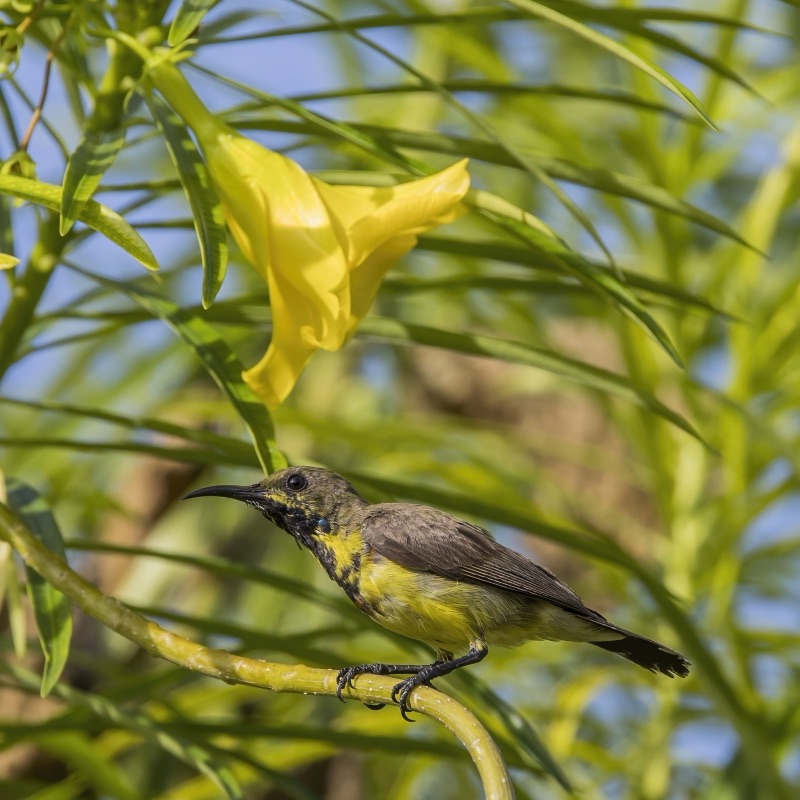
Kin pi (กินฯปี่) belongs to so singing: it describes a singer's voice that fits the pi pipe well. Kin pi (กินฯปีลฯ) in a slightly different tone is a bird: the sunbird.
Kin salak, kin tan, kin khantok: kin at merit-making and feasts
| Phrase | Lanna script | Dictionary meaning |
|---|---|---|
| kin salak | กินฯสๆลฯากฯ | the salak merit-making festival |
| kin kuai salak | กินฯกวฯยฯสๆลฯากฯ | to make salak merit (also kin khao salak, tan kuai salak, tan salak) |
| kin tan | กินฯทาฯนฯ | to make merit by giving |
| kin kin tan tan | กิๆนฯทาฯนฯๆ | to eat and give at the same time |
| kin wan tan muan | กินฯหวฯานฯทาฯนฯม่วฯร | (saying) to make merit happily |
| kin kon tan lun | กินฯก่อฯรทาฯนฯลูร | to eat food prepared as an offering before it is offered, which is considered a sin |
| kin khantok | กินฯขันฯโต฿กฯ | to eat a meal served on a khantok tray |
| kin o phaya | กินฯอ๊อฯระฯบยฯา | to eat honey kept in a cane tube (see o phaya) |
Kin salak (กินฯสๆลฯากฯ) has nothing to do with lottery tickets (salak in Central Thai). It is the salak merit-making festival, when villagers bring kuai salak offering baskets to the temple. Its other common name is tan kuai salak: Tan Kuai Salak

Kin o phaya (กินฯอ๊อฯระฯบยฯา) comes from the o phaya (อํอฯระฯบยฯา, "wisdom cane") rite. The dictionary describes it as a ritual believed to bring wisdom and quick wits: honey is sealed in a section of cane about 4 to 7 centimetres long and blessed with Buddhist chants. For feasts served on the khantok tray, read Khantoke
Kin sayings: what northerners teach about eating
The dictionary marks these as sayings. Some are old teachings that northerners call kam ba kao (old words).
| Saying | Lanna script | Dictionary meaning |
|---|---|---|
| kin khao lam nam long | กินฯเขั้าลำนาฯํ้ล฿งฯ | to live well and happily, with nothing to worry about |
| kin khao bo lam kin nam bo long | กินฯเขั้าบํลำ | to be troubled and worried |
| kin khao hai tan | กินฯเขั้าไหตันฯ | a hard-working, thrifty person, whose rice jar is always full |
| kin hom tom muan | กินฯหอฯมตอฯมม่วฯร | to eat and work together happily |
| kin suk kin dip | กินฯสุกกินฯดิปฯ | to face life's hardships and obstacles |
| kin din kin sai | กินฯดินฯกินฯซายฯ | to be very poor, with nothing to eat |
| kin yang pu phram | กินฯอยฯ่างฯปู่ระฯพาหมฯณ์ | to eat just enough (compared with the old Brahmin Chuchok, who ate far too much) |
| kin muean poen ja pai kin muean poen | กินฯเหิมฯอฯรเพิ่นฯจไพกินฯเหิมฯอฯรเพิ่นฯ | to live within your means; like the Thai saying "don't copy the elephant's dung" |
| kin muea jai yang | กินฯเมิ่อฯอไจยังฯ | (old words) enjoy life and spend while you are still healthy |
| kin im laeo ni | กินฯอิ่มฯแลฯวฯหีนฯ | (old words) to be ungrateful: to accept help and then leave |
| kin hua o | กินฯห฿วฯโอ้ | to pick only the best bits, like eating the chicken's head |
| kin lai tuai | กินฯลายฯถ้วฯยฯ | slow, dawdling |
| kin nai khwang han | กินฯไหนฯข้วฯางฯหั้นฯ | to drop your rubbish wherever you eat; careless |
| kin ngai jai uai | กินฯง่ายฯจ่ายฯอ่วฯยฯ | to spend beyond your means, not to save |
| kin ji kin jam | กินฯชิกินฯชำ | to eat or spend rather stingily |
| kin khao bo phuea nam | กินฯเขั้าบํเผิ่อฯอนาฯํ้ | to eat without moderation |
A pair worth remembering: kin khao lam nam long (กินฯเขั้าลำนาฯํ้ล฿งฯ), to live happily, and kin khao bo lam kin nam bo long (กินฯเขั้าบํลำ), to be troubled and worried. Both sayings use rice that tastes good or bad, and water that goes down or won't, as a picture of happiness and sorrow.
Word by word it sounds like "eating until you see the pattern on the bowl", but the dictionary defines it as slow and dawdling. It is a criticism, so know what it means before you use it with elders.
Quiz: which kin is it?
Answers: 6 questions
- A friend says "next month I'll kin dong". What does that mean? I'm getting married
- What do northerners call lunch? kin khao ton or kin ton
- What kind of person "kin dai"? a big eater
- What is "kin salak"? the salak merit-making festival
- What does "kin aep" mean? letting others do the work, taking advantage
- Someone says "lately I kin khao bo lam kin nam bo long". What do they mean? they are troubled and worried
Play: guess the kin phrase
Guess what northerners mean by these phrases. One option is the word-by-word meaning; another is the real meaning from the dictionary.
Summary
- Kin means "to eat", and in the northern language it is a polite word, used for water, betel and medicine too
- The three northern meals are kin khao ngai, kin khao ton and kin laeng
- Invite people with kin ko and kin toe; kin dai means a big eater
- Many phrases involve no eating at all: kin dong (to marry), kin mueang (to reign), kin hua wat (to be abbot), kin aep (to let others do the work)
- Kin salak is the salak merit festival, and sayings like kin khao lam nam long describe happiness in terms of food
Look up more kin phrases in the Moradok Lanna dictionary, learn northern dish names from the songs Khong Kin Khon Mueang and Kin Lam Kin Lam, and more verbs in Everyday Kham Mueang Verbs.
Sources
- Moradok Lanna dictionary (Thai): กิ๋น · กิ๋นเข้างาย · กิ๋นเข้าตอน · กิ๋นแลง · กิ๋นดอง · กิ๋นเมือง · กิ๋นสลาก · อ้อผะหยา · กิ๋นเข้าลำน้ำลง
Practise the words from this article
Flip through 40 flashcards of the Lanna words used in this article.


