
Photo: Francesca Cesa Bianchi, Milano / Wikimedia Commons (CC BY-SA 3.0 it)
Happy Birthday in Kham Mueang: Northern Birthday Wishes
Happy Birthday to You may be the song people sing most often anywhere in the world. It has only four lines and everyone can sing it from childhood. This article sings it in Kham Mueang (Northern Thai) with words from the dictionary, and then turns to something more important than the song itself: how Northerners give their blessings.
Kham Mueang calls giving a blessing pan pon ปันฯพอฯร or hue pon หื้พอฯร, "to give a blessing", where pon พอฯร is a blessing. The dictionary explains it as words that show goodwill, wishing someone only what is auspicious.
The song also has a copyright story that few people know. A company collected fees for its use for decades, until a US court ruled in 2015, and the song entered the public domain in 2016. Unlike a song still under copyright, such as My Way, we can therefore render the whole song.
Where Happy Birthday comes from
The tune began in a kindergarten. The sisters Mildred J. Hill and Patty S. Hill were kindergarten and music teachers in Louisville, Kentucky, in the United States. According to a Kentucky Historical Society marker (no. 2298), in 1893 they published "Good Morning to All", a song for teacher and children to greet each other in the morning. NBC News reports that the rights to the song were sold to the Clayton F. Summy company that same year.
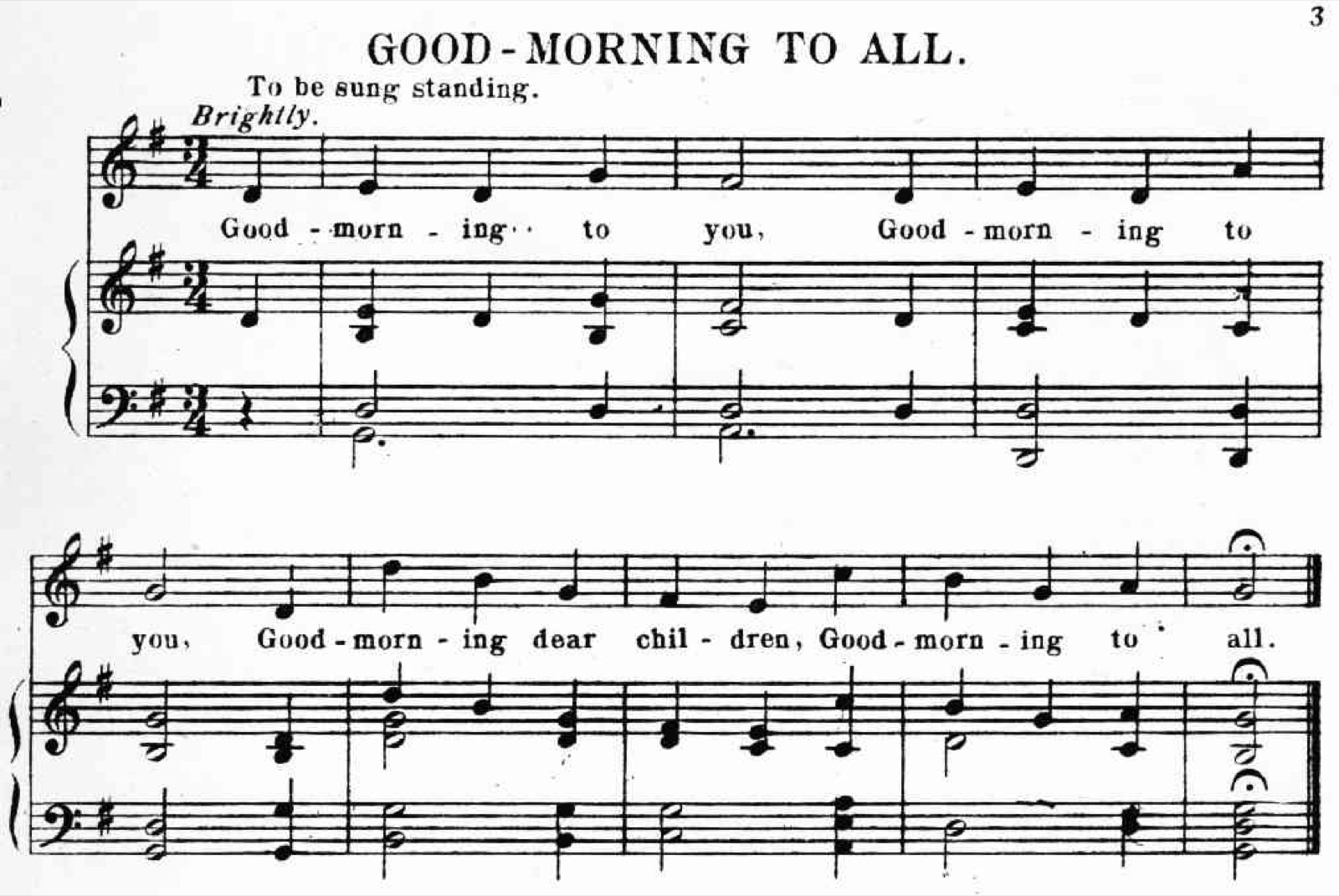
The birthday words came later. The Kentucky marker tells that at a birthday party in a house on Kenwood Hill, Patty suggested changing the words to "Happy Birthday to You". But there is no firm evidence for this: NBC News reports that the court found it unclear whether Patty wrote the birthday words. Wikipedia records that the words "Happy birthday to you" appear in print as early as 1901, in a children's poem that says nothing about singing, and that they were printed with this tune in books around 1911–1912. So the sources give different "first" years depending on what is counted. Wikipedia also notes that some scholars think the tune may echo earlier songs, while others reply that the tunes are not the same.
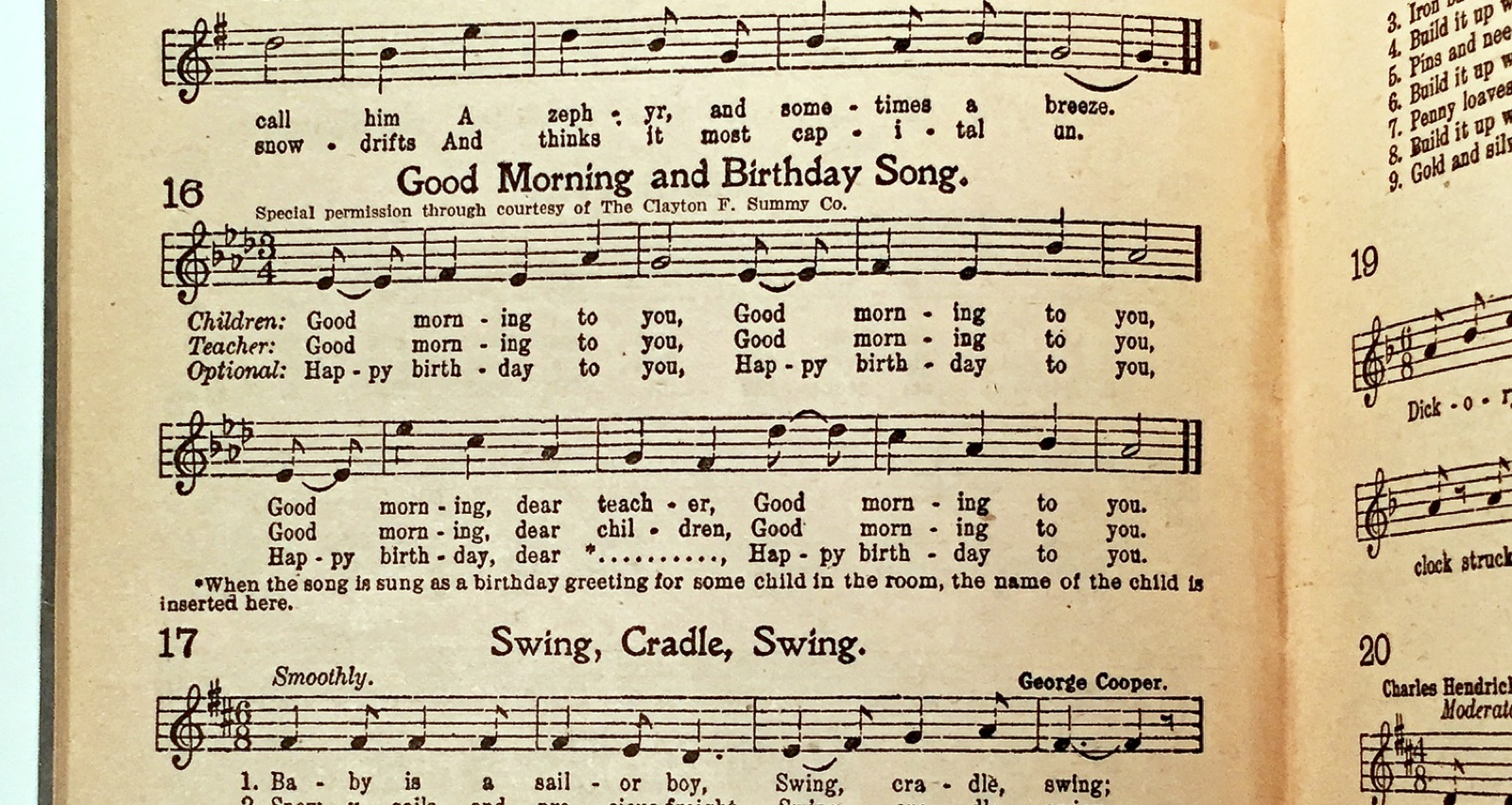
The copyright case that made the song everyone's
Wikipedia records that in 1935 the Summy company registered a copyright on the song. The rights later passed to Warner/Chappell, which charged fees when the song was used commercially (the company stated, as AP reported, that it did not charge ordinary people who sang it). In 2013 a documentary maker working on a film about the song and a group of musicians (the case Rupa Marya v. Warner/Chappell) sued, arguing that the company did not really own it.
On 22 September 2015, Judge George H. King of the US federal court ruled that the copyright registered in 1935 covered only piano arrangements, not the words (as NBC News reported). The company then agreed to refund 14 million US dollars in fees, and in late June 2016 the court approved the settlement, putting the song in the public domain in the United States. AP reported the approval on 27 June, while Wikipedia gives the final judgment as 30 June. In the European Union, Wikipedia says, the copyright expired at the start of 2017.
Singing it in Kham Mueang: muan wan koet ne
The song is a single sentence sung four times, with the birthday person's name in the third line. The best Kham Mueang word for "happy" is muan ม่วฯร, which the dictionary gives as pleased, enjoying, melodious, fun. "Birthday" is wan วันฯ (day) plus koet เกิดฯ (to be born). ("Wan koet" is not a single entry in the dictionary, but it appears in compounds such as phra wan koet.)
Original (the words as commonly sung):
Happy birthday to you,
Happy birthday to you,
Happy birthday, dear (name),
Happy birthday to you.Kham Mueang rendering by MoradokLanna:
วันเกิดตั๋ว ขอหื้อม่วนเน้อ
วันเกิดตั๋ว ขอหื้อม่วนเน้อ
วันเกิด (ชื่อ) ตี้ฮัก ขอหื้อม่วนเน้อ
วันเกิดตั๋ว ขอหื้อม่วนเน้อ
("On your birthday, may you be happy! / On your birthday, may you be happy! / On the birthday of dear (name), may you be happy! / On your birthday, may you be happy!")
Kho ขํอฯ is to ask for something, and hue หื้ is to give, so "kho hue…" opens a wish just like central Thai "kho hai…" ("may…"). At the end we add ne เนิอฯ, the Northern softening particle that matches Thai "na", which sounds gentle and friendly.
Tua ต฿วฯ is "you": the dictionary says it is used between close friends or sweethearts, so it suits singing to a friend. For "dear" we use ti hak ที่รักฯ, a loved one, beloved. When singing to an older family member, don't use tua; use a kinship word instead, such as ui อุ้ (grandparent): "wan koet ui, kho hue muan ne".
Birthday blessings the Northern way
In Northern custom, elders give blessings to the young. You can see it in the dam hua tradition, where children and grandchildren ask their elders' forgiveness and blessing, and the dictionary itself notes that some blessing words are "usually said to juniors". If an elder wants to wish a lan หลฯานฯ (grandchild) a happy birthday, here are words to choose from, all in the dictionary.
| Blessing | Dictionary meaning | How it is used |
|---|---|---|
| yu di mi suk อยฯู่ดีมีสุข์ | living in peace and happiness | the dictionary's example is "hue yu di mi suk ne", usually said to juniors |
| yu di mi hang อยฯู่ดีมีร่างฯ | in good health and happy | a wish for good health |
| yu di kin di อยฯู่ดีกินฯดี | living comfortably, without hardship | a wish for a life free of want |
| hom yen pen suk ร่฿มฯเอยฯันฯเปนฯสุข | peaceful and happy | a wish for a calm, happy life |
| yuen ยืนฯ | lasting, enduring, as in a-yu yuen, long life | "kho hue a-yu yuen" |
| mang ka la มํฯคลฯฯะ | auspiciousness, what brings prosperity | in formal blessings |
Try putting them into a short birthday wish: "wan koet pi ni, kho hue yu di mi suk, yu di mi hang, a-yu yuen ne" ("this birthday, may you live in peace and happiness, in good health, and live long"). Every word comes from the dictionary except a-yu (age), which is not a separate entry, so we use the central Thai word.
Candles, sweets and counting your age in Kham Mueang
A modern birthday party has a cake and candles. Kham Mueang calls a candle tian ทยฯร, following the sound rule th → t. To light it is tam ตามฯ: the dictionary's own example is "tam tian", to light a candle. To blow it out is pao เปั่า, as in central Thai. A sweet or cake is khao nom เขั้าห฿นฯม (the word "cake" is not in the dictionary), and to sing is hong phleng ร้อฯงเพลฯฯง.
The cake in this article's picture has the number 23 on it. Northerners say the "two" in the tens place as sao ซาวฯ, so 23 pi ปี (years) is "sao sam pi", and 21 is "sao et", as the dictionary shows. A hundred is hoi ร้อฯยฯ, and someone of great age is called thao เถั้า (old). Type your age, or the age of the person you are wishing well, and see how a Northerner would say it.
A Lanna birthday: cha ta, suep chata and the birthday Buddha
Long before cakes and Happy Birthday, the people of Lanna already marked birthdays, in their own way.
Cha ta ชตา first means, in the dictionary, a birth record: the time, day, month and year of birth, usually incised on a palm leaf with a stylus and rolled up for keeping. It also means the horoscope an astrologer works out from the time of birth. So a Northerner's birthday used to be "written down" on a palm leaf, not on a card.
Suep cha ta สืปฯชตา is a rite that the dictionary describes as performed for good fortune, to lengthen life, and to bring courage and hope. For suep cha ta khon สืปฯชตาฅ฿นฯ, the life-extension rite for a person, the dictionary says the people of Lanna like to hold it on important occasions, such as a birthday, a promotion, or moving into a new house. Read more in Suep Chata.
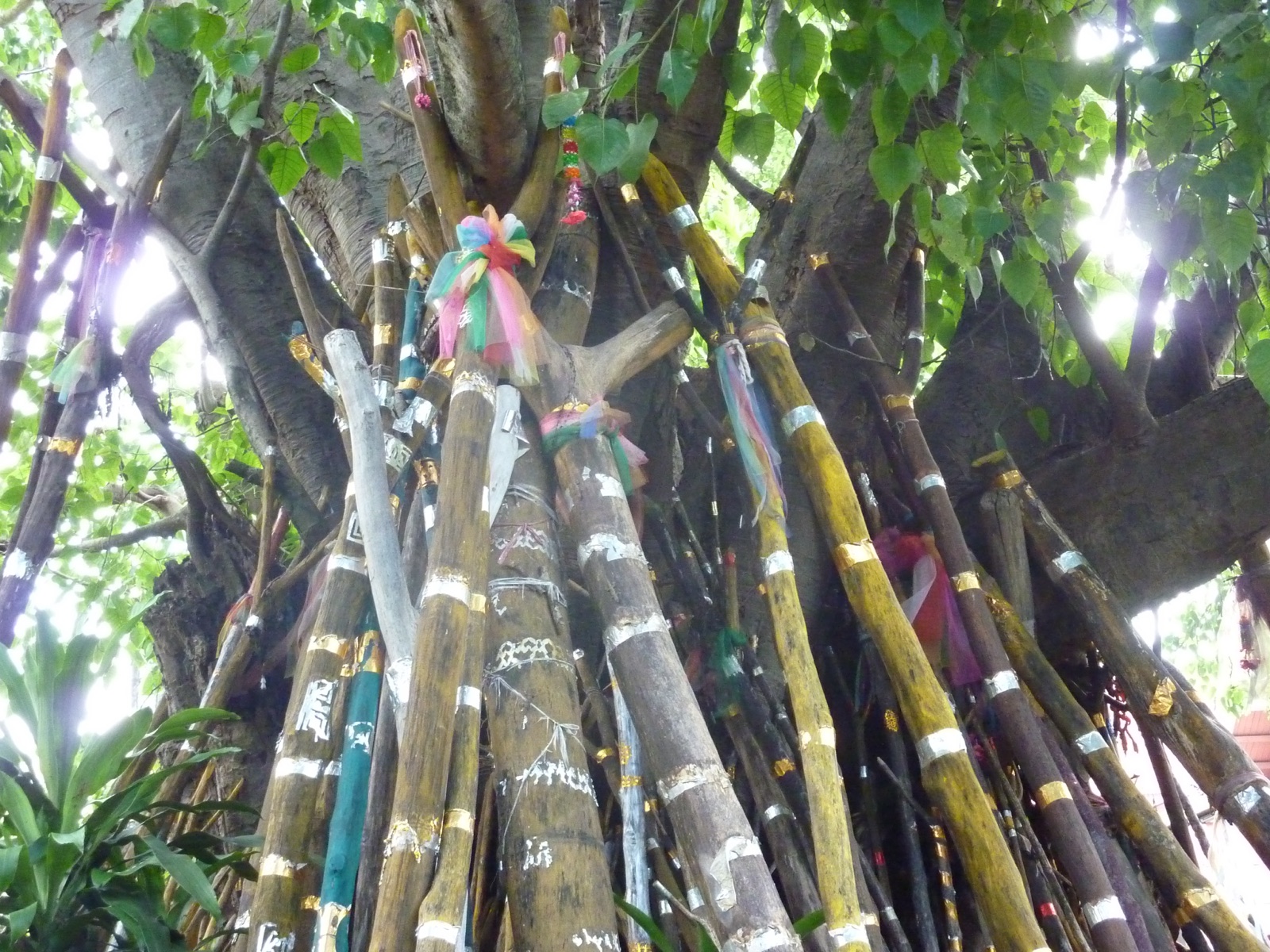
The dictionary has two more words tied to birthdays: phra wan koet ระฯพวันฯเกิดฯ, the Buddha image in the posture for each day of the week, which people born on that day take as their own; and tham cha ta wan koet ธัม์มฯธัม์มฯชตาวันฯเกิดฯ, the Dhamma text that a person born on each day is meant to sponsor or help copy for Buddhism. Each birth year also has its own relic stupa in Lanna belief. Find your birth year here, then read more in Lanna birth-year relic stupas.
All of this is about khwan ขัวฯร (the vital essence) and the mang ka la (auspiciousness) of a life, which is quite different from Happy Birthday, a cheerful party song. Yet both share the same heart: telling the people we love that we are glad they were born and are still with us.
Summary
- The tune of Happy Birthday comes from "Good Morning to All" by the Hill sisters (1893); who wrote the birthday words is uncertain.
- A US court ruled in 2015 that the 1935 copyright did not cover the words, and the song has been in the US public domain since 2016.
- To give a blessing is pan pon or hue pon, and the favourite blessing is yu di mi suk, along with yu di mi hang and yu di kin di.
- To light a candle is tam tian, and 23 years is sao sam pi.
- Lanna has its own birthday rite, suep cha ta, and the cha ta, a record of the time of birth on a palm leaf.
Look up the words of this article in the MoradokLanna dictionary. More in the same series: My Way · Suep Chata, or see the whole series at Kham Mueang through songs and literature (in Thai).
Copyright and courtesy
| Item | Details |
|---|---|
| Song | Happy Birthday to You |
| Words | Author uncertain (English); the birthday words appear in print from 1901; the Kentucky historical marker says Patty S. Hill suggested the change of words |
| Music | "Good Morning to All" by Mildred J. Hill and Patty S. Hill (1893) |
| Best-known recording | Sung at birthdays all over the world; no single recording is the model |
| Status | Public domain: in the US by the court judgment and the settlement approved in 2016, and in the European Union since 2017 (according to Wikipedia) |
This article was made by Moradok Lanna, a non-profit website, for learning the Lanna language and culture. The original words are in the public domain, so we render every verse in Kham Mueang. Modern arrangements and recordings remain under copyright; we do not use their particular wording. This article has no embedded video.
With thanks and respect to the songwriters, performers and rights holders. If a rights holder would like anything changed or removed, please write to moradoklanna@gmail.com and we will act promptly.
References
- MoradokLanna Dictionary (dict2): pan pon, pon, hue pon, wan, koet, muan, kho, hue, ne, tua, ti hak, ui, yin di, lan, yu di mi suk, yu di mi hang, yu di kin di, hom yen pen suk, yuen, mang ka la, tian, tam, pao, khao nom, hong phleng, sao, pi, hoi, thao, cha ta, suep cha ta, suep cha ta khon, phra wan koet, tham cha ta wan koet, khwan.
- Kentucky Historical Society. Marker 2298: The Little Loomhouse
- NBC News. (2015). Music Company Does Not Own 'Happy Birthday' Song Copyright: Judge
- Associated Press, via FOX 7 Austin. (2016). Judge approves settlement in 'Happy Birthday' copyright case
- Wikipedia. Happy Birthday to You (used as a lead and checked against other sources).
- Moradok Lanna articles My Way, Suep Chata, Lanna birth-year relic stupas and Dam Hua.
Practise the words from this article
Flip through 35 flashcards of the Lanna words used in this article.


