
Photo: Nickicooo / Wikimedia Commons (CC BY 4.0)
Kham Mueang Sound Shifts: Why Khu Means Teacher
Kham Mueang sound shifts explain why a northerner reads the sentence written "เรารักโรงเรียน" (rao rak rongrian, "we love our school") aloud as hao hak hong hian. The Moradok Lanna dictionary says so in its entry for the letter ra: in native Lanna words, a written r is pronounced h. There are more pairs like this: ch becomes j, th becomes t, ph becomes p and kh becomes k. A few of them turn the word into a completely different Central Thai word.
The classic joke is khu (ระฯคู). A Central Thai listener hears "ditch" (khu), but a northerner means khru, "teacher": the r in the cluster has dropped out. This lesson gathers the five rules with more than 50 examples from the Moradok Lanna dictionary. Once you know them, you can decode Kham Mueang words you have never heard before.
In Lanna (Tham) script the words for love, elephant, way and father are still written with the letters ร ช ท พ. The dictionary notes under each letter that ท is pronounced ta, พ is pronounced pa, ค is pronounced ka, and ร in native Lanna words is pronounced ha. Transcribe the spoken words into Thai script and you get ฮัก hak, จ๊าง jang, ตาง tang, ป้อ po.
Why Central Thai ears get confused
Kham Mueang and Central Thai share a great many words, but some sounds do not match. Compare the readings in the dictionary with the Thai forms printed beside them and you find several hundred words that follow each rule, so this is no coincidence.
| Rule | Central Thai | Kham Mueang | Examples |
|---|---|---|---|
| 1 | r | h | rak → hak (love), ruean → huean (house) |
| 2 | ch | j | chang → jang (elephant), chue → jue (name) |
| 3 | th | t | thang → tang (way), thi → ti (place) |
| 4 | ph | p | pho → po (father), phi → pi (elder sister) |
| 5 | kh | k | khit → kuet (think), kham → kam (word) |
The trouble starts when a shifted Kham Mueang word happens to match another Central Thai word. Ta that means "to paint on", or pa that means "to take someone along": the listener hears every syllable clearly and still understands something else. These are Kham Mueang false friends, and we point them out under each rule.
Rule 1: r becomes h
The rule you hear most often. Native Kham Mueang words have no rolled r, so r becomes h every time.
| Kham Mueang | Lanna script | Central Thai |
|---|---|---|
| hak | รักฯ | rak, to love |
| huean | เริอฯร | ruean, house |
| hon | ร้อฯร | ron, hot |
| hu (high tone) | รู้ | ru, to know |
| hoi | ร้อฯยฯ | roi, a hundred |
| huea | เริอฯอ | ruea, boat |
| hao | เรัา | rao, we |
| hom | ร่฿มฯ | rom, shade, umbrella |
Words to listen for carefully
- hu (รู้) with a high tone means "to know", but hu (รู) with a level tone means "hole" (ru). Only the tone is different.
- hot (รอฯด) is matched in the dictionary with Central Thai rot (to survive), but it is used to mean to arrive, to reach a goal. Pai hot laeo means "we've arrived", not "we survived".
- hai (ร้ายฯ) is Central Thai rai, "wicked"; the dictionary defines it as naughty, bad, not good. When an elder calls a child hai tae, the child is simply very naughty.
The dictionary records that ร in proper names, numbers and ranks, and words borrowed from other languages is usually read as l, not h: Mae Rim District is read Mae Lim, the rank and name roi tri phrom is read loi ti phom, and America is read Amelika. A few words are read with la: the temple bell rakhang becomes lakang (ระคังฯ).
Rule 2: ch becomes j
Words that Central Thai says with ch are usually pronounced with j by northerners. Province names change too: Chiang Mai becomes Jiang Mai and Chiang Rai becomes Jiang Hai (ชยฯงรายฯ), which uses rules 1 and 2 in a single word.
| Kham Mueang | Lanna script | Central Thai |
|---|---|---|
| jang | ช้างฯ | chang, elephant |
| jue | ชื่ | chue, name |
| jao (high tone) | เชั้า | chao, morning |
| jai | ไช้ | chai, to use |
| jao (level tone) | ชาวฯ | chao, people of a place |
| ja | ช้า | cha, slow |
| jin | ชิ้นฯ | chin, "a piece"; in Kham Mueang it means meat |
False friends from ch → j
| Kham Mueang | Lanna script | A Central Thai speaker hears | It actually means |
|---|---|---|---|
| juan | ชวฯร | almost | to invite (Central chuan) |
| jaeng | แช่งฯ | to inform | to curse (Central chaeng) |
| jao | เชั่า | lord, master | to rent (Central chao) |
| jang | ช่างฯ | to hire | a craftsman, someone skilled (Central chang) |
Jaeng, jao and jang also keep their Central Thai senses in the dictionary, as separate words that happen to be spelled the same, so you have to follow the conversation. A sign saying huean hue jao means "house for rent" (our own example), not "house for the master".
Some words with ch have both a j and an s form. For "skilled" (Central chamnan) the dictionary lists ja-nan (ชนาฯ) and notes that sa-nan is also used.
Rule 3: th becomes t
| Kham Mueang | Lanna script | Central Thai |
|---|---|---|
| tang | ทาฯงฯ | thang, way, path |
| ti | ที่ | thi, place |
| tong | ท้อฯง | thong, belly |
| tao | ท้าฯวฯ | thao, lord, ruler |
| tiao | ทยฯว | thiao; used to mean to walk |
False friends from th → t
| Kham Mueang | Lanna script | A Central Thai speaker hears | It actually means |
|---|---|---|---|
| ta | ทาฯ | eye | to paint on, apply (Central tha): ta si = to paint |
| taeng | แทงฯ | melon, cucumber | to stab (Central thaeng) |
| tong | ทอฯง | banana leaf | gold, metal (Central thong): tong daeng = copper |
| tam | ทำฯ | to pound | to put down, place: tam wai han = put it over there |
For words with the cluster thr, the dictionary says they are read tha-la: song (to hold, to bear) becomes tha-long (ระฯท฿งฯ).
Rule 4: ph becomes p
| Kham Mueang | Lanna script | Central Thai |
|---|---|---|
| po | พํอฯ | pho, father |
| pi | พี่ | phi, elder sister |
| puen | พื้นฯ | phuen, floor, ground |
| put | พุธ์ | phut, Wednesday |
| po (level tone) | พํอฯ | pho, enough |
False friends from ph → p
| Kham Mueang | Lanna script | A Central Thai speaker hears | It actually means |
|---|---|---|---|
| pa | พา | to throw | to take someone along (Central pha) |
| pan | พันฯ | to share | a thousand, and to wind round (Central phan) |
| pu | พลฯ | crab | betel leaf (Central phlu) |
The most fun pair is pu and pu (ปู) with a rising tone: a northerner calls the betel leaf pu and the rice-field crab pu on a rising tone. In the same way fish (pla) becomes pa (ปลฯา). To say "to give, to share", Kham Mueang uses pan (ปันฯ) on a rising tone, which differs from pan "a thousand" only in tone.
The dictionary also notes that ph with an r cluster keeps its ph sound: phra (monk, holy) is read pha, not pa.
Rule 5: kh becomes k
| Kham Mueang | Lanna script | Central Thai |
|---|---|---|
| kuet | คึดฯ | khit, to think |
| kam | คําฯ | kham, word; also "time, occurrence" |
| kang | คาฯงฯ | khang, chin |
| kam (high tone) | คำฯ | kham, to prop up |
| kang (falling tone) | ค่าฯงฯ | khang, langur |
So a northerner's kang with a falling tone is an animal, the langur, not a fishbone, and kang with a level tone is the chin, not "to spread out".
Khon (ฅ฿นฯ), "person", and khai (ไฅ่), "to want, to wish", keep their kh sound; the dictionary gives their Thai form with the old letter ฅ. Khu, "teacher", also keeps kh, because the dictionary says ค with an r cluster is pronounced kha. And some words go from kh to the high-class kh instead: khua (to dry-fry) becomes khua (ขั้฿วฯ) with a falling tone, as in khua khae.
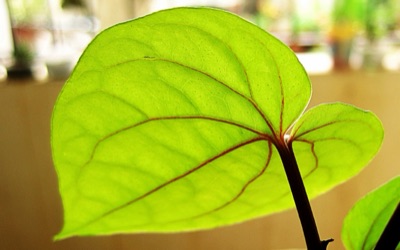
Photo: Kumaravel Thangaraj / Wikimedia Commons (CC BY 2.0)
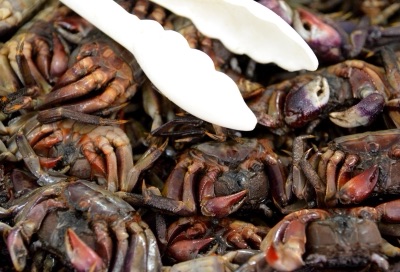
Photo: Takeaway / Wikimedia Commons (CC BY-SA 3.0)
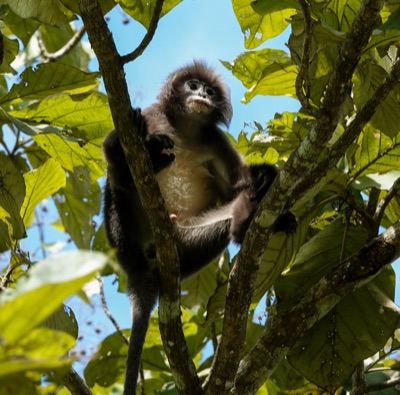
Photo: Rejoice Gassah / Wikimedia Commons (CC BY 4.0)

Photo: กสิณธร ราชโอรส / Wikimedia Commons (CC BY-SA 4.0)
A tone tip: mai ek becomes mai tho
When you look at Kham Mueang words written in Thai script in the dictionary, the tone marks change in a regular way too. That is because ช ท พ ค are low-class letters in Thai script, while จ ต ป ก are mid-class letters.
| Central Thai (low class) | Kham Mueang (mid class) | Tone mark |
|---|---|---|
| พ่อ, พี่, ที่, ชื่อ, ค่าง | ป้อ, ปี้, ตี้, จื้อ, ก้าง | mai ek becomes mai tho |
| ช้าง, ช้า, เช้า, ใช้, ท้อง | จ๊าง, จ๊า, เจ๊า, ใจ๊, ต๊อง | mai tho becomes mai tri |
| พา, ทาง, ชวน | ปา, ตาง, จวน | no mark stays no mark |
By the ordinary Thai tone rules, พ่อ and ป้อ are both read with a falling tone, and ช้าง and จ๊าง are both read with a high tone. Writing them this way lets a Thai-script reader land close to the original sound. The r → h rule needs no change of tone mark, because ร and ฮ are both low-class letters: ร้อน simply becomes ฮ้อน.
The tones of Kham Mueang in each area do not match Central Thai one for one. This table helps you read the readings in the dictionary correctly, but hearing northerners speak is the best way to get the tones right.
Try decoding Kham Mueang
Use the five rules to guess what a northerner says for each Central Thai word below, then open the answers, which are all dictionary headwords.
| Central Thai | Rule |
|---|---|
| ruea (boat) | r → h |
| chue (name) | ch → j |
| thong (belly) | th → t |
| phi (elder sister) | ph → p |
| khit (to think) | kh → k |
| Chiang Rai | ch → j and r → h |
| khru (teacher) | the exception |
Answers
ruea → huea · chue → jue · thong → tong · phi → pi · khit → kuet · Chiang Rai → Jiang Hai · khru → khu (the r drops, but kh stays kh)
Play: try the sound shifts
Type a Central Thai word to see which rules apply, or play the guessing game built from real dictionary pairs. The conversion is a rule-of-thumb guess, so always check the real word in the dictionary.
Summary
- Kham Mueang has sound rules that apply to hundreds of words: r → h, ch → j, th → t, ph → p, kh → k.
- Lanna script still writes ร ช ท พ ค; they are simply read differently, not misspelled.
- Many Kham Mueang false friends come from these rules: khu = teacher, ta = to paint on, pa = to take along, pu = betel leaf, juan = to invite, kang = langur.
- There are exceptions: r in names and loanwords is read l; khon and khai keep kh; clusters such as phra and khru keep ph and kh.
- Written in Thai script, mai ek usually becomes mai tho and mai tho becomes mai tri.
Look up the words you decode yourself in the Moradok Lanna dictionary. For more false friends, read Kham Mueang False Friends: Food and Kham Mueang False Friends: Feelings and Health. If you want to start talking with northerners, try Kham Mueang Words Locals Love, and to read the script that writes r but says h, start with Learn Lanna Script.
Sources
Practise the words from this article
Flip through 40 flashcards of the Lanna words used in this article.


