
Photo: Bienvenue en Thaïlande / Wikimedia Commons (CC BY-SA 4.0)
Lampang: Khelang Nakhon, City of Horse Carts
Lampang (lampang, ลำพางฯ) is an old city that the dictionary records as founded in 1223 BE (680 CE), together with Hariphunchai. Its first name was Khelang Nakhon. All of Thailand knows Lampang as the city of horse carts, but it also has rooster bowls, elephants, Wat Phra That Lampang Luang, and a drum with a name of its own.
This post walks through Lampang one topic at a time with Kham Mueang words from the Moradok Lanna dictionary: the city's name, its motto, and the words Lampang people say differently from Chiang Mai.
Where does Lampang come from? From Khelang Nakhon to Lampang province
The dictionary says the city was built together with Hariphunchai (Lamphun) and named Nakhon Khelang, later changed to Nakhon Lampang. For Hariphunchai and Queen Chamadevi, read Queen Chamadevi.
In the age of the northern rulers, Lampang was one of the major cities headed by a chao luang (chao luang, เจั้าหลฯวฯง), a ruling prince. The dictionary lists the principal cities with a chao luang as Chiang Mai, Lamphun, Lampang, Phrae and Nan, and it names Chao Luang Bunwat Wongmanit as the last ruler of Khelang Nakhon.
The dictionary records that Lampang became a province under King Rama V, as part of Monthon Phayap, and that when the monthon system was abolished nationwide it became "Lampang province" as we know it today.
Lampang's horse carts: it began when the train arrived
A rot ma (rot ma, ร฿ถฯม้า) is a horse-drawn cart. The dictionary tells us the horse cart became Lampang's symbol from 1915 (2458 BE), when the railway reached the city: carts carried passengers from the station into town.
Horse carts still run in the city today, but mostly to take visitors around. Riding in one is khi rot ma (khi rot ma, ขี่ร฿ถฯม้า) in Kham Mueang.
Tuai ka kai: Lampang's rooster bowl
Northerners call a bowl a tuai (tuai, ถ้วฯยฯ), so the famous rooster bowl is a tuai ka kai (tuai ka kai, ถ้วฯยฯกาไก่) in Kham Mueang. The dictionary explains it as a bowl decorated on the side with a chicken, usually a crowing rooster, made mostly in Lampang province.
According to the Michelin Guide Thailand, the boom of Lampang's rooster bowls began around 1955 (2498 BE), after a Chinese entrepreneur found good kaolin clay at Ban Pang Kha in Chae Hom district and set up a factory to make the bowls. The story is told at the Dhanabadee Ceramic Museum in Lampang.
Lampang's motto: the five "lue"
The dictionary records Lampang's provincial motto as:
"Coal renowned, horse carts famous, pottery known, the beautiful relic stupa far-famed, elephant training world-famous" (ถ่านหินลือชา รถม้าลือลั่น เครื่องปั้นลือนาม งามพระธาตุลือไกล ฝึกช้างใช้ลือโลก)
Every line contains the word lue ("famed"), and each one opens a different side of Lampang.
| Line | Refers to | Related Kham Mueang word |
|---|---|---|
| Coal renowned | the Mae Moh coal mine and power plant | hong fai fa โร฿งฯไฟฟ้า |
| Horse carts famous | the carts from the railway station | rot ma |
| Pottery known | ceramics and the rooster bowl | tuai ka kai |
| Relic stupa far-famed | Wat Phra That Lampang Luang | that ธาฯตฯ |
| Elephant training world-famous | the Thai Elephant Conservation Center | jang ช้างฯ |
Hong fai fa (hong fai fa) is a power plant: central Thai r becomes h in Kham Mueang (rong → hong). The dictionary's own example is "the Mae Moh power plant, Lampang province". This plant of the Electricity Generating Authority of Thailand runs on lignite coal.
The Kham Mueang word for elephant is jang (jang): central Thai ch becomes j. In Hang Chat district stands the Thai Elephant Conservation Center (the National Elephant Institute under royal patronage), overseen by the Forest Industry Organization, which works to conserve and care for Thai elephants.
Lampang's provincial tree is the Indian elm, which northerners call kha jao (kha jao, ขะชาวฯ).
Wat Phra That Lampang Luang: the birth-year relic for the year of the ox
In Kham Mueang a chedi is a that (that). Wat Phra That Lampang Luang in Ko Kha district is one of the that pi koet (that pi koet, ธาฯตฯปีเกิดฯ), the birth-year relic stupas. The dictionary lists Phra That Lampang Luang as the stupa for the year of the ox, so people born in an ox year like to pay respect here. All twelve are in Birth-Year Relic Stupas.
The temple also has a Buddha image called Lan Tong (lan tong, ล้านฯทอฯง). The dictionary notes that several Lanna images bear this name, one of them at Wat Phra That Lampang Luang.
The temple is a place to study Lampang craftsmanship. A 2022 study by the Lampang Sangha College of Mahachulalongkornrajavidyalaya University used Wat Phra That Lampang Luang to examine "Buddhist architecture of the Lampang school of craftsmen" and divided the work into four periods: Lanna's golden age, Burmese rule, Lampang as a tributary state of Siam, and the monthon era to the present.
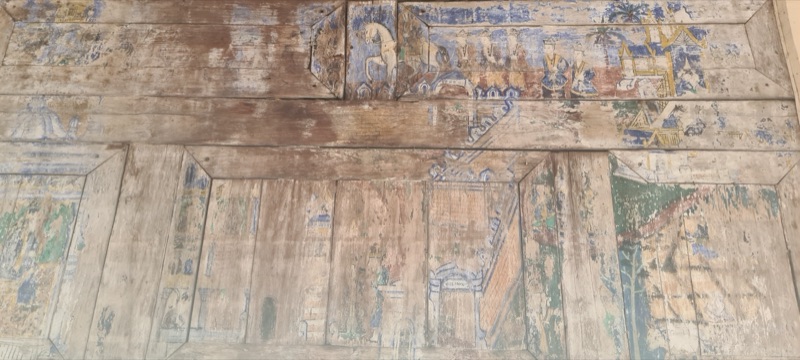
Photo: Bienvenue en Thaïlande / Wikimedia Commons (CC BY-SA 4.0)
The sounds of Lampang: the tok seng drum, so singing and local words
The long single-headed drum, about 1.5–2 metres, that Chiang Mai calls kong aeo (kong aeo, กลฯอฯงแอวฯ) has a different name in each city, the dictionary says: Lamphun calls it kong poeng mong, Phrae and Nan kong uet sueng, and Lampang kong tok seng or simply tok seng (tok seng, ต฿กฯเส้งฯ), which the dictionary records as a kind of drum of Lampang.
The dictionary records several more Lampang words:
| Meaning | Chiang Mai (general) | Lampang |
|---|---|---|
| long single-headed drum | kong aeo | kong tok seng |
| small two-headed drum with a shoulder strap | kong jum กลฯอฯงชุม | kong khum (Lampang, Phrae, Nan) |
| (of a bee or scorpion) to sting | pi ปี้ or ji | diat ดยฯด (Lampang, Phrae, Nan) |
"Stung by a bee" is phoeng pi in Chiang Mai, but in Lampang it is usually phoeng diat. When you hear it, the speaker may well come from Lampang, Phrae or Nan.
For so singing, the dictionary places Lampang in western Lanna with Chiang Mai, Lamphun and Chiang Rai, where the peng so (peng so, เพลฯงซํอฯ, so lyrics) are sung with pipes, together called "So Chiang Mai". But fon ngaen (fon ngaen, ฟ้อฯรแง้นฯ), the folk dance in which the dancer slowly bends backwards until the head touches the floor, is popular in Nan, Phrae, Lampang, Phayao and Chiang Rai, according to the dictionary. More on so in Khap So and Choi.
Lampang was also home to the great poet Phraya Phromwohan. The dictionary says he was a muen nang sue (muen nang sue, หื่มฯรหันฯงสื), the court scribe of Chao Luang Woranyan Rangsi of Nakhon Lampang, and that he wrote the Khao Khai Sik (khao khai sik, ระฯค่าฯวฯไระฯค่สิก์ขฯ) while still a monk in Lampang, a verse about longing to leave the robes (khai sik) and return to lay life. More on this verse form in Khao.
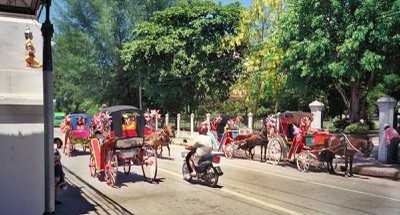
Photo: Heinrich Damm / Wikimedia Commons (CC BY-SA 3.0)
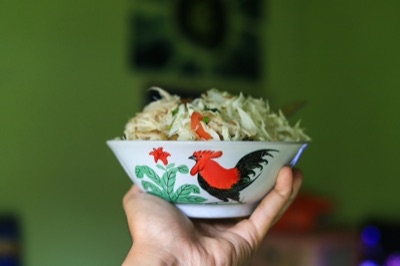
Photo: Aldrin Rachman Pradana / Unsplash
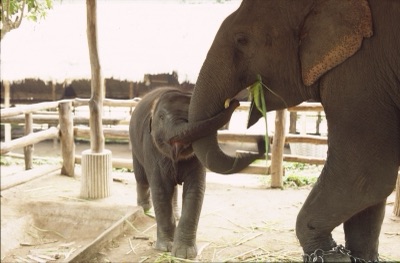
Photo: Dpservis / Wikimedia Commons (CC BY-SA 3.0)
Summary
- Lampang was founded in 1223 BE, the dictionary records; its first name was Khelang Nakhon, and it was once ruled by a chao luang.
- The horse cart (rot ma) has been Lampang's symbol since 1915, when the railway arrived; riding in one is khi rot ma.
- The rooster bowl is tuai ka kai in Kham Mueang, made mostly in Lampang.
- The "five lue" motto points to Mae Moh coal, horse carts, pottery, Wat Phra That Lampang Luang (the birth-year stupa for the year of the ox) and elephants, jang.
- Listen for Lampang words such as kong tok seng and phoeng diat.
Look up more Lampang words in the Moradok Lanna dictionary, and read about the other Lanna provinces in The 8 Lanna Provinces.
Sources
- Moradok Lanna dictionary: ลำปาง · ถ้วยก๋าไก่ · ต๋กเส้ง · ก๋องแอว · ธาตุปีเกิด · ครูบาเจ้า · เดียด
- Michelin Guide Thailand. ทำไมเชฟร้านมิชลินสตาร์ถึงหลงรักเครื่องเคลือบลำปาง [Why Michelin-starred chefs love Lampang ceramics] (in Thai; rooster-bowl history, Chae Hom kaolin, Dhanabadee museum)
- Thansettakij (12 Mar 2025). Mae Moh coal power plant news (in Thai; coal as the plant's fuel)
- ThaiPR.net (10 Feb 2025). อ.อ.ป. ชวนแอ่ว "ศูนย์อนุรักษ์ช้างไทย จ.ลำปาง" [FIO invites visitors to the Thai Elephant Conservation Center, Lampang] (in Thai)
- Phra Dattawat Rinchumphu et al. (2022). รูปแบบและแนวทางการอนุรักษ์พุทธสถาปัตยกรรมสกุลช่างลำปาง ณ วัดพระธาตุลำปางหลวง [Forms and conservation approaches to Lampang-school Buddhist architecture at Wat Phra That Lampang Luang]. MBU Lanna Academic Journal 11(2) (in Thai)
- Photos from Wikimedia Commons and Unsplash as credited under each image
Practise the words from this article
Flip through 21 flashcards of the Lanna words used in this article.


