
Photo: Supanut Arunoprayote / Wikimedia Commons (CC BY 4.0)
La Pun: Lamphun, Hariphunchai, Older Than Chiang Mai
Lamphun, which northerners call La Pun (la pun, หลฯะพูร), is the old city that was once Hariphunchai. The Moradok Lanna dictionary records it as an ancient city and as the smallest province in the north, but its story is much bigger than its size.
Hariphunchai flourished before Chiang Mai existed. King Mangrai had to take Hariphunchai first, and only then built Chiang Mai as the capital of Lanna. This post introduces Lamphun through Kham Mueang words: its name, its stupa, its motto, its trees, and the Yong people who make up most of the town.
Tap through Lamphun's Kham Mueang name, motto and provincial tree in this tool.
La Pun: Lamphun's Name in Kham Mueang
The dictionary lists Lamphun as La Pun, as Mueang La Pun (mueang la pun, เมิอฯงหลฯะพูร), and as Lamphun (ลำพูร), which it says northerners call La Pun. All three mean the same city.
Notice that the Lanna spelling uses the letter pho (พ), but northerners read it as a p sound, so it becomes La Pun rather than Lamphun. It is one of the regular sound differences between Central Thai and Kham Mueang.
The city's name even turns up in the dictionary's example sentences. The word jue (jue, เจิ่อฯอ) means "often", and the dictionary's example is "ไปหละปูนเจื่อ", "(I) go to Lamphun often", because the two cities are so close that going back and forth is just normal.
Hariphunchai: An Old City Before Chiang Mai
The Chamadevivamsa chronicle tells that Queen Chamadevi came up from La Wo (la wo, หลฯะโว้), which the dictionary explains is the old name of Lopburi, to rule Hariphunchai, bringing monks, craftsmen and Buddhism with her. The dates in the chronicle are still debated; read her full story in Queen Chamadevi.
One thing she brought is still with us: the Phra Kaeo Khao (phra kaeo khao, ระฯพแก้วฯขาวฯ), a small clear-crystal Buddha. The dictionary says it stayed in Lamphun for several hundred years, until King Mangrai took Hariphunchai in 1281 CE (B.E. 1824) and built Chiang Mai in 1296 (B.E. 1839). He then brought it to Wat Chiang Man in Chiang Mai, where it remains today.
The clearest trace of the queen in Lamphun is Ku Kut (ku kut, กู่กุด). The dictionary describes it as the stupa with a broken-off top that holds her ashes, at Wat Chamadevi.
On the archaeological side, Khomsi Saenchit (2010) in the Damrong Journal suggests that Hariphunchai was probably influenced by several neighbouring cultures, such as Dvaravati, Pyu–Pagan and Khmer. Its sister city was Khelang Nakhon, today's Lampang, which the dictionary says was founded in B.E. 1223 (680 CE) together with Hariphunchai.
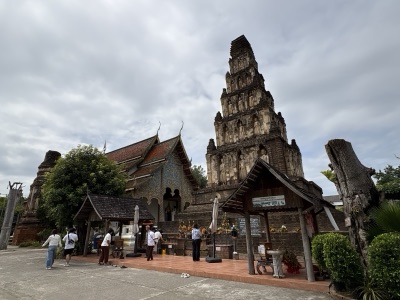
Photo: Chainwit. / Wikimedia Commons (CC BY 4.0)
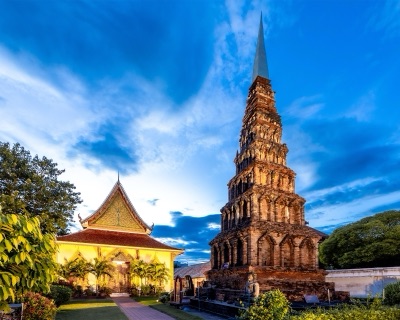
Photo: Supanut Arunoprayote / Wikimedia Commons (CC BY 4.0)
That Luang La Pun: Wat Phra That Hariphunchai
Northerners call a stupa a that (that, ธาฯตฯ). In its entry for chedi (chedi, เจดียฯ ฿ฯ) the dictionary gives an example: Lamphun's Phra That Hariphunchai is called That Luang La Pun, "the great stupa of La Pun".
A paper from Payap University's Northern Information Center says King Athitayarat founded the stupa around the 12th century CE (17th Buddhist century) to enshrine relics of the Buddha. It was first a square, castle-like stupa. After King Mangrai took the city he rebuilt it with a round base, and in 1447 CE (B.E. 1990), under King Tilokarat, it was raised to the shape we see today.
Phra That Hariphunchai is also the stupa for the Year of the Rooster among the twelve birth-year stupas (that pi koet, ธาฯตฯปีเกิดฯ), so people born in a Rooster year often try to visit it at least once. Read about all twelve in Lanna Birth-Year Relic Stupas.
Lamphun's Motto in Kham Mueang
The dictionary records Lamphun's motto in its entry for La Pun:
Motto: "พระธาตุเด่น พระรอดขลัง ลำไยดัง กระเทียมดี ประเพณีงาม จามเทวีศรีหริภุญชัย" ("The stupa stands out, the Phra Rot is potent, the longan is famous, the garlic is good, the customs are beautiful, Chamadevi of glorious Hariphunchai")
Each phrase tells part of the city's story. Here are the Kham Mueang words that go with them:
| Phrase in the motto | Means | Related Kham Mueang |
|---|---|---|
| The stupa stands out | Phra That Hariphunchai | that luang la pun |
| The Phra Rot is potent | Phra Rot, Lamphun's famous small votive tablet | (not in the dictionary) |
| The longan is famous | the city's cash crop | lam yai |
| The garlic is good | garlic | hom tiam, hom khao |
| The customs are beautiful | Lamphun's traditions | salak yom |
| Chamadevi of glorious Hariphunchai | Queen Chamadevi, the first ruler | ku kut |
The longan (lam yai, ลำไย), the dictionary says, is a cash crop of Chiang Mai and Lamphun, with several varieties such as i do, biao khiao and si chomphu.
Garlic is called hom tiam (hom tiam, หอฯมทยฯม) or hom khao (hom khao, หอฯมขาวฯ), literally "white onion". If a market seller in Lamphun says hom khao, she means garlic, not shallots.
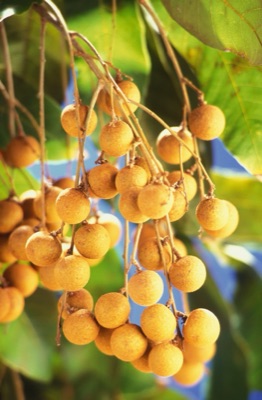
Photo: Wikimedia Commons (Public domain)
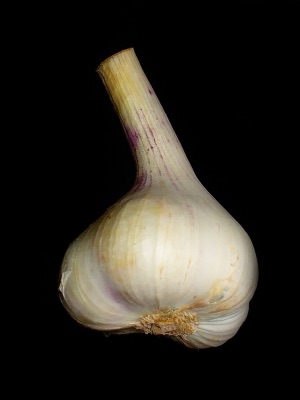
Photo: H. Zell / Wikimedia Commons (CC BY-SA 3.0)
Mai Sam Sa and the Yang Tree Road from Chiang Mai to Lamphun
Lamphun's provincial tree is the rain tree, which northerners call mai sam sa (mai sam sa, ไม้สำสา). The dictionary describes a big tree 15–20 metres tall, some so wide that ten people can barely circle them, with branches spreading like an umbrella and ripe pods whose sweet pulp cattle and buffaloes love.
Travel from Chiang Mai to Lamphun and you will see great trees lining both sides of the road. People of old called trees used to mark a route mai mai tang (mai mai tang, ไม้หมฯายฯทาฯงฯ), "way-marker trees", and the dictionary gives this very road as its example.
The trees are mai yang (mai yang, ไม้ยางฯ), the yang na tree. The dictionary says Phra Chao Inthawichayanon, the seventh ruler of Chiang Mai, had them planted along both sides from the foot of the Nawarat Bridge to the Lamphun border in 1882 (B.E. 2425). In 1911 (B.E. 2454) the authorities had villagers plant more yang na on the Chiang Mai side and cassia trees (khi lek) on the Lamphun side, and the trees became the symbol of the road.
Find more big-tree names in Kham Mueang Tree Names.
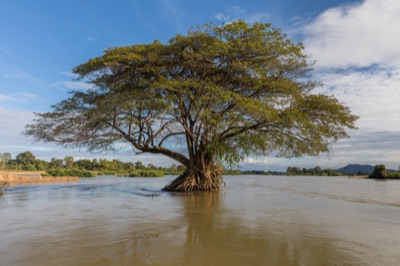
Photo: Basile Morin / Wikimedia Commons (CC BY-SA 4.0)
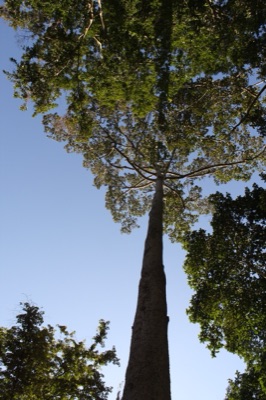
Photo: josh jackson / Wikimedia Commons (CC BY 2.0)
The Yong: Lamphun's Largest Community
Many people in Lamphun call themselves Tai Yong or Khon Yong. The dictionary gives the word Yong (yong, ยอฯง) three meanings: the town of Mueang Yong in Shan State, Myanmar; the Yong people, whose ancestors came from Mueang Yong; and the Yong language they speak.
Their spoken language has its own name, kam yong (kam yong, คำฯยอฯง). The dictionary records it in Mueang, Pa Sang and Ban Thi districts of Lamphun, and in Buak Khang subdistrict of San Kamphaeng, Chiang Mai, which borders Ban Thi.
A 2026 study from the Lamphun Buddhist College says the great move of people from Mueang Yong happened in 1805 (B.E. 2348), in the period of rebuilding after the wars with Burma. The Yong settled on the plains of the Kuang, Ping and Tha rivers and carried on their language, dress, music and food in Lamphun. The same study says the Yong are today the majority of the province.
One custom tied to young women of Lamphun is salak yom (salak yom, สๆลฯากฯย้อฯม). The dictionary explains it as an offering that young women prepare for the monks at the salakabhatta merit festival, and that by tradition a woman should make a salak yom at least once before she marries. Tall salak yom trees still rise at Wat Phra That Hariphunchai today; read about the festival in Tan Kuay Salak.
Words from La Pun: Rivers, a Bridge and Drums
Lamphun is a city of rivers. Sop Tha (sop tha, ส฿ปฯทาฯ) is the place where the Mae Tha river meets the Kuang river at Ban Sop Tha in Pa Sang district, and together they flow into the Ping. The dictionary explains sop in Kham Mueang as the place where two or more rivers meet.
The district name Mae Tha (mae tha, แม่ระฯทาฯ) is interesting too. The dictionary calls it an exception: letters written this way are normally read thala, but this name is simply read tha.
At Mae Tha stands a white concrete railway bridge known as the Tha Chomphu White Bridge. Northerners call a bridge khua (khua, ข฿วฯ). The Lamphun provincial website says it was built from 1918 to 1920 (B.E. 2461–2463) in reinforced concrete instead of steel, because steel was scarce and expensive during the war.
If you hear drums at a merit-making procession in Lamphun, ask what they are called. The long one-headed drum that Chiang Mai calls kong ae (kong ae, กลฯอฯงแอวฯ) is, the dictionary says, called kong poeng mong (kong poeng mong, กลฯอฯงเปิ้งฯโม฿งฯ) in Lamphun, after the sound it makes.
Lamphun is also a home of stories. The version of the Maeng Si Hu Ha Ta legend (maeng si hu ha ta, แมงฯสี่หูห้าตา) that the dictionary cites was written by Khruba Chaiyawongsaphatthana of Wat Phra Phutthabat Huai Tom in Li district, Lamphun. Read the tale in Maeng Si Hu Ha Ta.
Summary
- La Pun is Lamphun's name in Kham Mueang: spelled with pho but read with a p sound.
- Lamphun is old Hariphunchai, a city that flourished before Chiang Mai; the Phra Kaeo Khao and Ku Kut are traces of Queen Chamadevi.
- Phra That Hariphunchai is called That Luang La Pun and is the birth-year stupa for the Rooster.
- The motto names the longan and garlic, which northerners call hom tiam or hom khao; the provincial tree is the mai sam sa.
- Most people in Lamphun are Yong, who speak kam yong and keep customs such as salak yom.
Look up more Lamphun words in the Moradok Lanna dictionary, and find the Kham Mueang names of the other seven provinces in The 8 Lanna Provinces.
Sources
- Moradok Lanna dictionary: หละปูน · พระแก้วขาว · กู่กุ๋ด · เจ๋ดีย์ · ไม้ยาง · ยอง · กำยอง · ส๋บทา
- Northern Information Center, Payap University. พระบรมธาตุหริภุญชัย จังหวัดลำพูน [Phra Borommathat Hariphunchai, Lamphun] (series: 8 stupas of the Lanna provinces)
- Phrakhru Aranchaithath (Thawatchai Thanavamso), Phairin Na Wanna and Phrakhru Kowitatthawatee. (2026). ระบบคุณค่าและการสร้างอัตลักษณ์ทางพระพุทธศาสนาของชาวไทยองในจังหวัดลำพูน [The Value System and the Formation of Buddhist Identity Among the Tai Yong in Lamphun Province]. Panya Journal 33(2)
- Khomsi Saenchit. (2010). Haripunjaya: An Archaeological and Literary Account. Damrong Journal 9(1)
- Lamphun Province. The White Bridge (Tha Chomphu)
- All photos from Wikimedia Commons, credited under each image
Practise the words from this article
Flip through 25 flashcards of the Lanna words used in this article.


