
Photo: Takeaway / Wikimedia Commons (CC BY-SA 3.0)
A Lanna Funeral, Step by Step
A Lanna funeral is how the people of northern Thailand send off the dead, weaving Buddhism and local belief together. Kham Mueang calls all the rites of a funeral song sakan (ส฿งฯสการฯ, Kham Mueang reading song sakan). The dictionary explains it as "an expression of gratitude to the dead". This article walks through each step, from a person's last days to the morning the bones are gathered, with the Kham Mueang words you will hear and some advice for anyone invited to attend.
The order of rites here follows the study by Pimkalaya Ritpen (2024), which recorded traditional Lanna funerals. Details vary from village to village and family to family. Word meanings come from the Moradok Lanna dictionary.
Before death: asking forgiveness at the temple
When someone is lambak (ลำบาฯกฯ, lambak), which the dictionary defines in one sense as "a gravely ill person close to death", the family invites a monk to preach the Thamma Maha Wibak scripture. The study explains the belief: it frees the sick person from suffering. If their time has not come they recover; if it has, they pass away peacefully.
A grandson or son goes to the temple on the sick person's behalf with three sets of flower cones, incense and candles. He places them in the khan kaeo tang sam (ขันฯแก้วฯทังฯสามฯ, khan kaeo tang sam), a tall triangular flower tray set before the Buddha image in the viharn, and says the kham su ma (คำฯสูมา, kham su ma), words asking forgiveness of the Triple Gem. He then returns to tell the sick person, so they can remember the Buddha, the Dhamma, the Sangha and the good they have done.
The last instructions of a dying person are called kham phi (คำฯผี, kham phi). Children and grandchildren take them as words to be kept.
At death: washing the body and the coffin
Kham Mueang calls a dead body phi tai (ผีตายฯ, phi tai) or sop (ศ฿พฯ). "To die" is tai (ตายฯ, tai), and there is a gentle euphemism, khao long (เขั้าห้ลฯอฯง, khao long, "to enter the coffin"): "Mae Ui khao long laeo" means "Grandma has passed away". For words for different kinds of death, see Ghost and Spirit Words in Kham Mueang.
According to Pimkalaya (2024), the steps after death are:
- The body is washed as in life, and dressed with the clothes turned the other way round.
- A husked coconut and the fai jung (ฝ้ายฯจูง, fai jung) are placed on a tray on the coffin lid. The dictionary describes it as raw cotton thread in nine loops, by which monks lead the dead to the cemetery.
- The pu jan (ปู่จาร์ยฯ, pu jan), the lay ritual master of the temple, comes to ask the dead person's forgiveness, pour water over the body, bind and wrap it, and lay it in the hit long (หีดฯห้ลฯอฯง, hit long), the coffin.
- Relatives place an oil lamp at the feet of the dead and another in front for paying respect, one of each.
The wake, chanting and making merit
In the past the body stayed at home, and four monks were invited to chant the sut aphitham (สูระฯตอภิธัม์มฯ, sut aphitham), the Abhidhamma, from about 8 to 9 pm. Today the wake is usually held in a temple pavilion, starting around 7 pm and ending with pouring water to dedicate merit to the dead.
Guests usually make merit with an envelope of money. The study notes that people write their name and family on the envelope but not the amount, then put it in a box, tray or bowl set out by the hosts, or hand it to the hosts directly.
Before the cremation: castle, tung, rice bag and gifts
The funeral castle is called phasat phi tai (ผา(ระฯบาฯ)สาทฯผีตายฯ, phasat phi tai): a tiered, castle-shaped structure covering the coffin, used to carry the dead to the cemetery. The dictionary says that in the past its form followed the dead person's rank, and commoners had only a maeo khuap (แมวฯฅวฯบ), a cover over the coffin. Pimkalaya's study found two village forms: the "pak kraban" with no gable or spire, for ordinary villagers, and the "lang klai" with four gables, for respected elders. Today any form may be used, depending on what the family can afford.
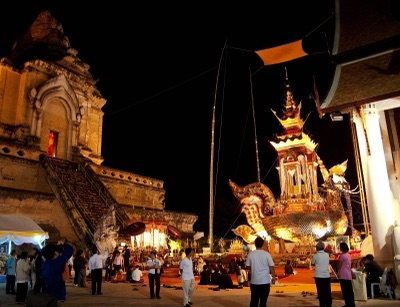
Photo: Takeaway / Wikimedia Commons (CC BY-SA 3.0)
Castles decorated with the nok hatsadiling (น฿กฯหัสีดฯลิง์คฯ), a creature of the Himavanta forest with an elephant's head and a bird's body, are, the dictionary says, used for leading figures and senior monks. The kinds of funeral castle will get their own article later in this series.
The tung sam hang (ทุงสามฯหางฯ, tung sam hang) is a banner shaped like a human figure with three tails. Relatives cut it from white cloth and write the dead person's name, surname, date of birth, date of death and age on its body, then tie it to a bamboo pole and hang it near the coffin. The dictionary says the three tails "may stand for the Three Characteristics". Read more in Tung: Lanna Banners.
Relatives also prepare the thong ho khao (ถ฿งฯหํอฯเขั้า, thong ho khao), a white cloth shoulder bag filled with sticky rice, fried pork wrapped in banana leaf, fruit or fermented tea leaf. The study explains the belief that the dead will eat it on the journey to the next life, and on the way to pay respect to the Ket Kaeo Chulamani relic in heaven.
The hosts prepare the khua tan (ระฯค฿วฯทาฯนฯ, khua tan), gifts for the monks: soap, toothpaste, kitchenware, fruit in season, blankets, medicine, packed into large carrying baskets to be offered on the day of the cremation. Before offering, the pu jan says the su ma khua tan (สูมาระฯค฿วฯทาฯนฯ), asking pardon for any fault in preparing the gifts, and the wen tan (เวนฯทาฯนฯ, wen tan), the words presenting the offering, which at a funeral end with a dedication of merit to the dead.
Before the cremation, grandsons and sons who wish to may be ordained as novices to make merit for the dead. Kham Mueang calls this buat jung hua (บวฯชจูงห฿วฯ, buat jung hua), known in central Thai as buat na fai. The new novices hold the fai jung thread tied to the coffin and lead it to the cemetery.
The cremation day: cutting the thread and the procession
Before the coffin leaves, if the dead person leaves a living spouse, the study records a rite called "pha jan phi", cutting the thread between husband and wife. The pu jan has the spouse hold a flower cone tied with sacred thread, back turned to the coffin, recites a verse, and cuts the thread through in one stroke. The spouse then walks away without looking back and does not attend the cremation. The rite marks the end of worldly ties.
The procession goes in this order: at the front the pu jan with the three-tailed tung and the rice bag; in the middle the monks and the new novices holding the cotton thread; at the back relatives and mourners. They head for the pa ja (ป่าช้า, pa ja), also called pa hoe or pa hiao: the cemetery.
The funeral pyre is the kong fon (กอฯงฟอฯร, kong fon). The dictionary records an old custom: each villager brought one or two pieces of firewood to pile at the pyre, called lua phao phi (ห฿ลฯวฯเผัาผี, lua phao phi).
Before the cremation, relatives pour nam khao min som poi (นาฯํ้เขั้าหิ้มฯรส฿้มฯป่อฯยฯ, nam khao min som poi), turmeric and som poi water, over the body once more. The dictionary also records nam suai na phi (นาฯซ่วฯยฯห้นฯาผี), the water of a split coconut poured over the face of the dead before cremation.
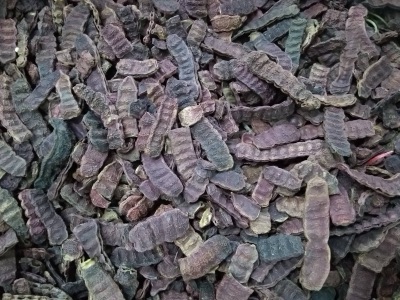
Photo: Thamizhpparithi Maari / Wikimedia Commons (CC BY-SA 4.0)
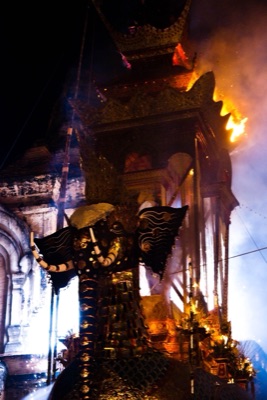
Photo: Takeaway / Wikimedia Commons (CC BY-SA 3.0)
When the time comes, fireworks are lit. The study explains the belief that they tell the deities and send the spirit to a good rebirth. The dictionary records the bok fai lo (บอฯกไฟหํลฯอฯ, bok fai lo), a small rocket on wheels that runs into the castle instead of the fire being lit by hand, and the ba phap (บ่าฯผาปฯ), a gunpowder fuse. The funeral castle is burned separately at the pyre.
Cremation is called phao phi (เผัาผี, phao phi) or lang khap (ล้างฯระฯคาฯปฯ, lang khap), and the whole disposal of the body sia sop (เสยฯส฿พฯ).
After the cremation: gathering the bones and the "cool house"
The next morning the cremation attendant wraps the bones in unbleached cloth. Relatives set out four sets of monks' robes with flower cones on the four corners of a tray, open the cloth and scatter leaves or flowers over the bones, and the monks jak bangsakun (ชักฯบังฯสกุล, jak bangsakun), drawing the cloth in contemplation of impermanence. Relatives pour and sprinkle turmeric and som poi water on the bones. Part of them goes home; part is buried by the temple wall or within the temple grounds, or scattered on water. The novices of the buat jung hua then leave the robes, and the rites are complete (Pimkalaya Ritpen, 2024).
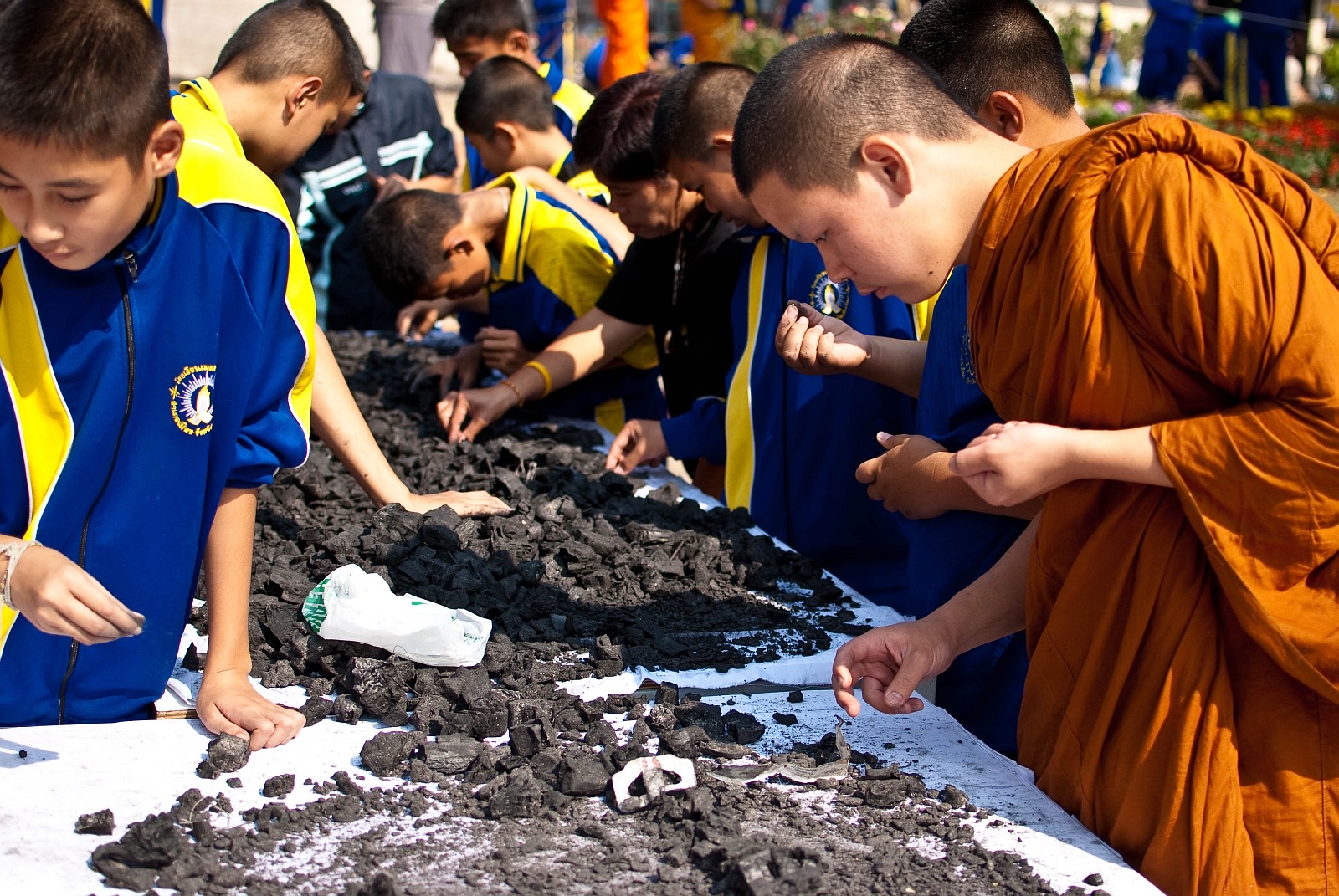
The home of the dead, after the cremation but before the merit-making, is called huean yen (เริอฯรเอยฯันฯ, huean yen, "the cool house"). Monks are then invited to chant the sut sangkaha (สูระฯตสํฯคหะ, sut sangkaha) at the house, which the dictionary says is to "help the hosts ease their worry and live well from now on".
Merit sent on to the departed afterwards is called tan pai ha (ทาฯนฯไพหา, tan pai ha), pouring water from the nam yat (นาฯอยฯาดฯ) vessel while the monks give their blessing. Families also make merit for their ancestors at other festivals, such as Tan Kuay Salak.
Attending a funeral in Lanna: what to do
If you are invited to a funeral in Chiang Mai or elsewhere in Lanna, Moradok Lanna suggests:
- Dress modestly in black, white or quiet colours, as is general Thai custom.
- Envelope for merit: write your name and family, not the amount, and put it in the tray or bowl the hosts provide, or hand it to them (Pimkalaya, 2024). Joining in merit-making is hom tan (รอฯมทาฯนฯ) in Kham Mueang.
- Do not touch the three-tailed tung or other ritual objects, and never take them home as souvenirs (Tung: Lanna Banners).
- Photos only with the hosts' permission, and never of the dead.
- Follow the hosts and the pu jan, since every village has its own ways. If unsure, ask quietly.
Kham Mueang words at a funeral
| Kham Mueang | Lanna script | Meaning (from the dictionary) |
|---|---|---|
| song sakan | ส฿งฯสการฯ | the rites of a funeral |
| phi tai | ผีตายฯ | a dead body |
| khao long | เขั้าห้ลฯอฯง | to die (euphemism) |
| hit long | หีดฯห้ลฯอฯง | coffin |
| pu jan | ปู่จาร์ยฯ | lay ritual master |
| fai jung | ฝ้ายฯจูง | nine loops of raw cotton for leading the dead |
| phasat phi tai | ผา(ระฯบาฯ)สาทฯผีตายฯ | funeral castle |
| tung sam hang | ทุงสามฯหางฯ | banner leading the funeral procession |
| thong ho khao | ถ฿งฯหํอฯเขั้า | white cloth bag of rice for the dead |
| buat jung hua | บวฯชจูงห฿วฯ | ordination as a novice at a funeral |
| pa ja | ป่าช้า | cemetery (pa hoe) |
| phao phi | เผัาผี | to cremate |
| huean yen | เริอฯรเอยฯันฯ | the home of the dead after cremation |
| tan pai ha | ทาฯนฯไพหา | merit dedicated to the dead |
Summary
- Kham Mueang calls funeral rites song sakan and a dead body phi tai.
- Before death a monk preaches the Thamma Maha Wibak, and a grandson asks forgiveness at the khan kaeo tang sam on the sick person's behalf.
- Before the cremation the family prepares the funeral castle, the three-tailed tung, the rice bag and the gifts, and grandsons are ordained in buat jung hua.
- On the day, the spouse's thread is cut, and the pu jan leads the procession with the tung to the pa ja, the cemetery.
- The next morning the bones are gathered, and merit is made at the huean yen and sent on as tan pai ha.
Look up more funeral words in the Moradok Lanna dictionary, and read about the rite that lengthens the life of the living in Suep Chata.
Sources
- Moradok Lanna dictionary (in Thai): ส่งส๋ะก๋าร · ผาสาทผีต๋าย · ตุงสามหาง · ถงห่อเข้า · บวชจู๋งหัว
- พิมพ์กัลยา ฤทธิ์เพ็ญ [Pimkalaya Ritpen]. (2024). รูปแบบของพิธีกรรมในงานศพที่คล้ายคลึงกันของชาวล้านนาและชาวเขมรถิ่นไทย [The form of the funeral ritual similar among Lanna people and Thai Khmer people]. Journal of Modern Learning Development 9(10). In Thai.


