
Photo: Vano111ru / Wikimedia Commons (CC BY-SA 4.0)
Phi in Kham Mueang: Ghost and Spirit Words
At the end of October many countries dress up as ghosts for Halloween. Ask someone from northern Thailand what phi (ผี) means, though, and the answer is much wider than a spook. The dictionary explains phi as something mysterious and unseen that can bring both good and harm to people, communities, animals and plants. Phi also means a corpse, and it is used for people who behave badly, as in phi phanan, a gambler.
This article gathers the Kham Mueang words that begin with "phi" from the Moradok Lanna dictionary: ancestor spirits, guardian spirits that protect villages and towns, forest spirits from folk belief, and words that start with phi but are not spirits at all, such as the rainbow and the shooting star. Every belief here is told as the dictionary and the cited sources record it, to help you learn the language and understand the culture.
Ancestor spirits: the phi who look after a family
For Lanna people many phi are not things to fear but ancestors who still look after their descendants. The dictionary explains that phi pu ya (ผีปู่ย่า) are a family's own spirits. They hold the kin group together and help settle quarrels. They pass down the female line: when a mother dies, her eldest daughter takes over, and wherever she moves, the phi pu ya go with her.
| Kham Mueang | Lanna script | Meaning (from the dictionary) |
|---|---|---|
| phi pu ya | ผีปู่ย่า | ancestor spirits, the family's spirits, passed down the female line |
| phi kao | ผีเคั้าฯ | the founding spirit of a family line |
| phi ban phi huean | ผีบ้าฯนฯผีเริอฯร | the ancestor spirits of each household |
| phi huean | ผีเริอฯร | the ancestor spirit that protects the people of a house |
| phi mo nueng | ผีหํมฯอฯหึ้นฯง | the spirit of the rice-steaming pot; believed to look after the family, and called on in a divination rite when someone is ill (also phi ya mo nueng ผีย่าหํมฯอฯหึ้นฯง and phi pu dam ya dam ผีปู่ดำย่าดำ) |
| phi mot | ผีม฿ดฯ | ancestor spirits of people of Mon descent in Lanna, paired with phi meng; honoured each year with offerings and dance |
| phi meng | ผีเมงฯ | ancestor spirits of the Mon, or perhaps of the Tai Yuan; danced for in the dry season before ploughing |
| fon phi mot | ฟ้อฯรผีม฿ดฯ | the dance offered to the ancestors, usually in a temporary pavilion before the rice season (fon phi meng ฟ้อฯรผีเมังฯ too) |
| phi khu | ผีระฯคู | the spirits of teachers, such as the teachers of craftsmen, healers, dancers and swordsmen |
Every year the family holds liang phi pu ya (ล้ยฯงผีปู่ย่า), "feeding the ancestor spirits". The dictionary says it is usually held before Buddhist Lent, around the ninth northern month. If someone breaks custom, for example a young man touches a young woman, it is called phit phi, "wronging the spirits". The woman's side must kho su ma (ขํอฯสูมา), ask forgiveness, and the man must sia phi (เสยฯผี), pay a fine in offerings and money set by the woman's family. The full ceremony is described in Liang Phi Pu Ya.
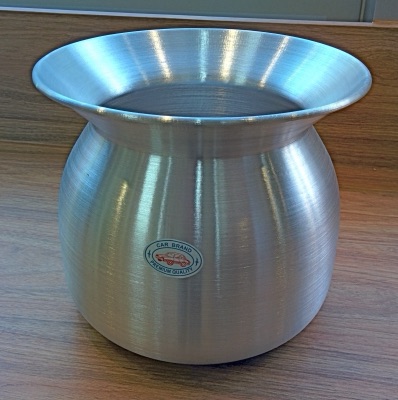
Photo: Susan Slater / Wikimedia Commons (CC BY-SA 4.0)
Phi suea: guardians of villages, towns and temples
In Kham Mueang phi suea (ผีเสิ้อฯอ) does not mean the pretty insect. It means a guardian spirit of a place, such as the guardian of a village, a mountain, a town or a temple. These spirits live in a ho phi (หํอฯผี), a spirit house, and villagers make offerings every year to ask for their protection.
| Kham Mueang | Lanna script | Meaning (from the dictionary) |
|---|---|---|
| phi suea ban | ผีเสิ้อฯอบ้าฯนฯ | village guardian, the spirit of the village's founding lord, honoured each year before Lent (also phi mu ban ผีหู่บ้าฯนฯ) |
| suea ban | เสิ้อฯอบ้าฯนฯ | the guardian who protects a village |
| ho suea ban | หํอฯเสิ้อฯอบ้าฯนฯ | the shrine of the village guardian |
| phi mueang | ผีเมิอฯง | the guardian spirit of a town |
| suea mueang | เสิ้อฯอเมิอฯง | the guardian who protects a town |
| phi suea wat | ผีเสิ้อฯอวัดฯ | the guardian spirit of a temple (also suea wat เสิ้อฯอวัดฯ) |
| phi suea yak | ผีเสิ้อฯอยัก์ขฯ | a very powerful guardian of a place |
| phi chao ti | ผีเจั้าที่ | the spirit that lived on a piece of land before people settled there; it must be fed every year |
| chao ti | เจั้าที่ | the guardian of the land |
| ho chao ti | หํอฯเจั้าที่ | a guardian shrine, a spirit house for the land |
| phi chao nai | ผีเจั้านาฯยฯ | a guardian who is usually an important person from legend, honoured for good deeds |
| phi pu sae ya sae | ผีปู่แสะย่าแสะ | the guardian spirits of Chiang Mai, whose shrine is now at Wat Doi Kham; honoured every year with a buffalo |
| phi khun nam | ผีขุรนาฯ | the guardian of a river's headwaters in the high mountains, thanked by the community for its water (khun = headwaters) |
| phi fai | ผีฝายฯ | the guardian of an irrigation weir, living in the weir's spirit house หํอฯผีฝายฯ near the canal mouth |
| liang phi fai | ล้ยฯงผีฝายฯ | the rite of feeding the weir guardian, usually at the end of the rice season |
You can read more about Chiang Mai's guardian spirits in Pu Sae and Ya Sae. Academic work such as Prasit Leepreecha's book Lanna Guardian Spirits: From the Spirit House to the Statue, Shrine and Monument (2017) shows that belief in guardian spirits lives on, moving from wooden spirit houses to statues and shrines today.
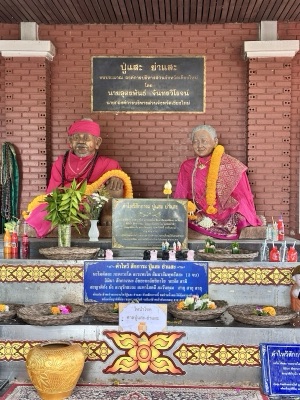
Photo: ManoiCMU / Wikimedia Commons (CC BY 4.0)
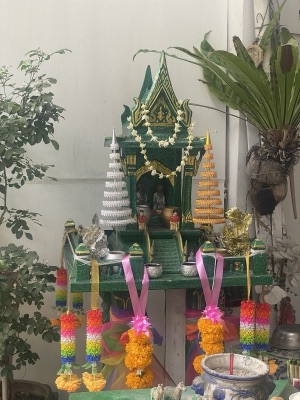
Photo: Immanuelle / Wikimedia Commons (CC BY 4.0)
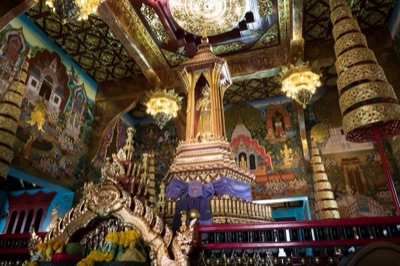
Photo: Takeaway / Wikimedia Commons (CC BY-SA 4.0)
Forest spirits, tree spirits and spirits of folk tales
These are the phi of stories passed down in the north, often told to teach caution in the forest and respect for nature. Every meaning in the table describes a belief as the dictionary records it.
| Kham Mueang | Lanna script | Meaning (from the dictionary) |
|---|---|---|
| phi song nang | ผีสอฯงนาฯงฯ | a tree nymph, a female spirit believed to live in large twin-trunked trees such as the takhian |
| phi suea huai | ผีเสิ้อฯอห้วฯยฯ | a spirit of the hills and forests with long tangled hair, said to turn into a beautiful woman to trick men lost in the woods |
| phi pok ka long | ผีป฿กฯกโห้฿ลฯง | a spirit of the deep forest, said to have long hair covering its face |
| phi chak khae | ผีชักฯแระฯค่ | a spirit shaped like a person but without kneecaps, which runs fast and cannot speak |
| phi ta moi | ผีตามอฯยฯ | a spirit believed to hide children and blind those searching for them |
| pong | โป่฿งฯ | a salt lick; the spirit living in such a place is phi pong |
| phi chiang miang | ผีจ้ยฯงห้มฯยฯง | the guardian spirit of a cemetery |
| phi phet | ผีเผตฯ | a preta, a starving, skeletal ghost, said to have been stingy and never given alms in life |
| phi sue | ผีสื | the krasue, a spirit believed to live in a woman |
| phi phong | ผีโพ฿งฯ | the krahang, a spirit believed to live in a man, paired with phi sue |
| phi ma bong | ผีม้าบ้อฯง | a person with strong spells believed to turn into a horse at night |
| phi yen | ผีเยนฯ | a were-tiger, a person believed able to become a tiger (also suea yen) |
| phi kan | ผีกั่นฯ | a fierce, dangerous spirit |
| phi ha | ผีร่า | the spirit of plague; an epidemic such as cholera |
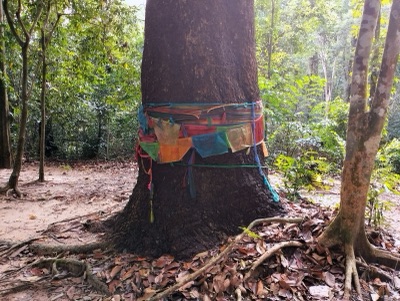
Photo: Per Meistrup / Wikimedia Commons (CC BY-SA 4.0)
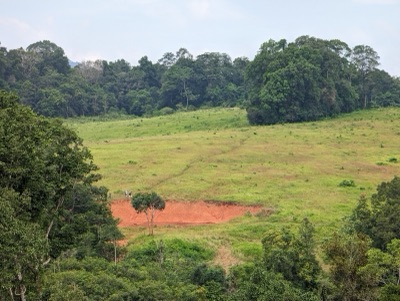
Photo: Syced / Wikimedia Commons (CC0)
Phi ka: a belief to handle with care
The dictionary explains that phi ka (ผีกลฯะ) is the northern name for the phi pop. In the belief, it is a spirit living inside a person; if its host is crossed, the phi ka goes to possess the other person, who then behaves strangely until a mo phi (หํมฯอฯผี), a spirit doctor, drives it out. A fiercer kind is phi ka yak (ผีกลฯะยัก์ขฯ). The bird said to carry the phi ka is nok kao phi ka (น฿กฯเคั้าฯผีกะ), the barn owl or another owl (see Bird Names in Kham Mueang).
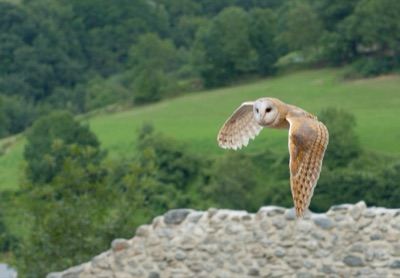
Photo: Luc Viatour / Wikimedia Commons (CC BY-SA 3.0)
Possession, mediums and spirit doctors
Kham Mueang has several words for possession. The dictionary gathers them under phi kum (ผีกุม), a spirit taking over a body so that its owner obeys without knowing it. Phi long (ผีล฿งฯ) is used for a medium who deliberately invites a spirit in.
| Kham Mueang | Lanna script | Meaning (from the dictionary) |
|---|---|---|
| phi kum | ผีกุม | possession by a spirit |
| phi kuam · phi khao · phi tue · phi sing | ผีกวฯม · ผีเขั้า · ผีทื · ผีสิงฯ | words the dictionary refers to phi kum, with the same meaning |
| phi long | ผีล฿งฯ | a spirit entering a medium |
| long phi | ล฿งฯผี | to hold a séance, inviting a spirit into a person to ask about good and bad fortune |
| ma khi | ม้าขี่ | a spirit medium, the person a spirit enters |
| mo phi | หํมฯอฯผี | a spirit doctor who uses spells to invite, drive out or subdue spirits |
| kha tha | คาฯถา | a sacred spell or incantation |
| liang phi | ล้ยฯงผี | to make offerings of food and drink to spirits, to avoid harm, ask for luck or fulfil a vow |
The word ma khi, "the ridden horse", is a vivid one: the medium is the horse the spirit rides. Calling a person's soul back is a different rite, described in Hong Khwan.
Phi tai: words for different kinds of death
Phi tai (ผีตายฯ) means a corpse or a dead person. Kham Mueang has separate words for deaths seen as out of the ordinary. Use them with care and respect for the dead.
| Kham Mueang | Lanna script | Meaning (from the dictionary) |
|---|---|---|
| phi tai | ผีตายฯ | a corpse, a dead person |
| phi tai hong | ผีตายฯโห฿งฯ | a person who died by accident or was killed |
| phi tai phai | ผีตายฯระฯพายฯ | a mother who died soon after giving birth |
| phi tai kom | ผีตายฯก฿ลฯม | a mother who died together with the unborn child |
| phi tai ha | ผีตายฯร่า | a person who died in an epidemic such as smallpox or cholera |
Words that start with phi but are not spirits
The most fun part of this family: many words begin with "phi" but mean everyday things.
| Kham Mueang | Lanna script | Meaning (from the dictionary) |
|---|---|---|
| phi ngueak hung | ผีเงิอฯกรุง | a rainbow (also phi hung ผีรุง and phi i hung ผีอี่รุง) |
| phi pung sao | ผีพุ่งส้าวฯ | a shooting star, a meteor |
| phi hua luang | ผีห฿วฯหลฯวฯง | the name of an inauspicious direction: the direction one must not face when holding a ceremony on a given day |
| phi phot | ผีโผ฿ดฯ | to be shown kindness; lucky |
| phi li | ผี้หี้ลฯ | an intensifier after ngam (beautiful): very beautiful, as in sao chi ngam phi li |
| phik | ผีกฯ | a small piece, a sliver, like a pumpkin cut into small pieces |
| phit | ผีดฯ | nok phit, a munia, and phak phit, an edible climbing plant |
| phi pan kin | ผีปันฯกินฯ | each to their own (see hom phai hu man ร่อฯมไผรูมันฯ) |
| phi puai | ผีปวฯยฯ | a naked person |
| phi ba phi bun | ผีบ้าฯผีบุญ | a person who claims special powers to make others believe them |
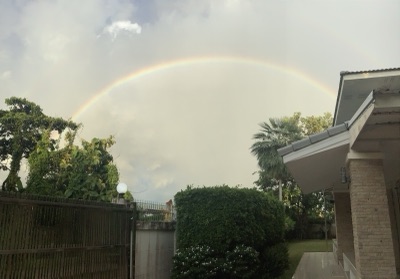
Photo: Pinplaybloxorwiki / Wikimedia Commons (CC0)

Photo: Jacek Halicki / Wikimedia Commons (CC BY-SA 4.0)
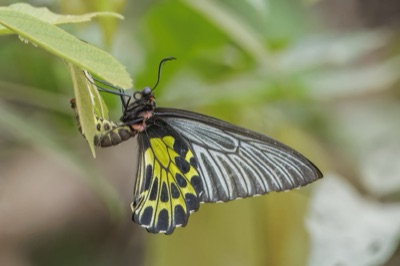
Photo: Charles J. Sharp / Wikimedia Commons (CC BY-SA 4.0)
Summary
- Phi in Kham Mueang covers protecting spirits and feared ones; it also means a corpse and is used for people who behave badly.
- Ancestor spirits such as phi pu ya, phi huean and phi mo nueng look after a family; phi pu ya pass down the female line.
- Phi suea means a guardian spirit, as in phi suea ban, phi mueang and phi suea wat; the butterfly is kam boe.
- The phi ka belief once led to people being accused and driven out; learn it with understanding and never use it to label anyone.
- Some words begin with phi but are not spirits: phi ngueak hung (rainbow), phi pung sao (shooting star) and phi li (very beautiful).
Look up more phi words in the Moradok Lanna dictionary. For the rites, read Liang Phi Pu Ya and Hong Khwan, or see the rice-steaming pot and other utensils in Lanna Kitchen Words.
Sources
- Moradok Lanna dictionary: ผี · ผีปู่ย่า · ผีเสื้อบ้าน · ผีก๋ะ · ผีเงือกฮุง
- Edwin Roy Zehner. (2015). ผีกะในภาคเหนือของไทยตอนปลายคริสต์ศตวรรษที่ 19 สืบเชื้อสายตามตระกูลแม่จริงหรือไม่ [Memories of Phii Ka Accusations in Northern Thailand]. Asia Social Issues, 8(1), 15–34.
- Isara Treepunya. (2020). Book review: Lanna Guardian Spirits: From the Spirit House to the Statue, Shrine and Monument (Prasit Leepreecha, 2017). Chophayom Journal, 31(1), 124–138.
- Sirindhorn Anthropology Centre, ethnic groups database. Mlabri Maniq seminar summary (in Thai)
- Photos from Wikimedia Commons as credited under each image; they illustrate the words, and some were taken outside northern Thailand as noted in the captions.


