
Photo: NASA, ESA, AURA/Caltech, Palomar Observatory / Wikimedia Commons (Public domain)
Dao Wi Kai Noi: The Pleiades Hen and Her Seven Chicks
Dao wi kai noi (ดาวฯวีไก่ห้นฯอฯ, Kham Mueang reading dao wi kai noi) is what the people of Lanna call the Pleiades, the little cluster of stars that sparkles in the cold-season sky. The Moradok Lanna dictionary says the name comes with "a folk tale passed down" to teach children about right and wrong, good and bad deeds, and gratitude towards those who care for them.
This article tells the tale of dao wi kai noi the Lanna way, explains where the word wi comes from, collects the Kham Mueang words in the story, and takes you outside to look for the mother hen and her seven chicks in the real sky.
Why the Pleiades are called "dao wi"
The word wi (วี, wi) means a fan in the dictionary, the thing you wave to make a breeze, and as a verb it means to flap, wave or fan. The dictionary goes on to say that Northerners "call the Pleiades dao wi or dao wi kai noi", because the stars sit together in a small group like a fan opened out across the sky.
The word noi (ห้นฯอฯย, noi) means small or little, as in ma noi, a puppy. So kai noi means a little chicken, a chick.
| Lanna word | Lanna script | Meaning (from the dictionary) |
|---|---|---|
| dao | ดาวฯ | something seen as a point of light in the sky when it is dark; a star |
| wi | (see above) | a fan; also a name for the Pleiades, dao wi |
| dao wi kai noi | (see above) | the Pleiades, and the tale that teaches gratitude |
| kai noi dao wi | ไก่ห้นฯอฯยฯดาวฯวี | the same name with the words swapped; both are used |
Khai tam-nong: the tale of dao wi kai noi
In Lanna, starting to tell a story is called khai tam-nong (ไขทำนอฯง, khai tam-nong). This tale has many versions. The one below is retold in our own words, following the outline of the Lanna version told in the picture book "Dao Wi Kai Noi" from TK Park, Thailand's Knowledge Park.
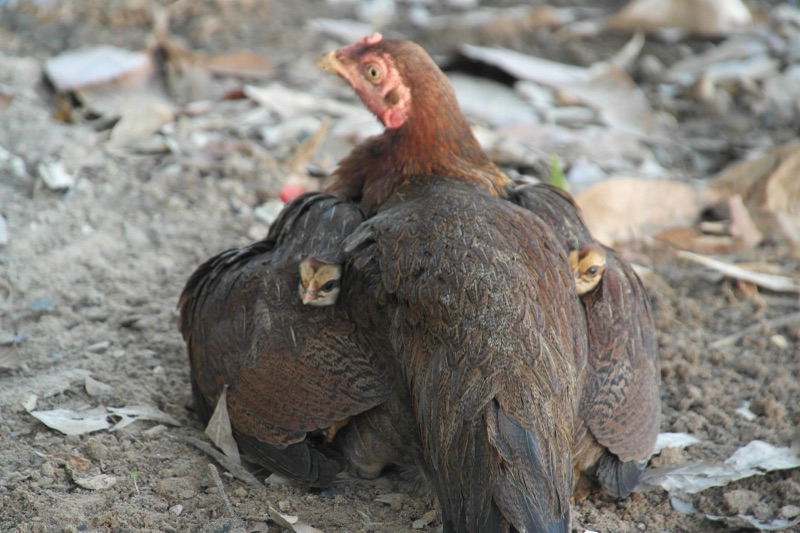
Once upon a time, in a village at the edge of the forest, there lived an old husband and wife. In Kham Mueang they are po ui and mae ui, grandpa and grandma. They were very poor and owned nothing at all, except one mother hen and her seven little chicks. Every evening the hen spread her wings, and her chicks crept underneath to sleep warm.
One day a tu jao, a Buddhist monk, walking on a wandering retreat, set up his umbrella tent to rest near the village. The old couple wanted to make merit by offering him food, but they had nothing to give, so they talked it over and decided to cook the hen. The hen overheard them. That night she called her seven chicks to her, said goodbye, and told them to take good care of one another.
The next morning the old couple took the hen to cook, as they had planned. When the seven chicks saw that their mother was not coming back, they were so heartbroken that they did not want to live on without her. One by one, all seven jumped into the fire to pai tuai their mother, to go along with her.
The old couple were deeply sorry, and went to tell the monk. Seeing the chicks' gratitude and their love for their mother, the monk used his power to send all seven chicks to be born again as a little group of stars in the sky. Whoever looks up can han, see, the seven chicks huddled together. And so people have called these stars dao wi kai noi ever since. Bo ya ja lae.
Khai tam-nong means to recount a story, and it is used when starting to tell one. In palm-leaf chronicles the word dai (ด่ายฯ, dai) often marks the end of a sentence before a new passage starts, and a tale ends with bo ya ja lae (บ£าช¦, bo ya ja lae), a closing phrase that says the story is over, roughly "and so it was".
The Pleiades tale is told all over Thailand, and the details change from teller to teller. An article by NSTDA SPACE Education (2021) tells that the seven chicks "jumped into the pot" after their mother and that the deities made them stars in the sky, and MGR Online (2009) likewise sums up that the chicks jumped into the cooking pot after her. In the Lanna version told above, it is the monk who turns the chicks into stars.
Kham Mueang words from the tale
One short tale teaches a lot of Kham Mueang. Read the story above again with this table.
| Lanna word | Lanna script | Kham Mueang reading | Meaning (from the dictionary) |
|---|---|---|---|
| po ui | พํ่อฯอุ้ย | po ui | grandfather (either side); an old man |
| mae ui | แม่อุ้ | mae ui | grandmother (either side) |
| ui | อุ้ | ui | word for the parents of one's parents |
| tuk | ทุก์ขฯ | tuk | suffering, hardship; poor |
| yak | ยากฯ | yak | hardship; poor, without money |
| tu jao | ทุเจั้า | tu jao | a Buddhist monk |
| tan | ทาฯนฯ | tan | giving, donation (alms) |
| bun | บุญ | bun | merit, goodness |
| bap | บาฯปฯ | bap | sin, wrongdoing |
| kai | ไก่ | kai | chicken, a bird-like fowl |
| fak | ฟักฯ | fak | (verb) to brood, keep eggs warm until they hatch |
| pik | ปีกฯ | pik | wing |
| fai | ไฟ | fai | fire |
| kong lua | กอฯงหลฯ฿วฯฯ | kong lua | a pile of firewood |
| mo | หํมฯอฯ | mo | a cooking pot |
| tuai | ทวฯยฯ | tuai | to follow; along with |
| pai tuai | ไพทวฯยฯ | pai tuai | to go along with |
| tai | ตายฯ | tai | to die |
| han | หันฯ | han | to see, to meet |
| fa | ฟ้า | fa | the sky; heaven |
| sek | เสกฯ | sek | to chant a spell to make something sacred or magical |
Perhaps the sweetest word in this story is kai phoe (ไก่เผิ่อฯ, kai phoe), the way a mother hen spreads her wings and calls out, chasing and pecking at anyone who comes near her chicks. One word tells the whole of a mother hen's love.
In the tale above, "whoever looks up can han the seven chicks" means "can see the chicks". It does not mean "to turn" as in central Thai. For example, koei han ko means "have you ever seen it?"
Seeing dao wi kai noi in the Lanna sky
Dao wi kai noi really is up there. To astronomers it is the Pleiades star cluster, or M45 (Messier 45), in the constellation Taurus. NSTDA SPACE Education (2021) explains that it is not a single star but a cluster: the naked eye sees about 6–7 stars, but there are in fact more than 1,000.
- Where: in the constellation Taurus
- How far: about 445 light-years, according to NASA, which adds that this number is not universally agreed upon
- Naked eye: about 6–7 stars (NSTDA)
- Best time: the Northern Hemisphere's cold season; NASA suggests December
In November, NASA suggests looking east in the couple of hours after dark, and the cluster climbs to its highest point around midnight. In Lanna this is the cool season and the time of the Yi Peng festival. Step outside at yam laeng (ยามฯแลงฯ, yam laeng), in the evening once the sky is fully dark, look for a small blue group of stars clustered like a fan, or like chicks snuggled together, and tell this tale to the children in your family.
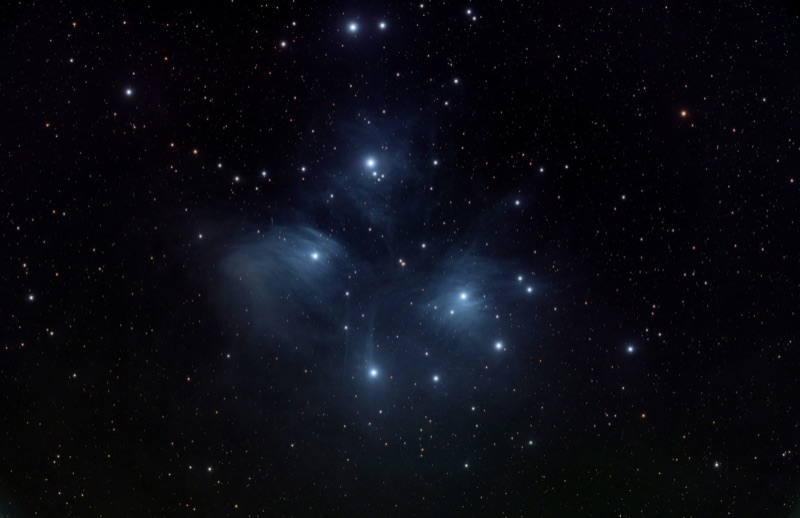
The ancient Greeks saw this cluster as seven sisters (the Seven Sisters), the Japanese call it Subaru, and it is also known as Krittika (NSTDA SPACE Education, 2021). But the people of Lanna saw a mother hen with her chicks, and a fan spread open across the sky.
What the tale teaches
The dictionary states the purpose of the tale plainly: it is told "to teach and train young men and women" to know sin and merit, right and wrong, to avoid evil and do good, and to be grateful to those who have helped them.
- A mother's love: the hen shelters her chicks every night and thinks of them to the very end.
- The children's gratitude: the chicks will not leave their mother, and so their love shines in the sky for the whole world to see.
- The faith of the poor: the old couple give up the only thing they have in order to make merit. The tale does not call anyone a villain; it invites listeners to think about animals that love their young just as people do.
How to tell it to children
This tale has a part where the mother hen and her chicks die, so many families tell that part gently, for example "The mother hen did not come back, and the chicks went after her", and then move quickly to the ending, where the chicks are with their mother in the sky every night. After the story, take the children outside to look for dao wi kai noi together. The tale becomes a memory they can see for real every cold season.
Summary
- Dao wi kai noi (read dao wi kai noi), also kai noi dao wi, is the Kham Mueang name for the Pleiades.
- Wi means a fan, because the people of Lanna saw the cluster as a fan, and kai noi means chicks.
- In the Lanna version of the tale, seven chicks follow their mother out of love, and a monk turns them into stars, a lesson in gratitude.
- To astronomers it is the M45 cluster in Taurus, easiest to see in the cool season, around November to December.
- A Lanna tale begins with khai tam-nong and ends with bo ya ja lae.
Look up more Kham Mueang words for stars and the sky in the Moradok Lanna dictionary, read Lanna funny folk tales in Jia Kom, and learn po ui, mae ui and other family words in Kham Mueang family words.
Sources
- Moradok Lanna dictionary: ดาววีไก่หน้อย · วี · ไก่เผ่อ · ไขตำนอง · บ่อย่าจ๊ะแล
- TK Park (Thailand Knowledge Park). ดาววีไก่น้อย [Dao Wi Kai Noi] (Lanna folk-tale picture book). The outline of the Lanna version that this article retells in our own words
- Pongsatorn Kitwech. (2021, 18 January). กระจุกดาวลูกไก่ (Pleiades) [The Pleiades star cluster]. NSTDA SPACE Education, National Science and Technology Development Agency
- MGR Online. (2009, 30 June). นิทานดาวเรื่องใหม่ "กระต่ายน้อยอิงอิง" กับแม่และดวงจันทร์ [A new star tale: "Little Rabbit Ing Ing", her mother and the Moon]
- NASA. Messier 45 (The Pleiades). Hubble's Messier Catalog
- NASA. (2020). What's Up: November 2020 Skywatching Tips from NASA
Look up "ดาววีไก่หน้อย" in the Moradok Lanna dictionary (in Thai)


