
Photo: Pablo Rebolledo / Unsplash
How to Greet in Chiang Mai: Kham Mueang Hellos and the Wai
How to greet in Chiang Mai? Not only with sawatdi. People in Chiang Mai and across Lanna usually greet each other with a warm question, such as pai tang dai ma (ไพทาฯงฯไดมา, Kham Mueang reading pai tang dai ma), "where have you been?", or kin khao laeo ka, "have you eaten yet?". Answer a local in Kham Mueang (Northern Thai) with even one or two words, and you will see the smile get bigger straight away.
This lesson opens our series Lanna for Travellers, written for visitors from abroad and from other parts of Thailand. It covers greetings, easy answers, thank you and sorry, what to call people of different ages, and how to wai. Every word comes from the Moradok Lanna dictionary.
Sawatdi jao, sawatdi khrap: the hello that works everywhere
The word sawatdi appears in the Lanna dictionary as sawatsadi (สัวฯªดี, read sa-wat-sa-di), meaning goodness, prosperity, well-being. In daily life Northern Thai people say sawatdi just like the rest of Thailand. What makes it sound local is the polite word at the end.
- Women end with jao (เจั้า, read jao, rhymes with "cow"): sawatdi jao. The dictionary describes jao as "a sentence ending that shows humility, nowadays mostly used by women", and notes that in earlier times men also used it when speaking to nobles and senior monks.
- Men usually end with khrap, as in standard Thai. The dictionary does not list a separate male polite ending for Kham Mueang.
Thai PBS reports that Phraya Upakit Silapasan (Nim Kanchanachiwa) began using the word sawatdi in 1933, and the government officially adopted it as the national greeting on 22 January 1943. Before that, Thais greeted each other with questions such as "are you well?", "where have you been?" and "have you eaten yet?", which Northern Thai people still use every day.
Pai tang dai ma, kin khao laeo ka: greeting with a question
Some visitors are surprised when a stranger asks where they have been or whether they have eaten. These questions are not nosy. They are a friendly way of showing care, much like "How are you?" in English. A short answer and a smile are all you need.
| Kham Mueang | Lanna script | Meaning (from the dictionary) |
|---|---|---|
| pai tang dai ma | ไพทาฯงฯไดมา | where have you been? |
| luk nai ma | ลุกไหนฯมา | where have you come from? |
| pai nai | ไหนฯ | where are you going? (the dictionary's own example for nai, "where") |
| kin khao | กินฯเขั้า | to eat (a meal), to have rice |
| …laeo ka | คาฯ | "…yet?", as in ap nam laeo ka (have you bathed yet?); so kin khao laeo ka = have you eaten yet? |
| kin khao kap yang | กินฯเขั้ากัปฯหัยฯง | what did you have with your rice? |
Younger people often say sabai di ko (are you well?): standard Thai sabai di plus the Northern question word ko. More question words in Asking Questions in Kham Mueang.
How to answer like a local
Keep it short: say you are sightseeing, going to the market or heading home, then add jao or khrap. That is polite enough.
| Answer | Lanna script | Meaning |
|---|---|---|
| pai aeo | ไพแอ่วฯ | going out, sightseeing: the traveller's best answer |
| pai kat | ไพกาดฯ | going to the market |
| mue ban | เมิอฯอบ้าฯนฯ | going home |
| kin laeo jao | เจั้า | I've eaten (polite, the dictionary's example) |
| bo dai kin tuea | เทิ่อฯอ | I haven't eaten yet (tuea ends a negative sentence) |
| kha jao pai hong hian jao | ข้าเจั้า | I'm going to school (kha jao = a woman's polite "I") |
| maen laeo | แม่นฯ¦วฯ | that's right |
| jai | ไช่ | yes |
The dictionary gives this very scene: when an adult asks a girl "where are you going?", the polite reply is kha jao pai hong hian jao. The final jao softens the answer, just like kha in standard Thai.
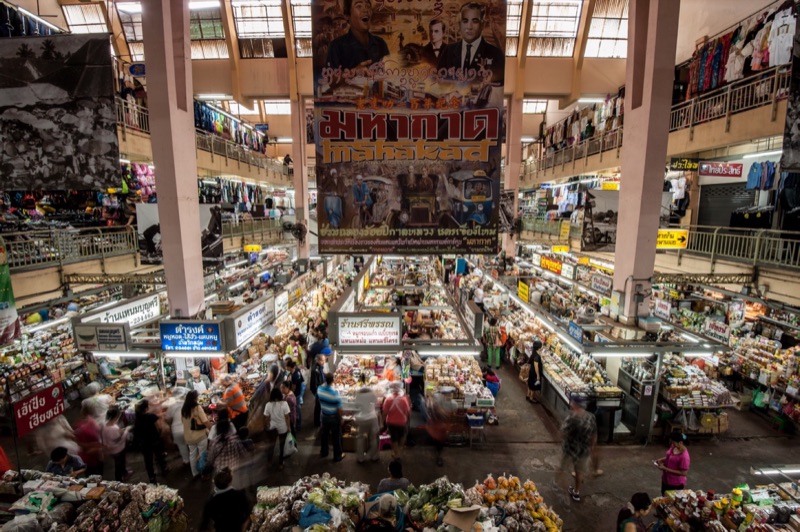
Yin di means thank you: thanks, sorry and goodbye
The first word every visitor should learn is yin di (ยินฯดี, read yin di). In standard Thai yin di means "glad", but in Kham Mueang it is how you say thank you.
| Kham Mueang | Lanna script | Meaning (from the dictionary) |
|---|---|---|
| yin di | ยินฯดี | thank you |
| yin di jat nak | ยินฯดีชาดฯนักฯ | thank you very much; women say yin di jat nak jao |
| su ma toe | สูมาเทิอฯะ | sorry, excuse me (men and women) |
| su ma toe jao | สูมาเทิอฯะเจั้า | sorry (polite, used by women of any age) |
| mue | เมิอฯอ | to go, to go back |
| yu di mi suk | อยฯู่ดีมีสุข์ | be well and happy: a blessing elders give to younger people, as in hue yu di mi suk noe |
When leaving, locals often say pai kon noe or mue kon noe ("I'll be off now"). The dictionary does not list this as a phrase, but mue means "to go, to go back" and noe works like "OK?" at the end. If an elder blesses you with hue yu di mi suk noe, raise your hands in a wai and answer yin di jao or yin di khrap.
The dictionary lists yin di ying laeo khaek kaeo ma yuean (ยินฯดียิ่งฯแลฯวฯแขกฯแก้วฯมาเยิอฯร): "we are delighted that honoured guests have come to visit", a phrase often written on welcome signs. Khaek (แขกฯ) here simply means a visitor, which is you.
Not fluent yet? Say so: u kam mueang bo jang, "I can't speak Kham Mueang". U kam mueang (อู้คำฯเมิอฯง) means to speak the Lanna language, and u bo jang (อู้ช่างฯ) means "can't speak (it)". Most people will smile and start teaching you.
What to call people: words for every age
Northern Thai people address each other with family words, even when they are not related. An older shopkeeper becomes pi or ai, and grandparents are po ui and mae ui. It sounds both respectful and friendly.
| Kham Mueang | Lanna script | Used for (from the dictionary) |
|---|---|---|
| ai | อ้ายฯ | a man older than you (elder brother) |
| pi | พี่ | a woman older than you (elder sister) |
| nong | น้อฯง | someone younger than you |
| pa | ป้า | a woman older than your parents (aunt) |
| na | นาฯ | your mother's younger sibling |
| po ui | พํ่อฯอุ้ย | grandfather, an old man |
| mae ui | แม่อุ้ | grandmother, a woman of your grandmother's generation |
| po luang · mae luang | พํอฯหลฯวฯง · แม่หลฯวฯง | the village headman · the headman's wife |
| tu jao | ทุเจั้า | a monk, of any age |
| tu pi | ทุพี่ | "elder brother" monk, a respectful way to address a monk |
| khru-ba | ระฯคูบาฯ | khruba: a Lanna-only title for revered senior monks |
| pha | ระฯพ | a novice monk (written phra, read pha) |
| jao mu | เจั้าหู่ | friends, companions |
The dictionary says pi is an older sister. For an older man, say ai. The word lung (uncle) is not a Kham Mueang dictionary word; with older people, po ui and mae ui are the safer, politer choice. All family words are in Kham Mueang Family Words.
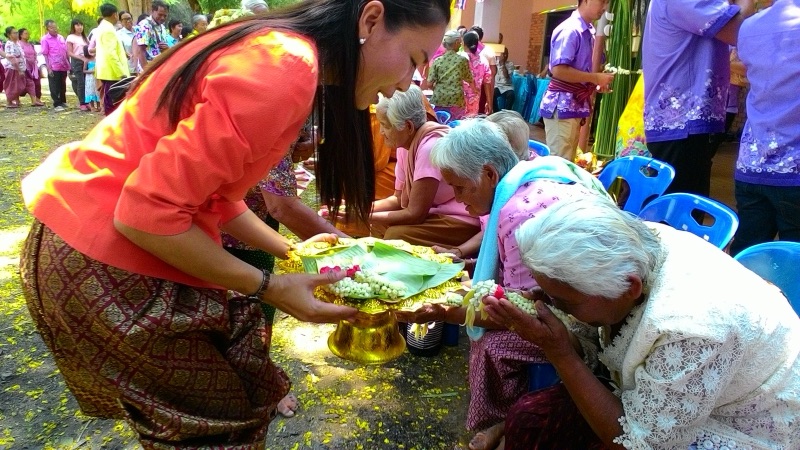
The wai: who goes first, and how high
Kham Mueang calls the wai wai (ไห้วฯ), just like standard Thai. Pressing the palms together is san mue (สานฯมื), and paying respect is wai sa (ไห้วฯสา).
The Faculty of Medicine Siriraj Hospital, Mahidol University, explains the wai for foreign visitors like this:
- The junior person wais first. Whoever is younger or lower in status offers the wai; the senior person returns it, hands at about chest height.
- Hand height shows respect. The joined hands sit somewhere between the chest and the forehead; the more respect, the higher.
The travel site Thai Holiday Guide adds:
- Friends and equals: hands around chest level, a light nod.
- Elders, teachers, your hosts: hands a little higher, a deeper bow.
- Monks and sacred places: higher still, done with care, and never with physical contact.
- You don't need to wai everyone first, such as shop staff, drivers or children; a smile and a greeting are enough. But if someone wais you, return it.
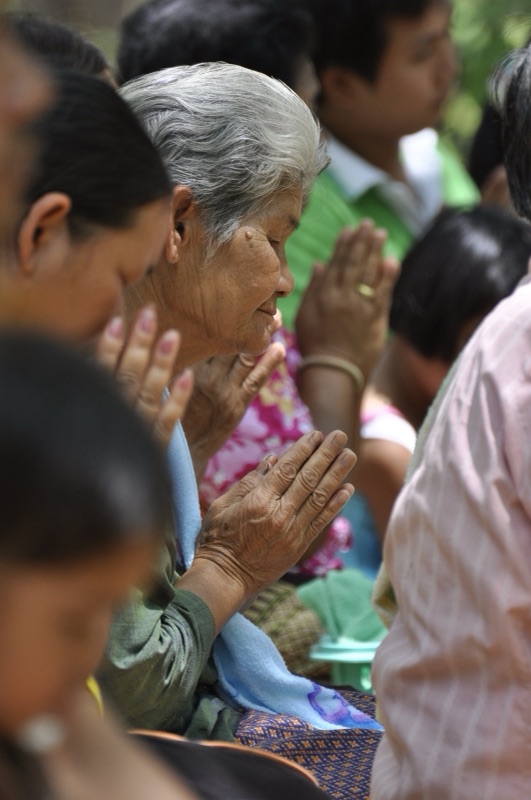
When you meet a monk, wai respectfully and call him tu jao or tu pi. Don't expect a wai back; he may simply smile or nod. A handshake is fine with people who work with foreigners every day, but with elders and monks a wai is always the better choice.
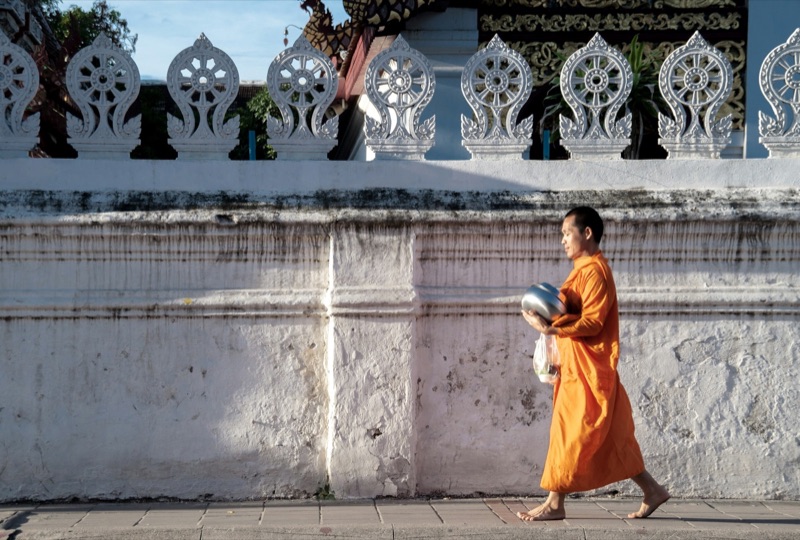
Sample conversation: greeting a market vendor
This short dialogue is our own example, built from dictionary words and sentence patterns.
Vendor: Sawatdi jao, pai tang dai ma jao? (Hello, where have you been?)
Traveller: Pai aeo khrap. Pa kin khao laeo ka khrap? (Just sightseeing. Have you eaten yet, auntie?)
Vendor: Kin laeo jao. U kam mueang dai ko? (I have. Can you speak Kham Mueang?)
Traveller: U kam mueang bo jang khrap. Yin di jat nak khrap. (I can't speak it, sorry. Thank you very much!)
Vendor: Hue yu di mi suk noe. (Be well and happy!)
Practice: greet and answer like a local (answers at the end)
- What does pai tang dai ma mean?
- How does a woman say "thank you very much"?
- You bump into someone by accident. What do you say?
- The man selling at the market is older than you. Do you call him pi or ai?
- Who wais first?
Answers 1. Where have you been? · 2. Yin di jat nak jao · 3. Su ma toe (a woman says su ma toe jao) · 4. Ai · 5. The younger or more junior person
Summary
- Northern Thai people greet with sawatdi plus jao (women) or khrap (men), and often with a question: pai tang dai ma? or kin khao laeo ka?
- These questions show care. Answer briefly: pai aeo, pai kat or kin laeo jao.
- In Kham Mueang, yin di means thank you; sorry is su ma toe.
- Address people with family words such as ai, pi, po ui, mae ui, and call a monk tu jao.
- The junior person wais first; the more respect, the higher the hands.
Look up more greetings in the Moradok Lanna dictionary (in Thai), and learn the little words that make you sound local in Kham Mueang Sentence Endings.
Sources
- Moradok Lanna dictionary: ไปตางใดมา · ยินดี · เจ้า · สูมาเต๊อะ · ไหว้
- Phiratchai Phasuthan. (2026). 22 มกราคม 2486 ประกาศใช้ 'สวัสดี' คำทักทายแห่งความปรารถนาดี [22 January 1943: "Sawatdi" adopted, a greeting of goodwill]. Thai PBS
- Faculty of Medicine Siriraj Hospital, Mahidol University. Thailand Information
- Thai Holiday Guide. Thai Gestures and Body Language
Look up "ไปตางใดมา" in the Moradok Lanna dictionary (in Thai)


