
ภาพประกอบ: มรดกล้านนา
Ka-tai: Why Rabbits Mean Sex, and Rabbits in Kham Mueang
In Kham Mueang a rabbit is a ka-tai (ระฯกต่ายฯ, Kham Mueang reading ka-tai); some places say kha-tai (ขต่ายฯ). In the West the rabbit became a symbol of sex and fertility, to the point that a rabbit head in a bow tie became the logo of Playboy magazine. In Lanna, though, the rabbit is the animal of the year mao, the shape people see on the moon, and even the name of a kitchen tool.
This article answers two questions: why is the rabbit linked with sex, and do rabbits really mate all the time? Along the way it teaches the Kham Mueang words around the rabbit, taken from the Moradok Lanna dictionary.
What is a rabbit called in Kham Mueang?
The dictionary gives ka-tai two meanings. The first is the animal itself: "a small mammal with fluffy fur, long ears and gnawing teeth at the top, five toes on the front feet and four on the hind feet." The second is the coconut grater, a kitchen tool with a saw-toothed metal blade on the end of a wooden seat, which the dictionary says "was originally shaped like a rabbit."
Kha-tai carries both meanings too. Kham Mueang also has other, rather charming names for the coconut grater, which come in the last section.
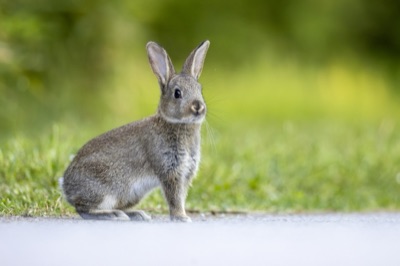
Photo: Alexis Lours / Wikimedia Commons (CC BY 4.0)
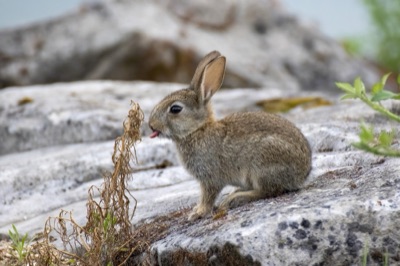
Photo: Alexis Lours / Wikimedia Commons (CC BY 2.0)
Why is the rabbit a symbol of sex?
The image has at least three roots: the rabbit's own biology, old European beliefs, and 20th-century marketing.
1. Rabbits have many young, fast
Animal Diversity Web (University of Michigan) explains that one reason for the rabbit's reproductive success is induced ovulation: the female has no regular ovulation cycle and releases eggs after mating. Pregnancy lasts about 30 days, a litter averages 5 to 6 young, and the female can mate again right after giving birth, so she can have several litters a year.
The Mammal Society in the UK estimates that one wild female can raise around 25 young a year. Hence the English phrase "breed like rabbits."
Kham Mueang has its own farmyard words for animal breeding. The dictionary records these:
| Kham Mueang | Lanna script | Meaning (from the dictionary) |
|---|---|---|
| chae | แช | (of animals) to be in heat during the breeding season |
| pat | พาดฯ | to breed animals, e.g. pat khwai, to breed buffaloes |
| kop kan | คอฯบกันฯ | (of some male animals, e.g. rhinoceros beetles, giant water bugs) to climb onto the female's back to mate |
| man | มานฯ | pregnant, of people or animals; a pregnant one is mae man |
| pa man | พามานฯ | to be pregnant, to carry young (also man) |
2. Old European beliefs
The Mammal Society notes that Europeans long linked rabbits with fertility and the cycle of the moon. Rabbits were associated with the Greek goddess Aphrodite, and in ancient Rome they were given to women who hoped to conceive.
As for the Easter Bunny who brings eggs to children, the earliest known written record is a 1682 essay by Georg Franck von Franckenau, which describes German children hunting for eggs laid by a hare. The popular idea that the Easter Bunny comes from an ancient goddess called Eostre or Ostara has very little evidence behind it, as folklorist Stephen Winick points out, least of all for any link between that goddess and hares.
3. The Playboy logo
Hugh Hefner launched Playboy in 1953. The rabbit head in a bow tie was drawn by Art Paul, the magazine's first art director, who said it took him about an hour; the logo appeared on every cover except the first.
In a 1967 interview quoted by The Guardian, Hefner said the rabbit "has a sexual meaning" because it is "a fresh animal, shy, vivacious, jumping." Playboy's bunny cemented the rabbit's sexual meaning in Western culture.
Do rabbits really mate all the time?
No. Rabbits do breed fast, but they do not mate all day, all year round.
- There is a breeding season. The Mammal Society says wild rabbits in Britain breed mainly from January to August. Animal Diversity Web says rabbits can breed all year, but most breeding happens in the first half of the year.
- Not every rabbit gets the same chance. Wild rabbits live in groups with a pecking order. Dominant males get first access to females and dominant females get the best nest sites; low-ranking females have to give birth in single burrows further away, where their young face more predators.
- The reputation comes from speed, not frequency. Rabbit numbers grow fast because pregnancy is short, litters are large, the female can conceive again right after giving birth, and the young grow up quickly. It is not because rabbits are mating all the time.
Pregnancy about 30–31 days · 3–7 young per litter (average 5–6) · weaned at 3–4 weeks · around 25 young per female per year
The rabbit in Lanna eyes: the year mao and Phra That Chae Haeng
In Lanna the rabbit does not stand for sex. It is the animal of the year mao (เหั้มฯา, Kham Mueang reading mao), the Year of the Rabbit, the 4th year of the twelve-year animal cycle. The dictionary explains pi hon tai (ปีห฿นฯไท) as the old Tai way of naming years: chai, pao, yi, mao, si, sai, sa-nga, met, san, lao, set, khai, matching the central Thai years of the rat, ox, tiger, rabbit and so on to the pig.
Each person's birth-year animal is called their tua poeng (ต฿วฯเพิ่งฯ, Kham Mueang reading tua poeng), so someone born in a mao year has the rabbit as their tua poeng.
Lanna people believe in that pi koet (ธาฯตฯปีเกิดฯ), a relic stupa for each birth year. The dictionary names the stupa of the Year of the Rabbit as Phra That Chae Haeng, at Wat Phra That Chae Haeng, Phu Phiang District, Nan. Following this belief, people born in a mao year like to pay respect there as a blessing for their lives.
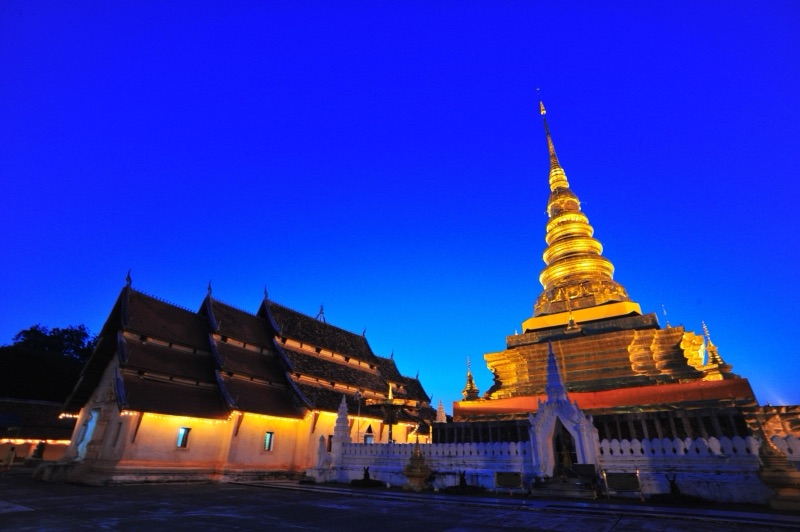
Photo: K.Phothiwijit / Wikimedia Commons (CC BY-SA 3.0)
The rabbit on the moon
Kham Mueang calls the moon duean (เดิอฯร, Kham Mueang reading duean), the same word as "month." Looking at the full moon, Thais and people in many Asian countries see the shape of a rabbit in its shadows.
In Buddhist culture this comes from the Sasa Jataka (the "Wise Hare" birth story). The Bodhisatta, born as a hare, has nothing to offer the god Indra, disguised as a hungry Brahmin, except grass, so he leaps into a fire to give his own body as food. The story says Indra then placed the image of the hare on the moon (some versions say he drew it, others that he carried the hare up there) so the world would remember this self-sacrifice.
A study by Supak Mahavarakorn (2012) found seven stories in the Jataka commentaries that retell the myth of the rabbit on the moon. Chanchai Khongphianthum (2017) explains that the Khmer see the rabbit as a symbol of wisdom, and that their reverence for the Sasa Jataka gave rise to a moon-worship festival in Khmer culture.
So where the West sees sex in the rabbit, Buddhist Asia sees self-sacrifice and wisdom.
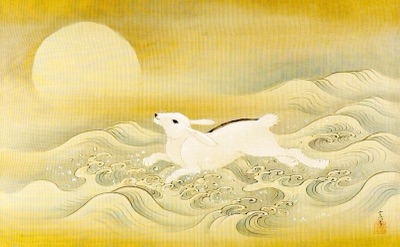
Photo: Kanō Tsunenobu / Wikimedia Commons (Public domain)
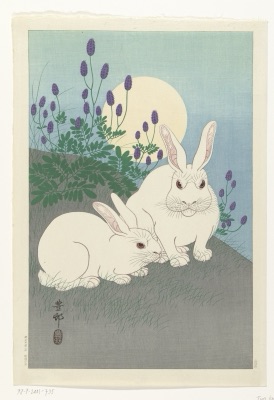
Photo: Rijksmuseum / Wikimedia Commons (CC0)
Rabbits in the kitchen and other Kham Mueang words
Back to the coconut grater. Central Thai calls it a "rabbit," but Kham Mueang calls the same tool a maeo ("cat," Kham Mueang reading maeo) or a ngong (Kham Mueang reading ngong), and scraping coconut is khut ba pao (Kham Mueang reading khut ba pao). The Lanna script for all three is in the table below. The dictionary explains: "to scrape coconut on the coconut grater (in some places called the maeo or ngong coconut scraper)."
| Kham Mueang | Lanna script | Meaning (from the dictionary) |
|---|---|---|
| maeo | แมวฯ | cat; the coconut grater (also ngong) |
| ngong | งอฯง | the coconut grater (also maeo khut ba pao) |
| khut ba pao | ขูดบ่าฯพ้ลฯาวฯ | to scrape coconut with the coconut grater |
| khiao kho bok | ข้ยฯวขํอฯบ฿กฯ | buck teeth: two upper front teeth larger than normal, like a hoe (kho bok = hoe) |
| lai lao | ไล่เหั่ลฯา | to hunt by having beaters drive animals out of hiding, e.g. driving rabbits out of the scrub |
| la thuean | ล่าเถิ่อฯร | to go into the forest hunting large game; hunting small game such as rabbits in the scrub is la lao or lai lao |
| bo | โบ | a silk cloth or ribbon tied into the shape of rabbit ears (a bow) |
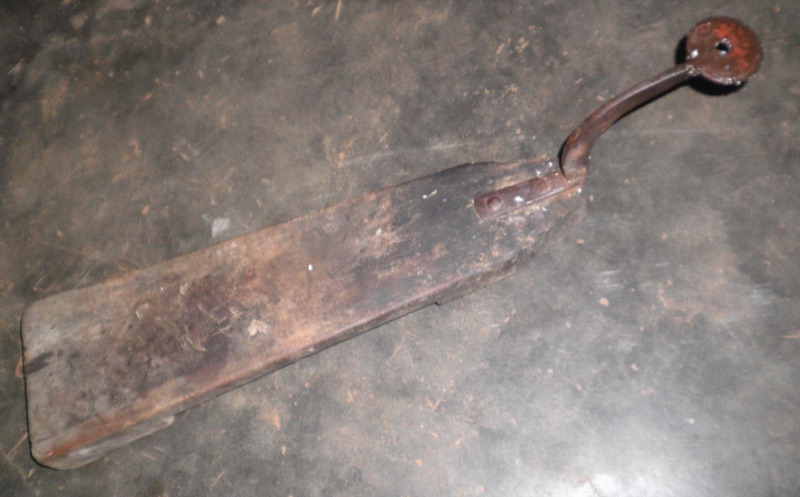
Photo: Mayooranathan at Tamil Wikipedia / Wikimedia Commons (Public domain)
Summary
- In Kham Mueang a rabbit is a ka-tai or kha-tai, and the word also means the coconut grater.
- The West made the rabbit a symbol of sex because rabbits breed fast and have many young, helped along by old European beliefs and the Playboy logo Art Paul drew for Hugh Hefner.
- Rabbits do not mate all the time: they have a breeding season and a pecking order. Their numbers grow fast because pregnancy is short and litters are large.
- In Lanna the rabbit is the animal of the year mao, the tua poeng of people born in the Year of the Rabbit, whose birth-year stupa is Phra That Chae Haeng.
- Buddhists see the rabbit on the duean (moon) as a symbol of self-sacrifice, and Kham Mueang calls the coconut grater a maeo ("cat") or ngong.
Look up more words in the Moradok Lanna dictionary (in Thai). Read more about Lanna ways of counting years and months in Duean Nuea, and about birth-year banners in Tung Lanna.
Sources
- Moradok Lanna dictionary (in Thai): กะต่าย · เหม้า · ตั๋วเปิ้ง · แมว · งอง
- Tislerics, A. (2000). Oryctolagus cuniculus (European rabbit). Animal Diversity Web, University of Michigan
- The Mammal Society. European rabbit. The Mammal Society (UK)
- Associated Press. (2018). Art Director Who Created Playboy Bunny Logo Dies At 93. CBS News
- It's Nice That. (2018). Playboy's original logo designer and art director for 30 years, Art Paul, has died aged 93. It's Nice That
- Cochrane, K. (2011). Bunny business: Is the Playboy party over?. The Guardian, reprinted in Taipei Times
- Keegan, F. (2025). The Surprisingly Controversial Origins of the Easter Bunny. Mental Floss
- สุภัค มหาวรากร (Supak Mahavarakorn). (2012). บทบาทของพระจันทร์ในอรรถกถาชาดก [The Role of the Moon in the Jataka Commentaries]. Institute of Culture and Arts Journal, Srinakharinwirot University 14(1)
- ชาญชัย คงเพียรธรรม (Chanchai Khongphianthum). (2017). กระต่ายในวัฒนธรรมเขมร [Rabbits in Khmer Culture]. Journal of Liberal Arts, Ubon Ratchathani University 13(2), 113–137
- All photos are from Wikimedia Commons as credited under each picture.


