
Photo: Tang2bar / Wikimedia Commons (CC BY-SA 4.0)
Trees in Kham Mueang: Bamboo, Teak and the Bodhi Tree
In Kham Mueang, the word mai (ไม้, Kham Mueang reading mai) comes before the names of almost every tree, such as mai du, mai sak and mai huak, and also before the names of things made of wood, such as mai tao (a walking stick) and mai sao (a picking pole). This article collects the Kham Mueang names of trees from the Moradok Lanna dictionary, from bamboo and the big trees used to build houses to temple trees and the trees that mark a city.
The dictionary also notes that Lanna script calls its vowel signs "mai" too: the a vowel is mai ka, the aa vowel mai kaa. Anyone learning the Lanna script (tua mueang) will hear the word often, both as "tree" and as "vowel".
Bamboo: called only by its kind
The dictionary explains that mai phai (ไม้ไผ่, Kham Mueang reading mai phai, bamboo) covers many clump-forming plants with hollow, jointed stems, and that Lanna names each kind of bamboo only by the word that follows, dropping the word "phai". So phai sang becomes mai sang, and phai ruak becomes mai huak.
| Kham Mueang | Lanna script | Meaning (from the dictionary) |
|---|---|---|
| mai sang | ไม้ซางฯ | sang bamboo: large, thick, long culms, used for basketry (also mai sang mon) |
| mai sang kham | ไม้ซางฯฅำ | a bamboo with golden culms, smaller than mai sang |
| mai sang nam | ไม้ซางฯหนฯามฯ | a wild sang bamboo with thorns along its branches |
| mai bong | ไม้บ฿งฯ | a bamboo smaller than village sang, thick, dense and tough, split into strips (tok) for weaving baskets or tying things |
| mai huak | ไม้รวฯก | ruak bamboo: short, small, thick, tough and straight; used for picking poles, fences and clothes rails; there is a black and a red kind |
| mai hok | ไม้ห฿กฯ | giant bamboo (phai tong), also called phai luang |
| mai phai luang | ไม้ไผ่หลฯงฯง | giant bamboo: tall, thick-walled, used for basketry |
| mai hok dam | ไม้ห฿กฯดำ | lam maloek bamboo: dense clumps, thick culms, long sections, thick walls (also mai ya) |
| mai lai | ไม้ไร่ | rai bamboo: a small wild bamboo whose shoots are eaten, crisp and tasty |
| mai khao lam | ไม้เขั้าหลฯา | khao lam bamboo: thin walls, long sections and a tough white inner skin, used as the tube for khao lam (sticky rice cooked in bamboo) |
| mai hia | ไม้เฮ้ยฯ | a bamboo with small, long sections and thin walls |
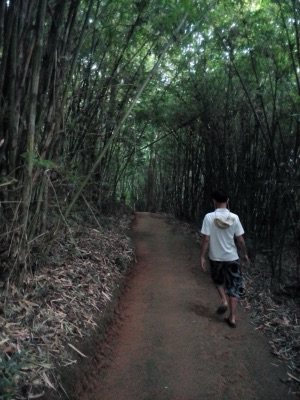
Photo: Ronggy / Wikimedia Commons (CC BY-SA 4.0)
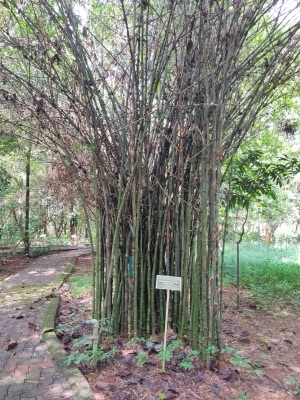
Photo: Vis M / Wikimedia Commons (CC BY-SA 4.0)
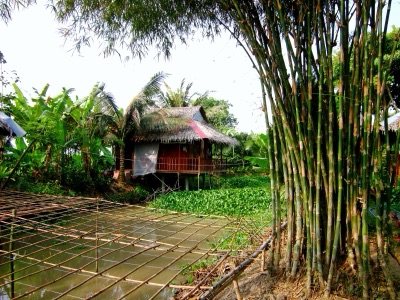
Photo: Bùi Thụy Đào Nguyên / Wikimedia Commons (CC BY-SA 3.0)
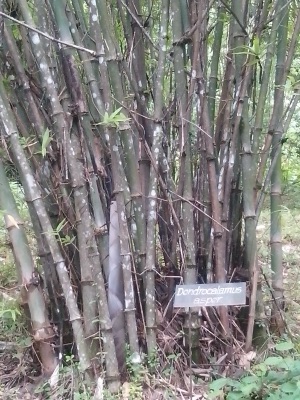
Photo: Dvellakat / Wikimedia Commons (CC BY-SA 3.0)
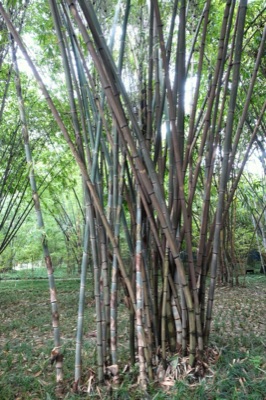
Photo: Daderot / Wikimedia Commons (CC0)
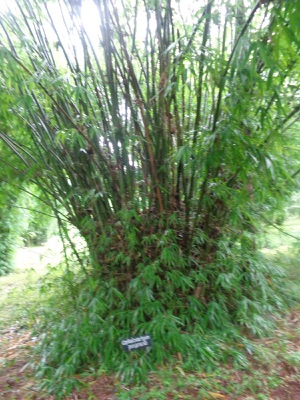
Photo: Dvellakat / Wikimedia Commons (CC BY-SA 4.0)
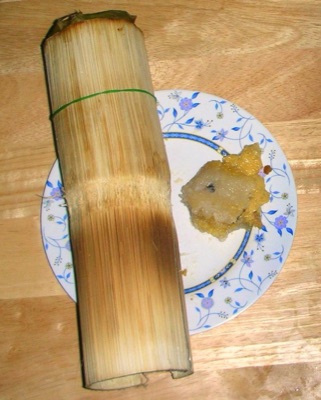
Photo: Xufanc / Wikimedia Commons (CC BY-SA 3.0)
Bamboo also becomes many everyday things with their own names: mai sao (ไม้ส้าวฯ), a fruit-picking pole usually made of mai huak; mai salap (ไม้สลาปฯ), split bamboo for fences; mai duk kan (ไม้ดูกก้านฯ), split bamboo strips used as the frame for tying thatch or tueng leaves into roofing panels; and mai khae (ไม้แฅ่), a torch of dry split bamboo bundled together, used to look for frogs at night or to travel in the dark.
Big trees and hardwoods
Many of the big trees the dictionary describes as used for houses and household things have Kham Mueang names quite unlike central Thai: teng becomes mai ngae, rang becomes mai pao, and phluang becomes mai tueng.
| Kham Mueang | Lanna script | Central Thai · meaning (from the dictionary) |
|---|---|---|
| mai sak | ไม้สักฯ | teak: a straight trunk, hard and durable wood, good for houses and household things |
| mai cha khian | ไม้จฅยฯร | takhian: hard wood sawn into planks for houses or dug-out boats; its resin seals boats |
| mai yang | ไม้ยางฯ | yang na: a huge tree, 40–50 metres tall, with a straight trunk and buttressed base |
| mai ngae | ไม้แงะ | teng: a very hard, durable wood, used for posts, beams and floors |
| mai pao | ไม้เพัา | rang: a hard wood that bears heavy loads, good for building |
| mai hiang | ไม้หยฯง | hiang: a deciduous tree with light red to reddish-brown wood; its flowers spin as they fall |
| mai tueng | ไม้ทึงฯ | phluang: big leaves; young leaves wrap things, dry leaves are made into roofing panels; the wood is used for houses |
| mai khayom | ไม้ขยอฯม | phayom: tough, hard wood; its young flowers are eaten |
| mai puai | ไม้ปวฯยฯ | tabaek: purple-pink flowers; fine, hard wood for posts and floorboards |
| mai ket daeng | ไม้เกัลฯดแดงฯ | chingchan: an expensive hardwood with dark red to deep purple heartwood, used for furniture |
| mai du | ไม้ดู่ | pradu: a big tree planted for shade along roads |
| mai tum | ไม้ตุ้ม | krathum: round, pale yellow, fragrant flower heads |
| mai phaeng | ไม้แภ่งฯ | sakae: its wood is used for firewood |
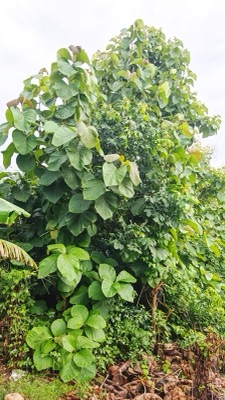
Photo: Dadjosm / Wikimedia Commons (CC BY-SA 4.0)
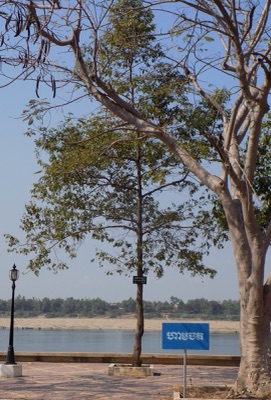
Photo: Pamputt / Wikimedia Commons (CC0)
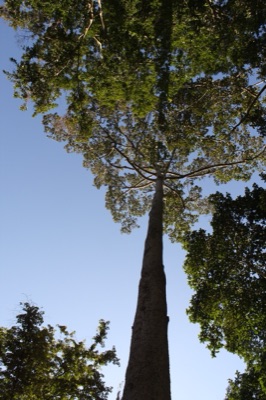
Photo: josh jackson / Wikimedia Commons (CC BY 2.0)
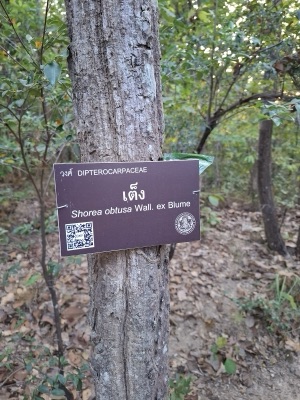
Photo: Lannafolium / Wikimedia Commons (CC0)
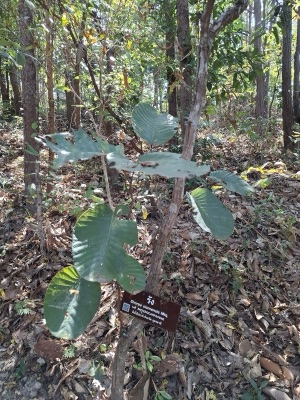
Photo: Lannafolium / Wikimedia Commons (CC0)
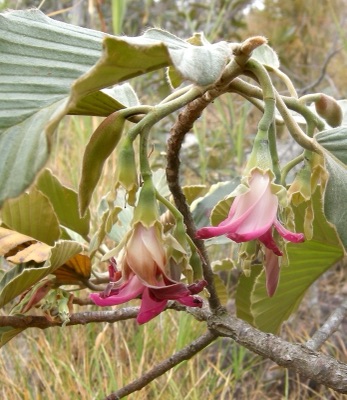
Photo: Len Worthington / Wikimedia Commons (CC BY-SA 2.0)
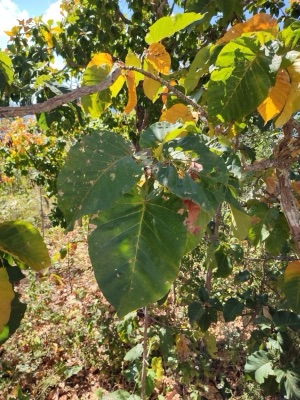
Photo: Иван Ковтун Ivan Kovtun / Wikimedia Commons (CC BY 4.0)
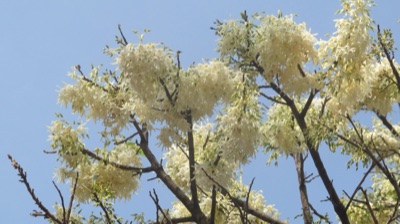
Photo: Haneeshkm / Wikimedia Commons (CC BY-SA 4.0)
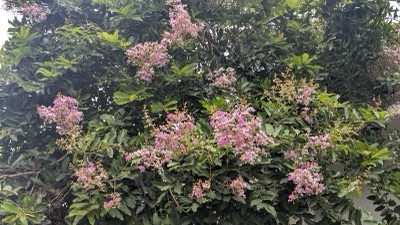
Photo: Rajasekhar1961 / Wikimedia Commons (CC BY-SA 4.0)
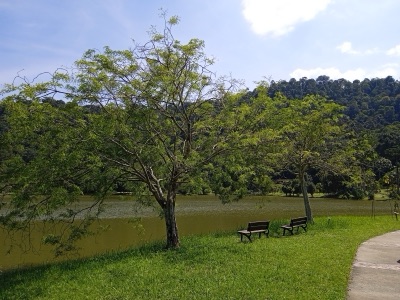
Photo: Wiki Farazi / Wikimedia Commons (CC0)
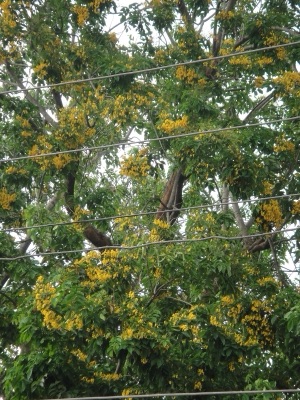
Photo: Rockrangoon / Wikimedia Commons (CC BY-SA 3.0)
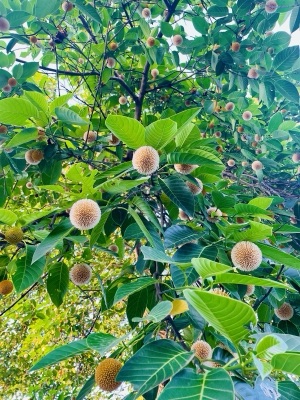
Photo: AjayDas / Wikimedia Commons (CC BY-SA 4.0)
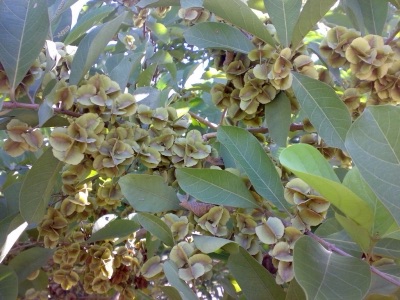
Photo: New Moon at vi.wikipedia / Wikimedia Commons (Public domain)
Temple trees and city trees
Mai sali (ไม้ระฯสี, Kham Mueang reading mai sali) is the bodhi tree, the sacred Sri Maha Bodhi. At Songkran, Khon Mueang take mai kam sali (ไม้คําฯระฯสี), forked props of different sizes, to prop up a bodhi tree, as a way of extending their own life and luck (read more in Wan Phaya Wan).
| Kham Mueang | Lanna script | Meaning (from the dictionary) |
|---|---|---|
| mai hai | ไม้ไฮ | sai, a fig tree; some kinds have hanging aerial roots |
| mai lung | ไม้ลุง | krang or nigrodha fig: an auspicious tree, often planted in temples for shade |
| mai suea mueang | ไม้เสิ้อฯอเมิอฯง | the tree where the city's guardian spirit lives, usually a big, tall tree |
| mai ming mueang | ไม้ | the tree of a city |
| mai mai mueang | ไม้หมฯายฯเมิอฯง | a big tree that marks where a city stands, visible from far away |
| mai mai tang | ไม้หมฯายฯทาฯงฯ | a tree used to mark the way from one city to another |
The dictionary gives as its example mai mai mueang chiang mai (ไม้หมฯายฯเมิอฯงชยฯงไห่มฯ): the great yang na tree that King Kawila, the first ruler of the restored Chiang Mai, planted near the Inthakhin city pillar at Wat Chedi Luang, in the heart of the city (read about the Inthakhin pillar in Sai Khan Dok). The way-marking trees Chiang Mai people know best are the yang trees along both sides of the Chiang Mai–Lamphun road, which the dictionary records were first planted under Chao Inthawichayanon in 1882.
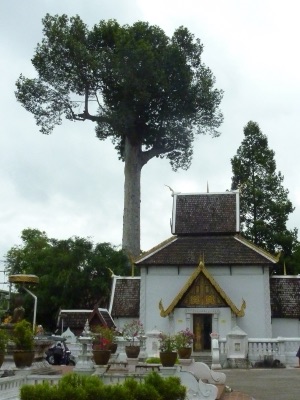
Photo: Photo Dharma from Sadao, Thailand / Wikimedia Commons (CC BY 2.0)
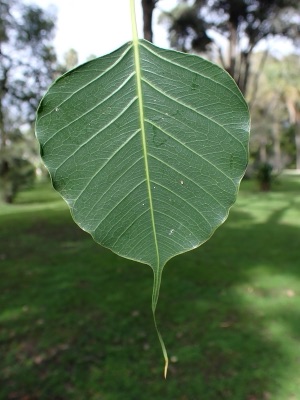
Photo: Krzysztof Ziarnek, Kenraiz / Wikimedia Commons (CC BY-SA 4.0)
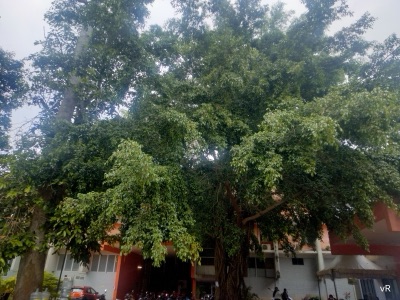
Photo: Vijayanrajapuram / Wikimedia Commons (CC BY-SA 4.0)
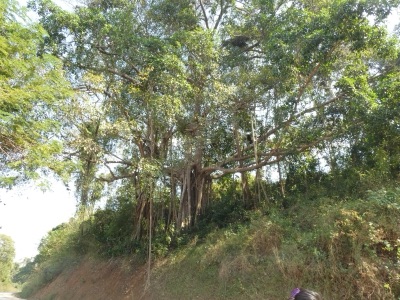
Photo: luluchouette / Wikimedia Commons (CC BY 4.0)
Flowering and ornamental trees
Many trees grown for their flowers have Kham Mueang names of their own. The easiest to remember is mai lom laeng (ไม้ล฿มฯแล้งฯ), the golden shower tree (ratchaphruek or khun), and mai samsa (ไม้สำสา), the rain tree (chamchuri or kampu), which the dictionary records as the provincial tree of Lamphun.
| Kham Mueang | Lanna script | Meaning (from the dictionary) |
|---|---|---|
| mai kao | ไม้กาวฯ | flame of the forest (thong kwao): orange or yellow flowers, usable as a cloth dye |
| mai som pho | ไม้ซอฯมภํอฯ | peacock flower: a thorny shrub with pink, red or yellow flowers |
| mai som pho luang | ไม้ซอฯมภํอฯหลฯวฯง | flame tree: a big thornless tree with red, orange or yellow flowers |
| mai cham pa | ไม้จำปา | champak: yellow-orange, strongly scented flowers (also mai chum pa) |
| mai cham pi | ไม้จำปี | white champak: creamy pale yellow flowers with a cool scent |
| mai cham pa lao | ไม้จำปาลาวฯ | frangipani (lanthom, leelawadee): flowers of many colours, fragrant |
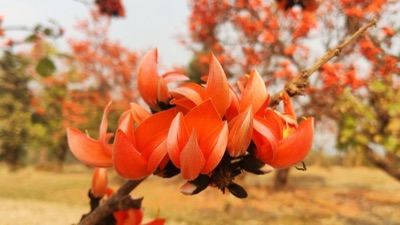
Photo: SMarndi / Wikimedia Commons (CC BY-SA 4.0)
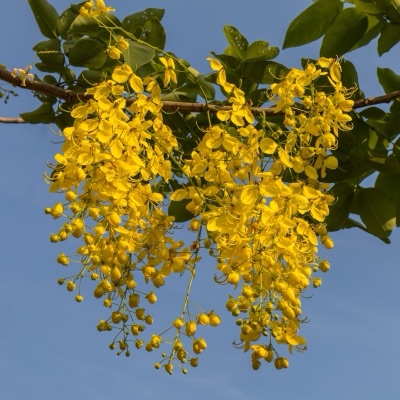
Photo: Basile Morin / Wikimedia Commons (CC BY-SA 4.0)
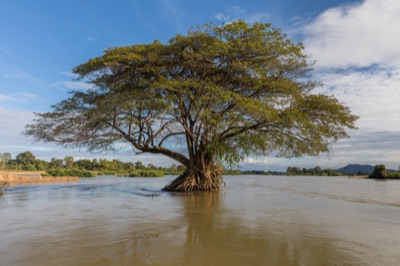
Photo: Basile Morin / Wikimedia Commons (CC BY-SA 4.0)
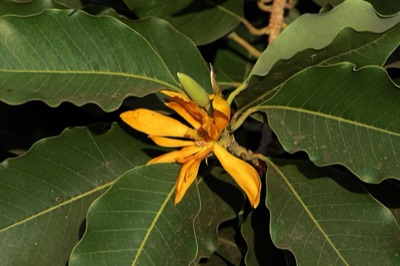
Photo: P Jeganathan / Wikimedia Commons (CC BY-SA 3.0)
Read the Kham Mueang names of flowers in Lanna Flowers.
Trees for everyday life
Some trees are valued more for their sap or seeds than their wood, such as mai hak (ไม้รักฯ, the lacquer tree), whose clear, poisonous sap is used to prime or coat things and is called nam hak, and mai mue (ไม้หื้มฯ, thalok), whose seed oil is mixed with nam hak to make lacquerware and whose seed fluff is used as tinder.
| Kham Mueang | Lanna script | Meaning (from the dictionary) |
|---|---|---|
| mai ba sak | ไม้บ่าฯซักฯ | soapnut tree: ripe fruits are crushed and whisked in water into a lather for washing silk or cleaning gold |
| mai saliam | ไม้สลยฯม | neem (sadao): the young shoots and flowers are eaten |
| mai kia | ไม้เคยฯะ | small sticks of resinous pine that catch fire easily, used to light the stove |
| mai lua | ไม้ห฿ลฯวฯ | firewood: logs used as fuel |
| mai lua hing fai | ไม้ห฿ลฯวฯหิงฯไฟ | firewood for a warming fire in the cool season |
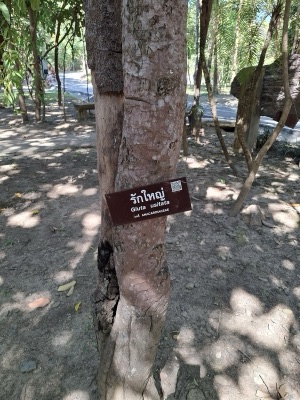
Photo: Lannafolium / Wikimedia Commons (CC0)
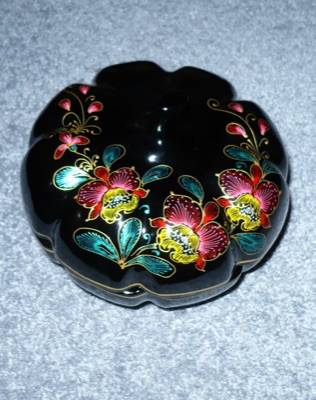
Photo: Gisling / Wikimedia Commons (CC BY-SA 3.0)
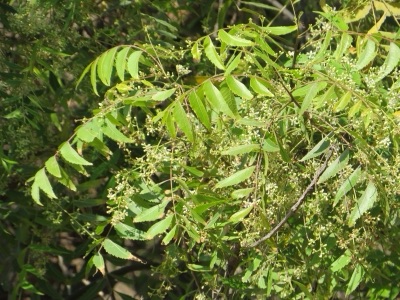
Photo: Vinayaraj / Wikimedia Commons (CC BY-SA 4.0)
Sayings that come from trees
- mai khon bo mi het (ไม้ขอฯรบมีเหัดฯ): said of a poor old person with no property, like a log with no mushrooms growing on it, so their children and grandchildren do not visit
- mai sao lam khum (ไม้ส้าวฯล้ำฅุ่ม): too much, too late, too old to learn
Summary
- Mai in Kham Mueang comes before the names of trees and of things made of wood, and is also the name for vowel signs in Lanna script.
- Khon Mueang call bamboo only by its kind: mai sang, mai bong, mai huak, mai lai, mai khao lam.
- Many big trees have their own Kham Mueang names: mai ngae (teng), mai pao (rang), mai tueng (phluang), mai puai (tabaek).
- Mai sali is the bodhi tree, and mai mai mueang chiang mai is the yang na tree King Kawila planted by the Inthakhin pillar.
- Mai lom laeng is the golden shower tree and mai samsa the rain tree.
Look up more tree names in the Moradok Lanna dictionary (in Thai), read about fruit trees in Kham Mueang Fruit Names and Lanna Wild Fruits, or read on about Lanna tung banners and lacquerware.
Sources
- Moradok Lanna dictionary (in Thai): ไม้ · ไม้ไผ่ · ไม้สะหลี · ไม้หมายเมือง · ไม้ยาง


