
Photo: SMarndi / Wikimedia Commons (CC BY-SA 4.0)
Lanna Flowers: dok kwao, dok kham pu chu, orchids and more
Many Lanna flowers have Kham Mueang names nothing like their central Thai names, even flowers people see every day. The marigold, for example, is dok kham pu chu, and the flame of the forest, the provincial tree of Chiang Mai, is dok kwao (ดอฯกกวฯาวฯ, Kham Mueang reading dok kwao). This article collects flower names from the Moradok Lanna dictionary, with their Lanna script, meanings and real photos.
The word dok mai (ดอฯกไม้, flower) is used as in central Thai, while the name of each flower usually starts with dok followed by its own name. The flowers are grouped as flowering trees, scented flowers, garden flowers, lotuses and orchids, wild flowers, and flowers you can eat.
Names nothing like central Thai
Try guessing first what central Thai calls the flowers in this table. Several are impossible to guess if you have never heard them.
| Kham Mueang | Lanna script | Central Thai (English) |
|---|---|---|
| dok kham pu chu | ดอฯกฅำปู้จู้ | dao rueang (marigold) |
| dok mai | ดอฯกไห่มฯ | chaba (hibiscus) |
| dok kom | ดอฯกโค฿มฯ | fueang fa (bougainvillea) |
| dok bua phat | ดอฯกบ฿วฯผัดฯ | thantawan (sunflower) |
| dok hom kai | ดอฯกหอฯมไกลฯ | son klin (tuberose) |
| dok kham khuen | ดอฯกฅําฅืนฯ | ratri (night-blooming jasmine) |
| dok champa lao | ดอฯกจำปาลาวฯ | lanthom, lilawadi (frangipani) |
| dok talom | ดอฯกตะห้ลฯอฯม | ban mai ru roi (globe amaranth) |
| dok som pho | ดอฯกซอฯมภํอฯ | hang nok yung (peacock flower) |
| dok ka salong | ดอฯกกาสลอฯง | pip (Indian cork tree) |
| dok sam si | ดอฯกสาสี | phut tan (confederate rose) |
| dok in tho | ดอฯกอินฯโถ | phu rahong (fringed hibiscus) |
Some names explain themselves. The dictionary says dok hom kai means "the flower whose scent drifts far" (hom kai = smells far), and dok sam si, "three-colour flower", is the confederate rose, which opens white and turns pink and then deep pink within a single day.
Flowering trees
Many large trees in the North flower so thickly they can be recognised from afar. The dictionary records dok kwao as the provincial tree of Chiang Mai: its flowers grow in clusters shaped like pea flowers, velvety, in orange and in yellow. Dok sa la pi (ดอฯกสาหลฯะพี, Mammea siamensis) is the provincial tree of Phayao.
| Kham Mueang | Lanna script | Meaning (from the dictionary) |
|---|---|---|
| dok kwao | ดอฯกกวฯาวฯ | flame of the forest; provincial tree of Chiang Mai |
| dok ka salong | ดอฯกกาสลอฯง | Indian cork tree; long tubular flowers, strongly scented at night |
| dok som pho | ดอฯกซอฯมภํอฯ | peacock flower; a shrub with flowers in many colours, all year |
| dok som pho luang | ดอฯกดอฯกซอฯมภํอฯหลฯวฯง | royal poinciana (flamboyant); a big tree that drops its leaves and flowers all over once a year |
| dok lom laeng | ดอฯกล฿มฯแล้งฯ | golden shower tree (ratchaphruek, khun) |
| dok fai kham | ดอฯกฝ้ายฯฅำ | yellow silk-cotton tree; clusters of gold-yellow flowers |
| dok du | ดอฯกดู่ | Burmese rosewood (pradu); bright yellow clusters, strongly scented |
| dok champa lao | ดอฯกจำปาลาวฯ | frangipani |
| dok som suk | ดอฯกส้฿มฯสุก | the sok (asoka) tree |
| dok khayom | ดอฯกขยอฯม | the phayom tree (Shorea roxburghii) |
| dok sa la pi | ดอฯกสาหลฯะพี | saraphi (Mammea siamensis); provincial tree of Phayao |
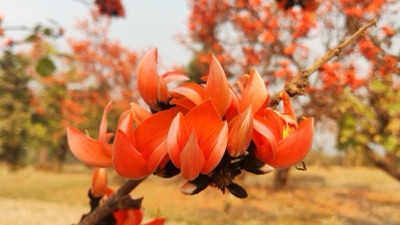
Photo: SMarndi / Wikimedia Commons (CC BY-SA 4.0)
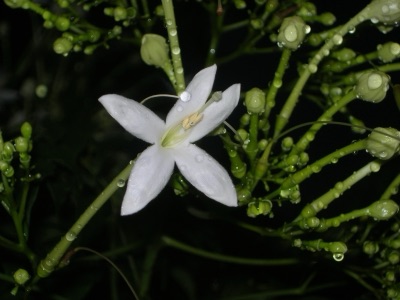
Photo: Gagan / Wikimedia Commons (CC BY-SA 3.0)
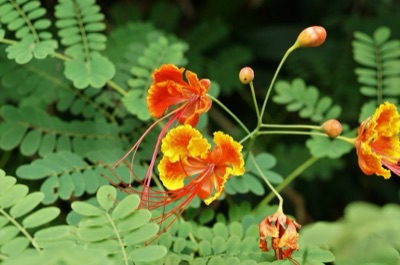
Photo: Prenn / Wikimedia Commons (CC BY-SA 3.0)
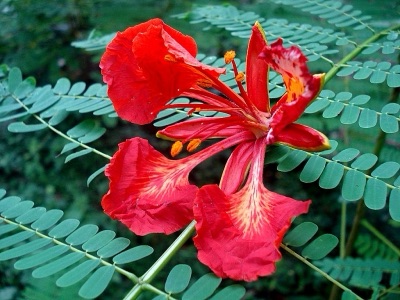
Photo: Aruna at Malayalam Wikipedia / Wikimedia Commons (CC BY-SA 3.0)
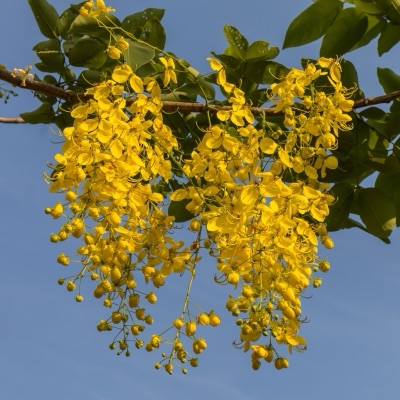
Photo: Basile Morin / Wikimedia Commons (CC BY-SA 4.0)
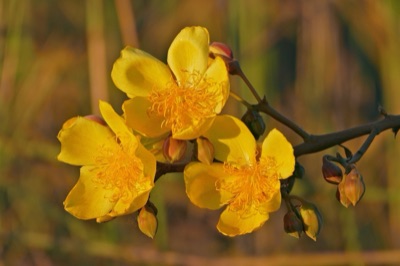
Photo: Bernard DUPONT from FRANCE / Wikimedia Commons (CC BY-SA 2.0)
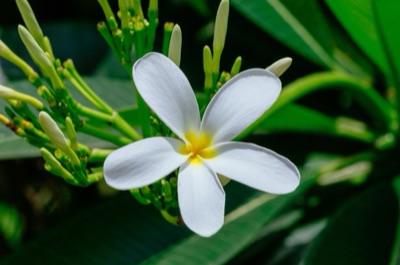
Photo: Subhrajyoti07 / Wikimedia Commons (CC BY-SA 4.0)
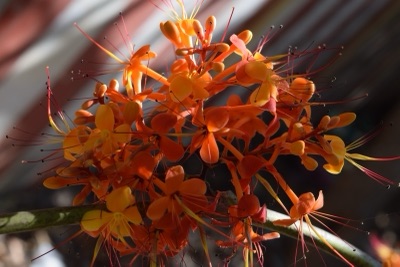
Photo: Varun Pabrai / Wikimedia Commons (CC BY-SA 4.0)
Scented flowers
The dictionary describes each flower's scent in detail: "strongly scented", "cool scent", "smells far", and some only at night.
| Kham Mueang | Lanna script | Meaning (from the dictionary) |
|---|---|---|
| dok cham pa | ดอฯกจำปา | champak (champa); yellow-orange, strongly scented (also dok chum pa) |
| dok chum pi | ดอฯกจุมปี | white champaca (champi); creamy white, cool scent |
| dok ket tha wa | ดอฯกเกัดฯถๆวฯา | double gardenia; white petals in many layers |
| dok kaeo | ดอฯกแก้วฯ | Spanish cherry (phikun); cool scent that stays when dried |
| dok sa ban nga | ดอฯกสบันฯงา | ylang-ylang (kradang nga); long twisted petals, often smoked over a flame to scent water |
| dok sa ban nga khuea | ดอฯกสบันฯงาเระฯคิอฯอ | climbing ylang-ylang (karawek); pale yellow petals curling inward |
| dok hom nuan | ดอฯกหอฯมนวฯร | lamduan (Melodorum fruticosum); creamy yellow |
| dok hom kai | ดอฯกหอฯมไกลฯ | tuberose; very fragrant from dusk until just before dawn |
| dok kham khuen | ดอฯกฅําฅืนฯ | night-blooming jasmine; opens at night, strongly scented |
| dok khayong | ดอฯกขะย฿งฯ | Chinese rice flower (prayong); tiny round buds that never open, scent carries far, still fragrant when dry |
| dok chi hup | ดอฯกจีหุ | yi hup (Magnolia coco); thick, fleshy petals |
| dok kiang | ดอฯกกยฯง | screw pine flower (lamchiak, pahnan) |
| dok ka kaet | ดอฯกกาแกดฯ | karaket (a pandan) |
| dok khao mai | ดอฯกเขั้าไห่มฯ | chommanat (Vallaris glabra); smells like new rice mixed with pandan (also dok om sai) |
| dok khet kao | ดอฯกเฅัดฯเคั้าฯ | khat khao (Oxyceros); thorny climber, creamy-white, strongly scented |
| dok ba li | ดอฯกบ่าฯลิ | jasmine (mali); single-petalled mali la, many-petalled mali son |
| dok un | ดอฯกอูร | "pearl strings" (phuang khai muk); hanging clusters of tiny white flowers (also spelled ดอกอุน) |
| dok tai hoen | ดอฯกตายฯเหินฯ | white ginger lily (maha hong); white, scented |
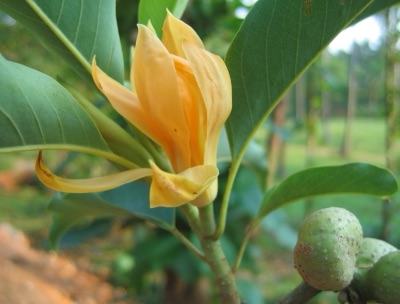
Photo: Vinayaraj / Wikimedia Commons (CC BY-SA 3.0)
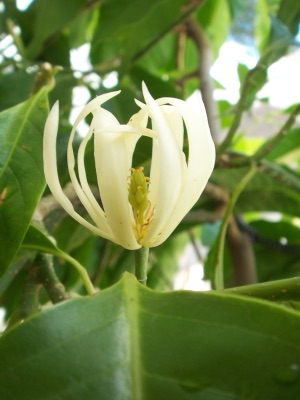
Photo: CommonsDara / Wikimedia Commons (CC BY-SA 3.0)
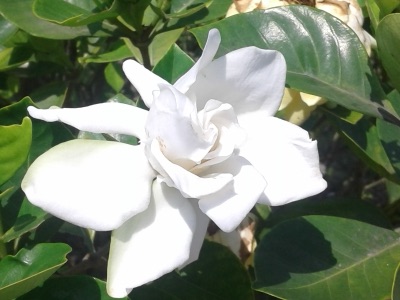
Photo: Md Arif bd / Wikimedia Commons (CC BY-SA 4.0)
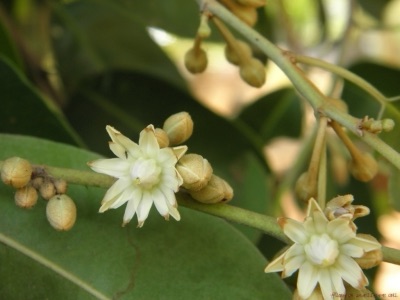
Photo: Lalithamba from India / Wikimedia Commons (CC BY 2.0)
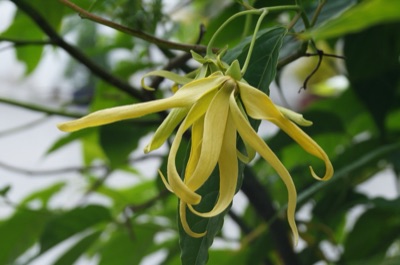
Photo: Prenn / Wikimedia Commons (CC BY-SA 3.0)
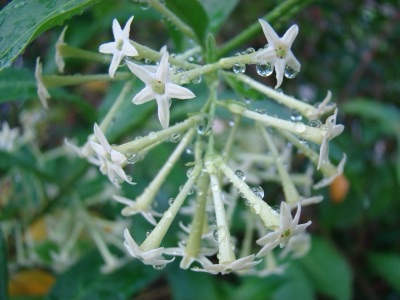
Photo: Asit K. Ghosh Thaumaturgist / Wikimedia Commons (CC BY-SA 3.0)
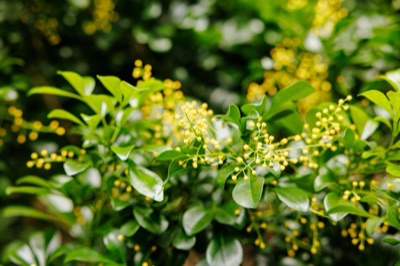
Photo: Dinkun Chen / Wikimedia Commons (CC BY-SA 4.0)
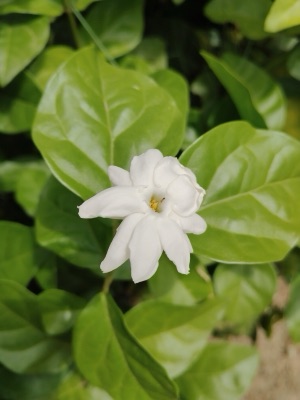
Photo: PapiPijuan / Wikimedia Commons (CC BY-SA 4.0)
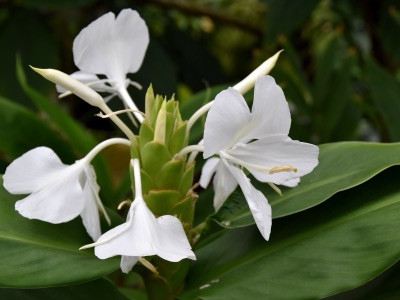
Photo: NasserHalaweh / Wikimedia Commons (CC BY-SA 4.0)
Garden flowers
Flowers grown around the house have their own Kham Mueang names too. Dok kham pu chu (ดอฯกฅำปู้จู้, Kham Mueang reading dok kham pu chu) is the marigold. The dictionary adds that besides being pretty, its buds can be blanched and dipped in chilli paste or eaten with lap, and the open flowers can be made into a yam salad.
| Kham Mueang | Lanna script | Meaning (from the dictionary) |
|---|---|---|
| dok kham pu chu | ดอฯกฅำปู้จู้ | marigold |
| dok talom | ดอฯกตะห้ลฯอฯม | globe amaranth; the petals neither drop nor wilt, and it is considered an auspicious flower |
| dok kham phae lae | ดอฯกฅำแผ้แห้ลฯ | cosmos |
| dok kham tai | ดอฯกฅำใต้ | sweet acacia; deep yellow, scented all day |
| dok dai | ดอฯกด้ายฯ | plumed cockscomb (fon) |
| dok dai ngon kai | ดอฯกด้ายฯหงฯอฯรไก่ | crested cockscomb |
| dok mai | ดอฯกไห่มฯ | hibiscus; flowers all year |
| dok kom | ดอฯกโค฿มฯ | bougainvillea; the coloured parts are leaves that change colour |
| dok in tho | ดอฯกอินฯโถ | fringed hibiscus; drooping flowers with deeply cut petals |
| dok sam si | ดอฯกสาสี | confederate rose; changes through three colours in one day |
| dok cham yam | ดอฯกจำยามฯ | four o'clock flower; opens in the evening until the next morning |
| dok bua phat | ดอฯกบ฿วฯผัดฯ | sunflower |
| dok bua la wong | ดอฯกบ฿วฯหลฯะว฿งฯ | canna (phutthaksa) |
| dok bua tong | ดอฯกบ฿วฯทอฯง | Mexican sunflower; bright yellow |
| dok ku lap | ดอฯกกุหลฯาบฯฯ | rose |
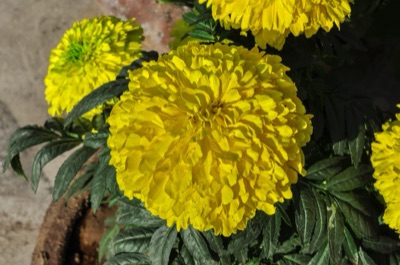
Photo: Joydeep / Wikimedia Commons (CC BY-SA 3.0)
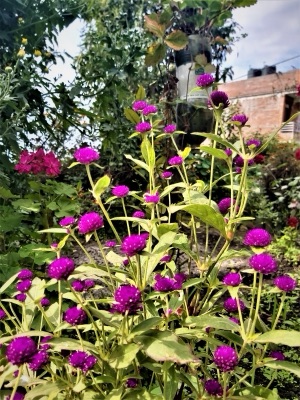
Photo: Sabina Bajracharya / Wikimedia Commons (CC BY-SA 4.0)
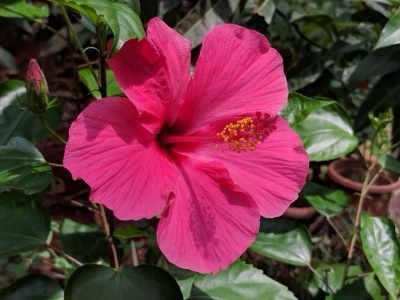
Photo: Vengolis / Wikimedia Commons (CC BY-SA 3.0)
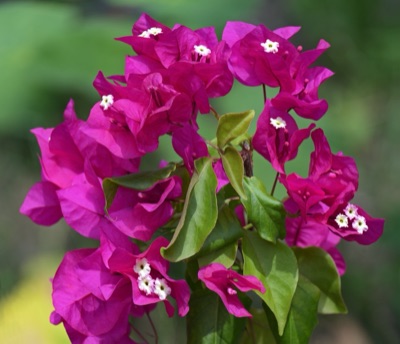
Photo: Ввласенко / Wikimedia Commons (CC BY 4.0)
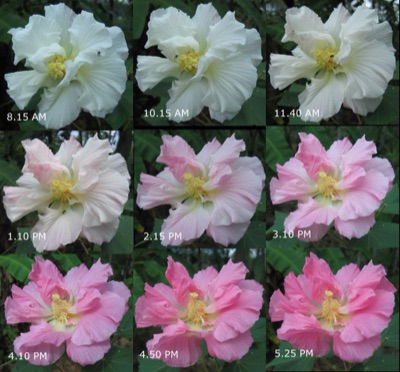
Photo: Vinayaraj / Wikimedia Commons (CC BY-SA 3.0)
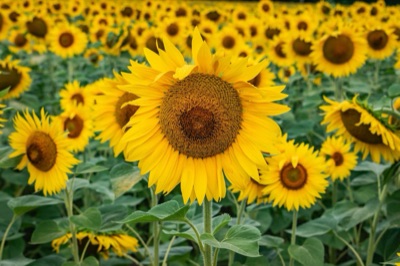
Photo: Krzysztof Golik / Wikimedia Commons (CC BY-SA 4.0)
Lotuses, orchids and wild flowers
Dok ueang (ดอฯกเอิ้อฯง, Kham Mueang reading dok ueang) means orchid: the dictionary says the North calls orchids ueang, both the ones that grow in the ground and the ones that cling to trees. Two have their own names: dok ueang phoeng (ดอฯกเอิ้อฯงเผิ้งฯ, Kham Mueang reading dok ueang phoeng), the bright yellow "bee orchid" that flowers from February to April, and dok ueang kham (ดอฯกเอิ้อฯงฅำ), which flowers from February to May.
| Kham Mueang | Lanna script | Meaning (from the dictionary) |
|---|---|---|
| dok bua | ดอฯกบ฿วฯ | lotus and water lily: many water plants with round leaves, flowers held above the water |
| dok bua luang | ดอฯกบ฿วฯหลฯวฯง | sacred lotus; stiff stalks with small prickles |
| dok pan | ดอฯกพ้านฯ | water lily (bua sai); its flower stalk, "sai bua", is edible |
| dok ueang | ดอฯกเอิ้อฯง | orchid |
| dok ueang phoeng | ดอฯกเอิ้อฯงเผิ้งฯ | "bee orchid" (Dendrobium lindleyi); bright yellow, flowers Feb–Apr |
| dok ueang kham | ดอฯกเอิ้อฯงฅำ | "golden orchid" (Dendrobium chrysotoxum); yellow or orange-yellow, flowers Feb–May |
| dok ao | ดอฯกอาวฯ | Siam tulip (krachiao, pathuma) |
| dok pan thuean | ดอฯกป่านฯเถิ่อฯร | crown flower (dok rak); strung into garlands for auspicious ceremonies |
| dok nom nae | ดอฯกน้อฯมแน้ | laurel clock vine (rang chuet); pale purple, used as medicine |
| dok ya mueang wai | ดอฯกห้ยฯาเมิอฯงวาฯยฯ | Siam weed (sap suea); used as medicine |
| dok bua loi | ดอฯกบ฿วฯลอฯ | water hyacinth; the dictionary calls it a serious weed of waterways |
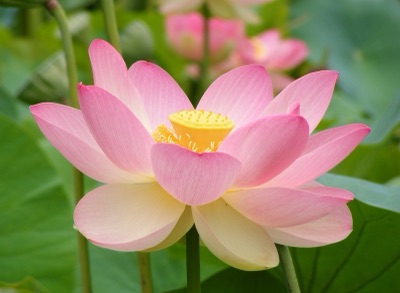
Photo: Peripitus / Wikimedia Commons (CC BY-SA 4.0)
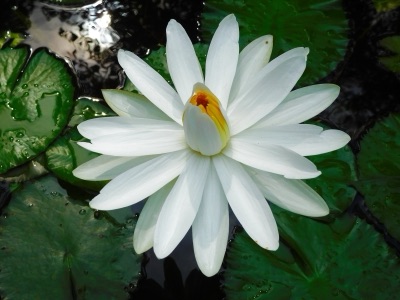
Photo: Shishirdasika / Wikimedia Commons (CC BY-SA 4.0)
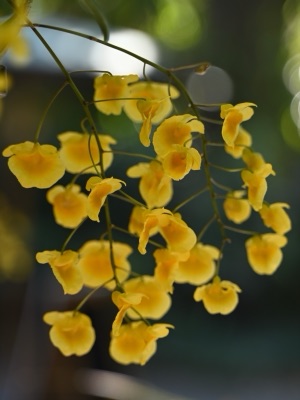
Photo: Krzysztof Ziarnek, Kenraiz / Wikimedia Commons (CC BY-SA 4.0)
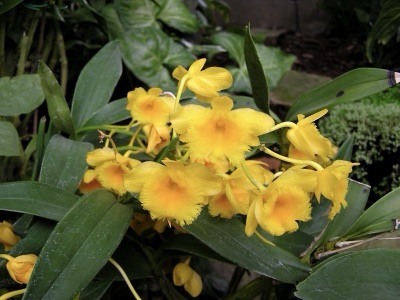
Photo: NasserHalaweh / Wikimedia Commons (CC BY-SA 4.0)
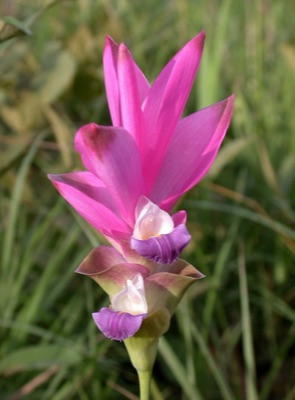
Photo: Len Worthington / Wikimedia Commons (CC BY-SA 2.0)
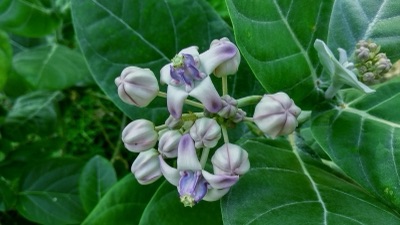
Photo: শাহাদাত সায়েম / Wikimedia Commons (CC BY-SA 4.0)
Flowers you can eat
Some flowers are both flowers and vegetables. The dictionary says they can be eaten, and some have dishes of their own. Read more about edible wild greens and tree shoots in Lanna wild greens, and about garden greens in Kham Mueang garden greens.
| Kham Mueang | Lanna script | Meaning (from the dictionary) |
|---|---|---|
| dok kae | ดอฯกแค | vegetable hummingbird flower (dok khae); edible. Wrapped around seasoned minced pork and grilled or steamed, it is called dok kae ua chin |
| dok ngio | ดอฯกงิ้วฯ | the dried stamens of the red cotton tree flower; they keep for years and season nam ngiao and kaeng khae |
| dok sa liam | ดอฯกสลยฯม | neem flowers; bitter, edible, and used as medicine |
| dok sa lit | ดอฯกสิๆลฯด | cowslip creeper (khachon); greenish-yellow, lightly scented, edible |
| dok ban doek | ดอฯกบาฯนฯเดิกฯ | moonflower (chom chan); white, opens at night, scented, edible |
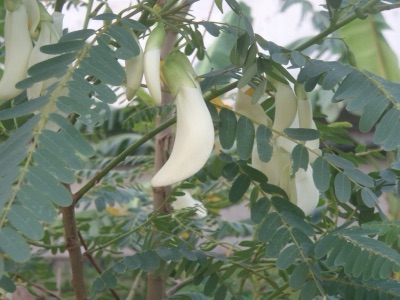
Photo: Muhammad Malik Ali / Wikimedia Commons (CC BY-SA 4.0)
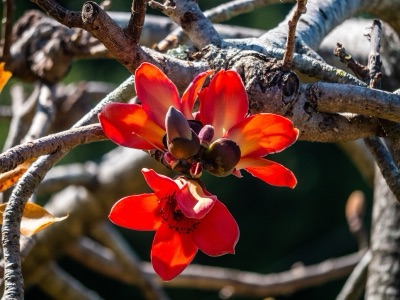
Photo: John Robert McPherson / Wikimedia Commons (CC0)
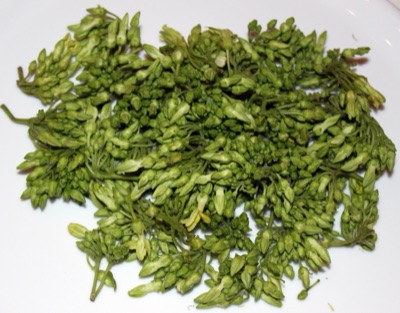
Photo: Anagoria / Wikimedia Commons (CC BY 3.0)
The ngio flower is a key ingredient of nam ngiao. See khanom chin nam ngiao and almost a hundred more Northern dishes in Kin Lam Kin Lam.
Dok that are not flowers
Flowers are also central to many Lanna traditions. Read on in Sai Khan Dok, Tan Kuay Salak and Poy Luang.
Summary
- Kham Mueang flower names start with dok, and many are completely different from central Thai: dok kham pu chu (marigold), dok mai (hibiscus), dok kom (bougainvillea).
- Dok kwao (flame of the forest) is the provincial tree of Chiang Mai, and dok sa la pi (saraphi) that of Phayao.
- Dok kaeo in Kham Mueang is phikun (Spanish cherry), not the central Thai dok kaeo.
- The North calls orchids ueang, as in dok ueang phoeng and dok ueang kham.
- Many flowers are eaten: dok kae, dok ngio and dok sa liam (neem flowers).
Look up more flower names in the Moradok Lanna dictionary (in Thai), and read about tree and bamboo names in Kham Mueang trees and bamboo.
Sources
- Moradok Lanna dictionary (in Thai): ดอกไม้ · ดอกกว๋าว · ดอกคำปู้จู้ · ดอกเอื้องเผิ้ง · ดอกแก
- All flower photos are from Wikimedia Commons, identified by the scientific name of each file, with credits under each photo.


