
Photo: Call Me Fred / Unsplash
Can't Help Falling in Love in Kham Mueang: the Song's Ideas
Can't Help Falling in Love is a love song known worldwide in the voice of Elvis Presley. It is about someone who knows they should guard their heart and cannot help themselves. In this article we ask how a Northerner (khon mueang) would put that feeling into words. You pick up several Kham Mueang words for love, including the way close friends and lovers say "I" and "you", which central Thai does not have.
The key word here is hak รักฯ (Kham Mueang reading hak). In the dictionary it is a verb meaning to care for and feel bound to someone, to be fond of someone with affection, as young men and women are, and to love specially.
This is another article in the set World songs in Kham Mueang, within Kham Mueang through songs and literature, following My Way. The song is still under copyright, so we do not translate it line by line, and we quote only two short phrases. What we take from it is its ideas, and then we try saying those ideas in Kham Mueang.
Where the song comes from
The song is credited to Hugo Peretti, Luigi Creatore and George David Weiss, according to Wikipedia and American Songwriter. Peretti and Creatore were cousins who worked as the duo "Hugo & Luigi", and Weiss studied at Juilliard and arranged for big bands. The sources do not say which of them did which part of the song. Songfacts reports, in Weiss's own words, that the film producers and people around Elvis disliked his demo, but Elvis insisted on recording it. This comes from a single source.
The melody is based on "Plaisir d'amour", a French love song composed by Jean-Paul-Égide Martini in 1784, with words by Jean-Pierre Claris de Florian, according to Wikipedia. Wikipedia, Songfacts and American Songwriter all agree that the tune of "Can't Help Falling in Love" comes from it. The title Plaisir d'amour means "the pleasure of love". Wikipedia also records that the first version of the English words was written from a woman's point of view, under the title "Can't Help Falling in Love with Him" (citing Peterik, 2010), which explains why the first and third lines end in "in" instead of rhyming with "you".
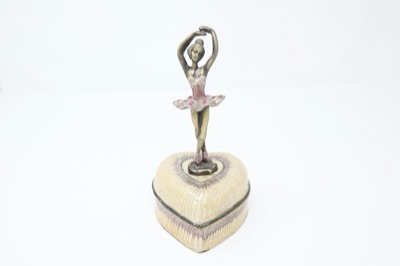
Elvis recorded it at Radio Recorders in Hollywood on 23 March 1961 for the film Blue Hawaii, and it came out as a single on RCA Victor on 21 November 1961. In the film Elvis sings it to the heroine's grandmother on her birthday, giving her a music box that plays the tune (as Songfacts tells it). The single reached number one in Britain for four weeks in 1962 and number two on the US Billboard Hot 100, behind "Peppermint Twist" by Joey Dee and the Starliters.
Listen to the original on the artist's own official channel.

Ya hip long chai: don't rush
The song's first idea is a warning from people who know the world: do not fall in love too fast. The opening line is "Wise men say, only fools rush in" (Hugo Peretti, Luigi Creatore and George David Weiss, "Can't Help Falling in Love", 1961), a line everyone recognises at once.
Kham Mueang has the words to tell this idea. A khon ฅ฿นฯ who hu รู้ is a person who understands and knows. The word for "don't" is ya อยฯา, and hip รีปฯ means in a hurry, urgent. Long chai ห฿ลฯงไจ the dictionary explains as the heart leaning one way, letting the heart slip.
Kham Mueang rendering by MoradokLanna: คนฮู้ว่า อย่าฮีบหลงใจ๋ ("people who know say: don't rush to lose your heart")
Ham chai bo dai: cannot hold back the heart
The second idea is the heart of the song. The singer knows every warning and still cannot hold back. The title itself is "Can't Help Falling in Love". Kham Mueang uses ham ห้ามฯ, which the dictionary glosses as telling someone to stop, restraining, together with chai ไจ, which means both the heart and what one feels and thinks, and bo dai บได้, not able.
Kham Mueang rendering by MoradokLanna: ห้ามใจ๋บ่ได้ หลงใจ๋ฮักตั๋ว ("can't hold back my heart, my heart slips into loving you")
The dictionary also has an interesting opposite: tat chai ตัดฯไจ, which means to steel the heart, to stop the heart from dwelling on something that has happened, or to make up one's mind. If tat chai is holding your heart back successfully, this song is about someone who does not succeed.
Poen and tua: what close people call each other
Kham Mueang has special words for "I" and "you" among people who are close. The dictionary explains that poen เพิ่นฯ is a first-person pronoun used only among people who are close and familiar, such as close friends or husband and wife, and tua ต฿วฯ is a second-person pronoun used between close friends or lovers. The dictionary's examples are that close friends use "poen–tua", and a wife can use either "poen–tua" or "poen–ai" with her husband.
Ai อ้ายฯ in the dictionary is what a man calls himself when speaking to someone younger, and nong น้อฯง is used for someone younger. These two words are also a pair in the courtship verses (see the comparison below). A sweetheart is ti hak ที่รักฯ, literally a loved one or someone dear, and paeng แพงฯ says that something is precious and dear.
Kham Mueang rendering by MoradokLanna: เปิ้นฮักตั๋ว (said between close people) or อ้ายฮักน้อง (a man speaking to someone younger) ("I love you")
Yu tuai kan dai ko: may I stay with you
The third idea is a gentle question: may I stay by your side? The song asks humbly, not as a command. Kham Mueang uses yu อยฯู่, which means not leaving, staying, living, with tuai ทวฯยฯ, which means to follow, to accompany, together with. For the question "is it all right?", dai ได้ is used, following the dictionary's example "pai dai ko", which means "may I go?"
Kham Mueang rendering by MoradokLanna: อ้ายอยู่ตวยตั๋วได้ก่อ ("may I stay with you?")
Pan mue pan chai: giving it all
The fourth idea is giving everything to the other person. The song tells it through the picture of a hand and a life. The short line people remember is "Take my hand, take my whole life too" (Hugo Peretti, Luigi Creatore and George David Weiss, 1961).
Kham Mueang uses pan ปันฯ, which means to give, to share out (its synonym is hue), mue มื for the part of the body at the end of the arm, and tueng mot ทึงฯห฿มฯด for all of it. The dictionary has no word for "life", so we let the picture of the heart, chai, carry the meaning of giving both body and heart.
Kham Mueang rendering by MoradokLanna: ปั๋นมือ ปั๋นใจ๋ ตึงหม๋ด ("give the hand, give the heart, all of it")
Tuai kan pai nae tae: some things are meant to be
The last idea is the feeling that some things are already settled. The song compares it to a river that flows surely to the sea. Kham Mueang calls a river nam mae นาฯแม่, which the dictionary glosses as a large watercourse where many streams gather. Pai ไพ is to move away from a place, yang อยฯางฯ is a manner, a way, nae แน่ is true, sure, not missing, and tae แท้ is real, true.
The dictionary has no verb for "flow" in the sense of a river flowing (only "lai nam", meaning to let things float away on the water), and no word for "sea", so we keep both in Thai.
Kham Mueang rendering by MoradokLanna: ใจ๋ตวยตั๋วไป อย่างน้ำแม่ แน่แต๊ ("my heart goes along with you, like a river, surely")
The words at a glance
| Idea | Kham Mueang words | Dictionary meaning |
|---|---|---|
| A warning not to fall too fast | hu รู้ · hip รีปฯ · long chai ห฿ลฯงไจ | to understand, to know · in a hurry · to let the heart slip |
| Can't hold the heart back | ham ห้ามฯ · chai ไจ · tat chai ตัดฯไจ | to restrain · heart · to steel the heart |
| What close people call each other | poen เพิ่นฯ · tua ต฿วฯ · ti hak ที่รักฯ | an intimate "I" · an intimate "you" for close friends or lovers · a sweetheart |
| Asking to stay | yu อยฯู่ · tuai ทวฯยฯ · dai ได้ | to stay, to live · to follow, with · able (used to ask "may I?") |
| Giving hand and heart | pan ปันฯ · mue มื · tueng mot ทึงฯห฿มฯด | to give, to share out · hand · all of it |
| Some things are meant to be | nam mae นาฯแม่ · nae แน่ · tae แท้ | river · sure, not missing · real, true |
All of these renderings are phrasings we put together from dictionary words. They are not the one standard way to say it, Northerners from different places may say the same idea with other words, and a native speaker should check them again.
The word hak has more than one meaning
The dictionary gives hak several layers. Besides the verb "to love", it is the name of a shrub whose flowers are strung into garlands, the name of the lacquer tree whose sap, called "nam hak", is brushed on as a coating, and the name of a kind of rhinoceros beetle (kwang hak). Compounds include hak tae รักฯแท้, true love, genuine love, and hak paeng รักฯแพงฯ, love very much, close love. Read more about the beetles in Kwang Lanna.
Compared with Kham u bao u sao: two ways of saying "I love you"
Kham u bao u sao is the verse the young people of Lanna used to court one another when a young man went calling on a girl. It has something in common with this song, because the young man in the first verse also asks permission humbly, asking to sit for just "a cubit, a fathom" and promising to get up if the girl's sweetheart arrives. That is not far from the singer who asks whether he may stay by someone's side.
The difference is how it is said. Elvis's song states the feeling plainly: I can't hold back my heart. The courtship verses play with wit. The girl runs down her own betel leaves as not fragrant, so that the young man has to answer cleverly. The example short verse in the dictionary tells love as a picture, "I secretly love you, I keep you reserved in my heart", and then keeps it in the heart. The words ai and nong that the young people use in these verses are the same pair explained above.
So the reader sees two ways. One says "I can't hold back my heart", the other says "let me sit a cubit, a fathom". Both are equally humble forms of love, and they differ in the distance between the words and the heart.
Summary
- Hak is love according to the dictionary, for parents and children as well as young lovers.
- Ham chai bo dai means can't hold back the heart, the opposite of tat chai, to steel the heart.
- Poen and tua are the words for "I" and "you" between close friends and lovers.
- Pan is to give, tuai is to follow, to be with, and nae tae is surely, truly.
- The "Kham Mueang rendering by MoradokLanna" lines in this article tell the song's ideas; they are not a translation of its lyrics.
Look up more of the words in the MoradokLanna dictionary. Keep reading in the same series: My Way · What a Wonderful World, or see the whole set at Kham Mueang through songs and literature.
Copyright and courtesy
| Item | Details |
|---|---|
| Song | Can't Help Falling in Love |
| Words | Hugo Peretti, Luigi Creatore and George David Weiss (English, 1961) |
| Music | Based on the French song "Plaisir d'amour" by Jean-Paul-Égide Martini (1784) |
| Best-known recording | Elvis Presley (1961) |
| Status | Under copyright; all rights belong to the authors, publishers and record labels (the original "Plaisir d'amour" is now in the public domain, but this song's words and arrangement are still protected) |
This article was made by Moradok Lanna, a non-profit website, for learning the Lanna language and culture. It is not an adaptation, translation or new version of the song. We quote only a few short lines, with credit, for study, criticism and review, as fair use allows (Thai Copyright Act B.E. 2537, section 32). The Kham Mueang lines are our own wording of the song's ideas, not a translation of its lyrics. Embedded videos come from the rights holders' official channels and remain their property.
With thanks and respect to the songwriters, performers and rights holders. If a rights holder would like anything changed or removed, please write to moradoklanna@gmail.com and we will act promptly.
References
- MoradokLanna Dictionary (dict2): hak, hak tae, hak paeng, ti hak, paeng, long chai, tat chai, ham, chai, bo dai, hip, ngao, hu, khon, ya, tua, poen, ai, nong, yu, tuai, dai, pan, mue, tueng mot, pai, nam mae, yang, nae, tae.
- Wikipedia. Can't Help Falling in Love and Plaisir d'amour (used as a lead and checked against other sources).
- American Songwriter. Who Wrote "Can't Help Falling in Love"?
- Songfacts. Can't Help Falling In Love by Elvis Presley
- Elvis Presley (official channel, ElvisPresleyVEVO). Can't Help Falling In Love (Official Audio). YouTube
- Moradok Lanna articles Kham u bao u sao, Kwang Lanna, My Way.
Practise the words from this article
Flip through 30 flashcards of the Lanna words used in this article.


