
Photo: LannaPhoto / Wikimedia Commons (CC BY-SA 4.0)
Kham Mueang Words Locals Love: Yin Di, Lam Tae, Ngam Tae
Kham Mueang (kam mueang, คำฯเมิอฯง), Northern Thai, is the everyday spoken language of the Lanna north. Visit Chiang Mai, Chiang Rai, Lampang or Nan and try even one or two easy Kham Mueang words for travellers, and you will often get a big smile back: people can tell you made the effort to greet them in their own home language.
This guide collects about ten groups of Kham Mueang words locals love to hear. Every word comes from the Moradok Lanna dictionary, with when to use it and a quick pronunciation hint. Start with the one word you should learn first: thank you.
Yin di: saying thank you the Northern way
The first word to learn is yin di (ยินฯดี, said like "yin-dee"). The dictionary explains it as "pleased, thanks, glad, thank you". To say thank you very much, say yin di jat nak (ยินฯดีชาดฯนักฯ, "yin-dee jaht nahk"). In some areas it is pronounced ngin di.
In central Thai, yin di usually means "glad" (and yin di ton rap is "welcome"). In Kham Mueang it simply means thank you. The central Thai words khop jai and khop khun are not even headwords in the dictionary. After you pay or finish a meal, say "yin di jao" or "yin di jat nak jao".
Jao: the polite ending that makes everything sound nice
One tiny word changes the tone of a whole sentence: jao (เจั้า, rhymes with "cow"). The dictionary calls it "a sentence ending that shows humility", as in kin laeo jao (I've eaten, thank you) and yin di jat nak jao (thank you very much).
- The dictionary says that today jao is used mostly by women; in the past men also used it when speaking to nobility and senior monks.
- Men can end with the central Thai khrap. The dictionary itself says of the apology su ma toe: "add khrap or kha at the end to be polite".
More endings like this: Kham Mueang sentence endings.
Lam, lam tae, jat lam: saying it's delicious
You will eat a lot in the north, and the word every cook loves to hear is lam (ลำ, "lahm"): delicious, tasty, just right.
| Kham Mueang | Lanna script | Meaning (from the dictionary) | Use it |
|---|---|---|---|
| lam tae | ลำแท้ | really delicious, very tasty | everyday praise for food |
| lam kha-nat | ลำขๆนฯาดฯ | very delicious, truly tasty | full-on praise |
| jat lam | ชาดฯลำ | very delicious, just to my taste | another way to say lam kha-nat |
| lam ko | ลำกํ่อฯ | is it tasty? | asking your table mates |
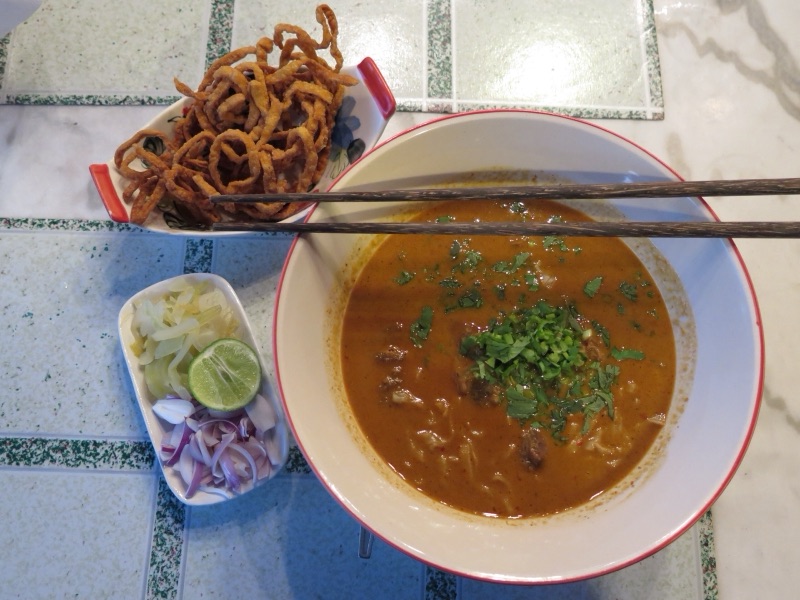
Not sure what to order? See what to eat in Chiang Mai.
Ngam, ngam tae: saying it's beautiful
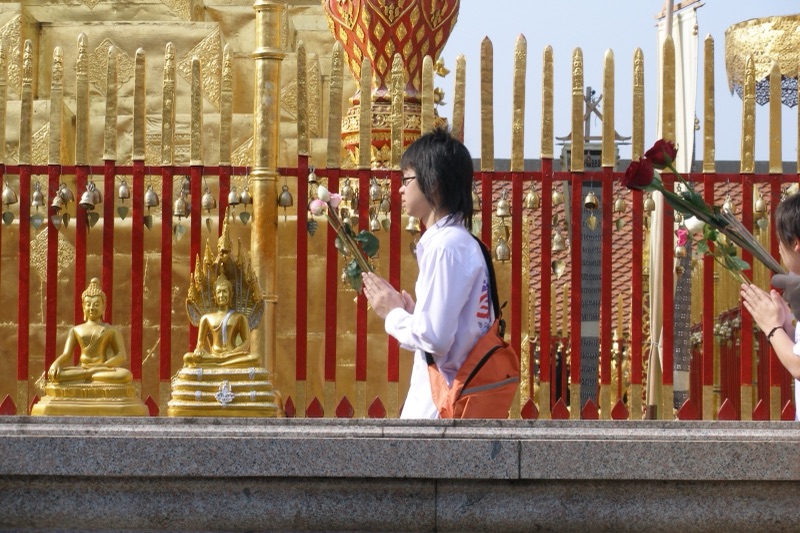
Ngam (งา, start with the "ng" of "sing", then "ahm") means beautiful. Use it for views, temples, a woven skirt or a person. For "really beautiful" say ngam tae (งาแท้). The dictionary adds that ngam tae tae and ngam tae ngam wa work too.
Muan, muan kha-nat: fun, lovely, enjoyable
Muan (ม่วฯร, "moo-un") is a very wide word: pleasing, enjoyable, melodious, fun, or easy. Use it for festivals, music, a trip or simply a good day.
| Kham Mueang | Lanna script | Meaning (from the dictionary) |
|---|---|---|
| muan kha-nat | ม่วฯรขๆนฯาดฯ | great fun, very melodious (also muan tae muan wa) |
| muan ok muan jai | ม่วฯรอ฿กฯม่วฯรไจ | delighted, at ease, happy at heart |
| u muan | อู้ม่วฯร | to speak nicely, pleasant to listen to |
If someone tells you u muan, they are complimenting the way you speak. Answer with "yin di jao".

Bo pen yang: no problem
Bo pen yang (บเปนฯหัยฯง, "baw pen yung") means "no problem, never mind". Bo pen sang means the same. Use it when someone apologises to you, when a dish is sold out, or when the traffic is slow.
Su ma toe: saying sorry politely
Bumped into someone, or need to squeeze past? Say su ma toe (สูมาเทิอฯะ, "soo-mah-tuh"). The dictionary says both men and women can use it. Women often say the full su ma toe jao (สูมาเทิอฯะเจั้า), which the dictionary calls polite enough "for every occasion".
Kho su ma (ขํอฯสูมา) can also mean "sorry", but the dictionary notes a second meaning: a formal apology to a woman's family ancestor spirits after breaking a household taboo, according to Northern belief. For everyday life, su ma toe is the easy choice.
U kam mueang bo jang: survival phrases
When a local answers faster than you can follow, these lines help. All of them are built from dictionary words.
| Kham Mueang | Lanna script | Meaning (from the dictionary) | Try saying |
|---|---|---|---|
| u | อู้ | to speak, to talk, to chat | |
| u kam mueang | อู้คำฯเมิอฯง | to speak the Lanna language | |
| u bo jang | อู้ช่างฯ | can't speak (it), not good at speaking | u kam mueang bo jang jao (I can't speak Kham Mueang) |
| bo jang | บช่างฯ | can't do it, not skilled at it | |
| ja | ช้า | slow, e.g. tiao ja (walk slowly) | u ja ja jao (please speak slowly) |
| maen | แม่นฯ | true, yes, right | maen laeo jao (yes, that's right) |
In u bo jang, jang matches central Thai chang ("skilled at"), not "to employ". So the phrase means "can't speak (it) well".
Aeo: travelling and going out
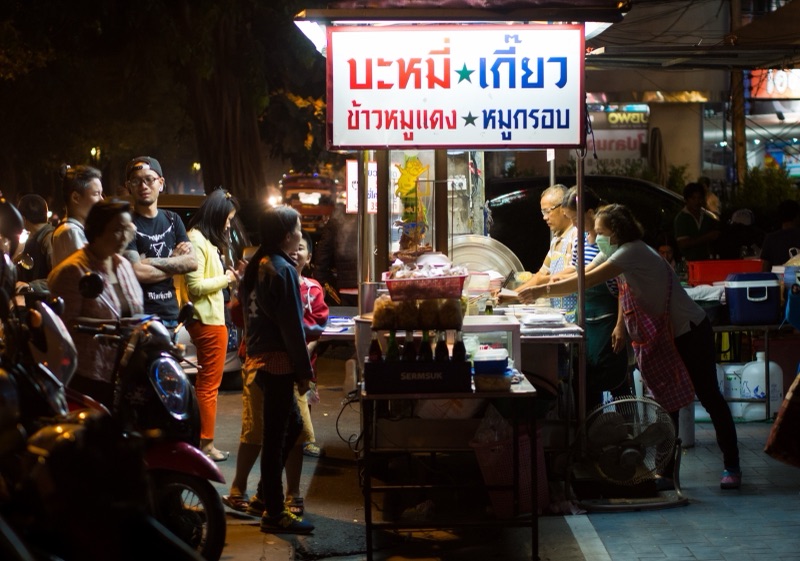
Aeo (แอ่วฯ, roughly "a-eo", like "air" + "oh" said quickly) means to travel, to go out, to tour. A local may ask ma aeo ka? (here on holiday?). Answer "ma aeo jao".
| Kham Mueang | Lanna script | Meaning (from the dictionary) |
|---|---|---|
| pai aeo | ไพแอ่วฯ | to go on a trip, to go out |
| aeo kat | แอ่วฯกาดฯ | to go to the market (also aeo kat aeo li) |
Market words: Kham Mueang at the kad (market). Visiting a temple? Read Lanna temple etiquette first.
Jai di: you're so kind
The last word thanks someone who helped you. Jai di (ไจดี, "jai dee") means kind, generous, calm. If a red-truck driver shows you the way, say "jai di tae, yin di jat nak jao" (you're really kind, thank you very much).
Say it with a smile: slow, warm, and end with jao
- Smile first. Kham Mueang has its own tones. If you don't get every tone right, don't worry: people can hear that you are trying.
- Speak slowly and end with jao (or khrap). Even a short sentence then sounds polite.
- Start with the everyday four: yin di, lam tae, ngam tae, bo pen yang. You can use them almost every day.
- Watch out for false friends. Ja pai in Kham Mueang means don't, not "will go". See ja pai means "don't".
For greetings like kin khao laeo ka? (have you eaten?) and how to wai, read how to greet in Chiang Mai.
Try it: at the khao soi stall
This dialogue is our own example for learning, built from dictionary words.
Cook: Ma aeo ka jao? (Here on holiday?)
Traveller: Ma aeo jao. U kam mueang bo jang, u ja ja jao. (Yes, on holiday. I can't speak Kham Mueang, please speak slowly.)
Cook: Bo pen yang. Khao soi lam ko? (No problem. Is the khao soi good?)
Traveller: Lam tae jao, yin di jat nak jao. (It's delicious, thank you very much.)
Cook: U muan tae! (You speak so nicely!)
Quick quiz
Answer first, then open the answers.
- How do you say "thank you very much"?
- What does lam ko mean?
- You bump into someone at the market. What do you say?
- Does u bo jang mean "to hire someone to talk"?
- Someone tells you u muan. What do they mean?
Answers
- Yin di jat nak (women add jao: yin di jat nak jao)
- Is it tasty?
- Su ma toe, or su ma toe jao
- No. Jang here means "skilled at", so u bo jang means "can't speak (it) well".
- They are complimenting you: you speak nicely.
Summary
- Thank you = yin di; thank you very much = yin di jat nak; end politely with jao (men can use khrap).
- Tasty = lam tae, lam kha-nat, jat lam; beautiful = ngam tae; fun, lovely = muan, muan kha-nat.
- No problem = bo pen yang; sorry = su ma toe.
- Survival = u kam mueang bo jang and u ja ja; to travel = aeo.
- Speak slowly, smile and end politely: locals will hear that you care.
Look up more words in the Moradok Lanna dictionary (in Thai), practise asking questions with Kham Mueang question words, and learn everyday verbs in Kham Mueang everyday verbs.
Sources
- Moradok Lanna dictionary (in Thai): ยินดี · ยินดีจ้าดนัก · เจ้า · ลำแต๊ · งามแต๊ · ม่วน · บ่เป๋นหยัง · สูมาเต๊อะ · อู้บ่จ้าง · แอ่ว


