
Photo: Gigi2562 / Wikimedia Commons (CC BY-SA 4.0)
Mo Mueang, Ya Mueang: Lanna Healers and Remedies
Before every district had a hospital, the first person people in northern Thailand turned to when they fell ill was the mo mueang (หํมฯอฯเมิอฯง). The dictionary explains the mo mueang as a Lanna folk healer who treats people with spells and incantations, with spirit possession, or with ya mueang (อยฯาเมิอฯง), local herbal medicine made in many forms.
This article gathers Kham Mueang words about healers and medicine from the Moradok Lanna dictionary: the names for different kinds of healer, ways of treating, kinds of medicine, herbs, and words for being ill. It is a language lesson and a window on Lanna folk wisdom.
Mo in Kham Mueang does not only mean doctor
The dictionary gives mo (หํมฯอฯ) a wider meaning than central Thai does: first an expert or someone learned in any field, then a doctor who treats illness, and as an adjective, skilled. So people in the north call experts of many kinds mo.
| Kham Mueang | Lanna script | Meaning (from the dictionary) |
|---|---|---|
| mo khwam | หํมฯอฯฅวฯามฯ | lawyer |
| mo pa | หํมฯอฯป่า | hunter, someone who knows the forest |
| mo chang | หํมฯอฯช้างฯ | elephant expert, who performs the elephant's soul-calling rite |
| mo twai | หํมฯอฯทวฯาฯยฯ | fortune-teller, astrologer who picks auspicious times (also mo muea หํมฯอฯเมิ่อฯอ, mo hu la หํมฯอหูรา) |
| mo duk kai | หํมฯอฯดูกไก่ | a diviner who reads the future by pushing slivers of wood into the leg bones of a chicken freshly killed in the rite |
| mo ngon | หํมฯอฯง่อฯร | the man who strikes the pig's nape with a stick in a sacrificial rite |
Mo mueang: the many kinds of Lanna folk healer
The dictionary describes three ways a mo mueang treats people. The first uses magic: incantations, blowing spells, wiping, scraping with a charmed knife and bone-setting. The second is called mot: spirit possession, healing through the spirit world. The third is mo ya (หํมฯอฯอยฯา), healing with herbal medicine. A healer who uses all three is called a mot mo (ม฿ดฯหมฯอฯ).
Healers who treat the sick
| Kham Mueang | Lanna script | Meaning (from the dictionary) |
|---|---|---|
| mo mueang | หํมฯอฯเมิอฯง | Lanna folk healer (also mo ya) |
| mot mo | ม฿ดฯหมฯอฯ | a mo mueang who treats with magic, spirit possession and herbal medicine all at once |
| mo pao | หํมฯอฯเปั่า | a folk healer who recites a spell and blows it over the patient's body, sometimes with herbs too |
| mo yam khang | หํมฯอฯย่ำขางฯ | a mo mueang who treats by yam khang (treading on hot iron, below) |
| mo khwak sui | หํมฯอฯขวฯากฯซุ | a bone-setter who treats broken bones with spells and sesame oil, using bamboo splints |
| mo nuat | หํมฯอฯนวฯด | a masseur who loosens tight sinews and muscles (also chang bip) |
| mo chang | หํมฯอฯจั้งฯ | midwife (a different word from the elephant expert above; the tone differs) |
| mae chang | แม่ช่างฯ | midwife, a woman who delivers babies the traditional way (also mae chang แม่ชั่งฯ) |
The dictionary praises the mo pao as a folk healer with a real role in rural life. The knowledge passes down from a grandfather, father or teacher. The fee is a small token of thanks, or nothing at all if the patient has no money, and once well again the patient often brings food or useful things as thanks.
Healers of ritual and spells
These healers belong to the world of spirit beliefs and unseen power. The dictionary records them like this.
| Kham Mueang | Lanna script | Meaning (from the dictionary) |
|---|---|---|
| mo phi | หํมฯอฯผี | spirit doctor, who uses spells to invite, drive away or subdue spirits |
| mo song khuet | หํมฯอฯส่฿งฯขึดฯ | an expert in rites to ward off bad luck, sending misfortune away |
| mo pai mo paeng | หํมฯอฯไป่ลฯหํมฯอฯแปลฯง | love-charm maker, who uses spells to make people love or hate each other |
| mo tu | หํมฯอฯตู้ | someone who uses spells to bring harm on another person, according to belief |
For more spirit words, such as ma khi (a medium) and long phi (a séance), see Phi in Kham Mueang.
How a mo mueang treats
Many treatments have their own names in Kham Mueang. This table describes them as the dictionary records them, so you know the words. It is not a guide to try them yourself.
| Kham Mueang | Lanna script | Meaning (from the dictionary) |
|---|---|---|
| pao | เปั่า | the healer recites a spell and blows on the sore place to draw out poison |
| haek | แหกฯ | the healer charms a mit mo with a spell, then scrapes, strokes or rubs the sore place many times (also haek แรกฯ) |
| mit mo | มีดฯหํมฯอฯ | a small charmed knife, often of wood from a tree killed by lightning, used in rites and healing (also mit haek มีดฯแหกฯ) |
| yam khang | ยาขางฯ | the healer dips a foot in plai juice or sesame oil, steps on red-hot cast iron, then treads on the patient's body while reciting spells |
| tok sen | ตอฯกเส้นฯ | herbal oil is rubbed on, then a wooden peg is tapped along tight sinews and muscles while spells are recited over the mallet |
| khwak sui | ขวฯากฯซุย | treating wounds and setting broken bones with blown spells and herbal medicine |
| bip | บีบฯฯ | to massage, knead, as in bip khaeng bip kha (massage the legs) |
| khatha | คาฯถา | a spell, words held to be sacred |
| nam mon | นาฯม฿น์ตฯ | holy water, blessed with Buddhist chanting or a spell, drunk, sprinkled or bathed in for good fortune |
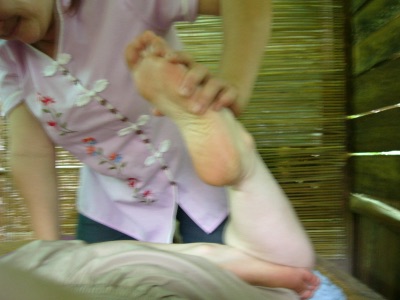
Photo: Mattes / Wikimedia Commons (Public domain)
Ya mueang: medicine in many forms
The dictionary says local medicine comes in many forms, such as ya tom (boiled), ya fon, ya hom, ya sak, ya dong (steeped), ya sup, ya phong (powder), ya met (pills), ya tha (ointment) and ya chu. The kinds the dictionary explains are below.
Medicine taken by mouth
| Kham Mueang | Lanna script | Meaning (from the dictionary) |
|---|---|---|
| ya fon | อยฯาฝ฿นฯ | herbal medicine ground against a stone with a carrier liquid to make nam ya fon for the patient to drink |
| ya that | อยฯาธาฯตฯ | in Thai traditional medicine, remedies that bring the body's elements back into balance |
| ya kae | อยฯาแก้ | a mixed herbal remedy in small dark brown or black pellets, for many complaints such as stomach ache and wind |
Ya fon comes from fon (ฝ฿นฯ). Besides rain, fon is a verb meaning to grind or rub on a stone, as in fon mit (sharpen a knife) and fon ya (grind medicine). The dictionary records that ya fon was made from plants (roots, tubers, stems), from animal parts such as tiger fangs and deer horn, and from minerals believed to be sacred.
Medicine used on the body
| Kham Mueang | Lanna script | Meaning (from the dictionary) |
|---|---|---|
| ya chu | อยฯาจู้ | a herbal compress in a cloth bag, steamed hot and pressed on the body to ease aches or pain |
| ya kop | อยฯาคอฯบ | a poultice laid on a painful spot or a wound |
| ya khom hua | อยฯาข฿มฯห฿วฯ | a compress for the head |
| ya ap | อยฯาอาปฯ | medicine soaked in or mixed with bath water |
| ya hom | อยฯาร฿มฯ | medicine used by smoking or steaming the patient |
| ya phu | อยฯาผู่ | medicine chewed or mixed with water and then sprayed from the mouth over the patient |
| ya mong | อยฯาห่มฯอฯง | a fragrant, hot balm rubbed on insect bites or aching muscles |
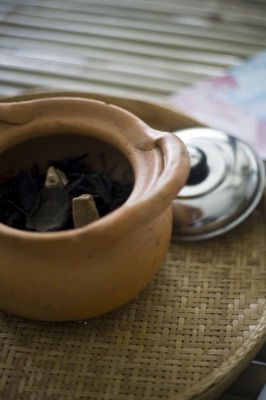
Photo: Government of Thailand / Wikimedia Commons (CC BY 2.0)
Photo: Athikhun.suw / Wikimedia Commons (CC BY-SA 4.0)
Medicines named after the illness
Many medicine names carry the illness in them: learn the illness word and you can guess the medicine.
| Kham Mueang | Lanna script | Meaning (from the dictionary) |
|---|---|---|
| ya kae sang | อยฯาแก้ซางฯ | medicine for a wasting illness of children and for mouth ulcers (also ya khang อยฯาขางฯ) |
| ya kae pit | อยฯาแก้พิษฯฯ | antidote for poison (also ya dap pit อยฯาดัปฯพิษฯฯ) |
| ya kae lu tong | อยฯาแก้หลฯท้อฯง | medicine for diarrhoea |
| ya tut lueat | อยฯาทุดเลิอฯด | medicine to stop bleeding |
| ya pi | อยฯาปิ | medicine for fainting |
| ya sa | อยฯาซะ | medicine to expel poison or worms (also ya sawa อยฯาซวฯะ, ya sa อยฯาสะ) |
| ya thu | อยฯาถุ | medicine to expel worms (also ya lu อยฯาหลฯ) |
| ya thip | อยฯาถีปฯ | medicine to expel poisons |
A verb worth knowing is ya tua (อยฯาต฿วฯ): to nurse yourself back to health.
Herbs the dictionary says are used for medicine
Many plants in a northern kitchen are both food and medicine. This table lists only plants whose dictionary entry says they are used to make medicine.
| Kham Mueang | Lanna script | English | Meaning (from the dictionary) |
|---|---|---|---|
| pu-loei | พลฯเลิยฯ | plai | a herb with a rhizome like galangal, yellow-green inside, used for medicine |
| khing | ขิงฯ | ginger | a herb with a hot rhizome, used in cooking and medicine |
| kha | ข่า | galangal | a herb with a pungent rhizome, used in cooking and medicine |
| ba kham pom | บ่าฯขามฯป้อฯม | Indian gooseberry | sour, astringent, slightly sweet fruit, used for medicine |
| ba na | บ่าฯนะ | myrobalan | flowers, fruit and bark are used in many medicines |
| som poi | ส฿มฯป่อฯยฯ | soap pod | every part is used for medicine; the dried pods make the scented water for the Dam Hua rite |
| fang | ฝางฯ | sappan wood | a thorny tree with red heartwood, used for medicine or dye |
| ya kha | ห้ยฯาฅา | cogon grass | leaves thatch roofs, the rhizome is used for medicine |
| nga | งา | sesame | seeds pressed for oil; sesame oil is used in yam khang and khwak sui |
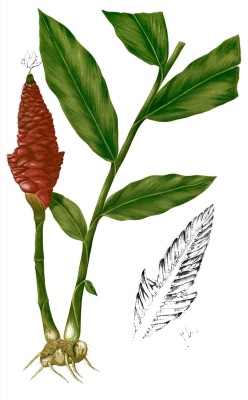
Photo: Francisco Manuel Blanco (O.S.A.) / Wikimedia Commons (Public domain)
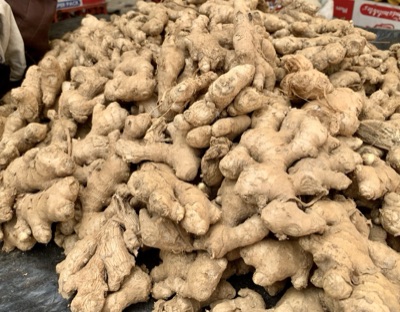
Photo: Judethedeus / Wikimedia Commons (CC0)
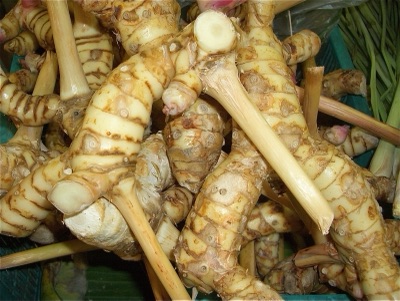
Photo: Susan Slater / Wikimedia Commons (CC BY-SA 4.0)
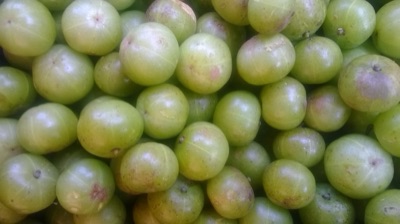
Photo: Krish Dulal / Wikimedia Commons (CC BY-SA 4.0)
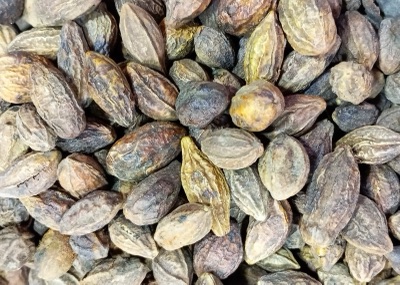
Photo: Salil Kumar Mukherjee / Wikimedia Commons (CC BY-SA 4.0)
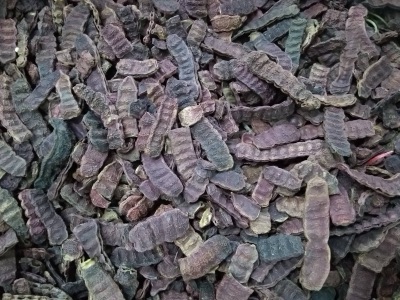
Photo: Thamizhpparithi Maari / Wikimedia Commons (CC BY-SA 4.0)
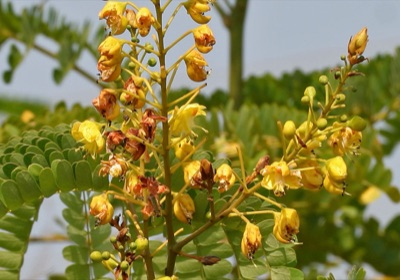
Photo: J.M.Garg / Wikimedia Commons (CC BY 3.0)
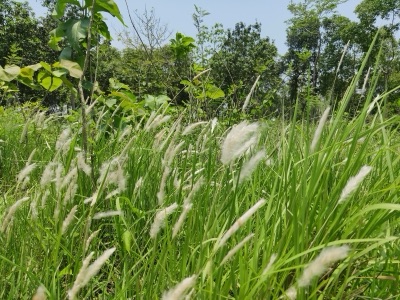
Photo: Apurv013 / Wikimedia Commons (CC0)
A study from the Faculty of Humanities, Chiang Mai University (2024) gathered the folk-medicine vocabulary of ethnic groups in Lanna from 256 documents. It found 1,858 terms, and the largest group was herbal therapy, which shows that knowledge of herbal medicine sits at the heart of this tradition.
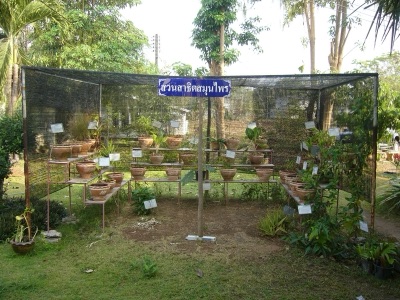
Photo: Mattes / Wikimedia Commons (Public domain)
Words for being ill
To talk with a mo mueang you need words for symptoms too. The one to remember is mueai (เมิ่อฯยฯ), which in Kham Mueang means to feel unwell, feverish and weak. The word khai (ไข้), fever, is noted in the dictionary as a borrowing: older Lanna used mueai.
| Kham Mueang | Lanna script | Meaning (from the dictionary) |
|---|---|---|
| mueai | เมิ่อฯยฯ | unwell, feverish and weak; also tired, aching muscles |
| khai pa | ไข้ป่า | "forest fever": malaria |
| khai pang | ไข้ป้างฯ | chronic malarial fever with an enlarged liver and spleen |
| sang | ซางฯ | a childhood illness in old medical texts, as in pen sang |
| kiao | ก่ยฯว | cramp: a muscle suddenly tight, hard and painful |
| ma-hok | มโห฿กฯ | a wasting illness in old medical texts: thin, weak, yellowish (also ba hok) |
| chu | ชุ | bruised, sore |
| puat | ปวฯด | to ache, as in puat hua (headache) |
| ai | ไอ | to cough |
| fi | ฝี | a boil, an abscess |
| tum | ตุ่ม | a bump on the skin, as in tum yung (mosquito bite) |
| hai | หายฯ | to get well, as in hai khai (recover from a fever) |
Ya that does not mean medicine
Some Kham Mueang words begin with ya but lead somewhere else entirely. Knowing them saves misunderstandings.
Ya meaning "to patch a leak." As a verb, ya is used for sealing something so it stops leaking: ya lang-kha (อยฯาหัลฯงฅา, patch a leaking roof), ya huea (อยฯาเริอฯอ, caulk a boat) and ya nam khu (อยฯานาฯฅุ, seal a leaking water bucket).
Ya meaning tobacco, as in ya sup (อยฯาสูบ), ya khuen (อยฯาขื่นฯ, strong tobacco), ya chang (อยฯาจางฯ, mild tobacco), ya pae (อยฯาแระฯพ่, fine tobacco from Phrae) and ya khwan (อยฯาฅัวฯร), a cigarette. These are here for the language, not as an invitation to smoke.
Ya that is poison: ya pit (อยฯาพิษฯฯ, poison) and ya buea (อยฯาเบิอฯอ, a toxin that stupefies).
Words such as yam (time), yao (long) and yai (grandmother) are different words with nothing to do with medicine.
Summary
- Mo in Kham Mueang also means an expert: mo khwam (lawyer), mo pa (hunter), mo twai (fortune-teller).
- A mo mueang heals in three ways: spells and blowing, spirit possession (mot) and herbal medicine (mo ya). One who uses all three is a mot mo.
- Treatments have their own names: pao, haek, yam khang, tok sen, khwak sui.
- Ya mueang comes in many forms, such as ya fon, ya chu (compress) and ya kop (poultice); ya tua means to nurse yourself back to health.
- Mueai means to feel unwell, and ya can also mean to patch a leak, or tobacco.
Look up more words in the Moradok Lanna dictionary. For beliefs, read Phi in Kham Mueang and Hong Khwan, or see soap pods in a rite at Dam Hua.
Sources
- Moradok Lanna dictionary: หมอเมือง · หมอเป่า · ย่ำขาง · ตอกเส้น · ยาเมือง · ยาฝน
- Pakamon Charoensuk and Watsaporn Arayaphan. (2024). Analysis and Grouping of Knowledge and Wisdom: Folk Medicine of Ethnic Groups in Lanna. Journal of Information and Learning, 35(1), 40–55.
- THE STANDARD. (11 June 2019). ราชกิจจาฯ ประกาศรับรองใบอนุญาต 'หมอพื้นบ้าน' แล้ว [Royal Gazette certifies "folk healer" licences (in Thai)].
- Illustrations from Wikimedia Commons, credited under each picture. Some were taken outside northern Thailand or outside Thailand, as noted.
Look up "หมอเมือง" in the Moradok Lanna dictionary (in Thai)


