
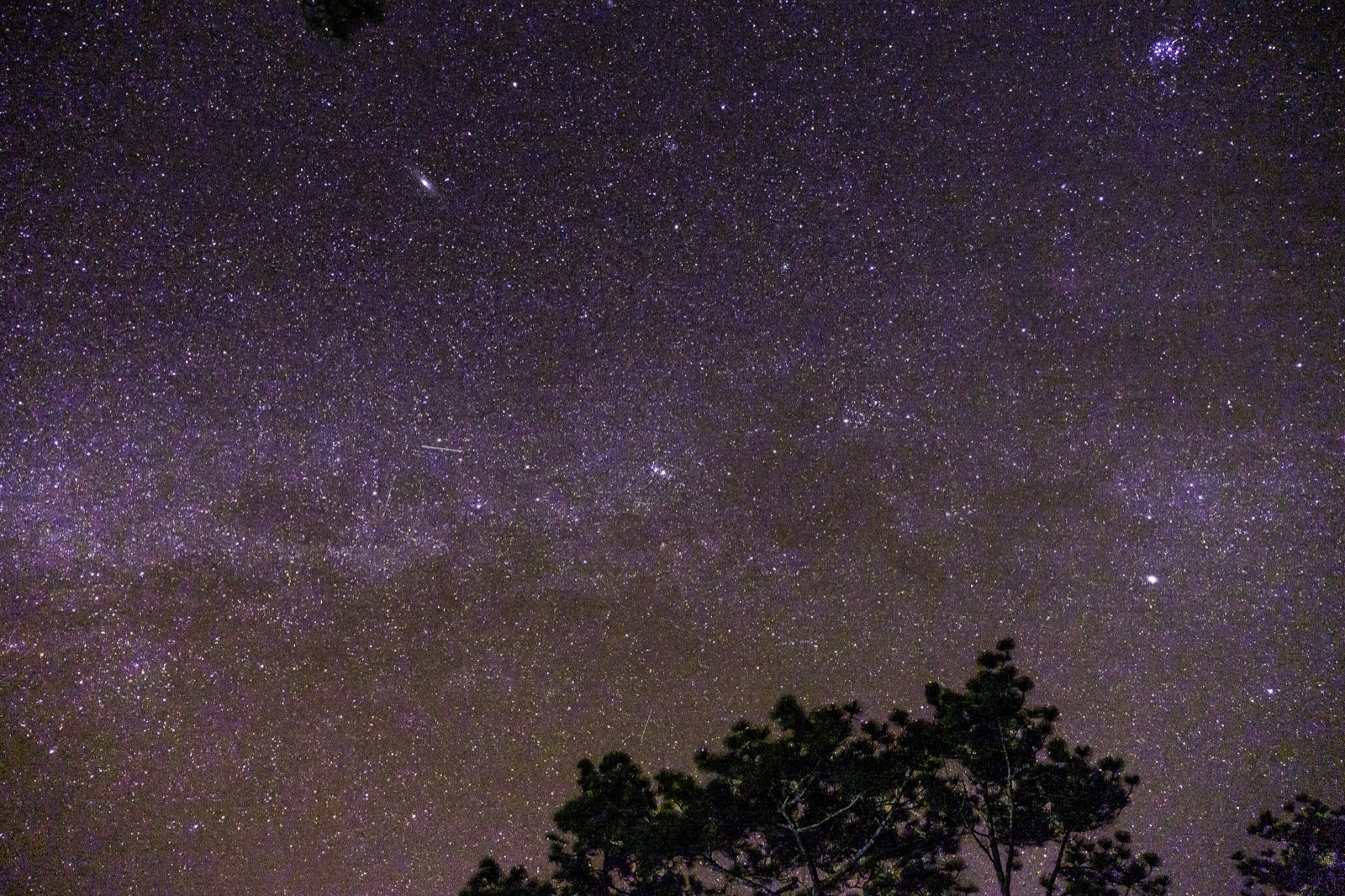
Photo: Piith.hant / Wikimedia Commons (CC BY-SA 4.0)
Twinkle, Twinkle, Little Star in Kham Mueang: Every Verse
Twinkle, Twinkle, Little Star is a nursery song children know all over the world. It is really a poem called "The Star" by the English writer Jane Taylor, published in 1806, with five verses, though usually only the first is sung. The closest word in Kham Mueang is dao ดาวฯ (Kham Mueang reading dao), which the dictionary defines as a shining point seen in the sky when it is dark, apart from the sun.
This is one more article in the set World songs in Kham Mueang, within Kham Mueang through songs and literature. The one before it was My Way, still under copyright, so we could only retell its ideas. Jane Taylor's poem is in the public domain, so we render it in Kham Mueang in full, all five verses, and every Kham Mueang word comes from the Moradok Lanna dictionary.
Where the song comes from
The words come from the poem "The Star" by Jane Taylor (1783–1824), published in Rhymes for the Nursery, which she wrote with her elder sister Ann Taylor (1782–1866), printed in London in 1806 according to Wikipedia. This agrees with the Dictionary of National Biography (by Thomas Seccombe, 1898), which says "Twinkle, twinkle, little star" is the tenth poem in that book. The sisters' first collection was Original Poems for Infant Minds (1804).
The tune we sing is the French melody "Ah! vous dirai-je, maman", which Wikipedia says was first published in 1761. The original French words, "La Confidence naïve" (printed 1774), are a love poem in which a young woman confesses to her mother that she has fallen for a man, which has nothing to do with stars. Mozart wrote his Twelve Variations on the tune (K. 265) around 1781 or 1782, though the exact year is disputed. The same tune is also used for The ABC Song and "Baa, Baa, Black Sheep".
The text we used
We used "The Star" as transcribed on Wikisource under Rhymes for the Nursery by Ann Taylor and Jane Taylor. It has five verses, and we keep its old spellings (trav'ller, thro', 'Tis). Later printings may differ in punctuation, so we give a plain English meaning after each verse.
For the Kham Mueang we write in Thai script following the Kham Mueang sounds, and add the Lanna script only for words found in the dictionary. A word that is not in the dictionary we do not invent; we use a Thai word and say so.
Verse 1: dao noi, song saeng chaeng
Twinkle, twinkle, little star,
How I wonder what you are!
Up above the world so high,
Like a diamond in the sky.
In plain English: little star, sparkling, I do wonder what you are, high up above the world, like a diamond in the sky.
The word twinkle (to sparkle, to flicker) has no matching word in the Moradok Lanna dictionary, so we use song ส่อฯง (to shine a light) with saeng แสงฯ (light) and chaeng แจ้งฯ (bright, clear), meaning "to shine brightly", which does not yet capture the flicker of twinkle. Noi ห้นฯอฯย is small, not large.
Sangka สังกฯา is doubt or wonder. Pen เปนฯ and a yang อหัยฯง together give "what are (you)". Sung สูง is straight up, not low, and tang bon ทาฯงฯบ฿นฯ is the upper side, the heights. Mueang เหิอฯร is "like, as". Fa ฟ้า is the part above that covers the land. Kaeo แก้วฯ is defined by the dictionary as a hard, clear stone, including gems of various kinds, so we use it for diamond, since there is no stand-alone word for "diamond".
Kham Mueang rendering by MoradokLanna: ดาวหน้อย ส่องแสงแจ้ง / เฮาสังก๋า ตั๋วเป๋นอะหยัง / สูงตางบน / เหมือนแก้วอยู่ฟ้า ("Little star, shining bright / I wonder what you are / high above / like a gem in the sky")
The pronoun tua ต฿วฯ is described by the dictionary as used between close friends or sweethearts. We chose it because it suits the tender voice of someone talking to a star as to a friend. Hao เรัา here stands for the speaker's "I" by our choice (the dictionary lists it as the first-person plural, so it may be used differently; please have a speaker check).
Verse 2: tawan tok din, khuen rung
When the blazing sun is gone,
When he nothing shines upon,
Then you show your little light,
Twinkle, twinkle, all the night.
In plain English: when the blazing sun has gone, and has nothing to shine on, then you show your little light, sparkling all night long.
The dictionary has words that match this verse closely. Tawan tok din ตาวันฯต฿กฯดินฯ is the sun setting, saeng tawan แสงฯตาวันฯ is sunlight, bo mi บมี is "there is none", and khuen rung ฅืนฯรุ่ง is defined as all night, the whole night, matching "all the night". Yam ยามฯ is a time, an occasion.
Kham Mueang rendering by MoradokLanna: ยามต๋าวันต๋กดิน บ่มีแสงต๋าวัน / ตั๋วส่องแสงหน้อย / ส่องแจ้งคืนฮุ่ง ("When the sun sets and there is no sunlight / you shine a little light / shining bright all night")
Verse 3: the traveller in the dark
Then the trav'ller in the dark,
Thanks you for your tiny spark,
He could not see which way to go,
If you did not twinkle so.
In plain English: then the traveller in the dark thanks you for your tiny spark; he could not see which way to go if you did not twinkle so.
A traveller in Kham Mueang is a khon ฅ฿นฯ who tiao tang ทยฯวทาฯงฯ (travels) in the mued มืดฯ time, which the dictionary defines as lacking light. For "thanks" we use yin di ยินฯดี, which the dictionary defines as pleased, grateful, thank you. Bo han บหันฯ is "cannot see" and tang ทาฯงฯ is the way, the road.
We did not translate the conditional "if you did not shine" directly. We put the two clauses side by side ("you do not shine" / "cannot see the way"), because the dictionary's entry for "ถ้า" gives a different meaning (to wait), so we avoid it rather than risk a misunderstanding.
Kham Mueang rendering by MoradokLanna: คนเตียวตางยามมืด / ยินดีแสงหน้อยตั๋ว / บ่หันตางไป / ตั๋วบ่ส่องแสง ("A person travelling in the dark / glad of your little light / cannot see the way to go / (when) you do not shine")
Verse 4: never shutting your eye
In the dark blue sky you keep,
And often thro' my curtains peep,
For you never shut your eye,
Till the sun is in the sky.
In plain English: you stay in the dark blue sky, and often peep through my curtains, for you never close your eye until the sun is in the sky.
The dictionary gives pho ผํอฯ as to look, to watch; phan ผ่านฯ as to pass from one point to another; and pha man ผ้าห้มฯา as a curtain. For "often" we use lai หลฯายฯ and mue มื้ (a time, an occasion), "many times". Bo koei บเคิยฯ is "never", pit ปิดฯ is to shut, to keep closed, and ta ตา is the organ for seeing. Tawan maen ตาวันฯแมนฯ is the sun rising over the horizon, daybreak, and chon จ฿นฯ is "until".
We leave out the colour of the sky (dark blue) because we cannot find a clearly matching Kham Mueang word in the dictionary, and we use yu อยฯู่ (to stay) to say the star stays in the sky.
Kham Mueang rendering by MoradokLanna: ตั๋วอยู่ฟ้ามืด / ผ่อผ่านผ้าหม้านเฮาหลายมื้อ / ตั๋วบ่เกยปิ๋ดต๋า / จ๋นต๋าวันแมน ("You stay in the dark sky / you look through our curtain many times / you have never shut your eye / until daybreak")
Verse 5: bo hu sang, tua pen a yang
'Tis your bright and tiny spark,
Lights the trav'ller in the dark:
Tho' I know not what you are,
Twinkle, twinkle, little star.
In plain English: it is your bright, tiny spark that lights the traveller in the dark; though I do not know what you are, sparkle on, little star.
The last verse goes back to the wonder of the first. The dictionary gives bo hu sang as "not to know anything", which we use for "I do not know what you are", and the closing call is "ดาวหน้อย ส่องแสงแจ้ง" ("little star, shine bright"), as in verse 1.
Kham Mueang rendering by MoradokLanna: แสงหน้อยแจ้งตั๋ว / ส่องคนเตียวตางยามมืด / เฮาบ่ฮู้สัง ตั๋วเป๋นอะหยัง / ดาวหน้อย ส่องแสงแจ้ง ("Your small bright light / shines on the person travelling in the dark / I do not know what you are / little star, shine bright")
The words at a glance
| Idea | Kham Mueang words | Dictionary meaning |
|---|---|---|
| A shining star | dao ดาวฯ · noi ห้นฯอฯย · song ส่อฯง · saeng แสงฯ · chaeng แจ้งฯ | a shining point in the dark sky · small · to shine a light · light · bright, clear |
| Wondering what it is | sangka สังกฯา · a yang อหัยฯง · bo hu sang บรู้สังฯ | doubt, wonder · what · not to know anything |
| Sky, day and night | fa ฟ้า · tawan tok din ตาวันฯต฿กฯดินฯ · khuen rung ฅืนฯรุ่ง · tawan maen ตาวันฯแมนฯ | the part above that covers the land · the setting sun · all night · daybreak |
| The traveller in the dark | tiao tang ทยฯวทาฯงฯ · mued มืดฯ · bo han บหันฯ · yin di ยินฯดี | to travel · lacking light · cannot see · glad, thankful |
| The star that never shuts its eye | pho ผํอฯ · pha man ผ้าห้มฯา · pit ปิดฯ · ta ตา · bo koei บเคิยฯ | to look · curtain · to shut · eye · never |
All of these Kham Mueang lines are phrasings we put together from dictionary words, not the one standard way to say it, and we have not made them fit the tune. Anyone who wants to sing them should rework them to match the melody. We ask Kham Mueang speakers to check them, especially our use of tua and hao, and our leaving out "world", "diamond" and twinkle, which the dictionary does not have.
Compared with ue cha cha: the star that never shuts its eye, and the child who sleeps
This poem comes from a book of verse for children, and Lanna lullabies are also sung to children. In the article on Ue Cha Cha the dictionary gives a lullaby example, "หลั๋บหล้มสองต๋า...ป้อแม่ปิ๊กมา...ก้อยตื่น" (lap lom song ta ... pho mae pik ma ... koi tuen: "sleep, both eyes closed ... father and mother come back ... then wake"), and the word kwai u (to rock the cradle). Set that beside Jane Taylor's star, which "never shuts its eye" until daybreak (tawan maen), and you have two opposite pictures: the star keeps watch all night without sleeping, while the little child is sung to sleep with both eyes closed.
They differ in purpose. Ue Cha Cha is a lullaby that Northerners have handed down by singing, while The Star is a poem with a named author, born in England, set to a tune from France. We are not saying the two are the same kind of thing, only that a poem and a lullaby from different places play with the same picture: a child's night.
Summary
- Dao is a shining point in the dark sky, and song, saeng and chaeng are used for shining bright.
- Khuen rung is all night, and tawan maen is daybreak, when the sun rises over the horizon.
- Jane Taylor's poem "The Star" (1806) is in the public domain, so we render all five verses in Kham Mueang.
- "World", "diamond" and twinkle have no stand-alone word in the dictionary, so we leave them out or use kaeo following the dictionary's meaning.
- Compared with Ue Cha Cha: the star that never pit ta (shuts its eye) and the child who lap (sleeps) with both eyes closed.
Look up more of the words in the MoradokLanna dictionary. Keep reading in the same series: My Way · Ui Kham · Auld Lang Syne or see the whole set at Kham Mueang through songs and literature (in Thai).
Copyright and courtesy
| Item | Details |
|---|---|
| Song | Twinkle, Twinkle, Little Star (the poem "The Star") |
| Words | Jane Taylor (English, 1806), in Rhymes for the Nursery by Ann Taylor and Jane Taylor |
| Music | The French song "Ah! vous dirai-je, maman" (first published 1761) |
| Source text used | "The Star" as transcribed on Wikisource (Rhymes for the Nursery) |
| Status | Public domain (the author died more than 200 years ago; Jane Taylor died in 1824) |
This article was made by Moradok Lanna, a non-profit website, for learning the Lanna language and culture. The original words are in the public domain, so we render every verse in Kham Mueang. Modern arrangements and recordings (for example versions by various artists and labels) remain under copyright; we do not use their particular wording.
With thanks and respect to the songwriters, performers and rights holders. If a rights holder would like anything changed or removed, please write to moradoklanna@gmail.com and we will act promptly.
References
- MoradokLanna Dictionary (dict2): dao, noi, song, saeng, chaeng, sangka, tua, pen, a yang, sung, tang bon, kaeo, mueang, fa, yam, tawan tok din, bo mi, saeng tawan, khuen rung, khon, tiao tang, mued, yin di, bo han, tang, pho, phan, pha man, lai, mue, bo koei, pit, ta, tawan maen, chon, bo hu sang, yu, hao.
- Taylor, J. (1806). The Star. In Taylor, A. and Taylor, J., Rhymes for the Nursery. Wikisource
- Seccombe, T. (1898). Taylor, Jane. Dictionary of National Biography, vol. 55. Wikisource
- Wikipedia. Twinkle, Twinkle, Little Star and Ah! vous dirai-je, maman (used as a lead and checked against other sources).
- Moradok Lanna's articles My Way, Ue Cha Cha and Auld Lang Syne.
Practise the words from this article
Flip through 38 flashcards of the Lanna words used in this article.


