
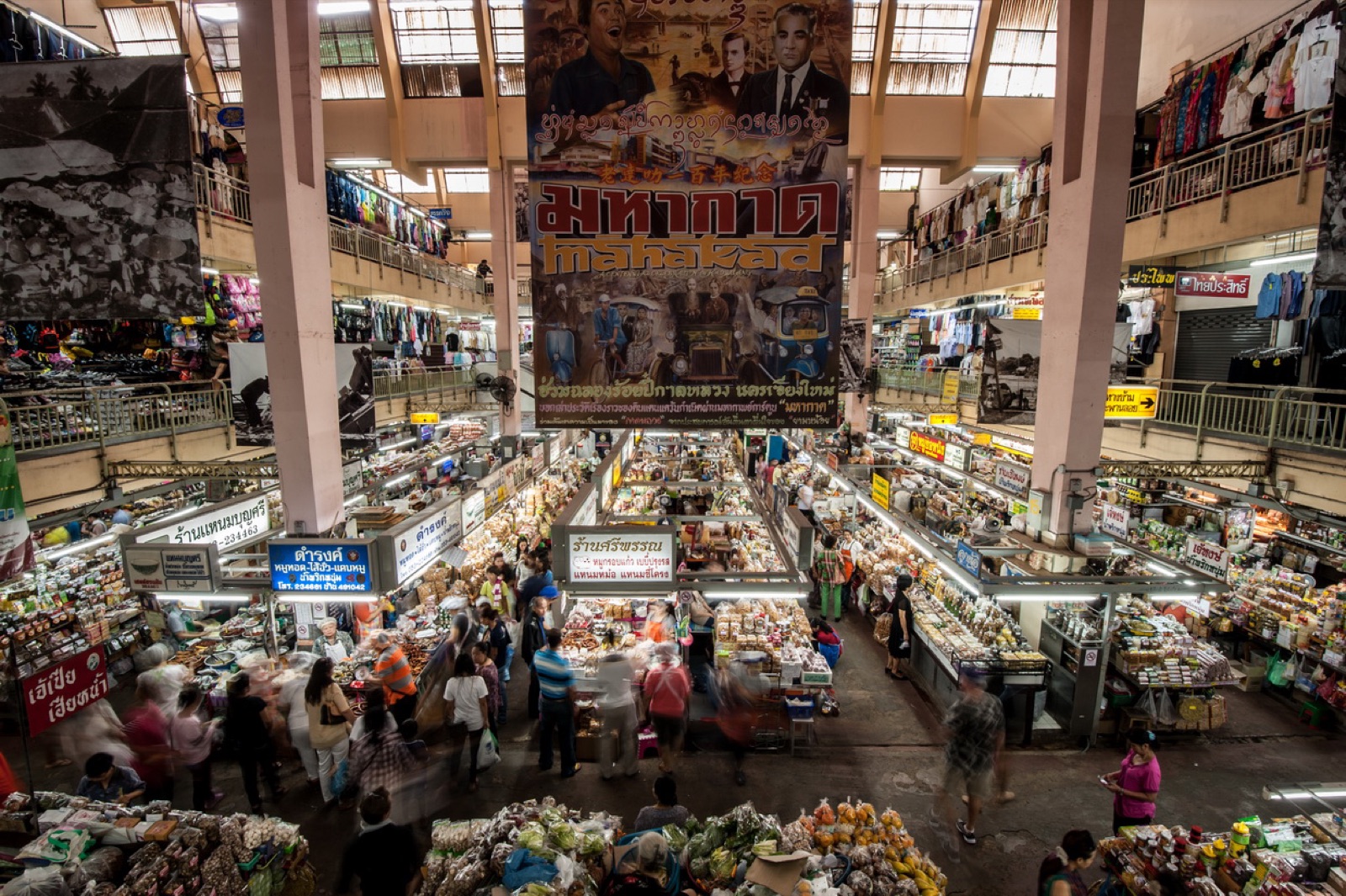
Photo: Mark Stevenson / Wikimedia Commons (CC BY-SA 2.0)
Scarborough Fair in Kham Mueang: Every Verse Retold
Scarborough Fair is an English folk ballad that many people know from the voice of Simon & Garfunkel. But the ballad itself is far older. Villagers sang it for centuries and it has no single owner. This article retells the original verses in Kham Mueang (Northern Thai), using only words found in the dictionary, to show which words a Northerner could use to tell the same story.
The title already holds one word every Northerner knows: fair, which is kat กาดฯ, the market. In the dictionary, a kat is a place for buying and selling all kinds of goods, and "pai kat" ไพกาดฯ simply means to go to the market.
Unlike a song still under copyright, such as My Way, the original words of Scarborough Fair are in the public domain. So we can retell every verse in Kham Mueang and print the English original beside it. We use the text that Frank Kidson collected and printed in 1891 (B.E. 2434). We do not use the wording of any modern arrangement.
Where Scarborough Fair comes from
The ballad. Scarborough Fair is a close relative of an older ballad, "The Elfin Knight", which the folk-song collector Francis James Child listed as number 2 in his Child Ballads. The story: a man and a woman take turns setting each other impossible tasks, each saying that if the other can do them, they will agree to be a pair (as the Ballad Index describes it). The oldest known text is a broadside (a song sheet), and the sources disagree on its date. Wikipedia says about 1650 and traces it back to 1670, while the Ballad Index gives 1673.
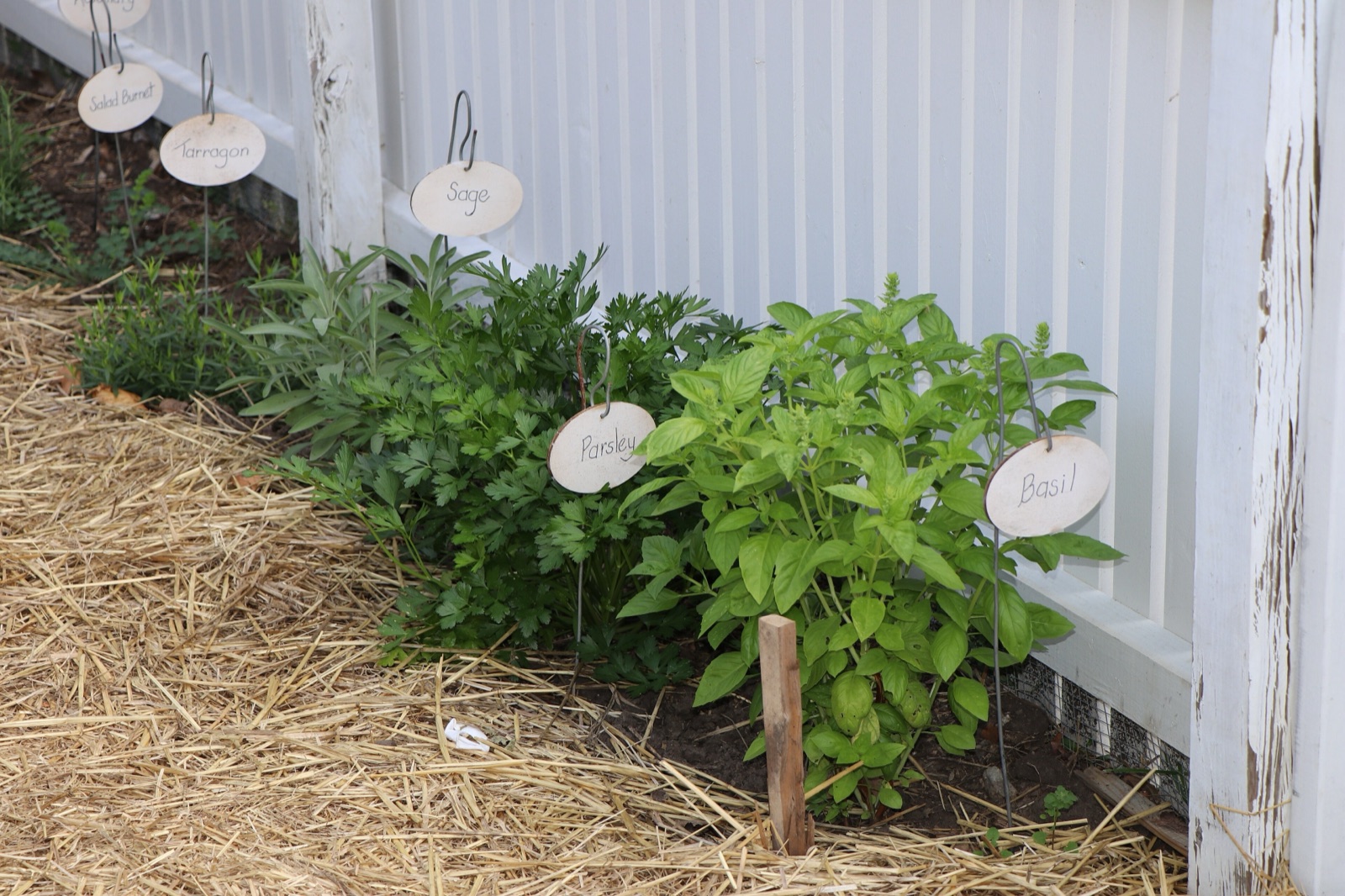
The famous herb line ("parsley, sage, rosemary and thyme") is not original to the old broadside. The Ballad Index notes that it has been tied to the ballad since at least 1784, in Gammer Gurton's Garland, and the name Scarborough entered the versions of the 19th century. Some writers suggest the herbs were protective charms; others think they may be only filler for the rhythm. All of this is guesswork, with no firm answer.
The edition we used is Frank Kidson's (1855–1926). He printed the ballad in Traditional Tunes: a collection of ballad airs, chiefly obtained in Yorkshire and the South of Scotland (Oxford: Chas. Taphouse & Son, 1891), pages 42–44. He notes that a ballad singer in the streets of Whitby sang it "twenty or thirty years ago", and that it was still remembered in the district. Kidson's version has eight verses, and its refrain is "Savoury sage, rosemary, and thyme". Parsley appears only in a second version that Kidson got from a Mr. A. Wardill of Goathland, which opens its refrain with "Rue, parsley, rosemary, and thyme". So the herbs were already changing from singer to singer in the 19th century.
The tune and the world-famous version. The tune we know came by another route. Wikipedia and Mainly Norfolk agree that in 1947 Ewan MacColl collected the tune and some verses from Mark Anderson, a retired lead miner from Teesdale, and added other verses from Kidson's 1891 text. Shirley Collins (1960) wrote that MacColl had taken the words from Cecil Sharp's book, which disagrees with MacColl's own note. Martin Carthy, an English folk singer, recorded his version on his first album in 1965, and Paul Simon learned the song from Carthy in London. Simon & Garfunkel recorded it on 26 July 1966 as "Scarborough Fair/Canticle", sung against an anti-war song, "Canticle", that they added. It came out as a single in February 1968, after the song was used in the film The Graduate. The copyright credit named only Simon and Garfunkel, which upset Carthy (according to Wikipedia). That arrangement and the "Canticle" words are still under copyright, so we do not use their wording at all.
Was there really a Scarborough fair?
Scarborough is a seaside town in Yorkshire, in the north of England, and Scarborough Fair was real. The Scarborough Maritime Heritage Centre and the 1911 Encyclopaedia Britannica agree that King Henry III granted a charter in 1253 (B.E. 1796) for a yearly fair, running from the feast of the Assumption (15 August) to the feast of St Michael (29 September), about 45 days, which was very long for a fair at that time. But the Ballad Index, citing a writer called Kellett, mentions a charter from Henry II as early as 1161, so the sources do not agree on when it began. Wikipedia records that merchants came from all over England and from far-off Norway and Denmark. The fair declined from 1383 and came to an end in 1788 (B.E. 2331).
So the fair in the song is no invention. It was a real fair that people travelled to from other towns, the kind of place where a message to an old sweetheart, as in the first verse, could really be passed on.
Listen to the version the world knows
Most people have heard the Simon & Garfunkel version, which has its own arrangement and the "Canticle" sung over it. Listen and compare it with the original verses we retell here: the tune is the same, but the words and the arrangement differ. The clip comes from the SimonGarfunkelVEVO channel, the artists' official channel.

Verse 1: sending kuet hot to someone from the past
The first verse of Kidson's text is a dialogue. Someone asks where you are going. The answer is Scarborough Fair, and a message goes with it to a young woman who lives there, once a sweetheart.
Original (Kidson, 1891):
"O, where are you going?" "To Scarborough fair,"
Savoury sage, rosemary, and thyme;
"Remember me to a lass who lives there,
For once she was a true love of mine.Kham Mueang rendering by MoradokLanna:
"จะไปไหน" "จะไปกาดสการ์โบโรห์"
เซเวอรี เสจ โรสแมรี แล้วก็ไทม์
"ฝากกึ๊ดฮอดไปถึงสาวตี้อยู่หั้น
ตะก่อนเปิ้นเป๋นใจ๋ฮักของข้า"
("Where are you going?" "To the Scarborough market." / the four herbs / "Send my longing to the young woman who lives there. / In the past she was the one my heart was fond of.")
The Kham Mueang words here are pai (to go, to move away from a place) and nai ไหนฯ, which the dictionary glosses as "what, where", used in questions. Kuet hot คึดฯรอฯด means "to think of, to miss", so it suits "remember me to", which in central Thai might be "send my thoughts". Sao สาวฯ is an unmarried young woman. Ta kon ตก่อฯร means "before, earlier, in the past" (it returns in the article on Yesterday). Chai hak ไจรักฯ in the dictionary means "fond of, pleased with", so we use it for someone your heart is drawn to.
The four herb names (savory, sage, rosemary, thyme) are not in the dictionary as Kham Mueang words. We keep them as Thai transliterations and do not invent Kham Mueang words.
Verses 2 to 4: the impossible shirt
The next three verses pass on three tasks for one fine linen shirt (a cambric shirt): sew it without a seam, wash it in a well with no water, and dry it on a thorn that has never flowered. Every one of them is impossible.
Verse 2: a shirt with no duk suea
Original:
"And tell her to make me a cambric shirt,
Savoury sage, rosemary, and thyme,
Without any seam or needlework,
And then she shall be a true love of mine.Kham Mueang rendering by MoradokLanna:
"บอกเปิ้นหื้อเยียะเสื้อผ้าละเอียดตัวหนึ่ง
เซเวอรี เสจ โรสแมรี แล้วก็ไทม์
บ่ต้องมีดูกเสื้อ บ่ต้องสอย
ถ้าเยียะได้ เปิ้นก็จะเป๋นใจ๋ฮักของข้า"
("Tell her to make me a shirt of fine cloth. / the four herbs / It must have no seam and no sewing. / If she can, she will be the one my heart is fond of.")
Suea เสิ้อฯอ and pha ผ้า are the same words as in central Thai. What is interesting is takhep: in the Moradok Lanna dictionary (ref 17031) it means the "takhep" centipede, a small creature like a centipede (in Kham Mueang, chak khap), not the stitching on cloth. For the seam of a shirt Kham Mueang uses duk suea ดูกเสิ้อฯอ, which the dictionary defines as the join or stitched line holding two pieces of cloth together. Sewing a seam is soi สอฯยฯ. And bo tong บต้อฯง means "not necessary to...", close to "without any" in the original. (The word for plain "sewing", เย็บ, is not in the dictionary, so we went round it with "soi".)
Verse 3: washing in a dry well
Original:
"And tell her to wash it in yonder dry well,
Savoury sage, rosemary, and thyme,
Where no water sprung, nor a drop of rain fell,
And then she shall be a true love of mine.Kham Mueang rendering by MoradokLanna:
"บอกเปิ้นหื้อซักเสื้อตัวนั้นในบ่อแห้งหั้น
เซเวอรี เสจ โรสแมรี แล้วก็ไทม์
ตี้บ่มีน้ำ บ่มีฝนลงสักหยด
ถ้าเยียะได้ เปิ้นก็จะเป๋นใจ๋ฮักของข้า"
("Tell her to wash that shirt in the dry well there. / the four herbs / Where there is no water and not a drop of rain falls. / If she can, she will be the one my heart is fond of.")
The dictionary gives sak ซักฯ as "to clean or wash with water", with a close word lang ล้างฯ. Bo บอฯ is a deep hole in the ground for holding water. Haeng แห้งฯ means dry, without water, and the dictionary's own example is "a dry well", exactly as in the original. Fon ฝ฿นฯ is rain, water falling in small drops from the clouds, and long ล฿งฯ is glossed as "to fall, to scatter", as in "rain falls".
Verse 4: drying on a thorn that never flowered
Original:
"Tell her to dry it on yonder thorn,
Savoury sage, rosemary, and thyme,
Which never bore blossom since Adam was born,
And then she shall be a true love of thine."Kham Mueang rendering by MoradokLanna:
"หื้อตากไว้บนต้นหนามต้นหั้น
เซเวอรี เสจ โรสแมรี แล้วก็ไทม์
ตี้บ่ฮอดเกิดมีดอก ตั้งแต่อาดัมเกิดมา
ถ้าเยียะได้ เปิ้นก็จะเป๋นใจ๋ฮักของข้า"
("Have her dry it on that thorn tree. / the four herbs / Which has never come to bear flowers since Adam was born. / If she can, she will be the one my heart is fond of.")
(In Kidson's book the last line of this verse is printed "true love of thine", unlike the other verses, which say "mine". We keep it as printed in the original, but in the Kham Mueang rendering we make it the same as the other verses.)
Tak ตากฯ means to dry in the sun or wind. Nam หนฯามฯ is a thorn, a sharp part growing out of a plant. Dok ดอฯก is a flower, the part of a plant for reproduction, and koet เกิดฯ is to be born, to come into being. In the third line we use "บ่ฮอดเกิดมีดอก", a sentence we put together ourselves from these words, which a native speaker should still check.
Verses 5 to 7: the impossible field
In the next three verses, as the Ballad Index describes the pattern of this ballad, the woman sets tasks in return: find one field between the sea foam and the sea sand, plough it with a ram's horn, sow it with a single peppercorn, reap it with a sickle of leather, and tie the sheaves with a peacock's feather. Kidson does not say who is speaking, so this is only one way to read it.
Verse 5: a field between sea foam and sand
Original:
"O, will you find me an acre of land,
Savoury sage, rosemary, and thyme,
Between the sea foam, the sea sand,
Or never be a true lover of mine.Kham Mueang rendering by MoradokLanna:
"จะหานาผืนหนึ่งหื้อข้าได้ก่อ
เซเวอรี เสจ โรสแมรี แล้วก็ไทม์
อยู่ระหว่างฟองสะหมุ๋ดกับซาย
ถ้าบ่ได้ ก็บ่เป๋นใจ๋ฮักของข้า"
("Can you find me a field? / the four herbs / Lying between the waves' foam and the sand. / If you cannot, you are not the one my heart is fond of.")
In the dictionary na นาฯ is a flat area made into banked plots for growing rice. "Acre" is an English unit of land, so we say "a plot of field" instead and do not translate the unit itself. Sai ซายฯ is sand (very small bits of stone, loose and not sticking together). For "sea foam" the dictionary has fong samut ฟอฯงสมุท์ทฯ, glossed as waves in the ocean, sea or river, which is the closest word but not exactly "sea foam". The plain word for the sea is not in the dictionary as a Kham Mueang word.
Verse 6: ploughing with a ram's horn, sowing a peppercorn
Original:
"O, will you plough it with a ram's horn,
Savoury sage, rosemary, and thyme,
And sow it all over with one peppercorn,
Or never be a true lover of mine.Kham Mueang rendering by MoradokLanna:
"จะไถนาด้วยเขาแกะได้ก่อ
เซเวอรี เสจ โรสแมรี แล้วก็ไทม์
แล้วหว่านเม็ดพริกไทยเม็ดเดียวหื้อทั่ว
ถ้าบ่ได้ ก็บ่เป๋นใจ๋ฮักของข้า"
("Can you plough the field with a ram's horn? / the four herbs / And scatter a single peppercorn all over it? / If you cannot, you are not the one my heart is fond of.")
Thai na ไถนาฯ is to plough a field using the strength of buffalo or cattle, to prepare the soil for planting rice. Khao เขัา first means an animal's horn in the dictionary. Wan ห่วฯานฯ is to scatter, to spread about. The words for a sheep (แกะ) and pepper (พริกไทย) are not in the dictionary as Kham Mueang words, so we keep the Thai words.
Verse 7: reaping with a leather sickle, tying with a peacock feather
Original:
"O, will you reap it with a sickle of leather,
Savoury sage, rosemary, and thyme,
And tie it all up with a peacock's feather,
Or never be a true lover of mine.Kham Mueang rendering by MoradokLanna:
"จะเกี่ยวเข้าด้วยเคียวหนังได้ก่อ
เซเวอรี เสจ โรสแมรี แล้วก็ไทม์
แล้วมัดหื้อเรียบด้วยขนนกยูง
ถ้าบ่ได้ ก็บ่เป๋นใจ๋ฮักของข้า"
("Can you reap the rice with a sickle made of leather? / the four herbs / And bind it neatly with a peacock's feather? / If you cannot, you are not the one my heart is fond of.")
Kiao khao ก่ยฯวเขั้า means to reap rice, to cut rice with a sickle, and khiao ฅยฯว is a tool for cutting rice or grass. Nang หันฯง is animal hide tanned and made into goods (so a leather sickle can cut nothing, one more impossible task). Mat มัดฯ is to tie together tightly. Khon ข฿นฯ is the hair that grows in strands on the skin of people or animals, and nok yung น฿กฯยูง is the peacock, a large bird whose male spreads its tail when courting.
The last verse: come when the work is done
Kidson's last verse turns the story into a bargain: when you have finished the work, come and get the fine shirt, and we will be sweethearts. Since everything before it is impossible, the whole ballad is a game in which each side sets tasks for the other, as the Ballad Index explains.
Original:
"And when you have done and finished your work,
Savoury sage, rosemary, and thyme,
You may come to me for your cambric shirt,
And then you shall be a true lover of mine."Kham Mueang rendering by MoradokLanna:
"ตอนเยียะงานแล้ว
เซเวอรี เสจ โรสแมรี แล้วก็ไทม์
ก็มาเอาเสื้อผ้าละเอียดตัวหั้นจากข้า
ตอนหั้นก็จะเป๋นใจ๋ฮักของข้า"
("When the work is done / the four herbs / come and take that fine shirt from me. / Then you will be the one my heart is fond of.")
Yia เยยฯะ is "to do", and laeo แลฯวฯ is finished, already past. Ma มา is to come, the opposite of going, and ao ´า is to want, to take. Hue หื้, used in verses 2 to 4, is "to give". Bo บ is "not", found in almost every line of this retelling.
The words at a glance
| Idea in the ballad | Kham Mueang words | Dictionary meaning |
|---|---|---|
| The market and going there | kat กาดฯ · pai kat ไพกาดฯ | market · to go to the market |
| A message to an old sweetheart | kuet hot คึดฯรอฯด · sao สาวฯ · chai hak ไจรักฯ · ta kon ตก่อฯร | to miss, to think of · an unmarried young woman · fond of, pleased with · before, in the past |
| Cloth and the seam | suea เสิ้อฯอ · pha ผ้า · duk suea ดูกเสิ้อฯอ · soi สอฯยฯ | a garment for the upper body · cloth · the seam of a shirt · to sew cloth into a seam |
| Washing and drying | sak ซักฯ · bo บอฯ · haeng แห้งฯ · tak ตากฯ · nam หนฯามฯ · dok ดอฯก | to wash with water · a pit for holding water · dry, without water · to dry in the sun · a thorn · a flower |
| Field, sand and waves | na นาฯ · sai ซายฯ · fong samut ฟอฯงสมุท์ทฯ | a rice field · sand · waves in the sea |
| Plough, sow, reap, tie | thai na ไถนาฯ · wan ห่วฯานฯ · kiao khao ก่ยฯวเขั้า · khiao ฅยฯว · mat มัดฯ | to plough · to scatter · to reap rice · a sickle · to tie |
| The peacock and leather | nok yung น฿กฯยูง · khon ข฿นฯ · nang หันฯง | a large bird that spreads its tail · hair, fur · tanned hide |
| Coriander in the market | phak pom ผักฯป้อฯม | coriander |
All of the Kham Mueang lines here are Moradok Lanna's own wording, built from dictionary words and ordinary Thai particles. They are not a single standard version. Northerners from different places may say the same idea in other words, and we would still like a native speaker to check them.
Compared with the Northern market: herbs and greens
The ballad takes us to a market, and a Northern market has no fewer herbs and greens to buy than the Scarborough fair. They are simply a different set, such as phak pom (coriander), which goes into laap, chilli dips and curry paste. The article Going to the Kat collects the names of markets and the words used when buying, while Vegetable names in Kham Mueang and Lanna wild greens introduce many more of the greens and herbs of our own region.
The English ballad uses herbs as a refrain, to be easy to remember and to keep the beat (or perhaps as protective charms, as some suggest). Northerners have greens for eating and herbs for medicine in the market and the kitchen every day. What the two share is that talk of vegetables, markets and old sweethearts was handed down by word of mouth long before anyone wrote it down.
Summary
- Scarborough Fair is an English folk ballad descended from "The Elfin Knight" (Child Ballad 2), and its original words are in the public domain.
- We used Frank Kidson, Traditional Tunes (1891), pages 42–44, and not the wording of any modern arrangement.
- Kat is the market and pai kat is to go to the market, and kuet hot is to miss someone.
- Cloth, washing, drying, ploughing and reaping have words in the dictionary, but savory, sage, rosemary, thyme, pepper and sheep do not, so we kept the Thai words.
- Takhep in the Moradok Lanna dictionary is the centipede-like creature, while the seam of a shirt is duk suea.
- The Kham Mueang lines are Moradok Lanna's wording and still need a native speaker's check.
Look up the words in the Moradok Lanna dictionary (in Thai). Read on in the same series: My Way · Dak Sai or see the whole set at Kham Mueang through songs and literature (in Thai).
Copyright and courtesy
| Item | Details |
|---|---|
| Song | Scarborough Fair (another name for the ballad "The Elfin Knight", Child Ballad 2, Roud 12) |
| Words | English folk ballad, author unknown (English); the text used was collected by Frank Kidson, Traditional Tunes (1891) |
| Music | English folk tune; the best-known tune was noted by Ewan MacColl from Mark Anderson (1947) |
| Best-known recording | Simon & Garfunkel "Scarborough Fair/Canticle" (1966; single 1968), from Martin Carthy's version (1965) |
| Status | Public domain: the original words are an old folk ballad, and the collector, Frank Kidson, died in 1926 |
This article was made by Moradok Lanna, a non-profit website, for learning the Lanna language and culture. The original words are in the public domain, so we render every verse in Kham Mueang. Modern arrangements and recordings (e.g. Simon & Garfunkel) remain under copyright; we do not use their particular wording. Embedded videos come from the rights holders' official channels and remain their property.
With thanks and respect to the songwriters, performers and rights holders. If a rights holder would like anything changed or removed, please write to moradoklanna@gmail.com and we will act promptly.
References
- MoradokLanna Dictionary (dict2): kat, pai kat, kuet hot, sao, chai hak, ta kon, suea, pha, duk suea, soi, bo tong, sak, lang, bo, haeng, fon, long, tak, nam, dok, koet, na, thai na, sai, fong samut, khao, wan, kiao khao, khiao, nang, mat, khon, nok yung, phak pom, ma, ao, laeo, nai, hue, yia.
- Kidson, F. (1891). Traditional Tunes: a collection of ballad airs, chiefly obtained in Yorkshire and the South of Scotland. Oxford: Chas. Taphouse & Son. Pages 42–44 and 172. Copy at the Internet Archive
- Ballad Index. The Elfin Knight (Child 2)
- Mainly Norfolk. Scarborough Fair / The Elfin Knight (notes on Martin Carthy)
- Wikipedia. Scarborough Fair (ballad) and Frank Kidson (used as a lead and checked against other sources).
- Scarborough Maritime Heritage Centre. Scarborough Fair
- Encyclopaedia Britannica (11th ed., 1911). Scarborough. Wikisource
- Wikipedia. Scarborough Fair (fair)
- Simon & Garfunkel (official channel). Scarborough Fair/Canticle (Audio). YouTube
- Moradok Lanna articles My Way, Going to the Kat, Vegetable names in Kham Mueang and Lanna wild greens.
Practise the words from this article
Flip through 40 flashcards of the Lanna words used in this article.


