
Photo: Setawut / Wikimedia Commons (CC BY-SA 4.0)
Ma Mia: What's Real, What's Legend, What's Fiction
Ma Mia is the name of the young woman from Moulmein in a love story with Chao Noi Sukkasem, a son of Chao Kaeo Nawarat of Chiang Mai. The story has been told as a book, a song, TV drama and stage plays, until many people took it for history. Northern Thais call a story handed down over time a legend, tamnan (ตํานาฯ), and this is a legend tied to real people.
This article does not rule on whether it is true. It takes the story apart and shows which pieces are in records of the time, which come from the first book that told it, which were added later, and which are still disputed. It ends with a new song that was written as fiction from the start. We tell it with respect for the northern royal family, the na Chiang Mai family, and the woman in the story, whatever her real name was.
The cover photo shows the ku (reliquary stupas) of the northern royal family at Wat Suan Dok in Chiang Mai. Chao Noi Sukkasem's ku is here, and so is another one that people once said was Ma Mia's. We come back to it below.
Ma Mia or Ma Mia: why two spellings?
Most history writing and academic articles spell the name มะเมียะ, as the Pridi Banomyong Institute and Dr Pensupa Sukkata do; Pensupa adds that it is pronounced Ma-mia with a high first syllable. Jaran Manopetch's song spells it the Kham Mueang way, มะเมี๊ยะ, with a tone mark. Some works write หมะเมียะ, like Thanet Charoenmuang's book 100 Years of Love: Ma Mia and Chao Sukkasem.
Here we use Ma Mia for the character and the story, and refer to Jaran's song by its title. The Kham Mueang lesson on the song is at Ma Mia: learning Kham Mueang from Jaran Manopetch's song. The name itself is not in the dictionary, because it is a personal name.
The real Chao Noi Sukkasem: what the Royal Gazette records
Chao Noi Sukkasem was a real person, born around 1880, the eldest son of Chao Kaeo Nawarat and Chao Chamari Wong (Komchadluek, 2018). His father later became the ninth and last ruler of Chiang Mai, a chao luang (เจั้าหลฯวฯง). The easiest first-hand evidence to check is the Royal Gazette; we read the four original pages ourselves.
| Date | The Royal Gazette records | Source |
|---|---|---|
| 16 Feb 1898 | "Chao Suriyawong" becomes Chao Ratchawong of Chiang Mai; this is Chao Kaeo Nawarat | vol. 14, p. 796 |
| 6 Mar 1905 | the Chao Ratchawong becomes Chao Upparat of Chiang Mai | vol. 21, p. 932 |
| 22 Nov 1911 | "Noi Sukkasem, son of Chao Kaeo Nawarat" becomes Chao Uttarakan Kosol of Chiang Mai | vol. 28, p. 1957 |
| 20 Mar 1914 | Chao Uttarakan Kosol (Noi Sukkasem), special official of Chiang Mai, aged 33, ill with a nerve disease, has died | vol. 30, p. 3080 |
The table answers one key question. From the year the story says the prince left to study (1898) to the year the couple parted (1903), his father was Chao Ratchawong, not Chao Upparat as the first book says, exactly as Somrit Luechai (2012) and Pensupa (2021) point out. Both posts belong to the top rank of northern royalty called chao khan tang ha, the "five-tray lords" (เจั้าขันฯทังฯ5); the Chao Upparat, chao upparat (เจั้า³บราชฯ), is the deputy of the ruler.
The table also shows that the title "Chao Uttarakan Kosol", announced in 1911, is not one of the five-tray posts. Somrit and Pensupa therefore ask how much weight the story's line about the prince being a future ruler can carry.
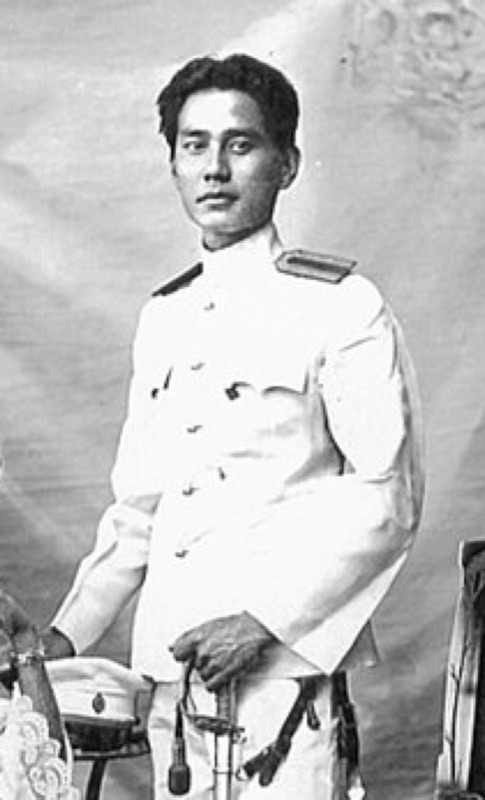
His family life is documented by several sources too. He married Chao Bua Chum na Chiang Mai around 1905: Lawan Chotamara's book Phra Mahesi Thewi (as quoted by Pensupa) dates the wedding to that year, and Silpa Wattanatham prints a photograph of the celebration from late 1905. Pensupa and the Pridi Institute both say the couple met at the residence of Princess Consort Chao Dara Rasmi in the Grand Palace.
What the Royal Gazette never mentions is a young woman from Moulmein. Somrit points out that if the affair had really strained relations with Siam, official papers should record it, and nobody has found any.
Moulmein a century ago: why northerners knew it
Moulmein (today Mawlamyine) is a port at the mouth of the Salween, in Myanmar's Mon State. Chaiwat Pasuna (2022) describes it as the first port and seat of government of British Burma from 1826 to 1852, a town that grew on forestry, sawmills and shipyards.
For Lanna, Moulmein was where teak, mai sak (ไม้สักฯ), ended up: logs from the western forests floated down the Salween to it, and many Tai and Burmese timber traders in Lanna borrowed capital from firms in Bangkok and Moulmein. That story is told in Lanna and Britain. Overland trade moved with pack oxen, ngua tang (ง฿วฯต่างฯ), cattle carrying goods in long trains.
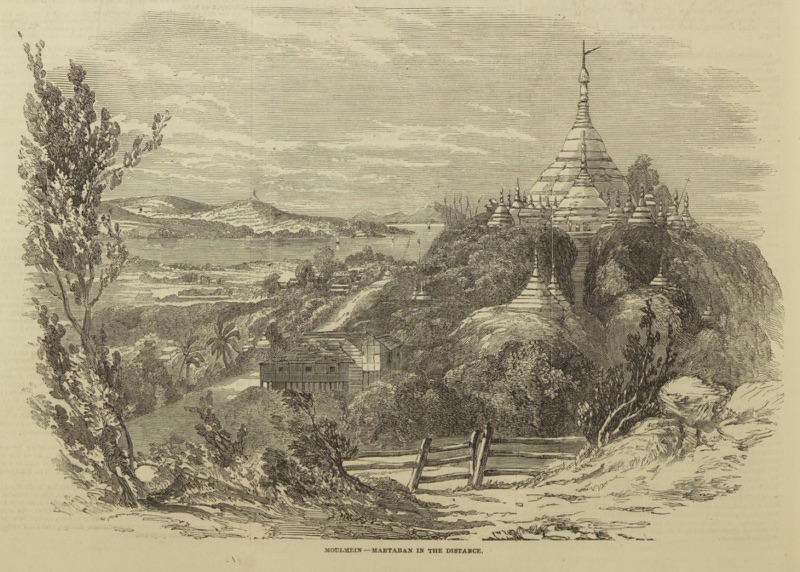
Why would a Chiang Mai lord send his son there instead of to Bangkok? Pensupa leaves it as an open question. The closest evidence is an article by Pichet Tantinamchai (2013), quoted by Pensupa, recording the family of Nai Kham Tan, the prince's close friend: Kham Tan went to Moulmein to study forestry together with the prince, who studied administration. Going to study, hian (รยฯร), abroad, mueang nok (เมิอฯงนอฯก), was for a lord's son of that time bound up with the world of teak.
The much earlier centuries when Lanna lay under the Burmese court are covered in Lanna under Burmese rule. Ma Mia's story belongs to a very different time: lower Burma under Britain, and Chiang Mai already governed by Siam.
Born in a book: Phet Lanna and what came after
Every source we read agrees that the Ma Mia story was first told in the book Phet Lanna by Pranee Sirithon na Phatthalung, published in 1964. Pensupa describes Pranee (1920–1997) as a writer, columnist and local politician close to many na Chiang Mai descendants; her main informant for the book was Chao Thawin na Chiang Mai, then 90 years old.
Somrit Luechai (2012) summarises the Phet Lanna story: in 1898 the 15-year-old prince goes to study in Moulmein and falls in love with a Burmese cigar seller named Ma Mia; in 1903 he brings her home to Chiang Mai; when the elders find out, she has to go back. The book's reasons: she is a British subject, Britain might use it as a pretext to interfere, and Siam would be displeased. It ends with the farewell at Hai Ya gate, where Ma Mia lets down her hair and wipes the prince's feet before a crowd, then leaves on an elephant, chang (ช้างฯ). The book also calls the affair a breach of "the ancestors' hit hoi"; hit hoi (รีตฯรอฯยฯ) means custom and tradition.
Sixteen years later Pranee told the story again in Chiwit Rak Chao Chiang Mai (1980). Comparing the two books, Somrit found the later one adds a good deal: Ma Mia's disguise as a man, her three months of waiting before she became a nun, the prince sending her 800 baht and a ruby ring, and words said to come from Chao Bua Chum that he was never happy in his marriage. Now the prince dies of grief, while the first book said he lived happily with Chao Bua Chum for seven years before he died. Somrit notes that Chao Bua Chum was still alive when the first book came out, and that Jaran's song was famous by the time of the second.
Piece by piece: on record, or added later?
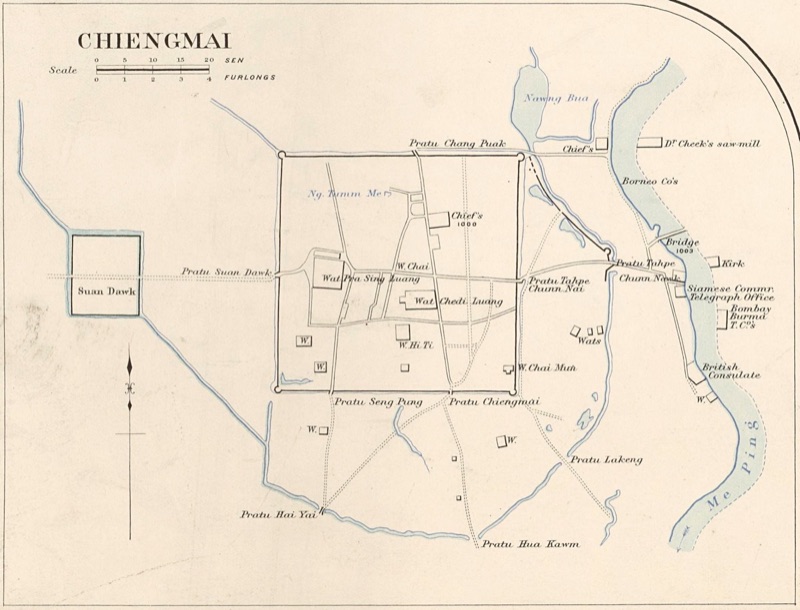
Try sorting the story yourself first. The widget below breaks it into 12 pieces: tap the box you think fits, then read the reason and the sources. The second tab shows how the story grew from 1898 to today; press "Compare" on two versions to set them side by side. The third tab maps Chiang Mai and Moulmein.
Age fifteen
The number comes from Phet Lanna. But if the prince was born around 1880, as Komchadluek says, and died at 33, as the Royal Gazette records, he would have been about 18 in 1898. Pensupa uses 18; Worachat Michubot made it 19 and thought him old for a schoolboy (Pridi Institute, 2025).
St Patrick's School
Phet Lanna only says he studied in Moulmein. The name St Patrick's School came from later researchers, Jirijan Pratipasen and Thanet Charoenmuang's group, because it was a Catholic, English-medium school with mostly well-off pupils. When Somrit asked there in 2006, the school had long closed and only its church remained; the priest had no record of this pupil and had never heard the story (Somrit, 2012; Pensupa, 2021).
The years in the story: 1898, 1902, 1903
These three years (leaving to study in 1898, falling in love in 1902, coming back and parting in 1903) come from the story; no document of the time confirms them. Komchadluek (2018) and the Pridi Institute (2025) use the same years, while a 2019 Matichon Academy talk summarised Pranee as saying he left in 1897. The only years we can check are those in the Royal Gazette table above.
The disguise as a man
Somrit found that Phet Lanna (1964) does not mention a disguise; it first appears in Chiwit Rak Chao Chiang Mai (1980). He asks how, if Ma Mia cut her hair short to pass as a man, it could have grown long enough to wipe the prince's feet a few months later. Pensupa replies that Mon and Burmese men of a century ago wore long hair under a turban, so she could pass as a man, pho chai (พํอฯชายฯ), without cutting it. Both are interpretations, not evidence.
The hair at Hai Ya gate
The scene is in Phet Lanna from the first edition. Hai Ya gate, patu (ปตู), stood on the outer earth rampart to the south and led out of town southwards, but no other record of the scene exists. Somrit once asked an elderly woman in her eighties living near Khuang Sing; she had never heard of it. Worachat suggests the writer borrowed the image from Princess Consort Chao Dara Rasmi wiping King Chulalongkorn's feet with her hair in 1908; Pensupa sees it as a Mon woman's gesture of deepest respect, which might mean the woman was Mon (Pensupa, 2021).
Ma Mia becomes a nun
The story that Ma Mia became a nun, mae chi (แม่ชี), and died in 1962 comes from Pranee's later book. Pensupa quotes Pichet, who interviewed the wife of Chao Somboon na Chiang Mai: Chao Somboon once met a Burmese nun who sent her regards to Chao Thipwan, and Chao Thipwan and Prince Bovoradej are believed to have visited the nun, though whether in 1909 or 1915 is unclear.
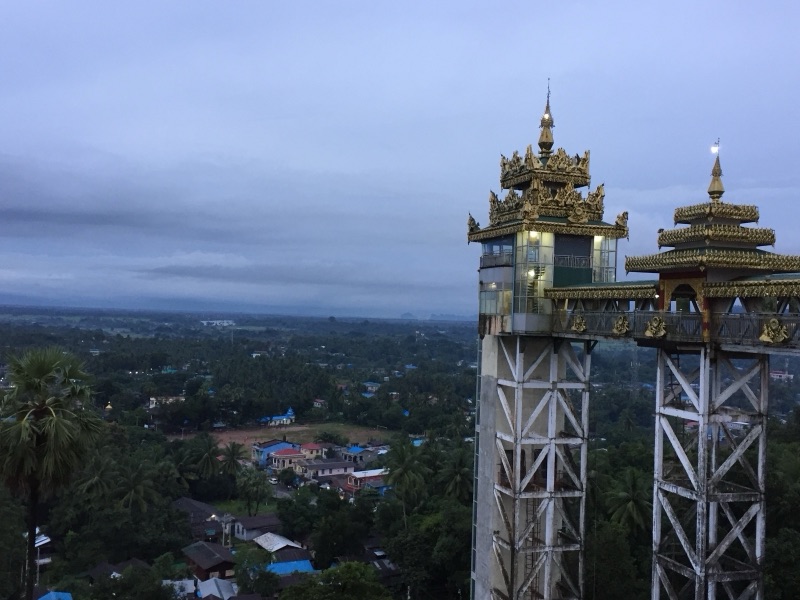
On the Moulmein side, Somrit searched in 2006 at Kyaikthanlan Pagoda, where the story says the couple swore their love, sa ban (สาบาฯนฯ). The temple did once have a nun named Parami, but the woman who had cared for her said she was ordained as a child. For another nun at the Khemathiri nunnery, Somrit notes that every informant had already met earlier Thai research teams, so what he heard may have come from the visitors themselves. At the old market and the town's oldest cigar shop, nobody knew of a cigar seller called Ma Mia.
The Burmese-style ku at Wat Suan Dok
In the northern royal ku at Wat Suan Dok, ku chao nai fai nuea (กู่เจั้านาฯยฯฝ่ายฯเหินฯอฯอ), which the dictionary says Princess Consort Chao Dara Rasmi moved to this temple, stands Chao Noi Sukkasem's ku, and near it a small one in a style like Burmese art. About twenty years ago Thanet Charoenmuang asked whether it might be Ma Mia's. Somrit Luechai later examined it and found it belongs to Chao Mae Thipsom, a daughter of Chao Ratchabut (Chao Nan Thananchai), not to Ma Mia. He reported this at a Matichon Academy talk (2019), Pensupa (2021) confirmed it, and she asked tour guides to tell it correctly.
The name "Ma Mia" and the cigars
Pensupa thinks nobody knew the young woman's real name, so Pranee had to give her one. Mia is a Mon word for emerald, and Pranee took the name from a Tai woman, tai (ไท, the Shan people's own name for themselves), who lived near Wat Pa Pao in Chiang Mai. As for the cigar seller, retellings often call such cigars muli khi yo (มูลีขี้โอยฯ), which the dictionary describes as large, long cigars rolled in young pressed banana leaf and sprinkled with khi yo. Somrit points out that rolling cigars was ordinary women's work in Burma then, so it cannot identify anyone.
"Died of a broken heart" and what was recorded
The later book and the song say the prince died of grief. The Royal Gazette records an illness of the nerves, and the Ministry of Interior letter Pensupa quotes says he had long been ill. The tale that the vow at the pagoda shortened the life of whoever broke it is, as Komchadluek (2018) itself says, a belief rather than a fact, like the belief that the song is cursed, which we tell in the article on the song.
Is there a photograph of Ma Mia?
No photograph is known to be of her. Somrit went to Moulmein hoping to find even one of her in old age, and found none; a nunnery that said it had a photo of a nun called Daw Mya could not find it. The only image is a drawing of the nun Parami, made from descriptions for a documentary crew in 2006, and that nun turned out to have been ordained as a child (Somrit, 2012; Silpa Wattanatham, 2023). The old photograph often shown with the story is of Chao Noi Sukkasem and Chao Bua Chum, which Silpa Wattanatham and the Pridi Institute say comes from the National Archives.
Jaran's song (1981): what it chose to tell
The song Ma Mia by Jaran Manopetch, sung by Soontaree Vechanont, is on the album Folk Song Kham Mueang: Luk Khao Nueng (1981); Somrit dates it to 1977. It keeps only the heart of the story: age fifteen, a Burmese trader, the disguise, the farewell with her hair, the prince's grief, and the nun. In the song they part not because of politics but because of birth and custom.
ปลอมเป๋นป้อจายหนีตามมา ("disguised as a man, she followed") — Ma Mia, words and music: Jaran Manopetch
แต่สุดตี้ฮักเป๋นพม่า ("but the one he loved was Burmese") — Ma Mia, words and music: Jaran Manopetch
The study by Uamporn Thipdet and Siriwan Nanthachanthun (2023) reads the second line as weighing the two lovers' standing with the word "but". The song is an artist's choice of what to tell, not a confirmation of history. The word-by-word Kham Mueang lesson is at Ma Mia: learning Kham Mueang from Jaran Manopetch's song.
After the song, the story became a TV drama in 1994 starring Suwanan Kongying and Sornram Theppitak (Somrit, 2012; Pridi Institute, 2025). Around the 2003 centenary there was a stage play by Jirijan Pratipasen and Thanet's book, and in 2019 a musical at Kad Theatre in Chiang Mai (Pridi Institute, 2025; Pensupa, 2021). What each version added or changed is in the widget's "How the story grew" tab above.
Mong Mia: a new fiction from another angle
Mong Mia (2026) is published on OverNormal under the artist name TMXX, another name of Toni Maxx. As fiction, it asks: what if the story everyone remembers was told wrong from the start? The title plays on the word mong, mong (ห่มฯอฯง), which the dictionary defines as a title before a Burmese man's name.
In the lyric, the story is told by "Mong Mia", a Burmese man who paints. He says he was never a woman named Ma Mia and never sold khi yo cigars; his rolled paintings were retold as cigarettes; the wooden chest hid paintings of a love between him and Chao Noi Sukkasem; and in this fiction the palace, khum (ฅุ้ม, the house of a northern lord), cut "Mong" from his name to leave only "Ma Mia". The hair scene at the city gate is retold as his own act, seen from afar by townspeople who took him for a weeping woman. In the end he returns to Burma, becomes a monk, and paints the prince on a temple wall.
Every character in the song, including the palace that hides the truth, belongs to the fiction. Read it beside this article as one more version of the legend, newly made by its author, just as each generation of books, songs and plays has retold this story in its own way.
🎧 Listen: overnormal.com/play/mong-mia
The Thai lyric is on the song page and in the Thai version of this article (in Thai); below is our English rendering.
Full lyric in English: Mong Mia (fiction)
Mong Mia (หม่องเมี๊ยะ)
Words and story: Toni Maxx (Jarus Soontornsing) · Artist: TMXX · OverNormal (2026)
A fiction that reimagines the tale from another angle; not history. English rendering by Moradok Lanna.
The history you remember... is a lie told by the palace.
I am not a young woman called "Ma Mia", and I never sold khi yo cigars.
My rolls of painting paper were twisted into cigarettes to mock me.
And that great wooden chest... did not hide my body,
it hid the paintings of a forbidden love... between me and Chao Noi Sukkasem...
Mong Mia painted the prince, noble and fine,
hiding the love of two men under the starlight;
together we played the harp, priceless,
binding our hearts in the forest.
I hid the paintings in a golden chest,
kept the secret from every eye,
hoping only that we two could stay side by side,
with no one to part us or dim our joy.
Letting down long hair to wipe his feet, near to death,
the palace ordered my name erased,
turned my rolled paintings into tobacco and destroyed them,
ending the true love of us two men.
When the chest was forced open... the truth of two men was there to see.
To save face and bloodline, they made up a tale to fool the town:
they cut away the word "Mong", leaving only "Ma Mia",
and turned a Burmese artist... into a trader by the road!
When the secret broke, the palace threatened,
ordered us apart, no honour for us,
scorned the artist for all to belittle,
deceived the town that stood watching.
I hid the paintings in a golden chest,
kept the secret from every eye,
hoping only that we two could stay side by side,
with no one to part us or dim our joy.
Letting down long hair to wipe his feet, near to death,
the palace ordered my name erased,
turned my rolled paintings into tobacco and destroyed them,
ending the true love of us two men.
"At the gate of Chiang Mai... I let my long hair fall... the way the painters drew it..."
I bowed down... and washed the dust from your feet with my tears and my hair...
The townspeople watching from afar... all believed it was a young woman weeping...
"Chao Noi... they took even who I was..."
The truth lies buried in a hidden page of history;
the prince's tears ran until his life was gone;
the paintings burned to ash and ruin;
our love will never come back.
Back in Burma I became a monk, away from people,
painting the prince, hidden in the temple, enduring;
however long they searched for a nun, they never found her,
because I am the man who kept a love so full.
Letting down long hair to wipe his feet, near to death,
the palace ordered my name erased,
turned my rolled paintings into tobacco and destroyed them,
ending the true love of us two men.
The false legend was remembered for years and years;
the prince breathed his last with a faithful heart;
the monk Mong Mia painted the walls, his secret kept,
hiding the love of two men in this world.
"This world... may remember the legend of an unlucky girl who sold cigars..."
"But in this silent temple... there is only an old monk... who keeps touching your smile on the wall..."
"If there is a next life... may we be born in a time when... the love between us two... is no disgrace."
"Sleep well, Chao Noi..."
"I am Mong Mia... the man who loved you with all his heart... until his last breath."
The lyric follows the songwriter's original; only the section labels are left out.
Common mix-ups: what the sources show
The story has been retold so often that some details sound like facts. Below are lines people often hear, and what the sources in this article show.
"The prince was the Upparat's son and next in line to rule"
The Royal Gazette records that during the years of the story his father was Chao Ratchawong, becoming Chao Upparat only in 1905, and the prince was given the title Chao Uttarakan Kosol, which is outside the five-tray ranks. Somrit and Thanet therefore give little weight to the succession argument.
"They had to part because Britain would seize Chiang Mai"
Thanet and Somrit point out that Chao Inthanon, the prince's younger brother, married Chao Sukhantha from Chiang Tung, also under Britain, without any problem; both think standing and birth mattered more than politics. Pensupa agrees it may have been about standing, and adds that Chiang Mai people then may have seen Chiang Tung as kin more than Moulmein. Worachat, on the other hand, thinks a marriage to a foreigner really was a serious matter then, though no report by a Siamese commissioner about this case has been found.
"The Burmese-style ku at Wat Suan Dok is Ma Mia's"
Somrit's examination found it belongs to Chao Mae Thipsom, a daughter of Chao Ratchabut (Nan Thananchai).
"Ma Mia was certainly Burmese"
The song and the books call her a Burmese girl, but Pensupa suggests she may have been Mon, since most of Moulmein's people were Mon and the hair gesture is a Mon women's custom. The abbot asked about the nun gave different answers to different visitors, Shan in one case and Karen in another. Her people remain an open question. In Kham Mueang, the Burmese are called man (ม่านฯ).
"Scholars have settled that it is all made up"
Not settled. Somrit (2012) concluded that both people existed and the love affair was real, but its grandeur was not; in a 2019 talk he called the story historical fiction. Pensupa (2021) sees a strong core of truth, and the Pridi Institute (2025) concludes that it stands between fact and fiction.
In Kham Mueang, lao (เลั่า) can mean to rumour or spread news. Ma Mia's story shows well how a tale passed on many times slowly changes shape.
Try eight questions to review; every answer comes with its source.
Summary
- Chao Noi Sukkasem was real: the Royal Gazette records his title Chao Uttarakan Kosol (1911) and his death from illness at 33 (March 1914).
- The Ma Mia story starts in the book Phet Lanna (1964) and was added to in a later book (1980), the song (1981) and research around the centenary.
- St Patrick's School, the disguise, death from grief and the ku at Wat Suan Dok came later, and that ku turned out to be Chao Mae Thipsom's.
- Researchers still differ on how real the woman from Moulmein was, so we leave the verdict to the reader.
- Toni Maxx's song Mong Mia is a new fiction from another angle, not history.
Look up the words in this story: ต่ำนาน หม่อง มูลีขี้โย, then read the Kham Mueang of Jaran's song at Ma Mia: learning Kham Mueang from Jaran Manopetch's song.
📚 All of Lanna: Lanna: where the name comes from and 700 years of the land · the teak age and Moulmein: Lanna and Britain · northern royalty of the same time: Chao Dara Rasmi
Copyright and courtesy
| Item | Details |
|---|---|
| Song quoted in short lines | Ma Mia · words and music: Jaran Manopetch · sung by Soontaree Vechanont (album Luk Khao Nueng, 1981) |
| Book quoted in a few words | Pranee Sirithon na Phatthalung, Phet Lanna (1964), as quoted by Somrit Luechai |
| Song with full lyric | Mong Mia · words and story: Toni Maxx (Jarus Soontornsing) · artist: TMXX · OverNormal (2026); full lyric and English rendering published with the songwriter's permission |
| Status | The song Ma Mia and the book are under copyright; all rights belong to the authors, publishers and record labels |
This article was made by Moradok Lanna, a non-profit website, for learning the Lanna language and culture. It is not an adaptation, translation or new version of the song Ma Mia. We quote only a few short lines, with credit, for study, criticism and review, as fair use allows (Thai Copyright Act B.E. 2537, section 32). All word explanations come from the dictionary and the sources listed.
With thanks and respect to the songwriters, performers, writers and rights holders. If a rights holder would like anything changed or removed, please write to moradoklanna@gmail.com and we will act promptly.
Sources
- Moradok Lanna dictionary: ต่ำนาน · เจ้าขันตังห้า · หม่อง · มูลีขี้โย · กู่เจ้านายฝ่ายเหนือ · คุ้ม · เจ้าหลวง · ม่าน · แม่ชี · งัวต่าง · ฮีตฮอย
- ราชกิจจานุเบกษา [Royal Gazette]. (1898). ส่งสัญญาบัตรไปพระราชทาน [Appointments]. Vol. 14, p. 796
- ราชกิจจานุเบกษา [Royal Gazette]. (1905). ส่งสัญญาบัตรขุนนางไปพระราชทาน [Appointments]. Vol. 21, p. 932
- ราชกิจจานุเบกษา [Royal Gazette]. (1911). ตั้งแลเลื่อนบรรดาศักดิ์ [Titles conferred]. Vol. 28, p. 1957
- ราชกิจจานุเบกษา [Royal Gazette]. (29 March 1914). ข่าวตาย [Death notices]. Vol. 30, p. 3080
- สมฤทธิ์ ลือชัย [Somrit Luechai]. (2012). มะเมี๊ยะ: เรื่องเก่าที่ต้องมองใหม่ เรื่องจริงหรือนิยายอิงประวัติศาสตร์? [Ma Mia: an old story to look at again]. Silpa Wattanatham, December 2012
- มติชนอคาเดมี [Matichon Academy]. (2019). 'มะเมียะ' มีตัวตนหรือเรื่องแต่ง? [Was Ma Mia real or made up? Somrit Luechai's talk]
- กองบรรณาธิการศิลปวัฒนธรรม [Silpa Wattanatham editors]. (2023). "มะเมียะ-ศุขเกษม" โรมิโอ-จูเลียต แห่งลุ่มน้ำสาละวิน เรื่องจริงหรืออิงนิยาย? [Ma Mia and Sukkasem: fact or fiction?]
- เพ็ญสุภา สุขคตะ [Pensupa Sukkata]. (2021). 'มะเมียะ' ยังมีตัวตนอยู่จริงไหม? [Did Ma Mia really exist?] parts (1) (2) (3) (end). Matichon Weekly
- กวินพร เจริญศรี [Kawinporn Charoensri]. (20 April 2025). ๑๒๒ ปี จาก "มะเมียะ-ศุขเกษม" สู่ "กมล" [122 years from Ma Mia–Sukkasem to Kamol]. Pridi Banomyong Institute
- ธันยชนก อินทะรังษี [Thanyachanok Intharangsi]. (14 February 2024). มะเมียะ: เรื่องราวรักร้าวของเจ้าชายล้านนา [Ma Mia: a Lanna prince's broken love]. LANNER
- คมชัดลึก [Komchadluek]. (20 March 2018). 20 มี.ค.2456 สิ้นเจ้าอุตรการโกศล [This day in history]
- Chaiwat Pasuna. (2022). Moulmein: A Seaport and Administrative Center of the British Colony in Burma, 1826–1852. RTNA Journal of Social Sciences, Humanities and Education 9(1)
- เอื้อมพร ทิพย์เดช และสิริวรรณ นันทจันทูล [Uamporn Thipdet & Siriwan Nanthachanthun]. (2023). ภาพแทนคนเมืองในบทเพลงของจรัล มโนเพ็ชร [Representations of the Khon Mueang in Jaran Manopetch's songs]. Uttaradit Rajabhat University Journal of Humanities and Social Sciences 10(1)
- Toni Maxx (Jarus Soontornsing), artist TMXX. (2026). หม่องเมี๊ยะ (Mong Mia). OverNormal (fiction)
- Wikipedia (Thai). เจ้าอุตรการโกศล and เจ้าแก้วนวรัฐ (used only as a lead to the Royal Gazette pages, checked against the originals)
Practise the words from this article
Flip through 21 flashcards of the Lanna words used in this article.


