
Photo: Prayoon Hongsathon / Wikimedia Commons (CC BY-SA 4.0)
Mae Hong Son: City of Three Mists and Home of the Tai
Mae Hong Son (แม่ฮ่อฯงสอฯร, mae hong son) is the westernmost province of Lanna. The Moradok Lanna dictionary (in Thai) records that it is called "the City of Three Mists" because it is full of high, folded mountains, mist covers it for most of the year, and many peoples live there together. Most people in the town are Tai, better known to outsiders as the Tai Yai (Shan).
That makes Mae Hong Son different from the other Lanna provinces in many ways. Its temples are Tai temples, much of what you hear in the market is the Tai language rather than Kham Mueang (Northern Thai), and its merit-making follows the twelve-month calendar of the Tai. This post gets to know the province: a name that comes from a stream where elephants were trained, the founding of the town in 1874, Wat Chong Kham and Wat Phra That Doi Kong Mu, the poi festivals, the three mists, the bua tong flower, and the Tai food that Northern Thai cooks know well.
The name: a stream where elephants were trained
The name reads straight from Kham Mueang. Hong (ร่อฯง, hong) in the dictionary means a groove, a long deep channel, following the sound rule in which central Thai r becomes h in Kham Mueang (see R becomes H in Kham Mueang). Son (สอฯร, son) the dictionary glosses as "to pass on knowledge; to begin training".
The history published by local bodies says the name comes from a stream channel used to train elephants. The Tai Studies Centre of Mae Hong Son Community College, summarising the work of Saengsuri Ladawan (2002), tells that in 1831 CE (B.E. 2374) Chao Luang Phutthawong, ruler of Chiang Mai, sent Chao Kaeo Mueang Ma to survey the western forests and catch wild elephants to train for hauling timber. The elephant-catching party passed Pai and followed the Pai River south, set up a small village on its bank, then moved further south and set up a camp and an elephant-training pen beside a stream near a Tai Yai village. The village founded there was named "Mae Rong Son", the stream channel where elephants are trained, and the sound later shifted to Mae Hong Son.
Elephant in Kham Mueang is jang (ช้างฯ, chang, elephant), by the ch to j rule. So the elephant hunt is both a memory of the town and the reason for its name.
From an elephant camp to a town in 1874
According to the Provincial Commerce Office, the first village Chao Kaeo Mueang Ma founded on the Pai River was Ban Pong Mu, after a salt lick where wild pigs came in numbers; today it is called Ban Pang Mu. Its leader was a Tai Yai man named Pha Ka Mong, while the Mae Hong Son village was led by Saen Kom, his son-in-law.
The forests here were rich in teak, mai sak (ไม้สักฯ, mai sak), which the dictionary describes as hard and durable, good for building houses. The Tai Studies Centre tells that Pha Ka Mong and Saen Kom asked the ruler of Chiang Mai for permission to fell teak and float the logs down the streams into the Salween River, to sell in Moulmein, sharing the money with Chiang Mai every year. The villages slowly prospered.
Around 1856 CE (B.E. 2399) fighting for power broke out among the Tai Yai towns west of the Salween, and many Tai Yai fled to Ban Pang Mu and to Pai. One of them was a young man named Chan Kale, who later came to govern Khun Yuam.
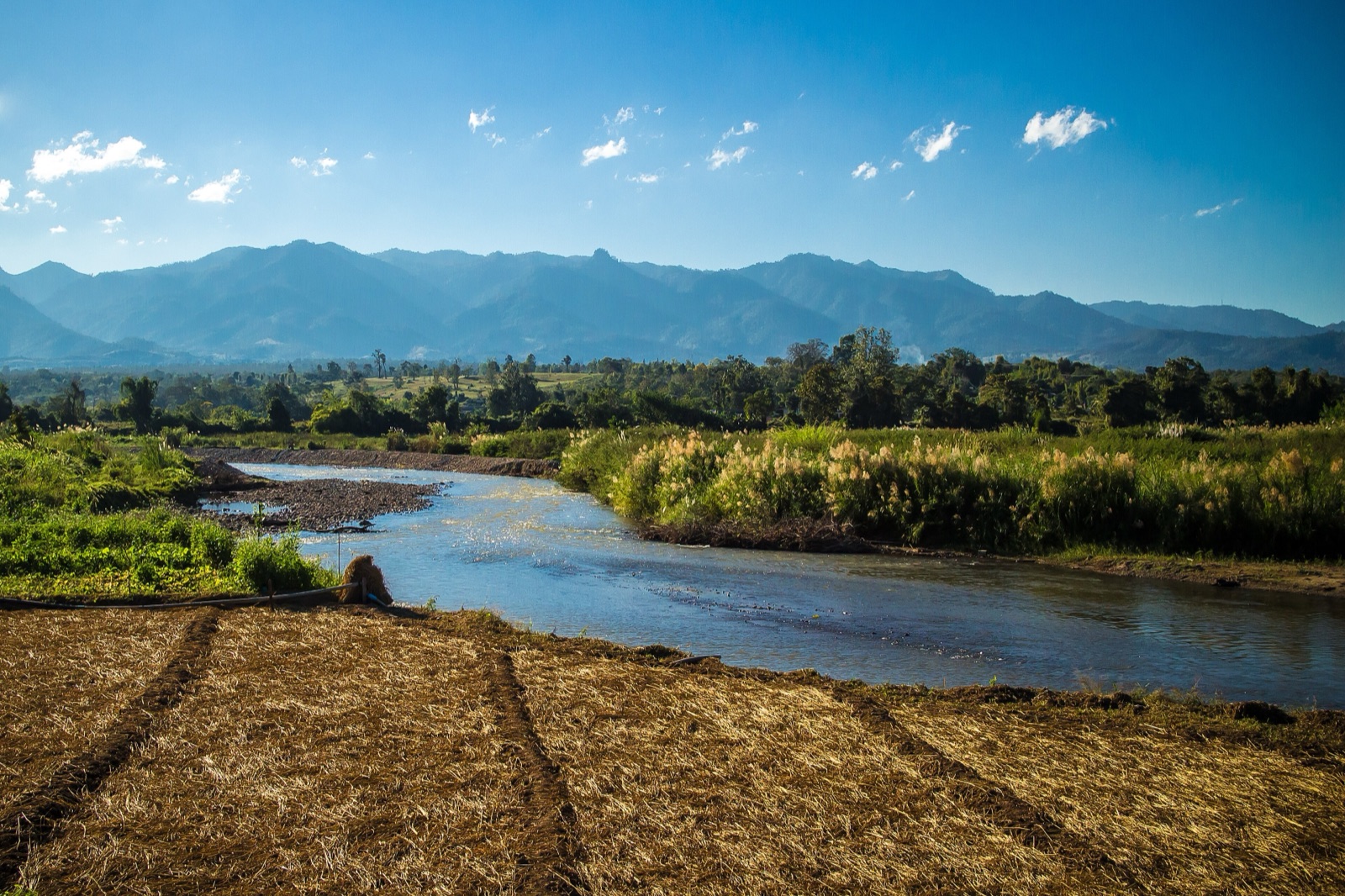
As the population grew, the dictionary records that Mae Hong Son was established as a town in 1874 CE (B.E. 2417) by Phra Chao Inthawichayanon, ruler of Chiang Mai, then a tributary state of Siam. The Tai Studies Centre tells that Mae Hong Son became a frontier town with Pai and Khun Yuam inside its territory, while Mueang Sariang answered directly to Chiang Mai. Chan Kale was appointed Phaya Singhanat Racha, the first ruler, and the townspeople honoured him as a chao fa (เจั้าฟ้า, chao fa), like the princes who ruled Tai Yai towns in the Shan States. The dictionary explains the word the same way: the title of a ruler of a Tai Yai or Tai Khün town.
The Provincial Commerce Office goes on: after Phaya Singhanat Racha died in 1884 CE, his wife Chao Nang Mia governed until 1891 CE, and in 1910 CE (B.E. 2453) Mae Hong Son became a fourth-class town under Monthon Phayap, named "Mae Hong Son Province", as it is today. For the bigger picture of how Lanna as a whole went from tributary state to Monthon Phayap, see Why 'Lanna'? 700 Years in One Song.
- 1831 CE: Chao Kaeo Mueang Ma's elephant hunt; Ban Pong Mu and Ban Mae Hong Son are founded
- 1856 CE: Tai Yai flee fighting west of the Salween
- 1874 CE: established as a town; Phaya Singhanat Racha (Chan Kale) the first ruler
- 1910 CE: Mae Hong Son Province, under Monthon Phayap
The Tai: most of Mae Hong Son's people
The Tai Yai call themselves Tai (ไท, tai). The dictionary says plainly that Thai and Lao people call this group ngiao (ง้ยฯว, ngiao), but the Tai Yai call themselves "Tai". In Thailand they live in Chiang Mai, Chiang Rai, Mae Hong Son and Phetchabun, and their cultural roots, such as their speech, are close to those of the Thai people of Lanna.
Ngiao is therefore a name given by outsiders. It survives in the names of some dishes and dances, such as nam ngiao or fon ngiao, but when speaking about people, Tai or Tai Yai is more polite and matches what the owners of the name call themselves. This post uses those two words.
In Mae Hong Son the Tai are not a small group. The Provincial Commerce Office's general information says the population is "mostly Tai Yai", followed by Tai Yuan, Pgaz K'nyau (Karen), Lahu, Lisu, Lua, Hmong, Yunnanese Chinese, Pa-O and others. MGR Online (2011) also calls the Tai Yai the largest group, living in Mae Hong Son since the town was founded. All six Tai groups of Lanna are in The Tai Peoples of Lanna.
Tai and Kham Mueang: words that sound alike
The province's agriculture plan (2025) explains that the Tai Yai have their own spoken language, called "kam tai", and speaking it is "up tai". Single words are easy for Thai speakers to follow, but whole sentences may not be. The script is "lik tai", round letters that look like Mon and Burmese.
Compare Kham Mueang. Northern Thai people call their language kam mueang (คำฯเมิอฯง, kam mueang), to speak is u (อู้, u), and the Lanna script is tua mueang (ต฿วฯเมิอฯง, tua mueang). The pattern "kam + the people's name" is the same, but the verb and the name of the script differ.
This table compares Tai words recorded by Sittirach et al. (2021) and the provincial plan with Kham Mueang in the dictionary.
| Tai (as the sources give it) | Meaning | Kham Mueang (dictionary) |
|---|---|---|
| kam tai | the Tai language | kam mueang |
| up tai | to speak Tai | u |
| lik tai | the Tai script | tua mueang (the Lanna script) |
| hoen | house | huean เริอฯร |
| kong | drum | kong กลฯอฯง |
| mong | gong | kong ค้อฯง |
| tho nao | (fermented) soybean | thua nao ถ฿วฯเนาฯ |
| lu | to make merit | tan ทาฯนฯ (giving, alms) |
| ka | to dance | fon ฟ้อฯร |
| poi | festival, merit fair | poi พอฯยฯ |
Read the Kham Mueang column as huean, kong, kong, thua nao, tan, fon and poi. Some words are almost identical in sound and meaning, like kong (drum) and poi. Others are different words altogether, like Tai mong and Kham Mueang kong, which both mean gong.
Wat Chong Kham, Wat Chong Klang and Doi Kong Mu
A Tai temple is called a "chong". Sittirach et al. (2021) explain that the main building of a Tai Yai temple is a half-open hall raised high on posts with walls on three sides, used as vihara, preaching hall and monks' quarters all in one. Its roofs are stacked in tiers, usually three, five or seven, topped with a castle-like spire and tiered umbrellas, a style influenced by mixed Tai and Burmese architecture in the Shan States. Burmese people in Kham Mueang are man (ม่านฯ, man).
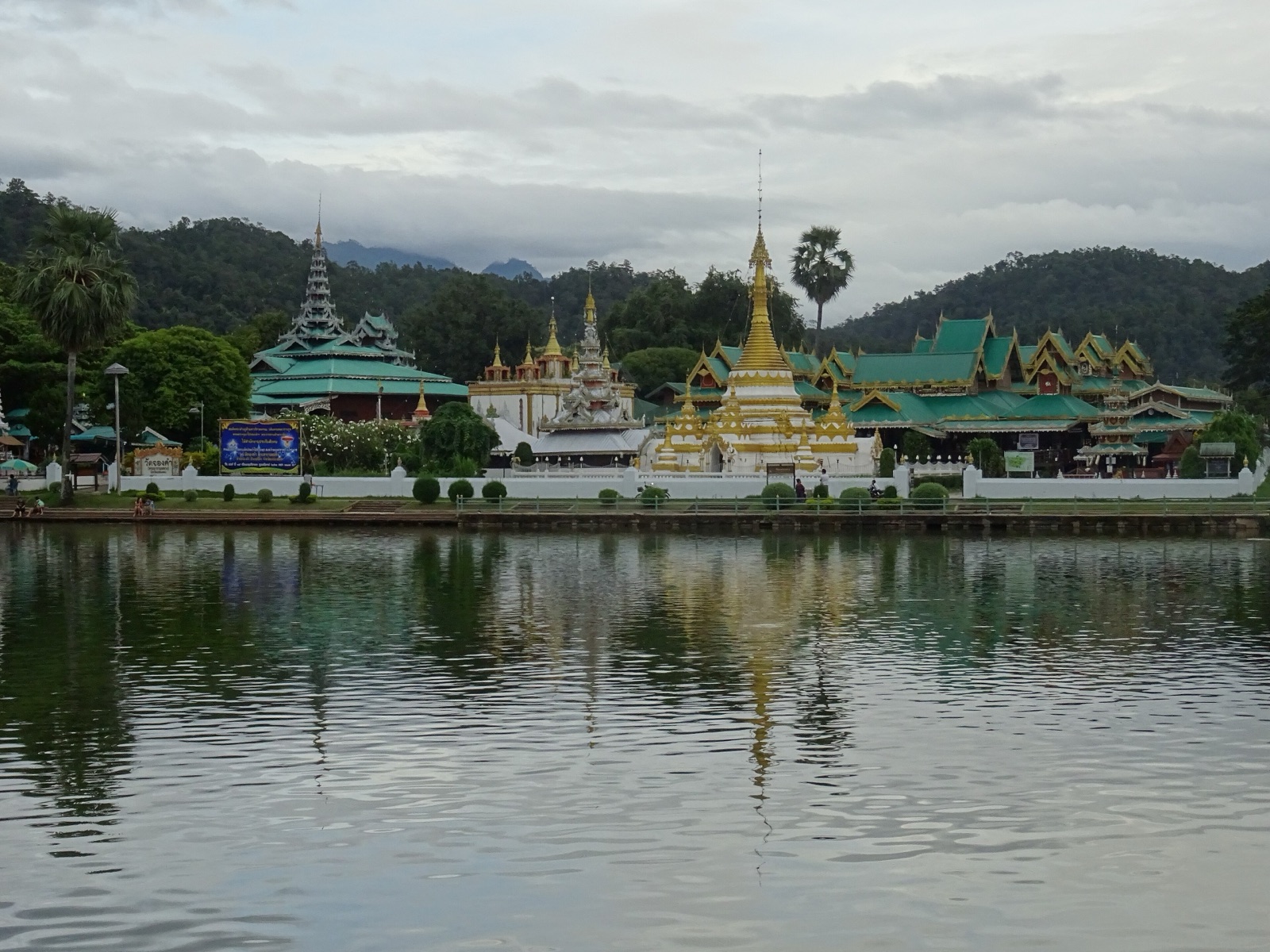
In the middle of Mae Hong Son, Wat Chong Kham and Wat Chong Klang stand side by side on the bank of Nong Chong Kham lake. MGR Online (2011) says both were built by Tai Yai craftsmen and that Wat Chong Klang keeps carved wooden figures telling the Vessantara Jataka. Wat Chong Kham is today a royal temple, according to a 2024 news item from the Office of Natural Resources and Environmental Policy and Planning.
On the hill west of town stands Wat Phra That Doi Kong Mu, the "Kong Mu touching the sky" of the motto. The Fine Arts Department's National Archives in Chiang Mai record that it was once called Wat Plai Doi and has two stupas in Tai Yai–Burmese style. The larger was built by Chong Tong Su in 1860 CE (B.E. 2403) and holds relics of Maha Moggallana brought from Burma; the smaller was built in 1874 CE by Phaya Singhanat Racha, the first ruler, and holds relics of Sariputta. People believed the hill itself looks like a stupa, so the temple was called Phra That Doi Kong Mu.
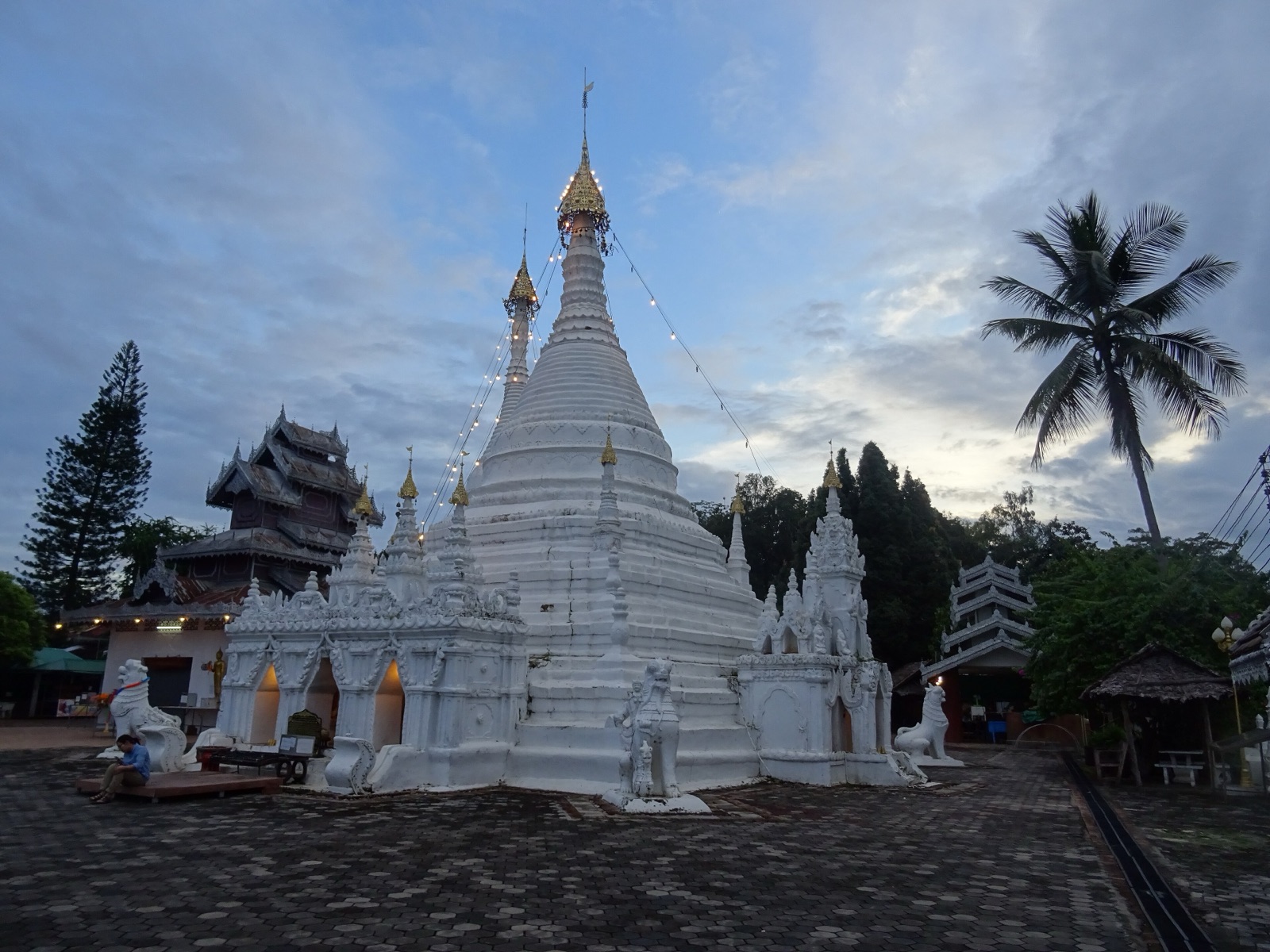
Mae Hong Son Town Municipality uses Wat Phra That Doi Kong Mu with its two stupas as its emblem, and Thai PBS (2023) notes that the whole town can be seen clearly from the temple.
Poy Sang Long, Chong Para and the Tai year of merit
The word you hear most about Tai festivals is poi (poi), which the dictionary glosses as a celebration or festive fair. One of the biggest is Poy Sang Long, a mass novice ordination. The boys about to be ordained are called sang long (ส่างฯลอฯง, sang long) and are dressed as princes. The provincial plan says it is held between March and April in communities and temples where Tai Yai live. Read it day by day in Poy Sang Long.
At the end of Buddhist Lent, which Northern Thai people call ok wa sa (ออฯกวัสสฯา, ok wa-sa), the Tai make chong para. The provincial plan explains that chong para is Tai Yai for "the Buddha's castle", built to welcome the Buddha back from the Tavatimsa heaven. Villagers make little castles to decorate temples and homes, parade animal figures, and on the morning that Lent ends, alms are offered along the way from Wat Phra That Doi Kong Mu down to Wat Muai To at the foot of the hill. The province calls the festival poi loen sip-et.
Poi festivals bring Tai dances such as fon king ka la (ฟ้อฯรกิงฯกห่ลฯา, fon king ka-la): the dictionary explains that king ka la is the kinnari, and the dancers wear wings and tails to imitate these mythical beings. In the processions you hear the mong soeng (มอฯงเซิงฯ, mong soeng), a Tai Yai double-headed drum played with a set of gongs and cymbals, and the kong pu che (กลฯอฯงปู่เจ่, kong pu che), a single-headed drum slung from the shoulder that the Tai Yai call the long drum. For Northern Thai dances, compare Lanna Dance.
Thai PBS filmed a Tai community in Ban Na Pla Chat, Mueang Mae Hong Son district, making chong para for its series Withi Khon.

Video from Thai PBS, the official channel of the broadcaster that owns the programme.
The Tai twelfth month is the Northern Thai Yi Peng
Tai and Northern Thai festival calendars number their months differently. The provincial plan describes "sip-song mon long phong tai", the Tai way of floating krathong on the full moon of the twelfth month. The dictionary says that this central Thai twelfth-month full moon is duean yi peng (เดิอฯรยี่เพงฯ, duean yi peng) in Northern Thai, because Lanna counts its months two ahead of central Thailand. The same night has two names: the Tai say the twelfth month, Northern Thai people say the second month (yi).
In the same way, the end of Lent, which the Tai call loen sip-et (the eleventh), falls in the eleventh month of the central Thai count, and the dictionary says the central eleventh month is duean kiang (เดิอฯรกยฯง, duean kiang), the first month of the Lanna year. Why Lanna counts ahead is explained in Northern Months.
Sittirach et al. (2021) sum up that the Tai Yai of Mae Hong Son make merit in every one of the twelve months, each called a "loen", from loen cheng in December to loen sip-song in November. The wheel below puts all twelve together with the seasons and mists of the town. Tap any month to see the Tai merit-making, Kham Mueang words for that month and this year's northern month from the Moradok Lanna calendar.
Mist in three seasons, bua tong and pi jan
The provincial motto, as the dictionary records it, is "Mist in three seasons, Kong Mu stupa touching the sky, green forests, good people, fine traditions, famed land of the bua tong". The first line is where the City of Three Mists gets its name.
Mist (หมฯอฯก, mok) is written and read the same in Kham Mueang as in central Thai. MGR Online (2011) explains that Mae Hong Son is a plain ringed by mountains, so it has mist all year: dew mist in the cool season, rain mist in the rainy season, and smoke haze from fires in the hot season. The provincial plan divides the seasons this way: hot from about mid-February to mid-May, with April the hottest; rainy from about mid-May to mid-October; cool from about October to mid-February, when dew can freeze on the highest peaks.
Northern Thai has its own word for dew, moei (เหิมฯอฯย, moei), and dew frozen by the cold is moei khap (เหิมฯอฯยขาปฯ, moei khap). The hot-season "mist", though, is really smoke. Kham Mueang calls heavy smoke such as a forest fire's khwan jung jung (ฅัวฯรชุ้งๆ, khwan chung chung). This kind of mist is nothing to admire like winter mist: it is a matter of health for the whole town.
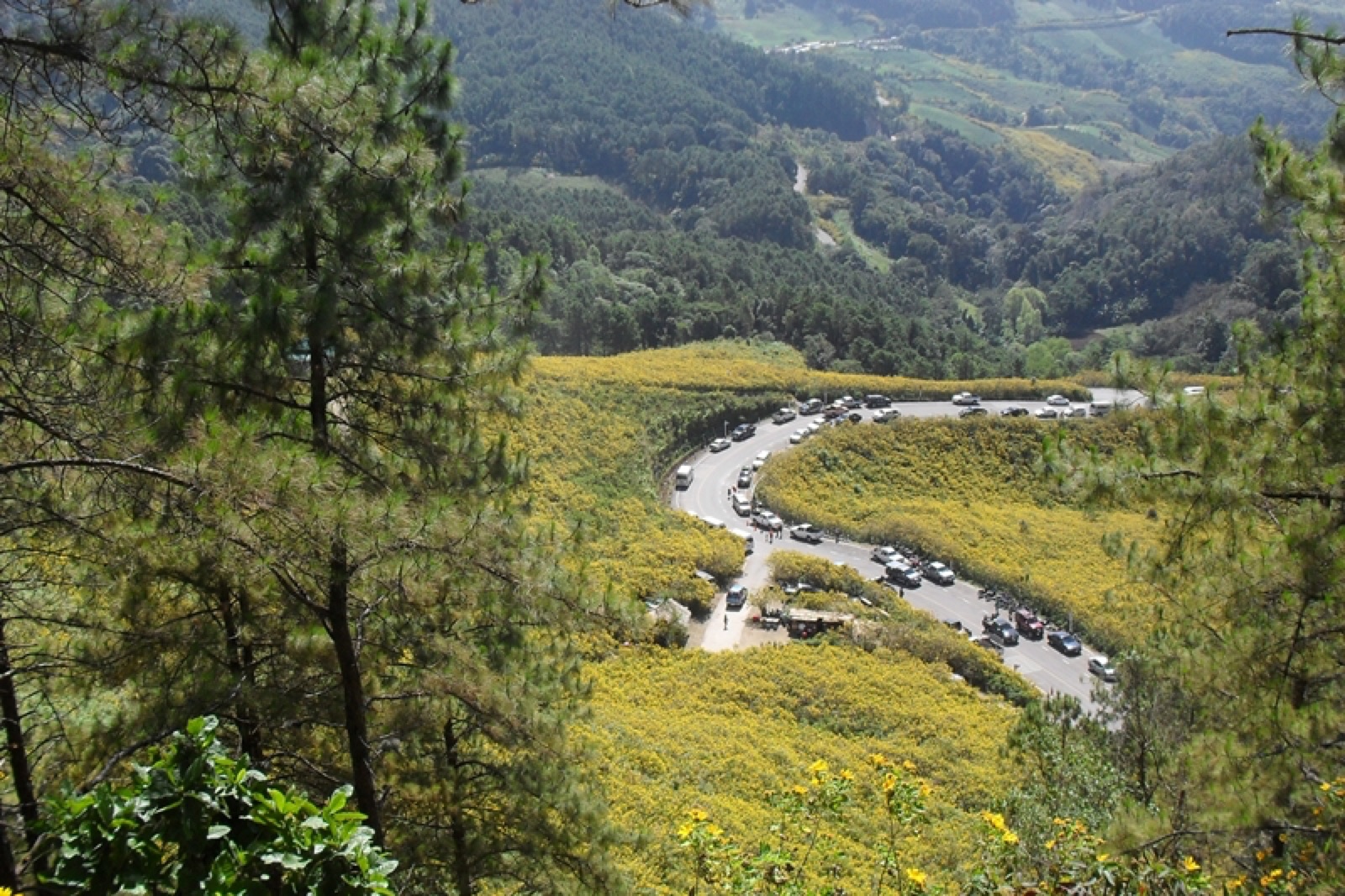
The last line of the motto is bua tong (บ฿วฯทอฯง, bua tong, Mexican sunflower). The dictionary describes it as a herb with bright yellow flowers, plentiful on Doi Mae U Kho in Mae Hong Son, flowering from November to December. The Provincial Commerce Office's general information lists bua tong as the provincial flower.
The provincial tree is the kraphi chan, which Northern Thai people call pi jan (พี้จั่นฯ, pi chan). The dictionary describes a medium-sized deciduous tree, 8 to 20 metres tall, with deep purplish-pink pea-shaped flowers that can bloom almost all year, long flat pods, leaves used as herbal medicine, and timber used for building. See a photo of its flowers in The 8 Lanna Provinces.
The dictionary has two more words tied to Mae Hong Son. Khiat laeo (ขยฯดแลวฯ, khiat laeo) is a large brown frog found in the mountains of the province, up to a foot long with its legs stretched, now a protected animal; the Provincial Commerce Office names it the province's aquatic animal. The other is siao dok daeng (ส้ยฯวดอฯกแดงฯ, siao dok daeng), the purple-red orchid tree, which the dictionary notes the people of Mae Hong Son call siao wan. More Kham Mueang flower names are in Lanna Flowers.
Pai, Mae Sariang and the peoples of the hills
Mae Hong Son is a big province. The Provincial Commerce Office says it is the eighth largest in the country by area, but thinly populated. It has seven districts: Mueang Mae Hong Son, Khun Yuam, Pai, Mae Sariang, Mae La Noi, Sop Moei and Pang Mapha.
Pai was one of the secondary towns from the founding year 1874, and the Pai River is the one the elephant party followed. MGR Online (2011) describes Wat Phra That Mae Yen, with a view over the whole of Pai, and the Yunnanese village of Santichon. The provincial plan says the Yunnanese Chinese of Pai, Pang Mapha and Mueang district were soldiers of the former 93rd Division who fled politics and settled permanent communities.
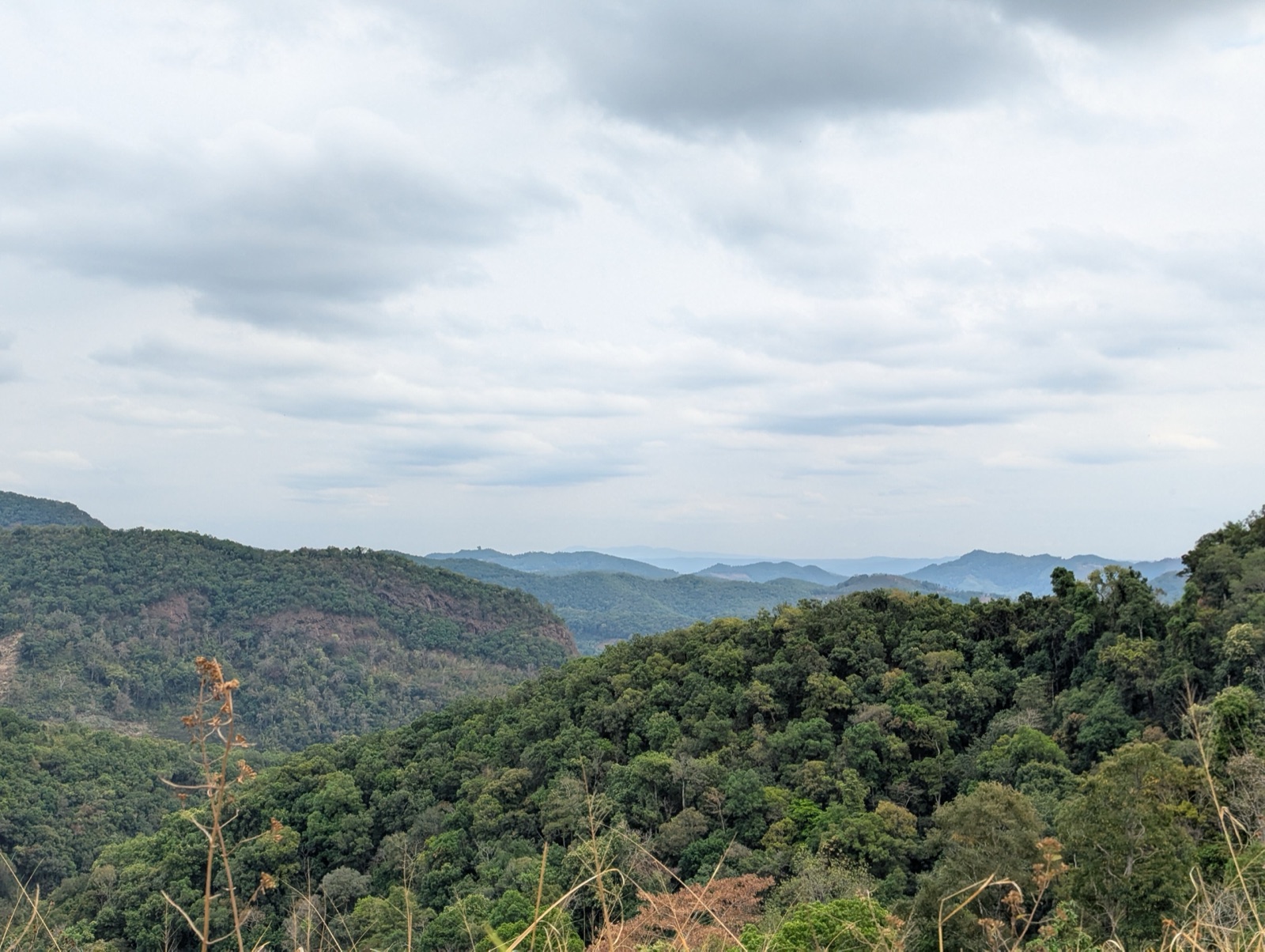
Mae Sariang in the south was once Mueang Yuam, according to the Provincial Commerce Office, and the Tai Studies Centre tells that when Mae Hong Son was founded in 1874, Sariang still answered directly to Chiang Mai. The Provincial Commerce Office also notes that Mae Sariang district holds Thailand's westernmost point, at about 97.5° east. Each year at the end of Lent, Mae Sariang holds "ok wa", with chong para and a Tai procession of a thousand candles, according to the provincial plan. Further south is Sop Moei (ส฿ปฯเมิยฯ, sop moei), which the dictionary describes as the place where the Moei River meets the Salween on the Thai–Myanmar border.
Peoples of the hills
The provincial plan describes two main groups: Thai people of Tai Yai descent who came from the Shan States, and the ethnic groups of the highlands. The largest of these is the Pgaz K'nyau (Karen), about 79 per cent of the province's hill population, settled in every district. There are also the Lahu in Pang Mapha, Pai and Mueang district; the Lisu in Pai and Pang Mapha; the Lua, who have lived in Lanna and Mae Hong Son since ancient times and today live along the ridges around Mae La Noi; the Hmong, spread across every district; and the Pa-O, who came from the Shan States.
Each group has its own language and yearly celebrations. The Lisu, for example, celebrate their New Year, kin wo, from late January into February, according to the provincial plan, which also says that about three quarters of the province's people are Buddhist and about one quarter Christian.
Eating the Tai way: thua nao, khao kan jin and nam ngiao
Tai food has long been part of the Northern Thai kitchen. A study of Shan cuisine as intangible cultural heritage by Kongsuwan (2016), carried out in Chiang Rai, Chiang Mai, Mae Hong Son and Tak, recorded 44 dishes, 33 savoury and 11 sweet, and found that the shared signature ingredients are fermented soybean (thua nao), sesame and tomato.
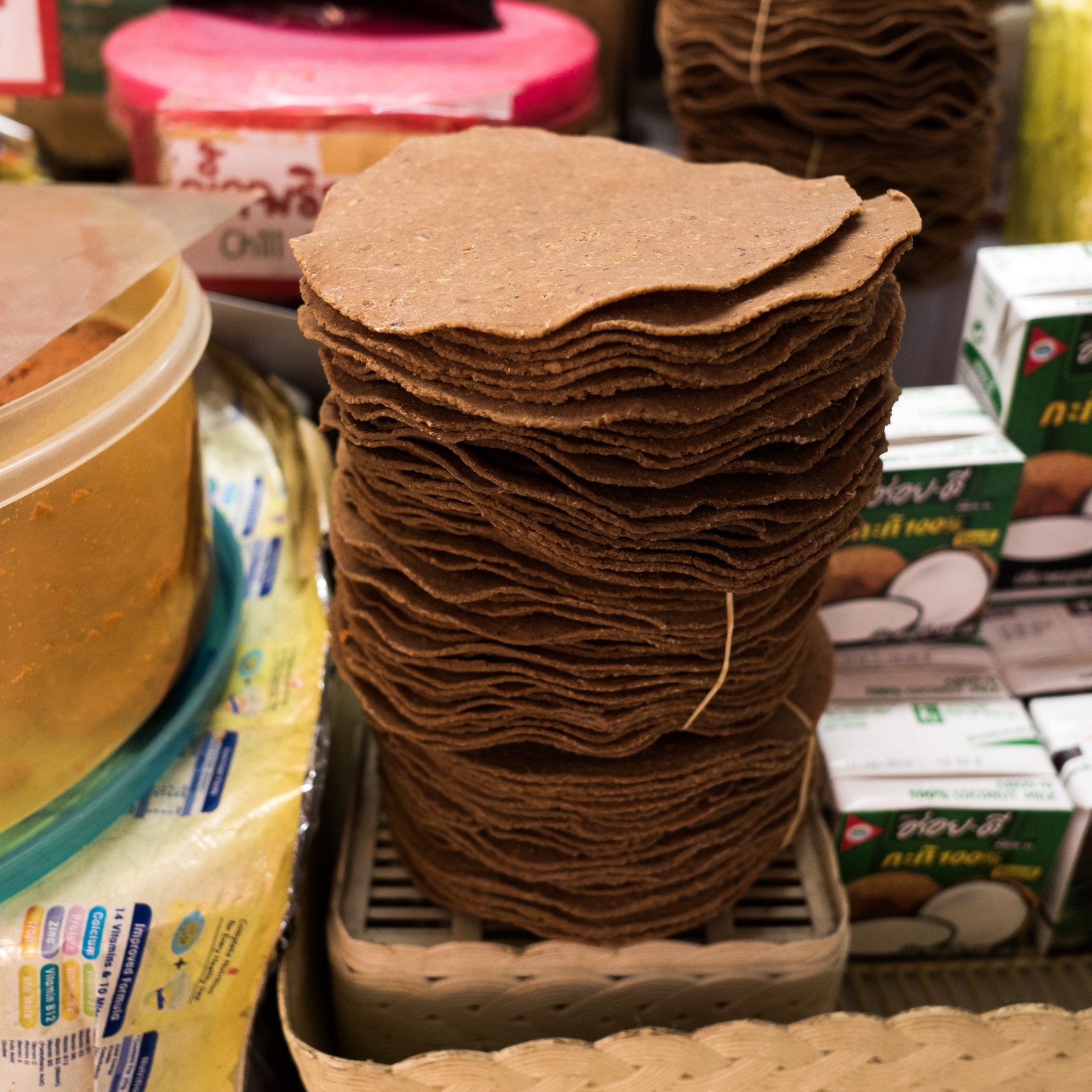
Thua nao in the dictionary is soybeans boiled soft, fermented with salt and pounded fine, used to season many dishes. Pressed into thin round discs about three inches across and dried in the sun, it is thua nao khaep (ถ฿วฯเนาฯแขัปฯ, thua nao khaep). The Tai call it tho nao, according to Sittirach et al.
Another Tai dish the dictionary records is khao kan jin (เขั้าคั้นฯชิ้นฯ, khao kan chin): rice mixed with meat and blood, wrapped in banana leaf and steamed, eaten with fried garlic, shallots and fried dried chillies. And nam ngiao (นาฯง้ยฯว, nam ngiao) is a broth of minced pork with pork bones, blood cubes, tomato and dried kapok flowers, poured over rice noodles.
Both dishes still carry the old name. The dictionary gives other names for khao kan jin as "khao ngiao" or "jin som ngiao". People still use these food names and no slight is intended, but when speaking of people, say Tai or Tai Yai. More Northern dishes are in the Lanna kitchen.
Travelling in Mae Hong Son the Northern Thai way
- To go out to a Poy Sang Long or Chong Para festival, say aeo poi แอ่วฯพอฯยฯ, to go and enjoy a festival
- On a winter morning in the hills it is nao kat nao yen หนฯาวฯกัดฯหนฯาวฯเอยฯันฯ, very cold
- When the thua nao or nam ngiao hits the spot, say lam tae ลำแท้, really delicious
- To thank a shop or host, say yin di jat nak ยินฯดีชาดฯนักฯ, thank you very much
- When the rainy season brings rain for days on end, Northern Thai people call it fon tok sueng ฝ฿นฯต฿กฯซึงฯ
These are Kham Mueang words, fine with Northern Thai speakers, but the Tai of Mae Hong Son have their own language; if unsure, polite central Thai is always fine. More greetings are in How to Greet in Chiang Mai.
Summary
- Mae Hong Son takes its name from a stream channel used to train elephants, according to the history the province publishes, because hong in Kham Mueang means a groove.
- It began with the villages Chao Kaeo Mueang Ma founded in 1831 and was established as a town in 1874, with Phaya Singhanat Racha (Chan Kale) as its first ruler.
- Most people are Tai, who call themselves Tai; ngiao is a name used by outsiders, and many people speak Tai rather than Kham Mueang.
- Tai temples such as Wat Chong Kham, Wat Chong Klang and Wat Phra That Doi Kong Mu, the Poy Sang Long and Chong Para festivals and the twelve months of merit-making are the heart of the town.
- The three mists are dew mist, rain mist and smoke haze; the provincial flower is bua tong and the provincial tree is pi jan.
Look up more Kham Mueang words about Mae Hong Son in the Moradok Lanna dictionary (in Thai), and read about the Tai ordination in Poy Sang Long.
📚 The whole series: provinces, old cities and peoples on one map in Places of Lanna: 8 Provinces, Old Cities and Peoples
Sources
- The Moradok Lanna dictionary: แม่ฮ่องสอน · ไต · ฮ่อง · บัวตอง · ปี๊จั่น · เขียดแลว · ถั่วเน่า and every word in this post, checked 23–24 October 2026
- ศูนย์ไทใหญ่ศึกษา วิทยาลัยชุมชนแม่ฮ่องสอน. (2011). ประวัติการค้าไม้สักในแม่ฮ่องสอน [History of the teak trade in Mae Hong Son; Tai Studies Centre, Mae Hong Son Community College; citing Saengsuri Ladawan, 2002]
- สำนักงานพาณิชย์จังหวัดแม่ฮ่องสอน. (2021). ข้อมูลทั่วไปจังหวัด [General information on the province; Mae Hong Son Provincial Commerce Office]
- สำนักงานเกษตรและสหกรณ์จังหวัดแม่ฮ่องสอน. (2025). แผนพัฒนาการเกษตรและสหกรณ์จังหวัดแม่ฮ่องสอน (พ.ศ. ๒๕๖๖–๒๕๗๐) ฉบับทบทวน [Mae Hong Son agriculture and cooperatives development plan 2023–2027, revised edition]
- Sittirach, C., Mookham, T., Ponmanee, S. & Dinnaratna, P. (2021). การดำรงอยู่ของอัตลักษณ์ชาติพันธุ์ไทใหญ่ในจังหวัดแม่ฮ่องสอน [The Existence of Tai Yai Ethnic Identities in Mae Hong Son Province]. Ramkhamhaeng University Journal, Humanities Edition, 40(1)
- หอจดหมายเหตุแห่งชาติเฉลิมพระเกียรติฯ เชียงใหม่ กรมศิลปากร. วัดพระธาตุดอยกองมู [Wat Phra That Doi Kong Mu; Fine Arts Department, National Archives in Chiang Mai]
- เทศบาลเมืองแม่ฮ่องสอน. ประวัติความเป็นมา [History; Mae Hong Son Town Municipality]
- Thai PBS. (7 September 2023). เที่ยวแม่ฮ่องสอน สักการะ "พระธาตุคู่ กองมูเสียดฟ้า" [Visiting Mae Hong Son: the twin stupas of Kong Mu]
- MGR Online. (12 December 2011). ข้ามเขาพันโค้ง สัมผัสความงาม "เมืองสามหมอก" [Over a thousand bends to the City of Three Mists]
- Office of Natural Resources and Environmental Policy and Planning. (2024). ถวายผ้าพระกฐินพระราชทาน ณ วัดจองคำ พระอารามหลวง จ.แม่ฮ่องสอน [Royal kathin offering at Wat Chong Kham, a royal temple]
- Kongsuwan, D. (2016). "Shan Cuisine" The Intangible Cultural Heritage of Shan Cuisine along the Thai Frontier. Academic Journal of Humanities and Social Sciences, Buriram Rajabhat University, 8 (special issue)
- All photos from Wikimedia Commons, credited under each photo
Practise the words from this article
Flip through 40 flashcards of the Lanna words used in this article.
Look up "แม่ฮ่องสอน" in the Moradok Lanna dictionary (in Thai)


