
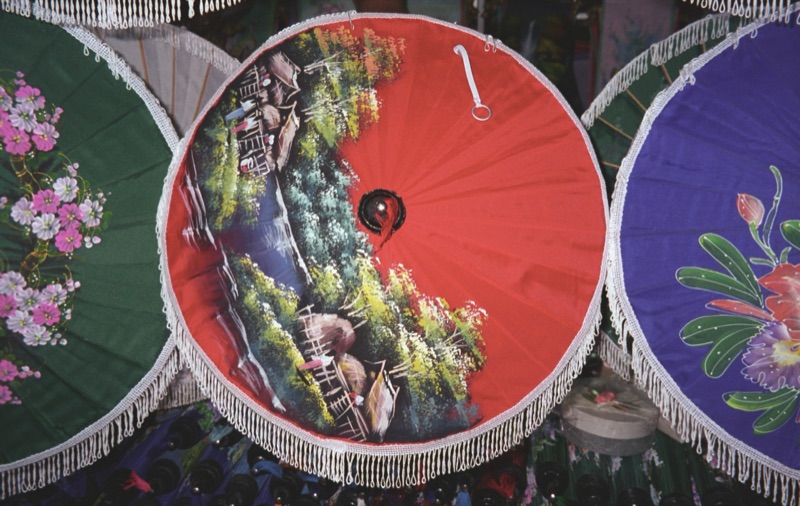
Photo: Takeaway / Wikimedia Commons (CC BY-SA 4.0)
Bargaining in Chiang Mai: Numbers, Prices, Discounts
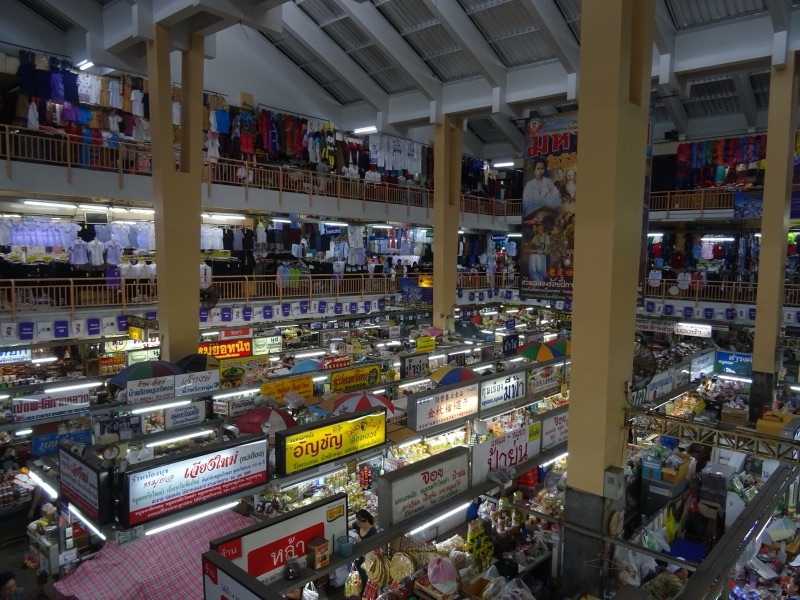
Bargaining in Chiang Mai is easier than you might think. You only need a handful of words, such as yom hue (ย่อฯมหื้, Kham Mueang reading yom hue), which the dictionary translates as "to lower the price for someone". Say yom hue dai ko jao? ("could you give me a discount?") with a smile, and the vendor at a Chiang Mai market will often smile back before she even names a price.
This guide is for travellers and visitors to Lanna. It covers counting in Kham Mueang, asking prices, asking for a discount politely, the counting words you hear at the market, and the bargaining manners local people appreciate. Every word comes from the Moradok Lanna dictionary. To meet the different kinds of market first, read Going to the Kad, Lanna Style.
Counting in Kham Mueang: 1 to 10
Most Kham Mueang numbers sound close to standard Thai. The difference is the tone of a few of them: six is hok and ten is sip, both said with a rising tone. Romanization can't show tones, so listen to how the vendor says them and copy her.
| Number | Kham Mueang | Lanna script |
|---|---|---|
| 1 | nueng | นึ่งฯ |
| 2 | song | สอฯง |
| 3 | sam | สามฯ |
| 4 | si | สี่ |
| 5 | ha | ห้า |
| 6 | hok | ห฿กฯ |
| 7 | jet | — |
| 8 | paet | แปดฯ |
| 9 | kao | เกั้า |
| 10 | sip | สิปฯ |
Sao, yi, yip: three ways to say "two"
The thing that puzzles visitors most is the number two. Kham Mueang has three words for it, depending on where the two sits in the number.
| Where the 2 is | Kham Mueang | Lanna script | Example |
|---|---|---|---|
| units (on its own) | yi | ยี่ | duean yi = the second month |
| tens | sao | ซาวฯ | sao ha = 25 |
| hundreds and up | yip | ยิปฯ | yip muen (ยิปฯหื่มฯร) = 20,000 |
Numbers ending in 1 use et (เอัดฯ, Kham Mueang reading et): sao et is 21 and roi et is 101, as in the dictionary's examples.
| Amount | Kham Mueang | Lanna script |
|---|---|---|
| 100 | hoi | ร้อฯยฯ |
| 1,000 | pan | พันฯ |
| 1,500 | pan ha | พันฯห้า |
| 10,000 | muen | หื่มฯร |
| 100,000 | saen | แสนฯ |
The dictionary even shows how to read long numbers: 925 is kao roi sao ha and 6,822 is hok pan paet roi sao song. Practise on the price tags at the market and it soon comes naturally.
Asking the price: tao dai and paeng
The price question you'll use most is tao dai (เทัาฯฯได, Kham Mueang reading tao dai), "how much?". The dictionary says tao hue (เทัาฯฮื) works too. The price itself is ka (ค่าฯ).
| Say | Lanna script | Meaning |
|---|---|---|
| paeng | แพงฯ | expensive, precious (it can also mean "dear, beloved") |
| paeng ka | แพงฯค่าฯ | pricey, high-priced |
| thuk | ถูก | cheap, not expensive |
| bat | บาฯทฯ | baht, the unit of money (100 satang) |
Example (our own): an ni tao dai jao? – how much is this one?; sao bat – twenty baht.
Asking for a discount politely: yom hue, lot ka, yon hue
Kham Mueang has several words for "lower the price". The dictionary gives them all the same meaning.
| Kham Mueang | Lanna script | Meaning (from the dictionary) |
|---|---|---|
| lot ka | ล฿ดฯค่าฯ | to lower the price |
| yom ka | ย่อฯมค่าฯ | to lower the price |
| lot ka (variant spelling) | ห฿ลฯดค่าฯ | to reduce the value, lower the price |
| yom hue | ย่อฯมหื้ | to lower the price for someone |
| yon hue | อยฯอฯรหื้ | to ease off, give a reduction, lower the price for someone |
Add dai ko (ได้กํอฯ, "is that OK?") at the end and you have a gentle request. If you'd rather have a little extra than a discount, use thaem (แถมฯ, "to add something free") or thaem noi (แถมฯน่อฯยฯ, "a bit more").
| You want to say | Kham Mueang (our examples) |
|---|---|
| Could you give me a discount? | yom hue dai ko jao? |
| A little lower? | yon hue thaem noi dai ko? |
| Could you add a little extra? | thaem hue dai ko jao? |
| Just looking for now | kho pho kon jao |
| No, thank you | bo ao jao (a dictionary example) |
| That's OK, never mind | bo pen yang jao |
The words in this table include ao (´า, "to want, take"), pho (ผํอฯ, "to look") and bo pen yang (บเปนฯหัยฯง, "never mind"). The ending jao (เจั้า) is, in the dictionary's words, "a sentence ending that shows humility, today mostly used by women". More in Kham Mueang Sentence Endings.
Before buying food, ask for a taste with jim (ชิมฯ). The dictionary's example: jim pho lo wa phet ka khem – "taste it and see if it's spicy or salty".
Counting things at the market: classifiers
When you buy something you also need a counting word, as in English "two bunches of bananas". These are the Kham Mueang classifiers you hear most at the market.
| Classifier | Lanna script | Used for (from the dictionary) |
|---|---|---|
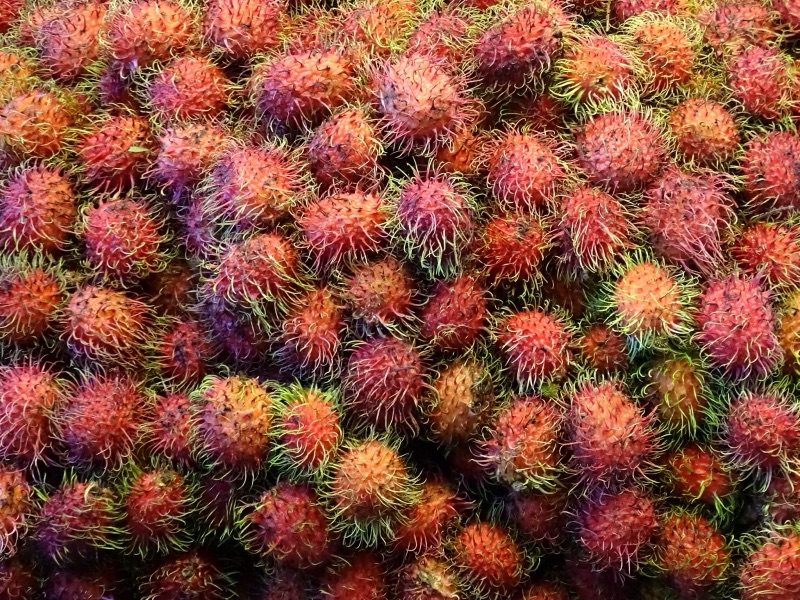
| nuai | ห่นฯวฯฯ | round, plump things such as fruit, e.g. 4 nuai of mango |
| wi | หีวฯ | things growing in a cluster, like a hand of bananas |
| ho | หํอฯ | things wrapped in leaves or paper |
| mat | มัดฯ | things tied together, such as a bundle of greens |
| tin | ติ่นฯ | small cut pieces, e.g. 10 tin of fried meat |
| tua | ต฿วฯ | animals and some objects, e.g. 2 tua of trousers |
| phuen | ผืนฯ | cloth and mats, e.g. five phuen of loincloth |
| pak | พากฯ | one ladleful, e.g. khao sam pak, three ladles of rice |
Bargaining manners local people appreciate
Bargaining is normal at Lanna markets, but doing it kindly gets you both a better price and goodwill. The tips below are Moradok Lanna's own advice.
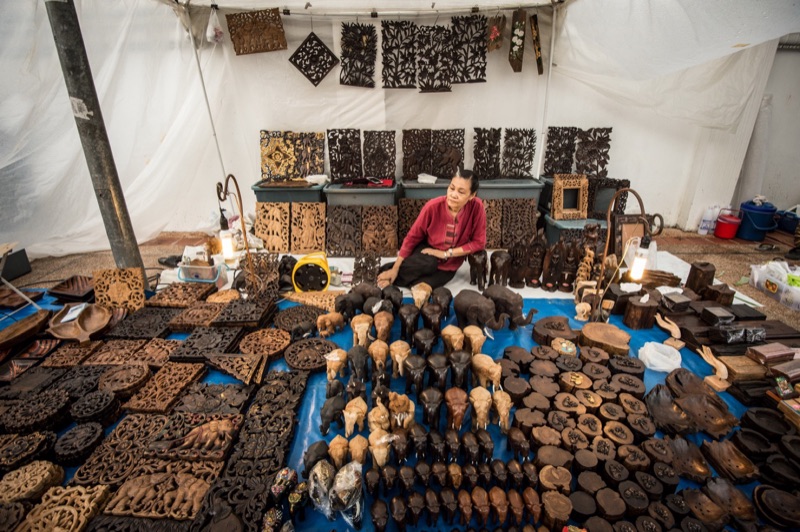
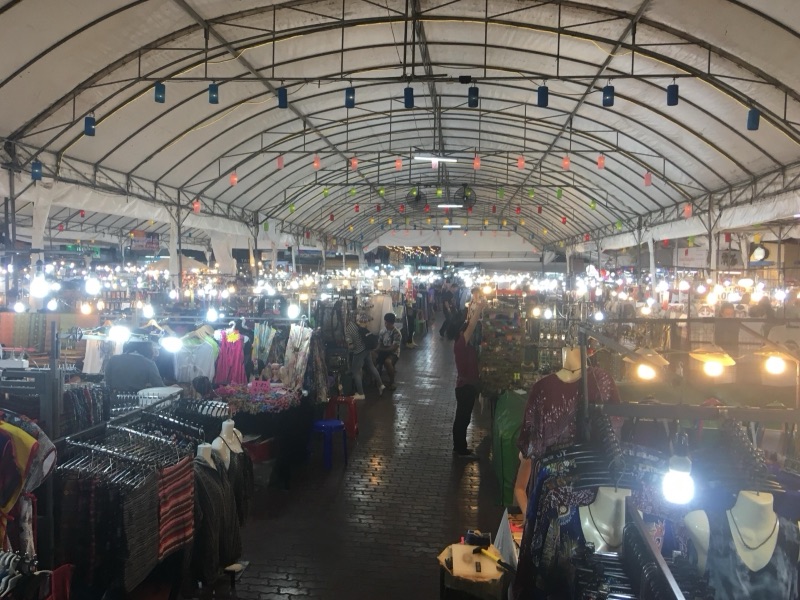
- Fine to bargain: souvenir, fabric, basketry and handicraft stalls on the walking streets or at the night bazaar, especially when you buy several items.
- Better not to: food stalls and dishes that cost a few dozen baht, shops with fixed price tags, and older farmers selling a few bundles of vegetables from their garden. A few baht to you may be their whole day's profit.
- Greet first, then ask the price (see How to Greet in Chiang Mai). Call an older woman vendor mae (แม่) and an older man po (พํอฯ), as the dictionary explains (more in Kham Mueang Family Words).
- Ask for a little off at a time, and keep smiling. Once you agree on a price, buy.
- End with thanks: yin di (ยินฯดี) or yin di jat nak jao ("thank you very much", a dictionary example).
To make the vendor smile even more, wish her well with khai muan (ขายฯม่วฯร, "selling well") or ka muan khai man (ค้าฯม่วฯรขายฯหมฯานฯ), which the dictionary translates as "easy buying, brisk selling". Ka (ค้าฯ) means "to trade", so a merchant is po ka (พํอฯค้าฯ) and a customer is luk ka (ลูกค้าฯ).
A dialogue at a fabric stall
Our own example dialogue, built entirely from dictionary words.
Traveller: Sawatdi jao. Phuen ni tao dai jao? (Hello. How much is this cloth?)
Vendor: Phuen la sam hoi jao. (300 baht a piece.)
Traveller: Ao song phuen. Yom hue dai ko jao? (I'll take two. Could you give me a discount?)
Vendor: Song phuen ha hoi ha sip jao. (Two pieces, 550.)
Traveller: Ha hoi dai ko jao? (Would 500 be OK?)
Vendor: Dai jao. An ni pen nam phuea noe. (OK. And this one's a little extra for you.)
Traveller: Yin di jat nak jao. Kho hue khai muan noe. (Thank you so much. May your stall sell well.)
Practice: try these (tap for the answers)
- How do you say 25 in Kham Mueang? → sao ha
- And 21? → sao et
- And 1,500? → pan ha
- "How much is this one?" → an ni tao dai jao?
- Which word asks for a discount? → yom hue dai ko? (or lot ka, yon hue)
- What classifier do you use for bananas? → wi
- What is to la to khwang, and should you do it? → haggling with no intention to buy; please don't
Summary
- Kham Mueang has three words for two: yi (units), sao (tens) and yip (hundreds and up); numbers ending in 1 use et.
- Ask the price with tao dai; expensive is paeng, cheap is thuk.
- Ask for a discount with yom hue dai ko jao?, or use lot ka and yon hue; ask for a little extra with thaem noi.
- Fruit is counted in nuai, bananas in wi, cloth in phuen.
- Bargain gently, never to la to khwang, and say thank you with yin di jat nak.
Look up more numbers and words in the Moradok Lanna dictionary (in Thai), and learn the words that make locals smile in Kham Mueang Words Locals Love.
Look up "ย่อมหื้อ" in the Moradok Lanna dictionary (in Thai)


