
Photo: Chainwit. / Wikimedia Commons (CC BY-SA 4.0)
Lanna Kitchen Verbs: Pound, Mix, Grill, Bury, Bamboo
Lanna kitchen verbs are the Kham Mueang (Northern Thai) words for how food is made, and many Northern dishes carry one right in their name. Tam (tam, ตำ) nam phik is to pound a chilli dip. Ji (ji, จี่) phik num is to lay green chillies on glowing embers. And lam (lam, หลฯามฯ) is to pack rice into a bamboo tube and roast it in the fire. Once you know these verbs you can read strange menu names, and follow the recipes in the Lanna Kitchen series more easily.
This article gathers 32 kitchen verbs, grouped by the stages of cooking, from washing the greens to tasting the pot. Each has its meaning from the Moradok Lanna dictionary and one example dish. If you have not met the basic verbs such as kin, hung, tam and ji yet, you can start with Everyday Kham Mueang Verbs.
Wash, soak, chop: verbs for getting ready
Before the fire is lit, everything has to be prepared. These are the words a cook uses from early morning.
| Kham Mueang | Lanna script | Meaning (from the dictionary) | Example dish |
|---|---|---|---|
| suai | ซ่วฯยฯ | to wash with water, to clean with water | suai phak, washing greens before eating them with a chilli dip |
| sao khao | ซาวฯเขั้า | to rinse and scrub rice before boiling, steaming or cooking it | raw rice before it goes into the pot |
| jae khao | แช่เขั้า | to soak raw sticky rice in the evening or before bed, so it softens for steaming the next morning | khao nueng, steamed sticky rice |
| fak | ฟักฯ | to chop, to chop fine, e.g. fak pa (chop fish), fak nuea (chop meat) | finely chopped meat for laap |
| soi | ซอฯยฯ | to cut with a small knife | khao soi, whose name is said to come from cutting the dough into strips with a knife |
| kan | คั้นฯ | to knead, to mix together, e.g. kan kathi, to squeeze coconut milk | coconut milk for khao soi |
In the dictionary fak is both a vegetable (wax gourd, fak khiao, fak khao) and a verb meaning "to chop". So fak pa means chopping fish, nothing to do with gourds. For the story of the name khao soi, see Khao Soi Gai, and for steamers, pots and baskets see Kitchenware Words.
Tam, sa, yam, laap: pound and mix
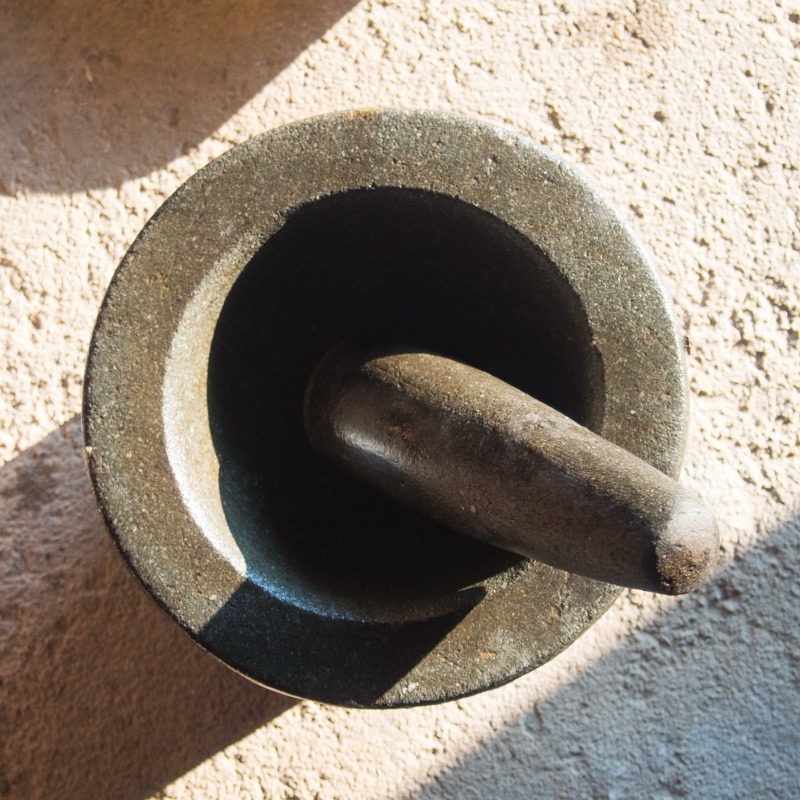
This group is the heart of the Northern kitchen, because every chilli dip starts in the mortar. The dictionary explains tam as driving the pestle down hard, again and again, and gives the example tam nam phik, to pound a chilli dip.
| Kham Mueang | Lanna script | Meaning (from the dictionary) | Example dish |
|---|---|---|---|
| tam | (see above) | to pound with a pestle | Nam Phrik Ong and nam phik num |
| sa | ส้า | a dish of meat or vegetables cut up and mixed with chilli paste; with vegetables it is sa phak | sa phak, young leaves mixed with grilled, pounded seasonings |
| yam | ยำ | to toss many ingredients together with seasonings; named after the meat or vegetable | yam jin kai, chicken yam |
| laap | ลาปฯ | to chop meat fine and season it with laap chilli paste | laap khua, laap roasted until cooked |
| kon | ค฿นฯ | to stir, by hand or with something, to mix it through, e.g. kon kaeng (stir the curry) | stirring the pot of khao soi |
Ji, ping, yang, mok, lam: cooking with fire and embers
The old Northern kitchen ran on a wood fire, so the first job of the day was dang fai (dang fai, ดังฯไฟ), lighting the stove with sticks of firewood. Kham Mueang has many verbs for cooking over embers, and each names a clearly different method.
| Kham Mueang | Lanna script | Meaning (from the dictionary) | Example dish |
|---|---|---|---|
| ji | (see above) | to lay food on red-hot embers and turn it until cooked, so the outside is rather charred | khao ji, balls of sticky rice toasted over the fire |
| ping | ปิ้งฯ | to cook by holding over the fire, for less time than grilling; usually for dry or small things | toasting bananas, toasting sticky rice that is already cooked |
| yang | อยฯ้างฯ | to grill, used when the food is fresh and raw | jin yang, grilled meat |
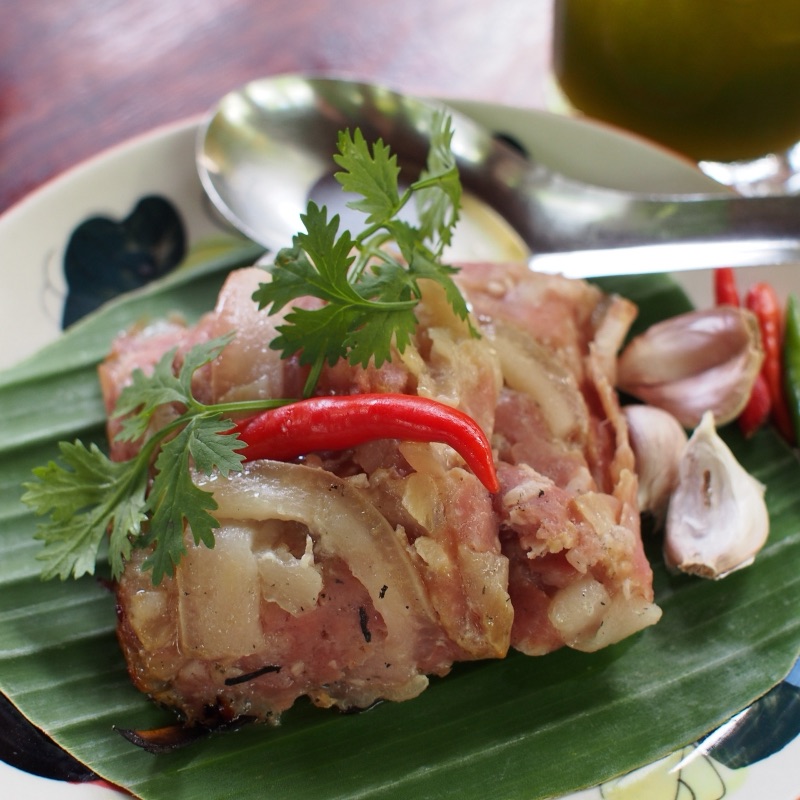
| mok | ห฿มฯก | to bury food somewhere hot until it is cooked, as in ho mok | jin som mok, sour pork wrapped in banana leaf and buried in hot ashes |
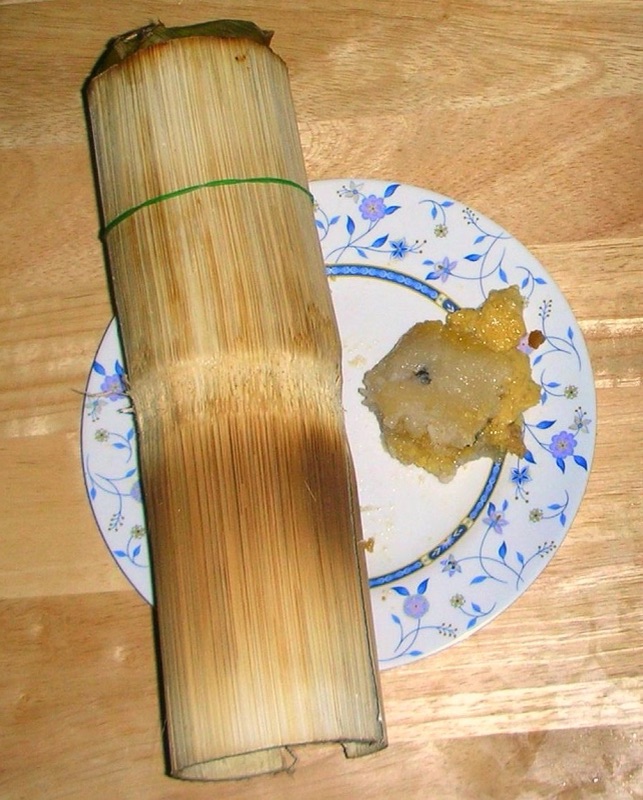
| lam | (see above) | to put something such as rice into a tube and roast it in the fire | khao lam, sticky rice soaked in water or coconut milk, cooked in bamboo |
| aep | แอัปฯ | to mix fish, meat or prawns with seasonings, wrap in banana leaf and grill over a low fire until the leaf is a little charred | aep pa, grilled fish parcels |
The dictionary keeps ping and yang clearly apart: things that are already cooked, dry or small are ping; fresh meat, pork or chicken is yang (spelled หย้าง). And do not mix it up with ย่าง yang, which in Kham Mueang means "to walk": see Everyday Kham Mueang Verbs.
Mok has several meanings in the dictionary. The first is a noun, a knob that sticks out, like the boss of a gong. The kitchen meaning is burying food somewhere hot until it is cooked. When you see a name like jin som mok, read it with this second meaning.
Tom, jiao, jo, ok: cooking in the pot
Once food goes into the pot, Kham Mueang separates the ways of boiling more finely than Central Thai. Under jiao the dictionary itself explains: if you add chilli paste it is called ok, and if you use a lot of water and make it sour it is called jo.
| Kham Mueang | Lanna script | Meaning (from the dictionary) | Example dish |
|---|---|---|---|
| tom | ต้฿มฯ | to bring a liquid in a pot to the boil, or to cook something in it | khao tom, and khao tom mat |
| hung | หุง | to cook food by boiling or simmering, e.g. to cook rice | hung khao, cooking rice |
| luak | ลวฯก | to pour hot water over, or dip in hot water; to blanch | blanched greens eaten with nam phrik ong |
| jiao | จยฯว | to boil a little water with finely pounded seasonings, simmer until fragrant, then add vegetables | jiao phak pang, Malabar spinach |
| jo | ชํอฯ | to boil greens with shrimp paste, salt and fermented fish, soured with tamarind | jo phak kat, mustard greens |
| ok | อัอฯก | a curry with very little liquid, cooked over a low fire in a small pot, usually an earthenware one | ok pu, rice-paddy crab |
Jo phak kat even has a song about it: read about the song and the jo method in Phak Kat Jo. For a curry simmered until the sauce is thick, see Kaeng Hang Le.
Khua, luan, pam, nueng: the pan and the steamer
What these verbs share is little or no oil. Central Thai "stir-fry" (ผัด) and "deep-fry" (ทอด) are not headwords in the dictionary in their cooking sense.
| Kham Mueang | Lanna script | Meaning (from the dictionary) | Example dish |
|---|---|---|---|
| khua | ขั้฿วฯ | to dry-roast: put food in a pan over the fire with no water or oil and turn it until done | khua khao, roasting rice; and laap khua |
| luan | รวฯร | to cut fresh meat and dry-roast it until cooked, to keep for later cooking | meat cooked ahead for the next meal |
| pam | ป่ามฯ | to fry until cooked with no oil, or only a little | khai pam |
| nueng | หึ้นฯง | to steam: to cook or heat with hot steam | khao nueng, and ho nueng leaf parcels |
Khai pam is interesting because the dictionary gives two kinds. One is egg cooked with little or no oil. The other is egg beaten until fluffy, seasoned, spooned into a banana-leaf cup and toasted over the fire. To see seasonings dry-roasted before pounding, step by step, go to Khao Soi Gai.
Dong, tak: keeping food for later
| Kham Mueang | Lanna script | Meaning (from the dictionary) | Example dish |
|---|---|---|---|
| dong | ดอฯง | to soak or ferment in brine or vinegar so it keeps a long time | no som, pickled bamboo shoots, and the pickled mustard greens served with khao soi |
| tak | ตากฯ | to dry in the sun or wind | ma muang kuan, mango paste baked or sun-dried |
Jim and jam: time to eat
When the food is ready there are two more words. Jim (jim, ชิมฯ) is to taste, and the dictionary's example sentence is jim pho lo wa phet ka khem, "taste it and see whether it's hot or salty". Jam nam phik (jam nam phik, จํานาฯระฯพิกฯ) is to take rice or vegetables in your fingers and dip or press them into the chilli dip. For table manners around sticky rice and dips, read Eat Like a Local in Chiang Mai.
The Lanna Kitchen map: from verbs to recipes
The Lanna Kitchen series groups its recipes by cooking method, matching the verbs in this article. Tap a group to see its Kham Mueang words and the recipes already published. Coming topics are shown in grey.
If you want to know what Northern dishes there are, listen to the song Kin Lam Kin Lam, which names 99 of them, then try sorting out which verb each dish uses.
Summary
- Northern dish names often say how they are made: tam nam phik, khao ji, khao lam, jin som mok, jo phak kat, khai pam.
- For preparing, use suai, sao khao, jae khao, fak, soi, kan; for pounding and mixing, tam, sa, yam, laap, kon.
- Over fire and embers: ji, ping, yang, mok, lam, aep. In the pot: tom, hung, luak, jiao, jo, ok. In the pan and steamer: khua, luan, pam, nueng. For keeping: dong, tak.
- Words whose meaning differs from Central Thai: fak means to chop, jiao is a vegetable curry with little liquid, and ย่าง yang in Kham Mueang means to walk, while grilling is หย้าง yang.
Start your first recipe with Nam Phrik Ong, see every recipe in the series at The Lanna Kitchen, and look up more verbs in the Moradok Lanna dictionary (in Thai).
📚 The whole series: every recipe and food word at The Lanna Kitchen: A Recipe Index
Sources
Practise the words from this article
Flip through 37 flashcards of the Lanna words used in this article.


